
-
Home

-
Maritimes NEWS
-
Ports
- maritimes


maritimes
Crew Change for ‘Key Workers’ at Sea Must be Top of the Industry’s Agenda, says INTERCARGO

As International Labour Day on May 1 approaches, it is more important than ever to remember the critical role played by seafarers in continuing to transport food, medicines and other essential goods during the COVID-19 pandemic, says INTERCARGO, the organisation representing the world’s quality dry bulk shipowners.
“Seafarers must not be forgotten in these extraordinary times,” says Dimitris Fafalios, Chairman of INTERCARGO. “The issue of crew change must be at the top of the industry’s agenda. Seafarers are amongst the world’s key workers, vital to the global transportation chain. All maritime nations, ports and airports should, as a matter of urgency, permit the travel in/out and sign-on/off of seafarers, with the necessary safety procedures, allowing them to join from and repatriate to their countries of residence with seafarer’s documents and without visas, while the consulates are closed in the seafarers’ countries of residence.
“Without efficient crew changes, the supply chain would break down leading to basic product shortages and greater hardships for people around the world,” adds Mr Fafalios.
“It must be remembered that some of these seafarers may have served their 4-9 months tour of duty and are not able to be relieved even after serving 12 months or more on board ship”, says Jay K. Pillai, INTERCARGO’s Vice-Chairman. “Not only do they deserve our full support, empathy and compassion, but we must also consider the safety implications of the fatigue and depression that are an almost inevitable result of a seafarer being unable to re-unite with their family after such a long time on board while their families back home are enduring these challenging circumstances.
“Maritime authorities of Port States should join hands with their immigration departments to empathise with crews, our unsung heroes at sea, treat them as key workers as requested by the IMO Secretary General and permit crew change without undue restrictions in their ports to ensure safety at sea and of their territorial waters,” adds Mr Pillai.
In the bulk carrier industry alone, there are close to 12,000 vessels employing over 300,000 seafarers globally. Dr Kostas Gkonis, Secretary General of INTERCARGO calls on the sector to support the #HeroesAtSeaShoutOut campaign. “If your vessel is in port and it is safe to do so, then please sound your ship’s horn at 1200 LT on May 1 to show consolidated support around the world for the many seafarers who cannot be with their loved ones at this time of global uncertainty.”
“Such initiatives remind our valued seafarers that they are not alone, as demonstrated by the recent personal message from the IMO Secretary General to seafarers ‘You are not alone’,” adds Dr Gkonis (to view this message, click here).
About INTERCARGO: The International Association of Dry Cargo Shipowners (INTERCARGO) is representing the interests of quality dry cargo shipowners, with 2,400 registered ships out of more than 11,000 ships in the global dry bulk fleet, corresponding to over 25% of the global dry bulk fleet basis deadweight. The dry bulk sector is the largest shipping sector in terms of number of ships and deadweight. INTERCARGO convened for the first time in 1980 in London and has been participating with consultative status at the International Maritime Organization (IMO) since 1993. INTERCARGO provides the forum where dry bulk shipowners, managers and operators are informed about, discuss and share concerns on key topics and regulatory challenges, especially in relation to safety, the environment and operational excellence. The Association takes forward its Members’ positions to the IMO, as well as to other shipping and international industry fora, having free and fair competition as a principle.
NCLH, RCL boost liquidity with debt holidays for German-built ships

Norwegian Cruise Line Holdings and Royal Caribbean Cruises Ltd. secured additional liquidity by taking advantage of debt holidays for certain German-built ships.
The 12-month debt holidays are offered by Hermes, Germany's official export credit agency, to provide relief for borrowers during the current COVID-19 pandemic.
NCLH additional $386m liquidity
For the six NCLH ships, this means $386m additional liquidity for the company through April 2021. The ships are Norwegian Bliss, Norwegian Breakaway, Norwegian Encore, Norwegian Escape, Norwegian Getaway and Norwegian Joy
RCL additional $250m liquidity
As anticipated, RCL took advantage of the chance to defer debt payments for additional ships which, together, will generate approximately $250m of incremental liquidity through April 2021.
The five ships are Quantum of the Seas, Celebrity Eclipse, Celebrity Equinox, Celebrity Solstice and Celebrity Silhouette.
On top of earlier extra $200m
This is on top of the $200m of incremental liquidity previously disclosed in connection with RCL's Hermes-backed facilities for three ships.
seatrade-cruise.com
All ships in port to sound their horns on 1 May

ECSA joins the International Chamber of Shipping in calling all member companies, shipowners, managers, port operators and any relevant national stakeholder to encourage ships captains to sound their horns when in port at 12h00 local time on 1 May 2020.
The move is to celebrate and recognise the contributions and sacrifices that all workers, including all maritime workers both on-board and onshore, have been making amidst the current COVID-19 crisis. At this difficult time for the world, shipping wants to ensure that the contributions made by all maritime workers such as seafarers are not forgotten.
Therefore, ECSA joins the ICS in their call to encourage as many ships as possible across Europe, who are in a port or harbour, to sound their horns (as is safe to do so) at 12h00 local time on 1 May 2020. We kindly ask our member companies, shipowners, managers, port operators and any relevant stakeholder to encourage ships captains to action this gesture.
685,000 maritime workers in European shipping, with some 555,000 of them at sea, are working hard to ensure that food, fuel and supplies continue to flow for millions of European citizens.
ECSA invites all EU policymakers as well as member states to recognise this contribution by providing a quote or a public statement of support.
DNV GL leads global pilot to secure greater trust in, and value from, oil and gas industry digital twins

DNV GL has issued an international call to oil and gas operators and the supply chain to pilot a methodology that will prove whether the data generated by digital twins can be trusted, and if the technology is delivering value.
- Digital twins can significantly enhance efficiency and reduce cost, but oil and gas operators are increasingly demanding proof that they can be trusted and deliver value over time
- DNV GL is leading research and development into the quality assurance of digital twins
- In partnership with TechnipFMC, DNV GL has developed methodology for qualifying the quality and integrity of the technology
- A global pilot project now being opened for international collaboration involving operators and the supply chain
Companies manufacturing hardware across the oil and gas value chain must prove the safety, quality and integrity of components, equipment and assets through recognised quality assurance principles. However, no standard process exists to provide the same mechanism of trust and value for digital representation of a physical asset and its behaviour.
DNV GL is developing and testing a methodology for the qualification of digital twins which will provide that assurance, and ultimately encourage wider adoption of the technology in the oil and gas sector. An initial partnership with TechnipFMC has led to the creation of the pilot, which is now being opened to the wider industry.
Digital twins are a rapidly developing technology widely expected to become a significant contributor to the future management of major industrial sites. The digital twin market is estimated to grow from USD 3.8 billion in 2019 to USD 35.8 billion by 20251.
DNV GL’s Technology Outlook 2030, a research report identifying transformative technologies in key industries, highlights a digital value chain run by machines and algorithms as a prevailing trend for the oil and gas industry in the decade ahead.
The research expects cloud computing, advanced simulation, virtual system testing, virtual/augmented reality and machine learning will progressively merge into full digital twins which combine data analytics, real-time and near-real-time data on installations, subsurface geology, and reservoirs.
“Solving the digital trust challenge will be key to the dramatic evolution that we expect to see in digital twin technology in the years to come. If more sophisticated digital twins are to be widely accepted and developed at scale by the oil and gas industry, they need to be supported by accurate, valuable and trusted technology,” said Liv A. Hovem, CEO, DNV GL - Oil & Gas.
“Technology decision-makers in our sector will increasingly offer support to the use of digital twins when they see the technology provide consistent, accurate information which brings tangible value against the investment needed. Our work with TechnipFMC and other partners through this new pilot aims to provide the industry benchmark to qualifying that a digital twin will perform as intended,” Hovem added.
DNV GL’s methodology will address the fact that many digital twins – some created at point of the construction or completion of a new asset – currently represent an asset’s initial form and struggle to reflect developments in their physical counterparts as the asset matures.
Digital twins must evolve, mature, and reflect the current condition of the real asset they represent. At present, the use of twins and trust in their accuracy is restricted by the fact that the data they contain does not always reflect the most up-to-date condition of the physical asset.
“Our methodology is a process of providing evidence that a digital twin will provide valid information, predict system performance within well-defined limits and to a stated level of confidence over time. Following our process, you should have a twin that creates value, and that you can trust,” said Kjell Eriksson, Vice President, Digital Partnering, DNV GL - Oil & Gas.
Snam and RINA team up to accelerate the development of hydrogen

Agreement seeks to launch infrastructure tests and experiment with new technologies
Snam, one of the world’s leading energy infrastructure companies, and RINA, a global testing, inspection, certification and engineering consultancy services firm, have signed a Memorandum of Understanding to collaborate in the hydrogen sector, in order to realize the significant potential of hydrogen as a fundamental energy carrier in the fight against climate change and industrial decarbonisation.
The agreement was signed by Snam CEO Marco Alverà and RINA CEO Ugo Salerno.
The two companies have formed a joint working group to study and test the compatibility of industrial burners and other existing infrastructure already in operation with hydrogen. The group will also begin experiments, analysis and technology scouting in various areas involving hydrogen including production, storage and distribution.
Snam CEO Marco Alverà said: “This agreement will combine the skills of Snam and RINA to accelerate the introduction of hydrogen as a new clean energy carrier and give further impetus to create an Italian hydrogen value chain. The use of green hydrogen in existing infrastructure will play a key role in enabling the energy transition and achieving climate objectives, whilst also creating new opportunities for economic development, which are now more important than ever. Italy and its companies have the opportunity to pioneer this approach at an international level”.
RINA CEO Ugo Salerno said: “We are proud to collaborate with Snam to promote the sustainable progress of the energy sector. We believe that hydrogen is currently one of the best options for reducing carbon dioxide emissions. We are delighted to contribute our research and certification skills on hydrogen-compatible materials and our expertise in the field of analysis, studies and tests for storage to this partnership. This agreement demonstrates Snam and RINA’s joint commitment to the common goal of curbing global warming”.
Introducing hydrogen into energy networks represents the first step for spreading and developing green hydrogen from renewable sources, while reducing its costs. Green hydrogen generated by water electrolysis, a process that takes place without CO2 emissions, has the advantage of being able to use the existing capillary gas infrastructure. In 2019, Snam became the first European company to successfully test the introduction of hydrogen blends into its gas transmission network with a percentage volume of up to 10%.
RINA boasts specific and unique engineering skills in Italy to support industries in the transition to a wider use of hydrogen. Most notably, it co-owns the first laboratory in Italy (one of the very few in the world) with the University of Calabria, which is capable of performing tests at high pressures (up to 1000 bar) for the storage of gases including hydrogen.
According to a recent study (‘Hydrogen Challenge: The potential of hydrogen in Italy’) commissioned by Snam, hydrogen could cover almost a quarter (23%) of national energy demand by 2050 under a deep decarbonisation scenario.
Snam is one of the world’s leading energy infrastructure companies and one of the largest Italian listed companies by capitalization. First in Europe by natural gas transmission network extension (over 41,000 km including international activities) and storage capacity (about 20 billion cubic meters, including international activities), the company is also among the largest continental operators in regasification and invests in new businesses related to the energy transition, from sustainable mobility (CNG and bio-CNG, LNG and bio-LNG, Small-scale LNG) to biomethane and energy efficiency.
RINA provides a wide range of services in the Energy, Marine, Certification, Infrastructure and Transport and Industry sectors. With an expected turnover in 2019 of 465 million euros, over 3,900 resources and 200 offices in 70 countries around the world, RINA participates in the main international organizations, always contributing to the development of new regulatory standards.
Dry Bulk Market: Capesizes See Strong Demand in the Brazil to China Routes
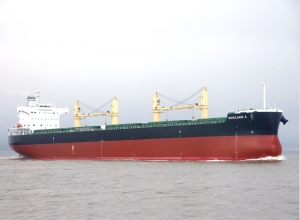
Capesize
The tide turned this week for the Capesize market, as voyage rates registered dramatically falling fuel costs. This was led primarily by weakness in the energy market, as the global supply of oil continues to mount. US suppliers are finding storage levels are brimming, while being reluctant to turn off the taps. The Capesize 5TC peaked early in the week at $10,081, before gains were gradually eroded down to $8,381 by Friday. Fixture activity was relatively strong throughout the week, with a flurry of cargoes fixing out of Brazil to China across a wide range of dates. West Africa and Eastern Canada to China were also notable on fronthaul activity. The Brazil to China C3, while active, shed over $1.60 to settle down at $10.505. The Pacific had a reasonable flow of trade before petering out on Friday. The West Australia to China C5 settled Friday at $4.073, down -$0.84. Along with the oil, Brazilian iron ore forecasts for the 2020 year were revised down by Vale this week. Cashflow troubles were heard out of a Steel maker in India, as Covid-19 continues to wreak havoc on the world markets.
Panamax
The Panamax market had a real directional shift this week, with the Baltic Panamax Index (BPI) veering negative for the first time in over two weeks. East Coast South America grain activity, so often the market driver, has come under pressure this week, with a vast amount of ballasters from Asia compounding the issue. With varying rates being fixed, the mean rate averaging out was at around $8,750 for 82,000dwt, basis delivery Singapore. Elsewhere in the Atlantic, trans-Atlantic demand has failed to deliver again despite some increased activity from North Coast South America. In Asia further falls were witnessed, and despite cargo volume remaining steady week on week, the tonnage count began to build. This counter balanced charterer’s standpoint, and consequently lower bids, with $6,500 being agreed on an 80,000dwt ship for a North Pacific round. Some period deals were agreed. An 82,000dwt ship agreeing to $6,100 for the first 55 days, $9,835 thereafter, for seven to nine months. An 81,000dwt vessel achieved $10,000 for 12 months earlier in the week.
Supramax/Ultramax
As the week ended, there was a change in direction from some areas, with vessels in Southeast Asia seeing rates from where they are open rather than absorbing ballast time. Other areas remain finely balanced, but some brokers saw more enquiry from East Coast South America. However, this has yet to be seen on rate values. There was limited activity on the period front. A 58,000dwt vessel open Nantong fixing in the mid $3,000s for the first 30 days, with $7,750 for balance of period up to five months. From the Atlantic, a 63,000dwt ship was fixed for a trip delivery US Gulf, redelivery China, at $13,000. From East Coast South America a 58,000dwt ship fixed a trip to Algeria in the low-mid $6,000s. From Asia, a 58,000dwt vessel was fixed delivery Singapore trip via Indonesia, redelivery West Coast India, at $4,500. From the Indian Ocean, a 53,000dwt vessel fixed for a trip East Coast India, redelivery China, at $5,000 for the first 35 days then balance $7,500.
Handysize
The same trend continued from last week, with limited activity reported from either Basin. There was a minimal gap reported among the four Atlantic and three Pacific routes. From Upriver region, Handysize vessels were competing with bigger sizes as the draft further dropped. East Coast South America coastal trips were reported at the level of $3,000 to $4,000. Inter-Mediterranean trips were at rates in the mid $4,000s. For a mid-large sized delivery in the Black Sea, a trip to the US Gulf paid in the range of $4,000 to $5,000 and slightly higher level for redelivery in the Continent. Otherwise little was reported from the Pacific.
Source: The Baltic Briefing
Overzealous Valuation and Global Pandemic Bad for Offshore Market
Intro
The last five years have been one of the longest and most challenging downturns the offshore industry has ever experienced. Since the oil price drop of 2014/2015, the Offshore vessel market has been plagued by bankruptcies, consolidations, takeovers and mergers, forced fleet sales and most importantly a significant decrease in asset values.
Values
VesselsValue has always been conservative in terms of Offshore asset values compared to their competitors. In January 2019, Solstad Offshore were requested to revalue their fleet by Norwegian financial authority Finanstilsynet. At that time VesselsValue estimated the value of a five-year-old large PSV at USD 13.7 mil, down almost 22% year to date from USD 17.5 mil. By comparison other valuation providers were quoting valuations 20% higher.
In the months that followed, others believed the value of a five-year-old large PSV increased from c. USD 16 mil to c. USD 19 mil. By comparison, VesselsValue figures increase from USD 13.5 mil to USD 14.1 mil.
There were very few transactions within the market during this period to support such an aggressive increase. However, the market was seeing some positivity, both a stable and relatively high oil price, vessel rates increasing, layup figures decreasing, and handful of ships sold for demolition.
The VV algorithms use a combination of long and short-term rolling averages of the Brent Crude oil price to model sentiment in the absence of transactions. This is effective because the VV sentiment does not overreact to any short-term knee-jerk effects witnessed in the market unless there are enough supporting sale and purchase transactions to justify this.
2019 was not a bad year for the Offshore industry, however VV has always argued based on their data, and valuations that the market was not experiencing the upturn others believed.
2020 has seen the Covid 19 global pandemic and a significant decline in oil price. Tuesday 21st April saw Brent crude drop below USD 16/barrel, a 21-year all-time low. To put this into perspective, the lowest recorded oil price in last crisis was USD 23/barrel.
On the 31st March 2020 Solstad Offshore announced they has entered financial restructuring, citing Covid 19 and the continued poor Offshore market conditions. Such a large Norwegian Offshore owner entering restructuring is an important milestone for the sector. As of 23rd April 2020 VesselsValue values the Solstad fleet at USD 1,483.9 bil. See below table.

Forced removals
A condition of Solstad's restructuring deal is they must remove 37 vessels. Although the exact vessels to be sold are not yet known, it will most likely be the laid up, older smaller units.
Utilising VesselsValue fleet search and recency of AIS function, VesselsValue are able filter PSVs, AHTs and OCVs within the Solstad fleet that have not signalled in 1 week or more, i.e. are inactive / laid up. These 34 vessels could represent a large portion of the possible 37 sales candidates. The below table shows the inactive vessel breakdown, for full list CLICK HERE

Please note:
1) Demolition value is based on vessels LDT current price for steel Indian Subcontinent
2) VesselsValue assumes vessels are in seaworthy condition and fair survey position.
If Solstad were to remove all the 34 outlined vessels from their fleet, the new VesselsValue fleet value would be USD 1,362.8 bil. See below.

The Future
It is unknown how long this current economic situation will last, but what is known is that the Offshore industry is in retraction and the outlook will be extremely testing for everyone from oil majors to small service providers and all those in between. All signs points to another period of restructuring, forced vessel sales, mergers and consolidations and therefore declining asset values. As always with periods of austerity, data driven valuations are critical to keep the market moving forward and prevent it from making the same mistakes of the past.
www.vesselsvalue.com
Captive seamen released by Djibouti land safely in Athens
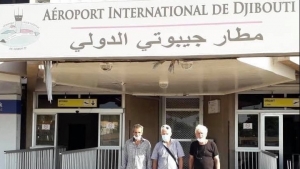
The three remaining Greek sailors held hostage in Djibouti over unpaid debts owed by their ship's owner have arrived safely in Athens following their release, Foreign Minister Nikos Dendias said in a tweet on Sunday.
"The ordeal of the other three Greek seamen, who remained in Djibouti, has reached a happy conclusion. Thanks to the flawless cooperation between the foreign ministry and the shipping ministry, a short while ago they arrived in Greece," Dendias said.
"I thank my counterpart, the foreign minister of the Republic of Djibouti for his response to the relevant letter I sent 15 days ago, the governor of the country and the European authorities in Djibouti for their help," the minister added.
The three sailors had been trapped on two Greek-owned ships anchored off the coast of Djibouti since September 4, 2019 over the unpaid debts of the ships' owner for port fees and fuel. Originally five, they faced a number of difficulties obtaining food and medicine, while two, a chief mate and engineer that was admitted to hospital, were released by authorities in Djibouti last December.
amna.gr
Greek finance minister not pessimistic after 3 agencies reduce economic outlook to "stable"
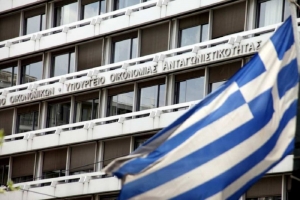
ATHENS, April 25 (Xinhua) -- After three major international rating agencies downgraded the outlook of the Greek economy from "positive" to "stable" within 24 hours due to the impact of the COVID-19 pandemic, Greek finance minister said Friday that "our reading of the report is not negative."
In an interview with Thema FM radio station, Christos Staikouras said markets have already factored in such assessments and there is no sign the acquisition of Greek bonds by the European Central Bank is affected. The agencies kept Greek credit rating unchanged.
Late on Thursday, in an out-of-schedule rating action, Fitch affirmed Greece's credit rating at BB, two levels below investment grade as of January 2020, but eased the country's outlook to "stable" from "positive".
Likewise on Friday, DBRS Morningstar affirmed its BB (low) rating and switched its outlook to "stable", with Standard & Poor's also affirming its BB- rating and reduced Greece's outlook to "stable". Both rating actions were scheduled and have left the Greek rating three notches below investment grade.
All three agencies have based their projections on the expected recession of the Greek economy this year before rebounding in 2021.
The adjustment of the economic outlook to "stable" and not to "negative" is hardly seen as adverse for Greece given the circumstances, said Antonis Zairis, vice-president of the Association of Business and Retail Sales of Greece and assistant professor at the Neapolis Pafos University.
Noting that Greece is heavily dependent on the service sector, he said it remains to be seen whether in 2021 it can enjoy a V-like rebound. Enditem
Third COVID-19 world ports survey report : the impact of blank sailings starts kicking in
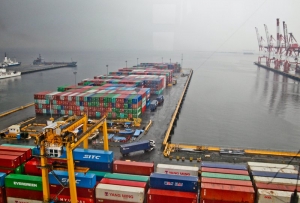
While average weekly number of container vessels calling remains down with further cancellations, some lines have replaced these by regional feeders with good frequency. Updated WPSP-IAPH COVID19 guidance document for ports also released.
Antwerp, 24 April 2020
In the third of a series of weekly Port Economic Impact Barometer Reports by the WPSP-IAPH COVID19 Taskforce, the gradual impact of blank sailings by the world’s major container shipping alliances is beginning to be felt by ports.
The situation for container vessel calls shows a clear deterioration compared to the previous two weeks. Only 41% of the respondents report a rather stable situation (vs.52% and 54% in weeks 15 and 16 respectively). An elevated 42% of the ports experience moderate declines (minus 5% to 25%) in container vessel calls. Already 1 out of every 10 ports face significant decreases (in excess of a 25% drop), compared to less than 3% last week.
“We have begun to see a reduction in vessel calls with blank sailings on the main East-West trades” comments report co-author Professor Theo Notteboom. “Nonetheless an interesting development we have observed from the responses is that some ocean carriers have replaced these cancellations by regional feeders with good frequency. As a result, the reduced number of long-haul calls has been counterbalanced. There are also some cases in which a slight increase in containerised vessels has been reported with public demand for specific goods on the rise during the lock-down period” he added.
The Task Force has also reported some of the larger container lines requesting quays to be used for cargo storage for those containers where shippers or forwarders have opted for suspension of transit (SOT), predominantly inbound cargo from Asia to Europe and the Americas. Reports of transhipment hubs as well as main line ports having capacity available has alleviated some destination ports in terms of congestion.

Storage capacity levels on the quayside and in warehousing facilities stabilise in some ports
For some ports, yard congestion is the result of laden imports of non-essential goods including new cars, which remain in port longer than usual. When rules exist to only handle essential goods, the utilization of storage capacity within the ports has become critical. Therefore respective governments have now allowed the weekly release and acceptance of import / export of non-essential goods on average of 3 days a week; a move that has brought down storage utilization at some container yards by 60%.
“While on one hand container and general cargo storage area utilisation has increased, the lockdown of major industries has led to serious underutilization of terminals and storage areas and warehousing for several other cargoes” comments co-author Professor Thanos Pallis. “These include black and white breakbulk cargoes, steel, heavy lift cargo and machinery. Liquid bulk is still suffering from a non-favourable downward trend in market demand. Nonetheless in some cases, storage tanks for liquid bulk are already full or rented, so no more tank storage is available.”
WPSP-IAPH COVID19 Dashboard debut in Port Economic Impact Barometer Report

In order to provide a visual guide to the data accumulated so far from the world’s ports and to track the impact of COVID19, this third report also includes a dashboard summarising the main findings of the surveys so far. IAPH Managing Director Patrick Verhoeven explained : “In the coming weeks, we expect many ports will feel the full impact of the collapse of economic activity in many parts of the world. To help ports adapt to the new normal will not be easy. Having data on precisely what is going on is invaluable, which is why we call out to our members and all other ports to give us their input, even if the status from the previous week is the same.”
New version of WPSP-IAPH COVID19 Task Force guidance document for ports released

Tessa Major, WPSP-IAPH COVID19 Task Force Chair
Earlier this week, the WPSP-COVID19 Task Force released an updated version of their guidance document for ports, an initiative led by Tessa Major, the Brazilian Port of Açu’s Director of International Business and Innovation. The Task Force providing additional input into the latest version includes multidisciplinary port experts from the ports of Antwerp, Busan, Felixstowe, Guangzhou, London, Los Angeles, Mombasa and Rotterdam as well as digital trade logistics advisors Maritime Street.
Tessa Major commented : “This second edition of the guidance on ports’ response to the corona virus pandemic is structured along a three-layered approach, to present a methodology and a range of good practices for potential use regarding 1) immediate measures addressing port operations, governance and communication, 2) measures to protect the business and financial returns, and 3) measures to support customers and supply chain stakeholders. The document is continuously evolving and we anticipate an updated version next week based on input from the Task Force during our weekly conference call.”
Founded in 1955, the International Association of Ports and Harbors (IAPH) is a non-profit-making global alliance of 170 ports and 140 port-related organisations covering 90 countries. Its member ports handle more than 60 percent of global maritime trade and around 80 percent of world container traffic. IAPH has consultative NGO status with several United Nations agencies. In 2018, IAPH established the World Ports Sustainability Program (WPSP). Guided by the 17 UN Sustainable Development Goals, it aims to unite sustainability efforts of ports worldwide, encouraging international cooperation between all partners involved in the maritime supply chain. WPSP (sustainableworldports.org) covers five main areas of collaboration: energy transition, resilient infrastructure, safety and security, community outreach and governance.
Main image: Jerome Monta | Source: Unsplash

Powered by  © Μaritimes 2019