
-
Home

-
Maritimes NEWS
-
Ports
- maritimes


maritimes
PSTF 2021 digital tables global cruise industry issues as Greek, Cypriot and Israeli ports prepare to welcome passengers back

The chief executives of some of the world’s biggest cruise lines will participate in the first virtual panel discussion that will kick off the 6th Posidonia Sea Tourism Forum 2021 on May 25th.
Gianni Onorato, CEO of MSC Cruises, Michael Thamm, Group CEO Costa Group and Carnival Asia, Wybcke Meier, CEO of TUI Cruises and Chris Theophilides, CEO of Celestyal Cruises will share the screen for the day’s first session titled ‘The Restart of Cruising in Europe and the Mediterranean’.
Each will share their company’s initiatives for post-pandemic cruising, their own vision for the restart and the measures and protocols each cruise line is implementing for the interim period. They will also discuss the reasons for the industry’s strong backing of the East Med as this year’s cruise hotspot, the region that in 2021 will host the highest number of cruise deployments in Europe.
Aida, Celebrity, Costa, Hapag Lloyd, MSC, Norwegian, Royal Caribbean, Seabourn, Silversea and TUI along with Celestyal Cruises will run considerable East Mediterranean summer programmes this season. The port of Piraeus will be the homeport for vessels from Azamara Cruises, Celebrity Cruises, Celestyal Cruises, Holland America Cruise Line, Norwegian Cruise Line, Seabourn Cruises and Silversea Cruises. Celebrity have chosen Greece’s biggest port for the commercial global debut of its newest vessel the Celebrity Apex. Greece’s Corfu and Heraklion, Limassol in Cyprus and Israel’s Haifa are ports that also feature strongly in the lines’ homeporting schedules.
“After all the geopolitical problems that hampered the East Mediterranean’s cruise development in recent years, the industry is now choosing the region as a main theatre for its successful restart in Europe,” said Pierfrancesco Vago, Global Chairman of CLIA and Executive Chairman MSC Cruises, who will keynote the event with his opening remarks about the State of the Industry.
Other sessions during the one-day event will discuss the impact on shore excursions, destination management and delivery under the new health protocols, the environmental challenges ahead and the impact of COVID-19 on port operation and development.
The outlook for the 2021 season for cruising in Greece will be exclusively discussed in a dedicated session as the country banks on international visitor arrivals to revive an economy heavily dependent on tourism revenue. Greece, as well as all cruise destinations, lost much-needed income last year due to the suspension of the bulk of cruise operations world-wide. CLIA estimates the disruption to have caused the world economy US$77 billion in global economic activity and 518,000 jobs.
“Cruise recovery won’t be plain sailing. The waves are high, seas are rough, however the collective minds and will of the industry and its stakeholders are strong enough to weather the storm caused by the pandemic and guide us to calmer waters and safer harbours,” said Theodore Vokos, Managing Director, Posidonia Exhibitions S.A, the event’s organiser.
“The timing of this year’s PSTF is impeccable as we will be able to take the pulse and capture the mood of the global cruise industry almost in real time, within two weeks of the official resumption of commercial operations,” he added.
Registration is free of charge for members of the sea tourism and maritime community. Online functionality will enable delegates to ask questions. Recordings of the sessions will be available on demand for all registered users until 10 June, 2021.
Sponsors and exhibitors will showcase their products and services in the virtual ‘Exhibition Hall’ consisting of digital branded stands and featuring promotional material and video. The PSTF exhibition will be accessible through the platform https://posidoniaforum2021.com from 24 May until 10 June, 2021.
The 2021 Posidonia Sea Tourism Forum is sponsored by Gold sponsor Greek National Tourism Organisation, Silver Sponsors Heraklion Port Authority, Indev Software, MedCruise and Piraeus Port Authority and Bronze sponsors Alba Graduate Business School, Celestyal Cruises and Thessaloniki Port Authority. The Posidonia Forum is organised under the auspices of the Ministry of Maritime Affairs & Insular Policy and the Ministry of Tourism and is supported by the Hellenic Chamber of Shipping, Cruise Lines International Association (CLIA), the Association of Mediterranean Cruise Ports and the Union of Cruise Ship Owners & Associated Members.
Euronav announces first quarter 2021 results
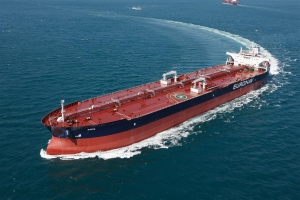
HIGHLIGHTS
• Challenging quarter due to stunted demand recovery and restricted crude supply
• Euronav continuing to diversify financing with new sustainability-linked funding sources
• Investing for the future with VLCC and Suezmax fleet renewal added during quarter
ANTWERP, Belgium, 6 May 2021 – Euronav NV (NYSE: EURN & Euronext: EURN) (“Euronav” or the “Company”) today reported its non-audited financial results for the first quarter of 2021, ended 31 March 2021.
Euronav orders two newbuild VLCCs and one option to add a third
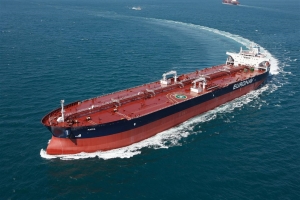
ANTWERP, Belgium, 22 April 2021 – Euronav NV (NYSE: EURN & Euronext: EURN) (“Euronav” or the “Company”) today announces that it has entered into an agreement with the Hyundai Samho yard for two VLCC newbuilding contracts. Sourcing fleet renewal from the newbuilding market has primarily been driven by the aim of Euronav to be at the forefront of innovation in the energy transition and to drive projects with potential to decarbonize the transportation of oil.
The vessels will be LNG-ready and consequently there is an ability to cut CO2 emissions compared to current market standards. Furthermore, Euronav is working in cooperation with the yard and classification society to include an Ammonia-ready notation with the potential to reduce CO2 emissions to zero when technology, logistics and the regulatory framework allows for it. This should be defined by the end of the summer. In addition to being significantly more fuel efficient compared to the vessels they will replace, the newbuildings will also be fitted with Exhaust Gas Scrubber technology and Ballast Water Treatment Systems.
These market leading units will be delivered during Q4 2022 and Q1 2023, costing USD 186 million en-bloc, and including USD 4.2 million in additions and upgrades to the standard specifications. Euronav also has the option to contract a third VLCC with the same specifications that would be delivered in the second quarter of 2023.
While contracting and orderbook-to-fleet ratio remains at an historical low in the tanker segment, elevated contracting activity from other segments has reduced available capacity to build VLCCs for the upcoming years at a time when the sector needs to replace maturing vessels with more environmentally friendly designs.
Hugo De Stoop, Euronav CEO said “As a market leader in our segment, Euronav acknowledges our responsibility to support innovation towards decarbonizing the transportation of oil, while protecting and building value with the capital our shareholders have entrusted us with. With this order Euronav is tangibly driving innovation and investing in the energy transition. These ships are not only the latest generation of low consumption design but also have the option to be converted or retrofitted to use either LNG or Ammonia as a low emission fuel of the future. As there are no such alternatives in the second-hand market today, and with rising steel prices and constraints over yard capacity to 2024, we wanted to seize this opportunity to rejuvenate the fleet with two or three modern VLCCs that will replace older and less efficient ships that will leave our fleet around the same time of their delivery”.
About Euronav
Euronav is an independent tanker company engaged in the ocean transportation and storage of crude oil. The Company is headquartered in Antwerp, Belgium, and has offices throughout Europe and Asia. Euronav is listed on Euronext Brussels and on the NYSE under the symbol EURN. Euronav employs its fleet both on the spot and period market. VLCCs on the spot market are traded in the Tankers International pool of which Euronav is one of the major partners. Euronav’s owned and operated fleet consists of 2 V-Plus vessels, 45 VLCCs, 28 Suezmaxes (one of which is in a joint venture and two vessels time chartered in and two to be delivered) and 2 FSO vessels (both owned in 50%-50% joint venture).
Bureau Veritas awards air lubrication system approval to Gills Pte ltd
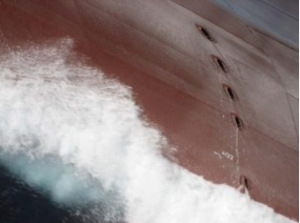
Bureau Veritas has awarded approval to the GILLS system, designed to support improved efficiency for both existing and new ships
Paris La Défense, 10 May 2021 – Bureau Veritas (BV), a world leader in testing, inspection, and certification (TIC), has been working with GILLS PTE LTD in Singapore to assess the performance of its innovative air lubrication system to improve ship efficiency and decrease fuel burn by reducing the drag of an underwater hull.
GILLS, which stands for gas injected liquid lubrication systems, deploys NACA profiles* to create self-generating micro-bubbles for ‘turbulent modulation’ which has a ‘hull-tightening’ effect (see below), reducing drag and energy requirements. The self-generating nature of micro-bubble clouds with no requirement for air-compression and additional energy requirements is one of the features of the GILLS system.
Following an in-depth assessment by Bureau Veritas in Singapore, covering safety of installation and updated Class compliance, GILLS has now been awarded approval in principle (AiP) for the system to be installed onboard vessels in general. The AiP covers the design of the system and installation onboard vessels as reviewed against the Bureau Veritas Rules for Steel Ships NR 467 (as updated in January 2021).
Commenting, David Barrow, SE Asia Zone Vice-President for Bureau Veritas, said: “The collaboration with GILLS is timely as the industry seeks performance improvements in line with the EEXI energy efficiency targets. Pressure is building to find cost-effective solutions that work and can be financed.
“The GILLS systems has been installed on an existing vessel for a number of years now and the vessel owners are confident of the fuel savings are approximately 10%. The next step is a full-scale measurement and a validation exercise led by Bureau Veritas Solutions (BVS) to identify confirmed performance. BVS, our consultancy arm, is also working with GILLS to assess the potential of access to Singapore ‘Green Funds’ to provide financial support to owners considering using such energy-saving systems.”
The hull tightening effect of the GILLS technology is a phenomenon of the various factors and forces acting on the microbubbles generated by a GILLS vortex generator installed at the bow of the ship. These factors and forces can be identified as the following:
1. A ship’s forward movement
2. Creation of microbubbles by negative pressure and Kelvin Helmholtz Instability (KHI) exiting the vortex generator
3. The random shape of microbubbles with turbulence, eddies and vortices, from KHI
4. Buoyancy acting on the micro bubbles inducing an upward force
5. Shape of the hull.
Peter Kneipp, Managing Director of GILLS PTE LTD said: “The GILLS Air Lubrication System is a nature based innovative technology that not only uses the micro bubbles to reduce the drag, emissions, fuel and biofouling, but it also utilizes the ship speed to generate a negative pressure and minimizes the required external compressor power.
“We are greatly confident that GILLS will be a valuable contributor for practically every ship type to improve the EEDI /EEXI IMO Index. GILLS can also be retrofitted to existing ships as well as new vessels.
*NACA airfoils are developed by the National Advisory Committee for Aeronautics (NACA - USA).
About GILLS
GILLS PTE LTD is a company established in Singapore in September 2019 to provide engineering, service support and marketing for the GILLS Air Lubrication System. From Singapore GILLS PTE LTD supports the customers world-wide, assisted by a network of dedicated specialist in the main Maritime Centers globally
About Bureau Veritas
Bureau Veritas is a world leader in laboratory testing, inspection and certification services. Created in 1828, the Group has 75,000 employees located in more than 1,600 offices and laboratories around the globe. Bureau Veritas helps its clients improve their performance by offering services and innovative solutions in order to ensure that their assets, products, infrastructure and processes meet standards and regulations in terms of quality, health and safety, environmental protection and social responsibility.
Bureau Veritas is listed on Euronext Paris and belongs to the Next 20 index.
Diana Shipping Inc. Announces Time Charter Contract for m/v Myrsini with Bocimar
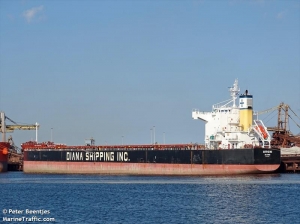
ATHENS, GREECE, May 7, 2021 – Diana Shipping Inc. (NYSE: DSX), (the “Company”), a global shipping company specializing in the ownership of dry bulk vessels, today announced that, through a separate wholly-owned subsidiary, it has entered into a time charter contract with Bocimar International N.V., for one of its Kamsarmax dry bulk vessels, the m/v Myrsini. The gross charter rate is US$27,750 per day, minus a 5% commission paid to third parties, for a time charter period until minimum October 15, 2021 up to maximum November 30, 2021. The charter is expected to commence on May 10, 2021. The m/v Myrsini is currently chartered, as previously announced, to Ausca Shipping Limited, Hong Kong, at a gross charter rate of US$11,500 per day, minus a 5% commission paid to third parties.
The “Myrsini” is a 82,117 dwt Kamsarmax dry bulk vessel built in 2010.
The employment of “Myrsini” is anticipated to generate approximately US$4.3 million of gross revenue for the minimum scheduled period of the time charter.
Upon completion of the previously announced sale of one Panamax dry bulk vessel, the m/v Naias, Diana Shipping Inc.’s fleet will consist of 36 dry bulk vessels (4 Newcastlemax, 12 Capesize, 5 Post-Panamax, 5 Kamsarmax and 10 Panamax). As of today, the combined carrying capacity of the Company’s fleet, including the m/v Naias, is approximately 4.7 million dwt with a weighted average age of 10.21 years. A table describing the current Diana Shipping Inc. fleet can be found on the Company’s website, www.dianashippinginc.com. Information contained on the Company’s website does not constitute a part of this press release.
About the Company
Diana Shipping Inc. is a global provider of shipping transportation services through its ownership of dry bulk vessels. The Company’s vessels are employed primarily on medium to long-term time charters and transport a range of dry bulk cargoes, including such commodities as iron ore, coal, grain and other materials along worldwide shipping routes.
Seanergy Maritime Holdings Corp. Announces Delivery of Capesize M/V Hellasship and Time Charter Agreement with NYK Line
May 6, 2021 - Glyfada, Greece - Seanergy Maritime Holdings Corp. (the “Company” or “Seanergy”) (NASDAQ: SHIP) announced today that it has taken delivery of the 181,325 dwt Capesize bulk carrier, built in 2012 by Imabari Shipbuilding Co. in Japan, which was renamed M/V Hellasship (the “Vessel”).
The delivery of the M/V Hellasship is the first of the four Capesize acquisitions performed already in 2021.
The Vessel has been fixed on a time charter (“T/C”) with NYK Line, a leading Japanese shipping company and operator. The T/C is expected to commence immediately, upon finalization of the customary transition process and will have a term of minimum 11 to maximum 15 months from the delivery. The gross daily rate of the T/C is based at a premium over the Baltic Capesize Index (“BCI”).
Stamatis Tsantanis, the Company’s Chairman & Chief Executive Officer, stated:
“We are pleased to announce the well-timed delivery of our twelfth cape vessel, during the strongest Capesize market of the last decade with spot rates standing currently above $42,000 per day. This delivery is the first of the four acquisitions we agreed so far in 2021, before the impressive surge in freight day rates and asset values. Needless to say, that our timing has been once again optimal.
“At the same time, we are glad to initiate a long-term commercial partnership with another leading charterer through M/V Hellasship’ s period employment. The relationships we have established with first class charterers in the Capesize space attest to the operational quality of our fleet and management platforms.
“Currently, 92% percent of our fleet is employed under index-linked time charters allowing Seanergy’ s earnings to be highly correlated with the performance of the Capesize index. We believe that Seanergy, as a pure-play Capesize owner, is best positioned to fully benefit from the strong earnings environment and increasing asset values.”
About Seanergy Maritime Holdings Corp.
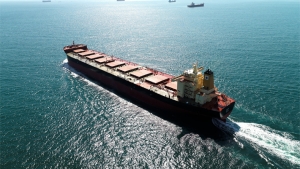
Seanergy Maritime Holdings Corp. is the only pure-play Capesize ship-owner publicly listed in the US.
Seanergy provides marine dry bulk transportation services through a modern fleet of Capesize vessels.
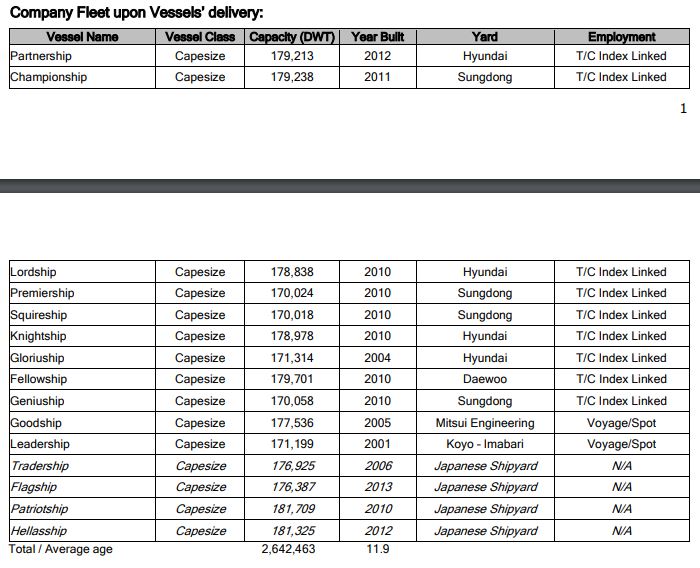
Upon delivery of vessels which the Company has recently agreed to acquire, the Company's operating fleet will consist of 15 Capesize vessels with an average age of 11.9 years and aggregate cargo carrying capacity of approximately 2,642,463 dwt.
The Company is incorporated in the Marshall Islands and has executive offices in Glyfada, Greece. The Company's common shares trade on the Nasdaq Capital Market under the symbol “SHIP,” its Class A warrants under “SHIPW” and its Class B warrants under “SHIPZ.”
GOLDEN DESTINY WEEKLY S&P MARKET REPORT
Attached please find for Week ending May 07th 2021 our : - Weekly S&P Market Report (Week 18 Report No 18.21)
GOLDEN DESTINY RESEARCH & VALUATIONS
ISO 9001 BV CERTIFICATION - SHIPBROKER OF THE YEAR, 2009 LLOYDS LIST AWARDS- BALTIC EXCHANGE Panel members
Container Trade Accelerates as Rates Continue to Climb
Time charter rates
The Container market has seen an unprecedented increase in rates since the end of 2020. Container 1 year TC rates have surged to extraordinarily new highs with 8,500 TEU values rising to a record 54,000 USD/day for April. This is an increase of 350% since June 2020.
Throughout 2020 the market fell significantly from impacts due to the Covid-19 pandemic. There was a significant decrease in demand as the uncertain circumstances surrounding the beginning of a global pandemic hit the consumer market hard.
Towards the end of 2020 trade started to rebound and since the beginning of 2021 a firm recovery has taken place. A combination of widespread logistical disruption amplified the positive impacts on the markets. A shortage of box availability in Asia had a particularly strong effect and an increase in port congestion has all led to a significant firming in rates.
Speeds
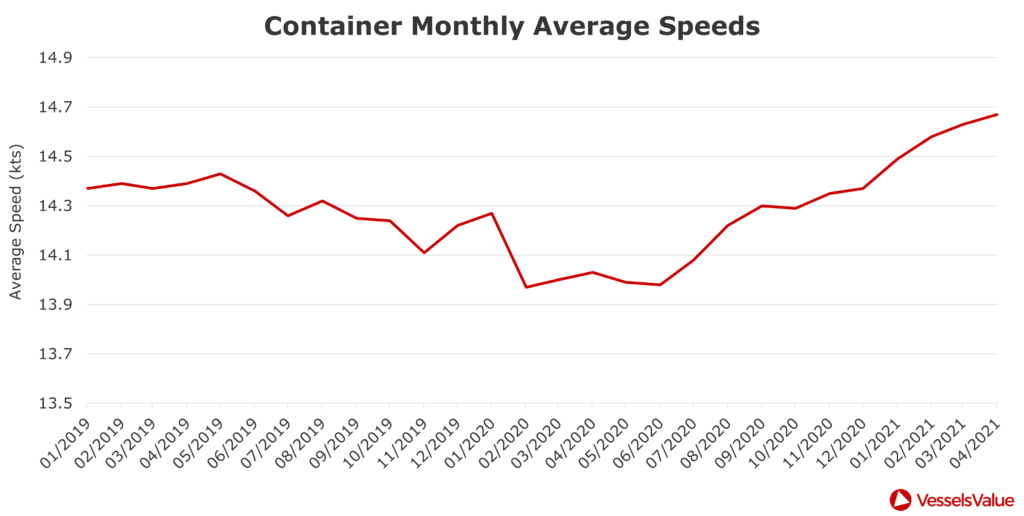
Alongside the increasing rates in the Container sector, we have seen a significant increase in average laden speeds travelled. In this current situation with rapidly increasing rates, vessels are moving faster.
Container speeds hit a five-year low in May 2020 as a result of reduced demand due to Covid, blank sailings and port delays.
Figure 1 shows monthly average speeds since the start of 2019 for all Container vessels. Container speeds and container rates have both been following the same upward trajectory since mid-2020. Container speeds across all types have jumped 5.5% since June 2020, from 13.99 knots to 14.76 knots, with some of the larger types increasing by more.
.
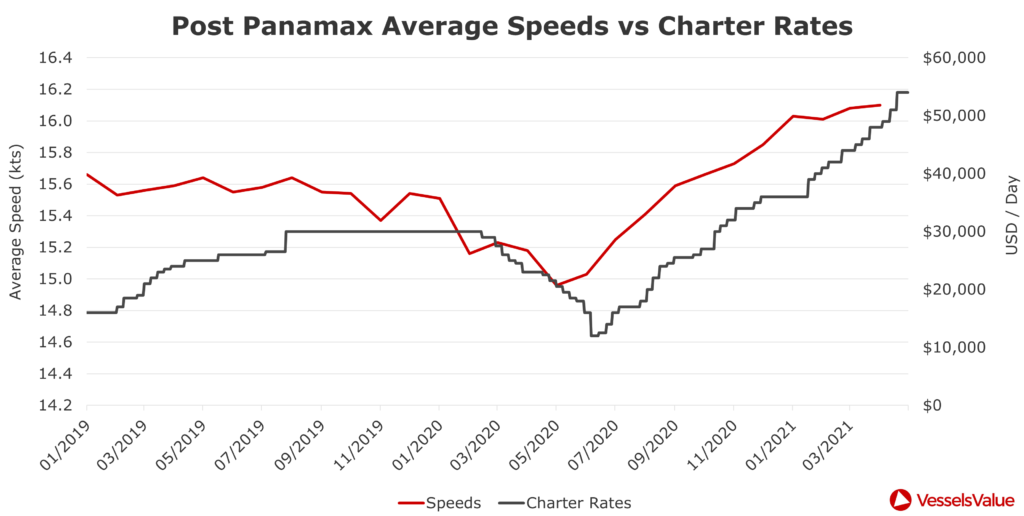
Speeds travelled by Containerships are directly correlated to charter rates as seen in figure 2.
Post Panamax average speeds between June 2020 and April 2021 have increased significantly by 8.5%. Across the same time period, Post Panamax rates have risen by 350%, from $12,000 per day in June 2020, to now currently reaching $54,000 per day in April 2021.
.
Container Cargo Miles
VesselsValue Trade data allows us to track cargo miles over time for any sector. Cargo miles combine actual distances sailed by each vessel and estimates of cargo volumes to indicate the true demand for vessels. Figure 3 shows global Container monthly estimated cargo miles back to January 2020.
.
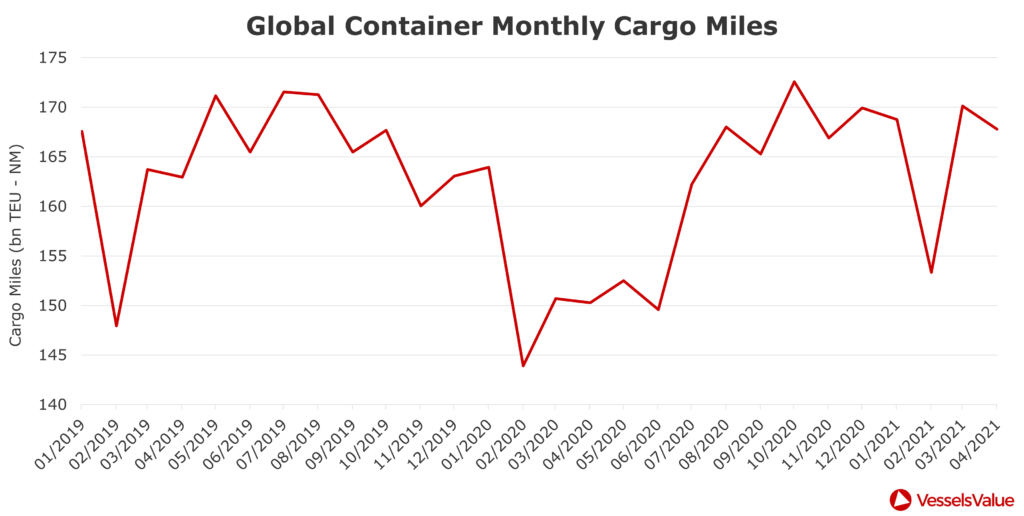
Cargo miles in 2020 declined overall between February and June. A drop at the start of the year is normal due to the Chinese New Year period, however, the decline was prolonged in 2020 due to the onset of Covid-19, disrupting exports from Asia into June. Between June and July 2020, monthly cargo miles increased by 8% from 150 bn TEU-NM to just over 160 bn TEU-NM, suggesting a rapid recovery in demand. This was helped by Western countries also easing lockdowns.
Since then, cargo miles in the last few months of 2020 stayed consistently high, with October 2020 cargo miles exceeding October 2019 cargo miles by 3%. This February’s cargo miles were also 6% up on last February and 4% up on February 2019 (pre-Covid), suggesting continued strong demand in the Container market. More recently, in March 2021, cargo miles continued to grow with rates, surpassing peak levels seen in 2019.
This growth is primarily driven by exports from China. Figure 4 shows some of the top routes for Post Panamax containers so far this year. China ranks highest, with almost three times the number of journeys leaving the country compared to the USA. The success of vaccine programmes is another good sign for the Container market, as we expect the demand for goods and cargo miles to continue rising, along with rates.

Figure 4 – Post Panamax Top Routes 2021. Vessels leaving countries sorted by highest Journey count.
Forecasting
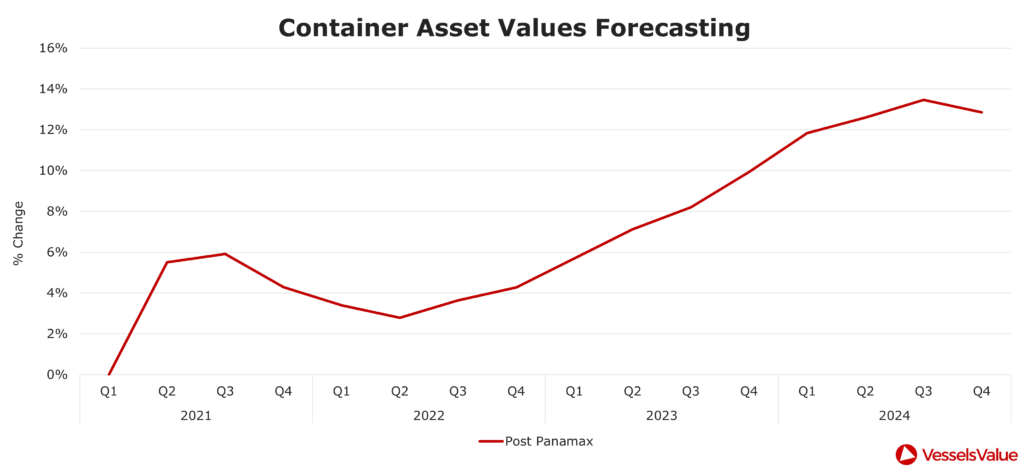
Demand growth in 2021 is expected to improve 5.3% from 2019 pre-Covid levels, with 2020 having declined 0.7%. The demand increase is supported by continued online purchasing but is expected to ease up as the vaccination programmes take hold and mobility starts to normalise. Rebounding manufacturing levels in the Western economies could support demand levels throughout the second half of the year and into 2022.
The large relief packages in the US are also likely to support Eastbound Transatlantic shipments and paired with a likely weakening and more competitive US dollar, the export market could strengthen overall backhauls for the main lanes. As we argue that both consumer and business confidence are likely to strengthen throughout the year, 2022 is estimated to maintain a healthy demand growth of around 4%.
Scrapping has naturally slowed down significantly from Q3 2020 with rising earnings, and we expect continued muted levels through 2021. New orders have picked up to 1.1 mil TEU since Q3 2020 or 4.6% of the fleet, and this month alone there have been 50 new orders for Containerships, however all for sizes >10,000 TEU. Containerships supply is set to increase over the next two years, but with lower fleet growth than in 2020. After a significant increase in freight rates during this prolonged peak period, earnings are expected to soften slightly from current levels during 2022, but remain steady into 2023-24, setting the stage for a multi-year peak market.
Container Trade Data from VesselsValue as at April 2021
Disclaimer: The purpose of this blog is to provide general information and not to provide advice or guidance in relation to particular circumstances. Readers should not make decisions in reliance on any statement or opinion contained in this blog.
ClassNK issues Approval in Principle (AiP) for Cargo Containment System for Large Liquefied Hydrogen Carrier developed by Kawasaki Heavy Industries - with world’s highest carrying capacity-
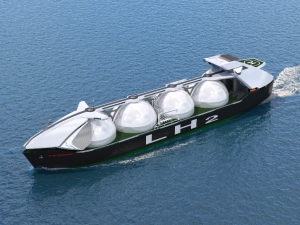
Tokyo – Leading Classification Society ClassNK has issued an Approval in Principle (AiP) to Kawasaki Heavy Industries, Ltd for the design of a cargo containment system (CCS) of the world's largest capacity (40,000 m3 class per tank) developed for use on a large liquefied hydrogen carrier.
Hydrogen is expected to be used as a clean energy source to realize a decarbonized society as its burning does not emit CO2. To contribute to the maritime transportation of hydrogen, which is anticipated to expand its use worldwide, in 2017 ClassNK published the "Guidelines for Liquefied Hydrogen Carriers" describing the safety requirements for liquified hydrogen carriers based on IMO’s Interim Recommendations for Carriage of Liquefied Hydrogen in Bulk. Besides, ClassNK has engaged in the classification survey during construction of a pioneering liquified hydrogen carrier, SUISO FRONTIER*1, of a 1,250m3 carrying capacity built by Kawasaki according to its rules and guidelines.
Having received an application from Kawasaki, ClassNK carried out the design review of the newly developed CCS*2 for a hydrogen liquified carrier based on its Part N of Rules for the Survey and Construction of Steel Ships incorporating the IGC Code, and its guidelines incorporating the IMO’s interim recommendations. In addition, a comprehensive safety assessment of the CCS was conducted based on the HAZID risk assessment results, which has led to the issuance of the AiP.
The main features of the CCS announced by Kawasaki are as follows:
1. Enables transportation of cryogenic liquefied hydrogen in large amounts thanks to tank capacity on par with tanks used on large liquefied natural gas (LNG) carriers
2. Utilizes an independent, self-supporting design with a structure capable of responding flexibly to thermal contraction that occurs when loading cryogenic liquefied hydrogen
3. Features a newly developed, high-performance heat insulation system that mitigates boil-off gas (BOG) which occurs in response to heat ingress
4. Designed to effectively utilize BOG as fuel to power the ship, thus contributing to reduced CO2 emissions from liquefied hydrogen transport operations
*1 Constructed by Kawasaki as a member of the CO2-free Hydrogen Energy Supply-chain Technology Research Association (HySTRA; website), as part of the Demonstration Project for Establishment of Mass Hydrogen Marine Transportation Supply Chain Derived from Unused Brown Coal by the New Energy and Industrial Technology Development Organization (NEDO).
*2 Developed by NEDO Technology Development Project for Building a Hydrogen-based Society / Technology Development Project for Large-Scale Utilization of Hydrogen / Project for Enlargement of Liquefied Hydrogen Cargo Tank Facilities and Development of Unloading Terminal Equipment
Dr. Martin Stopford, Non-Executive President of Clarkson Research on Riding the Waves of A Lifetime

Dr. Martin Stopford, Non-Executive President of Clarkson Research Services Limited shares his personal and career journey in this exclusive interview on Capital Link's "Riding the Waves of A Lifetime" series.

Powered by  © Μaritimes 2019