
-
Home

-
Maritimes NEWS
-
Ports
- maritimes


maritimes
ClassNK entrusted by Anchor Ship Partners Co., Ltd. with the evaluation of CO2 emissions of ships for its impact investment fund
Tokyo – Leading Classification Society ClassNK has been entrusted by Anchor Ship Partners Co., Ltd. for the evaluation of CO2 emissions of ships under its impact investment fund of JPY600 billion (USD5.5 billion), Anchor No.5 Ship Investment Fund.
The fund, which builds in ESG (environment, social, and governance) perspectives into ship investment, incorporates the concept of impact investment*1 to measure the impact of investment on the environment, society, and economy as a concrete action. In particular, the fund aims to contribute to the realization of carbon neutrality in shipping by striving to reduce GHG emissions. Impact evaluation and monitoring of this fund will be carried out by Sumitomo Mitsui Trust Bank, Limited (SMTB).
ClassNK will conduct the evaluation of CO2 emissions, which is one of the indicators for the impact evaluation, for the ships invested by the fund mainly consist of advanced LNG carriers. SMTB will use the results for its impact evaluation and monitoring of the fund.
Speaking on the occasion, Mr. Hiroaki Sakashita, President & CEO of ClassNK said “I am honored to be the part of the groundbreaking initiative led by Anchor Ship Partners in the shipping investment sector. Sharing the goal to ensure further GHG emissions reduction with stakeholders, ClassNK will work on accurate, transparent, and creditable outcomes based on its knowledge and experience in the verification of GHG. For better supporting the industry’s response to climate changes, ClassNK continues expanding its role and expertise as the third-party certification body.
(*1) An investment intended to grasp the social and environmental changes and effects that occur as a result of business activities, and to achieve both a positive social return and a financial return by adding the third axis of "impact" to the conventional two axes of "risk" and "return" for investment decisions.
Republic of the Marshall Islands Updates its Yacht Code

The Republic of the Marshall Islands (RMI) Yacht Code (the “Code”) has been updated and amended making it more pragmatic than ever for modern and innovative owners and shipyards to choose the RMI as a building standard. The Code was first published in 2013 and this is the most significant update to the Code since then. The 2021 Code revisions incorporate all previously issued supplements as well as additional technical and safety updates to address the building requirements of today’s yachts.
Key changes and updates include:
• new requirements for modern design elements such as underwater glazing for observation lounges and glazed bulwarks;
• helicopter landing areas (Annex 2 of the Code) revised throughout with alternative standards for firefighting;
• shipyards now have the possibility to apply for a Helicopter Landing Area Technical Certificate (HLATC) issued by an Aviation Inspection Body (AIB);
• a more practical approach for submersible launching;
• a practical approach to structural fire protection for Category 2 yachts;
• modified rescue boat requirements to provide a practical alternative standard for yachts < 500 gross tons;
• updated radio equipment requirements;
• modified firefighting appliances to provide alternative standards when taking the typical size of the yacht into consideration; and
• safe working practices for working over the side and man-riding cranes were clarified and addressed to meet national requirements.
International Registries, Inc. and its affiliates (IRI), who provide administrative and technical support to the RMI Maritime and Corporate Registries, organized an RMI Yacht Technical Working Group (YTWG) to make recommended amendments to the Code. Marc Verburg, IRI’s Fleet Operations Manager, Yachts, led the YTWG whose members consisted of representatives from the RMI Registry, Classification Societies, yacht managers, naval architects, surveyors, maritime safety consultants, and aviation experts. The Superyacht Builders Association (SYBAss) was also instrumental in the review of the amendments to the Code.
“It was a privilege to work with such a global team of experts. The Registry truly appreciates their assistance with the amendments to the Code which now further reflects the recent changes in the market, from a practical approach to helicopter landing areas and facilities to the use of glass without compromising safety,” said Marc Verburg. “The 2021 version of the Code allows builders and designers to create innovative and safe superyachts to a practical standard,” he continued.
In 2020 SYBAss members were responsible for the construction of almost 60% of 40 meter or more yachts delivered worldwide. “We are an innovative industry which embraces new technologies and materials, so we’re pleased to see this reflected in this forward-looking update of the Code. It takes a practical approach to the requirements of the superyacht industry and is fully aligned with the mission of the International Maritime Organization,” said Lorenzo Pollicardo, Technical and Environmental Director, SYBAss.
“The RMI offers many options for yacht owners in terms of registration and operation through the various chapters of the Code,” said Patrick Bachofner, IRI’s Director, Geneva Office and Worldwide Director, Yachts. “The practical amendments brought forward in this revision to the Code once again set the RMI yacht registry apart from others,” he concluded.
International Registries, Inc. and its affiliates (IRI), with more than 70 years of experience as a maritime and corporate registry service provider, has a network of offices in Baltimore/Annapolis, Busan, Dalian, Dubai, Ft. Lauderdale, Geneva, Hamburg, Hong Kong (Harbour Road and Gloucester Road), Houston, Imabari, Istanbul, Long Beach, London, Manila, Mumbai, New York (midtown and downtown), Piraeus, Rio de Janeiro, Roosendaal, Seoul, Shanghai, Singapore, Taipei, Tokyo, Washington, DC/Reston, and Zurich, that have the ability to register a vessel or yacht, including those under construction, record a mortgage or financing charter, incorporate a company, issue seafarer documentation, and service clientele. In order to meet higher expectations, IRI has expanded its worldwide coverage to include representation in Chile, Limassol, and Oslo. IRI concentrates solely on providing administrative and technical support to the Republic of the Marshall Islands flag and provides a broad spectrum of registry related services for the shipping and financial services industries.
www.register-iri.com
Seanergy Announces Delivery of Capesize M/V Flagship Vessel to enter Financing and Period Charter Agreement with Cargill
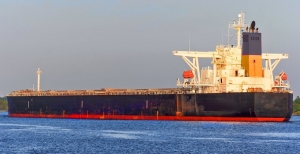
May 11, 2021 - Glyfada, Greece - Seanergy Maritime Holdings Corp. (the “Company” or “Seanergy”) (NASDAQ: SHIP) announced today that it has taken delivery of the 176,387 dwt Capesize bulk carrier, built in 2013 by Mitsui Engineering & Shipbuilding Co., Ltd. in Japan, which was renamed M/V Flagship (the “Vessel”). The Vessel was subsequently financed through a leasing agreement with Cargill International SA (“Cargill” or the “Charterer”). Pursuant to the agreement, the Company has chartered back the Vessel on a bareboat basis and subsequently entered into a five-year time charter (“T/C”) with Cargill at a rate which is linked to the Baltic Capesize Index (BCI).
Financing Agreement
The bareboat financing amount of the Vessel is $20.5 million at an implied interest rate of approximately 2% all-in, fixed for five years. The Company has the option to buy back the Vessel at any time during the whole five-year leasing period, at the end of which it has a purchase obligation of $10 million subject to certain adjustments based on the market price of the Vessel.
Time Charter Agreement
Under the terms of the T/C, the Vessel will earn an index-linked rate based on BCI, while the Company has the option to convert the daily hire from index-linked to fixed for a minimum period of three months to a maximum of 12 months based on the prevailing Capesize Freight Futures Agreements (“FFA”) curve.
The index-linked rate will be 102% of the BCI minus $1,325 per day. The term of the T/C matches the term of the leasing transaction and has a duration of 60 months from the delivery of the Vessel to Cargill on May 10, 2021.
Energy Saving Devices
In addition, Cargill will fund the equipment and the installation of certain energy saving devices (“ESDs”) onboard the M/V Flagship, aimed to increase the Vessel’s energy efficiency by reducing fuel consumption and subsequently the Vessel’s carbon footprint. The Company and the Charterer have successfully implemented a similar project for the M/V Championship in 2019 in a cooperative scheme pioneered by Seanergy and Cargill.
Stamatis Tsantanis, the Company’s Chairman & Chief Executive Officer, stated:
“We are pleased to announce the delivery of the thirteenth Capesize vessel and its immediate commencement of period employment, during the strongest Capesize market of the last decade.
Including this delivery, 84% percent of our fleet is employed under index-linked time charters.
We are also excited to further expand our strategic partnership with Cargill with another transaction, which is very beneficial commercially and environmentally. Cargill is one of the most prominent charterers with a clearly defined and actionable environmental and sustainability agenda.
The debt financings we have secured so far for our recent vessel acquisitions are priced competitively and this will further reduce the Company’s average cash interest expense. Moreover, upon the conclusion of this transaction our strong liquidity position will be further enhanced.
The implementation of our strategic decisions of the last 6 months has a clear positive impact on Seanergy so far, and we continuously explore opportunities to further increase value for our
shareholders.”
About Seanergy Maritime Holdings Corp.
Seanergy Maritime Holdings Corp. is the only pure-play Capesize ship-owner publicly listed in the US.
Seanergy provides marine dry bulk transportation services through a modern fleet of Capesize vessels.
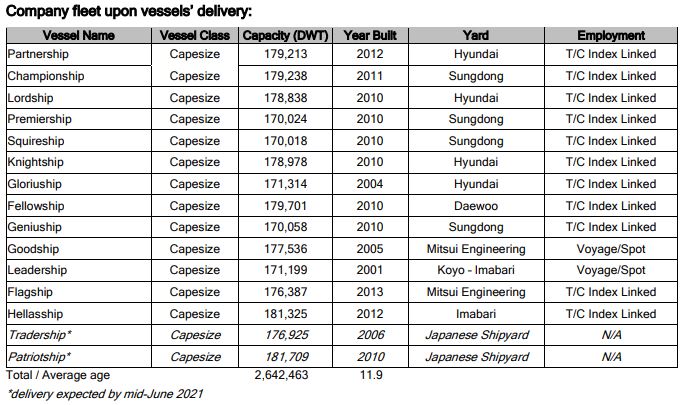
Upon delivery of the remaining newly acquired vessels, the Company's operating fleet will consist of 15 Capesize vessels with an average age of 11.9 years and aggregate cargo carrying capacity of approximately 2,642,463 dwt.
The Company is incorporated in the Marshall Islands and has executive offices in Glyfada, Greece. The Company's common shares trade on the Nasdaq Capital Market under the symbol “SHIP”, its Class A warrants under “SHIPW” and its Class B warrants under “SHIPZ”.
www.seanergymaritime.com.
Oil product tanker demolition on track to break 11-year record
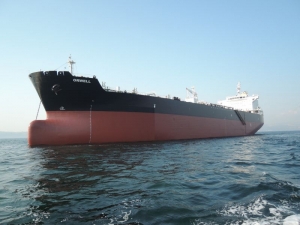
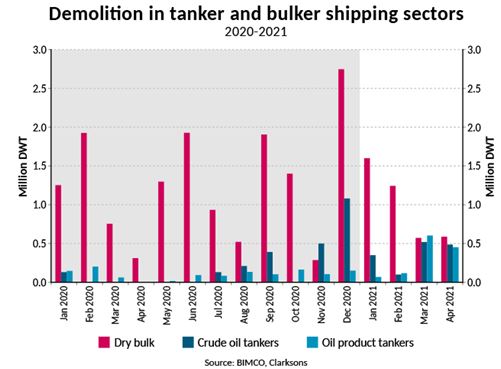
In the first four months of 2021, the amount of oil product tanker capacity that has been sent for demolition has already reached the total amount of demolished capacity in each of 2019 and 2020 due to unfavourable freight rates. If that pace continues for the rest of the year, an 11-year record is set to be broken.
So far this year, 10 crude oil and 38 oil product tankers have left the active trading fleet and the development in crude oil tanker demolition and that of oil product tankers continues to head in different directions. Crude oil cargo carrying capacity of just 1.45 million (m) DWT has left the market since the start of the year compared to 1.25m DWT of oil product tankers.
After the initial two months saw a total of just 11 oil tankers being sold for demolition, March and April both had oil tanker capacity of 1m DWT being retired.
The rise in demolition sales of oil product tankers is noteworthy although it comes from a very low base, whereas the amount of demolished crude oil tanker capacity fails to impress.
Same-same but different
Ships are demolished when earnings are low and higher earnings are not in sight in the near-term future. But why do we only begin to see a pickup in demolished volumes now when profits peaked one year ago and have been in doldrums since September 2020?
“Oil tanker owners made a lot of money during the boom-periods of 2019 and 2020. No one is short on cash and find themselves actively seeking asset liquidations,” says Peter Sand, BIMCO’s Chief Shipping Analyst.
“Just as every crisis holds recognisable elements from previous one – they are never the same. Every one of them contains something unique. This time around it seems to be demolition of oil product tankers that stand out,” Sand says.
A full year volume demolished in just four months
During the years of 2019 and 2020, 1.2m DWT of oil product tanker capacity was all that was demolished per annum. In 2021 however, the same amount of tonnage has been sold to cash buyers within just four months for subsequent breaking.
“Demolition of oil product tankers is heading for an 11-year high if the current pace continues for the rest of the year,” says Sand.
It would then amount to 2.1% of the active oil product tanker fleet. For crude oil tanker sector to reach that level, 10m DWT will have to be broken up.
Much lower demolition pace in the crude oil tanker sector
Despite the pick-up in demolition for crude oil tankers in March and April too, the sheer level – when compared to the size of the fleet - is much lower than that of oil product tankers. Currently 2021 volumes sit at 60% of what was demolished in 2020 (2.4m DWT).
With low earnings in the spot market most likely to stick around for longer than anyone hopes for, demolished crude oil tanker capacity during 2021 will no doubt exceed that of 2020 and 2019 (2.2m DWT). But it is unlikely to reach the 18.5m DWT that faced the blowtorch in 2018 as earnings were multi-decade low.
“If the spot market continues to bleed for another year with no real improvement in earnings, demolition will accelerate in 2022. Having said that, any dead-cat bounce which only temporarily eases the pain will limit demolition activity as die-hard optimism starts to re-emerge and inevitable slows demolition interest,” Sand says.
Finally, the devil is in the detail, some may say crude oil tanker demolition volumes is somewhat higher than what is included in the above chart. But for the freight market, what matters is only the actively trading VLCCs, and not the FSOs (Floating Storage Offloading units) or other structures permanent deployed in different ways.
Top dollar paid for tanker tonnage heading for breaking in Bangladesh
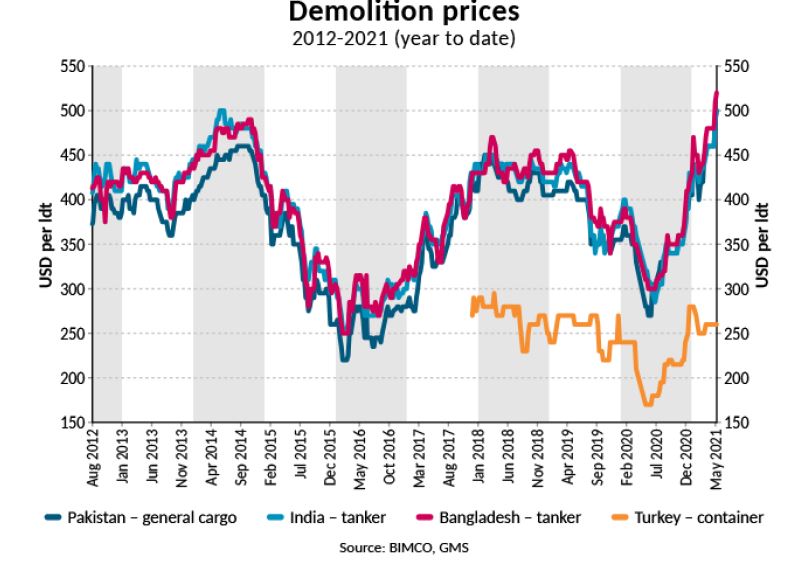
The average tanker demolition steel price paid in Bangladesh reached an all-time high on 7 May 2021 of USD 520 per LDT (Light Displacement Tonnage). With reports of much higher as well as significantly lower scrap steel prices agreed too for ‘demo-ready’ tankers.
Why is that? Ships are different, and a tanker - small as it may be – which has stainless steel tanks onboard, like ‘Laris’ 13,843 DWT (ex-name TMS Polaris), may be priced at USD 845 per LDT when sold to a bullish buyer in India (source: GMS).
Demolition prices are often very ship specific, depending on the steel content and quality as well as the condition of it and the – ‘as-is’ location of the sale, ‘as is’ is the jargon for a crewless ship which is sold for demolition, waiting for a crew to be ‘re-staffed’ for its final journey. Due to the rising cases of COVID--19 in India, as well as other main ship breaking nations such as Pakistan and Bangladesh, crews for ‘as is’ sales from these countries have been restricted from many ports world-wide. This makes crew change even more difficult that it already is.
Breaking nations lack scrap metal
The lack of scrap metal has pushed the demolition prices higher across the board. Nevertheless, no owner sells a ship because of high demolition prices, he sells when the freight markets have been horrific for long enough, and only for demolition if the second-hand value is lower.
Still, receiving USD 21 million for a 22-year-old VLCC that was purchased for USD 70 million must bolster the books somewhat, as the asset is fully depreciated.
Bulker owners expected a “normal” market but have adjusted to “extraordinary”
Finally, demolition of dry bulk capacity has been the exact opposite of tankers. Going into the year, bulker owners did not expect the extraordinary market that the first four months of the year has turned out to be.
Realising that, the demolition interest naturally cooled rapidly. The average age of bulkers leaving in 2020 and 2021 is 28-29 years, illustrating that owner are pleased with current market condition and no one is selling young ships for demolition.
Seeking more BIMCO insights on the oil tankers business?
This week holds plenty of opportunities. On Tuesday 11 May, BIMCO’s own webinar series “Shipping Markets Checkpoint” is featuring Dr. Adam Kent from Maritime Strategies International Ltd. For a talk on the energy transition that lies ahead of us, and that that means to the shipping industry, including tanker business.
On Wednesday 12 May, Peter Sand, BIMCO’s Chief Shipping Analyst, will set the scene at TradeWinds Tanker Shipping Forum. As he questions whether 2021 is "A quiet moment between the last years' storm and the next years typhoons? The opening is followed by two CEO-packed panel discussions.
On Thursday 13 May, Peter Sand digs into another range of details of the tanker market, when he joins the American Bureau of Shipping’s experts for an "ABS Tanker talk: What’s on the horizon for tankers”.
Castor Maritime Inc. Announces $18.0 Million Debt Financing

Limassol, Cyprus, May 10, 2021 – Castor Maritime Inc. (NASDAQ: CTRM), (“Castor”, or the “Company”), a diversified global shipping company, announces the closing and drawdown, through two of its ship-owning subsidiaries, of a $18.0 million senior term loan facility with a European bank (the “$18.0 Million Financing”), secured by two of its tanker vessels. The Company intends to use the net proceeds from the $18.0 Million Financing for general corporate purposes, including supporting the Company’s growth plans.
The $18.0 Million Financing has a tenor of four years and bears interest at LIBOR plus 3.20% per annum.
About Castor Maritime Inc.
Castor Maritime Inc. is an international provider of shipping transportation services through its ownership of oceangoing cargo vessels.
On a fully delivered basis, Castor will own a fleet of 24 vessels, with an aggregate capacity of 2.1 million dwt, consisting of 1 Capesize, 7 Kamsarmax and 8 Panamax dry bulk vessels, as well as 1 Aframax, 5 Aframax/LR2 and 2 MR1 tankers. Where we refer to information on a “fully delivered basis”, we are referring to such information after giving effect to the successful consummation of our recent vessel acquisitions.
ClassNK certifies Alpha Ori’s AssetAI as Innovation Endorsement for Products & Solutions
Tokyo - Leading Classification Society ClassNK has certified AssetAI, developed by Alpha Ori, as Innovation Endorsement*1 for Products & Solutions, under its certification service for innovative technologies.
In July 2020, to promote the spread and development of innovative technologies, the Society launched Innovation Endorsement as a swift certification service in cooperation with technological front runners to establish appropriate evaluation criteria. Among the certification categories, "Products & Solutions" covers digital equipment and software technology installed for use on vessels.
Alpha Ori’s AssetAI is the predictive maintenance solution running on a real time basis, learning from sensor data of associated assets and utilizing the right machine learning algorithm to provide actionable insights. In addition to monitor equipment degradation, catch anomalies and prevent failures, the solution also provides real time health scores and remaining useful life of an equipment for planning maintenance and overhaul.
ClassNK’s experts carried out the review by appreciating its functions powered by AI and machine learning, and working on the iterative process of development, examination, and refining for the appropriate methods to verify them as comprehensive and detailed as possible. On the satisfactory completion of the review, ClassNK issued its Innovation Endorsement certificate for AssetAI.
Speaking on the occasion, Capt. Rajesh Unni, Co-CEO of AOT said, “AOT’s predictive maintenance solution has opened up wide possibilities for the shipping industry to embark on a condition-based maintenance strategy to increase reliability and reduce equipment downtime. Receiving ClassNK innovation certification is a testament to the high standard we have set for ourselves.”
Mr. Nobutaka Mukae, President, Kumiai Senpaku, Tokyo further said, "Kumiai Senpaku, Tokyo was the first company globally to go for full fleet digitalization and our LPG 'Hourai Maru', was the first by ClassNK to be certified for SMARTShip systems in March 2019. We are excited to partner with Alpha Ori for their technology leadership in the maritime domain and strongly believe this is the way forward by going for Digital Transformation. We are sure that with ClassNK innovation endorsement for their AssetAI, predictive maintenance application, a tangible impact will be made on our business operations by improving vessel reliability, reducing equipment downtime and avoiding any safety and regulatory noncompliance.”
Mr. Hayato Suga, Corporate Officer, Director of Plan Approval and Technical Solution Division added, “ClassNK has successfully confirmed a set of predictive maintenance functions of Alpha Ori’s AssetAI under our certification scheme tailored to innovative technologies. I hope our third-party verification would encourage the industry to adopt and utilize the innovations driven by digital technologies.”
(*1) Related press release: ClassNK launches “Innovation Endorsement” service for certifying innovative technology
Norwegian Shipping - Industry Leadership in a Fast-Changing World
|











|
||||||||||||

BIMCO's SNOW: Tonne mile demand triples as March witnesses US coarse grain madness
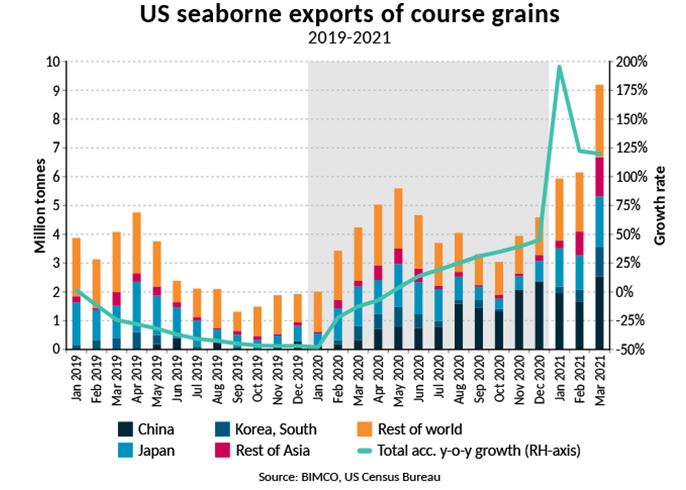
Record high US seaborne exports of coarse grains in March of 9.2 million tonnes took total Q1 exports to 21.3 million tonnes. This is the highest ever first quarter on record and a 120% increase from Q1 2020.
Of the total 21.3m tonnes exported so far this year, 68%, or 14.6m tonnes, have gone to Asia, an increase of 208.7% from Q1 2020. For years, the trade war has lowered US exports to China, but exports are now rebounding with a vengeance and China becoming the largest buyer of US coarse grains. Coarse grains include corn, grain sorghum, oats, barley and rye, with corn accounting for 89.4% of the total. Accumulated exports so far this year to China stand at 6.2m tonnes, an almost ten-fold increase from the just 650,950 tonnes exported in Q1 2020.
The two other large buyers of US coarse grains are also in Asia, namely Japan and South Korea. These have seen exports in the first quarter of this year rise to 4.3m tonnes (from 2.9m tonnes in Q1 2020) and 1.7m (from 0.6m tonnes) respectively.
Strong Asian demands drives total tonne miles to 198.3% growth
Though exports to the rest of the world, excluding Asia, are also up at the start of this year compared to 2020 (by 116.3%), exports to Asia have grown by an impressive 208.7% and the region is gaining market share. Because the average sailing distance from the US to Asia is much longer than to the rest of the world, tonne mile growth has been even more impressive than the growth in absolute volumes.
In the first quarter of the year tonne miles generated by US coarse grains exports rose by 198.3% compared to the same period last year, reaching 154.0 billion tonne miles. This is already more than half of total tonne miles generated by US coarse grains exports in all of 2020 (305.0 billion tonne miles).
The vast majority of exports are transported in dry bulk ships, although a small share travels as containerised goods.
“The dry bulk market continues its strong performance this year, supported in part by strong demand from grains trade, with the US providing plenty of support. After a record high start to the soya bean export season, these have now fallen to their usual out of season levels of around
2m tonnes a month, but higher exports of coarse grains ensure steady demand from the US for grain carrying ships,” says Peter Sand, BIMCO’s Chief Shipping Analyst.
“In March alone, US coarse grain exports required 123 Panamax ships, almost two thirds of which sailed to the Far East, one of the world’s longest trades. At the peak of the US soya bean export seasons in October, 147 ships were needed,” says Sand.
Capital Link’s 3rd Annual Singapore Maritime Forum

Capital Link's 3rd Annual Singapore Maritime Forum took place on Tuesday, April 20, 2021 as a digital event, with great success and participation. The Forum was held in partnership with Columbia Shipmanagement and Singhai Marine Services. It was held in conjunction with the Singapore Maritime Week.
The Forum featured industry leaders that covered financing opportunities and critical topics
of relevance to the maritime industry such as environmental regulations, shipping in post COVID-ERA,
technology, crewing and mental health.
AGENDA TOPICS
MARITIME DIGITALIZATION DEMYSTIFIED: PRACTITIONERS SHARE INSIGHTS
The panel focused on digitalization and technology; what works and doesn’t, lessons learned, measuring ROI on digital endeavors, and practical use of the technologies to create value. Shipowners shared their first-hand experience working with tech companies and technologies from the initial to the final stages of implementations taken in their organization using data driven insights. The discussion also featured two tech companies who shared their insight and experience working with shipowners.
Welcome Remarks: Nicolas Bornozis, President - Capital Link
Nicolas Bornozis, thanked the Forum's sponsors, panelists and attendees for participating in the forum, held in conjunction with the Singapore Maritime Week, and for making this digital event a success. In his introductory remarks, he stated that the agenda will focus on three main issues the shipping industry is facing today: technology, finance and the human element. The event featured three panels, each one dedicated to addressing these critical topics. Mr. Bornozis introduced all moderators to their panel, Magnus Lande of DNV, Shanna Ghose of Hill Dickinson and Mark O'Neil of Columbia Shipmanagement and Intermanager, thanking each one for putting together these strong panels and for their support in realizing another successful event. He also reiterated Capital Link’s commitment to support the Singapore Maritime Week.
Moderator: Magnus Lande, Veracity Head of APAC and Commercial Director - DNV
Panelists:
• Rens Groot, Innovation and Performance Manager - Berge Bulk
• Jon Løken, Chief Executive Officer - ChordX
• Leslie Yee, General Manager IT - Pacific International Lines (Pte) Ltd
• Dr. Thilo Dückert, Vice President Fleet Performance Management - StormGeo
Mr. Magnus Lande, Veracity Head of APAC and Commercial Director, DNV stated that: “Shipowners today face increasing pressure from external stakeholders and their competitions. They must optimize fleet operations to meet increasingly stringent regulations and at the same time, minimize cost. Digitalization is key to solving this dilemma. However, the progress within maritime is still slow. Small to medium sized companies especially, are struggling to understand their data and how to derive meaningful insights from it.
By the mid of next year, we will enter the last 10,000 days until 2050, where majority of the maritime companies, oil majors, cargo owners and even nations will pledge to be completely carbon neutral. Digitalization will be one of the key enablers for decarbonization. Improving the pace towards and transparency on decarbonization is paramount in staying competitive moving forward. But to reap the benefits from digitalization and technology, companies need to go through a learning phase, to understand their own operations and how data creates value to steer them forward, in line with their business strategies. Learning from early adopters and cross-sector collaboration will ensure the future success of the maritime industry.”
“Relevant DNV resources to address and support the topics in the panel debate:
1. Decarbonization, regulatory overview, including services and solution to your problems – https://www.dnv.com/maritime/insights/topics/decarbonization-in-shipping/index.html
2. Digitalization in maritime industry, collaboration, trust, class and services to help you excel – https://www.dnv.com/maritime/insights/topics/digitalization-in-the-maritime-industry/index.html
3. Veracity, DNV’s independent data platform and eco-system, to serve your digitalization needs be it technology, data and or digital services like data quality –https://www.dnv.com/data-platform “
Mr. Jon Løken, Chief Executive Officer – ChordX, stated: “We had a good go at taking the mystery out of digitalisation and rather discussed how value can be created in this process. For us at Chord X it is essential to prove value and the ROI for the market to be interested. In order to create good value for operators, owners and charterers we see it as very important to supply quality data in a standard format to ensure it can be used across various systems to unlock real value. There is still a lot to be done on this field and creating good collaborations among tech providers and data consumers is very important to make it successful. Even though we see acceleration on digital transformation I feel these collaborations is vital to accelerate the process.
Another that has been in focus this week at the many great maritime events is the need to put action to our words and walk the walk. Martin Stopford and others have given estimates this week of the needed costs for decarbonisation that could scare anyone to shy away from the maritime industry. At the same time we see unwillingness to invest in the assets to help them prolong their life cycle. No one knows the full picture yet of what shipping will be in 2030 or beyond that but we know that a ship being built today should be able to sail into the 2040s. I said in our discussion that I challenge the owners to take on more of the disrupting technologies, like that of Chord X from building of the ships making us part of the makers lists. By doing so they can actively demystify their future, as increasing knowledge of the actual energy cycle on board for instance can help pave the way for new innovations and solutions for the sharpening requirements.
Lastly I think it is important to see how the value chain in the industry is changing with owners, cargo owners and operators getting much closer. With that comes the need to share data openly to help create the best viable solutions for the industry.”
Mr. Leslie Yee, General Manager IT - Pacific International Lines (Pte) Ltd, stated: “Based on the questions posed by the moderator:
1. What is your take on what has changed in terms of how data driven tools and insights have changed value creation if at all for you ? is the principles still the same ?
Data driven tools and insights have provided end users much more simplicity in assessing and developing self-service reports. It provides a centralized single point of truth, real-time visibility and improved performance. With big data advancements and storage on cloud, service providers are capable of processing of large amounts of data, providing machine learning capabilities for classification and prediction. These in turn provide detailed and accurate insights for the Biz to make intelligent and informed data driven decisions, to validate/test what-ifs scenarios, to plan ahead and achieve the competitive advantage. The need to measure against KPIs and ROIs becomes even easier with a data driven approach, to communicate to key stakeholders and to motivate team on setting and achieving the set targets.
2. How do you go about measure success and for example the ROI of digital endeavours, and should you ?
Definitely, with any digital endeavours, we need to dedicate sufficient resources (cost, internal resource and stakeholder's time) to identify the pain points/as-is, solution the to-be and set the key objectives and results. The project team needs to look beyond current capabilities, identify key partners and solutions providers to provide the deep experience and best-in-class processes/systems. A good place to start would be to define the Project charter, communicate and ensure key stakeholders buy-in. Agree on a quantitative measurement to compute how the to-be process/solution can reduce time, costs and improve performance over which period of time. Introducing a constant monitoring and revalidation of the project scope and implementation, ensuring that it still delivers the key objective, else reformulate or agree to stop/discontinue the project. Setting up the data driven KPIs and ROI metrics early in the project is a good way to guide and sustain key stakeholders support of the digital endeavours objectives. Start small (even POCs and trials), but move forward with the team, with the clear goals in mind and always be open minded to new opportunities for improvements.”
GLOBAL ALTERNATIVE FINANCE OPTIONS
Moderator: Shanna Ghose, Partner - Hill Dickinson
Panelists:
• Axel Siepmann, Managing Partner - Braemar Naves
• Tobias Backer, Co-Founder - Fleetscape Capital
• Julian Proctor, CEO - Purus Marine
• George Kypraios, CEO - Yefira Consulting Pte Ltd
• George Cambanis, Managing Director - YieldStreet
Mr. George Cambanis, Managing Director – YieldStreet, stated: “Sea transportation makes all the difference from an emissions perspective. Besides being cheaper than air, rail, and truck, the ton mile greenhouse gas emissions when transporting, for example, food, are 47 times higher by air and 10 times higher by truck, than transporting the same mass by sea, according to an MIT publication. That said though, something really needs to be done, because shipping is said to burn three million barrels of bunker fuel every day.
The ambition of the International Maritime Organization is to reduce shipping’s total annual GHG emissions by at least 50% by 2050. Financial institutions, through the Poseidon Principles, have committed to improving the role of maritime finance in addressing global environmental issues. The shipping industry has embraced the challenge and the world has never been better positioned to help solve for this. When the COVID pandemic engulfed the world, pharmaceutical companies were able to deploy a new technology, a synthetic strand of genetic code called messenger RNA (mRNA), which primes the immune system, to bring mankind vaccines in record time. To reduce emissions at sea the world needs to develop entire new generations of fuels for the marine industry, improved propulsion systems and ship designs are required, as are modified port infrastructures to refuel the new vessels. The new fuels could include ammonia, hydrogen and even nuclear as multicell reactor technology develops. All these bring their own operational challenges and require careful testing to avoid the problems owners faced last year when very low sulfur fuel oil was introduced, later dubbed as the ‘Frankenstein Fuel’. COVID affected every human, which focused institutions, governments and industries, everybody lent in to solve the problem. Most people are unaware that from the moment they wake, the clothes they wear, what they eat, drink, and use throughout the day probably came on a ship. The most important job for the shipping industry is the messaging to get everybody to again lean in, because it will take a huge increase in global research and development spending to reduce shipping emissions, and shipping can’t do it alone.”
SHIPPING IN THE POST COVID-ERA: REFOCUSING ON THE HUMAN ELEMENT
The panel discussed Mental Health issues, Catering, Benefits Package, Training and more for both Crews and On-Shore Personnel.
Moderator: Mark O'Neil, President - Columbia Shipmanagement, President - InterManager
Panelists:
• Captain Faouzi Fradi, Group Crewing and Training Director - Columbia Shipmanagement Ltd
• Costas Joannides, Chief Executive Officer - Marsh Cyprus
• Christian Ioannou, Founder and Managing Director – MCTC Marine Ltd
• Christian Ayerst, Chief Executive Officer - Mental Health Support Solutions (MHSS)
• Nigel Cleave, Senior Advisor - OneLearn Global Ltd.
Capt. Faouzi Fradi, Group Director Crewing and Training at Columbia Shipmanagement stated that the maritime industry has opened its eyes to many issues during the pandemic most of them were human and technology centric. The crew change crisis has taught us the level of sacrifice and commitment of our seafarers and how we should respond to their needs in a holistic approach. A happy crew makes a happy ship. Therefore at Columbia we have made our utmost efforts to ensure in a record time that our seafarers have access to a state-of-the-art eLearning platform offering highly interactive and bespoke content available online and offline on any device which delivers customized, specific and practical training. Besides, they have access to full package provision services which include food management, training, menus and remote support plus a strictly controlled selection of provision supplies across the World. As we believe that crew wellbeing is a key to safer ships operations, our ships have access to a free 24/7 hotline for Mental Health Support which among others offer counselling, crisis management, educational approach and resilience training. In addition we have provided our crew with fitness kits. Last but not least, the CrewCare service includes individual life insurance products at a very attractive rate offered by a reputable insurance company. All seafarers regardless of their nationality or country of residence have full access to all our solutions which aim at CARING FOR OUR PEOPLE. Very soon we will also enable offline entertainment package onboard ships, including latest movies and documentaries as well as Online shopping solutions, which we believe will alleviate the effects of shore leave restrictions that were imposed because of the pandemic.
Mr. Christian Ioannou, Founder and Managing Director – MCTC Marine Ltd, stated: “Leading international catering management and training business provider, MCTC has long promoted the importance of leading a nutritionally rich diet which impacts on overall physical and mental health. Christian Ioannou, Managing Director at MCTC, says: “Food is crucial in supporting mental health due to its role in providing the body with essential nutrients which can only be obtained directly from diet, i.e Vitamin C that lowers cortisol levels which is a stress hormone, while complex carbohydrates increase serotonin production which is often call the happiness chemical. All of these are found in nutrients in food and demonstrate the important relationship between nutrient-rich diets and mental health."
MCTC's main focus is to ensure that the best possible quality of provisions is supplied on board the vessels, eliminate or at least significantly reduce the consumption of ready convenient foods, and at the same time ensure that the Catering staff is knowledgeable on how to transform these simple ingredients into well balanced and tasty meals. Furthermore, MCTC focuses in keeping the catering crews motivated as to ensure highest productivity and standards.
MCTC achieves all of the above, through its very unique combination of services; Catering Management and Catering Competency Development Program.”
Mr. Christian Ayerst, CEO at Mental Health Support Solutions (MHSS), said that “the shipping industry must now see professional mental health support as an investment, rather than a cost, and organizations which are proactive towards unlocking the psychological potential of their staff will benefit at all levels”.
He highlighted the increasing number of cases his team of professional psychologists are dealing with through MHSS’ 24/7 hotline – unsurprising given that over 50% of seafarers now report a decline in their mood and mental health whilst at sea. A global team of maritime psychologists assess and stabilize interactors, providing direct and confidential access to psycho-medical professionals. He further noted that shore staff are also suffering – and MHSS have developed innovative solutions to combat issues such as burnout and isolation.
He also pointed-out that MHSS psychologists regularly attend incidents to administer psychological first-aid to those affected by traumatic events. This is critical today, where mental health is a part of a seaworthiness – and the legal consequences of inadequate mental health support for their crew can be far-reaching.
As mental health and physical health are so closely connected, it is critical that any approach taken is holistic and practiced at all organizational levels. MHSS works closely with partners such as MCTC on nutrition, and has developed bespoke products designed to make mental health understood and accessible to all cultures and nationalities – from psycho-educational books (delivering a tangible, user-friendly guide to mental health), to bite-sized training (delivering complex messages in a short video).
Christian emphasized that in 2021 the spotlight will be on every company to show that they are taking a proactive approach to mental health: within their organization, and the expectations they have of business partners. Only a proactive, professionally-led and tailored approach will suffice. The good news is that organizations can take the first steps very quickly with MHSS; and the benefits of a long-term approach will prove an astute investment.
Mr. Nigel Cleave, Senior Advisor - OneLearn Global Ltd., stated: “The 20th of April 2021 was a symbolic day for OneLearn Global Limited, as participation in Capital Link’s 3rd Annual Singapore Maritime Forum concurrently saw the official launch of this new training solutions provider, created to serve the maritime, superyacht, energy, renewable energy, hospitality and industrial sectors.
OneLearn Global is part of OneNet, the satcom, connectivity, hardware, network design, cyber security and IT Engineering subsidiary of Fameline Holding Group, a diverse business entity in itself, comprising of some 50 companies today.
The foundations for OneLearn Global actually began when the creative IT engineering team from its sister company, OneNovation, developed a unique and innovative hi-tech solution to handshake and deploy courses to a customer’s Fleet.
OneLearn Global sees itself as truly a paradigm shift, focusing on modern-day learning techniques, aimed particularly with Millennials and the Gen Z generation in mind. They are native digital generations, champions at googling, who behave and learn differently due to their lifelong relationship with technology.
The enormously effective and extremely powerful cloud-based next-gen Learning Management System has been designed to deliver both an enhanced and engaging, yet very personalised, enjoyable and intuitive learning experience through the use of digitalisation. Simplicity of use being the key objective, the LMS is really user-friendly.
Having started from a clean sheet of paper, OneLearn Global has had the benefit of building its content much later in time, with no legacy or baggage to worry about. This has allowed the team considerable freedom to produce what can only be described as some amazing content.
Fresh, bright, agile and really motivating, content can be viewed both offline and online, across devices to optimize the learner experience, driving engagement through certifications and award badges for positive encouragement, everything being recorded in the cloud.
Learners can collect points to compete with their peers, receive AI based recommendations, participate in social learning activities, interact with the courses and post their feedback in the discussion forums for each course. There is also an optional feature of attending virtual classrooms.
The LMS, has been designed to enhance skills development where a training matrix and competency management system are included and, unlike a physical classroom environment, OneLearn Global is available 24/7.”
First new LPG FFA trades completed
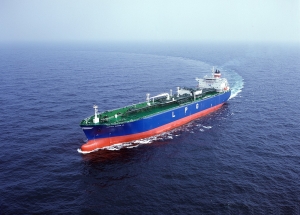
The first freight derivatives contract using the Baltic Exchange’s recently launched liquified petroleum gas (LPG) assessment (BLPG3) was traded by Gunvor and Vilma and cleared by CME Group last week (28 April). Clarksons Platou Futures brokered the trade.
Providing a USD per metric ton rate for cargoes of 44,000 metric tons moving from the US Gulf to Japan, BLGP3 is a daily assessment published by the Baltic Exchange and its panel of independent shipbrokers.
Christian Greenup, LNG & LPG derivatives broker at Clarksons Platou Futures said:
“The BLPG3 route is a welcomed addition to the LPG derivatives market, enabling market participants to take a position in the growing Houston – Asia trade, where the liquidity around the dynamic “take or pay” FOB contracts out of the US Gulf have become a key driver in the global LPG trade of today.”
Baltic Exchange Chief Executive Mark Jackson said:
“We’re backing the development of this new market and hope to see it mirror the success of FFAs in the dry bulk and tanker sectors. We have invested significant resources in achieving regulated status and will continue to ensure that our information is audited, verifiable and completely independent.”
Peter Keavey, Global Head of Energy at CME Group said:
“We are pleased to see customer support for the new LPG freight futures, which reflect the cost of shipping from the US Gulf Coast to Asia. The surge in exports from the U.S. to Asia has boosted demand for new price risk management tools around its transportation and these new Baltic contracts will help customers better manage their risk in today’s rapidly evolving global gas market.”
The Baltic Exchange provides three daily assessments for LPG market covering Middle East Gulf to Japan, US Gulf to Europe and US Gulf to Japan.
About the Baltic Exchange
The Baltic Exchange represents a global community of shipping interests. These include shipowners, charterers and shipbrokers who are collectively responsible for handling a large proportion of the world’s dry cargo and tanker fixtures, freight derivative trades as well as the sale and purchase of merchant vessels.
The Baltic Exchange is regulated by the UK’s Financial Conduct Authority (FCA). It is the trusted provider of data for the settlement of physical and derivative freight contracts, underpinning risk management tools for the shipping and transportation markets.
Founded in 1744, the Baltic Exchange is headquartered in London with regional offices in Singapore, Shanghai, Athens, Stamford and Houston.
In 2016 the Baltic Exchange was acquired by Singapore Exchange ("SGX").
Baltic Exchange services:
• Daily benchmarks for dry, wet, container and gas freight markets
• OPEX, S&P, ship recycling & forward assessments
• Air cargo assessments
• Escrow and dispute resolution support
• Executive training via the Baltic Academy
• Networking for shipping professionals
www.balticexchange.com

Powered by  © Μaritimes 2019