

-
Home

-
Maritimes NEWS
-
Ports
- maritimes


maritimes
News Analysis: Are Israel, Hamas on verge of large-scale war in Gaza Strip?
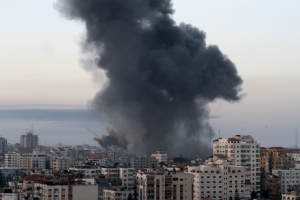
After tensions between Israel and the Palestinians have been escalated over the past few days, Palestinian analysts warn of a large-scale war in the Gasa Strip.
GAZA, May 12 (Xinhua) -- After more than a year of relative peace and stability in the besieged Gaza Strip, Israel and its bitter enemy Palestinian Islamic Resistance Movement (Hamas) are again on the brink of a large-scale war, Palestinian analysts warned.
The Israeli military continued its bombardment in the Gaza Strip on Wednesday, targeting buildings and apartments that led to heavy casualties, mainly among civilians, in the wake of hundreds of rockets fired from the Palestinian coastal enclave.
The current wave of violence between Israel and Gaza militant groups is the first of its kind since the last large-scale air and ground offensive that Israel waged on the Palestinian enclave for 50 days in 2014.
According to the Israeli military, two Hamas commanders and another two from the Palestinian Islamic Jihad (PIJ) have been killed in targeted strikes since Monday evening. Meanwhile, at least six Israelis were killed and more than 100 were wounded by the barrages of rockets fired from the Gaza Strip.
The Hamas-run health ministry said three days of Israeli air strikes on the Gaza Strip left 48 Palestinians dead and 304 others wounded.

MUTUAL THREATS
Israel and Hamas leaders traded threats, regardless of the mediative efforts made by Egypt, Qatar and the United Nations.
Hamas politburo chief Ismail Haniyeh said in a televised speech that his group had received calls from different mediating parties, asking Hamas to stop firing rockets at Israel.
"Our response was that the occupation is the one which should stop assaults and attacks on Jerusalem, Al-Aqsa Mosque and the Gaza Strip," Haniyeh said.
"The one responsible for the current escalation is (Israeli Prime Minister Benjamin) Netanyahu," Haniyeh added.
Meanwhile, Netanyahu said Israel would intensify its strikes on the Gaza Strip, adding that the Israeli army has targeted hundreds of targets and facilities of the Hamas and the PIJ.
Hani al-Masri, founder and director-general of the Palestinian Center for Policy Research and Strategic Studies, told Xinhua that the latest escalation "threatens to drag the confrontation between Israel and Gaza militants into a large-scale war in the Gaza Strip."
"But the war is very costly," al-Masri said. "The coming hours are crucial."
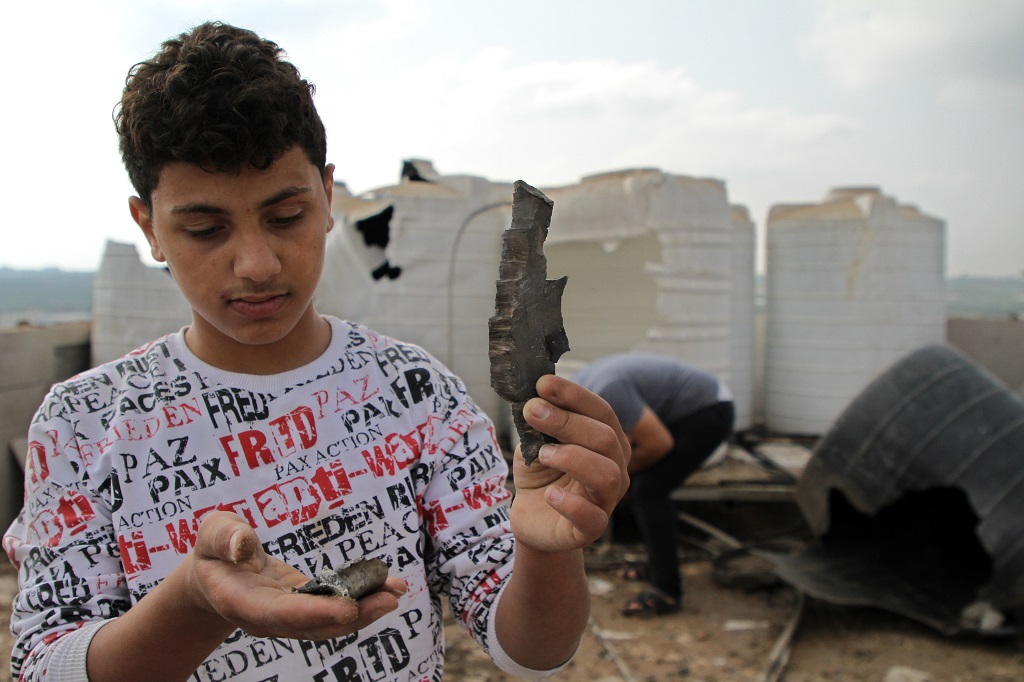
UNPRECEDENTED TENSION
Tension between Israel and the Palestinians have mounted recently when clashes broke out last week between Palestinian worshippers and Israeli police forces at Al-Aqsa Mosque and Sheikh Jarrah neighborhood in East Jerusalem.
Mohammed Hijazi, a Gaza-based political analyst, told Xinhua that Hamas had positively responded to the appeal of the Palestinians to retaliate the Israeli practices in East Jerusalem.
"What Hamas did constitutes a positive incentive for all the Palestinians, who must unite before the issue of Jerusalem. Despite the continuing disagreements among Palestinian politicians, there is no disagreement on the issue of Jerusalem," he said.
However, Hijazi said that reaching calm or a truce with Israel is also an important option, "because Hamas doesn't want to go for an open war."
"Netanyahu is also in a crisis after he failed to form a government in Israel, so he is not interested in a large-scale war that would threaten his political position," he added.
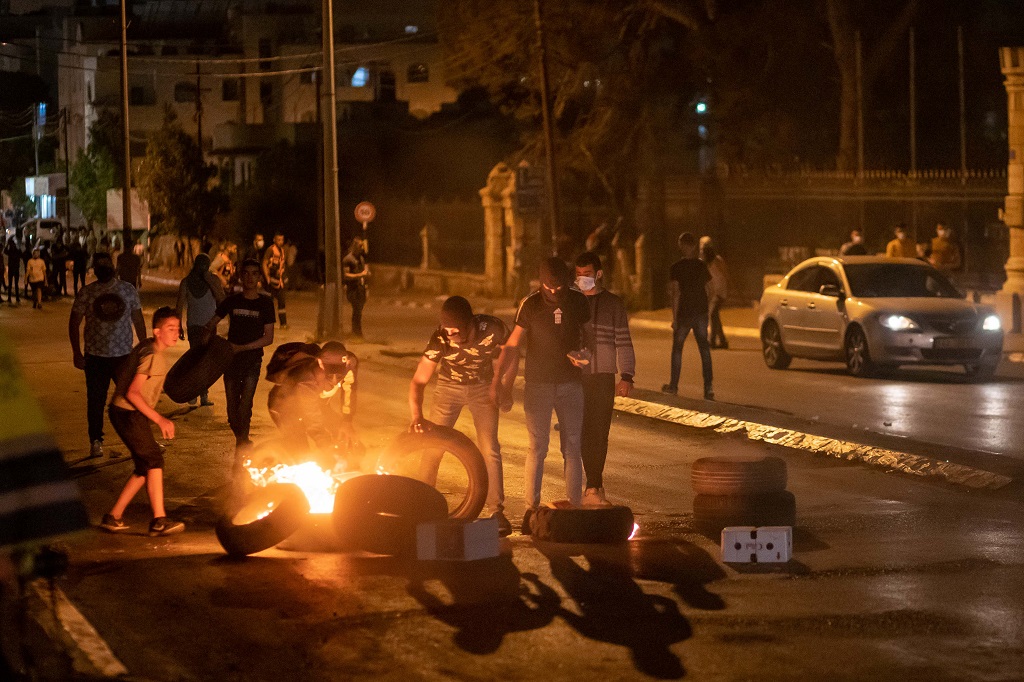
The Gaza analyst expected Hamas and Israel would reach a truce within the coming two days.
"But this option is still uncertain as long as the tit-for-tat trade of fire goes on and escalate," he said.
Adnan Abu Aamer, a Gaza political science professor who is specialized in Israeli affairs, told Xinhua that since the beginning of tension in Jerusalem, "Israel tries to avoid involving the Palestinians in the West Bank and Gaza in the tension."
"But the harsh and brutal Israeli policy of dealing with the Palestinians was the main reason behind the development of tension that has expanded to the entire Palestinian territories," Abu Aamer said.
Since 2008, Israel has waged three large-scale offensives on the Gaza Strip. The largest was in the summer of 2014, which ended when Egypt and other mediators brokered a cease-fire between Gaza militants and Israel. ■
Economic Watch: Turkey-China commerce moves forward despite pandemic
ISTANBUL, May 12 (Xinhua) -- Turkey and China have managed to further develop and diversify their growing trade relationship despite the COVID-19 pandemic as they celebrate the 50th anniversary of diplomatic ties this year.
The two countries established diplomatic relations in 1971, and since then, their ties have intensified on political, cultural, and economic levels.
Their trade volume is around 24 billion U.S. dollars as of 2020, and despite the pandemic, China and Turkey boosted their commercial ties and transactions significantly, according to experts.
The China-Turkey trade volume increased by 44 percent in the first three months of 2021, reaching 8 billion dollars, the Turkish Statistical Institute data revealed.
Observers agreed that the China-proposed Belt and Road Initiative (BRI), which was kicked off to create a global infrastructure and transportation network, made it easier to export to China by freight trains.
A railroad from Istanbul covering a distance of 8,693 kilometers across Turkey, Georgia, Azerbaijan, the Caspian Sea, and Kazakhstan to reach the Chinese city of Xi'an is operational since the end of 2020.
The cargo transportation time between Turkey and China decreased to 12 days from one month, a breakthrough in commercial understanding, as it slashes costs, Hasan Safak, director-general of the Istanbul-based transport firm Fevzi Gandur Logistics, told Xinhua.
Safak also pointed out that freight train trade needs time to reach full commercial maturity. "I believe that over time this alternative to maritime transportation will gain momentum," he said.
Safak praised the Chinese government's economic and production policies, calling them "very efficient" at a time when global trade is gaining pace as vaccination programs in major economic players are showing positive results in the fight against COVID-19.
"In the coming period, China is bound to be a global production hub," he noted.
In the past decade, China and Turkey have diversified their trade, as China is exporting more high technology goods while Turkey is exporting food products to China.
Experts believed that the BRI project will change the economic landscape in the region and beyond.
"Turkey is participating in this initiative with the Middle Corridor project. And in the past several months, we have seen a boost of trade towards and from China," Selcuk Colakoglu, an expert on China and director of the Turkish Center for Asia-Pacific Studies, told Xinhua.
The professor of international relations said that trade cooperation between Ankara and Beijing is on the upward trend and that China is also addressing the problem of Turkey's deficit in the bilateral trade volume.
"The trade balance is very much in favor of China, which is a problem from Turkey's point of view. However, China is actively inviting Turkish firms to participate in trade fairs and expos that it hosts to promote Turkish consumer goods to the Chinese market," he said.
"This has to be hailed as it aims to narrow Turkey's trade deficit," Colakoglu added.
Despite the negative impact of the pandemic on global trade, major Chinese smartphone manufacturers such as Xiaomi, Oppo, and Vivo have made direct investments in Turkey in the past year, launching production in Istanbul, Turkey's financial hub.
Chinese Internet giant Alibaba also recently invested 350 million dollars in Turkish e-commerce firm Trendyol in a capital increase, according to media reports citing an entry in the country's trade registry. Alibaba purchased Trendyol in 2018.
Trendyol, one of Turkey's best-known e-commerce platforms, has drawn backing from foreign investors and holds a leading position in the country's e-commerce market. Enditem
China pledges enhanced climate change cooperation with Germany, EU
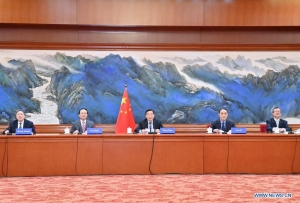
BEIJING, May 12 (Xinhua) -- A senior Chinese legislator Wednesday called on China and Germany to enhance cooperation and communication to address climate challenges. They should together build a fair, reasonable, cooperative, and win-win result environmental governance system.
Wang Chen, a member of the Political Bureau of the Communist Party of China Central Committee and vice chairman of the National People's Congress (NPC) Standing Committee, made the remarks when co-chairing a video conference between the NPC and the China-Bridge association with Hans-Peter Friedrich. Friedrich is the vice president of the German Bundestag.
Wang highlighted climate change as the most promising cooperation area between China and Germany and China and the EU. He said China's announcement of the vision and targets of carbon dioxide emissions peaking and carbon neutrality demonstrates China's firm resolution and sense of responsibility to address climate change.
The NPC would work with the German Bundestag to make joint efforts and promote the China-Bridge association to become the bridge that connects the peoples and cooperation between the two countries, Wang said.
Friedrich said the German Bundestag and the China-Bridge association are willing to play a positive role and contribute to addressing climate change and achieving sustainable development with China. Enditem
BRI should become project of new EU-Asia relations: former Greek PM
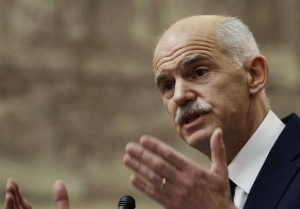
ATHENS, May 10 (Xinhua) -- The China-proposed Belt and Road Initiative (BRI) should become a project of new relations between the European Union (EU) and Asia, former Greek Prime Minister George Papandreou told Xinhua in a recent interview.
There is much that can be done in Europe-China cooperation, and Greece has a positive role to play, he added.
"The Belt and Road Initiative should become a project of new relations, building the new and future relations of the European Union with Asia and of course with China," he said.
Greece has a role to play, as it has "worked closely with China for many years," he stressed.
The former Greek leader cited China's COSCO Shipping investment in Piraeus, Greece's largest port, in recent years, as an example of fruitful cooperation between Greece and China.
The Chinese company acquired the majority of Piraeus Port Authority S.A. (PPA) shares in 2016 after an international tender, while its subsidiary, Piraeus Container Terminal S.A. (PCT), has managed the port's container terminal since 2009. Piraeus has since witnessed impressive results in recent years.
The investment for the port's upgrade and expansion, which continues also in the context of the BRI, has helped cooperation between China and Europe, as Piraeus has been transformed into a major trading hub, transportation hub for goods both ways, Papandreou noted.
"Greece and China, as ancient cultures, have a lot to give not only to each other, but to the world," the former PM stressed.
Regarding the prospects of bilateral cooperation towards common development and prosperity, he said Greece and China could work together on many areas.
In addition to trade, the two sides can collaborate on environment, tourism, as well as the exchange of traditional knowledge in medicine and wellness, among others, explained Papandreou, whose son has studied acupuncture in China. Enditem
World Insights: Global COVID-19 cases continue rising, vaccination picks up with China's vaccines showing efficacy
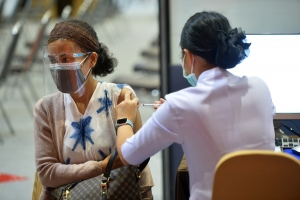
BEIJING, May 13 (Xinhua) -- The COVID-19 pandemic continues to rage across the world with some countries bracing for fresh surges of confirmed cases. Yet vaccination worldwide has been picking up as more countries witness the Chinese vaccines showing high efficacy.
GLOBAL CASELOADS CLIMB UP
Asia-Pacific countries have witnessed various increases in both cases and deaths. India's coronavirus death toll crossed the 250,000 mark, and Thailand reported a new daily record of 34 COVID-19 fatalities.
India registered as many as 4,205 deaths, the highest so far, during the past 24 hours, with 348,421 new cases, taking the total to 23,340,938, confirmed the federal health ministry.
There are still 3,704,099 active cases in the country, with a decrease of 11,122 in the past 24 hours. This is the second consecutive day of falling active cases.
The Philippines has been battling one of the worst outbreaks in Asia. The country's Department of Health reported 4,842 new COVID-19 infections, bringing the total number of confirmed cases in the Southeast Asian country to 1,118,359. The death toll climbed to 18,714 after 94 more patients died from the viral disease, the department said.
The number of patients designated as having severe symptoms as a result of COVID-19 in Japan reached a fresh record high of 1,189, rising by 13 compared to the previous day's record, the health ministry said.
The latest data regarding critically ill patients who typically require hospitalization and the assistance of ventilators or extracorporeal membrane oxygenation machines have more than tripled over the past month, according to the ministry.
In the Middle East, Iran reported on Wednesday 16,409 new coronavirus cases, raising the country's caseload to 2,707,761. The pandemic has so far claimed 75,934 lives in Iran, up by 366 in the past 24 hours, the Iranian Ministry of Health and Medical Education said in a written briefing published on its official website.
Meanwhile, Turkey will gradually ease lockdown restrictions after the Eid al-Fitr festival that marks the end of the Islamic holy month of Ramadan. President Recep Tayyip Erdogan announced a lockdown ease in a video speech for the occasion of Eid al-Fitr.
"Having taken the pandemic under control, we will take normalization steps in a controlled manner after the fest," Erdogan said.
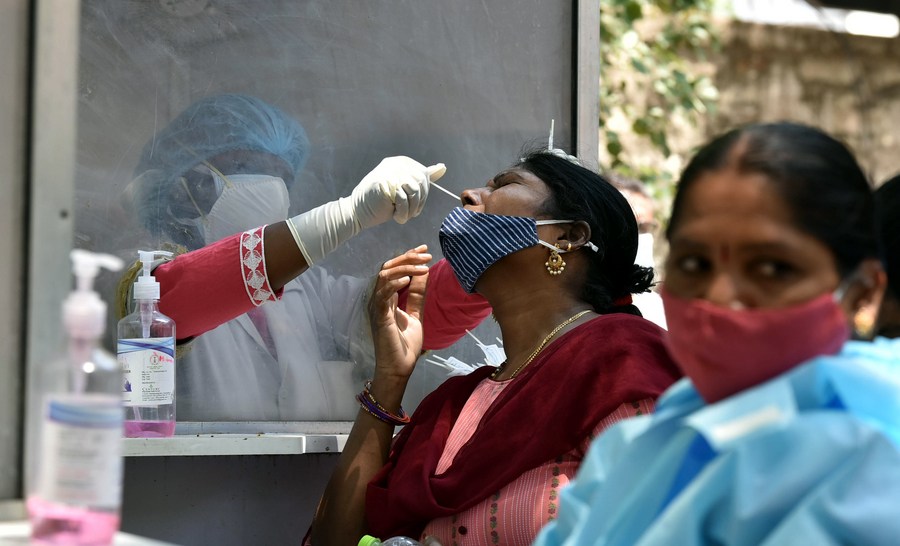
Turkey on Wednesday confirmed 13,029 new COVID-19 cases, including 1,496 symptomatic patients, raising the total number of cases in the country to 5,072,462, according to its health ministry. The death toll from the virus in Turkey rose by 232 to 43,821 in the past 24 hours.
In Latin America, Brazil, which has the world's second-highest COVID-19 death toll after the United States, and the third-largest caseload behind the U.S. and India, is seeing a second wave of the virus.
The country registered 2,494 more deaths from COVID-19 in the last 24 hours, bringing the total death toll to 428,034, the Ministry of Health said Wednesday.
The ministry said that tests detected 76,692 new cases, raising the national count to 15,359,397.
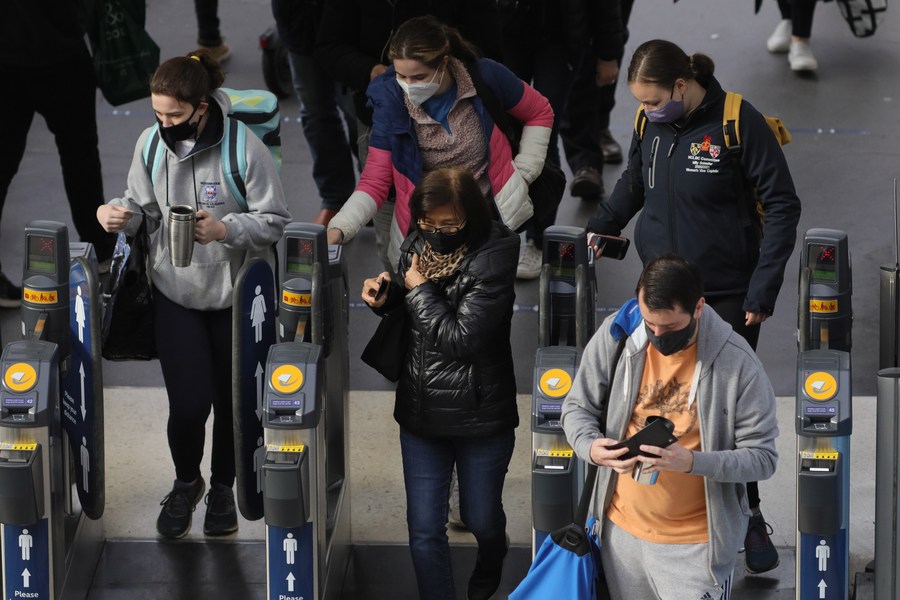
In Europe, Britain saw another 2,284 people test positive for COVID-19, bringing the total number of coronavirus cases in the country to 4,441,975, according to official figures released Wednesday.
Earlier Wednesday, British Prime Minister Boris Johnson announced that an independent public inquiry into the government's handling of the pandemic will begin in the spring of next year.
"Amid such tragedy the state has an obligation to examine its actions as rigorously and as candidly as possible" and "learn every lesson for the future," Johnson told lawmakers at the House of Commons, the lower house of the British Parliament.
VACCINATION WORLDWIDE PICKS UP
In North America, while the United States tops the world in both confirmed cases and deaths from COVID-19, the country is reporting an average of 2.2 million shots of COVID-19 vaccine per day over the past week, the latest federal data showed, up slightly from the most recent low reported on Saturday.
More than 46 percent of the U.S. population has received one or more shots and 35 percent are fully vaccinated, according to the Centers for Disease Control and Prevention.
Average daily U.S. COVID-19 cases fell further on Tuesday, with the seven-day average at about 38,000, according to data compiled by Johns Hopkins University. New case counts are below 40,000 per day this week for the first time since September.
World Health Organization Director-General Tedros Adhanom Ghebreyesus announced last week that China's Sinopharm COVID-19 vaccine has been validated for emergency use, marking the first Chinese vaccine officially recognized by the WHO.
China's Sinopharm COVID-19 vaccine, widely used globally, have been considered both safe and efficacious, said Mariangela Simao, WHO assistant director general for access to health products.
"We still have data proving that they are efficacious against severe disease," she said in a press conference on Monday. "Sinopharm has been very much used globally. I think 62 million doses have already been applied. It has been considered both safe and efficacious."
The Brazilian government said Tuesday it would inoculate the country's Olympic and Paralympic athletes using COVID-19 vaccines donated by China's Sinovac and U.S. firm Pfizer.
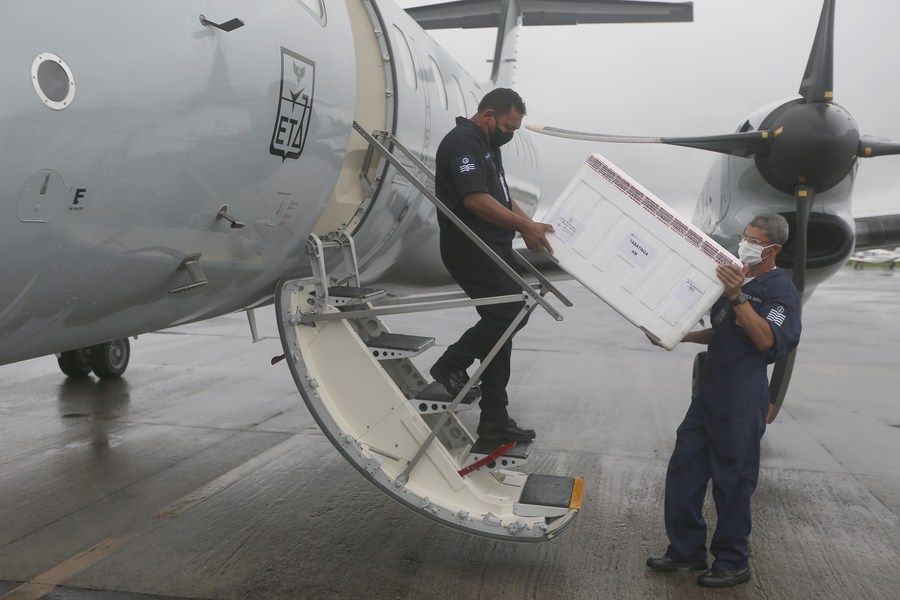
Around 1,800 Brazilians participating in the Tokyo Games -- including coaches, medical staff, officials and journalists -- will receive their first doses in the coming days, according to officials.
"We are going to vaccinate our Olympians ... to ensure that they can perform very well at the Tokyo Olympics and bring back medals," health minister Marcelo Queiroga told a news conference.
Meanwhile, China's Sinovac vaccine has rendered a Brazilian town "maskless" and created a "pandemic oasis" amid surging COVID-19 infections, Nikkei Asia has reported.
In Serrana, about a four-hour drive from Sao Paulo, a vaccination campaign known as "Project S" has successfully inoculated 97.7 percent of its adult residents with the Chinese-made shot, it reported.
Turkey began its drive with China's Sinovac vaccine on Jan. 14, with priority given to health care professionals and the elderly. Until the beginning of April, the country solely used Sinovac's CoronaVac jabs.
"Based on our field observations, we can say that the Sinovac vaccine prevents deaths and intensive care hospitalization 100 percent," Nurettin Yiyit, chief physician of the hospital, recently told Xinhua, referring to the general situation in the country.
"The phase studies had already proved its efficacy, but our field notes are even better," he continued while inspecting the ongoing vaccinations.
A study by the Indonesian Health Ministry said that China's Sinovac vaccine has effectively reduced the risk of COVID-19 symptoms in medical workers by 94 percent, and was 96 percent effective in protecting medical workers from hospitalization, and 98 percent effective in preventing deaths. ■
China will have 9 mln new college graduates this year

BEIJING, May 13 (Xinhua) -- China is expected to have 9.09 million new graduates from the country's universities and colleges this year, 350,000 more than the number from last year, the Ministry of Education said Thursday.
The ministry said since last autumn, it has worked with other authorities to launch a campaign to help the graduating students find jobs or start up businesses. To date, the employment situation has been progressing smoothly.
A recruitment promotion week will be held nationwide from May 17 to 23 to provide both job opportunities for the new graduates and chances for universities and employers to better match candidates with open positions.
Each provincial-level region will organize at least two large-scale job fairs during the week, according to the ministry.
Universities and colleges will also hold campus recruitment events both online and in person, the ministry said. ■
Chinese consumers spend nearly 700 bln yuan during nationwide online shopping festival
BEIJING, May 13 (Xinhua) -- Chinese consumers spent 692.8 billion yuan (about 107.22 billion U.S. dollars) over the course of a 15-day online shopping festival, official data shows.
This represents a year-on-year growth of 26.7 percent, commerce ministry spokesperson Gao Feng told a regular press conference on Thursday.
The online shopping festival, jointly launched by the Ministry of Commerce and other offices, is a nationwide campaign designed to boost quality consumption.
The sales revenue of physical commodities surged 25.9 percent year on year to 562 billion yuan during the festival, with Chinese brands accounting for 73.8 percent of total sales, the data shows.
Sales of travel packages soared 330 percent from a year ago during the online festival, and catering services sales surged 51.1 percent. ■
GLOBALink | Silk Road int'l expo promotes Belt and Road cooperation

The Fifth Silk Road International Exposition opened Tuesday in Xi'an, capital of northwest China's Shaanxi Province, with deeper Belt and Road economic cooperation one of the hot topics on agenda.
Themed "Interconnection, Contribution and Shared Benefits," the expo has attracted more than 1,900 envoys and guests from 98 countries and regions such as Belgium, the Republic of Korea, Tajikistan and Zambia.
The Belt and Road Initiative, proposed by China in 2013, aims to build trade and infrastructure networks connecting Asia with Europe and beyond along the ancient Silk Road trade routes for common development and prosperity.
Produced by Xinhua Global Service
China-CEEC trade up 50.2 pct in Q1
BEIJING, May 12 (Xinhua) -- Trade between China and Central and Eastern European Countries (CEECs) jumped 50.2 percent to 30.13 billion U.S. dollars in the first quarter of 2021, an official said Wednesday.
Ren Hongbin, assistant minister of commerce, told a press conference that China's imports from CEECs reached 8.17 billion dollars in the period, up 44.7 percent year on year.
The country also plans to import goods worth 170 billion dollars from CEECs in the next five years, according to Ren.
Bucking a global downturn, the China-CEEC trade expanded 8.4 percent year on year to 103.45 billion dollars last year, Ren said, adding that the bilateral trade maintained an average annual growth of 8 percent between 2012 and 2020.
Looking ahead, Ren said that China will further increase imports and promote the balance of trade via platforms such as the China-CEEC Expo and the China International Import Expo.
The second China-CEEC Expo & International Consumer Goods Fair will be held from June 8-11 in the eastern city of Ningbo, Zhejiang Province. It is expected to attract more than 2,000 guests and 6,000 domestic purchasers. ■
China Taiyuan coal transaction price index up for 4 weeks
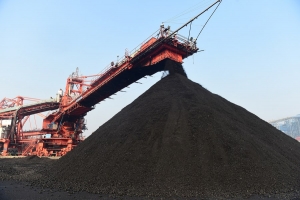
TAIYUAN, May 10 (Xinhua) -- China Taiyuan coal transaction price index stood at 144.24 points Monday, up 2.8 percent week on week and marking a consecutive rise for four weeks.
The index, released by China Taiyuan Coal Transaction Center (CTCTC) based in Shanxi, a coal-rich province, reflects the coal price levels and changes in the main production areas of China. It is published every Monday.
Analysts said that purchasing demand of end users continues to be released, and the thermal coal market in producing areas remains tight, causing the prices to rise.
With more than 10,000 registered coal traders, the CTCTC is the largest coal trading center in China. ■

Powered by  © Μaritimes 2019