
-
Home

-
Maritimes NEWS
-
Ports
- maritimes


maritimes
Safe Bulkers, Inc. Pursues its Fleet Renewal and Deleveraging Strategy
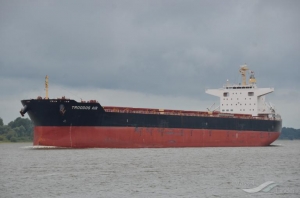
- Acquisition of Two Post-Panamax Newbuilds
- Sale of Two Kamsarmax Vessels
- Prepayment of $27.3 million of Debt
Monaco – May 12, 2021 -- Safe Bulkers, Inc. (the Company) (NYSE: SB), an international provider of marine drybulk transportation services, announced today that in relation to its fleet renewal strategy, it has entered into agreements: i) for the acquisition of two Japanese-built, drybulk, Post-Panamax class, 87,000 dwt, newbuild vessels at attractive prices with scheduled
delivery dates within the first and the second quarter of 2023 respectively; ii) for the sale of two Chinese 2012 built, Kamsarmax class, 82,000 dwt vessels at gross sale prices of $22.5 and $22.0 million with scheduled delivery dates within the second and third quarter of 2021 respectively.
The newbuild vessels are designed to meet the requirements of Energy Efficiency Design Index related to Green House Gas, GHG emissions, ‘EEDI, Phase 3’ and also comply with the NOx
emissions regulation, NOx-Tier III and will be financed from the cash reserves of the Company.
In relation to vessel sales the company will pay prior to each delivery the respective associated debt in the aggregate amount of $28.0 million. Upon completion of the two sales the net liquidity
is expected to increase by about $16.5 million.
In the context of our deleveraging strategy the company has scheduled to voluntarily prepay $27.3 million of debt in May 2021.
The Company’s consolidated debt before deferred financing costs has been reduced from $607.6 million in March 31, 2021 to $593.7 million as of today. On a pro-forma basis reflecting the above transactions and the previously announced sale and lease back agreement for an existing vessel of $24.3 million for the refinancing of a $16.3 million outstanding term loan facility the consolidated debt before deferred financing costs is expected to be further reduced to about $546.4 million.
Dr. Loukas Barmparis, President of the Company commented: “Safe Bulkers is continuing its renewal strategy since December 2020, by ordering two additional newbuilds with attractive
delivery dates, bringing their total number to four GHG - EEDI Phase 3, NOx-Tier III newbuilds and one second hand acquisition and by selectively selling in total of four older vessels. At the
same time the Company is accelerating its deleveraging, maintaining a strong liquidity position.”
About Safe Bulkers, Inc.
The Company is an international provider of marine drybulk transportation services, transporting bulk cargoes, particularly coal, grain and iron ore, along worldwide shipping routes for some of the world’s largest users of marine drybulk transportation services. The Company’s common stock, series C preferred stock and series D preferred stock are listed on the NYSE, and trade under the symbols “SB”, “SB.PR.C”, and “SB.PR.D”, respectively.
Golden Destiny: Weekly S&P Market Report (Week 19 Report No 19.21)

Attached please find for Week ending May 14th 2021 our : - Weekly S&P Market Report (Week 19 Report No 19.21)
Captain Weng Lin:The port of Piraeus has a significant commercial and geopolitical value
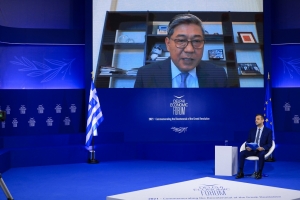
Captain Weng Ling, Deputy CEO of PPA SA., speaking at the Delphi Forum, reffered to the importance of Piraeus Port, as it is a gateway to Europe.
He noted that PPA has €300 million investment plans in progress, which aim not only to improve the existing infrastructure and facilities but to create new ones, that will contribute to increasing the port's competitiveness.
Apart from that, he mentioned that today the port has combined all activities and means of the supply chain, providing quality logistics services and he added that "Cosco is working in the direction of improving the connection of the railway network to the port and has been succesful in recent years.
In the last few years, through the distribution of profits and the increase in the volume of services provided, the port of Piraeus has effectively contributed to social welfare, creating thousands of working positions, he added.
Also, Captain Weng Ling, said that "All of the above advantages have given the port maximum acceptance by the markets, not just as a local gateway, but also as a gateway to Europe".
Finally, he reminded that COSCO from the beginning recognized the strategic importance of the port, which is also provided due to its proximity to the Suez Canal, and highlighted that, "as a global shipping industry, strongly believed in Piraeus port value since 2009".
Norsepower announces installation of five tiltable rotor sails on a vloc chartered by vale
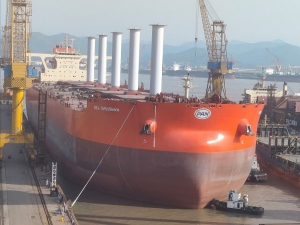
New-build bulker utilises wind propulsion to maximise reduction of carbon emissions by up to 3,400 tons of CO2 per year
HELSINKI – 13 May 2021: Norsepower Oy Ltd., the leading global provider of auxiliary wind propulsion systems, today announced the installation of five tilting Rotor Sails onboard a newbuild Very Large Ore Carrier (VLOC) chartered by Vale, the Brazilian mining company. The first installation of Norsepower’s innovative Rotor Sails on a bulk carrier demonstrates the adaptability of the technology to reduce fuel consumption, fuel costs and reduce emissions across a variety of vessel types.
The new vessel, a 325,000 dwt VLOC is owned by Pan Ocean Ship Management and will be chartered by Vale after construction is completed in China. To enable efficient cargo operations, the five 24m high and 4m diameter Rotor Sails can be tilted by using hydraulic cylinders.
With growing international and public pressure on the maritime industry to move towards decarbonising their operations, the ability to harness the wind to generate thrust, reduce fuel consumption and emissions, is a natural next step is becoming an increasingly viable option to meet imminent regulatory drivers such as EEXI and CII ratings.
Norsepower has analysed the routes for the vessel chartered by Vale and estimates that its technology would be able to achieve an efficiency gain of up to 8% and a consequent reduction of up to 3,400 tons of CO2 per year.
Commenting on the installation, Tuomas Riski, CEO, Norsepower, said: “We are delighted to be working with Vale, and supporting them to maximise the propulsive power of wind to reduce carbon and other emissions as well as protecting the sustainability of its value chain more broadly.
“The five tilting Rotor Sails will allow Vale to maintain flexible cargo operations while also saving fuel and emissions. Installing our Rotor Sails on the first VLOC demonstrates that our technology is adaptable across varied operational profiles and vessel types. As vessel operators and charterers strive to decarbonise, the value of wind propulsion for both a retrofit and newbuild vessels is undeniable. The Rotor Sails can reduce a vessel’s Energy Efficiency Design Index (EEDI) and future-proof vessels against impending IMO Greenhouse Gas regulations as well as against inevitable fuel price increases as new fuels enter the market.”
Rodrigo Bermelho, Shipping Technical Manager, Vale, added: “We are committed to supporting the adoption of clean technology solutions for shipping to ensure that Vale’s sustainability objectives are achieved. Installing five Rotor Sails will maximise our fuel and emissions savings. We are working with Norsepower to ensure this new build is as environmentally friendly as possible and can achieve significant reductions in fuel consumption and CO2 emissions. If the pilot proves effective, it is estimated that at least 40% of the fleet will be able to use the technology, which would result in a reduction of almost 1.5% of Vale's annual iron ore maritime transport emissions.”
The Norsepower Rotor Sail is the first third-party verified and commercially operational auxiliary wind propulsion technology for the global maritime industry. The solution is fully automated and detects whenever the wind is strong enough to deliver fuel and emission savings, at which point the Rotor Sails start automatically.
About Norsepower
Norsepower Oy Ltd is a Finnish clean technology and engineering company pioneering modern auxiliary wind propulsion for the global maritime industry. Norsepower’s Rotor Sail Solution is a proven, low-maintenance, easy to use, and reliable fuel-saving technology, supporting the decarbonisation of the shipping industry.
Since its establishment in 2012, Norsepower has generated more than €20 million of funding and has now installed Rotor Sails onboard five vessels, including the latest installation on the SC Connector. Each installation has made significant reductions to fuel costs and emissions, confirmed by independent verifiers such as ABB, NAPA and Lloyd’s Register. Other shipowners, charterers, and shipyards have been convinced of Rotor Sail technology’s benefits and are taking steps to study the technical and economic feasibility of wind propulsion on their fleet based on these positive results.
Why the Greek shipping market needs to outsource

The Greek shipping industry needs to address change in the sector to support seafarer wellbeing, according to the leading international catering management and training provider, MCTC.
Vicky Stamati, MCTC’s Business Development Director in Greece, said the Greek market could save thousands of Euros per annum if generational attitudes within the family shipowning businesses welcomed outsourcing catering management rather than keep it all inhouse.
“Greece is my homeland and a key maritime hub, but the sector needs to shift its mindset to support seafarer wellbeing and allow outside connections to provide business.
“Outsourcing catering management means you’re working with specialists who can streamline galley operations to optimise costs and reduce wastage. It’s the only way the Greek market will continue to develop while saving money during this competitive time, post-Covid,” she said.
Christian Ioannou, Managing Director of MCTC, added: “Each Greek shipowner could be saving thousands of Euros each year in the galley. I’d estimate that we can save each vessel approximately 15-20% of its budget each year.”
MCTC offers a full catering management service and a range of training programmes for cooks, ranging from menu planning, health and nutrition to ordering supplies.
Ms Stamati explained: “MCTC’s team of food technologists, nutritionists and culinary training experts provide invaluable input and knowledge to vessels ensuring wholesome nutritious meal plans are followed. These services can only be provided when you work with professionals in the field.
“Outsourcing catering management also improves the health of crew onboard and their wellbeing. Our nutritionists provide specific meal plans for dietary requirements but also ensure each meal plan is backed with nutrients, which is vital for improving health onboard.
“If shipowners invest in outsourcing their catering management, seafarer wellbeing will improve through leading nutritious diets – but they’ll also save money. It’s surely a win-win situation,” she said.
New Management Appointments in Golar LNG Ltd.

13 May 2021
The board of Golar LNG Limited ("Golar") is pleased to announce that they have appointed Mr. Karl Fredrik Staubo as the new Chief Executive Officer of the company in their board meeting on 13th May 2021. Mr. Staubo has since May 2020 been the Chief Executive Officer of Golar LNG Partners LP, recently successfully sold to New Fortress Energy. Since September 2020 Mr. Staubo has also been acting as Chief Financial Officer of Golar. Mr. Staubo has a broad shipping/energy background from Clarksons Platou Securities (2010-2018) and Magni Partners (2018-2020). He has a MA (Business Studies and Economics) from the University of Edinburgh.
The board has in the same meeting also appointed Mr. Eduardo Maranhao to take over Mr. Staubo’s role as Chief Financial Officer of Golar. Mr. Maranhao has since 2015 been supporting Golar in different functions including as Chief Financial Officer of Golar Power/Hygo Energy Transition Limited until its recent sale to New Fortress Energy. Prior to joining the Golar group, he was the Chief Executive Officer of CELSE. Mr. Maranhao has vast experience in international energy projects and infrastructure financing having worked at different financial institutions including Lakeshore Partners, Santander, Credit Agricole, Banco Votorantim and Citibank. Mr. Maranhao graduated in Business Administration from the Universidade de Pernambuco and has completed a Management Programme from INSEAD in France.
Golar’s Chairman, Tor Olav Troim, said in a comment “The board is very pleased by the new management appointments. Both individuals have deep knowledge about our company, they are good leaders, have strong work ethics, dynamic minds and have delivered solid value to the group over the last years. Together, with the rest of Golar’s management and board, we are convinced that the Company has a strong management team ready to stream-line Golar’s existing operations and also explore the opportunities we see in the LNG market today. Through the Company’s strong strategic positions through the LNG value chain, including upstream, midstream, and downstream, Golar is well positioned to take an active part in the ongoing energy transition with the target to deliver cheaper and cleaner energy.”
Dry bulk market report | Industry analysis, news and rates. Week 19, 2021

Dry bulk capesize freight rates breaking a record high on the back of strong start 2021 cargo loading volumes
The dry bulk index keeps its increasing trend driven by buoyant sentiment in dry bulk capesize freight rates. The capesize freight market has been trading strongly since the beginning of April to reach levels not seen in the past decade.
The capesize 5TC opened last week at $40,608/d, peaked at $44,817/d mid-week before finally retracing to take a breather at $41,514/d. With commodity prices at historical levels and consequent max output of iron ore ex Brazil and West Australia in particular, average daily spot value went up 15 pct w-o-w and has now reached the highest level since 2010. Dry bulk capesize freight rates are nearly three times higher than average for this period over the last five years. The Pacific basin was the busier region for vessels with strong cargo flow coming from the major charterers. With iron ore prices touching $200 pmt, the cost of shipping a 170,000mt 10% cargo on the West Australia to Qingdao C5 route closed the week at $14.427/d.
The dry bulk Index has broken the barrier of the 3,000-point mark in more than a decade at the end of April and keeps the levels up to now. Last Friday, the index decreased only 1% to 3,183 extending a 1.7% decline in the previous session, as the capesize freight index, which tracks iron ore and coal cargoes of 150,000-tons, dropped 3.1%. Still, the index climbed 4.3% this week, the 5th weekly rise in a row as the capesize freight index booked a sixth straight weekly gain. The dry bulk shipping market has been supported mostly by rising demand for key commodities such as iron ore and grains, alongside the ongoing disruptions in global supply chains amid the Covid-19 crisis.
Signal Ocean platform data revealed an increasing trend in cargo counts during the first quarter of this year at major iron ore loading areas supporting the current euphoria of capesize iron ore freights along with slower fleet growth since the beginning of this year. The levels were elevated in March, chart 1, with West Australia leading the volume of cargoes.
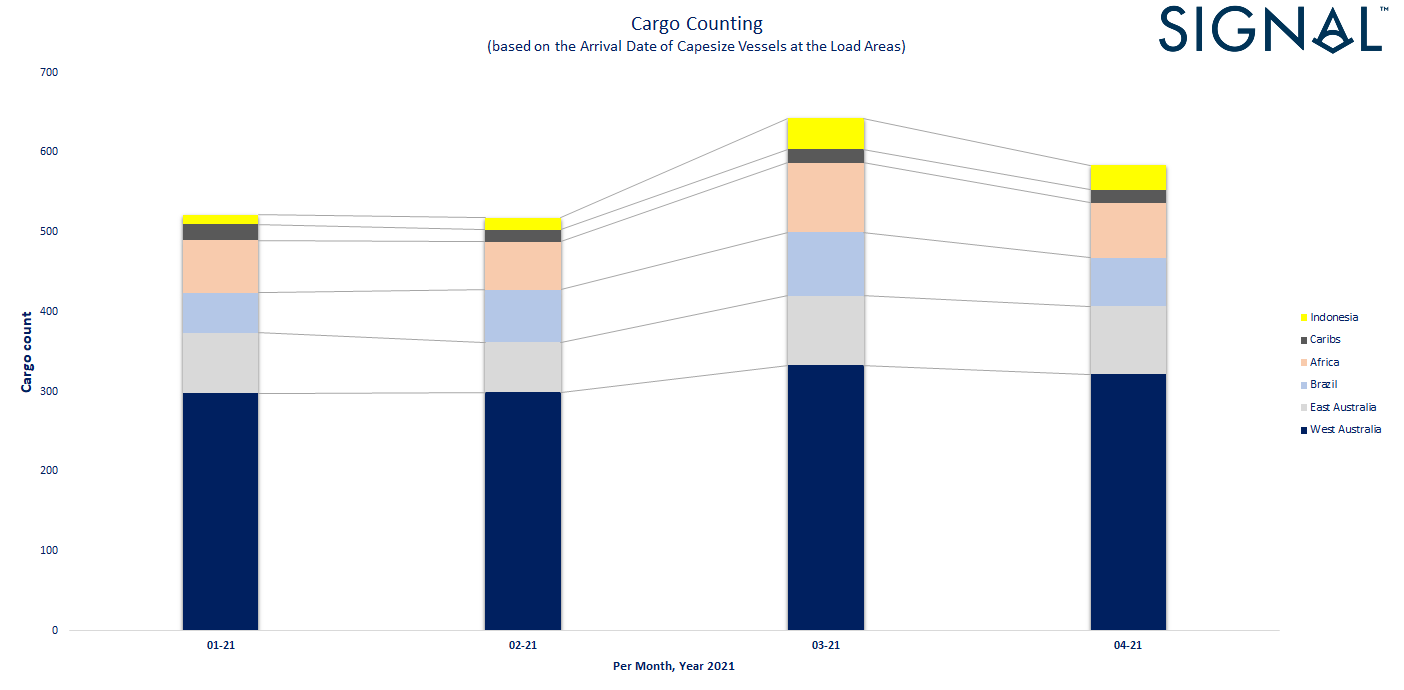
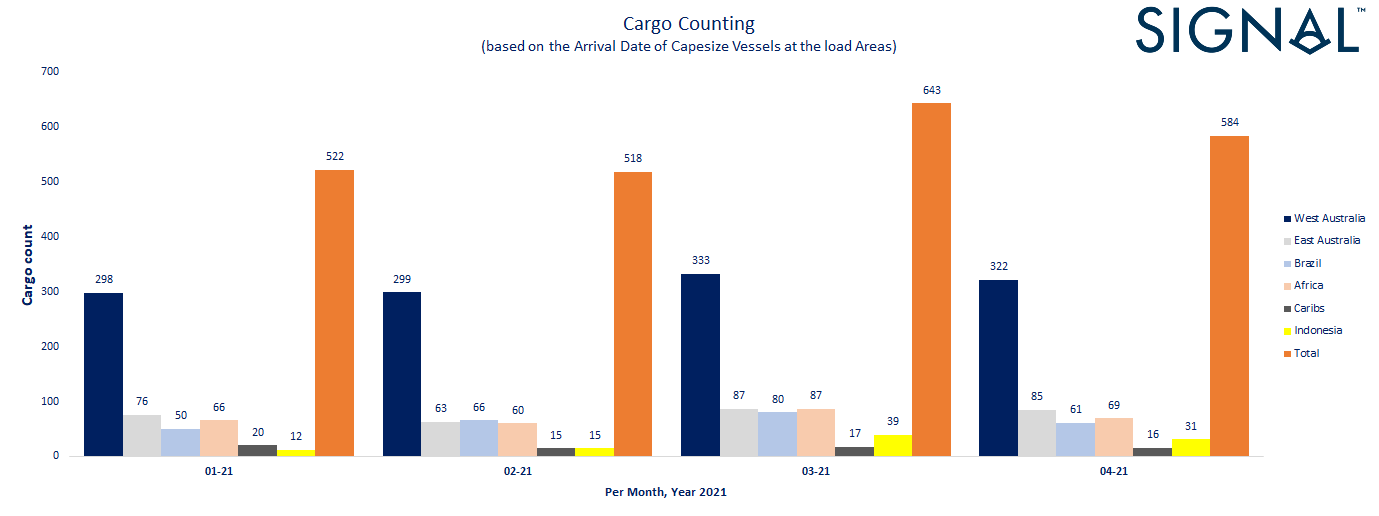
However, the cargo counting per date intervals, at major iron ore loading areas during April has revealed a mild decreasing trend that could push downwards the direction of freight rates in the coming days. During March, cargo counting at West Australia surpassed the barrier of 300 and peaked to 333 for March and 322 for April. In Brazil, the volume of cargoes reached 80 in March compared to 50 at the start of 2021, before falling to 61 for April. In Africa, Sigan Ocean Data revealed 87 cargoes in March compared to 66 since the beginning of this year and for April, the figures decreased to 69 cargoes.(Chart 2) Overall, April ended with 584 cargoes, which is 9 percent down to the volume of cargoes in March, but still higher than levels of January and February, posting 12% & 13% increase compared to January and February levels respectively.
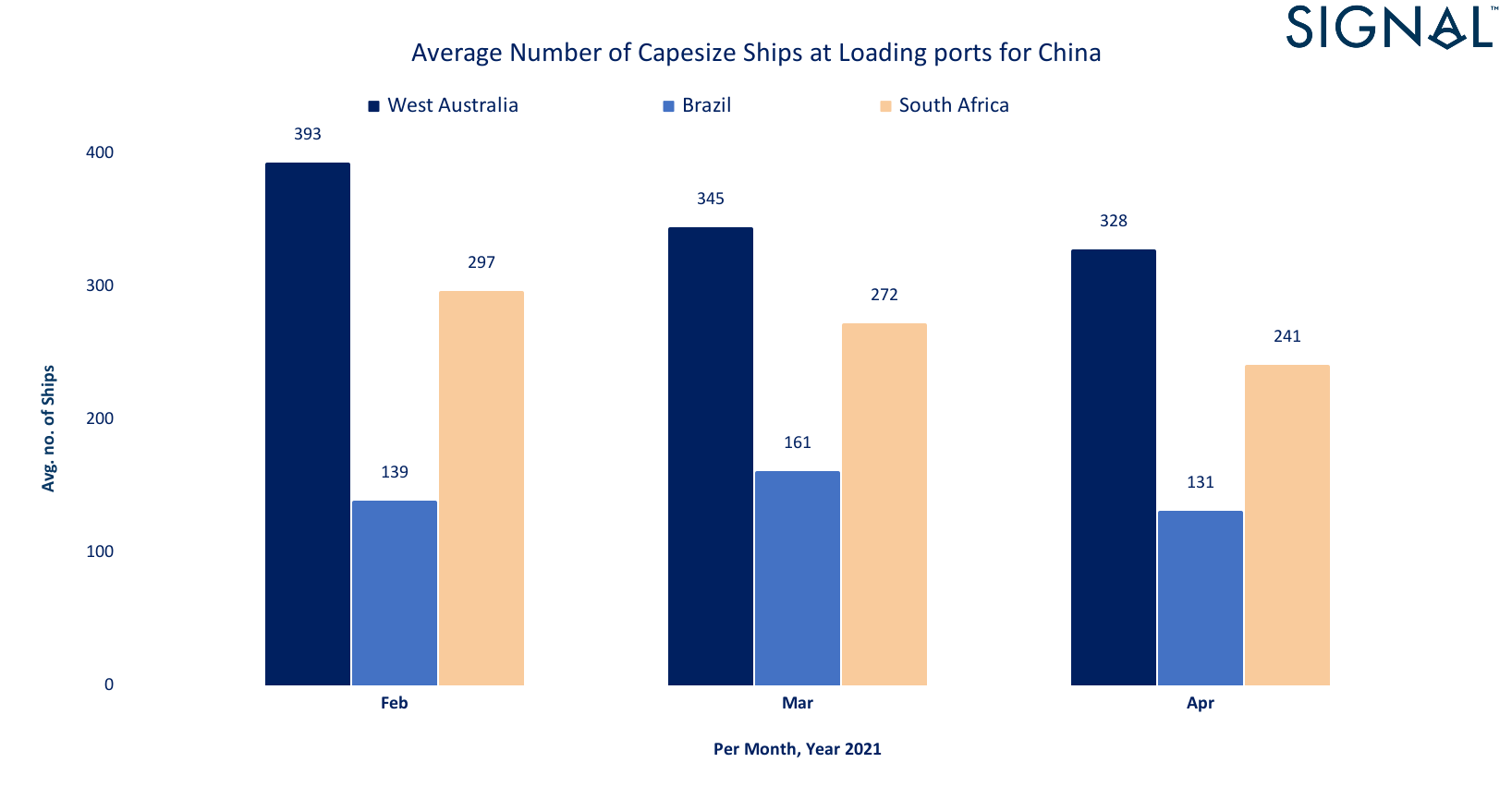
One additional key driver that seems to have supported the recent rally of iron ore freight rates ($/t) is the vessel supply at major loading ports in W. Australia, Brazil and South Africa (Chart 3). The average number of capesizes estimated for arrival at WAustralia during February for iron ore loading was near to reach the barrier of 400 vessels before falling to 345 in March and data for April indicate an average trend of eight percent higher than 300 vessels. In Brazil, the highest figure was seen in February with 161 vessels estimated for arrival compared to 131 vessels for April, so data reveal a decreasing trend of 19% compared to the highs of February. In South Africa, capesize vessel arrivals, for iron ore loading, were near the barrier of 300 ships in February, whereas data for April indicate 19% lower vessel arrivals, an average trend of 240 capesizes.
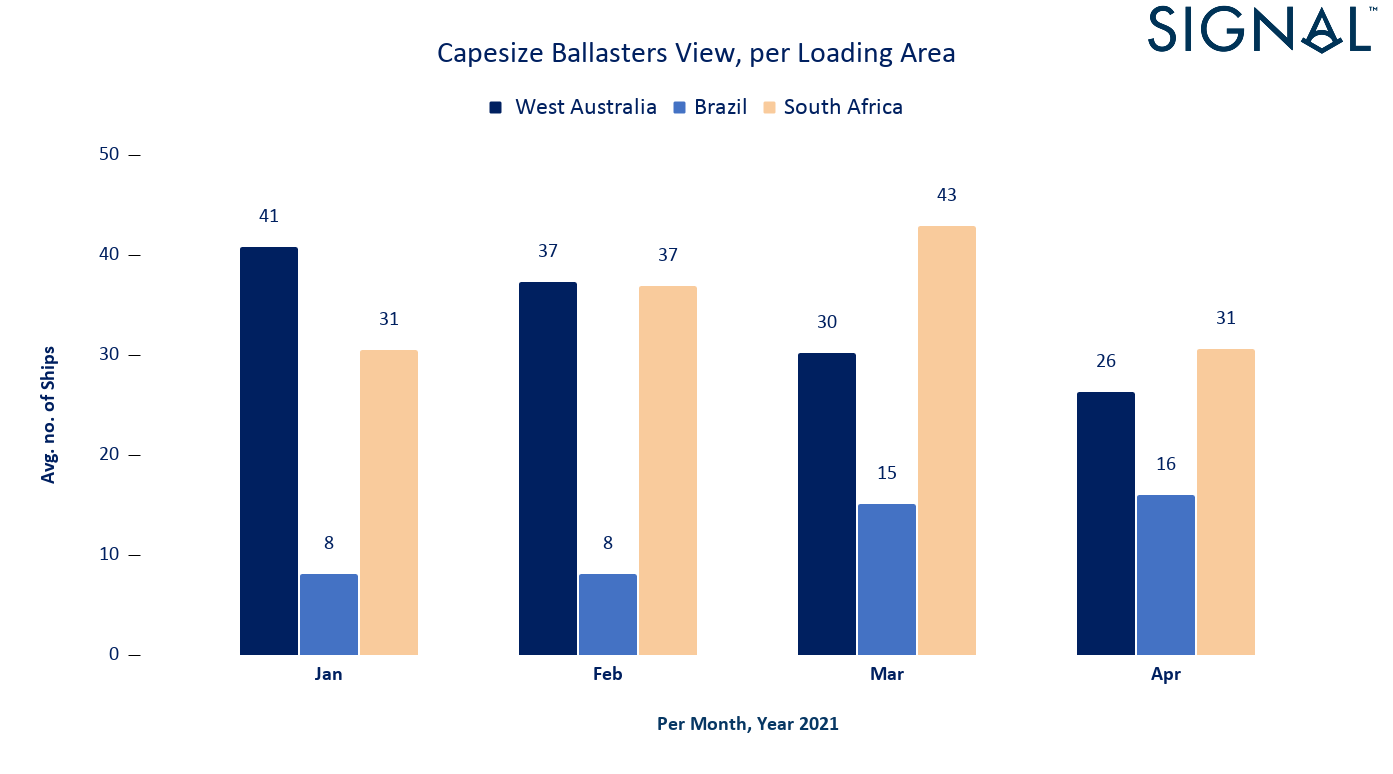
Capesize ballasters view gave a clear increasing trend over the last months that added upward pressure on the sustained freight market rally. Signal Ocean data (Chart 4). March was the month with the highest figure for all major iron ore loading areas, apart from West Australia, where January ended with an average number of 41 ballasters and then the figure fell to 37 in February, 30 in March and for April the trend shows 26 ballasters. In South Africa, the average number of ballasters increased to 43 compared to 31 in January and now the trend is around 31 ballasters. In Brazil, the trend for April keeps the increasing momentum of March, with an average number of ships around 16, compared to 8 during January - February period.
Except for supply figures in the capesize segment leading to remarkable rebound for the first four months of this year, the freight market has experienced signs of growth in Chinese iron ore appetite that supports to absorb the flow of ships. In March, official customs data show that China’s iron ore imports rose 18.9% to 102.11 million tons from the corresponding month a year earlier. The world’s top iron ore consumer brought in 283.44 million tons of the steelmaking ingredient in the first quarter, up 8% on an annual basis, data from the General Administration of Customs showed.
Ιron ore exports to China from Port Hedland, the top iron ore terminal in Western Australia, recovered by 7.4 million tons or 19.4% from February’s low to total around 38.1 million tons in March, according to Mysteel. In Brazil, daily average iron ore exports were 1.32 million tons in the first six business days of April, up from 1.24 million tons a day during March.
The question comes if May will continue at the same upward trend as indications on cargo counting record a decreasing trend and the supply of ballasters at major iron ore loading areas may lead to an opposite direction in iron ore freight rates.
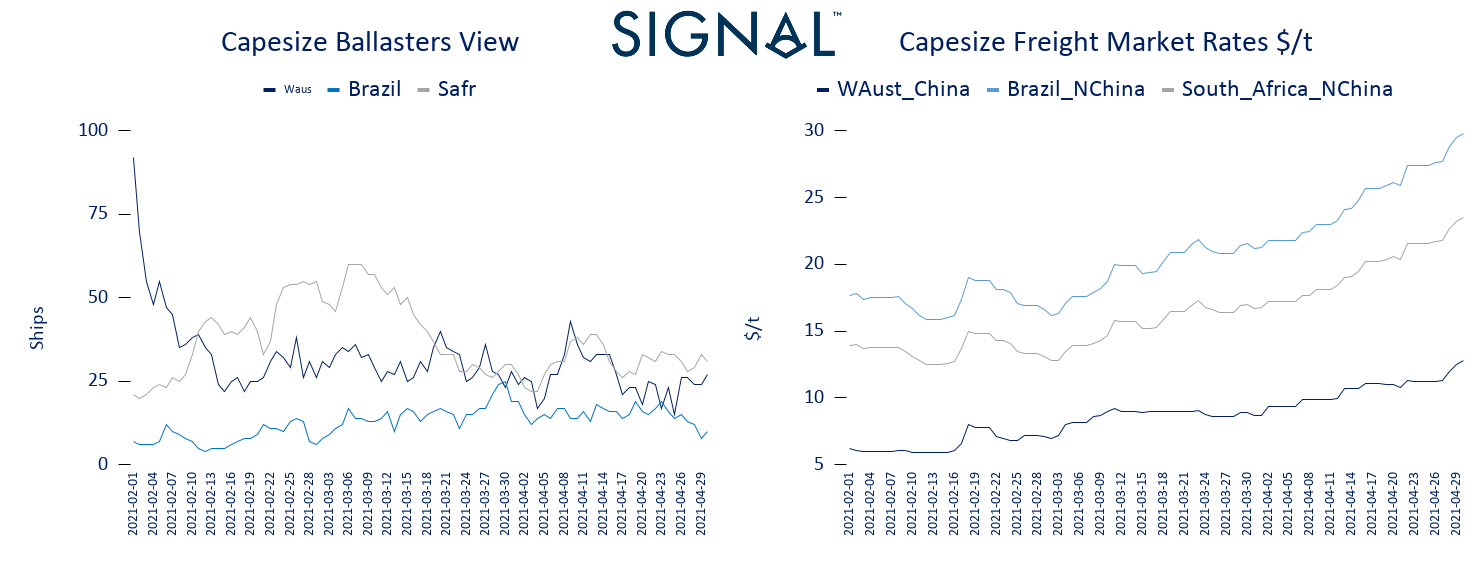
In Chart 5&6, we compared the evolution of daily freight rates ($/ton) to the daily number of capesize ballasters per major loading area, West Australia, Brazil and South Africa, to China during February, March and April. We can view a sustained upward trend of freight rates, but at a slower pace in WAus as April ends and the average number of capesize ballasters has fallen below 20 vessels. However, the routes of Brazil and South Africa to North China record firmer momentum that confirms the target of China’s economy to diversify its iron ore supplies away from Australia. It remains to be seen whether the second quarter of this year will end as strong as in the first quarter of 2021, when China’s imports of iron ore rose 8% to 283 million tons after jumping to 102.11 million tons in March.
Established in 2014 The Signal Group is a diversified shipping services group with offices in London and Athens. The Signal Group offers commercial ship management services to a pool of Aframax class oil tankers. In addition, The Signal Group develops and invests in next generation shipping related software technologies. It is led by an executive team who has more than 65 years of collective experience in ship management at the highest level. The leadership team is supported by a world-class mix of commercial shipping professionals, finance professionals, strategists, energy market analysts, data scientists and developers.
www.thesignalgroup.com
Change of Course
On the fourth day of Delphi Economic Forum VI international relations took center stage, with sessions featuring global leaders, academics and policymakers alike.
Former Prime Minister of Greece and Leader of the Opposition Alexis Tsipras looked to the other side of the Atlantic, praising US President Joe Biden’s recent speech in Congress as historic and sharing his belief that "it put an end to a cycle of many years of neoliberalism". In terms of the EU’s response to the pandemic, he noted that despite its collective efforts "European leadership continues to think in terms of the past". Regarding the management of the pandemic by the Greek government he expressed his belief that it had “major shortcomings", noting significant delays in vaccinations and a "timid" response to the recession.
On the topic of the EU vaccination program, Leader of the European People’s Party in the European Parliament Manfred Weber took a different view, noting that the situation is improving significantly, with vaccination accelerating. He also shared his hope that the Green Certificate will be ready as soon as possible, also discussing the EU's Recovery Fund, noting that the Commission "will invest €750 billion into the future of Europe, in green growth, digitization and many other areas".
International cooperation was also a topic in the discussion in which former Prime Minister of the UK and founder of the Faith Foundation Tony Blair participated, noting that tackling climate change requires cooperation and unanimity worldwide, due to the urgency of the issue. He spoke of the speed with which the pandemic has been dealt with, sharing his belief that the issue of climate change would have been solved to a large extent, if governments had taken a similar interest.
What to Expect from Today
• Geopolitics is once again a major theme today, in a series of sessions on the Apollon Stream taking place this morning, followed by sessions on the EU’s future and global trends.
• Developments in Greece take center stage on the Dionysos Stream, while technological trends and digitization feature heavily on the Artemis Stream.
• For a detailed conference agenda, please click here.
An Inclusive Recovery
• "Joe Biden's first 100 days of governance were impressive," noted Joseph Stiglitz, Nobel Laureate in Economics and Professor at Columbia University. Joe Biden presented an ambitious and well-structured recovery program accompanied by crucial legislation. He also pointed out that temporary suspension of the vaccine patent is indispensable and will make a huge difference in society and the economy. "A new political era begins in the USA, where the state is no longer the problem but the solution to the problem. The promise of neoliberalism failed," he stated.
• George Papandreou, former Prime Minister of Greece (2009-2011), characterized Biden's policy as a bright example of progressive politics, as it includes measures for the pandemic, public health, poverty, infrastructure and taxation. Regarding the EU's Recovery Fund, he shared his view that it could help combat inequalities and foster growth, noting the need for Europe to harmonize taxation and invest in the green transition. "The private sector turned to the state to manage the pandemic, and this should become a lesson for our country", he said, stressing the necessity of the modernization of the Greek state.
Market Trends
• VISA CEO for Europe Charlotte Hogg spoke of the pandemic as a time when we saw a rapid increase in digital transactions from consumers in Greece and abroad. She noted that Greece was one of the first countries in Europe to increase the threshold for contactless transactions in the first phase of the pandemic, while their use increased rapidly in Greece and worldwide. The use of contactless transactions and e-commerce is something that will remain a habit among consumers even after the pandemic. "It takes 21 days to create a habit and 90 days to consolidate it. We have already exceeded this time limit", she explained. She also cited VISA's commitment to support millions of SMEs worldwide, with more than 2 million European SMEs already being supported by the company to bring their operations online. "The future of transactions is in the use of debit and credit cards", she concluded. "Consumers consider these transactions to be reliable, secure and fast and they have the assurance that if something goes wrong in the purchase of a product, they will be able to get their money back."
• Discussing the incredible digital transformation underway, Demetrios Marantis, Senior Vice President of Global Government Engagement VISA Inc., pointed out that there has been a 61% increase in the use of e-commerce in Greece in the past few years. "The priority of VISA is to ensure that small businesses are digitally enabled", he said, given that they represent 97% of the Greek economy. He noted that digitized small businesses were in a position to weather the crisis and even thrive throughout it. VISA embraces the perception that "data use and data flow should operate together", he noted, also raising the issue of security, acknowledging that all transactions need to be safe and fraud-free. He referred to a number of VISA initiatives in Greece, such as the launch of the campaign "Where You Shop Matters," its efforts to grow the e-commerce ecosystem and nurture the fintech ecosystem, but also to help the Greek government support small businesses, especially in vital sectors like tourism.
• Antonio Taquis, former Ambassador of Panama in Greece and General Director and Owner of the Panama Shipping Agency, made a thorough analysis of the current global reality, concluding that elements of globalization are essential. However, he noted trends that will lead to a form of regionalization or nationalization. "Companies are trying to navigate the challenges of the pandemic, aiming to be less global and more local." He added that policymakers should find ways to level the supply and demand of goods and services. Nevertheless, he noted that even if the world becomes more deglobalized, some of the biggest winners of globalization will endure, such as digital companies and companies adopting the e-commerce model. "The solution will be an interdependent world of resilience," he suggested.
Sustainable Leadership
• Andre Calantzopoulos, President of the Board of Philip Morris International, shared his insight on the future of the tobacco industry. He reiterated his belief that the sale of cigarettes can cease within 15 years if certain conditions are met, mentioning the proliferation of alternative tobacco products and the introduction of a proper regulatory framework, including education and incentives for smokers to switch. Calantzopoulos revealed that 98% of the firm’s R&D expenses and 70% of the firm’s marketing expenses are in support of alternative products and now heated tobacco products account for 28% of the firm’s revenues. Calantzopoulos also discussed the intricacies of Philip Morris’ transition to a new era. "Leadership transition is a long-term planning process", he noted.
• "We had a shared vision from the very beginning", remarked Jacek Olczak, CEO of Philip Morris International, regarding the transformation of the company and the recent leadership change. He stressed the central importance of the consumer in the company’s plans for the future, noting that Philip Morris is bringing forth constructive solutions to solve the health complications of smoking. He pointed to Greece as a country that has the potential to be one of the first to successfully complete its transition to a combustion-free future. Finally, he spoke of the long-standing importance of sustainability for the company, revealing that the it has already reduced its carbon footprint by 50% and is aiming for carbon neutrality by 2025. He also highlighted the efforts being made for inclusion and gender equality.
Greece 2.0
• Greek Finance Minister Christos Staikouras said that the government will seek to increase the advance of € 4 billion from the RRF, which is expected to be disbursed in July. He emphasized the importance of utilizing the Fund's resources for the productive transformation of the economy, noting that private investments are expected to increase by 20% due to the RRF. He shared his expectation that there will be c. 200,000 new jobs created by 2026. He outlined the government's holistic plan for strengthening the private sector of the economy, based on four pillars: the grants from the RRF, tax policy, the reduction of NPLs in order to increase financing from the banking sector and the Fund's lending program.
• Christopher Pissarides, Regius Professor of Economics in the London School of Economics spoke of the two main ways in which the pandemic has affected the labour market - the first being the recession and the second technological progress, which has been accelerated over the past year, making a particular reference to the gig economy. "Advanced economies must offer protection to employees", he said, explaining that when a worker feels secure he has much a greater incentive to work better, to ask for retraining and to grow in his job.
• Speaking to US Managing Editor at the Financial Times Peter Spiegel, Chairman and CEO of GEK Terna Georgios Peristeris praised the work done by the Greek government in preparation of the Greek plan for the RRF. He also noted the fact that a lot of private investment is involved in the new plan as a positive development, as it means the money from the RRF will be leveraged and multiplied. "As far as our company goes, we are quite bullish about the whole setup and what we expect in coming years", he said, noting that his company has vast experience with concessions and PPPs. He also stressed that "this is a once in a generation occasion and opportunity for Europe as a whole". Speaking of the brain drain, he characterizing its reversal as being of paramount importance. "Greece is lucky enough to have a very capable and educated young generation, so there will be a lot of opportunities for them to return in this new phase." Finally, he shared his view that becoming a net exporter of electricity is a feasible prospect for Greece. Comparing wind and solar, he noted that Greece does not have extensive flat areas so solar can be installed but up to a certain point, on the contrary offshore wind has significant potential.
Political Discourse
• SYRIZA MP and former Deputy Prime Minister Yiannis Dragasakis noted the lack of "substantial political and social dialogue" during the preparation of the Greek government’s RRF plan. "This raises an important issue of democratic order, as the plan goes beyond the lifespan of the current government", he added. He pointed to 4 conditions that need to be met in order for society and the economy to take advantage of the available funding in the aftermath of the pandemic: joint design of funding, goal- setting, common investment criteria and finally the promotion of progressive reforms. "The resources of the Recovery Fund cannot and should not be directed to only a few and large companies, with small and medium-sized enterprises remaining out of the game."
• Akis Skertsos, Deputy Minister to the Greek Prime Minister, discussed the handling of the pandemic by the Greek government, but also its plans for the future. Asked about the re-opening of the country, he emphasised that "we should not compare 2020 with 2021", as this year we have knowledge, we have assimilated protective measures, we have the vaccine and also much better diagnostic tools. He also spoke of the declining trend of new cases, calling on those of our fellow citizens who have not been vaccinated to do so. On the topic of vaccines and the non-renewal of the EU's deal with AstraZeneca, he stressed that we don’t have an issue with vaccines as "we have ordered more than we require". The goal is for the population to have caught immunity by the beginning of autumn - then we will look at the issue of mutations’ as well as whether a repetition of vaccinations is necessary, he explained. Regarding reforms, he noted that the pandemic "did not remove us from the path of reform", mentioning the significant strengthening of the healthcare system and highlighting Greece 2.0 as "the new, better version of our country".
Implementation in Focus
• Declan Costello, Deputy Director-General Economic and Financial Affairs at the European Commission, explained that Greece is one of the biggest beneficiaries of the RRF and has requested the full allocation of funds and loans to support investment in the country, noting that the potential impact of these is quite large. "What is going the be critical is the quality of the investments and the country’s absorption capacity", he said.
• Chairman of the Council of Economic Advisors Michalis Arghyrou pointed out that after a crisis a big fiscal push is aways welcome, but in the case of Greece and Europe it is much more than that. Greece seemed to lack the ingredients for growth so, having identified these employment, investment and productivity gaps, the government saught to correct them. "This is what the program tries to do", he said.
• Lord Maude of Horsham, Founder of FMA Partners and former UK Minister of State for Trade and Investment pointed out that every government in the world is facing a triple crisis: a health, an economic and a public finance crisis. He praised the Greek government’s swift preparation of its RRF plan and noted the importance of implementaion; "working out what to do is not easy, but it is 10% of the challenge; how you make it happen is the rest". Because so much of the plan involves investsment projects, procurement is a key area to focus on.
• Head of Unit at the Directorate General for Economic & Financial Affairs at the European Commission, Julia Lendvai, noted that the support measures adopted by the Greek government seem to have helped contain the shock of the pandemic to the economy, sharing her expectation of a return of GDP to 2019 levels next year. "It will be important to phase out the support measures when the situation allows, for the more fundamental purpose of debt sustainability." She stressed the importance of the RRF funding being spent well; the program gives a big emphasis on human capital, digitization and unlocking private investment. She echoed the view that strengthening the absorption and implementation capacity in Greece is critical for the success of the program.
A Message From Our Sponsor
Remarkable things can happen when people unite towards achieving them. In the milestone anniversary of the 200 years since the Greek Revolution of 1821, Papastratos is proud to commemorate its own landmark. Our company’s 90-year anniversary comes in recognition of the sum of the combined individual efforts of all the women and men that have made and still make it possible for us to honor our past while building a sustainable future.
Delphi Dashboard
This year, in addition to Delphi Confidential, you can follow the latest updates and key insights of the conference by tuning into out special live-blogging page Delphi Dashboard, which the team of αθηΝΕΑ will be updating for the duration of the convention. Bookmark this page for live insights from this year’s conference.
Economic Recovery & Jobs
• "Every business now is a digital business", noted Matt Brittin, President, EMEA Business and Operations at Google. He said that the company is investing in a large number of programs and internships aimed at the unemployed youth. "I hope that, with the cooperation of the Greek government our investment will help us see an acceleration of the recovery." He also added that these investments are a perfect way to support under-represented groups, underlining the need for an economic recovery that is inclusive and sustainable.
• Spiros Protopsaltis, Governor of OAED, spoke of the successful partnership of the Greek state with Google, through a program of upskilling and reskilling aimed at providing digital skills to the unemployed. He also noted that job openings exist, but people do not have the requisite skills to respond to them. "It's not only about creating new jobs, but also about training people so that they can have the skills that these jobs require."
• "The investment in the data center is one of the biggest challenges that Microsoft has ever faced in Greece", noted Theodosis Michalopoulos, CEO of Microsoft Greece, Cyprus and Malta. He explained that the primary goal of this project is to help Greek companies grow and export and, in this way, to support the Greek economy. He also highlighted that ensuring employee safety, having profitable partners and loyal customers, as well as a positive impact on Greek society were the four pillars that the project's development was based on. He made a particular reference to the digitization of Ancient Olympia and the Extra Miles project. Ηe finally acknowledged that establishing a positive professional environment for employees, a sense of contribution to a common goal, education, but also social conditions play a decisive role in reversing the brain drain.
Moving Forward With Secondary Education
• On the topic of secondary education reform, Minister of Education and Religious Affairs Niki Kerameus stressed that, in addition to the transfer of knowledge, the curriculum must be enriched with the cultivation of skills. She noted that young people receive a huge amount of information and it is necessary for them to acquire critical thinking. This will be enhanced by skill strengthening and the acquisition of multiple sources of knowledge, she added. She also emphasized the government’s key objective to connect the educational system with the job market.
• Ioannis Antoniou, President of the Institute of Educational Policy in the Ministry of Education and Religious Affairs, noted that the main goal should be for students to learn to be creative and think critically, while Leonidas Kastanas, Physicist and Professor of Secondary Education, remarked that a school is credible when it constantly evaluates both students and teachers.
Pre-School Education
• Deputy Minister for Labour and Social Affairs Domna Michailidou presented the first program for pre-school education in Greece. She underlined that ensuring equal opportunities through the proper cognitive, emotional and motor development of children is a substantial investment in the future of both themselves and our country. "We brought together the most specialized scientists in the world, asked for the contribution of diANEOsis and formed the best team to create the best possible pre-school program for our children", she noted. The discussion encompassed the main pillars of the first Preschool Curriculum that will be implemented in our country and establishes quality standards for education, care and early detection of developmental disorders in infants and toddlers.
• "To strengthen this program, we will create a network of mentors who will advise educators in all kindergartens so that there is a homogeneous implementation to the highest possible degree of quality", remarked Costas Meghir, Douglas A Warner III Professor of Economics at Yale University, highlighting the importance of pre-school education for the development of a child.
• Sally Grantham-McGregor, Emerita Professor of International Child Health at University College London, stressed that we should be cautious about what children are exposed to because from the moment they form their character, it is very difficult to change. "The challenge is to be able to provide the right educational programs for preschoolers so that they acquire solid foundations, the right skills and emotional intelligence as supplies for their lives."
The Future of Skills
• "Technological skills, emotional skills and marketing skills are essential today", noted Byron Nicolaides, Chairman and CEO of PeopleCert and President of CEPIS, during a session on the future of skills and the future of higher education. He explained that today technology has created completely different conditions in terms of knowledge acquisition and that universities worldwide must adapt to these, with certifications in a number of different cognitive fields gaining value.
• Phil Baty, Chief Knowledge Officer of Times Higher Education, remarked that this is "an opportunity for universities to restart". They should focus on teaching students how to solve the problems that arise in society today.
• President of the Hellenic Authority for Higher Education Pericles A. Mitkas referred, among other things, to the importance of "lifelong learning and adaptability" as key skills for the future.
• Anthony Tattersall, Vice President of EMEA at Coursera, referred to the changes that have taken place in society, noting that "it is important to develop the skills one needs to be able to cope with, for example, multicultural environments".
Macro Trends
• "The present crisis is a formidable wake-up call", declared Jean-Claude Trichet, former President of the European Central Bank, while also being a "formidable accelerator of underlying trends", pointing particularly to digitization and the green transition in the global and European economy. Trichet also described how the global economy was not prepared for the pandemic and in many ways was in a worse condition than before the Lehman Brothers collapse in 2008, illustrating the need for hard work to increase growth rates. Trichet also hopes that the pandemic crisis can spur a necessary integration within the European construction itself.
• Pierre Gramegna, the Luxembourg Minister of Finance, stated his belief that the crisis will be "V-shaped" and will not be long-lasting. According to Gramegna, the pandemic revealed many weaknesses with our economies, but also acted as a catalyst for change, disproving those who did not believe climate change was real. "The planet was breathing better", he said, calling the pandemic lockdown "a life-size test that we have witnessed". However, he shared his pleasure that the US has returned to the fight for the protection of the environment, also praising Chinese goals for carbon neutrality by 2060.
• Deputy Director of Bruegel Maria Demertzis discussed the prospects of inflation from the stimulus packages announced, particularly in the US, and shared her view that "the markets are not very worried". Demertzis took it a step further, sharing her belief that a low inflation rate could be a good thing, as it would illustrate that "the economy is now booming". However, she also warned of the dangers of inflation in Europe and the prospects of higher interest rates and the risk of financial fragmentation. Additionally, a rise of interest rates would make borrowing for countries like Greece a more difficult affair.
The Euro at a Crossroads
• Governor of the Bank of Greece Yannis Stournaras downplayed fears of inflation, based on the available data and modelling projections for the next five years. However, he stated that it is a problem that for many in Europe the 2% inflation rate is a "ceiling and not a target", speaking of an upcoming strategy meeting in which there will hopefully be a shift in strategy from the current one, often perceived as a disinflationary bias. He also pointed out that US policy is more expansionary in nature and that it is, in many ways, a more flexible economy. He also spoke of lessons learned from the Greek financial crisis, both in Europe and in Greece. "I do not think that Brussels will ask us to go back to austerity", he said but warned that Greece must return to more normal primary surpluses.
• "Europe’s response to turmoil in the financial markets was actually the move to the euro", opened Klaus Regling, Managing Director of the European Stability Mechanism, calling the euro the second most important currency in the world. Regling moved on to discuss the euro governance mechanisms and tools used and stated that "it is on the agenda to create a full banking union". When challenged by Peter Spiegel, US Managing Editor at the Financial Times, on the speed with which the banking union is being pursued, he outlined the three pillars of forming a banking union and how two of these have already been met. "The third pillar has important items like a common deposit insurance, better crisis management and dealing with the sovereign exposure of banks", calling the missing part a difficult and politically sensitive issue. Regling and Spiegel also discussed the geopolitical importance of the euro, especially in light of the Trump administration and its use of the dollar as a geopolitical tool.
European Sovereignty in a Changing World
• "Are we actors that can shape the international landscape in the context of rivalry, or will we just be shaped by the decisions taken by others", asked Arancha González Laya, Minister for Foreign Affairs of the Kingdom of Spain, when discussing the question of European sovereignty, especially in the wake of the presidency of Donald Trump. However, she stressed that she believes the conversation should be focused on questions of strategic autonomy or resilience, rather than strategic sovereignty. The European Union should be open and ready to work in a multilateral setting, but also be able and prepared to stand alone when its friends and allies are not willing or able to assist.
• Daniela Schwarzer, Executive Director for Europe andEurasia at the Open Society Foundations, believes there is still significant work to be done to achieve autonomy, especially due to the diverging national interests of member states. "We have to think of our own development and cooperation with our allies and with our partners in order to catch up in the field of technology, for example, but also in order to honour the alliances we have", she stated. Schwarzer also discussed the impact of growing China, and argued that the EU must be present on the international stage or other players will increase their influence in critical regions of the world.
• Member of the European Parliament and former Minister of Foreign Affairs of Poland Radoslaw Sikorski evaluated the capability for strategic autonomy of the European Union. "We are autonomous in trade and regulation, and in those areas we are actually a superpower. Yet we are a defense pygmy and we have not made the euro a global currency. As such we are not yet immune from being dictated to in the financial sphere." Without those prerequisites, we cannot be a "serious player in foreign affairs", he concluded. He spoke in depth on the EU’s relationship with Russia, and the divergence that began in 2010.
The Ties That Bind
• Zoran Zaev, Prime Minister of the Republic of North Macedonia, spoke of his experiences in the signing of the Prespes Agreement. "I am very happy because the citizens, the institutions and the states feel the benefit of the agreement that brings better cooperation between all of us", he reflected on the deal. He believes that domestic opposition to the deal has evaporated, given the benefits of solving the dispute with Greece, including NATO membership. He spoke of the great trust that is developing between North Macedonia and Greece and the important experience that can be shared between the two. Zaev also discussed his relationship with Greek Prime Minister Kyriakos Mitsotakis and the contributions of the Greek state to North Macedonia’s vaccine struggle. He also spoke of the commercial, energy and infrastructure connections that are developing between Greece and his country. Finally, Zaev discussed the difficulties his country is facing with EU accession and the "safety and security" offered by North Macedonian NATO membership.
• Robert Menendez, the United States Senator from New Jersey and Chair of the United States Senate Committee on Foreign Relations, discussed his thought process on formulating American strategy in the region with the Eastern Mediterranean Act. "From energy resources to security co-operation to building economic ties, the opportunities in my mind for the Eastern Mediterranean are boundless if we have the strategic vision and energy to pursue them", he stated, sharing his hope that the United States can deepen its relations with Greece and Cyprus. He also spoke of Turkey and its deviation from democratic values and pointed to a number of confrontational Turkish manoeuvres. Menendez also revealed his pride in being "on the right side of history" on the recognition of the Armenian Genocide and that it is part of the re-establishment of the protection of human rights as a centrepiece of American foreign policy. Finally, he made it clear that a two-state solution in Cyprus will not stand, blaming Turkey for the continued division of Cyprus.
• Zdravko Krivokapic, Prime Minister of Montenegro, spoke of the challenges facing his government. "There are several problems we are facing. The first is the highway loan that we have taken, secondly there is a major debt this government has inherited from the previous one, and thirdly there are major social discrepancies in our society. And on top of all of that, there is the global challenge of the pandemic", he said. He went on to describe the course of the pandemic in his country and his optimism for its ending. Finally, he spoke of the European Union accession negotiation process. Krivokapic stated that he is dedicated to European membership and requested clear and solid goals instead of more fluid targets, including fighting corruption and creating the conditions for the rule of law.
• Ana Brnabic, Prime Minister of the Republic of Serbia, discussed her recent meeting with Greek Prime Minister Kyriakos Mitsotakis. She broke the agenda down into three parts: discussions in the political sphere, the provision of certificates for vaccination that will allow Serbians to travel to Greece this summer, as well as an agreement to remove roaming charges between the two countries. "I think the inclusion of the Western Balkans in the EU is good for the EU. It is also one of the primary pre-conditions for long-term peace, stability and prosperity in this part of Europe", she stated and thanked the Greek Prime Minister for his vocal support of European expansion in the Western Balkans.
Small State Diplomacy in a Complex Order
• Alternate Minister for Foreign Affairs Miltiadis Varvitsiotis stressed the need for countries to be part of a common group, where common rules apply, citing the improving political and economic relations between Greece and Bulgaria following the latter’s accession into the European Union. He also stressed the importance of geography saying "it is different when you have a difficult neighbour that challenges your sovereignty to when you have your 'cousins' surrounding you". He also stressed that the EU should live up to its obligations and continue the process of North Macedonian accession to the Union.
• Nicos Christodoulides, Minister of Foreign Affairs of the Republic of Cyprus, stated the importance of paying close attention to the specific characteristics of every small state. "We have the opportunity to play the role of the honest broker", he said, setting out the benefits and disadvantages of the geopolitical location of Cyprus. He also believes that the EU should not delay in pushing forward with the EU accession of North Macedonia.
• Deputy Prime Minister for European Affairs of North Macedonia Nikola Dimitrov spoke of the relativity of small states, stating that for North Macedonia Greece is not considered a small state. He stressed the importance of maintaining good relations with your neighbours and agreed with Christodoulides that "we can definitely play the role of an honest broker" and maintained that being open and friendly is vital for the future.
• Anders Wivel, Professor of International Relations at the University of Copenhagen, warned of the global increase of nationalism. He spoke of three risks to smaller states, including marginalization, the risk of parallel action and the risk of overload with so many challenges facing states today. "We know that one road to success is for small states to act smart", he advised, mentioning smaller states must be efficient in problem-solving on the international agenda.
|
|
|
LR innovates lifecycle approach in oil and gas subsurface software

The new modules and updates to Lloyd’s Register’s subsurface software packages – IC and IP – will help oil and gas operators adapt to an ever-changing world.
Lloyd's Register is today launching a suite of new modules and updates to its subsurface software packages IC and IP.
The software's new capabilities are prompted by the increasing need to capture and utilise data across the entire lifecycle of wells and fields, allowing E&P operators to rise to the challenges presented by a maturing industry, and the energy transition, without additional software investment at each stage. The new modules and software updates will be demonstrated at the virtual SPWLA 62nd Annual Symposium 2021 in May.
Derek Crombie, Vice President of Subsurface at Lloyd's Register said: "Integrated digital technologies are vital for subsurface operators to keep pace with, and push the boundaries of, a rapidly changing world."
"With countries such as Denmark no longer issuing new hydrocarbon exploration licenses, E&P operators are increasingly seeking to maximise output from their existing assets and subsurface regions. In addition, many abandoned wells are now being earmarked for other uses such as carbon capture, utilisation and storage, geothermal and waste disposal. The industry is on a journey of change as it transitions to alternative and differing subsurface technology applications than just hydrocarbon production. Increased insights of scale, from region to well, across the lifecycle of all subsurface assets will be more valuable than ever in this changing world."
"Equally, as retiring engineers are replaced with the next generation, and remote working is becoming the new normal, subsurface software needs to be geared towards integrating data and industry knowledge from numerous sources as seamlessly as possible."
One of the new modules - Casing Inspection - introduced to IP, Lloyd's Register's subsurface interpretations software, will seamlessly integrate mature well monitoring and abandonment into the platform, strengthen IP's existing collection of cased-hole tools, further improving insights across a well's lifecycle. Two further modules will provide automated workflow benefits for users. Textural Facies will create an automated workflow for determining rock texture types from image log data, while Log QC will highlight data quality issues with raw log measurements.
The IP software will also benefit from a refreshed, cloud-ready user interface designed to be touch-screen compatible with a more detailed home screen view and improved search function, resulting in a more intuitive user experience.
IC, Lloyd's Register's well integration and visualisation software, will benefit from a new addition to produce more detailed correlations of the subsurface characteristics between wells as well as easier to apply interactive interpretations.
Not only will the tool be highly insightful for oil and gas operators, it can also play a role in new energy markets by identifying locations to tap geothermal resources, fresh water or lithium brine extraction, as well as being used to access underground aquifers or waste disposal sites. IC will produce holistic subsurface interpretations at a higher resolution than ever before, improving insights and decision making across any aspect of a project's lifecycle.
The new correlations feature is bolstered by a new data import infrastructure to make it even simpler for users to merge and integrate disparate subsurface data for visual display and interpretation.
Nial McCollam, Lloyd's Register's CTO and keynote speaker at SPWLA adds: "Decades of subsurface exploration has led to rapid growth in data collection and storage. However, poor quality data can have an impact on the accuracy and precision of decision-making. These IP and IC updates are vital for the industry to keep pace with the demands of an ever-changing world and will pave the way for operators to successfully adopt innovative technologies as they become available."
Visit the Lloyd's Register virtual booth at the SPWLA 62nd Annual Symposium 2021 to learn more about the new modules and updates.
Official visit of the Minister of Maritime Affairs of Portugal at the port of Piraeus
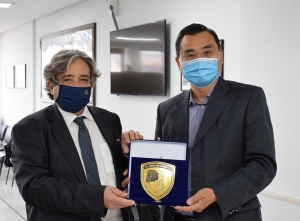
The Minister of Maritime Affairs of Portugal Mr. Ricardo Serrão Santos, head of a delegation of the Government of Portugal accompanied by the Secretary of State for Internationalization, Mr. Eurico Brilhante Dias, visited today, Wednesday May 12th 2021 the port of Piraeus and met with the Chairman of the BoD of PPA S.A. Mr. Yu Zenggang and the Deputy CEO Capt. Weng Lin, in the presence of the Ambassador of Portugal in Athens, Mrs. Helena Paiva.
The Minister showed great interest in the developments at the port of Piraeus, had a site visit at the port’s business units, was informed in detail about the results and prospects of the port and discussed with the Management of PPA S.A. on current developments of the port and the shipping industry.

Powered by  © Μaritimes 2019