
-
Home

-
Maritimes NEWS
-
Ports
- maritimes


maritimes
World Hydrogen Congress
Tap into high quality, expertly curated content from hydrogen thought leaders across the globe at the World Hydrogen Congress in Amsterdam, 04 - 06 October 2021.
We are very pleased to be able to present this rich, diverse programme of true hydrogen thought leaders for you to listen, question and meet. Our new programme comes at a critical time for the fast growing clean hydrogen industry, and we believe that there remains tough challenges for the commercialisation of clean hydrogen as a key energy vector in the decarbonised energy system.
To find out more, download the latest brochure below:
Fleet-wide implementation of next-generation hull integrity monitoring
Working in collaboration with Altera Infrastructure, one of the world’s leading operators of shuttle tankers, DNV has successfully completed a fleet-wide implementation of “Nerves of Steel”, the industry’s most- advanced hull integrity monitoring system.
For decades, assumptions about the status of the structural integrity of a vessel have been based on its age, design and observations taken from surveys, which only provide a static snapshot of existing conditions. In the absence of more concrete, verified data, different stakeholders have been left to make critical decisions related to safety, scheduled maintenance, inspections, commercial operations, charter agreements and calculations on insurance premiums. Worse, the quality of these assumptions degrades as a vessel ages, leaving many to only estimate the real condition of a vessel’s structural integrity.
Nerves of Steel provides more precise decision support
According to Antonio Goncalves, Business Lead (Maritime Advisory) at DNV, the organization worked to develop a tool called “Nerves of Steel” that can provide a more dynamic overview, which not only helps explain past findings, but also allows owners to predict the future degradation of the vessel. “Simply by pairing a vessel’s location using AIS data with asset-specific information, we can calculate wave loads on the hull with far more accuracy,” he explains. “And by applying DNV’s hull integrity analytical expertise and other relevant data, we can provide owners and other stakeholders with better decision support.”
In addition to reducing safety risks, Nerves of Steel allows for more cost-effective and proactive scheduling of dry-dockings and provides greater guidance on where inspectors should focus to find potential damage, saving time at the yard. “Nerves of Steel is a user-friendly tool, providing operators with a high-level overview of the fleet, with hull integrity indicators based on encountered weather conditions,” says Goncalves. “This insight gives owners a better understanding of structural integrity.”
Utilizing new technologies to calculate operational effects
The development of increasingly sophisticated software tools, such as digital twins and onboard sensors now found on many vessels, created an opportunity to develop Nerves of Steel further. “For example, by utilizing ‘digital twins’ to calculate the wave-induced damage risk for ship hulls, fleet managers can visualize all key components, perform analyses and calculations,” explains Goncalves. “In this way, owners have more control over the long-term effects of operation on the ship’s structural and functional components.”
In 2020, DNV entered into a formal collaboration with Altera Infrastructure to develop a structural monitoring system for hulls that would add value to its fleet of shuttle tankers. According to Lars Holterud Aarsnes, DNV’s Digital Product Manager (Maritime Advisory), working with Altera Infrastructure provided invaluable insight. “By sharing their hands-on experience and operational know-how, Altera Infrastructure ensured the tool has the correct features and usability for the end user, “Aarsnes says. “DNV’s contribution was to perform the technical calculations and develop a dashboard to help users visualize hull utilization of individual vessels.”
Altera benefits from increased fleet safety
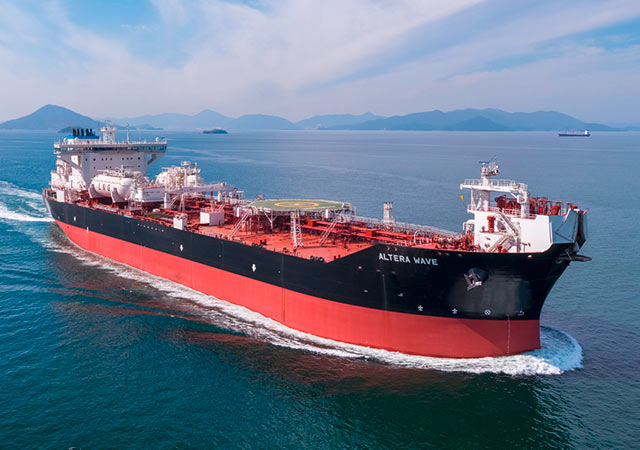
James Fowler, Structural Integrity Manager for Altera Infrastructure, says that while Nerves of Steel may focus on safety via hull integrity monitoring, the concept supports the company’s business objectives. “We have gained a great deal of insight working with DNV, and by identifying our safety, operational and commercial priorities which are unique to our shuttle tanker fleet, we have a solution that fits our needs,” he says. “We have implemented the basic Nerves of Steel indicator service across our entire shuttle tanker fleet and are currently pilot-testing the digital-twin numerical services on four vessels, which provides us with near real-time monitoring of hull integrity.”
Fowler notes that Nerves of Steel allows them to further establish proactive inspection and maintenance regimes to identify small defects before they become critical, which is crucial. “This is not just a matter of safety,” he says. “We have a high utilization rate across the fleet, so taking a vessel out of service to carry out unscheduled steel repairs is bad for business. And because demand for more detailed hull integrity assessments is increasing, Nerves of Steel helps to strengthen the confidence that charterers and insurers have in our organization. We are no longer working with assumptions but with verified data.”
Visualizing potential vessel damage
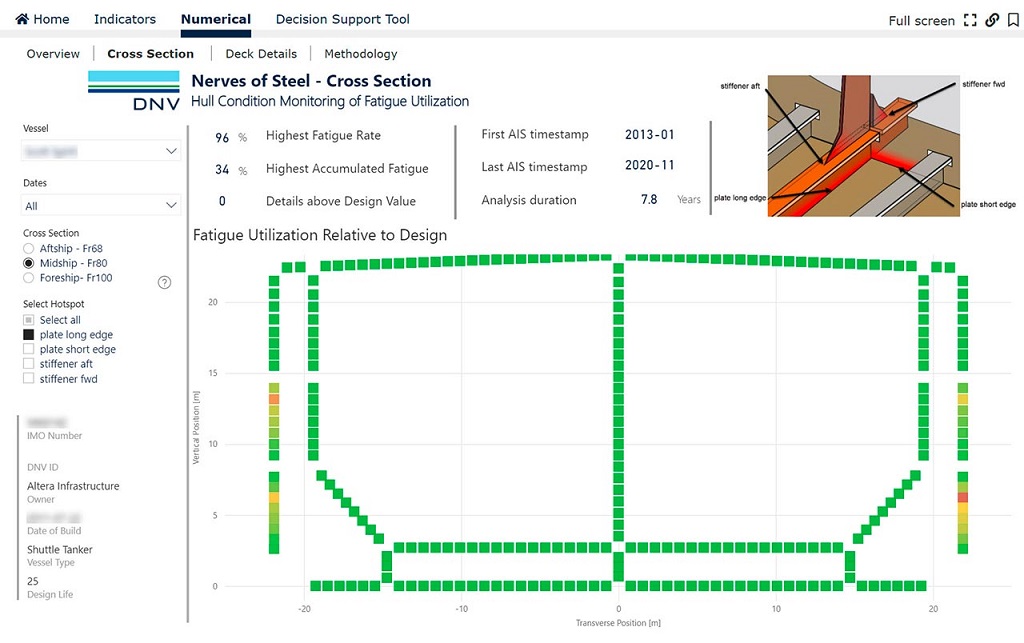
One focus of the project was to develop a dashboard that enables Altera to visualize hull integrity in real time. “The dashboard has helped us gain a better understanding of the relationship between a vessel’s trading pattern, the weather and hull integrity,” says Fowler. “This allows us to evaluate the consequences of operating in harsh weather environments and at the same time gives us the foresight to make more informed decisions on routing. By potentially limiting our vessel’s exposure to high wave loads, we can quantitively extend the life of the asset for continued shuttle tanker operations, or select a suitable asset for further analysis for conversion.”
Nerves of Steel also provides data that helps Altera perform root-cause analysis. “In addition to gaining a better understanding of how structural defects may develop on a particular vessel, this hindsight can be applied to sister ships for comparison purposes; it also helps inform us how we should design vessels, especially those expected to operate in areas with challenging weather conditions, such as the North Sea,” he says. “What can be measured can be managed.”
Sensor technologies provide a clearer picture of hull structure
In addition to the basic Nerves of Steel service (indicators) and the digital-twin service (numerical), DNV has also developed a hybrid service which integrates data from on-board sensors. “Using relevant sensors, combined with numerical models and relevant weather data, we can provide an even more accurate picture of hull structure utilization,” says Goncalves. “And in cooperation with Altera Infrastructure, we are developing a reporting tool that makes it easier to share data and exploring how the application of machine-learning algorithms can strengthen the service.”
Findings and tools can be translated into other projects
Goncalves says that while this Nerves of Steel project was developed for Altera Infrastructure’s fleet, “lessons learned” from the collaboration have produced a proven suite of tools that can be easily applied to other shipping segments or offshore structures. “DNV is working with a broad range of stakeholders in the maritime and energy industries to enable owners to monitor their assets in real time through the Nerves of Steel interface,” he says. “We are confident that as more stakeholders become aware of the benefits of this approach, we will be able to enable safer, more cost-effective operations.”
dnv.com
The port of Piraeus welcomed the first Cruise Ship of the season
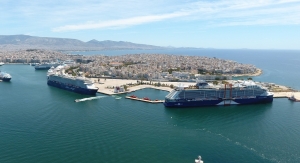
PPA S.A. announces the arrival of Mein Schiff 5, the first cruise ship in Piraeus for the current tourist season, with approximately 1000 passengers, after a long-time suspension due to the pandemic.
The port of Piraeus in cooperation with the competent authorities has taken all necessary measures for the safe conduct of passengers and the compliance with health measures, being ready to support the successful restart of the cruise industry, serving all cruise ships that have requested to visit it, offering quality services and contributing to the development of the tourist product.
It is noted that PPA S.A. has provided to the Region of Attica three (3) office rooms inside the Cruise Terminal for use as Public Health facilities, in order to be used by the staff of the Region for the health supervision of cruise operations in the port of Piraeus, as part of the measures against the COVID-19 pandemic.
Castor Maritime Inc. Announces New Vessel Acquisitions and the Delivery of the M/V Magic Vela

Limassol, Cyprus, May 17, 2021 – Castor Maritime Inc. (NASDAQ: CTRM), (“Castor”, or the “Company”), a diversified global shipping company, announces that it entered, through two separate wholly-owned subsidiaries, into agreements to acquire a 2013 Japanese-built and a 2014 Korean-built Panamax dry bulk carrier from unaffiliated third-parties for a purchase price of $19.06 and $21.0 million respectively.
The acquisitions are expected to be consummated by taking delivery of the vessels within the third and fourth quarter of this year and are subject to the satisfaction of certain customary
closing conditions.
The 2013 Japanese-built dry bulk carrier will be delivered to the Company with a time charter contract attached with a reputable charterer, at a daily gross charter rate of $11,650 and with
an estimated remaining term of about 2 to 4 months.
The agreement for the 2014 Korean-built Panamax dry bulk carrier contains a final purchase price adjustment mechanism, pursuant to which, in the event that the delivery of the vessel is
concluded after July 20th, 2021, the purchase price shall be reduced by $10,500 per day from that day and until the day a valid notice of readiness for delivery is tendered by the seller.
The Company also announces that, on May 12, 2021, it took delivery of the M/V Magic Vela, the 2011 Chinese-built Panamax dry bulk carrier it had agreed to acquire as previously announced on April 28, 2021. The M/V Magic Vela acquisition was financed in its entirety with cash on hand.
Petros Panagiotidis, Chief Executive Officer of Castor, commented: “We are happy to announce the acquisition of two additional Panamax vessels. Following the delivery of M/V Magic Vela, our fleet consists of 14 vessels, and after the completion of all our announced acquisitions, our fleet will consist of 26 vessels across the dry bulk and tanker segments.”
About Castor Maritime Inc.
Castor Maritime Inc. is an international provider of shipping transportation services through its ownership of oceangoing cargo vessels.
On a fully delivered basis, Castor will own a fleet of 26 vessels, with an aggregate capacity of 2.2 million dwt, consisting of 1 Capesize, 7 Kamsarmax and 10 Panamax dry bulk vessels, as well as 1 Aframax, 5 Aframax/LR2 and 2 MR1 tankers. Where we refer to information on a “fully delivered basis”, we are referring to such information after giving effect to the successful consummation of our recent vessel acquisitions.
castormaritime.com
“White Dragon” proposal submitted for IPCEI Hydrogen Important Projects of Common European Interest
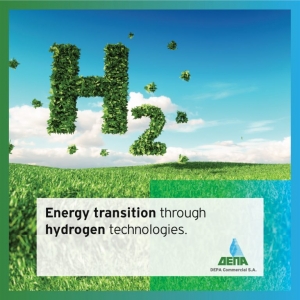
Marks a milestone for energy transition through hydrogen technologies
Last week was extremely important for hydrogen technologies and the Greek energy system. The national proposal for “White Dragon” was submitted on Wednesday, May 5, in the framework of the Greek call for expression of interest for Hydrogen Important Projects of Common European Interest by a group of companies formed by the largest energy groups in the country.
DEPA Commercial, as project coordinator, in collaboration with Advent Technologies, Damco Energy (Copelouzos Group), PPC, DESFA, HELLENIC PETROLEUM, Motor Oil, Corinth Pipeworks, TAP and Terna Energy submitted to the Greek Government and the EU their investment proposal which exceeds the amount of 8 billion Euro, for the development of an innovative integrated green hydrogen project in Greece which covers the entire hydrogen value chain.
The “White Dragon” is fully supported by the Region of West Macedonia and is the development of the initial expression of interest, in September 2019 in Brussels, of the Regional Governor of West Macedonia Mr. George Kasapidis. At regional level, it has also the support of the Bioeconomy and Environment Cluster of West Macedonia.
The core of the project is based on the gradual replacement of the lignite power plants of West Macedonia and the transition to clean energy having as final goal the de-carbonization of the country’s energy mix. The “White Dragon” project will use large-scale renewable electricity (GW) for the production of green hydrogen by electrolysis in Western Macedonia.
Hydrogen will then be stored directly (short-term hydrogen storage) and indirectly (streaming through DESFA’s natural gas pipeline) and, subsequently, through high temperature fuel cells will provide the country’s power grid with electricity as a fixed base load co-generation unit of green energy and heat.
The generated heat, as a by-product of green electricity production, could initially have a complementary use to the district remote heating networks of West Macedonia, as well as in other applications that require heat and / or cooling in the future (industries, data centers, greenhouses, etc.).
Moreover, a main goal of the “White Dragon” project is the development, by the cooperating companies, of an integrated Hydrogen Industrial Research Center within the High Technology Hydrogen Node Research & Development & Innovation that will be created in West Macedonia.
The intended upgrade and capitalization of the existing energy infrastructure (electricity grids and natural gas pipelines) is of utmost importance. In particular, natural gas pipelines will be used for the transport of green hydrogen for other uses, as well as for its indirect storage. A necessary condition is the creation of a regulatory framework for Energy Net Metering as a transition option until the full development of the hydrogen economy.
To accelerate growth in the framework of “White Dragon”, the National Natural Gas Transmission System will initially be prepared so that it can receive increasing rates of hydrogen, which will reduce the carbon footprint of the fuel and help initiate the hydrogen market. Moreover, the study and construction of an exclusive hydrogen backbone pipeline will be implemented in Greece, along with the first hydrogen projects in the transport sector (garbage trucks, trucks, trains, cars), the appropriate infrastructure for hydrogen refueling stations (HRS) and its road transportation and distribution.
The exclusive hydrogen backbone pipeline will enable the interconnection between remote green hydrogen production units with large end consumers (refineries, industrial units, etc.) to help them “green” their production processes, but also the interconnection with the respective systems of neighboring countries.
Finally, through the integrated “White Dragon” project, the transport and export potential of hydrogen through TAP Pipeline connecting Greece to European markets.
The key elements of the completed “White Dragon” project are:
Total investment cost: € 8.063 billion
Project duration: 2022 – 2029 (R&D, FID and ΕΕΤ phases)
Hydrogen production: 250,000 tons / year *
Hydrogen for other uses: 58,000 to 71,000 tons / year
Saving CO2: 11.5 million tons / year
Job creation: 18,000 direct jobs and 29,500 indirect
*Renewable hydrogen will be supplied almost entirely into the pipelines
On behalf of all the partners participating in “White Dragon”, Mr. Konstantinos Xifaras, CEO of DEPA Commercial, noted: “The “White Dragon” project, coordinated by DEPA Commercial, is a decisive step for the realization and development of hydrogen technologies in Greece. The project has the potential to become a lighthouse project for Europe by having a significant positive environmental and socio-economic footprint. It is estimated to attract major investments in the green technologies’ sector, create a great amount of sustainable jobs, make Greece a pioneer in Southeast Europe in terms of hydrogen technologies and make West Macedonia an exemplar for fair transition to clean technologies”
Dredges: Trends and Opportunities in the U.S. Market
26 MAY
Event Date: Wednesday, May 26, 2021
Time: 9 AM GMT, 10 AM CST/CDT, and 9 PM CST/CDT
Full Details: Click here
Dear Colleague,
Deepening and maintaining waterways and navigation channels through the use of dredges allow for the safe movement of ships and cargo in the maritime industry. Investments in the dredging fleet are now being viewed as a critical step in supporting new developments, including environmental restoration and U.S. offshore wind projects.
Join us as we discuss what’s ahead for dredges in the U.S. and how ABS can assist with guidance and solutions. Our speakers will address:
• Emerging opportunities and application for dredges
• Unique operational aspects and safety considerations
• ABS class solutions and case studies
Looking forward to seeing you there,
The ABS Team
ABS Publishes Guidance on the Use of Biofuels in Shipping

ABS continues its series of industry-leading alternative fuels guidance with the publication of its latest whitepaper examining the potential of biofuels in shipping.
The Sustainability Whitepaper: Biofuels as Marine Fuel gives an overview of the various types of marine liquid biofuels that are “drop-in” fuel options for replacing conventional fuels in both the near- and long-term and their potential to contribute to industry decarbonization goals. Other aspects considered include safety, vessel design implications and regulatory challenges.
“Biofuels have been identified as highly promising carbon neutral fuels that can enter the global market relatively quickly and help approach the IMO GHG reduction targets for 2030 and beyond. Being produced from renewable biomass, biofuels have the potential to offset the carbon emissions of a vessel due to the CO2 absorption of the feedstock, which can help counterbalance the combustion emissions. However, the total carbon reduction potential of different biofuels clearly depends on a range of factors related to their value chain. ABS is committed to ensuring owners, operators, shipbuilders and original equipment manufacturers are fully informed about its potential as they develop their decarbonization strategies,” said Georgios Plevrakis, ABS Director, Global Sustainability.
The guidance builds on ABS research developed in the ABS Low Carbon Shipping Outlook series, to help drive decarbonization pathways for the industry.
Source: ABS
BSM launches digital payment platform for seafarers

Singapore/Hamburg. Bernhard Schulte Shipmanagement (BSM) has launched BSM NiumPay, a digital payment platform for its seafarers and their families to manage finances easily and efficiently. The new payment platform provides seafarers with a multi-currency eWallet and a complimentary VISA card. In addition, a supplementary VISA card is available for the seafarer’s family.
“Digital payments have become an essential part of our everyday lives; seafarers, however, are still very much dependent on cash on board and incur costly charges when sending money home”, says Dennis Moehlmann, Finance Manager at BSM. “With this new initiative, we are taking a big step ahead in digitalising the industry by not only reducing the use of cash aboard vessels but also by giving seafarers the freedom to quickly transfer funds from and to nearly all parts of the world using their mobile phones.”
With BSM NiumPay, seafarers can receive and send funds home in real-time, exchange money at best trading rates as well as withdraw cash at most ATMs worldwide. Furthermore, it includes a multi-currency account, allowing seafarers to manage their balances in all major currencies. Whenever an urgent advance payment is needed, the Master can easily top up the seafarer’s eWallet instantly.
The idea behind the unique platform was formed when BSM and its sister company Innoport, the corporate venturing arm of the Schulte Group, realised that existing solutions simply did not meet the complex requirements of a globally operating shipping company. Both companies then joined forces to fill this market gap.
"The eWallet is uniquely designed for BSM to meet the specific needs of seafarers, taking into account their global work environment. By partnering with Nium, a Singapore-based fintech company, we ensure that all services can be seamlessly and conveniently accessed through a single app on the user’s mobile phone”, explains Haymon Sinapius, Investment Manager at Innoport.
Following the first successful trials aboard ten vessels, BSM is now targeting a broad and fast implementation to connect its seafarers, vessel by vessel, starting with the Asia-Pacific region. Going forward, BSM will continue to share its experience in developing and implementing the platform with other interested vessel owners and ship managers, taking an active role in supporting the maritime industry in moving away from cash and reap the benefits of digitalisation.
About Innoport
Innoport is the venture capital unit of the Schulte Group that identifies investment opportunities in startups from the global maritime and the logistics sector and equips entrepreneurs with smart capital. The Innoport team works globally to build up a diversified investment portfolio of innovative and high potential seed-stage startups across Asia and Europe, and supports Schulte Group business units in their technological transformation. They work with founders from the discovery stage up to successful exit, promoting the portfolio companies to a wider network within the Schulte Group.
For further information, please view https://innoport.vc/.
About Nium
Nium is a next-generation financial services platform that enables companies around the world to unlock new revenue opportunities and improve cash flow economics. Nium is a leader in its geographical and payment service breadth, owning licenses in the world's largest and fastest-growing economies. Our modular platform allows banks, payment providers, travel companies, and other businesses to collect and disburse funds in local currencies to over 100 countries, plus issue physical and virtual cards globally. Our proprietary set of APIs embeds financial services and can bring to life multiple B2B and B2C use cases in a matter of weeks. Nium is part of CB Insights Fintech 250, which highlights the most promising Fintech companies globally. Today, Nium serves over 130 million customers and enables platforms to provide access to financial services to over 3 billion people across the world.
For more information, visit http://www.Nium.com.
A third of euro zone corporate loans exposed to climate hazards: ECB
Euro zone banks face potential climate hazards such as floods and droughts on up to a third of their loans to companies, with lenders in Greece, Portugal and Spain among the most exposed, the European Central Bank said on Monday.
The ECB study is part of a broader analysis of the risks that climate change poses to the financial sector, ranging from physical damage to changes in regulation or in consumer preferences.
It found that around 30% of euro area banks’ corporate loan book is exposed to businesses located in areas where the risk of floods, droughts, extreme heat, wildfires or a rise in sea levels is high or rising.
“This may become increasingly relevant if emissions are not effectively reduced in the long run and if firms and economies fail to adapt to climate change,” the ECB said.
With 18% of firms in Southern Europe highly or increasingly exposed to extreme heat, water scarcity or wildfires, banks in those countries emerged as the most exposed.
Some 80% of Greek banks and roughly 40% of Portuguese and Spanish banks were exposed to multiple risks, the ECB’s study showed.
While two-thirds of loans to areas at high or rising risks are secured by collateral, half of that is made up of physical assets — whose value is itself subject to those same hazards — in sectors such as manufacturing and real estate
Only a third of climate-related economic losses in the euro area are insured, with that share falling as low as 12% in southern Europe, the ECB said citing Eurostat and NatCatSERVICE data.
Source: Reuters (Reporting By Francesco Canepa; Editing by Kirsten Donovan)
Embassy and General Consulate of Panama in Greece - May 2021- Press Release from Panama Maritime Authority

Powered by  © Μaritimes 2019