
-
Home

-
Maritimes NEWS
-
Ports
- maritimes


maritimes
Ulsan Port, South Korea, leads the way in the supply of sustainable marine fuel
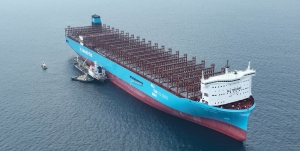
A world first: Green methanol supply to a very large container ship (16k) successfully completed
The Ministry of Oceans and Fisheries (Minister Kang Do-Hyung) and Ulsan Port Authority (President Kim Jae-gyun) announced a world first with the successful completion of ship-to-ship (STS) green methanol supply[1] to a very large container ship (16k) at Ulsan Port, South Korea.
The Ministry of Oceans and Fisheries established the relevant institutional foundation, including the ‘Guidelines for Approval of Self-Safety Management Plan for Methanol Supply’, and accumulated know-how through two methanol supply demonstrations[2] with Ulsan Port Authority in July and November last year. In addition, as competition among global ports for the methanol fuel market is intensifying, the success of this demonstration[3] is significant.
It is expected that this will not only enable Korean ports to further consolidate their position in the world as a sustainable marine fueling location, but will also promote the growth of Korea’s sustainable marine fueling industry in the future.
The Ministry of Oceans and Fisheries and Ulsan Port Authority will continue to upgrade related systems, such as establishing standard operating procedures for the supply of methanol, and will also continue to work with the private sector to secure the economics of sustainable marine fuel supply.
“Competition among international ports to preempt the market by building ports that supply sustainable marine fuel is accelerating,” said Kang Do-Hyung, the Minister of Oceans and Fisheries. “Under the goal of achieving net-zero by 2050 in the global shipping sector, we will make all-out efforts to strengthen competitiveness so that Korea can lead the global trend of switching to sustainable fuels.”
Kim Jae-gyun, the president of Ulsan Port Authority, commented “Following the success of the world’s first green methanol PTS bunkering for container ships in July last year, Ulsan Port has succeeded in green methanol STS bunkering for a very large container ship.” He further expressed, “We will do our best to proactively respond to the paradigm shift in ship fuel so that Ulsan Port can be reborn as a hub port for sustainable marine fuel supply.”
[1] (Supplier/bunkership/volume) OCI Global / GOLDEN SUNNY HANA (chemical ship, owned Hana Marine) / 5,000 tons (Receiver/Vessel) A.P. Moller-Maersk A/S / ANE MAERSK (16k, container ship)
[2] (1) World’s first green methanol pipe-to-ship (PTS) fuel supply to a container ship (2.1k, LAURA MAERSK) in July 2023, (2) Ship-to-ship (STS) bunkering of grey methanol (methanol made from fossil fuels) to a container ship (16k, ANE MAERSK) in November 2023
[3] Promote demonstration projects for the Ministry of Oceans and Fisheries, such as reducing port dues and supporting expedited review of safety regulations.
About Ulsan Port Authority
Established in 2007, Ulsan Port Authority is responsible for the development, management, and operation of Ulsan Port, the world's fourth largest and South Korea's largest liquid cargo-centered port. Since its opening in 1963, Ulsan Port has played a crucial role as South Korea's leading industrial support port, growing into a trade port with an annual cargo volume of approximately 200 million tons.
EU Innovation Fund is key to support the transition to zero-emission waterborne transport

Today (01/02), CLIA Europe, ECSA, ESPO, FEPORT, SEA Europe and WaterborneTP jointly organised the EU Innovation Fund infoday for the waterborne transport sector, co-organised by the European Commission. Approximately 300 participants from the broader waterborne transport sector (private and public stakeholders) attended the infoday, showcasing the commitment of the sector to engage and set sail for deploying solutions for societal challenges, while highlighting the need for financial support for the uptake of clean fuels and for the deployment of innovations to progress as fast as possible on the net-zero pathway.
The Innovation Fund uses revenues generated by the EU Emissions Trading System to invest in Europe's green transition. 20 Million EU Emission Trading System (ETS) allowances have been earmarked under the new EU ETS Directive for the maritime sector. These allowances correspond to 1.5 to 2 billion EUR under the current carbon price. Although waterborne transport projects were already eligible, the most recent call for proposals in the framework of the EU Innovation Fund includes specificities of the sector, taking into account the fact that maritime transport contributes to the EU ETS from 1 January 2024 onwards. The Innovation Fund focuses on highly innovative technologies and flagship projects within Europe that can achieve significant emission reductions. The aim is sharing the risk with project promoters and putting the spotlight on highly innovative projects with clear European added value.
In the waterborne transport domain, support can be provided to various clean technologies that contribute to the decarbonisation of the sector. These include energy efficiency, sustainable fuels and energy sources as well as infrastructure. Various examples of new projects were presented by different stakeholders during the infoday.
Whilst the sector is acknowledging the importance of the EU Innovation Fund, there is still a need to further finetune the Fund for future calls and the upcoming dedicated maritime calls, to ensure the specificities of the sector are properly addressed. The event provided a unique opportunity to discuss also these items as well, ranging from calculation methods and assessment of the award criteria that must be targeted to the specificities of the sector to the need to ensure access to the funding instruments for small and medium-sized enterprises and the importance of a comprehensive network approach in deploying the innovative solutions.
Marie-Caroline Laurent, Director General Europe, CLIA said: “The cruise industry is at the heart of the European maritime industrial cluster with 98% of cruise vessels built in Europe. The opportunity to access the EU Innovation Fund will support our industry’s drive to innovate. To achieve the maritime industry objective of zero GHG emissions by 2050, reinvestment of EU ETS revenues into maritime innovation, research & development and adequate renewable energy infrastructures at ports will essential at European and national level.”
Sotiris Raptis, Secretary General, ECSA, added: “Decarbonising shipping is not a question of ‘if’ but a question of ‘how’. Setting aside almost 2 billion EUR of the ETS revenues for maritime is a victory for the decarbonisation of the sector. Clean fuels can be up to five times more expensive compared to fuels currently used. Dedicated support through the Innovation Fund is key to bridging the price gap with clean fuels, as well as improving the energy efficiency of ships, fostering innovation and building the infrastructure in ports.”
Isabelle Ryckbost, Secretary General, ESPO, continued: “The EU Innovation Fund is instrumental in paving the way to progress as fast as possible on the sector’s greening path. This requires important and more high-risk investments in ports, to ensure the supply and infrastructure needed for the new energies and technologies. As such, the Fund should make sure to support projects that are proven highly effective in terms of emission reduction and overall climate impact, and must be improved and scaled up even further through further innovation.”
Lamia Kerdjoudj, Secretary General, Feport, added: “This workshop is a very important exercise that allows us to identify the main needs to be considered in the framework of the forthcoming calls. It has also shown the importance to dedicate part of the revenues of the Innovation Fund for the maritime sector and port sector[1]. FEPORT also underlines the need to focus on GHG emission avoidance, cost efficiency and replicability as important award criteria to ensure that the Innovation Fund can leverage adequate support for energy efficiency in ports and the electrification of the maritime sector.”
Christophe Tytgat, Secretary General, SEA Europe, added: “Today's highly attended infoday highlighted the remarkable interest of the maritime sector towards the current and forthcoming calls under the Innovation Fund. The growing recognition of maritime project specificities within the Innovation Fund framework marks a significant stride forward. However, SEA Europe is now looking to propel progress even further by contemplating the establishment of a dedicated maritime envelope or fund. Such an approach will foster competition exclusively among maritime project proposals and so, aims to amplify opportunities and streamline advancements within the maritime industry.”
Jaap Gebraad, Secretary General, Waterborne Technology Platform, concluded: “The EU Innovation Fund is a key instrument to deploy innovations. The Fund has the potential to ensure the sector meets the climate targets that have been set. Taking into account the fact that the waterborne transport sector mainly consists of SMEs, further necessary amendments to the Fund would ensure a just transition of the waterborne transport sector.”
[1] As agreed upon by the EU Parliament and the Council in 2023: EU ETS revenues should go back to the maritime sector to support the uptake of clean fuels and foster innovation (20 million ETS allowances, which correspond to around 2 billion Euro)
Cruise Lines International Association (CLIA) is the world’s largest cruise industry trade association, providing a unified voice and leading authority of the global cruise community. On behalf of the industry, together with its members and partners, the organization supports policies and practices that foster a secure, healthy and sustainable cruise ship environment, as well as promote positive travel experiences for the more than 30 million passengers who cruise annually. The CLIA community includes the world’s most prestigious ocean, river and specialty cruise lines; a highly trained and certified travel agent community; and cruise line suppliers and partners, including ports and destinations, ship development, suppliers and business services. The organization’s global headquarters are in Washington, DC, with regional offices located in North and South America, Europe, Asia and Australasia. For more information, visit www.cruising.org or europe.cruising.org or follow CLIA on Facebook, Twitter and LinkedIn.
ECSA represents 21 national shipowners’ associations based in the EU and Norway (www.ecsa.eu). European shipowners control 39.5% of the global commercial fleet, contribute 149 billion euros per year to the EU GDP and provide 2 million people with careers both on board and ashore. ECSA strives for a regulatory environment that fosters the international competitiveness of European shipping, to the benefit of the EU.
Enquiries about ECSA can be sent to: ECSA Senior Director Shipping Policy & Communications, Luisa Puccio, This email address is being protected from spambots. You need JavaScript enabled to view it.
ESPO represents the port authorities, port associations and port administrations of the seaports of the European Union's Member States and Norway at EU political level (www.espo.be). ESPO also has observer members in Albania, Iceland, Israel, Montenegro, Ukraine and the United Kingdom.
Enquiries about ESPO can be sent to: Isabelle Ruyckbost, Secretary General, This email address is being protected from spambots. You need JavaScript enabled to view it., +32 2 736 34 63
FEPORT Since 1993, FEPORT represents the interests of a large variety of private port companies and terminals performing cargo handling and logistics related activities in the seaports of the European Union (www.feport.eu). FEPORT members employ more than 390 000 port workers.
Enquiries about Feport can be sent to: Maarten Boot, Policy Advisor This email address is being protected from spambots. You need JavaScript enabled to view it., tel: +32 (0)2 736 75 52.
SEA Europe represents the European shipbuilding industry in 15 nations, encompassing the production, maintenance, repair, retrofit and conversion of all types of ships and floating structures, commercial as well as naval, including the full supply chain with the various producers of maritime systems, equipment material, and services.
Enquiries about SEA Europe can be sent to: Benoit Loicq, Technical and Environmental Affairs Director, This email address is being protected from spambots. You need JavaScript enabled to view it., tel: +32475917724
WATERBORNE TP has been set up as an industry-oriented Technology Platform to establish a continuous dialogue between all waterborne stakeholders, such as classification societies, shipbuilders, shipowners, maritime equipment manufacturers, infrastructure and service providers, universities or research institutes, and with the EU Institutions, including Member States (www.waterborne.eu). The members of Waterborne TP comprise members as well as associated members from both maritime and inland navigation countries, representing about 21 Member States. In addition, the Associations member of the Waterborne Technology Platform represent the broader waterborne sector throughout the entire EU.
ZeroNorth acquires Euronav’s FAST platform, accelerating shipping industry’s journey to zero emissions

Euronav is set to fully adopt the ZeroNorth platform, further increasing organisation’s sustainability impact
Copenhagen, Denmark; 31 January 2024: Technology company ZeroNorth and shipping company Euronav have today announced that ZeroNorth will acquire and manage Euronav’s Fleet Automatic Statistics and Tracking (FAST) platform. As part of the deal, Euronav also becomes a customer of ZeroNorth’s full platform offering.
FAST collects advanced high-frequency data in real time from sensors across Euronav's fleet. Euronav has successfully implemented the FAST platform across its fleet, using ship reporting, voyage optimisation and ship optimisation through the use of high-frequency data. FAST has significantly improved collaboration between ships and all shore departments, optimised vessel and fleet utilisation, reduced fuel consumption, and lowered OPEX. These improvements have had a tangible positive impact on Euronav's bottom line results and have also helped improve its sustainability strategy.
The data can power up voyage and vessel optimisation decisions, allowing crew and shoreside teams to collaborate in making the most detailed live adjustments to improve sustainability and profitability for Euronav’s diverse fleet of globally operating vessels.
Over time, the plan is for ZeroNorth and Euronav to integrate FAST’s data and full functionality with the ZeroNorth platform. This high-frequency data and FAST’s existing functionality will drive ZeroNorth’s data flywheel, accelerate the industry’s green transition and massively increasing the company’s positive impact on the market.
The transfer comes at a time of increasing transformation for the global trade value chain, with digitalisation and data now at a tipping point for impact. The new collaboration between the two companies will radically accelerate the digitisation of shipping, uniting two sustainable shipping leaders with a shared vision to make a positive impact on the planet.
Pelle Sommansson, Chief Growth Officer & EVP, ZeroNorth, said: “We are extremely excited by this new partnership with Euronav, which is already recognised as one of the most sustainable and progressive companies in the shipping industry. By acquiring FAST and incorporating it into our existing platform, we believe we will accelerate the transformation and sustainability strategies of a large part of the global fleet.
High-frequency data is the solution to many industry challenges. Optimised journeys play a major role in achieving zero emissions in our industry. That’s why we are proud to work with like-minded leaders at Euronav, because together we can change the way that our customers, and shipping as a whole, operate for the better.”
Patrick Declerck, Operations Manager, Euronav, added: "Euronav has a clear ambition to be a leader in sustainability and efficiency. We are proud to partner with ZeroNorth, which is already making a significant impact on enabling green global trade.
Together, we are leading brands focused on creating a better world. We believe this new partnership will enable us to drive the journey to zero emissions across the shipping industry to decarbonise today and navigate tomorrow. This will make more parties aware of the transformative impact data can have on their operations.”
About ZeroNorth
Recognising the challenges posed by climate change, technology company ZeroNorth was founded to accelerate the transition to greener global trade. By blending cutting-edge data-driven technology with human expertise, the ZeroNorth platform provides a range of software solutions that are helping the global shipping industry cut emissions and reduce its impact on the climate, whilst maintaining commercial performance.
ZeroNorth offers one platform with multiple services and is an industry leading software developer, which interconnects data into insights and actions, optimising global trade for cargo owners, vessel owners, commercial operators, charterers, and bunker suppliers. The company’s software offers a full range of services which support the value chain to increase earnings and reduce CO2 emissions.
About Euronav NV
Euronav is an independent tanker company engaged in the ocean transportation and storage of crude oil. The company is headquartered in Antwerp, Belgium, and has offices throughout Europe and Asia. Euronav is listed on Euronext Brussels and on the NYSE under the symbol EURN. Euronav employs its fleet both on the spot and period market. VLCCs on the spot market are traded in the Tankers International pool of which Euronav is one of the major partners. Euronav’s owned and operated fleet consists of 1 V-Plus vessel, 20 VLCCs (with a further three under construction), 21 Suezmaxes (with a further five under construction) and 2 FSO vessels.
NYK Holds Dry Bulk Safety Conference in Greece
Held overseas for the first time with Greek shipowners to achieve safer ship operations
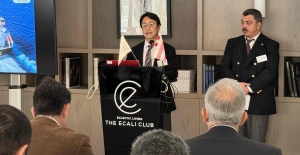
NYK held its first Dry Bulk Safety Conference in Athens, Greece, on January 25. The conference was attended by 74 participants from 36 Greek shipowners and other companies involved in the dry bulk business. Since 2010, this conference has been held annually in Japan, mainly for Japanese shipowners and ship-management companies, and this was the first year the gathering was held abroad.
The purpose of this meeting was to share information with Greek shipowners and others on past accidents and troubles and the subsequent responses. The NYK Group's initiatives for safe ship operations and efforts being made throughout the shipping industry to reduce the burden on the natural environment were also presented. NYK additionally introduced its activities to promote safe operation through NAV9000,* the NYK Group's safety standards, and the Remote Diagnostic Center (RDC),** which is a facility in the Philippines for remote diagnosis and monitoring of the state of engine plants. Moreover, the ship classification society Nippon Kaiji Kyokai (ClassNK) introduced new-generation marine fuels and new SOLAS requirements for mooring equipment, and the Norwegian classification society Det Norske Veritas (DNV) presented an overview of the decarbonization requirements, industry trends, and technologies.
A lively exchange of opinions took place during the Q&A session. Participants asked questions such as "Could you tell me about NAV9000 more?" and "Which next-generation fuel do you think will be the most common in the world?" and offered comments such as "Very good opportunity to learn about trends in Japan's maritime cluster" and " It was a great benefit to learn about NYK’s activities to promote safe operation." demonstrating a high level of interest in the safe operation of vessels and the reduction of environmental impact.
NYK will continue to provide information on safe vessel operations and environmentally friendly initiatives to gain the understanding of maritime professionals, thereby contributing to the sustainable, safe operation of the entire shipping industry.
On March 10, 2023, the NYK Group released its medium-term management plan“Sail Green, Drive Transformations 2026 — A Passion for Planetary Wellbeing.” The NYK Group is promoting growth strategies with ESG at the core, based on the Group’s mission statement of “Bringing value to life” and a new corporate vision for 2030, which reads, “we go beyond the scope of a comprehensive global logistics enterprise to co-create value required for the future by advancing our core business and growing new ones.”
Sea Europe welcomes the transition pathway for a Green, Digital, and Resilient European Mobility Industrial Ecosystem

SEA Europe welcomes the Transition Pathway for the European mobility industrial ecosystem published on 29 January by the European Commission. It is the result of a two-years “co-creation” process between industry stakeholders and policy-makers, to identify the challenges, opportunities, and actions needed to lead the green and digital transition and improve the ecosystem’s resilience.
SEA Europe was closely involved in the co-creation process and co-chaired the roundtable on the waterborne sector. The Transition Pathway thus clearly highlights the maritime technology industry's "call for an effective EU maritime strategy to address the competitiveness challenges of the waterborne industry".
Christophe Tytgat, Secretary General of SEA Europe, commented, "The Transition Pathway is an important acknowledgement by the European Commission that the maritime technology industry is critical for the greening and digitalisation of the waterborne sector. It makes the challenges clear: although the new economic activities in the blue economy constitute an important opportunity for the European industry – which remains a global leader in complex shipbuilding and in advanced maritime equipment manufacturing –, the European shipbuilding sector is challenged by massive State aid in third countries, subsidized steel, easier access to finance but also local content requirements favouring domestic production and other forms of protectionism. The WTO framework and EU anti-dumping measures are not effective in fixing this competitiveness issue.”
The European Commission now calls on industry stakeholders to “make pledges” in line with the actions identified in the Transition Pathway. SEA Europe will act upon this call and continue working closely with policy-makers and the other stakeholders of the mobility ecosystem towards a vigorous EU maritime industry strategy.
SEA Europe represents close to 100% of the European shipbuilding industry in 16 nations, encompassing the production, maintenance, repair, and conversion of all types of ships and floating structures, commercial as well as naval, including the full supply chain with the various producers of maritime systems, equipment material, and services. As an NGO observer at the International Maritime Organisation (IMO), CESA represents the shipbuilding industry and its supply chain from EU Member States, Norway, and Turkey.
Seanergy Maritime Achieves Key Partnership with European Union Funding and Major Industry Stakeholders Under SAFeCRAFT to Revolutionize Maritime Propulsion for Existing Vessels

January 30, 2024 - Athens, Greece - Seanergy Maritime Holdings Corp. (the "Company" or "Seanergy") (NASDAQ: SHIP), through its wholly-owned subsidiary Seanergy Shipmanagement Corp., is the first Greek-based shipping company to accomplish a strategic partnership in the European Union Funded SAFeCRAFT Project Consortium (“Safecraft”), a breakthrough initiative concerning the utilization of alternative fuels.
Safecraft aims to demonstrate the safety and viability of Sustainable Alternative Fuels (SAFs) in seaborne transportation, accelerating the adoption of SAFs technologies.
Seanergy will provide one of its existing, conventionally fueled Capesize vessels as the demonstrating vessel under Safecraft which will be retrofitted to utilize hydrogen (H2) as the main energy source for electric power generation. This system is also expected to cover a portion of the vessel's propulsion requirements and, therefore, to reduce reliance on conventional fuels.
Seanergy will oversee the feasibility study and the retrofitting of the equipment in cooperation with Hydrus Engineering S.A., American Bureau of Shipping, National Technical University of Athens, MOTOR OIL (Hellas) Corinth Refineries S.A., University of Patras, Dresden University of Technology, RINA Services SPA, Pherousa Green Technologies AS, Foundation WEGEMT and University of Strathclyde, aiming to physically demonstrate this groundbreaking technology’s applicability to the existing maritime fleet.
This visionary project has a duration of 48 months starting from December 2023 and will be co-funded by the consortium partners and the European Union’s key funding program for research and innovation, the “Horizon Europe” program, aligning with the FuelEU Maritime 2040 targets and demonstrating a decisive ambition to achieve a 26% reduction of CO2eq in an existing vessel.
Stamatis Tsantanis, the Company’s Chairman & Chief Executive Officer, stated:
“We are the first Greek-based shipping company on this groundbreaking project. The strategic partnership with the European Union and key industry stakeholders is another major achievement of our Company towards our global ESG objectives. Safecraft is advancing our proven strategy of making the current vessels more efficient and potentially reducing radically GHG emissions by utilizing alternative fuels and new technologies on the existing fleet.
“This prominent combination of world-renowned stakeholders consists of classification societies, engineering and industrial firms, the academic community, as well as the European Union. Our collaborative approach will actively contribute to the development of green solutions for the existing fleet, revealing solutions that have an immediate impact.”
Vasileios G. Petousis, the Company’s Energy & Sustainability Manager, stated:
“We actively pursue advanced operational and technical initiatives that place Seanergy at the forefront of a greener maritime industry as a notable example.
“We strive for a more sustainable course of operations and we constantly evaluate and further improve the Company's ESG milestones in an effort to meet the global environmental targets through tangible and proven solutions.”
Seanergy Maritime Holdings Corp. is the only pure-play Capesize ship-owner publicly listed in the U.S. Seanergy provides marine dry bulk transportation services through a modern fleet of Capesize vessels. The Company's operating fleet consists of 17 vessels (1 Newcastlemax and 16 Capesize), with an average age of approximately 12.8 years and an aggregate cargo carrying capacity of 3,054,820 dwt.
The Company is incorporated in the Marshall Islands and has executive offices in Glyfada, Greece. The Company's common shares trade on the Nasdaq Capital Market under the symbol “SHIP”. www.seanergymaritime.com
LR and Green Marine forge strategic partnership to lead in solutions for methanol as a marine fuel

Leading Danish methanol-as-marine-fuel consultancy to collaborate with LR on expert training for methanol handling.
Lloyd’s Register (LR) and Green Marine, a Danish consulting service provider that specialises in methanol as marine fuel, have joined forces to offer value-adding solutions to maritime stakeholders that aim to build or retrofit and operate vessels with methanol-as-fuel technology, with a prime focus on training.
Methanol, known for its lower carbon intensity and potential for renewable production, presents a promising pathway to propel the maritime industry towards a more sustainable future. As a new fuel in shipping, there is still limited operational experience of methanol as a marine fuel and its use presents challenges for seafarers and their upskilling, alongside shoreside competencies which are required in order to ensure safety and efficient use.
Green Marine has developed experienced-based training delivered by ex-captains and chief engineers with over 100,000 hours of onboard operational experience in methanol dual-fuelled ships. This, coupled with LR’s expertise around rules, risk assessment and risk management, as well as human factors, provides an end-to-end support that is expected to create significant value in practice.
Andy McKeran, Chief Commercial Officer, Lloyd’s Register said: “This partnership reflects LR and Green Marine’s shared commitment to advancing sustainable solutions in the maritime sector. By leveraging our technical expertise and working collaboratively with Green Marine, we aim to accelerate the adoption of methanol as a viable and environmentally friendly fuel source, contributing to a greener and more sustainable future for the maritime industry.”
Nikos Kakalis, Global Bulk Carriers Segment Director, Lloyd’s Register said: “LR is delighted to initiate our partnership with Green Marine focusing on human factors for methanol as marine fuel. We firmly believe that crew and shore personnel are a immensely important part of sustainable shipping, both now and in the future.”
Morten Jacobsen, CEO Green Marine, said: "Green Marine’s gold-standard methanol training curriculum was created based on practical knowledge gathered over a decade of experience working with methanol dual fuel vessels. Our certified trainers are captains and chief engineers with first-hand knowledge of working with methanol as marine fuel and the safe handling of the same. The Green Marine methanol training curriculum is supplementing baseline regulatory training requirements with experience-based learnings. We provide practical knowledge to support crews in adopting methanol dual fuel technology and the safe handling of methanol.
"Our partnership with Lloyds Register on methanol marine fuel training aligns perfectly with the evolving demands and regulations of the maritime industry.”
About Lloyd’s Register
Trusted maritime advisers, partnering with clients to drive performance across the ocean economy.
Lloyd’s Register (LR) is a global professional services group specialising in marine engineering and technology. With a heritage going back more than 260 years to the establishment of the world’s first marine classification society; improving and setting standards for the safety of ships.
Today we are a leading provider of classification and compliance services to the marine and offshore industries, helping our clients design, construct and operate their assets to accepted levels of safety and environmental compliance.
We also provide advice, support and solutions on fleet performance and optimisation, voyage optimisation, enhancing our clients’ digital capability. Our digital solutions are relied upon by more than 20,000 vessels.
In the race to zero emissions, our research, technical expertise and industry-firsts are supporting a safe, sustainable maritime energy transition.
Lloyd’s Register Group is wholly owned by the Lloyd’s Register Foundation, a politically and financially independent global charity that promotes safety and education.
About Green Marine
Green Marine’s methanol experts are Technical and Operational Directors, Captains and Chief engineers with direct knowledge derived from concept to the supervision of the newbuilding construction of 16 methanol dual fuel MR tankers from 2014 to 2023 and from managing, as well as sailing onboard these vessels since 2016.
Green Marine has offices in Copenhagen, Gothenburg, Geneva, Manila and Singapore and the firm is committed to assisting the maritime industry in accelerating the transition to a methanol-powered maritime future.
Research and Innovation key for a sustainable competitiveness of the waterborne value chain

innovation in the transition pathway for the EU mobility industrial ecosystem
Brussels, 30 January 2024- Without waterborne transport, Europe would not be able to function. According to the report on the transition pathway for the EU mobility industrial ecosystem published yesterday, as more than 80% of the EU’s external trade and 40% of the EU’s internal trade are carried by sea and EU shipping controls 39.5% of the world fleet, waterborne transport has a strategic dimension. Europe’s maritime technology sector comprises some 300 shipyards and more than 28,000 maritime equipment manufacturers and technology suppliers. The EU has all the necessary ingredients for a flourishing and competitive waterborne transport sector, supplying Europe with among others energy and food as well as raw materials for its industries.
The report highlights the crucial role of the transition to clean shipping as an opportunity for the EU waterborne industry to regain sustainable competitiveness. This will require significant investments in new technology development in a market where the EU already plays a frontrunner role in RD&I. It will also lead to new opportunities in terms of fleet renewal and retrofitting activities (i.e. energy efficiency improvements, conversion of ships to alternative fuels). The waterborne transport sector is involved in a complete transformation especially focusing on the production and integration of innovative zero-emission, air pollution control, noise reduction, sustainable, digital, and automated/autonomous technologies as the cornerstones of the industry’s global competitiveness.
Another important line of innovation in the sector is through the digitalisation of ships and ship systems. Further RD&I activities regarding the digital transformation are recommended in the report
Eero Lehtovaara, Chair of the Board of Directors, Waterborne TP, said: “The items identified in the transition pathway for the EU mobility industrial ecosystem clearly identify the need and the significant added value of EU research and innovation activities and the deployment of these innovations. The digital and green transition will be the cornerstones of our activities for the coming period. These activities should benefit the entire waterborne transport ecosystem to increase competitiveness at the global level. Only this way the EU will be able to secure the fundamental role of a European waterborne transport sector.”
WATERBORNE TP has been set up as an industry-oriented Technology Platform to establish a continuous dialogue between all waterborne stakeholders, such as classification societies, shipbuilders, shipowners, maritime equipment manufacturers, infrastructure and service providers, universities or research institutes, and with the EU Institutions, including Member States (www.waterborne.eu). The members of Waterborne TP comprise members as well as associated members from both maritime and inland navigation countries, representing about 21 Member States. In addition, the Associations member of the Waterborne Technology Platform represent the broader waterborne sector throughout the entire EU.
Cymothoe Initiative is introducing BlueTech Competition: the only start-up accelerator highlighting the technological innovation in Ocean

Cymothoe Initiative, a prominent Greek not-for-profit organization, proudly presents the international BlueTech Competition, an innovative startup accelerator dedicated to fostering technological advancements in the Blue Economy. This new acceleration program will provide comprehensive support to 150 start-ups from Mediterranean and European countries over the next decade.
BlueTech Competition, initiated and organized by Cymothoe Initiative, is set to run with the support of the Alexander Innovation Zone and the Thessaloniki Port Authority. The program aims to facilitate the growth of blue entrepreneurship in Europe and Mediterranean, positioning Greece as a world-class hub for ocean innovation.
Program Highlights:
Application Deadline: Applications will remain open until February 29, 2024.
Targeted Industries: Ocean & Maritime sector, including Shipping/Ports, Marine Transport, Shipbuilding, Fishery, Aquaculture, Coastal Tourism, Renewables, Aqualife, and more.
Program Structure: Hybrid, featuring online components and in-person demo days and finals in Thessaloniki, Greece.
Tracks: General, Port Operations, Safety Robotics, and Seabed Exploration.
Eligibility Criteria: A team of min 2 – max 5 founders. They have at least a prototype of their product or service. They have raised no more than EUR 500.000 so far.
Unique Features:
Equity-Free Participation: Startups involved in BlueTech Competition are not required to offer any equity to the program.
Comprehensive Support: The program spans four months, offering targeted courses, expertise dissemination, mentoring, pitching techniques, international networking, and funding opportunities.
Global Inspiration: BlueTech Competition draws inspiration from reputable international acceleration programs, combining knowledge, industry best practices, marketable guidance, and targeted networking.
About Cymothoe Initiative:
Inspired by Greek, the symbolism of sea nymph Cymothoe, and the rich maritime history of Greece, Cymothoe Initiative is committed to stirring the waters and fostering a wave of renewal in the maritime sector. The organization conducts events, forums, and actions related to maritime, focusing on networking, communication, and collaboration among institutional, market, and research bodies. Learn more at cymothoe.gr.
Connect with BlueTech Competition
LinkedIn
Facebook
Instagram
Twitter
Apply for BlueTech Competition 2024: metabeta.com/programs/blue-tech-competition-2024
Contact:
Vangelis Argyros
Email: This email address is being protected from spambots. You need JavaScript enabled to view it.
Mobile: +30 698 087 5248
Michael Iakovides
Email: This email address is being protected from spambots. You need JavaScript enabled to view it.
Mobile: +30 693 747 5058
Join us in shaping the future of ocean technology with BlueTech Competition!
Commissioner Olivér Várhelyi's press statement during the joint press conference following the EU-Egypt Association Council
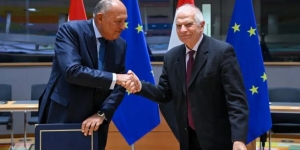
Brussels, 23 January 2024
Thank you very much.
I also would like to welcome Minister Shoukry here in Brussels.
As you have already heard the two speakers, we are entering into a golden age of EU-Egypt relations.
I think that Egypt has proved itself to be our longstanding and reliable partner already. A reliable and predictable partner in the region, a region which faces many, many challenges and this relationship also contains a lot of opportunities; opportunities that we have been discussed, opportunities that we agreed to reap and use and enjoy to the full. So, we think that we all agree that the role of Egypt nowadays in the region is not only paramount, but it is critical. We are convinced that the prosperity, the stability, and the security of Egypt is the prime interest of Europe and this is why I'm very pleased to see that we are contributing not only to this, but to build together something even more steady. Through our cooperation in the last few years, we have laid the foundations of the new phase of our partnership, the deep and comprehensive partnership that we hope to sign very, very quickly with Egypt.
Now, talking about today, Minister Shoukry already mentioned that we have addressed many, many issues.
I just want to give you a flavour, only quote some of the headlines that we went through.
We discussed the success of our Economic and Investment Plan, which is to mobilize 9 billion euros in investments, basically growth and jobs in Egypt in areas that are the most critical, food, water, energy for any sustainable economy. We were really proud to see that out of the 9 billion euros that we have indicated, we have already mobilized 5.8 billion euros in investments in Egypt. I think if you look at the time elapsed, this is a very good result. We started our work back in 2021, and here we are already at the beginning of 2024. Of course, it should encourage us to work even harder to finish all the investments under the Economic and Investment Plan.
Now, it also follows from this that our economic and investment relations are booming. We see that the upcoming Investment Conference in Egypt, which is due this semester, will not only provide a unique opportunity to boost further our economies, but also it generated significant interest in the business and private investors community. And this is something that we're looking forward to, both of us, with high expectations.
Because the EU has developed itself to be the first investor in Egypt. The EU companies have invested 32% of all the foreign direct investment stock of Egypt. We are not only present, but I think that we are providing a significant part of the engine of the economy of Egypt. And we are also proud to be the first trading partner of Egypt, doing 27% of all the trade Egypt does.
We also discussed energy and the trilateral EU-Egypt-Israel a Memorandum of Understanding (MOU) that has delivered significant amounts of LNG to Europe. And that has helped Europe to diversify away from Russian gas and to find new reliable partners in terms of gas supply. So, I think this is another success that we have only started working on, and this is already bringing direct benefits also to European citizens.
We have also discussed the future of our cooperation in the energy field, which is, I would say maybe of the biggest potential for the both of us, because Egypt can become not only a reliable supplier of gas, but also a reliable source of renewable energy. And for that reason, we highlighted on our side that the importance of the decision we took to give the status of project of mutual interest for the GREGY project, basically the deep-sea electricity cable between Greece and Egypt. And this status should create a business opportunity and also more interesting financing opportunities for this project. We consider this project to be the first, if you will, a blueprint, for further projects like this with Egypt, but also in the broader region. We are engaging with Tunisia in investments of this kind, with Georgia, but the potential Egypt carries in terms of possible supplier of green electricity is difficult to match. So, we are very interested in not only implementing this project but working on new similar ones.
We also touched upon migration, where we are cooperating very, very closely. We have doubled our efforts there. And I think we all need to praise the very hard work Egypt has been doing relentlessly.
And this hard work has not started yesterday, it's been with us since the Syrian war and Egypt is a host of a very large refugee community, something only few are talking about. But I hope many more know about this. So, we want to help here as well. I think that what we're working on, be it the protection of borders, be it fighting smugglers, be it hosting refugee communities, is important. And we want to not only continue to work, but we want to increase our support. And therefore, I'm also very happy to see that the first of our biggest investments in border protection, the search and rescue vessels that are on their way from France to Egypt, are already bringing this cooperation to the fore and make it very visible for everyone.
So, on this basis, these are only the headlines of what we're working on. I think it's easy to see why we need to move to the next level.
The next level, which is the privatized relationship between Egypt and the EU, which is a partnership that we would like to create very, very soon. Hopefully next month we should be able to get all the green lights from our member states and move forward to signature so that we can start the implementation very soon.
Of course, this cooperation will be built on pillars, strong pillars of mutual interest: political relations, economic stability, investments in trade, migration and mobility, security and demography, and human capital, just to name the key sectors where we are working. And I want to reassure Minister Shoukry that we are here for the long haul. We're here to establish this partnership on solid foundations and to accompany Egypt in its biggest challenges, because we also need Egypt to be on our side in our biggest challenges.
Thank you.
STATEMENT/24/378

Powered by  © Μaritimes 2019