


Nuclear power is set to get a lot safer (and cheaper) – here's why

Despite 60 years of nuclear generation without major accidents in many countries including Britain and France, many people have serious concerns about the safety of nuclear energy and the impact of the radioactive waste it generates. The very high capital cost of building a plant is also seen as a significant barrier, particularly given recent low oil prices. Plans to build a new British plant at Hinkley Point in Somerset are facing fresh opposition after it emerged the estimated lifetime costs had risen to £37 billion. 
Yet the high priority of reducing carbon emissions thanks to climate change means nuclear power looks more important than ever. Luckily, the next generation of reactors could hold the answer. With more in-built safety systems and a way to reuse old fuel, they are set to make nuclear power safer and, potentially, cheaper.
Human error and a natural disaster played major roles in the Chernobyl and Fukushimaincidents, respectively. But in both cases, the failures occurred when the plants could no longer keep the reactors cool enough. At Chernobyl this was because of deliberate action and human error, and at Fukushima because the backup generators to drive the cooling pumps had been destroyed as a result of the tsunami.

An important reason why nuclear power is so expensive is the complex engineering, exacting standards, and advanced manufacturing technology that is used to ensure safe operation. For example, plants usually sits on a “nuclear island” of reinforced concrete that acts as a stable base for the plant and provides a barrier of last resort in case radioactive material is released. The pressure vessel at the core of the plant is made from carefully alloyed and fabricated steel to prevent it from becoming brittle from the decades’ worth of radiation it has to endure.
Modern reactors are safer
Today’s reactor designs also have far more safety features than older installations. These range from duplicate emergency cooling systems to prevent overheating even if some systems fail, through to so-called “core catchers” that would contain the reactor core in a worst-case meltdown event.
Some designs will cool passively in the event of a loss of power to the cooling circuit (as happened at Fukushima). The heat from the core will gradually dissipate from the walls of the pressure vessel and through the cooling circuit by convection. The reactors that are being constructed today benefit from 60 years of experience gained in the design and operation of nuclear power plants around the world.
But future reactor technologies –- so-called “Gen IV” designs – offer even better inherent safety. One of their key features are fully passive cooling systems so the reactor is never dependent on external power for safety. The reactor is carefully designed so that overheating actually reduces, rather than increases, the power output of the core. The core and cooling systems are not pressurised, and using liquids other than water for cooling prevents the risk of creating hydrogen: both of which drastically reduce the risk of explosions as occurred at Fukushima.


Gen IV reactors will also allow more efficient use of nuclear fuel. The fuel in current reactor designs is used only once and then disposed of, which produces radioactive waste that will take hundreds of millennia to decay to a safe level. But this waste contains valuable resources of fissile material that can be reprocessed into new fuel. Burning this fuel in specialised “fast” reactors provides would be much more efficient and generate waste that decays safely within just a hundred years or so. It would also move us towards a closed fuel-cycle that would greatly extend the lifetime of the Earth’s uranium reserves.
More power plants equals cheaper power
Another of the factors that makes nuclear power plants so expensive is that we haven’t built very many in recent years. This means that there is no industrial supply chain of companies with the expertise to manufacture the technology, reducing competition and limiting economies of scale.
For the few plants that have been built, there have often been issues in construction quality as the project has progressed: with the concrete for the nuclear island, the welding of heat exchanger pipework, or the composition of the steel used for the pressure vessel. These have needed expensive fixes or investigation to assure regulators that safety hasn’t been compromised.
So one way to reduce the costs of nuclear power plant is simply to build more of them. There are economies of scale in terms of having identical designs with the same requirements for construction, fuelling, operation and maintenance. In the UK in particular, attention is shifting towards so-called small modular reactors, or SMRs, that produce less power but that have lower upfront capital construction costs.
Perhaps if the latest technology can also convince the public nuclear power has become safer, there will be the appetite to build enough plants to bring the costs down even more.
Michael Fitzpatrick, Pro-Vice-Chancellor and Lloyd's Register Foundation Chair in Structural Integrity and Systems Performance, Coventry University
This article was originally published on The Conversation. Read the original article.
Effective onboard training on the Ballast Water Management Convention

Effective onboard training on the Ballast Water Management Convention
Following the ratification of the Ballast Water Management Convention in September 2016, Seagull Maritime has worked towards releasing a revised onboard course, as well as a completely redesigned e-learning module. Using the latest technologies and a combination of different media, these ensure your crew are fully prepared for compliance with the requirements.
In the example of a Ballast Water Management Plan issued by Lloyd’s Register, it states that “A suitable staff training scheme will need to be developed and included in the Ballast Water Management Plan. Staff will need to be trained in their obligations under the BWM Convention, the ballast operations on board the ship, the operation and maintenance of the ballast water treatment system, and any safety risks and mitigation measures associated with the ballasting operations or treatment system”. Seagull Maritime’s onboard course and e-learning module will assist the ship-owners and operators in creating a suitable staff training scheme as required by the BWM Plan.
The objective of Seagull Maritime’s onboard course is to familiarize the crew with the International Convention for the Control and Management of Ships’ Ballast Water and Sediments (the Ballast Water Management Convention), so that they fully –understand their obligations and can actively comply with the training requirements in the convention. The Ballast Water Management onboard course will take participating seafarers through those requirements and provide them with the knowledge necessary for effective implementation of the Convention. Training crew members engaged in ballast water treatment and exchange will enable them to meet the ultimate goal of eliminating the risks to the environment, human health, property and resources arising from ships‘ballast water and sediments.
Sushi, tanker pools, and LNG
 |
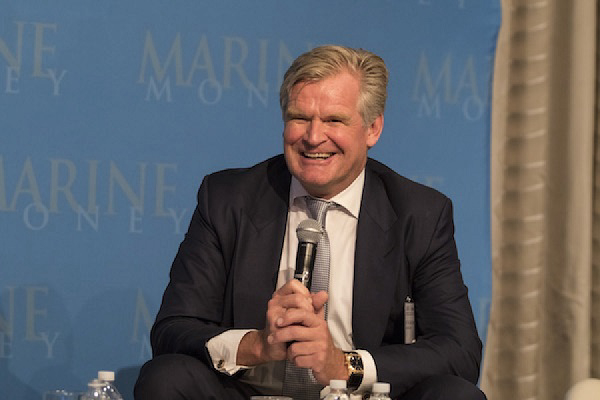
With Golar boasting the tagline “From shipping company to provider of electricity well to wire”, Troim provided a much needed perspective on a round of earlier presentations, from Poten & Partners, GasLog, FlexLNG (also in the Fredriksen sphere), Hoegh LNG, and Tellurian- building a LNG Liquefaction facility near Cameron, Louisiana in the US Gulf.
The presentations noted that supply of LNG is set to rise dramatically as “LNG becomes a growing strategic component of the global clean energy future”, in the words of Poten presenter Jefferson Clarke. Clarke noted that, as worldwide LNG trade grows by 24\%, over the next five years to around a base case of 370m tons loaded on vessels, “exceeding the projected fleet growth.”
US exports of LNG, “already going farther afield than we thought”, could reach between 46 – 50m tonnes of LNG. once already green-lighted projects come online. One important facet of the market is that “current prices are low…there is little room for profit for most off-takers…however most costs are fixed…so there is still an incentive to lift cargoes.”
The over-arching theme of the sessions goes beyond the near-term, or medium term vessel supply and demand balance, which Marsoft’s Arlie Sterling, speaking the following day, also viewed as positive. Efficiencies are being designed into the supply chain ranging from landside infrastructure - as presented by Tellurian’s Meg Gentle, the vessels, with new engine technologies described by FlexLNG’s Jonathan Cook, and receiving facilities - with FSRU’s as described by Hoegh LNG’s Sveinung JS Stohle.
In the aggregate, the case was made for a “sea change”- where gas (transported as LNG) will increase its share of energy at the expense of other fossil fuels.
Back to Troim, whose remarks included a historical snippet regarding a salmon farming business- where a sustained period of low prices created demand for sushi – the “finished product”, and forced competitors out of the market.
Turning to shipping, Troim waxed effusive over the liner segment, where years of losses begot consolidation and improving fortunes. But the big picture is Golar Energy’s voyage from being a gas producer to owning a power station (in Brazil). Bringing in some gas pricing economics (the ability to deliver LNG anywhere in the world for prices under $5 per mmbtu.
Troim noted “When the prices come down, you make a much more affordable commodity….it’s like when we sold salmon…when the prices come down, you are creating demand for the long term.”
Barry Parker
http://www.seatrade-maritime.com
Evergreen Is Happy Being Single
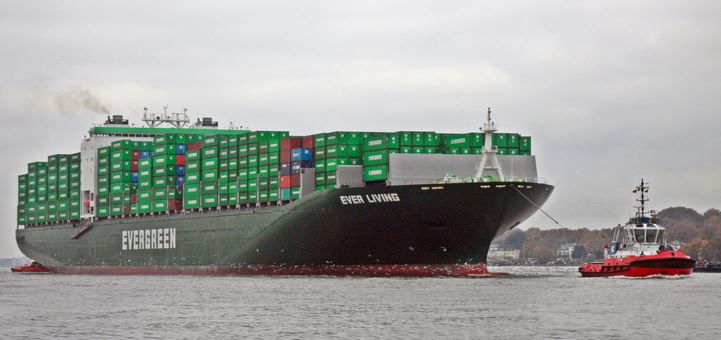
If mergers currently awaiting approval go ahead, the market share of the top five container lines will rise to 60 percent, from about 49 percent 18 months ago. With the last of the big marriages imminent, Evergreen looks like it's being left at the altar.
State-owned Cosco Shipping Holdings Co. plans to buy Hong Kong's Orient Overseas Container Line Co., or OOCL, for at least $4 billion in a deal that could be reached as early as July, the Wall Street Journal reported Wednesday, citing people it didn't identify.
I COULDA BEEN A CONTENDER
Such a transaction would hardly be a surprise: While a spokesperson for OOCL said the company wasn't aware of a bid, Gadfly was predicting it six months ago. Still, this would cement a stark reversal of fortunes for Greater China's shipping lines.
When the current round of M&A was kicked off last December with CMA CGM SA's takeover of Singapore's Neptune Orient Lines Ltd., Evergreen was Asia's biggest box carrier and was fighting Hapag-Lloyd AG for the title of fourth-biggest globally, with capacity of about 936,000 TEUs, or 20-foot equivalent units. It's been overtaken by both Cosco and the merged group that comprises Japan's three major container lines, and its 1 million TEUs are now sufficient to make it only the seventh-biggest worldwide.
Single life has its advantages, though. Cosco, Evergreen and OOCL are all members of the Ocean Alliance, a grouping that pools its ships and allows customers a greater range of destinations and frequency. As a result, Evergreen gets some of the scale and revenue advantages of a formal merger without requiring a full-blown commitment.
Less Is More
Container freight rates have rebounded as the shipping industry has consolidated
 |
There are other pluses. The entire shipping industry has benefited from the fashion for M&A over the past 18 months or so. Drewry's weighted average of east-west container freight rates has risen 44 percent over the past year, to $1,464 from $1,020 per 40-foot box. Price volatility has dropped, too, as consolidating groups got a better handle on supply and demand.
DREWRY GAUGE OF EAST-WEST CONTAINER RATES, 12 MONTHS
+44\%
Only the companies actually doing the deals have paid for this improvement, though. Evergreen's NT$43.1 billion ($1.4 billion) net debt load -- about 80 percent of the value of its equity -- means it would probably have struggled to afford OOCL's dowry. The debt may also have saved the company from a government-brokered shotgun marriage with Taiwan's other big shipping line, Yang Ming Marine Transport Corp., which has failed to make more than a peppercorn profit since 2010 and has net debt at an eye-watering 482 percent of equity.
When the dust has settled on the container-shipping industry, Evergreen may have lost market share but it will remain a major player, and will have spared itself an expensive shopping spree. Wedding bells are all very well, but there are perks to being a wallflower.
By David Fickling
www.bloomberg.com
VLCC Orders Ruling The Roost
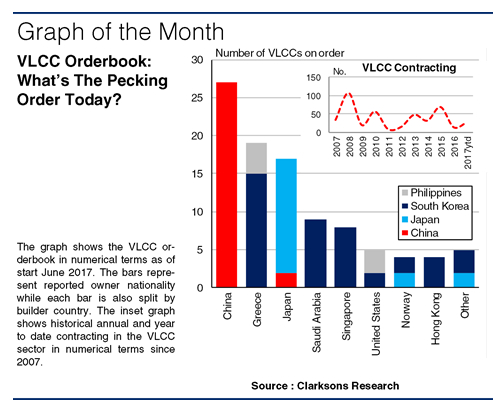
VLCC ordering in 2017 so far has been dominated by Greek owners and most orders have been placed at Korean yards. However, when looking at the VLCC orderbook as a whole, further trends emerge.
 |
In the first five months of 2017, there have been 27 VLCCs of a combined 8.5m dwt reported ordered. This is a 366\% increase year-on-year in dwt terms on extremely subdued 2016 levels and has provided a much needed boost for certain shipyards. Furthermore, VLCC orders account for 52\% of year to date contracting in dwt terms as well as 11\% of estimated year to date investment. If in the first 5 months of 2017 there had been as many VLCC orders as the same period last year, then total global ordering in the year to date would have suffered a 50\% decrease year-on-year in dwt terms.
Prices Take A Swan Dive
Shipowners have been placing orders in the VLCC sector against a backdrop of falling newbuild prices, with the guideline newbuild price for a c.320,000 dwt vessel dropping to $80m in March this year, its lowest level since February 2004. These low prices have proved attractive to owners, though contracting in the other crude tanker sectors has remained muted, with only 2 Suezmaxes and 5 Aframax crude tankers reported ordered in the year to date.
Greek Owners Sniping Away
In 2017 so far, most VLCC orders (19 of 27 contracts) have been placed by Greek owners, while Singaporean and Chinese owners have placed 6 and 3 contracts respectively. However, the orderbook tells a slightly different story, with Chinese owners accounting for 28\% of the VLCCs on order currently. Meanwhile, Greek and Japanese owners account for 19\% and 17\% of VLCCs on order respectively in numerical terms.
Owners Flocking To Korea
The majority of orders in the year to date (70\%) have been placed in South Korea. This has provided much needed support for some yards, and has helped the Korean orderbook to eventually increase in dwt terms following 19 months of continuing decline. Korean yards currently account for 44\% of the VLCC orderbook, with orders in the Philippines also placed at the subsidiary yard of Korean group HHIC. Elsewhere, Chinese and Japanese yards, accounting for 30\% and 19\% of the VLCC orderbook respectively, have benefitted primarily from orders placed by domestic owners.
Overall, VLCC contracting has been relatively firm in the year to date while newbuild prices have fallen. Greek owners have ordered the most VLCCs in 2017 so far, while the current orderbook is led by Chinese owners. 70\% of VLCC orders placed in 2017 have been at Korean yards, who have benefitted from the ordering uptick in the sector. However, VLCCs only represent 16\% of the global orderbook in dwt terms and yards will still be hoping for improved activity across a broader range of sectors.
Source: Clarkson Research Services Limited
DNV GL awards Kawasaki Heavy Industries AiP for new non-spherical (MOSS) LNG tank
 |
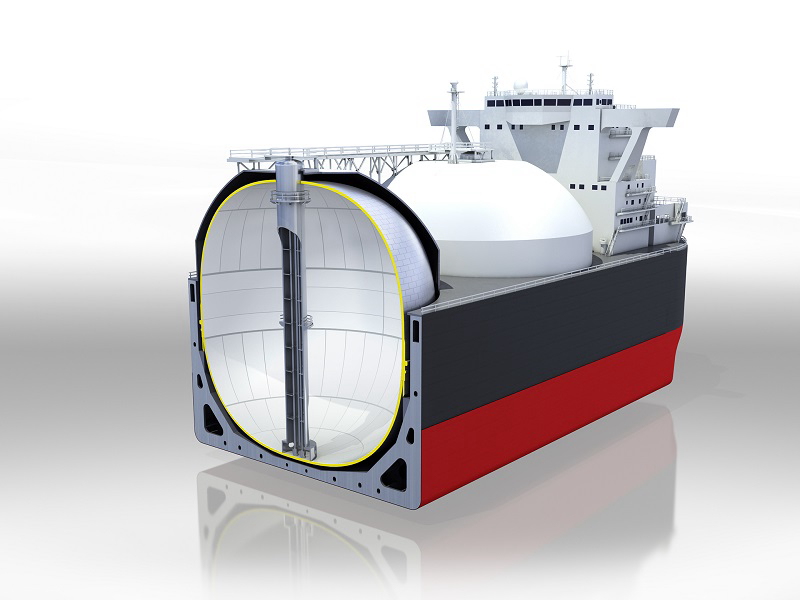
| KHI's new non-spherical (MOSS) tank is a IMO Independent Type B LNG tank that has been developed for use in 180KM3 LNG carriers. Credit: KHI |
The new tank is a IMO Independent Type B LNG tank that has been developed for use in 180KM3 LNG carriers designed to pass through the new Panama Canal.
“It is always a great pleasure to work with KHI, to continue what has been such a long and enjoyable cooperation,” said Johan Petter Tutturen, Business Director for Gas Carriers at DNV GL – Maritime. “We worked with KHI on the delivery of the first Japanese built LNG carrier – Golar Spirit – in 1981 and that cooperation continues to this day, as she remains in DNV GL class after her successful conversion to a FSRU, a world’s first.”
KHI says that the new tank has the same reliability as a spherical (MOSS) tank, but has an increased cargo capacity of 15 per cent. It can also be used with the “Kawasaki Panel System”, an advanced heat insulation system developed by KHI. DNV GL carried out comprehensive sloshing and buckling analyses together with KHI, which demonstrated that the new tank provided an equivalent level of safety performance to the well-known spherical (MOSS) tank with no filling restrictions.
“As DNV GL’s experience with LNG has grown over the years, so too has our conviction that LNG can make a significant and positive contribution to the efficiency and sustainability of the energy and maritime industries,” said Johan Petter Tutturen. “To keep this momentum for the use of LNG growing, DNV GL will continue to work with innovative partners like KHI to ensure that owners and yards can be confident that this technology will continue to advance, while meeting strict safety and reliability standards,” he concluded.
An Approval in Principle is an independent assessment of a concept within an agreed framework, confirming that the design is feasible and no significant obstacles exist to prevent the concept from being realized. The AiP is typically carried out at an early stage of a project to confirm its feasibility for the project team itself, company management, external investors or regulators.
Caption: KHI's new non-spherical (MOSS) tank is a IMO Independent Type B LNG tank that has been developed for use in 180KM3 LNG carriers. Credit: KHI
About DNV GL
Driven by our purpose of safeguarding life, property and the environment, DNV GL enables organizations to advance the safety and sustainability of their business. We provide classification, technical assurance, software and independent expert advisory services to the maritime, oil & gas and energy industries. We also provide certification services to customers across a wide range of industries. Operating in more than 100 countries, our professionals are dedicated to helping our customers make the world safer, smarter and greener.
About DNV GL – Maritime
DNV GL is the world’s leading classification society and a recognized advisor for the maritime industry. We enhance safety, quality, energy efficiency and environmental performance of the global shipping industry – across all vessel types and offshore structures. We invest heavily in research and development to find solutions, together with the industry, that address strategic, operational or regulatory challenges. For more information visit www.dnvgl.com/maritime
IMO meeting considers flashpoint and other safety implications of 0.50\% bunker fuel sulphur limit
The 98th session of the IMO’s Maritime Safety Committee (MSC 98) had two papers to consider on the subject.
MSC 98/22/8 submitted by Brazil and Chile expressed concerns about the effects the 2020 requirement will have on on-board safety, specifically with regards to flashpoint. The paper noted that the official availability study presented to the 70th session of the IMO’s Marine Environment Protection Committee (MEPC 70) had stated that a potential reduction in the minimum flashpoint of fuel oil “would certainly help improve fuel availability” to meet the 0.50\% sulphur limit in 2020.
It asked, therefore, for the MEPC to clarify whether the decision to implement the 0.50\% sulphur limit in 2020 is conditional upon a reduction in the flashpoint limit of 60ºC, and to request the Sub-Committee on Ship Systems and Equipment (SSE) to study any on-board safety problems that may arise from lowering the 60ºC flashpoint limit stipulated under SOLAS.
Also up for discussion was MSC 98/22/10 submitted by Brazil, which in addition to concerns about flashpoint pointed to papers submitted to MEPC 70 by IBIA and ISO that had raised concerns about the quality of fuel oil blends that are anticipated to enter the market to meet the 0.50\% sulphur limit relating to stability and challenges regarding compatibility of various blends.
Brazil said that the work on effective implementation of the 0.50\% sulphur limit in 2020 to be undertaken by the MEPC should not focus on enforcement “but rather on exploring what actions, including preparatory and transitional measures to address any expected impact on fuel and machinery systems, uncertainties in general and potential safety concerns, may be taken to ensure truly consistent, safe and effective implementation of the global cap from 2020 onwards, and, as a result, secure the necessary compliance.“
IBIA prepared a statement prior to the meeting highlighting that although the terms of reference for the availability study, set at MEPC 68 in 2015, requested the contractor to model the possible adjustment of the marine fuel oil flashpoint limit to 52°C, the conclusion presented to MEPC 70 that there would be sufficient refinery capacity to meet both marine and non-marine demand for fuel in 2020 did not rely on lowering the flashpoint limit from the current SOLAS requirement of 60°C. This point was also specified by the IMO Secretariat before opening discussions on the two papers.
IBIA’s IMO representative, Unni Einemo, at MSC 98
Addressing MSC 98 in plenary, IBIA’s IMO representative added: “Furthermore, this committee [MSC], at its 96th session in May 2016, decided that all safety concerns with regard to ships using low-flashpoint fuels should be addressed in the context of the IGF Code only, and to not reopen discussion on the possibility of amending the minimum 60°C flashpoint requirement in SOLAS.”
IBIA noted that this means fuels provided to the marine sector in 2020 will still need to meet a minimum flash point of 60°C as per the SOLAS requirement to be commercially viable.
Most member state delegations that spoke concluded that there is no requirement to reopen a discussion on whether meeting demand in 2020 will require a reduction of the current flashpoint limit in SOLAS, and noted that any further considerations of low flashpoint fuels should be dealt with under the auspices of the IGF Code (International Code of Safety for Ships Using Gases or Other Low-Flashpoint Fuels).
Despite that, a number of member states and industry NGO delegations were supportive of the proposal from Chile and Brazil, demonstrating that many are concerned that the safety of ship and crew are being compromised in order to meet the 0.50\% sulphur limit in 2020.
“We agree that there is a need to keep a close eye on the safety implications associated with efforts to meet demand for fuels complying with the 0.50\% sulphur limit that is due to take effect on 1 January 2020,” IBIA told MSC 98.
Even a small amount of a low flashpoint blend component could cause the resultant blend to be off-spec, hence caution is required when choosing blend components, IBIA explained.
“The general consensus in the market today is that refineries and other parties in the marine fuel supply chain are aware of the 60°C flashpoint limit and as such will take due care to ensure products offered to the marine fuels market comply with the SOLAS requirement,” IBIA told MSC 98.
This may not be enough to reassure IMO member states, however, because flashpoint is seen as a critical safety parameter.
One member state delegation stressed that there have been “numerous reports” over the past few years of fuels failing to meet the minimum flashpoint limit being supplied to ships. MSC 98 also heard a proposal, put forward during discussions, to make it mandatory to include flashpoint on the bunker delivery note. This received significant support, but there were also objections, so it was not formally put forward to MEPC.
MSC 98 agreed that the way forward on flashpoint was to encourage interested parties to submit proposals to the Sub-Committee on Carriage of Cargoes and Containers (CCC) to develop specific requirements for low-flashpoint fuel oils within the context of the IGF Code.
CCC has an on-going agenda item relating to revisions to the IGF Code to add new chapters for low-flashpoint fuels which are materially different from LNG and therefore very different safety requirements. On member state informed MSC 98 that it will submit the results of a study on the use of low flashpoint distillate fuels to the next session of CCC. To date, CCC has only discussed a new chapter on using methanol as a marine fuel.
Aside from the issue of flashpoint, IBIA and other delegations noted that there are other uncertainties surrounding potential safety concerns relating to the fuel oil blends that are anticipated to come into the market to meet the 0.50\% sulphur limit.
MEPC 71 will consider a draft justification and scope for a ‘new output’ [*] prepared by the Sub-Committee on Pollution Prevention and Response (PPR) on consistent implementation of the 0.50\% sulphur limit. The draft scope already includes a note to consider the potential impact on fuel and machinery systems, but it was agreed, following discussions at MSC 98, to request MEPC 71 to explicitly add to the scope considerations on the safety implications relating to using fuel blends to meet the 0.50\% sulphur limit.
If this is approved at MEPC 71, the PPR Sub-Committee will be asked to report to MSC on any safety issues that may be identified with regard to low-sulphur fuels.
Source: IBIA
ABS Chairman's First ‘Chair Award’ is Presented to Dr. Chris Leontopoulos for Technical Excellence.
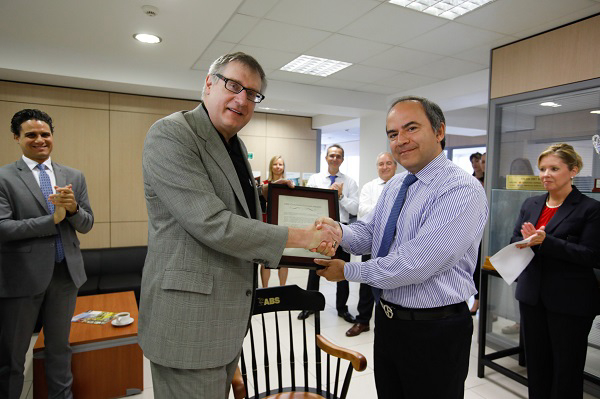
On June 12, he received special recognition for his contributions when Chairman, President and CEO Christopher J. Wiernicki presented him with the first ever ABS Chairman's Chair Award for Technical Leadership in ABS's Athens, Greece, office.
The purpose of the Chairman's Chair Award is to provide high-level recognition to employees who demonstrate exemplary leadership in technical achievement, customer service, product development or the advancement of the mission and spirit of ABS. To be considered, an employee must go above and beyond his or her regular scope of duties to deliver significant value to the organization.
Dr. Leontopoulos is widely renowned as an industry expert in the areas of Rotor-dynamics, Finite Element Analysis, Modal Testing and Vibration Monitoring. He has developed new technologies in multiple areas, such as ship vibration, ship shafting analysis and advanced bearing design.
A systems engineer who is known throughout the global shipping community, Dr. Leontopoulos built ABS' industry-leading forensic shafting analysis capabilities. He is frequently called on by clients to support projects in China, Korea, Singapore, Europe and the United States. Clients often seek him for urgent support of real-world operational issues and look to him for guidance and recommendations on issues related to design review, shaft alignment optimization, sea trial participation and incident investigations.
"Dr. Leontopoulos has transformed ABS in technical areas, establishing and instituting processes to ensure the organization's future strength and vitality as a technical leader," said Wiernicki. "ABS is extremely fortunate to enjoy his elite talent, energy and vision. I am pleased that he is our first recipient of the ABS Chairman's Chair for Technical Leadership Award."
 |
 |
| Dr. Chris Leontopoulos, ABS Technology Manager |
 |
Setting a Shared European Logistics Information Space to improve Supply Chain visibility
The objective is to provide seamless exchange of information between different participants processes, irrespectively of the underlying ICT systems used. SELIS, which stands for “Shared European Logistics Information Space”, establishes a collaborative information and business environment for all EU logistics stakeholders. The objective is to offer improved interoperability, advanced collaboration and reduced costs.
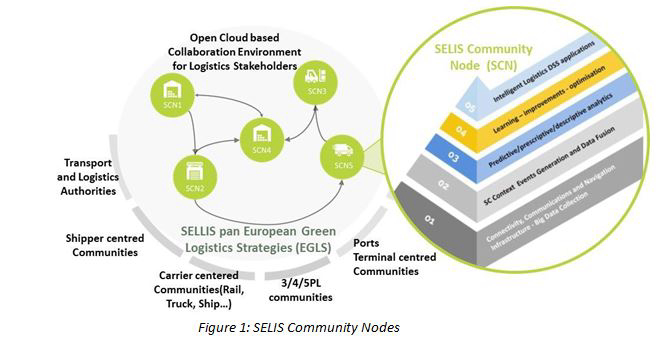
Figure 1: SELIS Community Nodes
 |
SELIS offers to different logistics stakeholder communities as shown in Figure 1 better ways to share and use information. More precisely, logistics stakeholders manage their business processes in the most efficient, safe and green way whilst maintaining absolute control of their own data.
- The SELIS Concept and approach
SELIS is a network of logistic communities’ intelligent information spaces that are termed, defined as the SELIS Community Nodes (SCN). SCNs are developed by individual logistics communities to facilitate the next generation of collaborative, responsive and agile green transportation chains. SCNs link with their participants’ existing systems through a secure infrastructure and provide shared information and tools for data acquisition and use, according to a 'cooperation agreement'. Connected nodes, provide a distributed common communication and navigation platform for Pan European logistics applications. SCNs are powered by Big Data Analytics, feeding green logistics Decision Support Applications.
Each supply chain actor develops secure unified communications infrastructure that is common among the community. This service provides integration of data (business, sensor, satellite, etc.) that is elastic, software defined, content based and follows the publish - subscribe decentralised approach (information pull approach). Each node participant decides what information wishes to publish and what information wants to subscribe to. A SELIS node is not a B2B aggregator platform in the traditional sense, but a focused supply chain community one. This way the obstacles of large scale data and system integration are avoided and a low cost entry to collaborative supply chain management for green logistics can be realised. Conceptually, SELIS is a single data source on the cloud, consisting of distributed connected data sources, participant’s databases, public web sites etc. As more logistical information is added, SELIS will enable improved planning and improved supply chain execution.
- The SELIS Business Innovation Opportunity
The role of logistics is shifting from simply controlling the goods flows to the integrated management, coordination and control of information, material, financial, and energy flows. This creates a need for new business models that foster stakeholder cooperation. There are significant opportunities for Supply Chain Actors, including:
- Cooperative business models that can be executed online and offline, using dynamic simulation, based on captured information flows of logistics information, that drive joint decisions and collaborations at a strategic level;
- Integration of public authorities (e.g. customs, national systems including Single Windows), and private entities such as port community systems in logistics cloud environments and enhanced Business - Government collaboration;
- Semantically enabled information exchange models feeding interoperability-on-demand for message exchanges, with continuous flows of sensor based information and IoT devices;
- Change management processes that strengthen business resilience and increase collaboration responsiveness, and impact oriented strategies, aligned with technology innovation
Authors, Tsampieris Nikos and Koliousis Ioannis
Celestyal Cruises unifies its Greece and Cyprus offices with SetelHellas next gen communications services
Installation Will Integrate Communications, Foster Collaboration,
Improve Efficiency and Increase Productivity throughout the Entire Enterprise
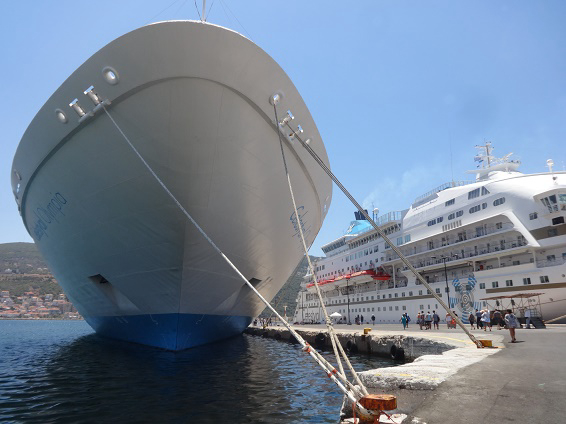
Celestyal Cruises, long an early-adopter of innovative technology, announced it has selected SetelHellas to equip its offices in Greece and Cyprus, including Optimum Ship Management, with Cisco IP telephony service. The installation will integrate communications, foster collaboration, improve efficiency and increase overall productivity throughout the entire enterprise.
The Cisco IP telephony solution, provided, implemented and supported by SetelHellas, combines B2B and B2C connectivity and enables Celestyal Cruises’ teams in Greece and Cyprus to cooperate more effectively and to provide even better service to the company’s partners and customers around the world. The solution includes Next Generation Communication Services, including VoIP, Instant Messaging, and Web and Video Conferencing, all of which enhance and strengthen the company’s autonomous digital infrastructure and enable direct, instant communications between employees at all of the company’s offices and between the company and its customers, partners and suppliers.
“We were looking to create a seamless interface between all of our offices, and SetelHellas provided us with a solution that bundles all of our communications into a single platform,” said Celestyal Cruises CEO Kyriakos Anastassiadis. “We are constantly seeking to increase efficiency and productivity throughout our entire operation, and we now have the communications infrastructure in place to support better and faster communication internally and externally.”
Mr. George Marinakis, Managing Director at SetelHellas S.A. quoted: “We are proud to provide added value solutions utilizing the best available technology in well-established organizations such as Celestyal Cruises. We are looking forward to strengthening and developing this business relationship further.”
The Celestyal Cruises MIS/IT department will gradually exploit the entire system over the 2017 Aegean cruise season.
About Celestyal Cruises
Celestyal Cruises is one of the only cruise lines based in Greece. The company’s main ports of call are the Greek Islands and Cuba, where it sails 7-day cruises year-round. Celestyal Cruises operates five mid-sized vessels, each one cozy enough to enable its crews to provide genuine and highly-personalized service to the company’s passengers. The foundation of the company’s philosophy is the ‘destination’: every cruise is focused on true cultural immersion and the provision of authentic, lifetime experiences, both on board and onshore.
Corporate Responsibility
Celestyal Cruises is deeply committed to sustainability and ethical business practices. The company actively supports the local communities in the destinations it visits, particularly in the field of education. Since 2015, more than 1,200 students on the Greek islands of Milos, Patmos and Ios have enjoyed a ‘journey to knowledge’, by attending specialized educational programs, initiated by Celestyal Cruises. Additionally, Celestyal Cruises supports cultural NGOs; while promoting youth entrepreneurship, marine student development and child welfare.
ISO Certification
The entire spectrum of Celestyal Cruises’ ship management, including technical, hotel and crew management, and offices, are certified in accordance with ISO 9001/14001 standards. The certifying authority is DNV-GL, which is widely recognized as the largest and most respected rating agency in the marine industry.
Awards & recognition
In 2017 Celestyal Cruises received four Cruisers’ Choice Awards from Cruise Critic, the world’s largest online cruise community: ‘Best’ in the mid-sized category, for ‘Embarkation’, ‘Entertainment’, ‘Shore Excursions’ and ‘Value’. At the Greek Tourism Awards 2017 the company won five awards, an indication of its dynamic presence in the cruise sector and the great value it provides its customers. Specifically, the company won the Gold Award in the following categories: ‘Tourism Season Expanding Initiatives-Greek Tourism Product Enrichment’, ‘Guest Service Excellence’, ‘Gastronomic Tourism’ and ‘Corporate Identity-Corporate Reputation Management-Branding’; the company also won a silver award in the ‘Integrated Marketing Campaign’ category.
Connect with Celestyal Cruises:
Facebook, Instagram, Twitter, LinkedIn
About SetelHellas SA: SetelHellas is an international provider of leading ICT solutions specially designed for the maritime and offshore vertical businesses. Combined with the power of the cloud and Internet of Things (IoT) technology, the SH-Suite from SetelHellas is able to support the most efficient and secure operation of smart ships. With a broad set of Maritime Apps, Business Insight and Analytics, Automation and Advanced Communication as an integral part of SetelHellas products; the SH-Suite offers remarkable new capabilities and ultimate value in a connected world. Our Award Winning Solutions and SetelHellas’ installed base constitute the ultimate proof of success and excellence in providing holistic and efficient Maritime Solutions.
Connect with SetelHellas S.A.:

Powered by  © Μaritimes 2019