



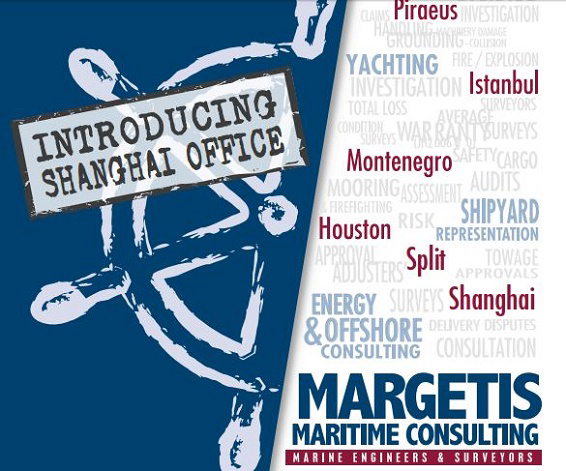
New office of Margetis Maritime Consulting in Shanghai
 |
In the Shanghai office, with Mr. Zheng is Mr. Lei Ming, as Senior Surveyor, also a Chinese national and a graduate of the local Naval Academy, as an Engineer Officer. Mr. Ming has more than 20 years of experience at sea – having reached the rank of Chief Engineer, while he has worked for 13 years at major Classification Societies such as GL and BV and at Shipping Companies, as Superintendent Engineer.
Both of them have diversified experience with wide range types of vessels, including Bulkers and Tankers.
Furthermore, in previous years they had undertaken numerous projects in Chinese shipyards both for Repairs and for New Buildings.
A brief electronic Brochure with details of our New Office in Shanghai.
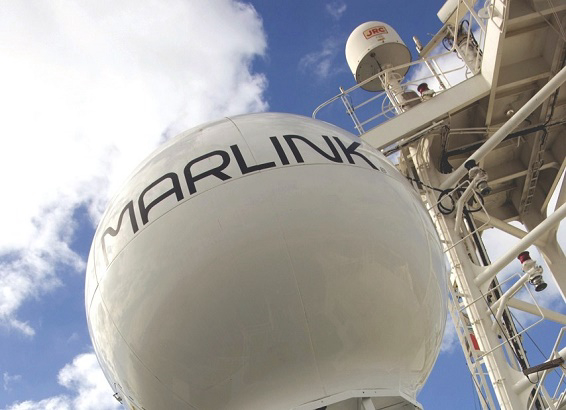
TNL Group and Marlink to create a new leading satellite communications expert for the Greek and Cypriot markets
 |
The Joint Venture with the TNL Group follows a long-term working partnership between TNL Group and Marlink, which started more than 15 years ago. TNL Group has experienced significant growth as a maritime communications service provider by offering diverse connectivity services and Value Added Services from Marlink for the Greek and Cypriot fleets.
“Customer proximity is key to our ability to provide the connectivity services that ship owners need,” said Tore Morten Olsen, President Maritime, Marlink. “We are committed to only working with the best local partners in all key maritime regions. Based on our experience of working with TNL Group it was a natural step to invest further in order to create a new first party Marlink presence in the region that will support ship owners to digitalise their fleets more efficiently through reliable, flexible and high speed connectivity.”
With more than 60 professionals covering both sales and technical multi-level support, the TNL Group is recognised for providing reliable connectivity solutions. The joint venture between Marlink and the TNL Group enables the partners to launch a brand new maritime satellite communications service provider, dedicated to delivering best-in-class satcom solutions to all maritime customers.
“By fully integrating Marlink’s product portfolio, technology, service delivery and people with the established TNL Group satellite connectivity business division, Marlink CG will become an even stronger partner and will offer even higher service standards to the existing and future customer base in the region,” said Evangelos Andriotis, CEO, TNL Group. “TNL Group will continue to contribute to Marlink’s business in Greece and Cyprus and we look forward to collaborating with Marlink CG and Marlink on a global basis, on technical projects that cover both communications and prospectively marine electronics solutions.”
Prisma Electronics SA participated in the ‘Get to Know WIMA’ Conference Cyprus.
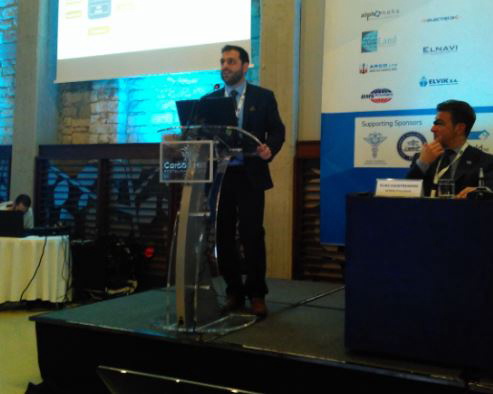
In the event WIMA members presented their business activities and key speakers of each panel focused on topics related to developments in marine technology, operational tactics and new regulations coming to EU and worldwide shipping industry.
 |
Prisma’s Laros System impressed the audience with its innovation features and its unique remote montitoring characteristics.
GasLog LNG Services Ltd. selects Seagull e-learning solutions
 |
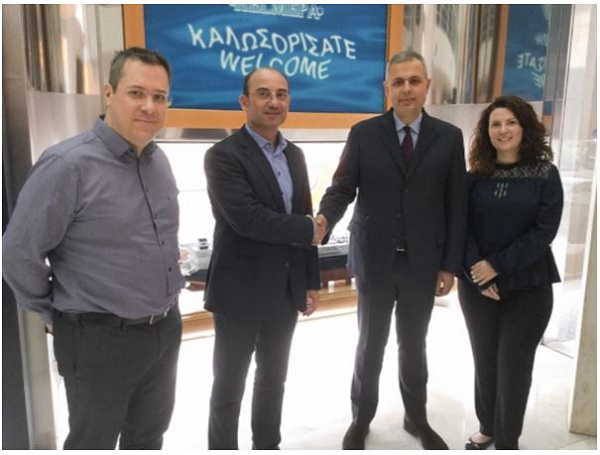
| Pictured in the center-left, Mr. Theofanis SALLIS, General Manager of Operations of GasLog in Greece, along with Mr. Ioannis ATHANASOPOULOS (center-right), Managing Director of Seagull Greece. On the far left, Mr. Antonios LIAPPIS, Marine HR Manager of GasLog. On the far right, Mrs. Archontia LENI, Competency Assurance Manager of GasLog. |
GasLog LNG Services Ltd. attaches great importance to the continuous training of its personnel allocating significant resources in using modern, technologically advanced and effective training & assessment tools.
“At GasLog we pride ourselves on our outstanding record of safety, both for our people and the environment within which we work. We have a strong proactive approach to safety and continually assess risks and adapt procedures accordingly”. – says Mr Theofanis Sallis, General Manager of Operations, GasLog LNG Services Ltd.
GasLog LNG Services Ltd. firmly believes that the adoption of Seagull Maritime’s e-learning concept, Competence Manager & Crew Evaluation System will further enhance the quality of the onboard training provided.
Mr. Ioannis Athanasopoulos, Managing Director of Seagull Greece is proud to announce the partnership with GasLog LNG Services. “We are looking forward to working closely with GasLog providing high quality products & solutions, along with continued effective support”.
Eagle Bulk Shipping Buys Ultramax Dry Bulker
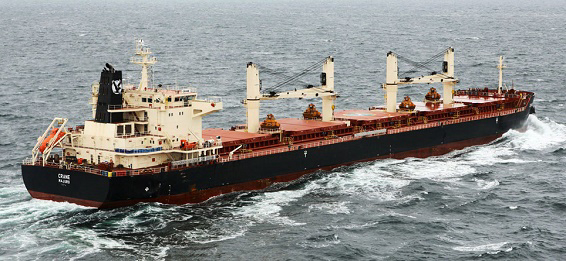
The 2016-built bulker, scheduled to be delivered to the company in November, will be renamed the M/V Stamford Eagle.
Eagle Bulk said that this is the first vessel acquisition for the company in more than 6 years and “reflects management’s renewed commitment to invest in a high-quality fleet renewal and growth strategy within the Supramax/Ultramax segment.”
Featuring a length of 200 meters and a width of 32.2 meters, the 34,447 gross ton ship has a capacity of 77,546 cubic meters.
The vessel, which has a market value of USD 19.7 million, was previously named Port Belavista, according to data provided by VesselsValue.
World Maritime News
Order for First Cruise Ships Built in China
 |
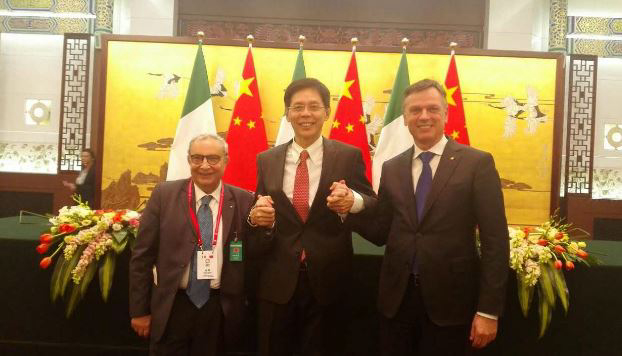
The ship design will be tailored to suit Chinese tastes and Carnival Corporation’s cruise joint venture – a partnership announced in 2015 with CSSC in which Carnival Corporation holds a minority interest – plans to launch a cruise brand in China using ships that are purchased from Carnival Corporation’s existing fleet. The joint venture would then add the new China-built cruise ships starting in 2023 with the first delivery.
The deal supports China’s larger efforts to prioritize cruise industry growth in its five-year economic development plan. China is set to become the world's second largest cruise market after the United States by 2030. It is expected to expand to 4.5 million passengers by 2020 from one million in 2015.
http://www.maritime-executive.com
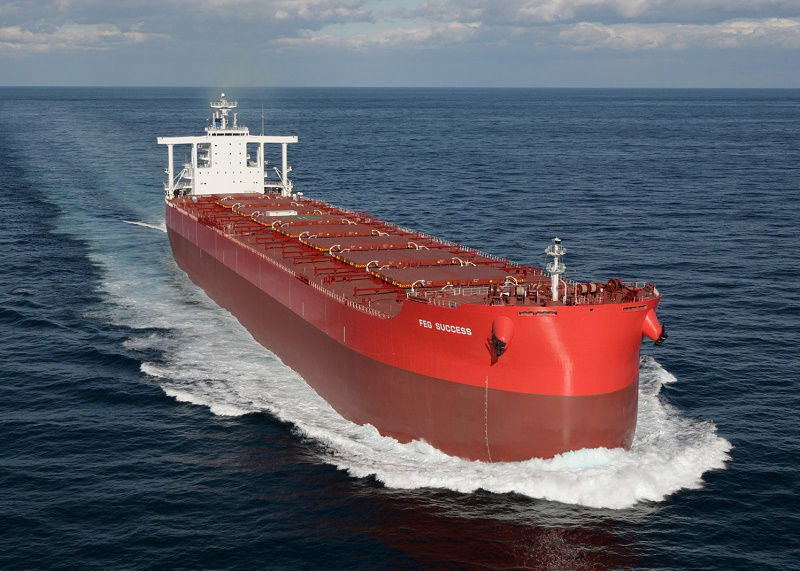
DRY BULK BACK FROM THE BRINK 2017/02/23
Containership Deliveries: Turning A Corner?
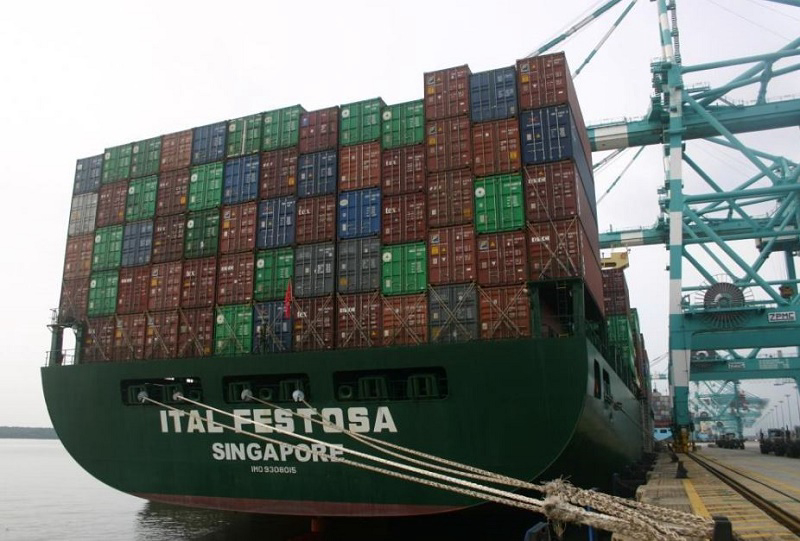
If deliveries remain at these slightly more moderate levels in coming years, this could potentially herald a new era of less robust fleet growth in the boxship sector.
Brakes On
 |
The smaller volume of boxship capacity scheduled for delivery in 2016 was the primary factor in the slowdown in deliveries last year. At the start of 2015, the orderbook scheduled for delivery in 2016 totalled 1.1m TEU, a 44\% decline relative to deliveries scheduled for 2015. However, rising ‘non-delivery’ of the scheduled start year orderbook, from 11\% in 2015 to 33\% in 2016, also significantly impacted deliveries last year, with delays to deliveries to owners in the ongoing difficult market conditions. The level of ‘non-delivery’ was particularly substantial in the 8-12,000 TEU sector, reaching 42\% in 2016, compared to just 7\% in 2015.
Looking Ahead
Current projections suggest that deliveries in 2017 may accelerate from 2016 levels, boosted by the surge in ‘mega’ boxship contracting in 2015. Indeed, deliveries in the 15,000+ sector in 2017 are expected to be fairly similar to 2015 levels, which is likely to present continued challenges to operators managing capacity on the mainlanes. However, overall delivered capacity is projected to remain below the 2015 level, with very limited deliveries projected in the mid-size sectors. Deliveries into the smaller sectors are projected to rise y-o-y, although remain at a historically subdued level. In 2018, total boxship deliveries are projected to remain relatively steady y-o-y.
Reading The Signs
So, the sluggish level of deliveries in 2016 broke the consecutive four year run of growth in delivered capacity. Over time the rate of growth in the boxship fleet has moderated, averaging 11\% in 2000-09, and 6\% in 2010-16. With more moderate deliveries, and elevated levels of demolition, fleet growth of c.3\% p,a. is projected in 2017 and 2018. Overall, delivery trends, alongside other factors, could be signalling the start of a more languid period of growth in the boxship fleet.
Source: Clarkson Research Services
“Simulating LNG operations in Poseidon Med II ports”
 |
“The navigation simulation workshops were significant components in fostering collaboration with the project ports and port stakeholders. Through genuine discussions and interaction, we built a common knowledge base about the proposed bunkering operations within each port, aiming at improving operational effectiveness and mitigating risks”, underlines Anna Apostolopoulou, Poseidon Med II Project Manager for Lloyd’s Register.
The findings of the simulation workshops, which were concluded in Lemesos in February 2017, will be integrated to the Environmental Impact Assessment Studies, along with other safety studies and assessment tools, all effectively contributing to the development of a thorough and robust safety impact assessment of the proposed LNG installations within the ports and the Revithoussa LNG terminal.
«These simulations, as they are assimilating interactively the results of the numerical simulations of wind induced wave disturbance in the Port’s entrance and around the berths of the LNG feeder vessels, constitute a valuable tool for the optimization of the design of the necessary harbour infrastructure, from the perspective of safety of operations», underlines Dr. Christos Solomonidis, Poseidon Med II Project Manager for Rogan Associates SA.
|
|
||||
|
|
||||
|


What is Poseidon Med II project?
Poseidon Med II project is a practical roadmap which aims to bring about the wide adoption of LNG as a safe, environmentally efficient and viable alternative fuel for shipping and help the East Mediterranean marine transportation propel towards a low-carbon future. The project, which is co-funded by the European Union, involves three countries Greece, Italy and Cyprus, six European ports (Piraeus, Patras, Lemesos, Venice, Heraklion, Igoumenitsa) as well as the Revithoussa LNG terminal. The project brings together top experts from the marine, energy and financial sectors to design an integrated LNG value chain and establish a well-functioning and sustainable LNG market.
A Long Winter for Shipping
The excess supply of ships continues to face no growth in demand for their services while new newbuilding orders have emerged as shipyards continue to lower their prices.
The average age of the operating ships remains historically low whilst the ship recycling industry continues to offer low prices and itself faces reduced demand for the recycled materials. Mid-size container ships dominate this market as more mega-ships continue to deliver causing a trickle-down effect into the feeder trades.
The public face of the shipping industry is mainly the publicly traded companies quoted in New York and Oslo but these collectively represent only 30\% of the fleets trading in most sectors. However it is reasonable to assume that the freight markets affect all shipowners even though the majority does not report their results.
The major factor affecting the industry today is the virtually complete withdrawal of commercial banks from funding the shipping industry including the Offshore Supply Vessel sector. The level of non-performing loans is enormous and most owners can only pay interest on their debts but no principal. Ship values continue to decline as they are physically depreciating assets causing much of the debt to be under-secured.
Creative funding from the private equity and hedge funds has done little to relieve the decline as the issue of insufficient income from the freight markets continues to dominate.
It is ironic that the cargo owners have not obtained increased demand for their products or expanded their markets because of the cheap freight rates. Thus the losses being experienced by shipowners have benefited nobody and shipowners need to collectively resolve to drive freight rates up.
Returning to time charters and contracts of affreightment can secure the relationship between shipowners and cargo interests who need their products moved.
We have seen the catastrophic effect of a shipping bankruptcy with Hanjin, where thousands of loaded containers were stranded on ships and in terminals and the cargo owners were forced to pay to recover their products and deliver them to markets.
Another serious issue that the low freight rates have caused is the forced reduction of operating costs. This has resulted in cheaper less experienced crews, minimal spares and poor maintenance.
While new ships can operate on minimal operating costs, the mandatory surveys will become increasingly expensive if this continues. Much of the speculative capital that has come into the industry in the past few years was expecting a profitable return in 5 years or less. This has not materialized and instead more capital is needed to fund the cash flow shortfalls whilst the asset values continue to decline.
Recent bankruptcy filings have evidenced the fact that there is little or no equity remaining in the industry and that the banks are looking to get out before their security diminishes further.
This is of serious concern to the cargo interests who need to pay more for the services they need and secure those services on period contracts.
It is highly unlikely that world trade will grow over the next few years until there is greater global stability and reduced warfare in the Middle East.
Chinese demand for raw materials and energy goods has reduced already and shows no signs of increasing while their export of manufactured products has also stalled. They will continue to build ships and provide export finance provided they are operated in Chinese trade thereby controlling the freight costs.
The oil markets will continue to operate at marginally profitable levels in both crude and products but face intrusion for the new Iranian and Iraqi tanker fleets. The reduction in the size of the fleets owned by the oil majors will present opportunities for time charters but only for the financially strong shipowners.
The new US Government’s determination to become “energy independent” will certainly affect the tanker industry but the USA could well become an exporter of oil when the new pipelines are built but new oil terminals will need to be built also.
Finally the Offshore Supply Vessel industry is in deep trouble as the reduction in drilling activity in the Gulf of Mexico and the progressive shutdown of the North Sea, as well as little or no offshore work anywhere else, have combined to create a huge fleet of laid=up vessels and a number of bankruptcies, with no end in sight.
Bigger shipping companies with strong equity capital for the long-term and affordable bank debt will be the future for an industry whose services will be needed for the long foreseeable future.
Source: Paul Slater, First International Corporation

Powered by  © Μaritimes 2019