



Dubai Shipowner Weighs Share Sale, Islamic Bonds in Expansion
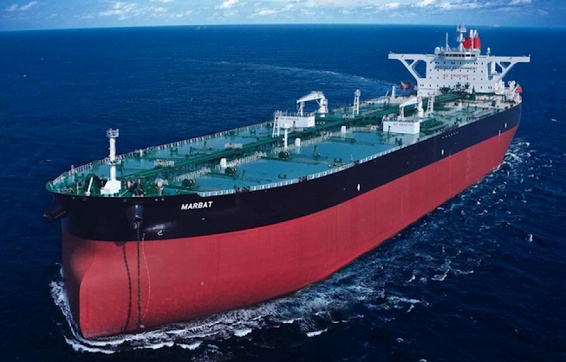
The company wants to acquire chemical and product tankers as well as offshore support vessels, after it agreed last month to settle historical liabilities, Buamim said in a Bloomberg TV interview. Gulf Navigation currently owns eight chemical tankers and four crew boats, according to its website.
“We need to double our fleet or triple our fleet by 2020,” Buamim said. The company could sell shares or issue short-term Islamic bonds, or sukuk, to fund the growth, he said. “Most of the legacy issues are sorted out or about to be finalized.”
Gulf Navigation reached a settlement with DVB Bank SE, BNP Paribas SA and DNB ASAover liabilities dating back to 2014, the company said in a statement on Feb. 19. It said earlier that the settlement should improve investor confidence and widen market interest in Gulf Navigation. The company has started studying an expansion of operations including ship-building and repairs in the northern parts of the United Arab Emirates, together with two Chinese shipbuilders.
Source: Bloomberg
Shipping and refiners in catch-22 over 0.5\% sulphur rule

The problem with the 0.5\% sulphur cap regulation is indeed a textbook conundrum for refiners (the fuel suppliers), and shipowners (the fuel buyers), caught in a quandary whereby suppliers are unable to commit on how much to produce as buyers do not know how much is needed, vice versa.
In July this year, the IMO will meet and present a more detailed roadmap, with help from independent research and consultancy organisation CE Delft, on how the fuel sulphur regulation should be appropriately implemented in order to ensure a smooth transition and mitigate disruption to the market.
“The IMO could possibly be looking at a phased introduction of the regulation rather than instant compliance,” said Sushant Gupta, director - Asia Pacific, refining and chemicals research, Wood Mackenzie.
Heavy fuel oil (HFO), which is high in sulphur content and considered the bane for environmentalists, is the traditional source of energy to power ships. In 2016, global demand for high-sulphur HFO stood at almost 70\% of overall bunker fuels, including the low-sulphur marine gas oil (MGO), or distillates, with below 0.5\% sulphur content.
The switch to burning MGO is an option for shipowners to be in compliant with the IMO regulation, and two other alternatives are installing abatement technology such as scrubbers or using LNG as fuel. The use of LNG as fuel, however, is considered a distant option due to the global lack of LNG bunkering infrastructure, not to mention a great deal of uncertainty regarding supplies.
“Installing scrubbers may be an economically attractive option. Although there is an initial investment, shippers can expect a high rate of return of between 20-50\% depending on investment cost, MGO-fuel oil spread and ships’ fuel consumption,” Gupta said.
“Despite attractive returns, penetration rate for scrubbers could be limited by access to finance, scrubber manufacturing capacity, dry-dock space and technological uncertainties. The shipping industry is traditionally slow to move, but in this case, early adopters may hugely benefit,” he said.
Wood Mackenzie forecast that the retrofitting or installation of scrubbers will not pick up substantially until 2020 due to the costly investments ranging from $5-10m per vessel. Analyst McQuilling Services said in a recent industry note that players with difficult access to financing for a scrubber can look to potential cooperation with trading companies as alternatives to banks and investors.
Scrubber manufacturer DuPont Clean Technologies estimated that up to 25\% of the world’s fleet would be fitted with abatement technology by 2025, and in the run up to 2020 between 500 to 2,000 additional ships will retrofit with scrubbers.
“Switching to MGO is a more costly solution. In full compliance, we expect shippers to try to pass the cost to consumers and freight rates from the Middle East to Singapore could increase by up to $1 a barrel,” Gupta said.
JBC Energy, a boutique oil market research company, also noted that tonne-kilometres and freight rates for dirty tankers are likely to receive a boost with the 0.5\% sulphur regulation. The research firm sees potential for crude runs to have additional upside resulting from the specification switch, while the need to optimise the global distribution of HFO should unlock extra demand for dirty freight.
“On top of that, requirements for floating storage of low and high sulphur residue streams are expected to be an additional pillar of support for freight rates over the crucial period from 2019 through 2021,” JBC Energy said.
In terms of demand, Wood Mackenzie’s data showed that MGO sales are currently at approximately 700,000-800,000 barrels per day (bpd), and they are forecast to skyrocket to 2.8m bpd by 2020. Demand levels for HFO, on the other hand, are at around 3.2m bpd and are projected to plunge to 700,000 bpd by 2020.
Gupta pointed out that the change in supply landscape would then create a dilemma for scrubber users who would question if there will be enough HFO to burn if refiners significantly restrict the sale of the high-sulphur product as they reap higher margins from selling MGO. Refiners also have their worries that any extra production of MGO would be stranded if the more ships equipped with scrubbers continue to consume the less costly HFO.
“The options for refiners and ship operators will depend on the course of action decided by each of them. At the end of the day, the shipping industry and refineries need to communicate and find middle ground, and time, unfortunately, is running out,” Gupta said.
© Copyright 2017 Seatrade (UBM (UK) Ltd).
Lee Hong Liang
Asia Correspondent, Seatrade Maritime
Verifavia Shipping awarded full accreditation as a global independent EU MRV Verifier
 |
This is a full accreditation that allows Verifavia Shipping to assess monitoring plans as of today, and verify emission reports from 2019 onwards, according to the ISO 14065 standard and regulation 757/2015. There are no limitations to the scope of our accreditation, meaning we are able to assess or verify any ship anywhere in the world, regardless of country of ownership, flag state, or class.
The EU MRV regulation is now a pressing reality for the industry. With only five months to go until the first legal deadline on 31st August 2017, we would urge ship owners and operators to act now to avoid the EU MRV bottleneck that might ensue.
To obtain an EU MRV proposal and quote for our Monitoring Plan Assessment and Emission Report Verification services, please write to This email address is being protected from spambots. You need JavaScript enabled to view it.
Click here to read our accreditation announcement
Download our accreditation announcement
More Room for Asian VLCC Rates to Fall
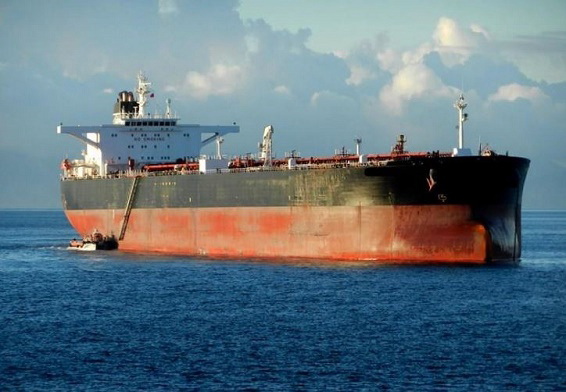
Charterers went for the jugular, with at least 4 older vessels fixed within the range of w55-w58 for an AG/East voyage. We believe that VLCC rates will remain depressed in the short term due to the upcoming refinery turnaround season in Asia, diminishing floating storage inventories that will free up more tonnage as well as OPEC production cuts.
 |
Heavy refinery maintenance in Asia
Upcoming Asian refinery maintenance over the next two months is unusually heavy and is expected to lower March cargo flows out of the AG, weighing on VLCC rates. At least 2 mmb/d of refining capacity in the East of Suez is expected to be offline in March, more than double that of last year. China’s state-owned refiners account for around 50\% of overall shut capacity in Asia in March, which will reduce AG-loading cargo volumes as they form the core of Saudi Aramco’s client base.
Falling floating storage inventories
The unwinding of storage plays has begun as floating storage becomes less economically viable due to the flattening Brent futures curve. According to Reuters, 12.1 mmb of crude (equivalent of 6 VLCCs) were released from floating storage in Malaysia, Singapore and Indonesia. The influx of tonnage will further push down freight rates. Moreover, some of the vessels previously chartered for floating storage are older units which are typically available at discounted rates.
OPEC production cuts
The overall impact of OPEC’s production cuts (~1.2 mmb/d) is evident from the fall in VLCC fixtures from the AG. The number of fixtures is estimated to have dropped by 9\% m-o-m to 145 in February. According to OPEC, compliance reached over 90\% in January with Saudi Arabia shouldering the bulk of agreed cuts.
Source: OFE Insights
Star Bulk Carriers Corp. (SBLK) Raised to “Buy” at Deutsche Bank AG
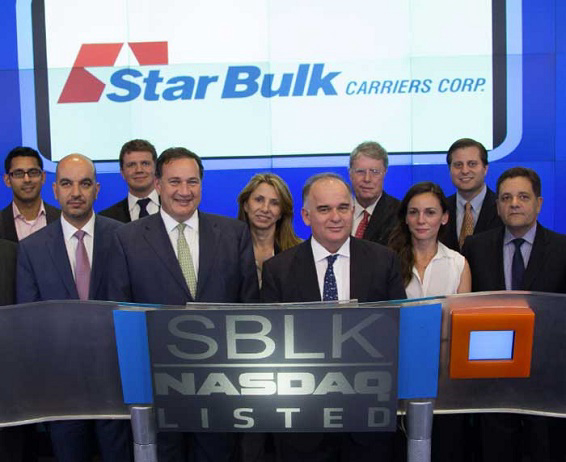
SBLK has been the topic of several other research reports. Zacks Investment Research raised Star Bulk Carriers Corp. from a “hold” rating to a “buy” rating and set a $5.75 price objective on the stock in a report on Wednesday, December 21st. Jefferies Group LLC upped their price objective on Star Bulk Carriers Corp. from $6.50 to $11.00 and gave the stock a “buy” rating in a report on Monday, January 23rd. Finally, Pareto Securities downgraded Star Bulk Carriers Corp. from a “buy” rating to a “hold” rating in a report on Thursday, February 9th. Two research analysts have rated the stock with a sell rating, two have given a hold rating and four have assigned a buy rating to the company. The stock has an average rating of “Hold” and an average target price of $6.05.
Shares of Star Bulk Carriers Corp. (NASDAQ:SBLK) opened at 8.26 on Tuesday. The firm’s market cap is $377.76 million. The company’s 50-day moving average price is $7.93 and its 200-day moving average price is $5.52. Star Bulk Carriers Corp. has a 52-week low of $2.10 and a 52-week high of $9.50.
A number of hedge funds and other institutional investors have recently bought and sold shares of the company. Monarch Alternative Capital LP acquired a new stake in shares of Star Bulk Carriers Corp. during the fourth quarter valued at approximately $102,000. A.R.T. Advisors LLC acquired a new stake in shares of Star Bulk Carriers Corp. during the fourth quarter valued at approximately $180,000. Renaissance Technologies LLC boosted its stake in shares of Star Bulk Carriers Corp. by 174.2\% in the fourth quarter. Renaissance Technologies LLC now owns 172,980 shares of the company’s stock valued at $884,000 after buying an additional 109,886 shares during the last quarter. Marshall Wace LLP acquired a new stake in shares of Star Bulk Carriers Corp. during the fourth quarter valued at approximately $1,259,000. Finally, GSA Capital Partners LLP boosted its stake in shares of Star Bulk Carriers Corp. by 542.7\% in the fourth quarter. GSA Capital Partners LLP now owns 409,323 shares of the company’s stock valued at $2,092,000 after buying an additional 345,634 shares during the last quarter. 67.79\% of the stock is currently owned by hedge funds and other institutional investors.
Source: Zacks
Aegean Marine Petroleum Network Inc. Sold 16.5 million tons of marine fuels during 2016
Fourth Quarter Highlights and Full Year Financial Highlights
Recorded sales volumes of 3,954,700 metric tons in Q4 2016 and 16,519,079 metric tons for the full year.
Achieved gross profit of $90.8 million in Q4 and $353.5 million for the full year.
Generated operating income of $24.4 million in Q4.
Recorded net income attributable to Aegean shareholders of $16.0 million or $0.41 basic and diluted earnings per share for the fourth quarter and $51.9 million or $1.14 basic and diluted earnings per share for the full year.
Adjusted Net income for the full year was $61.4 million or $1.35 basic and diluted earnings per share.
Generated EBITDA of $32.5 million in Q4 and $125.6 million for the full year.
Full year adjusted EBITDA was $135.2 million.
Fourth Quarter and Full Year Operational Highlights
E. Nikolas Tavlarios, Aegean’s President, commented, “The fourth quarter marked the end of another strong year for Aegean, despite volatile commodity markets and increased competition. Our flexible business model continued to enable Aegean to capitalize on growth opportunities across our unique platform. As evidenced by consistent portfolio rationalization, we are focused on strengthening our operations and enhancing efficiencies across our business. Our global footprint now includes more than 30 markets and 51 ports, with a team dedicated to ensuring that customers are better equipped to run their businesses. We remain committed to executing our strategy and confident in our ability to generate sustainable growth to drive shareholder value.”
Generated Solid Financial Results
Revenue – The Company reported total revenue of $1.2 billion for the fourth quarter of 2016, an increase of 29.0\% compared to the same period in 2015, primarily due to the increase in oil prices. Voyage and other revenues were, $20.6 million, approximately $4.4 million more than the same period in 2015.
Gross Profit – Gross Profit, which equals total revenue less directly attributable cost of revenue increased by 2.8\% to $90.8 million in the fourth quarter of 2016 compared to $88.3 million in the same period in 2015.
Operating Expense – The Company reported operating expense of $66.4 million for the fourth quarter of 2016, an increase of $2.2 million or 3.4\% compared to the same period in prior year.
Operating Income – Operating income for the fourth quarter of 2016 was $24.4 million, in line with the same period for the prior year.
Net Income – Net income attributable to Aegean shareholders was $16.0 million, or $0.41 per basic and diluted share, an increase of $6.3 million or 64.9\% compared to the same period in 2015. Net income for the full year was $51.9 million or $1.14 basic and diluted earnings per share. Net income for the full year adjusted for gains/losses on sales of assets, impairment charges and the Accelerated Shares was $61.4 million or $1.35 basic and diluted earnings per share.
Operational Metrics
Sales Volume – For the three months ended December 31, 2016, the Company reported marine fuel sales volumes of 3,954,700 metric tons, a decrease of 1.9\% compared to the same period in 2015.
Adjusted EBITDA Per Metric Ton of Marine Fuel Sold – For the three months ended December 31, 2016, the Company reported adjusted EBITDA per metric ton of marine fuel sold of $8.21. Adjusted EBITDA per metric ton of marine fuel sold in the prior year period was $8.14 per metric ton.
Gross Spread Per Metric Ton of Marine Fuel Sold – For the three months ended December 31, 2016, the Company reported gross spread per metric ton of marine fuel sold on an aggregate basis of $21.1. Gross spread per metric ton of marine fuel sold in the prior year period was $20.5.
Liquidity and Capital Resources
Net cash used in operating activities was $32.8 million for the three months ended December 31, 2016. Net income as adjusted for non-cash items (as defined in Note 9 below) was $25.9 million for the same period.
Net cash used in investing activities was $2.4 million for the three months ended December 31, 2016, primarily due to advances for fixed assets under construction.
Net cash provided by financing activities was $71.5 million for the three months ended December 31, 2016, primarily due to the proceeds from our recent convertible bond offering.
The weighted average basic and diluted shares outstanding for the three months ended December 31, 2016 was 37,612,600. The weighted average basic and diluted shares outstanding for the three months ended December 31, 2015 was 47,436,953.
Spyros Gianniotis, Aegean’s Chief Financial Officer, stated, “Our solid results and accomplishments during the quarter demonstrate the long-term potential of our financial strategy. During the fourth quarter we continued our focus on driving higher margins and profitable volume and improved our financial strength. We have maintained a strong balance sheet and are confident our flexibility will support Aegean’s continued success. Looking ahead, we will continue to deploy our resources into the most effective and profitable markets to generate the greatest return for Aegean shareholders.”
Source: Aegean Marine Petroleum Network
EU shipping policy is solid, but needs a stronger global orientation to sustain further growth
This combination supports the current status of the EU as an attractive location for shipping activities. To develop further growth in European shipping, the EU however needs to adapt this framework into a comprehensive, globally oriented shipping policy that aims to improve the EU’s competitiveness as a location for international shipping. That is the principal conclusion from a study by Monitor Deloitte that benchmarks the overall EU policy framework for shipping with policies of five international shipping centers. The study was commissioned by ECSA as input for the ongoing review of EU shipping policy, which started in 2015 with a mid-term review of the 2009-2018 Maritime Transport Strategy. The results of the study were presented this afternoon at a press conference held in the context of European Shipping Week.
“The study demonstrates that successful shipping centres combine investment in an attractive business climate with investment in quality and skills”, said ECSA President Niels Smedegaard, “It is encouraging to see that the EU is in a good position and does not need a dramatic policy change. But global competition is fierce and we cannot take our position for granted. The study shows there are a number of policy gaps that should be addressed, firstly to maintain and then to enhance even further the competitive position of the EU. We have a unique momentum to do so now with the EU maritime year. We therefore offer this study as a basis for discussion on the EU shipping strategy for the next decade.”
The Monitor Deloitte study confirms that the maritime state aid guidelines form an essential part of the EU policy framework. “Legal certainty in the continuity of the guidelines is paramount”, said Niels Smedegaard, “The guidelines are inherently flexible in nature and should therefore in their current format already allow for new growth opportunities of the maritime cluster and more competitiveness.”
A globally-oriented EU shipping policy also involves the trade dimension. The Monitor Deloitte study recognises that the EU plays a very positive role in supporting bilateral and multilateral free trade agreements as well as in promoting individual market access cases. “We need a more structured EU external shipping policy to capitalise on this positive role, similar to the one existing for aviation. With protectionism on the rise worldwide, Europe should remain a champion of free trade”, concluded Niels Smedegaard. To underline this message, ECSA also published today a series of recommendations for an EU external shipping policy.
The Monitor Deloitte study compares the overall EU policy framework for shipping with policies of Singapore, Hong Kong, Dubai, Shanghai and Vancouver. The benchmark exercise is based on eight criteria: taxation and fiscal incentives, availability of professional services, regulatory, economic and political factors, skills, flag attractiveness, ease of doing business, legal framework for vessel exploitation and availablilty of finance.
ecsa
Palau Ship Registry Opens New Piraeus Hq

 |
| Panos Kirnidis, Chief Executive, Palau International Ship Registry, in his new European Head Office in Piraeus, Greece. |
Panos Kirnidis, CEO of PISR says, “We have spent time finding and employing people around the shipping world who add value to our services and come with a sense of dedication we demand. During the years of our operations we have come into contact with many professionals whose skills we now use for our clients. We have more than 30 Deputy Registrars worldwide and if needed, we can source surveyors, engineers and legal experts to handle any issue that arises for ship owners and managers. We have no concerns about our global reach for any of our services.”
Panos Kirnidis sees the move to Greece as a strong indication of the Registry’s commitment to the Greek and European shipping sectors as well as providing worldwide support for ship-owners.
“Greece has always played an important part in the world of shipping and Palau Registry recognizes this. This is why we have opened our Piraeus head office to ensure we can provide ship-owners and managers with a dedicated and reliable solution to the challenges they face. Our registration services are proving to be smoother, faster and even more efficient as we face the demands of the new shipping industry.”
“The shipping world is changing rapidly and so we have adapted and moved with the needs of our clients. They want a registry that works when they need it and that’s what Palau Registry is. We understand their challenges and can offer not only advice but also strong solutions to keep them at sea. Moving our head office to Greece shows we appreciate the breadth of our work and the scale of operations needed to become a world class leading Registry,” said Panos Kirnidis.
“As an active member with permanent delegation to both the IMO and ILO, Palau Registry has set the standard for participation and ratification of all major treaties and conventions. With an array of fast, reliable and effective registration methods, as well as technical and seafarer documentation services, Palau Registry follows the highest maritime standards and is strategically designed to play a key role in the shipping industry in years to come.
The Palau Registry was created by an amendment to the Title 7 of the Republic of Palau National Code in 2010 and was appointed by the government of the Republic of Palau as the Ship Registry Administrator. The world class ship Registry provides administrative, legal and technical support; documenting the ship and registering it under the Flag of the Republic of Palau.
Source: Palau Ship Registry
Maintaining and boosting the competitive position of the European shipping industry require a shift in policy priority says Deloitte study
The shipping industry in the EU is a highly mature industry and an economic giant in the European economy directly accounting for over 620,000 jobs.1 On the global level of shipping, the EU is still a large player compared to most regions in the world with 36.5 percent of owned gross world tonnage and 46.2 percent of operated world tonnage. An overall competitive regime for fiscal and social measures as well as quality registers and a strong skills base support the current status of the EU as a location for shipping activities.
Current growth rates in the overall market share suggest that the EU remains competitive, but at the same time that there are clear signs that the competitiveness of EU shipping is under significant pressure. The EU is experiencing cases of relocation of activities as well as de-flagging, despite its ambition of the opposite, and its growth rates in terms of ownership and the tonnage operated are significantly lower than those of its competitors in for instance Asia. In this study commissioned by the European Community Shipowners’ Associations, Monitor Deloitte has identified a number of important policy gaps in the overall EU shipping policy framework on the basis of a benchmark study of five specific international shipping centres (Singapore, Hong Kong, Dubai, Shanghai and Vancouver).
Through the comparison of the successful policies across eight competitiveness factors in those centres with EU policies, the policy gaps have been identified (see box on right). The study concludes that there is an overall solid – and highly important – EU policy framework facilitated by the Community Guidelines on State aid to maritime transport (SAGs) that has enabled a competitive position of EU shipping centres vis-à-vis competing non-EU shipping centres. But it is also concluded that there are EU policies making the EU less attractive to shipowners and to shipping activities and hence constituting policy gaps. Three gaps have been emphasised in this summary and form the basis for the key recommendations while further gaps have been described in the full report.
Important policy gaps exist in an otherwise strong policy framework
Firstly, in terms of taxation and fiscal incentives the current regime provides for a relatively competitive European shipping sector at its core. However, the EU framework is less competitive with regard to several elements, including the EU eligibility criteria relating to the flag requirement and the current ring-fencing of maritime activities applicable to tonnage tax put in place by the European Commission. Effective taxation at both corporate and shareholder level is a sine qua non condition to maintain a sizeable market share in international shipping.
A second significant gap has been identified concerning the regulatory framework specifically relating to the application and legal status of the SAGs for competitiveness. It is a perceived weakness seen from the shipowners’ point of view that the EU’s – and often also the member states’ – interpretation of the SAGs is based on legal grounds, but lacks flexibility, whereas administrations in international centres are often much more pragmatic and business-friendly. This problem is reinforced by the fact that the SAGs are easily amendable by the European Commission and that there are no explicit periods of applicability. In a sector where most business decisions are long-term, these factors give rise to uncertainty due to a perceived risk of interpretive policy change.
A third gap on flag attractiveness and the legal framework for vessel exploitation emanates from the regional legislation for international shipping that is introduced by the EU and entails different standards for EU flags and shipowners, causing additional administrative and technical requirements. Moreover, some EU registers still stipulate specific nationality requirements and crewing restrictions that also lead to increased administrative and economic burdens. Competitors, like Singapore, have strategies to ensure that national regulations do not go beyond the international standards and are, at the same time, considered a quality flag option. The consequence of the EU policy is that the competitiveness of EU flags is harmed as this leads to differences in operational costs and not quality.
EU shipping policy must evolve and change to better support
EU shipping at a global level Monitor Deloitte’s recommendations come at two levels: the overall perspective of shipping as a global industry and specific policies. Further recommendations are put forward in the report.
1. Formulate a comprehensive and globally oriented shipping and maritime policy in the EU
EU policies on short sea shipping must be complemented by a policy with a view to improve the EU’s competitiveness as a location for international shipping at a global level. While both short sea and global shipping are important markets, the largest share of EU shipping is international and crosstrading, carrying cargoes between third countries. Furthermore, the policy should be comprehensive by cutting across policy fields like transport, taxation, environment, etc, and thereby cover the key competitiveness factors.
2. Improve legal clarity around the application of the SAGs
The EU should increase the clarity around the applicability of the SAGs by clarifying the principles and objectives applied. While the SAGs should remain soft regulation, there is an apparent need for continued flexibility in the member state application of the guidelines – a one-size-fits-all model that drives out the particularities of individual member state shipping sectors would be very harmful to the competitiveness of EU shipping. Also, to the extent possible, the EU should aim at setting medium/long-term horizons for the applicability of the SAGs to induce increased legal certainty. Finally, the EU should not question previous decisions that were duly notified and approved.
3. Assess and ease the flag link eligibility criteria for entering the tonnage tax regime
Too rigid an insistence on the flag link eligibility criteria may be counterproductive as this could lead to increased operating costs or lack of market access. The EU should consider easing, or as a minimum not further restricting, the current flag link requirements set up in the SAGs as other important shipping centres do not have such requirements, which allows for more flexibility. Instead, the EU should maintain and focus on its requirements concerning strategic and commercial management activities.
4. Deviating from or going beyond IMO/ILO conventions in EU and member state regulation should be prevented
In order for the EU to offer competitive conditions for its flag states and shipping companies, deviating from or going beyond IMO/ILO conventions should be prevented. Furthermore, current regulation should be reviewed in 4 order to reduce unnecessary detailed and burdensome regulation. From a competitiveness perspective, it is important that the EU does not impose stricter regional regulations on top of global agreements. Implementation of regulations outside standards introduced by IMO/ILO will increase the operating costs relative to flag states, such as Singapore, pursuing regular implementation of IMO/ILO conventions, and should be avoided.
Source: Deloitte
Socio-economic impact of the EU shipping industry remains solid
 |
ECSA publishes the new figures at the start of European Shipping Week, a week-long series of shipping events meant to raise the profile of the sector with EU policy-makers. “The latest Oxford Economics figures underline that shipping remains a solid contributor to the European agenda of jobs and growth”, said ECSA Secretary General Patrick Verhoeven, “Compared to 2013 figures, we see a modest increase in both employment and value-added figures.”
The Oxford Economics report finds that around four-fifths of direct employment occurs at sea. Officers account for an estimated 42\% of positions at sea, and ratings 58\%. 40\% of the 516,000 seafarers employed in the EU shipping industry are estimated to be EU/EEA nationals.
“Although it is an estimated figure, the percentage of EU/EEA seafarers appears to remain fairly stable”, commented Patrick Verhoeven, “This is a positive sign, given the challenging market circumstances most European shipping companies still operate in.”
ECSA

Powered by  © Μaritimes 2019