


Gaslog Ltd. places a newbuilding order at Samsung Heavy Industries
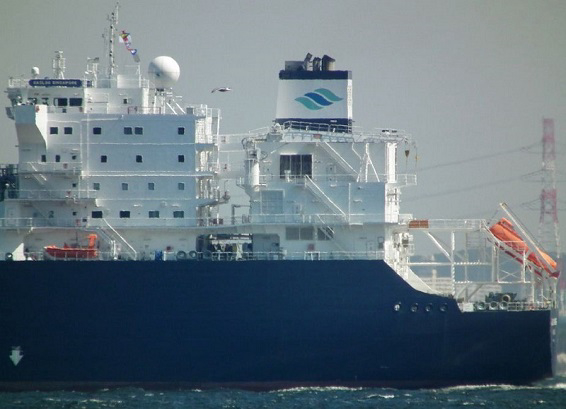
Paul Wogan, Chief Executive Officer of GasLog Ltd., commented, "I am very pleased to announce this expansion in our fleet. We have secured this vessel at a very attractive cost and she will be equipped with the latest propulsion and cargo containment technology which will result in highly competitive unit freight costs. The vessel is expected to deliver into a strong LNG shipping market which, according to our estimates, will be short of capacity by the winter of 2019/2020."
About GasLog Ltd.
GasLog is an international owner, operator and manager of LNG carriers. GasLog's fully-owned fleet includes 15 LNG carriers (including 10 ships in operation and 5 LNG carriers on order) and GasLog. GasLog Partners LP, a master limited partnership formed by GasLog, owns a further twelve LNG carriers. GasLog's principal executive offices are at Gildo Pastor Center, 7 Rue du Gabian, MC 98000, Monaco. GasLog's website is http://www.gaslogltd.com.
Will 2018 be the year that LNG as a marine fuel comes of age?
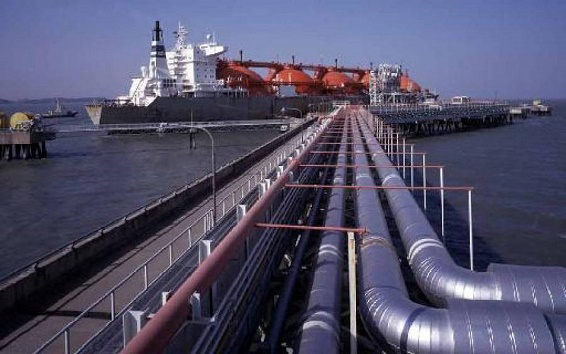
The earlier part of the decade when the oil price was sky high pushing bunkers to $600 - $700 per tonne saw a lot of interest in LNG as an alternative marine fuel and bullish forecasts of its development were issued by the likes of DNV GL. While a small number of vessels, mainly ferries in Scandinavia, did adopt LNG it failed to take a hold as forecast, stymied by the sharp drop in the oil price.
However, October 2016 was to see a decision that was to provide a new catalyst for the adoption of LNG as a marine fuel – the IMO implementing a global sulphur cap of 0.5\% for marine fuel from 1 January 2020, five years earlier than the 2025 date most had expected. This decision left owners with just three years to find an alternative to burning high sulphur heavy fuel oil (HSHFO) – the fuel of choice for the vast majority of the industry outside of emission control areas.
The result was 2017 saw a major upsurge in the use of LNG as fuel, and what had long been a chicken and egg situation witnessed developments in all parts of the supply chain.
An increasing number of ports are looking to develop LNG fueling infrastructure, the first LNG bunker tankers are starting to come into service, rules are being developed by classification societies, more and more owners are ordering LNG ready or dual fuel vessels, and oil companies are moving to supply the gas.
The most eye-catching announcement of all was CMA CGM’s decision to order eleven 22,000 teu containership newbuilds in China that would be LNG powered, with Total committing to supply the fuel. But there were many other announcements across the year – both big and small – with names like AET, Sovcomflot, UECC, Keppel and Shell.
According to Titan LNG some 11\% of newbuildings ordered last year were “LNG ready” and it expects the trend to continue in 2018. “The team of Titan LNG is very much looking forward to 2018 as in the past year the stage has been set for a push in the adoption of LNG as a marine fuel beyond the tipping point,” it said in a review of 2017.
The Society of Gas as a Marine Fuel (SGMF) sees 2018 as a “tipping year” rather than a single point for the use of LNG as a marine fuel.
One only has to look at the slew of announcements by containment specialists GTT during Marintec China last month understand where the French company sees a significant portion of future business lying.
Of course LNG is not the only choice for marine fuel in the future that meets environmental demands. Owners can opt to continue to use HSHFO with scrubbers, to use gas oil or explore alternatives such as battery power.
Most industry observers expect shipping to a have multi-fuel future rather than the largely mono-dimensional situation the industry has had using HSHFO.
With LNG reaching a tipping point or year in 2018 it set to very much play a major part in that multi-fuel future.
Seatrade (UBM (UK) Ltd)
Iraq Ships Near-Record Amount of Oil From South
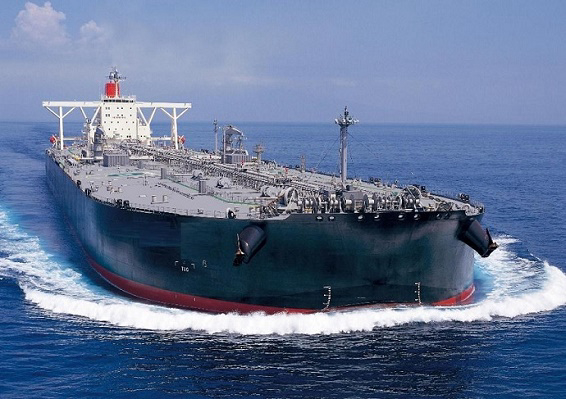
Southern exports at record levels in November and December again call into question Iraq’s ability to meet its commitment to cut output as part of the OPEC-led drive to curb a global oil glut. The producers’ group is seeking to bolster prices by keeping excess crude off the market. Iraq’s burgeoning southern sales contrast Saudi Arabia’s efforts to buttress the group’s action by cutting more than its share of production.
Iraq, the second-largest oil producer in the Organization of Petroleum Exporting Countries, shipped 3.46 million barrels of crude a day from its southern port of Basra last month, according to tanker tracking data compiled by Bloomberg. That’s slightly down from November, when the country exported a record 3.51 million barrels a day from the south.
The tanker tracking figures are slightly lower than Oil Ministry figures released on Wednesday, which showed December crude sales excluding northern flows reaching a record 3.535 million barrels a day.
Iraq is boosting southern output to offset a decline in exports from the country’s north. The semi-autonomous Kurdistan Regional Government ships crude it produces via pipeline to Turkey’s Ceyhan port. Sales from the neighboring Kirkuk region halted in October after the central government retook fields there from the Kurds amid a territorial dispute.
Total exports -- from both north and south -- slipped about 22,000 barrels a day in December, to 3.78 million barrels a day, according to tanker-tracking and port agent data compiled by Bloomberg. Sales from the north alone rose 10 percent to 319,000 barrels a day in December, according to tanker tracking. While that increase helped to regain some of the sales lost since October, exports are still only about 60 percent of their level prior to the dispute.
Iraq pumped 4.39 million barrels a day in November, exceeding its OPEC quota of 4.35 million barrels daily, according to data compiled by Bloomberg. The country met its commitment to the group for the first time last year only in October, when output slumped amid the output disruptions, also according to Bloomberg-compiled data. OPEC secondary-source figures put production a little above that level even in October.
Exports from Saudi Arabia, OPEC’s biggest producer, fell in December to the second-lowest level in the year, according to Bloomberg tanker tracking. The Saudis cut sales to China to the lowest in 2017.
source:www.bloomberg.com
The industry needs a marine investigation code
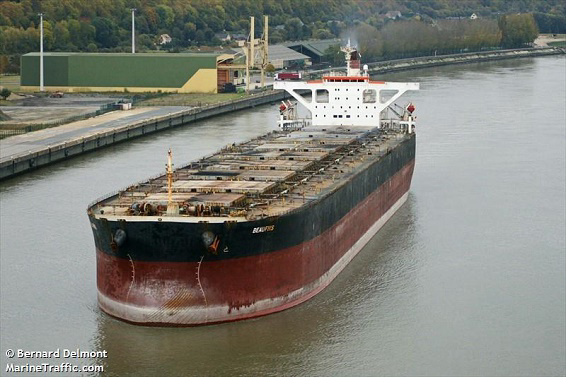
Too often local jurisdictions are unprepared, lacking in understanding and unwilling to cooperate, and as a result the process takes too long, with a negative outcome for the environment, the vessel’s crew or the damaged ship.
Problems arise when a local authority does not know the limit of its jurisdiction and assumes authority of a casualty when they have no right to do so. There are too many examples of where the recovery of a grounded or damaged vessel has run over many years, where the investigative and wreck removal process was flawed or where the master ended up in jail or otherwise detained.
I believe this could be addressed through a marine investigation code, driven by the IMO. The code would compel sovereign states to clarify their jurisdictions with their governments prior to any incident. This would mean that in the immediate aftermath, first responders would know who to deal with and exactly the limits of their authority.
A marine investigation code could establish transparent, consistent procedures across national borders ensuring the best response from all parties. Responders would be able to coordinate with an authority that understood the maritime sector and the implications of a shipping casualty. Sector expertise would be invaluable in managing the response with clear procedures, avoiding situations where a local authority response is driven by media, public emotion or political agenda.
The Nairobi International Convention on the Removal of Wrecks is a step forward and importantly promotes the idea that action should be “proportionate to the hazard” and that activities “should not go beyond what is reasonably necessary” but the convention, although accepted in 2007 has yet to be ratified.
Accidents will happen. But a maritime accident investigation code would minimise their impact, and better communication between governments, maritime authorities, shipowners, regulators and others would mean that future casualties were better managed, the environment protected and seafarers’ rights observed.
Source: IUMI (By Captain Jon Walker, Asia Chairman, LOC, IUMI Professional Partner)
Spotlight: Belt and Road Initiative brings win-win results
 |
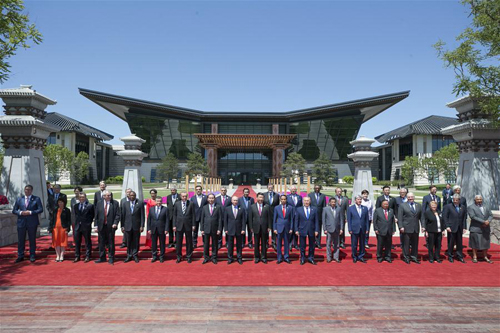
| Chinese President Xi Jinping, foreign delegation heads and guests pose for a group photo at the Leaders' Roundtable Summit of the Belt and Road Forum (BRF) for International Cooperation at Yanqi Lake International Convention Center in Beijing, capital of China, May 15, 2017. |
The BRF has yielded a list of deliverables, which includes 76 items comprising more than 270 concrete results in five key areas, namely policy, infrastructure, trade, financial and people-to-people connectivity.
Markos Kantzios, publisher of "Maritimes.gr," a web portal which focuses on shipping, banking and investments, told Xinhua recently that "the new Silk Road alters the image on the global chessboard. Growth will from now on be based on common good and benefit."
He followed the event at Beijing from his office at Piraeus port, Greece's largest, which has become in recent years a role model of win-win cooperation between China and Greece.
"The principle of the win-win cooperation promotes a different, advanced dialogue. This new mentality will help forging trade partnerships and doing business on the basis of friendship rather than alliances which are built after confrontations," Kantzios underlined.
David Vines, an Australian professor of economics at the Institute for New Economic Thinking at the Oxford Martin School with Oxford university, said in an article published by the Australian Financial Review on Sunday that "China's One Belt, One Road (OBOR) offers a huge opportunity. It is true that there are risks. But it is clear what we should do. We should welcome the initiative with open arms and engage with it."
"A win-win outcome is possible," he said. "Many in China want to lead well, for the benefit of the global economic community and not just for the benefit of China. It is up to the rest of the world to help show Chinese policymakers how to do this."
The Belt and Road is set to bring win-win results in the world, and in the process lift millions of people out of poverty, raise living standards and connect the world in a way never before seen.
Enterprises have long sensed opportunities brought by the Belt and Road Initiative first envisioned by Chinese President Xi Jinping in 2013 aiming at building a trade and infrastructure network connecting Asia with Europe and Africa along and beyond ancient trade routes.
The Wall Street Journal published an article on Sunday titled Western Firms Bet Big on China's Billion-Dollar Infrastructure Project, saying that Honeywell, GE and Caterpillar are set to benefit from the Belt and Road efforts.
The article said "the 'One Belt, One Road' infrastructure project presents giant business opportunities for Western companies, if they already have deep ties in China and the region."
The BRF summit in Beijing is also expected to open up new avenues for Western companies searching for growth opportunities outside their home markets, the article said, "U.S. companies could use the business."
Adel Sabri, a cairo-based expert of Chinese affairs, applauded the roundtable of the BRF, saying the meeting conveyed a message that China and Xi are set to boost global cooperation to implement the Initiative.
Sabri said that the Chinese leadership realizes the importance of mutual and practical cooperation and never believes in sole economic domination of one country.
A commentary published Sunday on the Egyptian newspaper El-Tahrir wrote that "China managed to promote the principals of joint interests via peaceful means like trade exchange, developmental infrastructure and aiding the other developing and emerging countries to take advantages of the Chinese experience as a transparent and credible country."
As Xi said at the forum, the Belt and Road Initiative "does not exclude or target any party," and "we need to seek win-win results through greater openness and cooperation, avoid fragmentation, refrain from setting inhibitive thresholds for cooperation or pursing exclusive arrangements, and reject protectionism."
Thus far, Xi's Belt and Road vision has been backed with concrete action.
To date, 68 countries and international organizations have signed agreements with China on Belt and Road cooperation. Total trade between China and other Belt and Road countries exceeded 3 trillion U.S. dollars between 2014 and 2016, and Chinese investment in these countries surpassed 50 billion dollars.
A multi-dimensional infrastructure network is taking shape, one that is underpinned by economic corridors featuring land-sea-air transportation routes and information expressways and supported by major rail, port and pipeline projects.
Source: Xinhuanet
Editor: Wu Peng
ATHEX : New Chairman of the Board of Directors
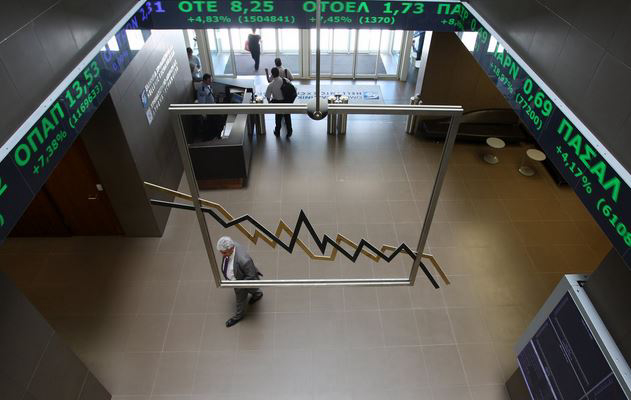
The Board of Directors at its meeting today elected Mr. George Hadjinicolaou as new nonexecutive member to fill the vacated seat. Mr. Hadjinicolaou is a banker and a non-executive Chairman of the Bank of Piraeus.
The Board of Directors was then formed as a Body, as follows:
1. George Hadjinicolaou Chairman, non-executive member
2. Socrates Lazaridis Vice Chairman & CEO, executive member
3. Alexandros Antonopoulos Independent non-executive member
4. Konstantinos Vassiliou Non-executive member
5. Ioannis Emiris Non-executive member
6. Dimitrios Karaiskakis Executive member
7. Sofia Kounenaki-Efraimoglou Independent non-executive member
8. Ioannis Kyriakopoulos Non-executive member
9. Adamantini Lazari Independent non-executive member
10. Nikolaos Milonas Independent non-executive member
11. Alexios Pilavios Non-executive member
12. Dionysios Christopoulos Independent non-executive member
13. Nikolaos Chryssochoidis Non-executive member
In addition, following the resignation of Mr. Iakovos Georganas from the Board of Directors of the subsidiary Hellenic Central Securities Depository, the Board of Directors elected Mr. George Hadjinicolaou as new non-executive Chairman and was formed as a Body as follows:
1. George Hadjinicolaou Chairman, non-executive member
2. Socrates Lazaridis Vice Chairman & CEO, executive member
3. Nikolaos Pimplis Executive member
4. Nikolaos Porfyris Executive member
5. Dionysios Christopoulos Non-executive member
ANNOUNCEMENT JOHN D. FAFALIOS
He is survived by his wife Rallia, his children Dimitris, Alexandra, Anastassis, Evgenia, Haralambos and his grand-children.
Condolences can be sent to:
Fafalios Ltd.
24-26 Baltic St W, London EC1Y 0UH
E- mail: This email address is being protected from spambots. You need JavaScript enabled to view it.
Fafalios Shipping S.A.
Akti Miaouli 35, Piraeus 185 35
E-mail: This email address is being protected from spambots. You need JavaScript enabled to view it.
please be advised that the funeral service for Mr. John D. Fafalios will take place on Wednesday the 3rd of January 2018, at Metamorfosis Sotiros Church in Kefalari Kifissia at noon, followed by the burial service at Panagia Moutsaina Church in Vrontados, Chios on Friday 5 January, at 13.00
The family wishes that in lieu of flowers, donations can be made to one of the following charities:
NAFTIKO MOUSEIO CHIOU (ph: 0030 22710 44139):
«KOINOFELES IDRYMA ANASTASIOU & MAROUKOS PATERA»
Alpha Bank
IBAN : GR4901409040904002101023299
SWIFT : CRBAGRAA
WITH THE INDICATION: John D. Fafalios
GREEK CATHEDRAL AGHIA SOPHIA TRUST FUND
National Bank of Greece
Account Number: 650748-01
IBAN: GB66 ETHN 4062 0465 0748 01
LOGARIASMOS SITISIS AEN OINOUSSON
National Bank of Greece/ Oinousses Branch
Bank account No: 439/742561-90
IBAN: GR3901104390000043974256190
G.S.C.C.
Piraeus Port upgrades harbour ahead of arrival of new floating tank
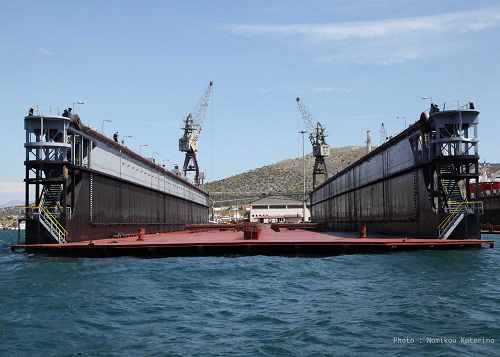
The work, undertaken by construction company TEKAL, includes dredging the harbor to create up to 20 meters of operating depth, providing new electricity and water supply networks, and installing four mooring buoys for anchoring ships. Completion of the project is expected in early March.
The floating tank - 240 m long, 35 m inboard, 22,000 tons lifting capacity and full crane equipment - will be able to service ships with a capacity of 80,000 tons. Shipping officials have said that ships will no longer need to carry out repair and maintenance operations in other Mediterranean shipyards, while this move is also expected to open new jobs in the Greek market.
Approval to install the tank was signed on Dec. 20 by the general secretary of Ports and Port Policy Christos Lambridis. The existing floating tank "Piraeus II" which is currently stationed at the same spot will be transferred to the eastern pier of the shipbuilding repair area and "Piraeus III" will take its place.
Piraeus Port Authority S.A. is 67 percent owned by COSCO.
MAN Diesel & Turbo Hellas hosts “1st Classification Society Event 2017”
 |
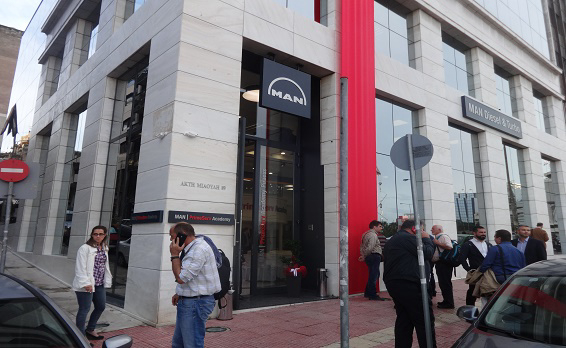
Almost every Classification Society attended the event which begun in the morning with a welcome speech and presentation of MAN Diesel & Turbo Hellas activities by Mr. Dionissis Christodoulopoulos – Managing Director of MAN Diesel & Turbo Hellas.
A presentation on Two-Stroke, Four-Stroke, Turbochargers EGR and SOx Scrubber by George Drossos - Head of New Sales and Promotion and continued with the ME Fundamentals & Critical Principles by Vassilis Kois – Technical Instructor.
Each session ended in lively exchanged between presenters and delegates, only adding to the Event’s worth.
The Event ended with a light lunch during which Classification Societies gave their very positive feedback in regards to the content of the presentations.
MAN Diesel & Turbo Hellas will organize similar events in 2018 with topics targeted towards Classification Societies.
DNV GL: Energy transition changes the shape, but not the importance of shipping to the global economy
“Big and rapid changes are happening in the way the world uses and produces energy,” says Remi Eriksen, Group President and CEO of DNV GL. “Our Energy Transition Outlook (ETO) shows that by mid-century, the energy supply mix is likely to split equally between fossil and renewables. Advances in energy efficiency will also see the world’s demand for energy flattening after 2030. These trends will impact all players in the maritime sector.”
The Maritime Forecast projects that heading to 2030, shipping will continue to enjoy robust growth. From 2030 to 2050, demand continues to increase, but less rapidly – with the growth primarily in non-energy commodities, such as the container trade and non-coal bulk. In addition to the changing energy production and export patterns, shipping’s fuel mix will become much more diverse. In 2050, oil will remain the main fuel option for trading vessels, but natural gas will step up to become the second-most widely used fuel, and new low carbon alternatives will proliferate.
“In the Maritime Forecast we can see the trends of today become the paradigms of tomorrow,” says Knut Ørbeck-Nilssen, CEO of DNV GL – Maritime. “Shipping will continue its drive for greater efficiency by reducing costs, improving utilization, lowering fuel consumption, increasing vessel size, and deploying new technologies. The current wave of digitalization transforming the industry will also have a profound impact – advancing design and operation and creating new business models.”
DNV GL has published a suite of reports on the Energy Transition Outlook website, which are available to download free of charge. The main ETO report covers the transition of the entire energy mix to 2050. In addition to the Maritime Forecast, two other sector-specific supplements, based on DNV GL’s deep expertise in the oil and gas, and power & renewables industries, accompany the main outlook.
Download the report here: https://eto.dnvgl.com/2017/maritime
About DNV GL
DNV GL is a global quality assurance and risk management company. Driven by our purpose of safeguarding life, property and the environment, we enable our customers to advance the safety and sustainability of their business. Operating in more than 100 countries, our professionals are dedicated to helping customers in the maritime, oil & gas, power and renewables and other industries to make the world safer, smarter and greener.
About DNV GL – Maritime
DNV GL is the world’s leading classification society and a recognized advisor for the maritime industry. We enhance safety, quality, energy efficiency and environmental performance of the global shipping industry – across all vessel types and offshore structures. We invest heavily in research and development to find solutions, together with the industry, that address strategic, operational or regulatory challenges.

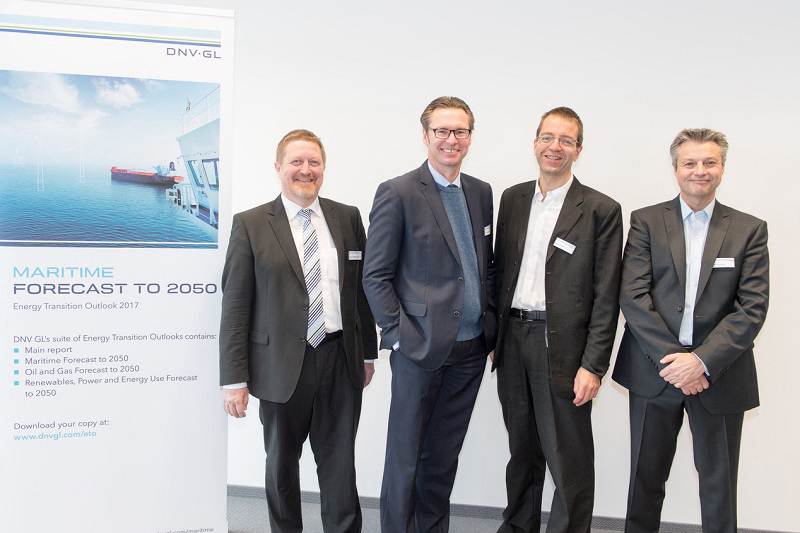
Presenters at the DNV GL - Maritime Forecast Launch (L to R): Gerd-Michael Würsig, Business Director Alternative Fuels, DNV GL - Maritime, Knut Ørbeck-Nilssen, CEO, DNV GL – Maritime, Sverre Alvik, Deputy Program Director, DNV GL, Trond Hodne, Sales and Marketing Director, DNV GL – Maritime.


Powered by  © Μaritimes 2019