


DNV GL develops offshore safety guidance for Greek Regulator
 |
Ben Oudman, Regional Manager for DNV GL, Continental Europe, Eurasia, Middle East, India and Africa says “DNV GL’s experience in working in many different oil and gas provinces has allowed us to develop best-practice guidance that meets the requirements of the Law and, while it has been created to suit the specific Greek requirements, it will be familiar to international oil and gas companies. I am sure that this will be a positive step in Greece to maintain a good record in major hazard management offshore.” 
Ben Oudman
The scope of work undertaken by DNV GL included studies and analysis of equivalent laws and guidance within Europe and determining what was the best fit for Greece before the guidance itself was developed. The work was carried out by DNV GL’s regulatory team in the UK.
Ana Berengual-Anter, Senior Banker at EBRD, based in London, says “We are very pleased with the work done by DNV GL, which shows its breadth of knowledge and experience. Development of this guidance allows existing and new entrants to the Greek oil and gas industry offshore to be certain of a robust and well-formed regulatory regime.”
Dr John Morgan, Senior Principal Consultant, DNV GL, outlined the significance of the outcomes of the collaboration with HHRM: “Τhe policy, procedures and guidelines published on 1st March 2018 with regard to Law 4409/2016 ensure that Greece has a world-class regulatory framework that promotes safety for the offshore oil and gas industry and confidence for its investors.”
www.dnvgl.com
SKF’s seminar on the available marine solutions and how they can support digital maintenance
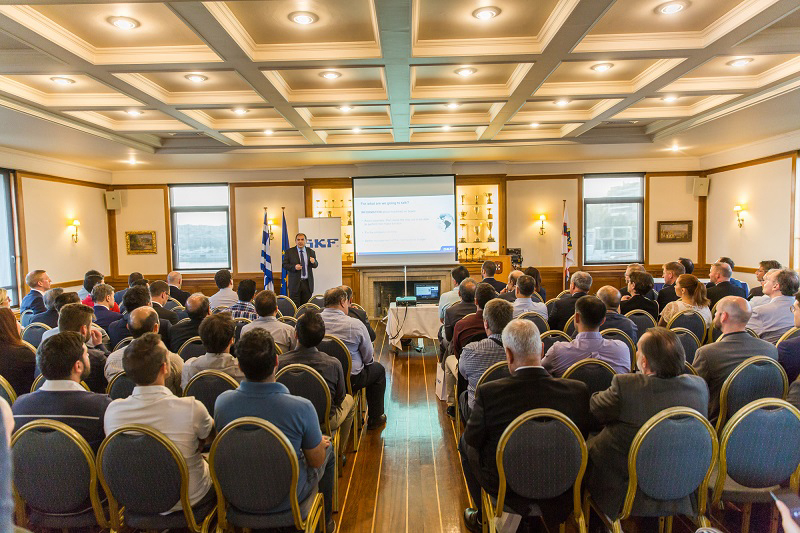
The speakers referred to the SKF Marine Condition Monitoring Kits and the Online monitoring solutions for critical applications. They also focused on precision services offered by SKF and the ways to get protected by counterfeit products, in order to optimize ship operations.
Mr. David LH Johansson, Director, Marine Business Unit at SKF, welcomed the guests and highlighted how the SKF Marine dedicated sales and technical team can work with shipping companies worldwide – for service, advice, maintenance and more.
Next to speak was Mr. Svetoslav Staykov, who is responsible for SKF Marine Monitoring Solutions. He presented the SKF Marine Condition monitoring kits that crew can use to collect vibration data measurements. The collected ship data can be transferred to the SKF One Global Cloud, from which it can be accessed and analyzed by SKF experts to support the ship’s engineer or the fleet technical manager, or directly by customers. Finally, he talked about the bearing faults and consumption which are classified using several statistical features as input to machine learning techniques.
Mr. Petros Petritis, Marine Sales Manager at SKF Hellas described the Odyssey Condition Based Maintenance (CBM) Project, an innovative project to collect and analyze vibration data, and its benefits for the shipping companies that implement it.
Mr. Wim Matsinger, Teamleader Mechanical Service, referred to Alignment, Chocking and On-Site Machining Services offered by SKF. Last but not least Mr. Alexandros Vourakis talked about how customers can be protected from buying counterfeit products. He recommended customers to use the SKF Authenticate app to verify products authenticity and highlighted that the best way to safeguard authenticity is by sourcing through SKF Authorized Distributors.
Mrs. Rania Patsiopoulos, Managing Director at SKF Hellas, in her closing speech, thanked all the participants who joined the seminar and urged them to talk with the SKF global marine experts who were on site.
 |
| David LH Johansson |
 |
Palau-U.S. Conducts Compact Review Agreement Funding Consultation
 |
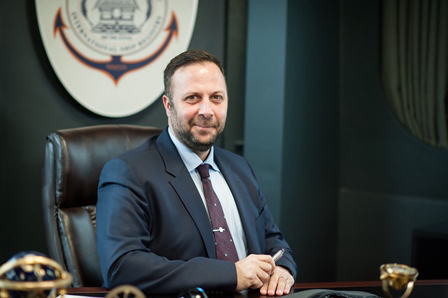
| Panos Kirnidis BEng, MSc - CEO of PISR |
PISR will benefit from this welcome generation of funds as it brings additional benefits not associated with other ship registries in terms of economic and political support. Palau is one of three countries with Freely Associated State (FAS) Status by having this free association with the USA helps it to provide businesses the ability to operate in a sovereign country and retain conveniences such a US dollar-based currency system and favorable trade arrangements with the USA. The PISR is now one of the strongest and politically supported ship registries as well as one of the fastest growing in the shipping sector.
Minister Elbuchel Sadang on behalf of President Tommy E. Remengesau, Jr., the People and Government of Palau, expressed gratitude and appreciation for the authorization of this long-awaited funding to implement the Compact Review Agreement signed in September 2010. Minister Sadang states, “Palau is grateful for the historical friendship and relationship it shares with the United States. The authorization and appropriation of this new Compact funding is a true testament of this relationship.”
Ambassador Amy Hyatt during the consultation meeting shared the U.S. Government’s eagerness to move the process forward, stating “I assure you that the U.S. Government is very keen to move this forward, to move forward quickly and not to delay. We are grateful for the warm and enduring friendship that we have with the People and Government of Palau and a partnership that has been a great benefit to all of our people.”
The objective of the consultation was to provide the opportunity for Palau and the U.S. to share concerns and discuss the process, funding schedule, and timeline in order to facilitate and develop an agreement for funding implementation.
Minister Elbuchel Sadang and Director Casmir Remengesau along with legal counsels and other officials from the Office of the President will continue to work closely with Ambassador Amy Hyatt, the U.S. Embassy in Koror, and officials from the U.S. Department of State and the U.S. Department of Interior to finalize all the agreements necessary for the implementation of the Compact Review Agreement, and the transfer of related funding.
Panos Kirnidis, CEO of PISR, sees the close ties with the USA as providing a stable environment for the registry to grow and operate a fleet of global proportions.
“We are The SMART Registry and with the support of the Government of Palau and its associated strong economic ties with the USA, we see an even stronger opportunity for our fleet to grow and provide world-class services to our customers.”
About Palau International Ship Registry:
The Palau International Ship Registry (PISR), an open registry headquartered in Houston, USA and has its European head office in Athens, Greece. PISR was created by an amendment to the Title 7 of the Republic of Palau National Code in 2010 and was appointed by the Government of the Republic to carry out the day-to-day management of vessels registered to the flag as the Ship Registry Administrator.
• PISR provides full administrative and technical support to the registration of vessels.
• PISR is an active member of both the IMO and ILO and is a member of BIMCO, WCPFC.
• Compact agreement of Free Association (COFA) with USA
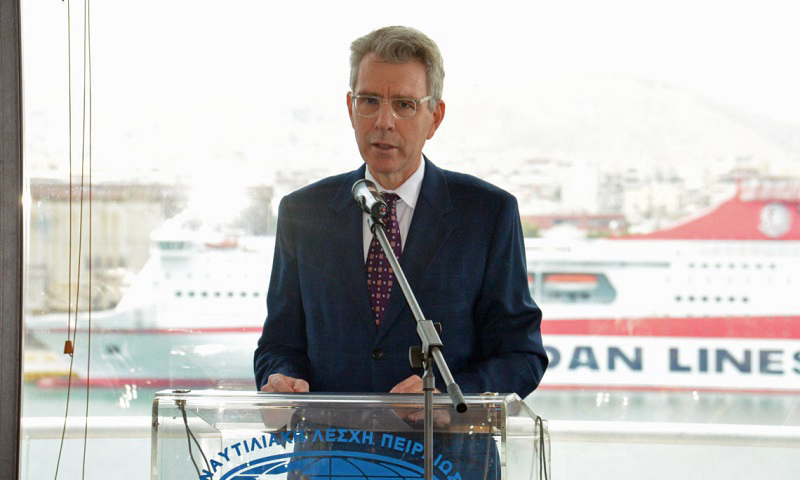
Ambassador Pyatt’s Remarks at Piraeus Marine Club
 |
| Ambassador Pyatt delivers remarks at the Piraeus Marine Club (State Department Photo) |
Ambassador Pyatt stressed U.S. support for Greece’s economic recovery, saying “Greek shipping is a big part of the U.S.-Greece economic story. The size and scale of the Greek shipping industry, represented by so many of you in the room today, is a tremendous achievement, for which the Greek people are justifiably proud.” In this context, he pointed to the recent U.S. investment in the Syros shipyards, and upcoming opportunities to strengthen U.S.-Greece economic relations, including the Posidonia trade fair, the SelectUSA conference in Washington, his roadshow with the American Hellenic Chamber of Commerce, and the Athens Stock Exchange to New York, and the role of the U.S. as honored country in the 2018 Thessaloniki International Fair
The members had the opportunity to raise questions to the U.S. Ambassador causing fruitful debate.
"Thank you Irene, both for the invitation but also for the opportunity to come down here to see so many friends from the Greek shipping community, to see Piraeus on a beautiful afternoon at the early beginning of the summer. I really want this to be as much of a dialogue as possible so we can talk a little bit about what I anticipate to be a particularly intensive period of U.S. – Greece economic and commercial engagement that will culminate with our role as the honored country at the Thessaloniki International Fair in September.
But before I get to that, I want to add a personal note as well. I was reminded, as I was stuck in traffic, that summer is coming, here in Piraeus. But summer for the State Department and for Embassies around the world is also the season of transitions. And we have a couple of important transitions on the economic side of the Embassy. One of which actually starts this week. So, I want to just single out Brian Hoyt, who I know many of you know because he has the funnest portfolio in the Embassy as the person who works with the Greek shipping community. But Brian has been a fantastic part of our Embassy team, he’s worked intensively with all of you. We’ve had some fun together, including a famous trip to Syros in connection with the hopefully, soon to be concluded sale of the Syros Shipyard to an American group. Brian has been doing his own version of China’s belt and road, his wife has been serving in China while he’s been here. And they get to come together now for a tour in Pakistan. Brian, I know I speak for all your friends in saying how much we’ve appreciated your good humor, your intelligence, your creativity in working on a portfolio that’s really vital to the U.S.-Greece relationship – and that is shipping and the maritime sector.
Of course, Greek shipping is a big part of the U.S.-Greece economic story. The size and scale of the Greek shipping industry, represented by so many of you in the room today, is a tremendous achievement, for which the Greek people are justifiably proud.
And I always highlight the role the United States has played in helping to revitalize the Greek shipping industry following the devastation of the Second World War. It’s great to be able to look over my shoulder – we have the Hellas Liberty there as a reminder of how the United States facilitated the sale of hundreds of Liberty Ships to Greek ship-owners, it really helped to revitalize and facilitate the rebirth of Greek shipping after the Second World War.
Today, from where I stand, your community symbolizes the unlimited potential of the Greek people and the real stirrings of recovery that we’re starting to see here. The work you do helps to keep the world economy open, dynamic, and free; just as the strength and resolve of the Greek people helps bring peace, prosperity, and stability to Greece’s neighborhood.
I look forward to seeing even stronger cooperation between Greece and the United States in the upcoming months, and I am truly confident that 2018 will be a groundbreaking year for our bilateral relationship.
This engagement will include intensive cooperation between our two governments, like we’ve seen during the dozens of important visits we’ve held in the past few months, as we sought to build on the momentum from the Prime Minister’s trip to the United States last fall and the recent visits of high-level congressional delegations to Greece.
In this regard, and especially relevant to the maritime sector, I’m very glad we will be welcoming later this week Admiral James Foggo, who is the Commander of NAVEUR, so the Senior U.S. Naval Officer in the European theater and he will have an opportunity to spend time with some of our key counterparts including Admiral Apostolakis, Admiral Tsounis and others of the Hellenic Navy.
This also is going to be a very important year and a very important summer for the Greek economy. And the next 100 days are especially critical for the country, as you emerge from bailout programs and set course on the path that we all hope will lead to recovery and sustained economic reform.
There are several ways in which the United States and Greece intend to work together to ensure that Greece enters 2019 on the strongest economic footing it has been on in about a decade.
One important area is energy. The United States hopes and expects to see enhanced bilateral energy investment cooperation between our countries, including an overall energy strategy where Greece serves as a regional hub bringing diverse sources of energy into Europe and helping to build resilience and strategic stability.
And, clearly, the Greek shipping community plays a key role in this energy strategy, by facilitating the delivery of LNG around the world. Your investments in LNG tankers help advance our priories in ensuring that Greek and European energy markets have a diverse array of supply options.
Your tankers also facilitate the growth of US natural gas and petroleum exports, a strategic priority for the United States. It is impossible to overstate the importance at a strategic level of the United States’ emergence as a major energy exporter – and this is a trend is likely to only accelerate in the years ahead.
Another significant opportunity for enhancing U.S.- Greek economic relations is the upcoming Posidonia trade show. The U.S. Embassy’s Commercial Section has once again organized a U.S. Pavilion showcasing U.S. companies that will exhibit products and services with maritime applications. The large US presence at Posidonia highlights the strong interest that our firms have in bringing the latest knowledge and technology to the growth and modernization of Greek shipping.
Posidonia is also an opportunity for the Greek private sector, and so many of you in the room today and especially in the shipping industry, to present to the world Greece’s dynamic human capital and economic potential.
After Posidonia, I’ll be travelling to Washington at the head of what I expect to be another very strong delegation of Greek companies for the U.S. Government’s SelectUSA program. Through this program, we offer Greek companies interested in expanding in the United States the opportunity to meet with regional economic development organizations, who can explain firsthand the specific tax and investment incentives their cities and states can provide to foreign investors.
I encourage you all to consider making the trip with me to SelectUSA next month.
In June, I will also travel to New York with our partners from AmCham and the Athens Stock Exchange for a roadshow intended to get the word out on Greek economic recovery and the real opportunities here.
Finally, as I hope all of you are aware the U.S. will be the honored country at the Thessaloniki International Fair in September. President Trump has called this an opportunity for us to highlight, on the world stage, American enterprise, innovation and entrepreneurship, and he promised to send a high-level delegation to represent the United States. But the Thessaloniki Fair will also give us the opportunity to highlight our strong bilateral relationship in all the areas I mentioned earlier, whether economic, defense and security, or people to people ties.
Our Embassy team, in cooperation with the American-Hellenic Chamber of Commerce, is working on a series of events around the TIF, especially in northern Greece, to ensure participation of the highest level business delegations. I encourage you all to plan on attending some of these events and, of course, to visit the American Pavilion itself. But TIF will also be a very important opportunity for Greek leaders to get the message out to the international audience, including the United States, that Greece is back, that Greece is open for business, that the economy has started to turn around, that there are real opportunities here in terms of American and international investment.
In conclusion, I want to reiterate how proud I am to say that the friendship between Greece and United States has never been stronger. We have reached a very special moment in our bilateral relationship, and on both sides there is a commitment to continue and to build on this momentum.
Greece and the United States will continue to profit from strengthening the ties between our people, businesses, and governments, which will also benefit Europe and the wider Mediterranean and Balkans regions. As President Trump told Prime Minister Tsipras in the White House Rose Garden in October: “America’s friendship with the Greek people has been long and enduring.”
I look forward to continuing along this path of friendship to which so many of you have contributed. Together, we can ensure that 2018 is remembered as a year of economic recovery in Greece, but also as a milestone year in Greek-American cooperation.
Now, I look forward to your questions, if I’m allowed, and I also look forward to seeing many of you at Posidonia, in New York with AmCham and the Athens Stock Exchange, in Washington for SelectUSA, and in particular in Thessaloniki and at TIF this September.
Ευχαριστώ πολύ."
Bahri Celebrates Another Key Milestone With The Delivery Of Its 46th VLCC, ‘Amad’
 |
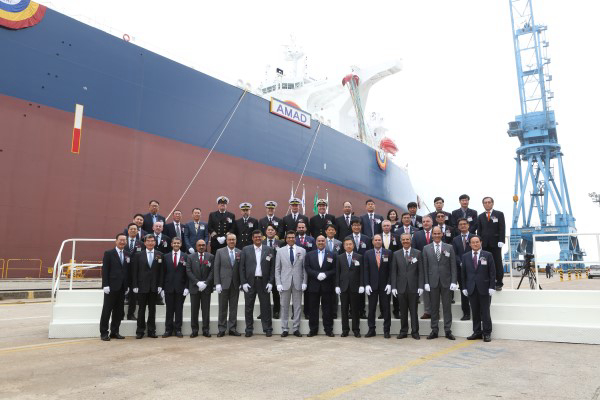
Bahri accepted the delivery of ‘Amad’ at a ceremony held at HSHI’s Mokpo shipyard in South Jeolla Province, South Korea, on 9 May 2018, in the presence of four board members, namely Mr. Ahmed Ali Al-Subaey, Mr. Ibrahim Al-Buainain, Mr. Khalid Mohammed Al-Araifi, and Mr. Khalifa Abdullatif Al-Mulhim, along with Bahri’s CEO Eng. Abdullah Al-Dubaikhi, M. K. Yoon, President and CEO of Hyundai Samho Heavy Industries, among others.
The new vessel, which will be operated on a time-charter/spot basis, marks the completion of the industry leader’s three-year agreement signed with HSHI in May 2015, to build five VLCCs and five more optional VLCCs, to fuel Bahri’s long-term expansion strategy.
With the capacity to transport 2.2 million barrels of crude oil, the 300,000-DWT carrier’s stands at 333 meters long with a beam of 60 meters, and a depth (from keel to main deck) of 30 meters. The speed of Amad is 14.4 knots.
 |
| The new vessel marks the last of the 10 VLCCs added to Bahri’s fleet as part of its agreement with South Korea-based Hyundai Samho Heavy Industries |
“Saudi Arabia is on the cusp of a number of major economic developments and milestones like the delivery of our 46th VLCC, ‘Amad,’ further strengthening our focus on playing an integral role in achieving the Kingdom’s Vision 2030 objectives. A strong fleet of VLCCs allows us to further penetrate and capture the lion’s share of the market through strategic expansions in key geographies, which will, in turn, provide a significant boost to the Kingdom’s ongoing efforts to establish itself as a unique regional logistics gateway to three continents,” said Eng. Abdullah Al-Dubaikhi, CEO of Bahri.
“A 46-strong VLCC fleet places Bahri in an excellent position to pursue bigger growth opportunities as part of our long-term expansion strategy. By further solidifying our leadership credentials as the world’s largest owner and operator of VLCCs, the robustness of our fleet enables us to expand our business prospects in the oil tanker market, meet the growing demand for crude oil transportation, and enhance our service offering to deliver greater efficiency and value to our stakeholders,” added Al-Dubaikhi.
 |
M. K. Yoon, President and CEO of Hyundai Samho Heavy Industries, said: “The conclusion of our agreement with Bahri represents a long-standing synergetic association between two global leaders dedicated to leveraging growth opportunities for the advancement of the maritime sector. We congratulate Bahri on the addition of their 46th VLCC, ‘Amad,’ and look forward to building on the success of our enduring business relationship to explore new opportunities of mutual interest in the future.”
‘Amad’ joins the four vessels Bahri received from HSHI earlier this year, namely, ‘Kassab,’ ‘Lawhah,’ ‘Qamran,’ and ‘Khurais,’ following the five vessels the company received in 2017, including ‘Amjad,’ ‘Maharah,’ ‘Aslaf,’ ‘Rimthan,’ and ‘Shaden.’
http://www.bahri.sa
Bahri Announces That It Received A Very Large Crude Carrier
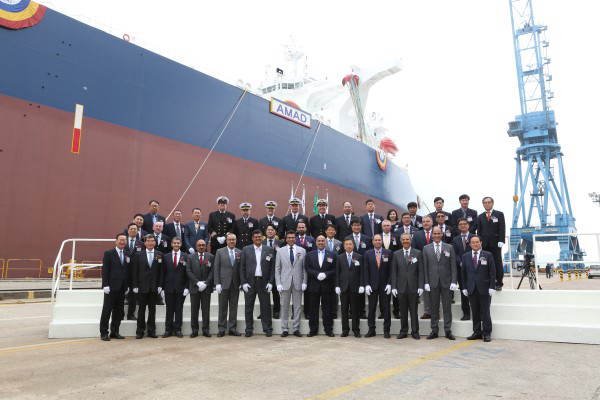
The newly received VLCC is one of the 5 VLCCs that were financed by Standard Chartered Bank, Arab National Bank, National Bank of Abu Dhabi and Bank Albilad according to Bahri announcement at Tadawul on 30 November 2016. The commercial operation of (Amad) is expected to be in May 2018. The financial impact of the new VLCC is expected to be in the second quarter of 2018.
Bahri currently owns 93 vessels including 46 VLCCs, 36 chemical/product tankers, 6 multipurpose vessels and 5 dry bulk carriers.
http://www.bahri.sa
The Good, the Bad, and the Ugly: Vessels Value Analogy of the Shipping Market
The Good
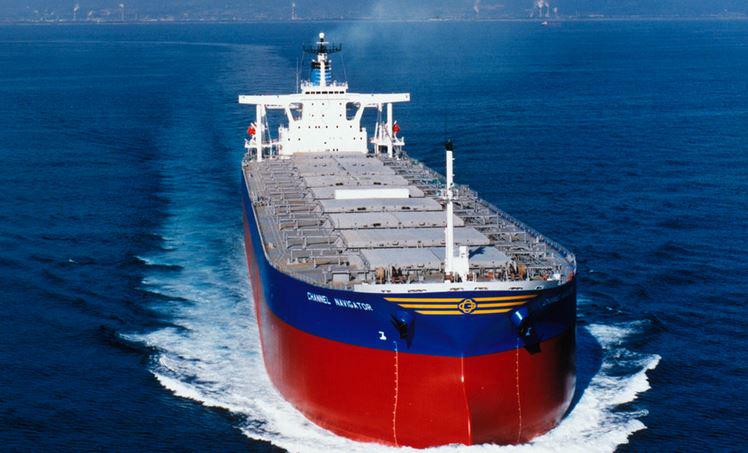
Two years ago the Bulker and Container markets were in a sorry state, fast forward to today and the market has significantly improved, with upside remaining. Over the past twelve months Panamax container ships have seen a rebound in asset values of about 40 pc for a five year old ship over the past year. In addition, earnings are above operating costs. There is a lot of positive sentiment and we expect Bulkers and Container values to continue this pattern in the next 2-3 years.


The Bad
Tanker earnings are low, especially for the large crude tankers. Small clean tankers are doing somewhat better but remain depressed. The general improvement in the shipping market has seen asset values for Tankers up by 10\% and smaller Tankers up 20\% from last year despite the weak spot markets. The outlook for prime aged asset values looks positive as we appear to be at the bottom of the market.

The Ugly
The Offshore industry has seen a 70\% decrease in values in the past two years, this is due to oil prices coming down from $130 USD in 2014/2015 to $30-$40 USD. A recovery in oil prices has begun, although it takes time for the oil companies to restart their exploration. Offshore is still saturated with low value commodity type OSV and AHTS, it is expected that the values will remain low over the next few years. It is not all bad for the Offshore industry with areas of interest such as Diver Support Vessels, Offshore Support Vessels and accommodation vessels that are still being used to maintain existing structures.

Gas
Gas does not fit into the good, the bad, or the ugly categories. Values have dropped a little but it’s not particularly going up and down quickly. Demand is good and growing, however while the market was too good, too many vessels were built and there were restrictions on the market.

(Source: Vessels Value)
Euroseas Ltd. Announces Spin-off of its Drybulk Fleet into a Separate Company
First Quarter 2018 Financial Highlights:
Total net revenues of $12.9 million. Net loss of $3.2 million; net loss attributable to common shareholders (after a $0.5 million of dividend on Series B Preferred Shares) of $3.7 million or $0.33 loss per share basic and diluted. Adjusted net loss attributable to common shareholders1 for the period was $3.8 million or $0.34 loss per share basic and diluted.
Adjusted EBITDA1 was $(0.2) million.
An average of 17.0 vessels were owned and operated during the first quarter of 2018 earning an average time charter equivalent rate of $9,167 per day.
The Company declared its seventeenth dividend of $0.5 million on its Series B Preferred shares; the dividend was paid in-kind by issuing additional Series B Preferred Shares.
Fleet Developments
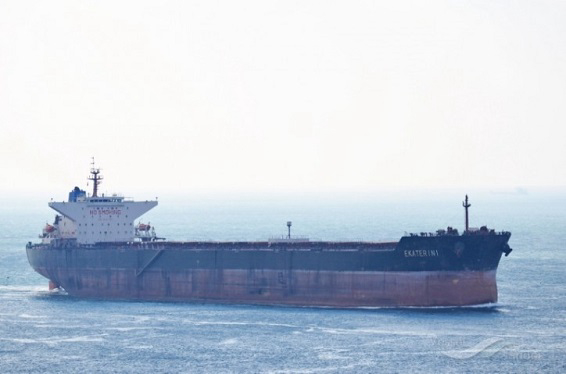
On May 7, 2018, the Company took delivery of newbuilding M/V Ekaterini, a 82,000 dwt drybulk vessel. As previously announced, the vessel entered into a two-year charter immediately after its delivery at a rate of $13,000 per day. The Company also reported that its containership, M/V EM Astoria, suffered propeller damage and will require repairs that will prevent the vessel from trading. The Company is making every possible effort for the vessel to resume trading in the shortest possible time.
Drybulk Fleet Spin-off
The Company announced that it filed a registration statement on Form F-1 with the Securities and Exchange Commission to spin-off the Company’s drybulk fleet into a separate company, EuroDry Ltd., which has applied for listing on the NASDAQ Capital Market.
1 Adjusted EBITDA, Adjusted net loss and Adjusted loss per share are not recognized measurements under GAAP. Refer to a subsequent section of the Press Release for the definitions and reconciliation of these measurements to the most directly comparable financial measures calculated and presented in accordance with U.S. GAAP.
Aristides Pittas, Chairman and CEO of Euroseas commented: “Although our revenues continued to increase in Q1 following the continued improvement in both drybulk and container markets we registered a loss during the first quarter of 2018, mainly due to the disproportionate number of drydocks we had to pass during the quarter. We expect both sectors to continue to register positive results in the future if the markets maintain their current levels and the company to revert to profitability for the remainder of the year.
“However, from our perspective, the most significant development during the quarter was our decision to spin-off our drybulk fleet into a separate publicly listed company, EuroDry Ltd. We believe that separate drybulk and containership investment options will give our shareholders the flexibility to adjust their holdings, if they so wish, between the two sectors. We also anticipate that the creation of sector-focused companies will allow the capital markets to appreciate the value that our public platforms can create as consolidators in their respective fields: EuroDry Ltd., a middle range drybulk owner that owns six vessels, three of which are newbuildings, one ultramax and two kamsarmaxes, built according to our specifications in the last two years and three high-quality Panamax vessels Japanese-built post-2000; and Euroseas Ltd., the only feeder containership public company, with a fleet of eleven vessels that are proven workhorses of the sector. We also expect that both EuroDry and Euroseas will trade much closer to their net asset value, like their peers, than the combined company does now.
“We plan to take advantage of growth opportunities in each of the two sectors to increase the size of each respective company as we believe that they are both well positioned to do so both in terms of their capital structure and their contract mix. Each of them being a public company with a cost-effective operating structure could be attractive to other small or large private fleets looking for opportunities to engage in transactions with acquirors. We plan to discuss in more detail the spin-off and the opportunities it may generate in a separate conference call on Monday, May 14, 2018 at 10 am EDT.”
Tasos Aslidis, Chief Financial Officer of Euroseas commented: “The results of the first quarter of 2018 reflect the improved rates most of our vessels earned as a result of the recovering state of the drybulk and container markets. Comparing our results for the first quarter of 2018 with the same period of 2017, our net revenues increased by about $4.6 million and we also incurred $0.7 million lower voyage expenses. Operating expenses, including management fees and general and administrative expenses increased by approximately $3.5 million as compared to the first quarter of 2017. This was mainly due to the operation of 17.0 vessels during the first quarter of 2018 versus 13.38 vessels during the same period of last year; on a per-vessel-per-day basis, operating expenses, including management fees and general and administrative expenses increased by 19\% during the first quarter of 2018 as compared to the same period in 2017 which was primarily attributable to certain expenses budgeted for 2018 occurring in the first quarter, the different mix of vessels we had in 2018 and costs related to the spin-off of our drybulk fleet under way. We believe that we continue to maintain one of the lowest operating cost structures amongst the public shipping companies which is one of our competitive advantages. Also, during the first quarter of 2018, three of our vessels completed their special surveys with a total cost of $2.2 million not including time lost due to drydockings.
“Adjusted EBITDA during the first quarter of 2018 was $(0.2) compared to $0.2 million achieved for the first quarter of last year. Finally, as of March 31, 2018, our outstanding debt (excluding the unamortized loan fees) is about $71.2 million versus restricted and unrestricted cash of about $10.4 million.”
First Quarter 2018 Results:
For the first quarter of 2018, the Company reported total net revenues of $12.9 million representing a 55.9\% increase over total net revenues of $8.3 million during the first quarter of 2017. The Company reported a net loss for the period of $3.2 million and a net loss attributable to common shareholders of $3.7 million, as compared to a net loss of $2.2 million and a net loss attributable to common shareholders of $2.6 million respectively for the first quarter of 2017. Depreciation expense for the first quarter of 2018 amounts to $2.1 million remaining unchanged compared to the same period of 2017. Although the average number of vessels increased, the new vessels acquired have a lower average daily depreciation charge as a result of their lower initial values (acquisition price) and greater remaining useful life compared to the remaining vessels. On average, 17.0 vessels were owned and operated during the first quarter of 2018 earning an average time charter equivalent rate of $9,167 per day compared to 13.38 vessels in the same period of 2017 earning on average $7,268 per day. In the first quarter of 2018 three vessels completed their special surveys with a total cost of $2.2 million. In the same period of 2017 one vessel completed an in-water survey with a cost of $0.1 million. The results for the first quarter of 2017 also include a $0.5 million of gain on sale of M/V RT Dagr compared to the same period of 2018.
Adjusted EBITDA for the first quarter of 2018 was $(0.2) million, compared to $0.2 million achieved for the first quarter of 2017. Please see below for Adjusted EBITDA reconciliation to net loss and cash flow provided by operating activities.
Basic and diluted loss per share for the first quarter of 2018 was $0.33, calculated on 11,133,764 weighted average number of shares outstanding compared to basic and diluted loss per share of $0.24 for the first quarter of 2017, calculated on 10,999,554 weighted average number of shares outstanding.
Excluding the effect on the loss for the quarter of unrealized gain on derivatives and the realized loss on derivatives, the adjusted loss per share for the quarter ended March 31, 2018 would have been $0.34 per share basic and diluted, compared to the loss of $0.29 per share basic and diluted for the quarter ended March 31, 2017. Usually, security analysts do not include the above items in their published estimates of earnings per share.
Capital Product Partners L.P. Completes Acquisition of the M/T 'Anikitos'
 |
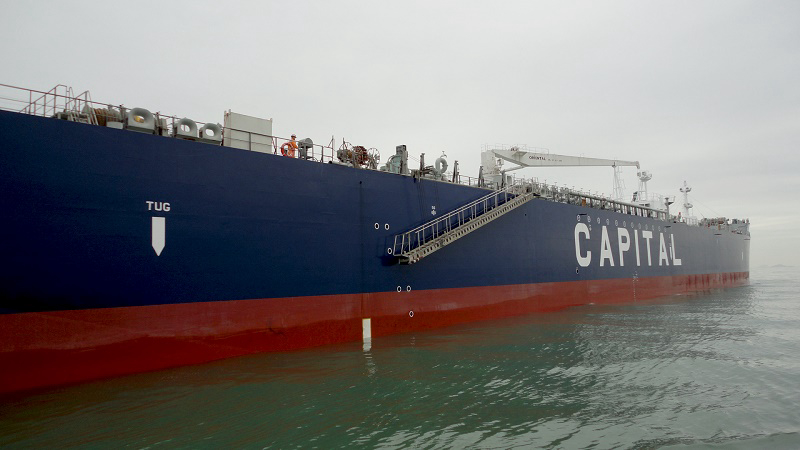
The Partnership funded the acquisition of the M/T 'Anikitos' with the net proceeds received from the sale of the M/T 'Aristotelis', available cash and the assumption of a term loan under a credit facility with ING Bank NV of approximately $15.6 million. The term loan is non-amortizing for a period of two years from the anniversary of the dropdown with an expected final maturity date in June 2023 and bears interest at LIBOR plus a margin of 2.50\%. The term loan is subject to ship finance covenants similar to the covenants applicable under our existing facilities.
The M/T 'Anikitos' is currently employed by Petróleo Brasileiro S.A. ("Petrobras"), at a gross daily rate of $15,300 with earliest charter expiry in June 2020. The charterer has the option to extend the time charter for eighteen months (+/-30 days) at the same gross daily rate.
Mr. Jerry Kalogiratos, Chief Executive Officer of the Partnership's General Partner, commented:
"We are pleased to have completed the acquisition of the M/T 'Anikitos', soon after the sale of the M/T 'Aristotelis' and thus replacing her with a younger, second generation eco MR product tanker, with long term employment in place, in line with our long term goal of replenishing our fleet and improving cash flow visibility to our unitholders.”
About Capital Product Partners L.P.
Capital Product Partners L.P. (NASDAQ:CPLP), a Marshall Islands master limited partnership, is an international owner of tanker, container and drybulk vessels. The Partnership currently owns 37 vessels, including twenty-one modern MR (Medium Range) product tankers, four Suezmax crude oil tankers, one Aframax crude/product oil tanker, ten Neo Panamax container vessels and one Capesize bulk carrier. Its vessels trade predominantly under period charters to CMA-CGM S.A., Cosco Bulk Carrier Co. Ltd., CSSA S.A. (Total S.A.), Flota Petrolera Ecuatoriana, Hyundai Merchant Marine Co. Ltd., International Seaways, Inc., Louis Dreyfus Company Suisse S.A, Mediterranean Shipping Company Co. S.A., Pacific International Lines, Petróleo Brasileiro S.A., Repsol Trading S.A., Tesoro Far East Maritime Company (‘Tesoro’), Shell Tankers Singapore Private Limited and Capital Maritime.
For more information about the Partnership, please visit our website: www.capitalpplp.com.
Cyprus's First Shipping Minister Sets Herself Ambitious Targets
 |
| Natasa PilidesPhotographer: Jo Michaelides/Shipping Ministry |
“While a small country, we are already a major player in international maritime affairs, but we want to be even bigger and better,” the 37-year-old, who was appointed to the role in February, said in an interview in Nicosia.

Powered by  © Μaritimes 2019