

Friday, May 01, 2026

Thursday, 23 August 2018 16:55

MRV vs. IMO Regulations

Ship owners are currently dealing with recent regulations applied to maritime industry, such as MRV Regulation which entered into force on 1st January 2018.

After a period of development and assessment of each vessel’s Monitoring Plan (until 31st December 2017), companies are, at this stage, gathering data from fuel types consumed on board, their respective impact on the environment, and vessel´s activity data (transport work, distance travelled, hours underway, cargo carried, energy consumption, among others).

This stage which goes until the end of the present year, corresponds to the reporting period. Completed this period, companies have until 30th April 2019 to submit an emissions report to be verified by an accredited entity.

Once the emissions report is verified, the company receives a Document of Compliance (DOC) which has validity for 18 months and has to be carried on board. This document proves the conformity of the vessel regarding the imposed MRV Regulation and prevents the company from any possible penalty.

Penalties can go from small dissuasive and proportionate sanctions, to the possibility of prohibition from entering EU ports in case of failing to comply for two or more consecutive reporting periods.

This regulation has implications only in EU ports, and considers only ships with 5000 GT or higher, ships for commercial purposes (carrying passengers or cargo), regardless of the flag or country of the shipowner.

People are still adapting to this recent regulations, although there is still much more to come.

IMO Data Collection System

On May 2015 IMO MEPC (Marine Environment Protection Committee) 68 agreed a three-step approach to enhance the energy efficiency of ships. It comprises a data collection step, followed by data analysis and ending in decision-making on what further measures can be done.

In this context, IMO established a “Data Collection System” (DCS) for fuel oil consumption as part of a roadmap for developing a comprehensive strategy on reduction of GHG emissions from ships. For this approach IMO MEPC developed several resolutions and guidelines:

  • Resolution MEPC.278(70) – Amendments to MARPOL Annex VI (Data collection system for fuel oil consumption of ships);
  • Resolution MEPC.278(70) – 2016 Guidelines for the development of a ship energy efficiency management plan (SEEMP);
  • Resolution MEPC.292(71) – Resolution on 2017 Guidelines for administration verification of ship fuel oil consumption data;
  • Resolution MEPC.293(71) – 2017 Guidelines for the development and management of the IMO ship fuel oil consumption database;
  • MEPC 70/18/Add.1/Corr.1- Report of the Marine Environment Protection Committee on its seventieth Session-Corrigendum.

On 1st March 2018, amendments to MARPOL Annex VI, Regulation 22A on fuel oil data collection of ships came into force. From calendar year 2019, each ship of 5,000 gross tonnages and above shall collect the data specified in appendix IV of Annex 3 MEPC 70/18, and the processes that will be used to report the data to the ship’s administration.

Reported data should be transferred to the IMO Ship Fuel Oil Consumption Database via electronic communication (THETIS Platform) and using standardized forma (Appendix 3 of Annex 10-MEPC 70/18).

Each ship to which regulation 22A applies must present before 31st December 2018 an updated SEEMP (Ship Energy Efficiency Plan) that ensures the methodology and processes prior to the beginning of the vessel first reporting period. There are two parts of a SEEMP:

Part I

Provides a possible approach for monitoring the ship and fleet efficiency performance over time and some options to be considered when seeking to optimise the performance of the ship. In addition, many companies already develop, implement and maintain a Safety Management System. In such case, part I of the SEEMP may form part of the ship’s Safety Management System. SEEMP Part I might be seen as a tool to assist a company in managing the ongoing environmental performance of the vessels. In that way it is recommended that a company develops procedures for implementing the plan in a manner which limits any on-board burden.

It should reflect efforts to improve a ship’s energy efficiency through four steps:

  1. Planning
  2. Implementation
  3. Monitoring
  4. Self-evaluation and improvement

It is important to notice that the improvement of energy efficiency of ship’s operation does not necessarily depend on a single ship management. Rather it may depend on many stakeholders including ship repair yards, ship owners, operators, charterers, cargo owners, ports and traffic management services, among others. All involved parties should consider the inclusion of efficiency measures in their operations both individually and collectively. Some measures could be, for example, improve voyage planning, weather routeing, speed optimisation, optimise shaft power, optimum use of rudder and heading control systems (autopilots) or perform hull maintenance.

Part II

The part II, in other way, provides the methodologies ships should use to collect the data required pursuant to regulation 22A of MARPOL Annex VI and the processes that the ship should use to report the data to the classification societies or any organization duly authorized.

The most relevant data to be collected is related to fuel oil consumption, distance travelled and hours underway. These new regulations do not focus on direct CO2 emission measurement, as it is imposed by the MRV Regulations.

Besides the collected data, companies should specify the vessel data (ship particulars and technical characteristics – gross tonnage, net tonnage, deadweight, power output of emission sources), IMO number and period of calendar year for which the data is submitted.

Along with the submission, companies should send documents, such as a copy of the Ship’s Data Collection Plan, summaries of BDNs with detail, summaries of disaggregated data, and information that proves the vessel follow the Data Collection Plan as set out in its SEEMP.

Fuel oil consumption should include all the fuel oil consumed on board including the fuel oil consumed by the main engines, auxiliary engines, gas turbines, boilers, and inert gas generator, for each type of fuel oil consumed, regardless of whether a ship is underway or not. Some methods to collect fuel oil consumption data would be: require to use of bunker delivery notes (BDNs), use of flow meters or use of bunker fuel oil tank monitoring on board.

Data related to distance travelled is related to distance travelled over ground in nautical miles (recorded in log-book) while hours underway relate to the duration while the vessel travel underway under its own propulsion.

The Data Collection Plan should include data quality control measures to be incorporated into the existing shipboard safety, namely a procedure for identification of data gaps and corrections, a procedure to address data gaps if monitoring data is missing (for example, flow meter malfunction).

What are the most relevant exemptions in IMO-DCS?

  • There are some exemptions in terms of the types of ships to which the regulations apply to. Ships engaged on domestic voyages, or ships not propelled by mechanical means and platforms, including FPSOs, FSUs and drilling rigs are exempt from reporting;
  • When a ship diverts from its scheduled passage to engage in search and rescue operations, it is also exempt from a per voyage monitoring.

The information required by these new regulations is anonymous and confidential.

After the reporting period, as in comparison to the MRV, companies have to submit the report on fuel oil consumption data until 31st March 2020. Classification societies or duly authorized verifiers analyse the conformity of the report and until 31st May 2020 emit a Statement of Compliance related to fuel oil consumption that must be kept on board of each ship. The Statement of Compliance shall be drawn up in a form corresponding to the model given in appendix X of MEPC 278(70) and shall be at least in English, French or Spanish. It is valid for the calendar year which it is issued and for the first five month of the following calendar year.

MRV vs. IMO 

The similarities and differences between the MRV Regulation process and IMO-DCS can be resumed in the following table:

As a conclusion of the facts mentioned above, ship owners need to take these regulations very seriously, as shipping is facing in a very short period of time a big green wave of requirements.

It is recommendable that ship owners select a classification society and/or accredited verifier for EU MRV and IMO-DCS, in order to utilize expected synergies between EU MRV and IMO-DCS system and overcome future penalties and burdens. Also the resort to help from companies with accumulated knowledge in the sector is considered a valuable asset especially in terms of finding solutions to optimise the energy efficiency of the vessel, its fuel consumption and operation.

Source: Tecnoveritas

ATHENS, Aug. 21 (Xinhua) -- After Monday's exit from the bailout programs which kept her afloat and in the euro zone since 2010, Greece is on the verge of returning to normality, but challenges remain, central Bank of Greece Governor Yannis Stournaras told Xinhua.

The country's political system should not fall back to the old bad habits that led to the crisis, the central banker warned.

"After eight years of crisis and three economic adjustment programs, Greece exits a long period of uncertainty and is on the verge of retuning to normality," Stournaras said in a written statement on Tuesday.

According to the bank's estimates, GDP growth is expected at 2 percent and 2.3 percent for 2018 and 2019 respectively, while the fiscal situation has improved significantly, with a primary surplus in 2017 exceeding 4 percent of GDP, he noted.

The current account deficit, which used to be as high as 15 percent of GDP in 2008, has also disappeared. Unemployment is falling, tax collection has improved a lot, banks are consolidated and recapitalized, and labor and product markets have been liberalized, the Greek official added.

Still, Greeks face fundamental economic challenges, Stournaras stressed.

Public debt is very high (178 percent of GDP), non-performing exposures must be radically reduced and high taxation is discouraging investors, who are also facing red tape and a constantly shifting legislative and regulatory framework in Greece, he explained.

"Public sector needs a lot of improvement, we have to make more efforts in privatizations and in liberalizing the energy sector, but the most important of all is to strengthen our institutions and respect their independence," he said.

The definitive proof that the Greek economy has turned a page will come after the successful return to the international sovereign bond markets, the central banker underlined.

"Investors are watching us, as they are checking if we honor our commitments in full and if we implement all the measures agreed with our creditors," he said.

"As we are approaching elections, our political system should not repeat mistakes of the past and fall back to the old bad habits, like the irresponsible fiscal policies that led us to the crisis ten years ago. This would be a disaster and would show disrespect to the sacrifices made by the Greek people," Stournaras stressed.

As Greeks are now on their own, without the protection of a program, and with a lot of economic and political uncertainty surrounding them, they have to show to the world that they can deliver their promises, he explained.

"Otherwise, the markets will abandon us and that's something we have to avoid," he said.

A sudden increase in the borrowing cost could endanger the recovery and could increase the debt servicing cost.

"It is wrong to assume that the Euro group decision of 21 June 2018 would be enough to assure our exit to the markets. Although this decision ensures the sustainability of Greek public debt in the medium term, in order to gain market confidence in the long term, we must continue with the full implementation of reforms and keep up with the fiscal effort for many more years," Stournaras stressed.

XINHUANET.COM

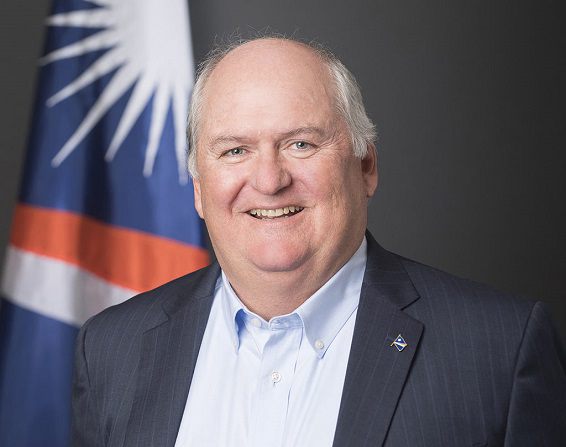
Bill Gallagher, President, IRI, reflects on how a changing industry has created an opportunity for growth.

As we start the third quarter of 2018, it’s important to look back and see how far the Republic of the Marshall Islands (RMI) Registry has come and to look ahead at what we still have left to accomplish. Last year, the RMI Registry reached a huge milestone, becoming the second largest ship registry in the world, a position we continue to hold. The June 2018 Clarksons Research World Fleet Monitor reflects that our fleet is not only the second largest, but also the youngest, with an average age of 8.3 years. This is due to the large number of newbuilds which have consistently registered in the RMI. Over the past five years, approximately 50\% of all vessels registered in the RMI have been newbuilds. The RMI Registry is globally recognized as the preeminent registry in terms of quality and service, factors we consider essential to our success. With continued fleet growth and our expert worldwide personnel, we are confident we can meet and overcome the challenges of the years ahead.

Source: Clarksons Research World Fleet Monitor, June 2018


What sets us apart from other registries is our local presence and the close relationships this creates within the local shipping communities worldwide. By giving our owners and operators the ability to contact an experienced member of our team to handle issues in their own language and during their working hours, we can help solve problems in a timely manner and avoid costly delays. The RMI Registry has 28 offices in major shipping and financial centers around the world. Our most recently opened office in Busan, Republic of Korea, shows our commitment to the growing South Korean shipowning market. Our Busan office is able to support shipowners in their cooperation with Korean shipyards, as well as monitor the trading and port State control (PSC) performance of the ships in North Asian waters.

One of the most important aspects of any registry is its culture surrounding safety, security, and environmental protection. The quality vessels that make up the RMI Registry’s fleet reflect this culture and the commitment of owners and operators that value the same.  The RMI has the best PSC record of any major open registry and is the only one of the top three flags to hold Qualship 21 status. The RMI has achieved significant fleet growth year over year for the past 15 years, while at the same time maintaining its Qualship 21 status for 14 consecutive years and improving its position on the White Lists of both the Paris and Tokyo Memorandums of Understanding (MoUs). Furthermore, the Green Award recently updated its list of participating vessels; the list shows RMI flagged vessels representing nearly 16\% of the Green Awarded vessels worldwide. These accolades are testament to the commitment of the RMI Registry and its owners and operators towards safety, security, and pollution prevention on their vessels.

Green Award Top 5 Flag States


The RMI’s outstanding PSC record is even more impressive when you take a look at the recent increase in new regulations coming into effect in the industry. One of the biggest issues in the shipping community today is the 2020 global fuel oil sulphur standard. We know how important it is for our owners and operators to have a voice in these discussions, and a recent concern raised at our Blue Water Vessel Advisory Group (BWVAG) meeting was the safety implications associated with the consistent implementation of regulation 14.1.3 of the International Convention for the Prevention of Pollution from Ships (MARPOL) Annex VI. These discussions resulted in the submission of a paper to the International Maritime Organization (IMO) that addressed these safety concerns and assisted the IMO’s Intersessional Working Group (ISWG) in developing guidelines on this regulation. The Marine Environment Protection Committee (MEPC) will consider aspects of the ISWG’s report addressing measures for ship implementation planning and the outcome of discussions on these safety issues will be further reported for consideration by the Maritime Safety Committee (MSC) at their next sessions later this year.

Source: USCG, Paris MoU, Tokyo MoU, AMSA, and China PSC & FSC 2017 Annual Reports


The BWVAG is an advisory group within the RMI’s larger Marshall Islands Quality Council (MIQC), a consultative group made up of a diverse range of industry experts that provides advice and guidance to the RMI Registry in the development of rules and regulations that shape the industry and improve the quality of the RMI Registry’s operations. We value the feedback of the MIQC, our owners and operators, and the larger maritime community as we work with global organizations to improve the safety and environmental awareness of the shipping industry.

We pride ourselves on our ability to provide timely professional services through our robust team of worldwide experts so that the RMI fleet can continue to trade without delay. We will continue to strengthen our existing offices and presence globally to provide the highest level of service that owners and operators require.

Technological developments, new regulations, and global economic concerns all contribute to an industry that is constantly changing and reinventing itself to fit new needs. The RMI Registry is uniquely positioned to respond to this ever-changing environment with innovation that goes above and beyond our owners’ expectations. We will continue to grow, continue to meet these challenges head on, while never losing sight of our roots, the people who make it happen. Our work is never done, and we look forward to leading the way as the industry forges its path in the modern world.


ATHENS, GREECE, August 22, 2018 – Diana Shipping Inc. (NYSE: DSX), (the “Company”), a global shipping company specializing in the ownership of dry bulk vessels, today announced that, through a separate wholly-owned subsidiary, it has entered into a time charter contract with Pacific Bulk Cape Company Limited, Hong Kong, for one of its Capesize dry bulk vessels, the m/v Semirio.

The gross charter rate is US$20,050 per day, minus a 5\% commission paid to third parties, for a period of minimum ten (10) months to about twelve (12) months. The charter is expected to commence on August 30, 2018. The m/v Semirio is currently chartered, as previously announced, to Koch Shipping Pte. Ltd., Singapore, at a gross charter rate of US$14,150 per day, minus a 5\% commission paid to third parties.

The “Semirio” is a 174,261 dwt Capesize dry bulk vessel built in 2007.

This employment is anticipated to generate approximately US$6.02 million of gross revenue for the minimum scheduled period of the time charter.

Diana Shipping Inc.’s fleet currently consists of 50 dry bulk vessels (4 Newcastlemax, 14 Capesize, 5 Post-Panamax, 5 Kamsarmax and 22 Panamax). As of today, the combined carrying capacity of the Company’s fleet is approximately 5.8 million dwt with a weighted average age of 9.0 years. A table describing the current Diana Shipping Inc. fleet can be found on the Company’s website, www.dianashippinginc.com. Information contained on the Company’s website does not constitute a part of this press release.

About the Company

Diana Shipping Inc. is a global provider of shipping transportation services through its ownership of dry bulk vessels. The Company’s vessels are employed primarily on medium to long-term time charters and transport a range of dry bulk cargoes, including such commodities as iron ore, coal, grain and other materials along worldwide shipping routes.

dianashippinginc.com


Wall Street multinational investment bank Goldman Sachs is reportedly in talks with the owner of a liquefied natural gas (LNG) fuel plant in the Gulf of Mexico to purchase a cargo of LNG.

American exports of LNG quadrupled between 2016 and 2017 to 1.94 billion cubic feet per day, with the US forecast to become the second largest exporter of the fuel in the world by 2022 behind Australia. According to the US Energy Information Administration, all of the fuel exported comes from the Sabine Pass, a plant located off the Gulf of Mexico, which cools 2.8 billion cubic feet of gas into liquid every day. This gas is then shipped as LNG to markets in Asia and South America.With analysts predicting that LNG trading will soon resemble the crude oil market, Goldman has reportedly entered negotiations with cs owner, Cheniere Energy Inc., to buy a cargo of the fuel.Local media report that the company is under pressure to improve results in its commodities branch, which recorded its worst year in 2017. Goldman plans to quickly resell the gas to another party with a view to avoiding the dangers associated with a week-long ocean voyage.However, the move could prove costly in the event that the bank fails to find a buyer or there is a drop in the price of LNG. According to Wood Mackenzie, the average spot cargo leaving the US is thought to be worth around $30m.Despite several recent attempts from regulators to keep banks out of the commodities business, Goldman Sachs has managed to remain a big player in several markets. The company is the eighth-largest marketer of natural gas in the US and has recently been targeting the growing LNG market.Although the bank is currently in talks with gas producer Cheniere, sources close to Goldman have said it may consider other sellers.

Aug 09, 2018

http://www.datamonitor.com


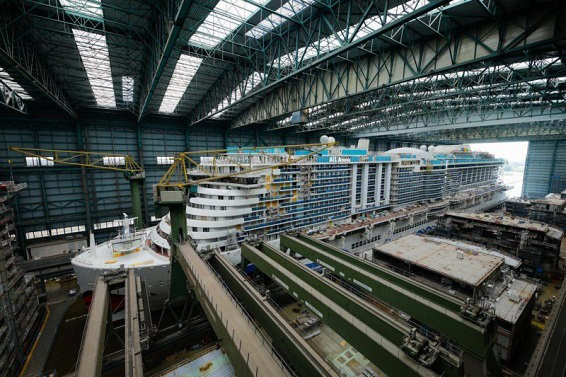
German shipbuilder Meyer Werft has floated out the world’s first LNG-powered cruise ship from its covered construction dock in Papenburg.

The float-out of AIDAnova took place Tuesday evening from the shipbuilder’s 504-meter building dock II. The vessel was then berthed at the outfitting pier, where its mast and funnel cladding will be fitted.

AIDAnova is scheduled to make the trip down the river Ems to Bremerhaven in late September. There, the cruise ship will undergo final outfitting and interior fittings, while further testing will be performed on the ship’s LNG-powered engines followed by sea trials. 

AIDAnova is the first of three LNG-powered ships planned for Carnival Corp.’s AIDA brand. The ship is scheduled to join AIDA Cruises’ fleet this Fall as the first-ever cruise ship in the world to be fully powered by LNG. The AIDAnova will have over 2,600 passenger cabins, a gross tonnage of over 180,000, a length of 337 meters and a width of 42 meters.

The second ship in the series will be christened in the spring of 2021, followed by the third in 2023.

As of earlier this year, Carnival had agreements in place with Meyer Werft and its Finish sister yard Meyer Turku to build nine LNG-powered cruise ships across four of Carnival’s nine global cruise brands with delivery dates between 2018 and 2023

gcaptain.com

A video of the float-out is below: 

Thursday, 23 August 2018 14:56

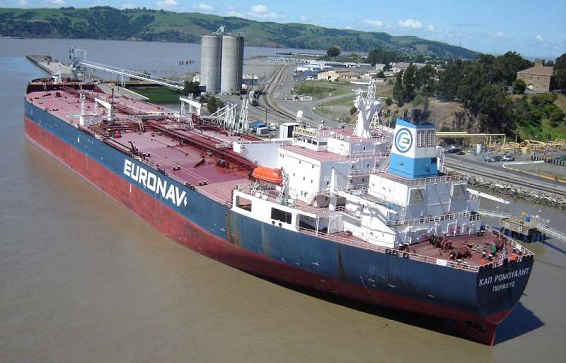
Euronav sells Suezmax Cap Romuald

ANTWERP, Belgium, August 23, 2018 – Euronav NV (NYSE: EURN & Euronext: EURN) (“Euronav” or the “Company”) announces that the Company has sold the Suezmax Cap Romuald (1998 – 146,640 dwt) for USD 10.6 million.

The vessel was delivered to her new owners on 22 August. The Company will record a capital gain of approximately USD 9 million in the current quarter.
The sale of the Cap Romuald is part of a fleet rejuvenation program. Together with the sale Euronav is taking in operation four new Suezmax vessels, of which three (Cap Pembroke, Cap Quebec and Cap Port Arthur) have already been delivered, with the remaining one due for delivery at the end of August. Those 4 vessels will all go under seven year time charter contracts with a leading global refinery player.

About Euronav
Euronav is an independent tanker company engaged in the ocean transportation and storage of crude oil. The Company is headquartered in Antwerp, Belgium, and has offices throughout Europe and Asia. Euronav is listed on Euronext Brussels and on the NYSE under the symbol EURN. Euronav employs its fleet both on the spot and period market. VLCCs on the spot market are traded in the Tankers International pool of which Euronav is one of the major partners. Euronav’s owned and operated fleet consists of 2 ULCCs, 43 VLCCs, 26 Suezmaxes (one under construction), 2 LR1s and 2 FSO vessels (both owned in 50\%-50\% joint venture). The Company’s vessels mainly fly Belgian, Greek, French, Liberian and Marshall Island flags. 

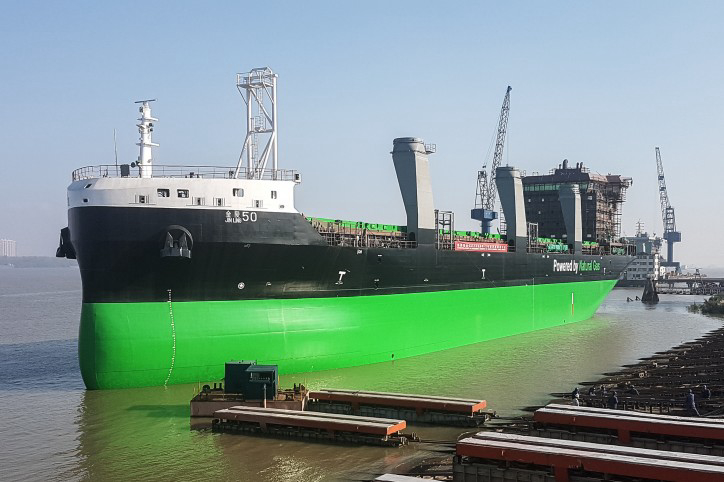
Te next-generation bulk carrier Haaga has today been delivered to ESL Shipping from Jinling Shipyard in Nanjing, China. ESL Shipping is part of the Aspo Group. The 160-meter, 25,600 dwt, LNG-fueled vessel generates less than 50\% of the carbon dioxide emissions of the previous generation of vessels. The vessel can also be fueled by completely carbon-free biogas, once the availability of carbon-free biogas improves over time.

The vessel incorporates several innovative solutions to reduce its environmental footprint by minimizing its energy consumption and emissions. The shipping company and MacGregor, which is part of Cargotec, have developed the world's first autonomous cargo processing solution for the vessel to further improve safety and efficiency.

The vessel will have raw material cargo while arriving from Japan to the Baltic Sea, where the vessel is currently scheduled to arrive in mid-September. 

"Our new vessels have met with an excellent reception among our customers. Every employee of our shipping company should be genuinely proud of what we have achieved during our new construction project", says Mikki Koskinen, Managing Director of ESL Shipping.
The completion of the new vessels will have a positive effect on the shipping company's profitability and competitiveness.

"This investment of around EUR 60 million is significant for a company of Aspo's size. It's also an excellent example of our responsible ownership, as environmental responsibility involves considering future generations, too. The design and construction of the new vessels were completed as planned. The vessels will considerably increase ESL Shipping's capacity, in addition to improving its profitability", says Aki Ojanen, CEO of Aspo Plc and Chairman of the Board of Directors of ESL Shipping.

This new construction project is part of the Bothnia Bulk project, partly funded by the EU. Its goal is to modernize the sea route between Luleå, Oxelösund and Raahe to be more eco-friendly. In addition, environmental emissions will decrease at port with the improved availability of shore-side electricity. The vessels have been designed by Deltamarin in Finland, and European equipment suppliers have provided roughly 60 percent of all vessel systems.

eslshipping.com


Wednesday, 22 August 2018 11:20

Greek PM announces end to bailouts, austerity

ATHENS, Aug. 21 (Xinhua) -- Years of international financial bailouts and national austerity measures are now a thing of the past for Greece, Greek Prime Minister Alexis Tsipras said Tuesday in a televised address.

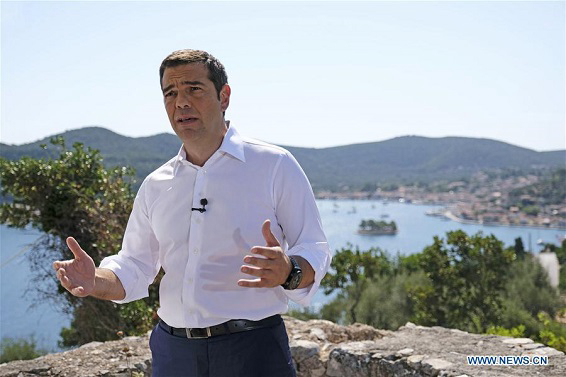
Greek Prime Minister Alexis Tsipras gives a televised address in Ithaki Island, Greece, on Aug. 21, 2018. Years of international financial bailouts and national austerity measures are now a thing of the past for Greece, Greek Prime Minister Alexis Tsipras said Tuesday in a televised address. (Xinhua/Andrea Bonetti)
He said "a historic day has dawned for Greece" after the country's exit from the painful bailout programs introduced in 2010 to avert its sovereign debt default, according to Greek state broadcaster ERT.

As the prime minister was visiting Ithaca island in western Greece, which is the home of Odysseus, the legendary hero in Homer's epic poem "Odyssey," he said Greece's modern "Odyssey" is over and the Greek people can begin to rebuild their home.

At the legendary location, Tsipras officially declared an end to austerity, recession and social hardships by saying, "Our country has regained its right to determine its own fate and future, like a normal European country."

In the ancient Greek epic, the king of Ithaca, Odysseus, returned home from the Trojan War after a perilous journey home fraught with adventures.

Debt-laden Greece on Monday formally exited from its third and final bailout.

"Greece has experienced a modern Odyssey since 2010 ... We struggled against many waves until we reached our destination today ... Today is a day of relief and also the beginning of a new era," Tsipras said.

Greeks will not forget the reasons that plunged Greece into a crisis, such as corruption and widespread tax evasion, he said.

"From today we move forward with vision and determination for our country's new era. (We go ahead) with prudence and responsibility so that we will never go back to the Greece of deficits and bankruptcy," Tsipras said.

"(We proceed) with boldness to Greece's rebirth and to create a country of equality, democracy and social justice, because Ithaca is only the beginning," he said.

XINHUANET.COM

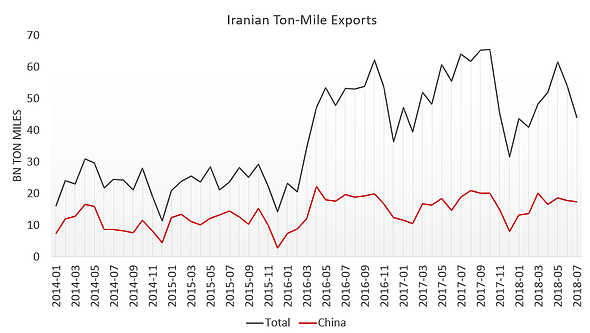
A significant increase in trade volumes can be seen following on from the lifting of US sanctions in January 2016.

A seasonal pattern can be observed in ton-mile exports post January 2016, with total volumes rising in the Autumn months in preparation for higher Winter demand. However, given the volatile nature of the Iran-US relations following on from president Donald Trump’s threats to amend and then kill the Iranian nuclear deal, it can be observed that there is a significant drop in total ton mile exports towards the end of 2017, below that of the same period in the previous year.


Within 2018, we can see that the seasonality pattern is not repeated and Iranian total ton-miles exports reach a peak by May 2018 in line with President Trump announcing his decision to cease the participation of the USA in the Iran deal and to begin re-imposing sanctions following a wind-down period. This may indicate the market is anticipating significant deterioration ahead, which falls in line with the ending of the 90 days grace period that expired on 6th August 2018 and the upcoming November deadline by which time US sanctions would apply to Iranian ports, shipping and energy sectors, as well as the provision of financial services, including insurance.

The largest export volumes from Iran have consistently been going to China, yet a significant drop off can be observed in December 2017, despite this Chinese imports rebounded thereafter and have been largely stable which falls in line with China’s declaration that it will ignore US sanctions and continue doing business with Iran.


Greek owners still dominate exports, with 81 Greek tankers moving Iranian exports since 1st January 2018. Nonetheless the Iranian owner NITC supplies the most tonnage for Iranian exports for now, this is likely to drop off after the last grace period ends in early November this year. The draw of higher freight premiums for Iranian business appears to be quite attractive thus far, particularly in relation to more conventional voyages out of the Middle East. However, it remains to be seen how much risk appetite remains as the sanction regime picks up speed midway through the fourth quarter of this year.

www.vesselsvalue.com

Page 306 of 354

logo

Subscribe to our Newsletter