


RBS looks to sell Turkish loans in latest bid to exit shipping - sources
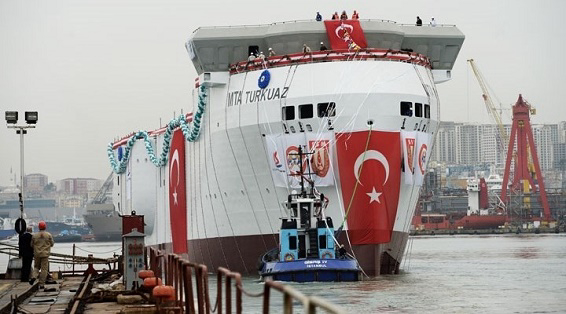
RBS, which has not made an annual profit since 2007, is restructuring under chief executive Ross McEwan and is looking to offload its entire shipping loans business to shore up its capital and avoid more losses on distressed debt.
The sources, who declined to be identified, told Reuters the bank was looking to sell between $200 million to $500 million worth of Turkish-related shipping loans.
RBS, which reported 2.05 billion pounds ($2.66 billion) of losses for the first half of 2016, declined to comment.
The British bank had been a big lender to the global shipping industry but has shrunk its balance sheet and largely retreated from non-UK lending since a 46 billion pound government bailout during the financial crisis.
The shipping industry has been through tough times since the crisis in 2008, hit by a combination of slowing demand and a glut of ships that has battered bottom lines and caused some casualties.
One source estimated the Turkish loans RBS aims to sell would have been worth double their current value at the market peak before the 2008 crisis.
The bank is also trying to sell its much larger Greek shipping business, which is valued at around $3 billion, sources told Reuters earlier this year.
Reuters reported in June that Credit Suisse and China Merchants were among the suitors for the Greek operation but Britain's vote to leave the European Union had partly led to potential buyers backing off.
The bank has hired Lazard as advisers on the sale of the Greek business but is likely to market the sale of the Turkish portfolio itself, several finance industry sources said. Lazard declined to comment.
TOUGH SELL
RBS's shipping exposure was 6.765 billion pounds at end June - not much changed from the end of 2015, RBS data showed. Nearly 6 billion pounds of that was managed by its Capital Resolution Group, its so-called 'bad bank'.
It recorded a net impairment charge of 263 million pounds primarily related to its shipping portfolio in the first six months of 2016.
Neither RBS nor the financial sector sources have disclosed a likely timeframe for a sale of the Turkish shipping loans but the political turmoil in Turkey and subsequent threats to its investment grade status could dampen investor interest in the country, one of the sources said.
Meanwhile, the limited level of interest in its Greek shipping loans business so far has raised questions about the bank's strategy of trying to sell it.
The bank hosted a roadshow in Asia last month in an effort to drum up interest for the Greek operation, according to one of the financial sector sources and a third source with direct knowledge of the bank's disposal plan.
The third source said it was unclear if a single buyer could be found for the entire Greek business or whether RBS would opt to sell the loans off in parcels.
"There is a price at which it is not worth selling it," the source said, suggesting shareholders might be better served if the bank opted to scrap a heavily-discounted sale and run down the loans instead.
The source also flagged possible buyer interest from China or Japan, pointing to RBS's sale of its aircraft leasing business to Sumitomo Mitsui Banking Corporation in 2012.
"If you get into China and Japan for example there is lots of money floating around looking for some yield," the source said. ($1 = 0.7717 pounds)
Reuters
(Editing by Sinead Cruise and Jane Merriman)
N-KOM signs fleet agreement with Samos Steamship
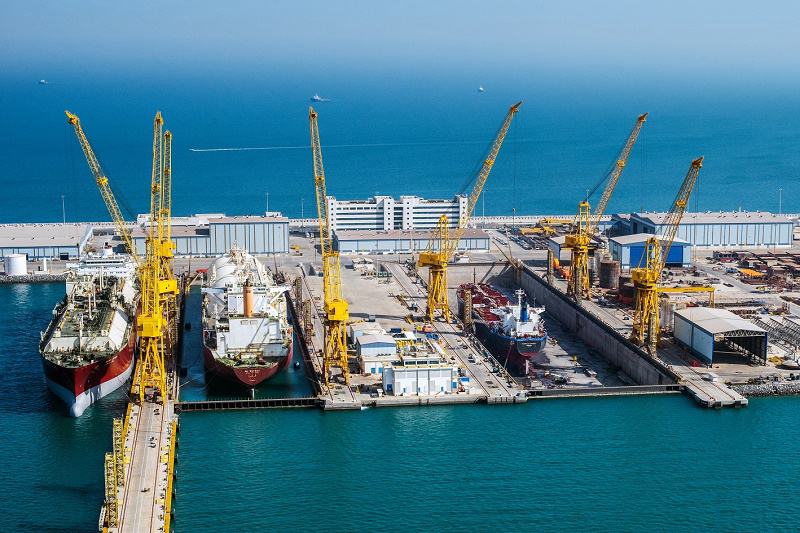
The Greek shipping company is an existing client of N-KOM, with several repairs undertaken for their fleet of tankers to date.
Under the fleet agreement, N-KOM will be the preferred shipyard in the Middle East for the repairs of all vessels owned by Samos Steamship Company.
Managing Director of Nakilat Eng. Abdullah Fadhalah Al Sulaiti said, “We are pleased to be strengthening our strategic partnership with our client Samos Steamship through the signing of this fleet agreement, during one of the largest international shipping events of the year no less. Nakilat has enjoyed successful long-standing partnerships with Greek shipping companies such as Maran Gas Maritime, and we look forward to the continued support from our Greek and other International clients to grow Qatar’s reputation as a maritime centre of excellence in the region.”
Managing Director of Samos Steamship Company Mr Anastassios Tzamouranis said, “We have been very satisfied with the high quality and timely repairs of our tankers by N-KOM over the years and are happy to further grow our partnership with this fleet agreement.”
 |
About Nakilat:
Nakilat is a Qatari LNG transport company providing an essential transportation link in the State of Qatar’s LNG supply chain. Its LNG shipping fleet is the largest in the world, comprising of 63 LNG vessels. Nakilat also manages and operates four large LPG carriers. Nakilat operates the ship repair and construction facilities at Erhama Bin Jaber Al Jalahma Shipyard in Ras Laffan Industrial City via two strategic joint ventures: N-KOM and NDSQ. Nakilat also offers a full range of marine support services to vessels operating in Qatari waters. For more information visit: www.nakilat.com.qa
About Nakilat-Keppel Offshore & Marine (N-KOM):
Established in 2007, N-KOM is a joint venture between Qatar’s premier gas shipper Nakilat and Keppel Offshore & Marine, a global leader in offshore rig design, construction and repair, ship repair and conversion, and specialised shipbuilding. From its strategic location in the heart of the Arabian Gulf and within the world-class Erhama Bin Jaber Al Jalahma Shipyard complex, N-KOM offers a comprehensive range of repair, conversion, maintenance and fabrication services for marine vessels, offshore and onshore structures. For more information, visit www.nkom.com.qa
About Samos Steamship
Samos Steamship is a ship management company operating a mixed fleet of tankers and bulk carriers. Samos manages a fleet of 2 million tons of an average age of 7 years. With over 140 years of experience, Samos Steamship offers reliable sea transport, combining expertise, flexibility and innovation. For more information, visit www.samossteamship.gr
Beijing thanks Tokyo for rescue after Chinese fishing boat collides with freighter near Senkakus
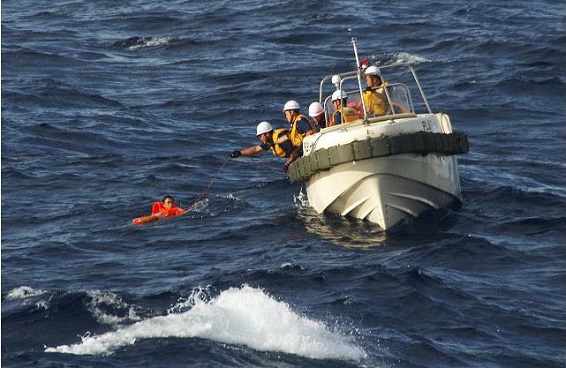
The coast guard rescued six Chinese crew members and was searching for eight missing, the agency said, after the fishing boat sank.
The boat collided with the 300-meter-long bulk carrier Anangel Courage about 65 km off Uotsuri Island, the largest in the Senkaku group of islets, just after 5 a.m.
The cargo ship issued a distress signal, and the coast guard dispatched a vessel and a plane to the area, the agency said. Weather conditions in the area were poor at the time.
Tokyo informed Beijing of the incident and the Chinese side “expressed appreciation” for the operation, the Foreign Ministry said in a statement.
Hundreds of Chinese boats are currently fishing in waters close to the disputed islands, the ministry has said, with multiple Chinese patrol vessels maneuvering among them. At least some of the government ships appear to be armed.
The Chinese ambassador in Tokyo said Wednesday that the flotilla is a response to heavy potential fish catches in the area, according to an official from Japan’s ruling party.
Toshihiro Nikai, secretary-general of the Liberal Democratic Party, quoted Ambassador Cheng Yonghua as saying “fish were markedly concentrated” around the islets.
China says the Japan-controlled Senkakus are Chinese territory. It knows the islets as Diaoyu.
On Wednesday, the Foreign Ministry issued a nine-page dossier detailing alleged intrusions with photographs of some of the vessels and lists of protests submitted to the Chinese side.
“There are approximately 200 to 300 fishing vessels operating in the contiguous zone of the Senkaku Islands, and a large number of Chinese government vessels,” the report said.
It said up to 16 patrol ships have been in the area, distributing images of the ships and identifying them as hailing from three government agencies: China Coast Guard, China Marine Surveillance and China’s Fisheries Law Enforcement Command.
The dossier listed examples of protests Tokyo has submitted to Beijing since Aug. 5. On Sunday alone, officials filed 10 separate protests with Chinese diplomats in Tokyo and the Ministry of Foreign Affairs in Beijing.
“Despite Japan repeatedly lodging strong protests with the Chinese side, the Chinese side has continued to take unilateral actions that raise tensions on the ground, and this is absolutely unacceptable,” the Foreign Ministry said in the document.
On Wednesday, the U.S. State Department restated that the Senkaku Islands fall under Washington’s treaty of mutual defense with Tokyo.
“We are in close communication with the Japanese as allies and are also concerned about the increase of Chinese coast guard vessels in the vicinity of the islands,” State Department Spokeswoman Elizabeth Trudeau said.
“We oppose any unilateral action that seeks to undermine Japan’s administration of the Senkaku Islands.”
Foreign Minister Fumio Kisihida on Tuesday said while relations with Beijing had deteriorated markedly, the door for dialogue remained open.
Information from Kyodo added
OCEAN RIG UDW INC. REPORTS FINANCIAL AND OPERATING RESULTS FOR THE SECOND QUARTER 2016
Second Quarter 2016 Financial Highlights
- For the second quarter of 2016, the Company reported a net income of $156.1 million, or $1.83 basic and diluted earnings per share.
- The Company reported Adjusted EBITDA(1) of $326.5 million for the second quarter of 2016.
Recent Highlights
- On August 11, 2016 we reached an agreement with Samsung Heavy Industries (“SHI”) related to the construction of our three drillships which provides for the re-scheduling of certain installments, the postponement of the delivery of the first two of these drillships currently under construction and the amendment of certain other terms (including the contract price).
- The Leiv Eiriksson completed, as planned, its 15-year class survey and scheduled equipment and winterization upgrades related to its next contract, and on July 18, 2016 mobilized on location in Norway to commence its previously announced contract with Lundin Norway AS.
- On June 16, 2016, we reached an agreement with Repsol Sinopec to terminate the contract of the Ocean Rig Mylos operating offshore Brazil against full payment of the remaining backlog.
- On April 27, 2016, we reached agreement with ENI to settle the dispute related to the termination of the contract of the Ocean Rig Olympia against a total payment of $54 million and the extension by 81 days for the contract of the Ocean Rig Poseidon at a daily gross operating rate of $115,000.
(1) Adjusted EBITDA is a non-GAAP measure; please see later in this press release for reconciliation to net income
George Economou, Chairman and Chief Executive Officer of the Company, commented:
“Despite the continued positive operational performance of the Company (fleet utilization for the second quarter of 96.3\%) the market conditions remain extremely negative. Oil companies continue to reduce their offshore budgets and as more floaters come off contract in the next six months, an already grossly oversupplied market is expected to worsen. In this current and anticipated poor market environment which we expect to persist for an extended period of time, we believe it is prudent to focus on maintaining liquidity and de-levering the Company.
Given the ongoing distressed market environment as well as the consensus view that a recovery may not occur for several years, we have engaged financial and legal advisors to assess the viability of our capital structure and alternatives that may be available to pursue. In the recent period, we have been approached by several of our debt holders who have in certain cases also retained legal counsel and financial advisors. While we have not made any specific decisions, it is evident to the Company and a number of its creditors that its debt obligations will need to be amended or exchanged for new debt and/or equity securities, and some debt holders may have little or no recovery on their investment. We continue to explore and consider alternatives, which may include a possible reorganization under US bankruptcy laws or another jurisdiction, so that we can ride out this very difficult cycle with feasible prospects for strong, long-term success.”
PLEASE CLICK ON THIS LINK TO VIEW THE ENTIRE PRESS RELEASE INCLUDING THE FINANCIAL TABLES
http://cdn.capitallink.com/files/docs/companies/ocean_rig/press/2016/oceanrig081116.pdf
DryShips inc. announces receipt of NASDAQ notice and reverse stock split of 4-for-1
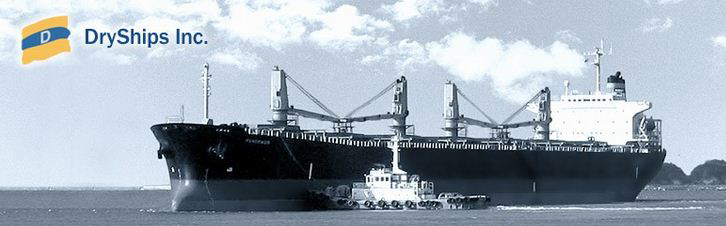
indicating that because the closing bid price of the Company's common stock for 30 consecutive business days, from June 14, 2016 to July 26, 2016, was below the minimum $1.00 per share bid price requirement for continued listing on the Nasdaq Capital Market, the Company is not in compliance with Nasdaq Listing Rule 5550(a)(2). Pursuant to Nasdaq Listing Rule 5810(c)(3)(A), the applicable grace period to regain compliance is 180 days, or until January 23, 2017.
The Company can cure this deficiency if the closing bid price of its common stock is $1.00 per share or higher for at least ten consecutive business days during the grace period. The Company has determined to effect a 4-for-1 reverse stock split, in order to regain compliance with the Nasdaq Capital Market minimum bid price requirement. In the event the Company does not regain compliance within the 180-day grace period and it meets all other listing standards and requirements, the Company may be eligible for additional 180-day grace period.
The Company's business operations are not affected by the receipt of the notification.
About DryShips Inc.
The Company is an owner of drybulk carriers and offshore support vessels that operate worldwide. The Company owns a fleet of 20 Panamax drybulk carriers with a combined deadweight tonnage of approximately 1.5 million tons, and 6 offshore supply vessels, comprising 2 platform supply and 4 oil spill recovery vessels.
The Company's common stock is listed on the NASDAQ Capital Market where it trades under the symbol "DRYS."
Visit the Company’s website at www.dryships.com
Large scope for further cooperation with Greek shipping: Sinotrans manager
 |
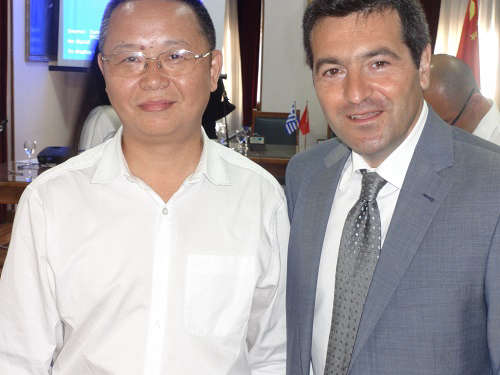
| Tao Bao Xuan, General Mamanger, Sinotrans Hubei Co. Ltd., Markos Kantzios, maritimes.gr |
Mr Tao Bao Xuan was among the six members of the business delegation from Wuhan, who visited Greece at the invitation of the PCT and the Hellenic- Chinese Chamber to discuss the prospects for deepening Sino-Greek cooperation in the Maritime industry.
The representatives of shipping, shipbuilding and logistics companies operating in the port of Wuhan, sought paths of cooperation with Greek shipping, ship repair companies, as well as logistics and manufacturing companies through joint ventures and investment.
"Collaboration is the path to cope with the global economic recession which has affected also our company. Sinotrans distributes the 80\% of containers from China worldwide. After the outbreak of the world crisis, there is a large reduction in demand for goods," according to Mr Tao Bao Xuan.
Extroversion, opening up to the world market and mergers- a strategy supported and promoted by the Chinese government- is the recipe the company has adopted to forge ahead, he told maritimes.gr
HMD, POSCO and ILSHIN LOGISTICS to build 50,000 dwt LNG-fuelled bulk carrier
- Largest LNG-fuelled bulk carrier ever ordered
- Use of a new cryogenic high-manganese steel developed by POSCO
- Joint Lloyd's Register and KR class in global project
- Key milestone in efforts to support wider adoption of LNG as fuel
Hyundai Mipo Dockyard (HMD) has signed a contract to build a 50,000 dwt bulk carrier with ILSHIN LOGITICS. The project is a collaboration between POSCO and ILSHIN LOGISTICS to develop the first in a new generation of ships for greener shipping.
The ship represents a significant step-up for the industry as it is the largest bulk carrier ever ordered to use LNG as fuel. When delivered in the fourth quarter of 2017, the ship will transport limestone cargoes in the Korean coastal trade for steelmaker POSCO. Lloyd’s Register (LR) and the Korean Register (KR) will provide dual classification and certification, verifying compliance with the International Gas Fuel (IGF) Code.
The new type of cryogenic steel, developed by POSCO, is high in manganese and will be used for the 500 m3 capacity Type ‘C’ LNG fuel tank, located on the aft mooring deck. The properties and characteristics of the high-manganese steel, as well as the required welding technology, have been proven suitable for cryogenic applications.
Chang-hyun Yoon, EVP of HMD Initial Planning Division explained: "We should not hesitate to adopt new technologies and materials as we strive for a greener shipbuilding and shipping industry. The world’s first application of high-manganese steel for an LNG storage tank is a challenge but I believe that the material expertise of POSCO and the engineering capability of HMD will offer the right solution to the shipowner. Additionally, the technology evolution represented by this project paves the way for small-scale LNG carrier designs incorporating high-manganese steel Type ‘C’ cargo tanks at a competitive price."
POSCO has already received the approval for high-manganese steel and its welding consumables from LR and other classification societies. This steel is cost competitive against conventional high-nickel equivalents and can be expected to help reduce capital costs in LNG-fuelled and LNG carrier systems.
Jin-Tae Lee, LR's Korea Chief Representative & Marine Manager, emphasised the importance of technical co-operation with other stakeholders, and said: "The successful construction of this vessel will be a very good trigger to draw the LNG industry’s attention to the widespread adoption of high-manganese steel in marine applications, for those who are hesitant to adopt LNG-fuelled systems due to high CAPEX. This contract is evidence that shipping can make progress to address cost challenges as well as provide technical solutions in tough markets – and doing so without compromising both safety and performance."
Technical Specifications
The ship has been designed with a maximum draught of 12.0 m, LOA of 191 m, breadth of 32.26 m, and a maximum capacity of 50,000 dwt. The propulsion system is a dual-fuel high-pressure gas injection engine, the HYUNDAI-MAN B&W 6G50ME-C9.5-GI. The LNG gas supply system consists of: a high-pressure pump, high-pressure vaporizer, low-pressure vaporizer and a glycol water heating system.
Lloyd’s Register (LR) is a global engineering, technical and business services organisation wholly owned by the Lloyd’s Register Foundation, a UK charity dedicated to research and education in science and engineering. Founded in 1760 as a marine classification society, LR now operates across many industry sectors, with some 8,500 employees in 78 countries.
LR has a long-standing reputation for integrity, impartiality and technical excellence. Its compliance, risk and technical consultancy services give clients confidence that their assets and businesses are safe, sustainable and dependable. Through our global technology centres and research network, LR is at the forefront of understanding the application of new science and technology to future-proof our clients’ businesses.
Safe Bulkers The Best Play For A Dry Bulk Recovery, Says Morgan Stanley
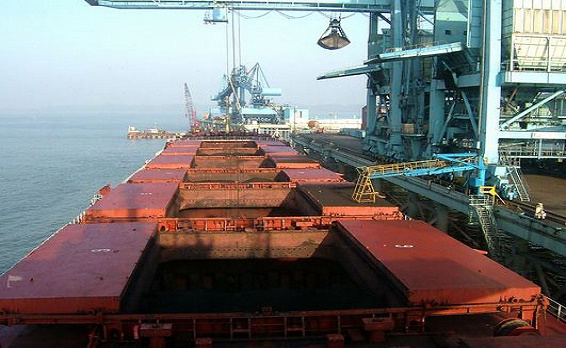
Giannakoulis maintains an Equal-Weight rating on the company, while raising the price target from $1.10 to $1.20.
2Q Performance
Safe Bulkers reported its 2Q results marginally above expectations, with the EPS of $(0.14) beating the consensus and the estimate.
Daily revenues came in at $7.6kpd, in line with the estimate, while expenses were 3 percent below expectations, leading to higher than expected EBITDA of $8.9 million.
“In 2Q, SB took delivery of the Kypros Spirit, a Panamax bulker, bringing the company's total fleet to 37 vessels. Four newbuilds are still expected for delivery; three in 2017 and one in 2018,” Giannakoulis mentioned.
Related Link: Credit Suisse On Safe Bulkers: "Not Getting Any Better"
The analyst believes that the remaining capex, worth $100 million, can be covered through the company’s existing liquidity of $170 million, and management has indicated that there was no intention of taking on any additional debt.
Liquidity Position
Giannakoulis also pointed out that dilution was unlikely, given that the operating cash flow was already positive, with Safe Bulkers having sufficient liquidity to see it through the current downturn.
According to the Morgan Stanley report, “Management was firm that they have sufficient cash and that they intend to do whatever it takes to avoid issuing any equity, suggesting that in the event of a further market deterioration the disposal of the newbuilds could be the alternative if necessary.”
During the previous quarter, the company had taken on a series of refinancings of its debt facilities, bringing its cash breakeven to lower than $8kpd.
The U.S. Securities and Exchange Commission recognizes the Athens Stock Exchange
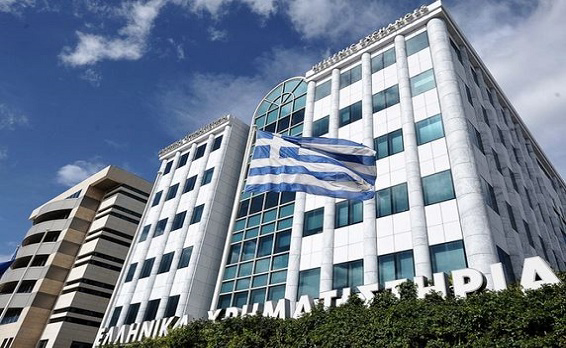
On July 15 2016, the U.S. Securities and Exchange Commission (SEC), the supervisory authority of the U.S. capital markets, has recognized the “Hellenic Exchanges–Athens Stock Exchange S.A. (ATHEX) as a “Designated Offshore Securities Market (DOSM)” within the meaning of Rule 902 (b) of Regulation S under the U.S. Securities Act of 1933, as amended (Securities Act). With this designation, ATHEX joins a number of leading international stock exchanges which have already been designated as DOSM.
Advantages from the designation
The designation of Hellenic Exchanges–Athens Stock Exchange S.A. (ATHEX) as DOSM provides several advantages to both investors and issuers:
All kinds of securities issued in Greece and listed and traded on the Athens Stock Exchange may now be resold, without requiring the seller to form a prior reasonable belief that the buyer is outside of the United States. Prior to that, investors who wished to sell such securities (i.e., equity or debt securities issued by ATHEX listed companies in a private placement under the U.S. securities laws) had to take certain measures to ascertain the location of the purchaser prior to re-selling. With this designation, investors will be able to resell such securities without having to follow procedures to ensure that the securities are not being purchased by a buyer in the United States or a U.S. person. Consequently, trading in the securities listed on ATHEX will be more facilitated. A more liquid resale market is expected to develop, which is likely to make private placements of Greek securities issued by ATHEX-listed companies more attractive to U.S. investors. Moreover, subject to satisfying certain other criteria, the DOSM designation will also facilitate the dissemination of research reports during offerings of securities
Legal Background
Regulation S provides a “safe harbor” for offers of securities made outside the United States. An offering of securities, whether private or public, made by an issuer outside of the United States in reliance on Rule 903 of Regulation S need not be registered under the Securities Act. The “safe harbor” provided by Rule 904 of Regulation S applies to re-sales of securities by persons other than the issuer, a distributor or persons acting on their behalf. An offer or sale of securities that satisfies the conditions of Rule 904 is deemed to occur outside the United States and therefore is not subject to the registration requirements of the Securities Act.
The availability of the Rule 904 resale “safe harbor” is contingent on two general conditions: (i) the offer or sale must be made in an “offshore transaction”, and (ii) no “directed selling efforts” may be made by the issuer, a distributor, any of their respective affiliates or any person acting on their behalf. For a resale to be considered an “offshore transaction”, the offer cannot be made to a person in the United States. Specifically, at the time when the buy order is originated, the buyer must be physically outside of the United States or the seller must reasonably believe that the buyer is outside of the United States. However, Regulation S also provides that, instead of researching the location of the buyer, the seller may execute the resale transaction on or through the facilities of a “designated offshore securities market” (provided there has been no pre-arranged sale in the United States). In this case, the location of the buyer does not matter. Accordingly, provided that there no directed selling efforts in the United States, re-sales of securities listed on ATHEX by persons who are not issuers, distributers or their affiliates will now automatically qualify as 'offshore transactions' under Regulation S.
About Athens Exchange Group
Athens Exchange Group (ATHEX Group), is a group of companies that provide support to the Greek Capital Market. ATHEX Group and its subsidiaries operate the organized Equities and Derivatives markets, perform clearing and settlement of trades, supply integrated software solutions and services to the Greek capital market community and promote the investment culture in Greece. ATHEX Group is a listed company in local market (symbol: HELEX).
The Exchange, through its markets, offers solutions and financing tools to businesses, expands investor choice by providing a safe, stable and easy environment in full harmony with international practices and the European regulatory framework.
Its shares are traded on the Main Market of the Athens Exchange (Symbol: EXAE).
More information about the Athens Exchange Group, can be found in the links provided here, website, company profile and overview of the market.
Is StealthGas Inc. a Buy? The Stock Rises Again
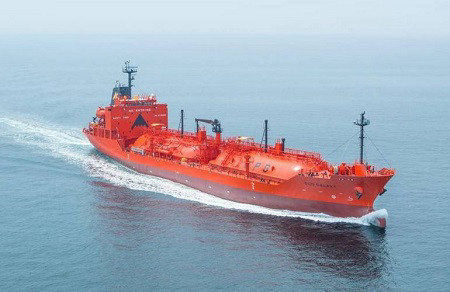
StealthGas Inc. (NASDAQ:GASS) has risen 3.51\% since December 22, 2015 and is uptrending. It has underperformed by 2.91\% the S&P500. The move comes after 7 months positive chart setup for the $137.57 million company. It was reported on Jul, 29 by Barchart.com. We have $9.14 PT which if reached, will make NASDAQ:GASS worth $221.49M more.
Analysts await StealthGas Inc. (NASDAQ:GASS) to report earnings on August, 25. They expect $0.02 EPS, down 60.00\% or $0.03 from last year’s $0.05 per share. GASS’s profit will be $786,114 for 43.75 P/E if the $0.02 EPS becomes a reality.
Out of 3 analysts covering Stealthgas (NASDAQ:GASS), 2 rate it a “Buy”, 0 “Sell”, while 1 “Hold”. This means 67\% are positive. Stealthgas has been the topic of 5 analyst reports since October 23, 2015 according to StockzIntelligence Inc.
According to Zacks Investment Research, “StealthGas Inc is a provider of international seaborne transportation services to LPG producers and users. The Company’s vessels carry various petroleum and petrochemical gas products in liquefied form, including propane, butane, butadiene, isopropane, propylene and vinyl chloride monomer, which are all byproducts of the production of oil and natural gas. These products are transported in liquefied form in order to reduce their volume and to facilitate their handling. Transportation by sea represents a major element of gas transportation logistics. LPG products have a variety of both industrial and other uses, including transportation, fertilizer production, the manufacture of plastics, space heating, cooking, water heating and process heating. We serve industrial companies, as well as national and independent energy companies and energy traders.”
http://www.consumereagle.com/

Powered by  © Μaritimes 2019