


ERMA FIRST participates at SMM 2016
 |
Get the chance to experience in augmented reality the ERMA FIRST BWTS FIT installation onboard a vessel.
SMM is attended by top shipbuilders, key players in the value chain, operators and service providers. ERMA FIRST will be participating as an exhibitor in this important maritime event, which has over 2,100 exhibitors and 50,000 visitors from all over the world.
More information on the exhibition available here .
Samsung Heavy to Raise 1.1 Trillion Won From Sale of New Shares
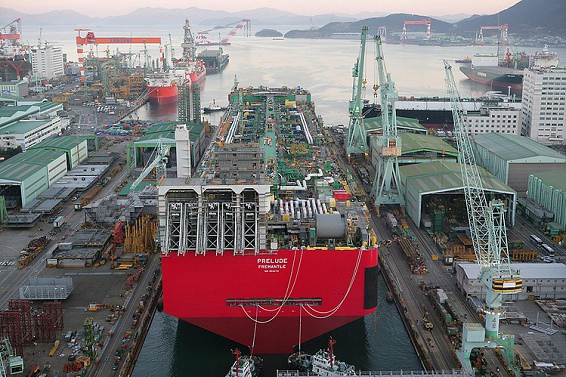
Samsung Heavy will sell 159.1 million new shares to shareholders in November, the Sungnam, South Korea-based company said in an e-mailed statement Friday. While it has applied for a sale price of 6,920 won, 30 percent lower than Thursday’s closing level of 9,890 won, the final amount will be determined on Nov. 2, it said.
Samsung Heavy and larger peers Hyundai Heavy Industries Co. and Daewoo Shipbuilding & Marine Engineering Co., the world’s top three shipyards, plan to raise a combined 8.41 trillion won through sales of assets and shares as orders dry up. They are among Asian shipbuilders hurt by a slowing global economy and slump in oil prices that have prompted customers to defer or stop orders.
“Cash flow has come under pressure because of sluggish demand and financial institutions becoming reluctant to lend money while the industry is restructuring,” Samsung Heavy’s Chief Executive Officer Park Dae Young said in the statement. “We hope that much of the liquidity concerns will be resolved through the rights offering.”
Samsung Heavy said in June that it plans to sell new shares as part of a 1.5 trillion-won restructuring plan.
Shares of Samsung Heavy fell 0.1 percent as of 3:09 p.m. in Seoul. The stock has declined 8.9 percent this year, compared with a 4.8 percent gain in the benchmark Kospi index.
Shrinking orders for new vessels amid mounting losses have heightened concerns the Korean shipbuilders’ cash could dwindle further. The government has told the shipyards to submit plans to manage their financials better. Samsung Heavy posted a net loss, excluding minority interest, of 169.1 billion won in the first half because of a delay in delivery of a rig and compensation to workers as part of the restructuring plan.
Brent crude recently traded at $51.08 a barrel in Singapore, dropping from about $101.56 two years ago.
Oil companies are projected to reduce capital expenditure by 17 percent this year, with offshore projects and exploration facing the steepest cuts, the International Energy Agency said in February. Leaders of the world’s largest suppliers of offshore drilling rigs and the services that go with them see the oil-market recovery taking even longer than expected last year.
Royal Dutch Shell Plc, Europe’s largest oil company, has said it has the option to cut expenditure further and defer more projects if oil prices stay blow $50 a barrel.
Source: Bloomberg
Gener8 Maritime, Inc. Announces Delivery of the “ECO” VLCC the Gener8 Chiotis
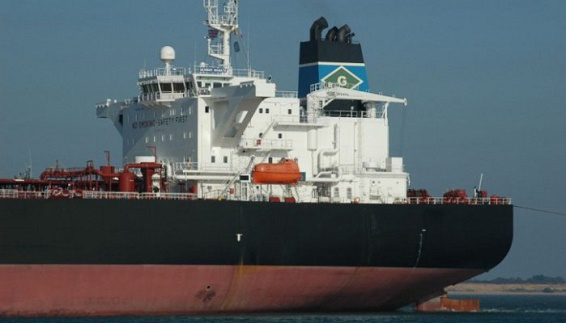
The Gener8 Chiotis represents the twelfth of 21 “ECO” VLCCs expected to be delivered into Gener8 Maritime’s fleet. Upon delivery, the Gener8 Chiotis entered Navig8 Group’s VL8 Pool.
As of August 22, 2016, Gener8 Maritime has a fleet of 44 wholly-owned vessels comprised of 27 VLCCs, including 9 newbuildings, 11 Suezmaxes, four Aframaxes, and two Panamax tankers. On a fully-delivered basis, Gener8 Maritime’s fleet has a total carrying capacity of approximately 10.5 million deadweight tons (“DWT”) and an average age of approximately 5 years on a DWT basis. Gener8 Maritime is incorporated under the laws of the Marshall Islands and headquartered in New York.
Source: Gener8 Maritime
Vard Holdings: Contract for three module carrier vessels for Kazmortransflot
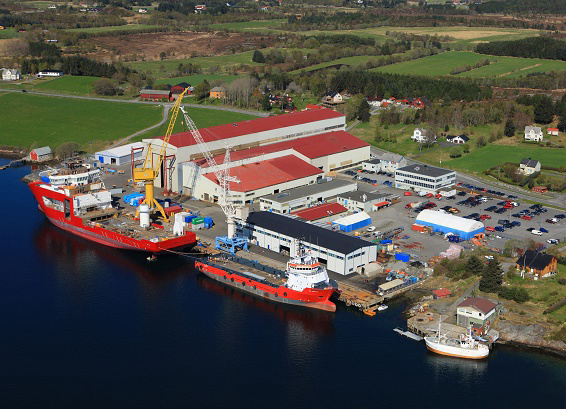
The vessels, of VARD 9 28 design, will be operated by KMTF through a consortium led by Blue Water Shipping. The vessels, measuring 113 by 22 meters, are designed for transport in the Caspian Sea.
All three vessels will be built at Vard Braila in Romania. Delivery is scheduled between 3Q 2017 and 1Q 2018. The aggregate contract price is approximately USD 70 million.
VARD CEO and Executive Director Mr. Roy Reite commented, “We are pleased to welcome Kazmortransflot as a new customer to VARD, and look forward to the cooperation in this exciting project. Our shipyard in Braila has unique experience in building vessels for Kazakhstan and the Caspian Sea, and this new contract further underlines our long-term commitment to the region.”
The National Maritime Shipping Company “Kazmortransflot” is the National Maritime Carrier of the Republic of Kazakhstan. Its mission is to further develop a national merchant marine and service fleet to ensure safe, reliable and cost-effective maritime transport, both in the Caspian region, and outside the Caspian Sea water area.
Why China’s Plan to Build a New Silk Road Runs Through Singapore
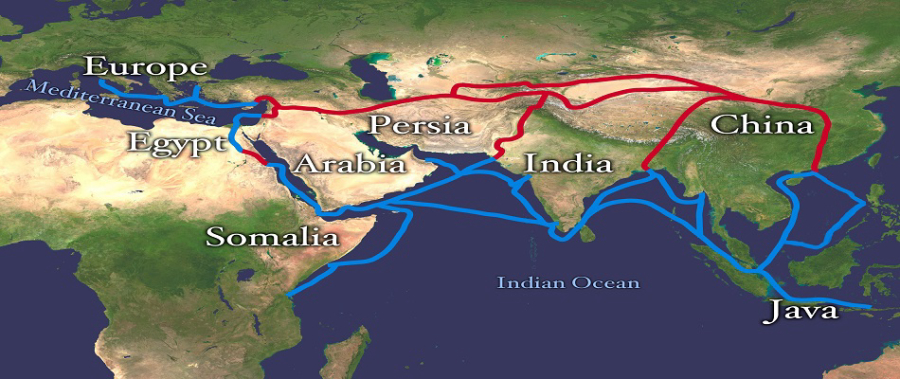
The venture underscores Singapore’s potential as a gateway to Southeast Asia for China as President Xi Jinping seeks to export excess industrial capacity while building influence overseas. Lured by shared cultural bonds and the former British colony’s legal and financial systems, the number of Chinese companies registered locally has almost doubled in the past five years to more than 7,500.
Exploiting Singapore’s regional familiarity could help Chinese companies navigate local politics complicated by tensions over China’s territorial claims in the South China Sea. It could also help them avoid pitfalls from prior investment in Africa and Latin America, where China has faced criticism at times for a heavy-handed approach, insisting for example its companies and laborers carry out the bulk of a contract.
“From all the failures, Chinese have learned that they need a local broker,” said Gao Zhikai, a board member of coking coal distributor Winsway Enterprises Holdings and former vice president of crude oil giant CNOOC Ltd. “Chinese companies believe Singapore companies are easier to deal with and they know how to deal with different markets.”
Xi is offering vasts amounts of money to Southeast Asia for infrastructure projects for the maritime portion of his revitalized Silk Road. Combined with an overland route through Eurasia, the project is known as “One Belt, One Road.”
World’s Biggest Shipping Firm Warns Against U.S. Protectionism
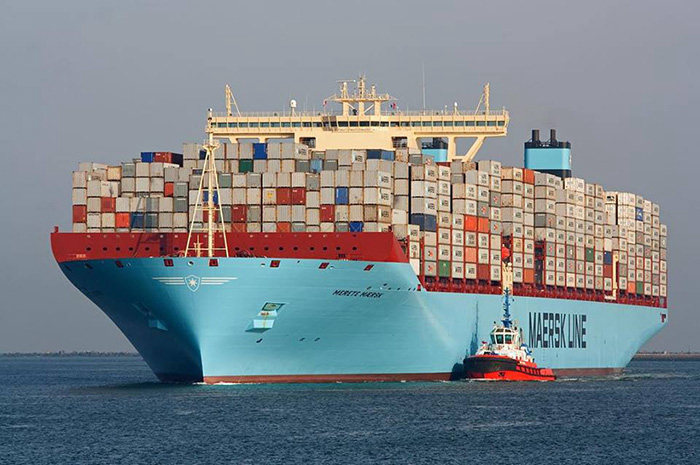
While Maersk assumes that no matter how the U.S. presidential election ends, it probably “won’t have an effect on the contracts we have and the employment exposure we have in the U.S.,” Trond Westlie, its chief financial officer, said any steps in a more protectionist direction would clearly hurt global economic growth.
“In general, trade barriers weaken global growth,” Westlie said in a phone interview on Friday. “Low trade barriers not only help trade growth, but also economic growth.”
With real-estate-magnate-turned-politician Donald Trump blaming China and Mexico for American job losses, the tone in the U.S. presidential race is more anti-trade than it’s been in decades. Democratic party nominee Hillary Clinton is also toughening her stance on globalization, and has criticized the Trans-Pacific Partnership for failing to do enough to support American jobs. Trump has gone so far as to call the pact a “disaster” for the U.S.
Westlie declined to comment on either candidate or on any specific elements in their proposals as they vie for the presidency. But the government in Maersk’s home country of Denmark has been less restrained in voicing its concerns. Foreign Minister Kristian Jensen says he’s “worried about what Trump has said.”
There are two things “in particular” that are grounds for unease, according to Jensen. “His anti-trade rhetoric” is one, while “the second issue is his security and defense policy, where he’s questioning NATO’s Article 5,” the minister said in an interview.
Trump has implied NATO members would only get U.S. assistance if they paid for the favor, while he has flirted with Russian President Vladimir Putin without providing much insight into how he would shape U.S.-Russian relations in practice. All the same, if U.S. voters end up making Trump their president, “we will find a way to work with him,” Jensen said.
The World Bank has identified trade as a key means to fight poverty. But since the global financial crisis, cross-border commerce has slowed, and in a report this year, the World Trade Organization estimated that trade grew less than 3 percent for a fifth consecutive year. It cited the “threat of creeping protectionism as many governments continue to apply trade restrictions,” in an April 7 report. Trade growth will reach 3.6 percent next year, compared with a 5 percent average since 1990, according to the WTO.
Maersk transports about 15 percent of the manufactured goods that are sent across the globe each year, making it the world’s biggest container shipping line.
“Trade barriers should be reduced as much as possible,” Westlie said. “That opinion stands whether we’re talking about Brexit or the U.S., but also for tariffs in Africa or South America, for example. So it counts for all countries, not just individual ones.”
www.bloomberg.com
Maersk Line hit by first half loss of $114m
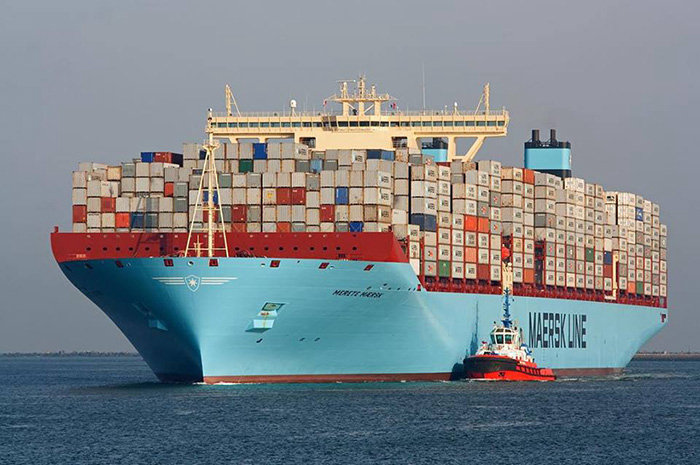
The container arm of Denmark’s AP Moller-Maersk reported a net loss of $114m in the six months ended 30 June 2016, as against the profit of $1.22bn in the previous corresponding period.
First half revenue was recorded at $10.04bn, down from $12.52bn in the year-ago period due mainly to decline in freight rates but partially offset by higher volumes carried.
“The freight rate decline was mainly attributable to lower bunker prices and weak market conditions,” AP Moller Maersk said in its results announcement.
“Container freight rates declined across all trades. North America and West Central Asia declined the most but African, Oceanic and European trades were also notably lower. The decline in North American average rates reflect increased competition, but is also impacted by increased backhaul volumes at lower rates in Q2 2016,” the group explained.
The group added that West Central Asian, Oceanic and European trades were impacted by market imbalance whereas African trades were mainly impacted by weak demand.
Amid the challenging environment, the industry has continued to see steps towards consolidation through mergers and acquisition as well as formation of large scale alliances.
Maersk Line itself partnered with Mediterranean Shipping Company (MSC) to form the 2M alliance since the start of 2015, with the potential inclusion of Hyundai Merchant Marine (HMM).
At at end of the second quarter, Maersk Line’s fleet consisted of 283 owned containerships and 347 chartered boxships with a total capacity of 3.14m teu. Its idled capacity stood at 44,000 teu from four vessels.
The group AP Moller-Maersk, meanwhile, saw its first half profit plunged by 87\% year-on-year to $342m due primarily to lower freight rates and oil prices.
http://www.seatrade-maritime.com/
Navios Partners accepts 20\% charter rate cuts with HMM
Navios Partners revealed that the hire rate for the period of 18 July 2016 to 31 December 2019 has been reduced to $24,400 per day. And from 1 January 2020 the hire rate would be restored to $30,500 per day.
In exchange, Navios Partners received $7.7m principal amount of senior unsecured notes at 3\% per annum payable on maturity in July 2024, and 3.7m freely tradable shares of HMM. In August, Navios Partners sold the 3.7m shares for a net cash proceed of approximately $21.3m.
South Korea’s HMM has been seeking reduction in hire rates with various shipowners as it battles to regain its financial stability. Greece’s Capital Product Partners has also agreed to take a 20\% cut on five containerships chartered to HMM.
The success of securing rate cuts by HMM is an important step in overcoming the company’s mounting debts and in proceeding with restructuring.
HMM has also confirmed earlier that it will join the 2M container alliance currently comprising of Maersk Line and Mediterranean Shipping Company (MSC).
Meanwhile, Navios Partners in June this year agreed to sell the 2011-built, 13,100-teu boxship MSC Cristina to an unrelated third party at a price of $125m, with delivery expected by the first quarter of 2017.
In financial results, Navios Partners recorded a first half net loss of $16.6m as against the profit of $22.23m in the same period of last year, due mainly to an impairment charge of $17.2m on a vessel.
First half revenue dipped to $90.52m compared to $113.26m in the year-ago period.
Angeliki Frangou, chairman and ceo of Navios Partners, commented: “Since the beginning of 2016, we have fortified our balance sheet, having reduced our debt by $44.6m. In addition, we have no significant debt maturities until 2018 and expect to generate $45m in free cash flow for the remainder of 2016.”
seatrade-maritime.com
COSCO SHIPPING Completed the Acquisition of a Majority Stake in the Piraeus Port Authority
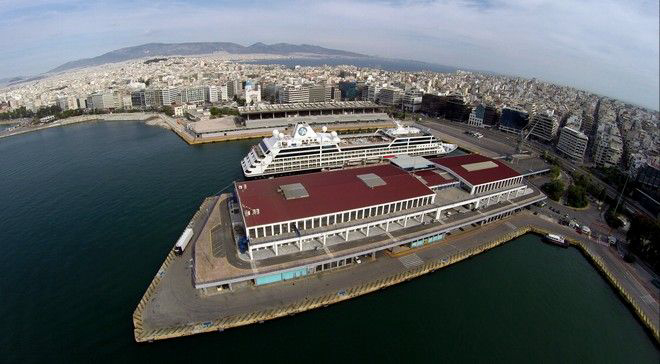
representing COSCO Shipping and HRADF respectively, signed the Memorandum of Understanding on the Transfer of a Majority Stake in Piraeus Port Authority in Athens at 9:00am, which sets a sign of the formal completion on the transfer of a 51\% equity holding in the Piraeus Port Authority (PPA) and the custody of an additional 16\% stake, thus COSCO (Hong Kong) Group Limited wholly owned by COSCO SHIPPING officially became the controlling shareholder of the PPA, and took over its management and operation.
Soon after, invited by Chairman Mr. Iakovos Georganas and Chief Executive Officer Mr. Socrates Lazaridis of Athens Exchange Group and accompanied by Stergios Pitsiorlas Chairman of HRADF, Mr. WAN MIN Director of the Board, President of COSCO Shipping went to the Athens Stock Exchange and rang the bell, which marked the debut of a new era at the Port of the Piraeus. Gao Wenqi, Charge d'Affaires a.i. of Chinese Embassy in the Hellenic Republic, Charalampos Gotsis, Chairman of the Hellenic Capital Market Commission (HCMC) and people concerned attended the ceremony event.
It is the first overseas acquisition transaction signed by COSCO SHIPPING following its establishment, a landmark initiative for the Group to expand its global network. According to the new concession contract, COSCO SHIPPING will invest 293.8 million Euros in a series of mandatory projects in the next five to seven years, including the expansion of the cruise port, the upgrading of the ship-building zone, and the construction of a multi-storied garage in the Ro-Ro vessel port. In the future, the Group will step up its investment to develop the Piraeus Port into one of the largest container transit ports in Europe and one of the biggest home ports for cruise operators in the world. COSCO SHIPPING will invest in a 300,000DWT dock and improve supporting facilities, so as to boost the ship repairing capacity and seek opportunities for repairing offshore equipment. The Group will also reform the Ro-Ro vessel port, which will make the Port the largest auto terminal in the Mediterranean. Furthermore, the Group will accelerate the construction of China-Europe Land-Sea Express Line to close the gap between China and eastern and southern Europe. The Group will leverage on the construction of logistics and warehousing, respond to the Belt & Road initiative and further expand the advantage of the Port as a bridgehead of sea-land intermodal to forge it into the logistics distribution center in the Mediterranean, as well as the south gate to Central and Eastern Europe and the Balkans. These investments will hopefully create more job opportunities and a better development platform for Greek younger generation.
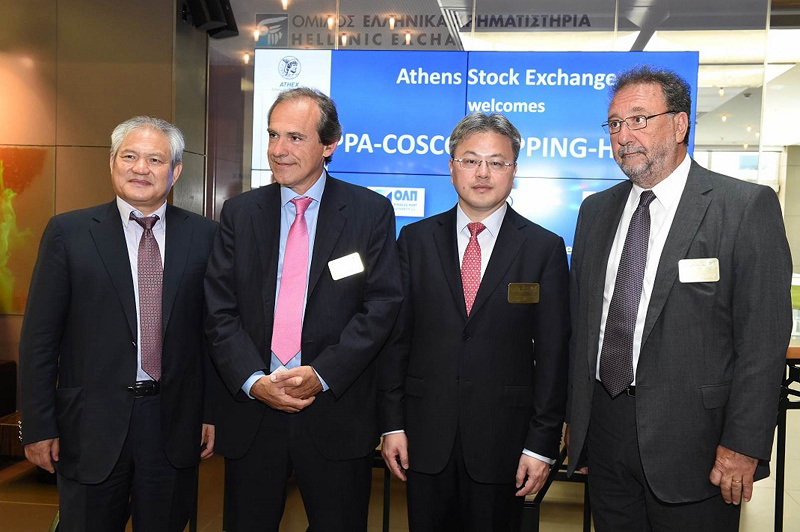
Opening of the trading session of Wednesday, 10th August 2016 Reception of PPA, COSCO and HRADF Transfer of PPA shares
 |
Mr. Wan Min, Director of the Board, President of China COSCO Shipping Corp. Ltd. and Mr. Stergios Pitsiorlas, President of HRADF, declared the opening of the session of the Athens Stock Exchange.
At today's event, the President of the Athens Stock Exchange Group, Mr. Iakovos Georganas, said: "We are delighted to welcome today at the Athens Stock Exchange, the new shareholders of Piraeus Port Authority SA, in the person of President Wan Min and his associates. Their investment today, as well as their ambitious expansion plan for the future, is an eloquent expression of their confidence in the prospects of the Greek economy.
On the side of the sellers, in the person of Mr Stergios Pitsiorlas, who heads the Hellenic Republic Asset Development Fund, we salute the decisiveness of the Greek government to proceed and implement the agreed program of the Greek economy, after its long years of crisis, and to sound economic growth in the months immediately coming.
May I wish that this session of celebration at the Athens Stock Exchange today rings in the restart of the effort to achieve solid economic growth in Greece. I wish also for the success of this new great investment program and the further expansion of friendship and cooperation of our two countries."
Mr. Wan Min, Director of the Board, President of China COSCO Shipping Corp. Ltd. during the opening ceremony of the session of the Athens Stock Exchange, said: "I was delighted and honored to represent COSCO SHIPPING and ring the opening bell at the Athens Stock Exchange. It marked the beginning of COSCO Hong Kong, a subsidiary of COSCO SHIPPING, undertaking the role as controlling shareholder of the Piraeus Port Authority. It is the Group's first cross-border acquisition following its establishment and a landmark initiative as we look to expand our global network. The Piraeus project represents a key milestone in the "Belt and Road" initiative, and the port's growth and prosperity will boost economic development both in China and Greece, ushering in a new era of trade cooperation and cultural exchange between east and west. COSCO SHIPPING will embark on a new series of operational investments that will streamline the port's performance as well as improve its international position, and will help the PPA reach its full potential to become one of the leading ports in Europe. COSCO SHIPPING will not only operate a state-of-the-art port that will boost trading links between Asia and Europe, but will also help create jobs and invigorate the Greek economy."
Mr. Stergios Pitsiorlas, President of HRADF, on the occasion of today's event, said: "The completion of the concession of the management of PPA to COSCO is a development of huge importance. The Greek economy will directly benefit from the large investments, the development of the port and the creation of jobs at this very critical moment.
But the significance of today's development is not confined to the obvious economic benefits. What must be realized is the fact that this creates the conditions for upgrading the geopolitical role and the importance of Greece to the international economic developments.
If Greece manages to take advantage of these opportunities and to incorporate them in a broader strategy, the synergy with COSCO in Piraeus can truly be the starting point of a promising path".
www.helex.gr

Powered by  © Μaritimes 2019