

Thursday, April 30, 2026

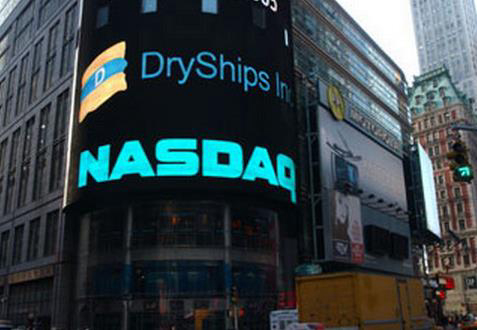
January 9, 2017, Athens, Greece — DryShips Inc. (NASDAQ:DRYS) (the “Company”), an international owner of drybulk carriers and offshore support vessels, announced today that it has exercised its first option

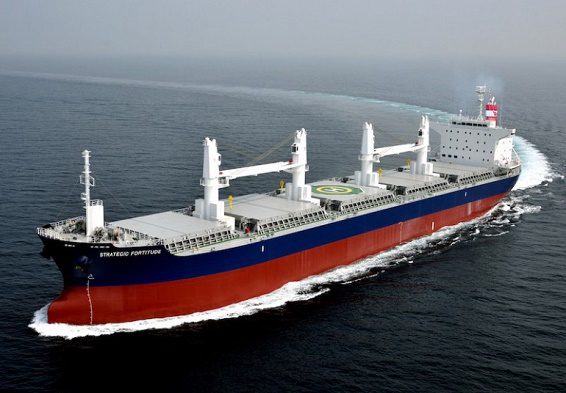
under the previously announced option agreement to acquire one Very Large Gas Carrier (“VLGC”) currently under construction at Hyundai Heavy Industries (“HHI”) for a purchase price of $83.5 million. Part of the purchase price (abt. 25\%) will be paid on closing, expected within January, with the balance payable in installments until the vessel’s delivery from HHI. The VLGC will be employed on
a fixed rate time charter with five years firm duration to an oil major. The charterer has options to extend the firm employment period by up to three years. The Company expects the total gross backlog associated with this time charter to be $54.0 million, or $92.7 million including the optional periods, and expects to take delivery of the vessel in June 2017.

The transaction was approved by the independent directors of the Company based on third party broker valuations.

George Economou, Chairman and Chief Executive Officer commented:

“We are very pleased to have declared our first option to purchase a high specification VLGC with long term employment to an oil major at above market rates. This acquisition allows us to deploy the
Company’s available liquidity immediately and will be highly accretive to earnings and cash flow. This marks the first acquisition of the Company since the restructuring of its balance sheet and our first
investment in the gas carrier segment which we believe has very positive long-term fundamentals.”

About DryShips Inc.
The Company is an owner of drybulk carriers and offshore support vessels that operate worldwide. The Company owns a fleet of 13 Panamax drybulk carriers with a combined deadweight tonnage of
approximately 1.0 million tons, and 6 offshore supply vessels, comprising 2 platform supply and 4 oil spill recovery vessels.
The Company’s common stock is listed on the NASDAQ Capital Market where it trades under the symbol “DRYS.

Jan 12 COSCO Shipping Corporation said policy lender China Development Bank has pledged to provide it with 180 billion yuan ($26 billion) in financing in the years through 2021 to support the Chinese shipping giant's business development.

Cosco Shipping said in a statement on its website late on Wednesday that the financing would be provided through various financial products. It did not provide details of how the financing would be used, but said the agreement was to serve China's "One Belt, One Road" strategy and efforts to deepen state-owned enterprise reform.

Formed through the merger of China's two largest shipping companies in February, COSCO Shipping owns the world's fourth-largest container shipping fleet by capacity, run by its flagship listed unit, China COSCO Holdings .

The company is one of the earliest results of China's mission to reform its bloated state sector and has been suffering losses. In October, its container shipping arm warned of a full-year loss.

reuters.com

Thursday, 12 January 2017 17:51

Greek fleet grows by over 10\% in 2016

With a growth of 6.5\% in vessel numbers and 10.26\% in carrying capacity Greek shipping continued to power forward in 2016, an impressive feat, given the challenging market conditions limited cash flows and restricted bank lending.

However, while the fleet has grown, market conditions have squeezed the number of Greek companies, reveals a two-part annual survey on the state of Greek shipping, by Athens-based Petrofin Research.

The first part of the survey places the Greek fleet at 5,230 vessels up from 4,909 and tonnage in dwt terms at 361.93m a 7.25\% increase on a year ago.

Ted Petropoulos, head of Petrofin Research, pointed out this “significant increase has occurred despite record scrapping by the Greeks in 2016”.

At the same time, “large Greek owners are becoming larger and younger as they are better able to take advantage of poor markets and low asset prices”, said Petropoulos, adding, “indeed, the very young fleets also continue to rise, a sign of commitment from Greek owners towards modern ships”.

“Greek owners have performed well compared to their rivals as Japan, China and Germany saw their annual rate of growth decline in 2016,” noted Petropoulos.

Average age of the fleet stands at 12.19, compared to 14.7 years in 2012. Using a 20,000 dwt cut-off, the average age of the fleet has fallen to 8.39 years, from 9.83 in 2013.

The dry bulk fleet of vessels over 20,000 dwt has gained 111 vessels, its age is down to 8.13 years, its tonnage is up by 7.2m dwt and is run by the same number of companies.

The large container fleet of vessels over 20,000 dwt has become marginally younger, 9.34 years old from 9.38 years in 2015, despite the fact that this sector traditionally shows a slow rate of renewal. In 2016 it has grown substantially and has gained a further 7.7m dwt to 25.3m dwt and the number

of vessels is up from 274 in 2015 to 381 in 2016. The companies that run these vessels are up one to 32.

The tanker fleet of vessels over 20,000 dwt shows a marked increase in dwt terms of 14.6m in the past 12 months to 131.6m dwt compared to the 2015 increase of just 220,751 dwt. The number of vessels is also significantly up by 43 to 851. This sector’s companies are down by three and age wise there

was a marginal drop to 9.35 years average from 9.49 years in 2015.

The most striking expansion is seen the LPG sector with this fleet almost doubling in size and its age dropping from 11.5 to 4.2 years. Petrofin comments: “This amazing development becomes even more marked when we observe the over 20,000 dwt LPG statistics: Vessels are up from 26 to 66, tonnage is up by 150\% and the age is down from 13.69 years of age to 4.33.

“Further, the LNG fleet is showing an internal reshuffle, where the same number of vessels are now 12.5\% bigger.”

The survey points out the investment in upgrading and expansion has been “massive” investment has not paid off, as most sectors remain fundamentally weak. However, it is too early to opine as to the overall future investment performance of Greek shipping and whether Greek owners shall be able to maintain the current growth momentum. Nevertheless, their track record has shown that Greek owners timed purchases and disposals well and remain true intuitive entrepreneurs, Petropoulos concluded.
 
David Glass

Copyright 2017 Seatrade (UBM (UK) Ltd)

In our DFRS Shipping Outlook 2017, we benchmark our shipping investments thesis to Capital Returns: Investing Through the Capital Cycle: A Money Manager’s Reports 2002-15 by Edward Chancellor.

In a fascinating account, Edward Chancellor (editor and introduction), covers “Capital Cycle”, predicated on investment strategies employed at Marathon Asset Management.

Typically, capital is attracted into high-return businesses and leaves when returns fall below the cost of capital. This process is not static, but cyclical – there is constant flux. The inflow of capital leads to new investment, which over time increases capacity in the sector and eventually pushes down returns.

Conversely, when returns are low, capital exits and capacity is reduced; over time, then, profitability recovers. From the perspective of the wider economy, this cycle resembles Schumpeter’s process of “creative destruction” – as the function of the bust, which follows the boom, is to clear away the misallocation of capital that has occurred during the upswing.

The key to the “capital cycle” approach – the term Marathon uses to describe its investment analysis – is to understand how changes in the amount of capital employed within an industry are likely to impact upon future returns. Or put another way, capital cycle analysis looks at how the competitive position of a company is affected by changes in the industry’s supply side”

We believe the outlook for the global shipping industry and expected future returns directionally can be meaningfully explained using the “Capital Cycle” framework. We have identified key tenets under the “Capital Cycle” investing approach and looked at key sectors with this framework over the past few years, and base our future recommendations in accordance.

Key tenets under capital cycle investing approach

• Most investors base their decisions focussing on demand forecasting rather than supply. This happens despite knowing that demand is essentially a black box and does not pay enough attention to supply side. Market and investors remain entirely focused on swings in the Chinese commodity demand; there is a similar risk as the extrapolation of Indian coal demand in 2011-14.

• It is the changes in the supply side dynamics that drive industry profitability. This key principle is often overlooked and stock prices fail to anticipate shifts in the supply side. Dry bulk shipping and container shipping is undergoing a massive supply side normalisation after years of supply growth, return expectations to rise owing to the shifts.

• Irrespective of growth, only sectors/companies with a supportive supply side can justify good valuations. For eight years, the market did nothing. Shipping investors have been at the receiving end and we believe it is time to increase the exposure. Dry bulk companies still trade at fractions of their restructured books. The leaders in container shipping will increase the market share, and when this will be coupled with dwindling supply growth, it will make for a potent mix for returns.

• Management and the company’s capital allocation skills are paramount. Investment banks drive the capital cycle, largely to the detriment of investors. Many new entrants, backed by fresh equity capital, saw their investors go through a painful value destruction. Many managements overextended their balance sheets and leveraged to the hilt. The restructuring has been painful, but survivors will make a comeback.

• When policymakers/governments/sovereigns interfere with the capital cycle, the market clearing process might come under stress. (In economics, market clearing is the process by which, in an economic market, the supply of the traded goods is equated to the demand, so there is no leftover supply or demand. The new classical economics assumes that, in any given market, prices always adjust up or down to ensure market clearing.) Container shipping industry is the perfect example of the diluted market clearing process, but we believe it has run its course.

• Investors are better positioned when employing the capital cycle approach. In our view, any company is available at a cheap rate when earnings are under stress. The key is to figure out whether that stress is permanent or temporary. We believe the stress levels for the shipping sector to ease significantly in 2017, primarily driven by supply normalisation, with real profitability and returns emerging over the next 18-24 months.

It is the changes in supply side dynamics that drive industry profitability

Basing our sector views on the “Capital Cycle” approach, our top sectoral picks for 2017 are container shipping and dry bulk shipping. We remain negative on tanker shipping and neutral on gas shipping.

DFRS top shipping stock picks for 2017

“Attractive” stocks for 2017

• A.P. Moller Maersk A/S (MAERSKB DC) – Positive outlook on contract rates is a key tailwind for share prices, in our view. The continued recovery in Asia to Europe spot market rates has improved carriers’ chances of securing higher 2017 contract rates and is a good sign for Maersk Line heading into the contract season. We believe Maersk Line will be a key beneficiary from a positive turnaround in freight rates, and recommend APMM shares on the back of continued positive industry developments in coming quarters.

• Orient Overseas International Ltd (316 HK) – We believe higher and more sustainable freight rates are more likely outcome in 2017. As OOIL normally undertakes 60-70\% of Transpacific trade and 35-50\% of Asia-Europe trade volumes on a contract basis, this could prove a key positive for the company. Recovery in OOIL’s biggest market, Intra Asia will support profitability. OOIL’s financial soundness negates balance sheet concerns in what has been a volatile period for sector profitability. The added speculations around M&A activity will also support the stock price.

• Pacific Basin Shipping Limited (2343 HK) – Pac basin has been one of our top picks in the dry bulk sector and we continue to maintain our positive stance on the company acknowledging its ability to deploy its fleet at higher than market rates. In addition to reasonable valuations, the company has no concerns on the balance sheet. PB has a rich pedigree and maintains its leadership position in the Handysize and Supramax segments.

• Scorpio Bulkers Inc. (SALT US) – SALT has addressed debt and liquidity concerns in 2016 and continues to negotiate with shipyards and lenders to supplement liquidity. It has also taken advantage of the rise in freight rates and has contracted 17 vessels on short-term charters, with most of the contracts expiring by second quarter. With majority of its fleet deployed on the spot markets, the freight rate recovery post the seasonal weakness in 1Q17 will be a key catalyst.

• Star Bulk Carriers Corp (SBLK US) – Multi-pronged actions in 2016 have considerably eased liquidity risks and the company has managed to restructure its balance sheet on multiple counts. On earnings, we believe cost management to support operating earnings in FY17. SBLK has one of the lowest average operating expenses for its vessels and a favourable freight rate environment will positively impact EBITDA.

“Unattractive” stocks for 2017

• Our key negative call for 2017 is “Unattractive” rating on all tanker stocks under our coverage, Euronav NV (EURN US), DHT Holdings Inc. (DHT US), Nordic American Tankers Ltd. (DHT US), Tsakos Energy Navigation Ltd. ( TNP US) and Teekay Tankers Ltd. (TNK US).

• We forecast declining earnings and diminishing dividends to keep tanker shipping stocks under pressure in 2017. Marginal recovery in freight rates is unlikely to be supportive of stock prices.

• Dividend expectation is the key driver of the tanker shipping stock performance and we do not expect dividend increases from any of the companies under our coverage.
Source: Drewry Financial Research Services

Seagull Maritime has significantly upgraded the Seagull Training App, the mobile software solution that has revolutionised the way seafarers track their training records and receive critical safety alerts.

Available in both Android and iOS formats, the newly enhanced app can be used across a range of mobile devices, with dynamic screen layouts for all sizes, including tablets. The home screen has also been refined to include a bottom bar menu featuring click-through to notifications, training statuses and scheduled activities.

Seagull’s improved app also features enhanced record keeping that allows seafarers to maintain training schedules that capture both proficiencies and training days left. Where scheduling is in place, proficiencies are sorted by priority code and deadlines are set for completion. If scheduling is not implemented, a list of pending proficiencies is displayed. Information of the next required proficiencies can be downloaded for local offline storage, with the default set to the next ten proficiencies.

“By creating a mobile training app, Seagull was the first maritime training provider to respond to changing seafarer needs, and we continue to lead the way by making enhancements based on customer feedback,” says Roger Ringstad, Managing Director of Seagull Maritime. “Today, recruiting skilled crews and retaining their loyalty calls on owners to demonstrate that they offer a viable career path. Investing in and refining the software that supports competency and safety offers tangible evidence of owner commitment to best practice.”

Seagull Training App v2.0 is available free of charge to all Seagull customers. Via synchronisation, it offers access to selected records within the Seagull Training Administrator Online database on all training requirements and competency, as well as downloadable training guidance notes. Company notices/fleet circulars are now pushed and appear as notifications on the seafarer’s mobile device, avoiding costly satellite communications.

http://www.seagull.no/

SetelHellas and Cisco participate as Gold Sponsors at the 3rd Naftemporiki Shipping Conference that will take place on Thursday 19 January 2017, at Megaron, the Athens Concert Hall, The Banqueting Hall entitled:

“Greek and European Shipping: Competitiveness and prospects in times of uncertainty”. The aim of the Conference is the discussion of the the challenges that both the Greek and the European shipping sector face.

SetelHellas and Cisco will be represented by Mr. Efthymios Chaldeakis, Sr. Strategic Accounts Manager at SetelHellas S.A., who will describe how the “Smart Ship” will dominate the digital side of shipping sector in the coming decade, giving added value and Mr. Antonis Tsiboukis, General Manager at Cisco, who will participate at a Panel Discussion, aiming to debate on the ground-breaking technological developments in shipping.

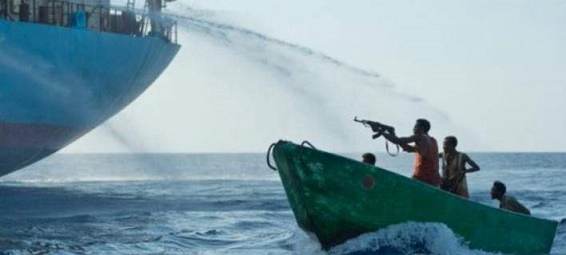
The Maritime and Port Authority of Singapore (MPA) and the ReCAAP Information Sharing Centre (ISC) are pleased to co-organise this meeting of anti-piracy contact points from Africa, Asia and Europe, along with international organisations such as the International Maritime Organization (IMO) that contribute towards the fight against piracy and sea robbery in Africa and Asia.

I would like to thank all of you, especially those who have travelled from Africa and Europe for participating in this meeting, and warmly welcome you to Singapore.

As maritime agencies, we are well aware that global incidents of piracy and armed robbery against ships continue to pose a threat to international shipping and trade. While notable advances have been made in tackling this threat, the threat persists as perpetrators shift to more sophisticated tactics and opportunistic attacks.

We must therefore remain vigilant and continuously enhance our measures and strengthen co-operation among agencies and countries. This Meeting and Workshop is one of the first ever initiatives bringing together anti-piracy contact points from Africa and Asia to improve networking and information sharing between the regions. We see this as a small step towards contributing to the overall efforts to combat piracy and sea robbery.

Let me qualify that the nature and root causes of piracy and sea robbery in Africa and Asia are unique to the circumstances in each region and vary greatly. It is therefore not the aim of this Meeting and Workshop to find solutions to what are often complex causes to piracy and sea robbery incidents in both regions. Rather, this Meeting and Workshop has two objectives. First, to find ways to strengthen our relationships with one another in order to facilitate timely information exchanges and sharing across reporting centres. And second, to find ways to promote more active cross-sharing and learning of best practices. These can contribute to the strengthening of a global network of anti-piracy information centres.

As we all know, the timely sharing and dissemination of accurate information can often play a decisive role in the success or failure of an attack. By providing the opportunity to meet, mingle and share experiences, we hope the Meeting and Workshop will allow us to develop a strong global network of anti-piracy contact points across Africa and Asia that we can tap on for timely information sharing.

In 2016, due to efforts from all parties, there was an improvement in the piracy and sea robbery situation in Asia. According to ReCAAP, reported incidents of piracy and sea robbery in Asia fell from 200 in 2015 to 85 in 2016. Globally, the latest available figures from the International Maritime Bureau indicated a drop in piracy and sea robbery incidents from 246 in 2015 to 141 in 2016. We note the positive developments in Africa too, particularly off the coast of Somalia, in the Gulf of Aden, which had only 1 reported incident of attempted piracy and sea robbery, as of the third quarter of 2016. This is a steep drop from the high of 237 incidents reported in 2011.

As I mentioned, this is the result of strong collective responses by all stakeholders, including governments, shipping industry and the wider maritime community, including international organisations.

On Singapore’s part, we strongly support collective efforts to tackle piracy and sea robbery, both in Africa and Asia. In Asia, MPA and Singapore’s law enforcement and security agencies – the Republic of Singapore Navy and the Police Coast Guard – work with Singapore’s neighbours to deter and suppress incidents through the regular sharing of intelligence and patrols. MPA also works closely with and supports the ReCAAP ISC, based in Singapore, to share information, analyse trends, raise situational awareness, and build capabilities to deal with piracy and sea robbery.

The shipping community is also an important partner in the fight against piracy and sea robbery. MPA, the Republic of Singapore Navy and the Police Coast Guard regularly engage the shipping industry through forums like the ReCAAP Nautical Forum, which you will get to attend tomorrow, and the Information Fusion Centre’s Shared Awareness Meetings. Not only have such events raised greater awareness amongst the shipping community, they have also laid the foundation for joint collaboration with MPA, ReCAAP ISC and the IFC, on industry guides like the Regional Guide to Counter Piracy and Armed Robbery Against Ships in Asia.

MPA also continually seeks to provide advice and solutions to the shipping community. Besides promulgating advisories to industry and encouraging the use of recommended practices for merchant vessels operating in piracy-prone areas, MPA also partners industry to test-bed and develop innovative shipboard solutions to counter piracy and sea robbery. On-going examples include the installation of radar enhancements and video analytics to detect small craft and attempted boarding, installation of shipboard closed-circuit televisions (CCTV) to detect and capture footage of intruders boarding vessels, as well as a real-time situation awareness and analytical platform, which will facilitate information sharing, passage planning and execution, to minimise the occurrence of security risks.

Further afield in Africa, the Singapore Navy participates in counter-piracy patrols off the coast of Somalia under the multinational Combined Task Force (CTF) 151. Singapore has also supported the ReCAAP ISC in its efforts to set up the Djibouti Code of Conduct Information Sharing Centres in the eastern coast of Africa. Beyond this, Singapore also participates in the international Contact Group on Piracy off the Coast of Somalia. I have cited these examples to show that our contributions to combating piracy and sea robbery are not just within this region but are conducted at the global level as well.

But we cannot lessen our efforts to address the problem of piracy and armed robbery against ships, as the threat evolves and new trouble spots emerge.

Since March 2016, according to the ReCAAP ISC, there have been 10 incidents of kidnap of crew reported in the Sulu-Celebes Sea and eastern Sabah region, attributed to Philippines militant group, the Abu Sayyaf. And there are early signs that the perpetrators are becoming more brazen, by making attempts on larger ships in the area.

Likewise, we note that in Africa, reported incidents of piracy and sea robbery, involving the kidnapping of crew for ransom in the Gulf of Guinea have also increased from 20 incidents in 2015 to 38 incidents as of the third quarter of 2016.

Collective action, close and effective communication, are key to combat this threat to international shipping and the safety and welfare of seafarers.

There are mechanisms to combat this threat. At the global level, the IMO promotes collective action. This is articulated as one of the key pillars in the IMO’s Maritime Safety Committee Circular 1333 on recommendations to governments to prevent and suppress piracy and sea robbery. Furthermore, under the on-going deliberation of the IMO’s draft Strategic Directions, combating piracy and sea robbery continues to be included as a priority.

In Asia, we have the ReCAAP Information Sharing Centre, which promotes rapid information sharing, capacity building and deeper co-operative arrangements to combat piracy and sea robbery. As the first regional government-to-government initiative to promote and enhance co-operation against piracy and sea robbery, ReCAAP and its network of Focal Points in Asia, have grown to include extra-regional members in Europe, as well as the United States.

Complementing ReCAAP ISC, we have the Information Fusion Centre, or IFC, hosted here by the Republic of Singapore Navy. The IFC is a multi-lateral agency comprising RSN and International Liaison Officers or ILOs, from the navies of regional and extra-regional countries. The centre facilitates regular situation updates and information exchanges through its extensive network of liaison officers and operational centres to ensure that our regional waters remain safe and secure.

There is also the Malacca Straits Patrol initiative, known as the MSP, involving Indonesia, Malaysia, Singapore and Thailand. The MSP’s three components – regular joint sea patrols, aerial maritime surveillance and intelligence sharing – have enabled MSP member countries to work together to prevent incidents of piracy and sea robbery.

In Africa, there is the “Djibouti Code of Conduct” covering the eastern coast of Africa and the “Code of Conduct Concerning the Repression of Piracy, Armed Robbery Against Ships, and Illicit Maritime Activity in West and Central Africa”. In both instances, the IMO played an active contributing role to facilitate adoption of the Codes to enhance regional co-operation. Recently, the African Union has also announced a “Charter on Maritime Security and Safety and Development” which includes efforts to combat piracy and sea robbery.

Additionally, with a global scope that covers Africa and Asia, the International Maritime Bureau (IMB) Piracy Reporting Centre, also contributes to the fight against piracy and sea robbery by acting as a reporting centre for shipmasters, and relaying information across to the shipping community, IMO, governments and enforcement agencies.

A common theme in these mechanisms is information sharing. That is why a key aim of this Meeting and Workshop is to foster closer linkages among all the anti-piracy contact points and relevant organisations for more effective communication and information sharing.

We have seen, in many instances, that this is critical to our efforts to combat piracy and sea robbery. There are many examples but let me highlight just one.. On 8 May 2016, ReCAAP ISC was informed by the shipping company about the loss of communications with tanker HAI SOON 12. ReCAAP ISC immediately shared the information with the Indonesian authorities, who along with the Singapore Authorities, tracked the ship’s movements. The Indonesian authorities eventually intercepted and boarded the ship the next day and arrested the 9 perpetrators found on board. Early reporting enabled the maritime authorities to respond to the incident quickly and apprehend the perpetrators. Beyond this, information sharing also allows us to analyse the problem further in order to resolve its root cause.

At this meeting and workshop, we can improve our individual capabilities by exchanging ideas, experiences and best practices. The proceedings over the next one and a half days, have been designed to foster a better understanding of each other’s work, and the sharing of best practices in information sharing.

The presentations and panel discussions will cover co-operative information sharing mechanisms, like ReCAAP ISC, and the Djibouti Code of Conduct Information Sharing Centres, as well as case studies of information sharing experiences. We have also included a session for interaction with the industry – for they are our key stakeholder.

The ReCAAP Nautical Forum, in the afternoon tomorrow, will then round off our programme for the Meeting and Workshop, with a sharing of analyses of maritime piracy and sea robbery incidents in Asia.

Ultimately, we hope this Meeting and Workshop will provide a new foundation and starting point for strengthened collective action that cuts across countries and across agencies. In order to maintain momentum on this, I propose two follow ups on the way ahead:

i. First, to put together and circulate a listing of contact point information, so that we can continue to keep our links warm and share relevant information across our agencies. The nature of the threat may differ from region to region, yet there are many common lessons to be shared. Singapore would be happy to initiate this “telephone directory” of sorts for anti-piracy contact points, starting with the information you have provided, and keep it updated on a regular basis, as personnel change.

ii. Second, the IMO and ReCAAP ISC have shown the way forward on what can be achieved through capacity building initiatives, both here, in Asia, and Africa, where they worked together to establish the Djibouti Code of Conduct Information Sharing Centres. There is scope to expand such capacity building activities so that focal points from Africa and Asia continue to learn from one another. We will be exploring future arrangements where such exchanges on anti-piracy information sharing are conducted on a more regular basis. It will possibly be the first cross-regional anti-piracy forum between Africa and Asia.

To conclude, as a maritime nation, Singapore will continue to expend all efforts to address the problem of piracy and armed robbery against ships. Having safe, open and secure shipping lanes is a key priority for us.

But we cannot do this alone. We recognise that efforts have to be collective, involving all stakeholders. Hence, I am confident that this Meeting and Workshop will develop a strong network of information sharing contact points to deal with piracy and sea robbery in Asia and Africa.

Without further ado, let me invite Ambassador Masafumi Kuroki, Executive Director ReCAAP, our co-organising partner for the Meeting and Workshop, to also say a few words. I wish everyone here today a fruitful Meeting and Workshop and pleasant stay in Singapore.

Thank you.
Source: MPA

- The dynamic new marine insurer presented its achievements during its first six months of operation to market gatherings in Piraeus and London attended by more than 500 participants

American Hellenic Hull Insurance Company (AHHIC), the new marine insurance company formed by the American P&I Club’s alliance with Hellenic Hull Management, has enjoyed a highly successful first six months of operation.

Since gaining its license as a Solvency-II compliant insurer from regulators in Cyprus on June 24th 2016, AHHIC has already provided cover for 1,000 vessels managed from Europe, the Americas and Asia. The company’s remarkable initial success underlines its ability to become a global player in the marine hull market as well as industry recognition of AHHIC’s backers and managers.

“At the American Club we are very proud of the company and I am happy to say that American Hellenic is performing even better than we expected”, said Vincent Solarino, Chairman of the Board of Directors of AHHIC and President and COO of Shipowners Claims Bureau, managers of the American Club.

The company recently updated key markets on its initial progress with presentations made at the Piraeus Marine Club in Greece and at Trinity House in London, UK. The events were attended by a total of more than 500 professionals who were briefed on the company’s underwriting activities and marketing initiatives to date as well as its financial standing and key management policies.

Among key aspects of AHHIC’s approach that were discussed during the events were its commercial strategy to ensure healthy premium levels, the company’s exceptionally high standards of governance and transparency, and its strong reinsurance cover. The company writes Hull and Machinery business of up to $10m per risk and war risks up to $50m.

The capital strength of AHHIC is one of its greatest assets and the company has a Solvency II capital ratio of 211\% at December 2016. Its status is already equivalent to a ‘BBB’ credit rating and the company aims to shortly have its own credit rating from a reputable international agency.

"American Hellenic is off to a great start,” said AHHIC CEO and Chief Underwriter Ilias Tsakiris. “We will continue to work hard, so as to stand by shipowners and insurance brokers in these volatile market times. Our growing global presence underlines our commitment to the industry.

“We are offering excellent service and trusted insurance coverage with beneficial synergies for their fleets,” said Mr. Tsakiris. “The response in these first six months shows that the market appreciates what American Hellenic has to offer.”
synergies for their fleets".

AMERICAN HELLENIC HULL INSURANCE COMPANY LTD.

American Hellenic Hull is a private marine insurance company, which covers Hull and Machinery risks. It is 100\% owned and financially backed by the American P&I Club and exclusively managed by Hellenic Hull Management. The company is registered in Limassol, Cyprus and has also affiliated offices in Piraeus, New York, Houston, London, Shanghai and Hong Kong. Its operations commenced on 1st July 2016. American Hellenic Hull is the first marine insurance company licensed in Cyprus under the Solvency II regime requirements. The Solvency II Capital Requirement reflects the economic capital to be held by an insurance undertaking in order to ensure that ruin occurs no more often than once in every 200 cases or, alternatively, that this undertaking will still be in a position, with a probability of more than 99,5\%, to meet its obligations to policy holders and beneficiaries over the following 12 months. American Hellenic has successfully passed all additional financial and operational Stress Tests required by the Solvency II regime and holds economic capital to meet its projected obligations to policy holders and beneficiaries over the following 36 months thus securing a triple level of protection to its policy holders.

SOLVENCY II

EU insurance legislation unifies a single EU insurance market and enhances consumer protection. The third-generation Insurance Directives established an "EU passport" (single license) for insurers to operate in all member states. Solvency II is a fundamental review of the capital adequacy regime for the European insurance industry. It has established a revised set of EU-wide capital requirements and risk management standards that replaced the previous solvency requirements. Solvency II aims to achieve consistency across Europe and includes the following key ideas: market consistent balance sheets, risk-based capital, own risk and solvency assessment, senior management accountability, supervisory assessment.

Ilias P. Tsakiris photo from London 9/12/2016

Panoramic photo from Trinity House 9/12/2016

from Piraeus Marine Club 7/12/2016

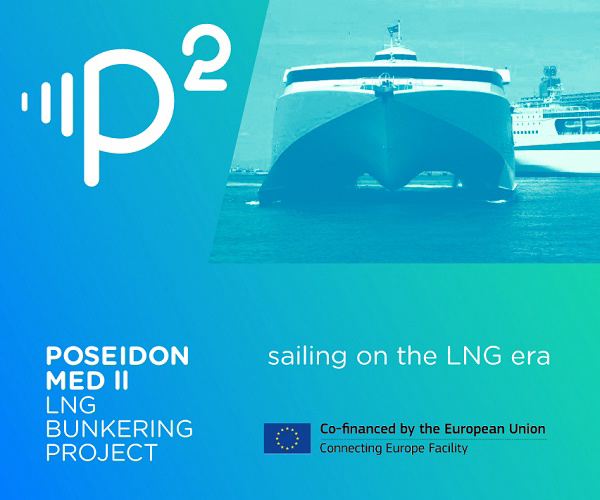
“Poseidon Med II calls at Piraeus” Conference presentations are available in the following link:

 http://poseidonmed.eu/index.php/2015-05-10-19-38-54/2016-piraeus-conference

You could also find available videos from the Conference in the link:

https://www.youtube.com/playlist?list=PLrg5iFLy4cCn2ouOtnO1VboDiy8iTRxFY


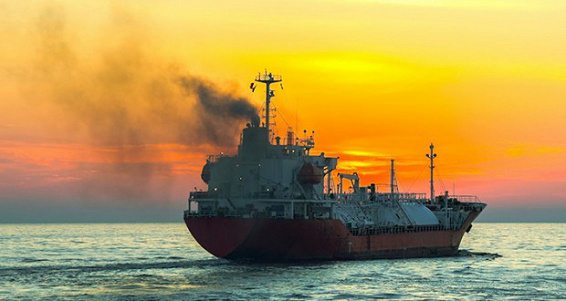
IMO Secretary-General Kitack Lim has written to senior European officials expressing his concern that including shipping in the European Union’s Emission Trading System (EU-ETS) could undermine efforts to reduce greenhouse gas (GHG) emissions from shipping on a global basis.

In a letter to Martin Schulz (President of the European Parliament), Jean-Claude Juncker (President of the European Commission) and Donald Tusk (President of the European Council), Mr Lim acknowledged that the EU had an ambitious policy for addressing emissions and recognised that Member States might wish to enhance the progress made to date. However, he cautioned against extending the EU-ETS to include ships.

Mr Lim said, “I am concerned that a final decision to extend the EU-ETS to shipping emissions would not only be premature but would seriously impact on the work of IMO to address GHG emissions from international shipping. Inclusion of emissions from ships in the EU-ETS significantly risks undermining efforts on a global level."

The letter follows an agreement on 16 December 2016 by the European Parliament's Environment Committee that emissions from ships should be included in the (EU-ETS) from 2023, if IMO does not deliver a further global measure to reduce GHG emissions for international shipping by 2021.

IMO is the specialized agency of the United Nations responsible for safe and secure shipping and preventing marine and atmospheric pollution from ships. Its efforts to address GHG emissions from shipping have reached an advanced stage. In 2011, IMO became the first international body to adopt mandatory energy-efficiency measures for an entire industry sector with a suite of technical and operational requirements for new and existing vessels that entered into force in 2013. 

In October 2016, IMO adopted a system for collecting data on ships’ fuel-oil consumption which will be mandatory and will apply globally. This will be the first in a three-step approach leading to an informed decision on whether any further measures are needed to enhance energy efficiency and address GHG emissions from international shipping. If so, policy options would then be considered.

IMO also approved a “roadmap” for developing a comprehensive strategy on reduction of GHG emissions from ships, which foresees an initial GHG strategy being adopted in 2018.

These measures were agreed, by consensus, by IMO Member States, including EU Member States. In his letter, Mr Lim said this not only demonstrates IMO’s leadership and role as the global body for developing and implementing requirements for international shipping, but also reaffirms that IMO is the only appropriate body to take this work forward and achieve the necessary political cooperation of all governments represented at IMO, including EU Member States. He added, “Such political cooperation is important to ensure that all countries act together to ensure that no one is left behind.”

Mr Lim said that, in his view, unilateral or regional action that conflicts with or undermines actions that have been carefully considered and deliberated by the global community at IMO threatens world-wide confidence in the consistent, uniform system of regulation developed by IMO. Regional or unilateral action, he said, would harm the goals of the wider international community to mitigate global GHG emissions from ships and be at odds with the overarching objectives of the Paris Agreement.
 
The 2015 Paris Agreement makes no reference to emissions from international shipping, due to the global nature of the sector and the difficulty in allocating emissions from a ship to a single state. However, as Mr Lim stressed, IMO’s work on the control of GHG emissions shows that strong action is being taken. IMO is continuing towards the goal of a fully global solution for international shipping, achieved through cooperation among all its Member States – including EU members.
 
A decision by the IMO Council, at the beginning of December 2016, to authorize two additional meetings of a special MEPC Working Group on reduction of GHG emissions from ships during 2017 (the first to be held 26-30 June) will enable further progress, and illustrates the importance and urgency IMO attaches to this issue. In parallel, IMO will continue its efforts to provide related assistance to developing countries through major capacity-building projects on energy efficiency in ship operations.


IMO – the International Maritime Organization – is the United Nations specialized agency with responsibility for the safety and security of shipping and the prevention of marine pollution by ships.

Page 51 of 354

logo

Subscribe to our Newsletter