


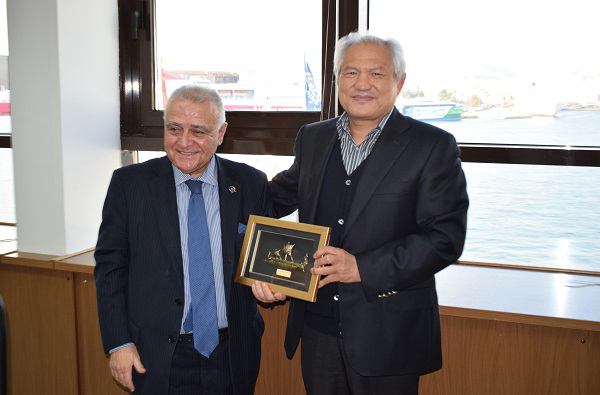
Meeting of the BoD members of the Chamber of Greek-Chinese Economic Cooperation at PPA SA
 |
• Organizational issues of the International Business Congress - The Belt and Road Initiative, Athens, June 2018 and
• Various items with speakers the representatives from the countries which participate in the Belt and Road Initiative.
On the occasion of the meeting, Capt. Fu referred to the great potential that is being developed at the port, the investment plan of the company and he highlighted the important role of Piraeus in the Belt and Road Initiative due to its geostrategic position.
Bureau Veritas to Class CMA CGM’s LNG Fuelled Mammoths
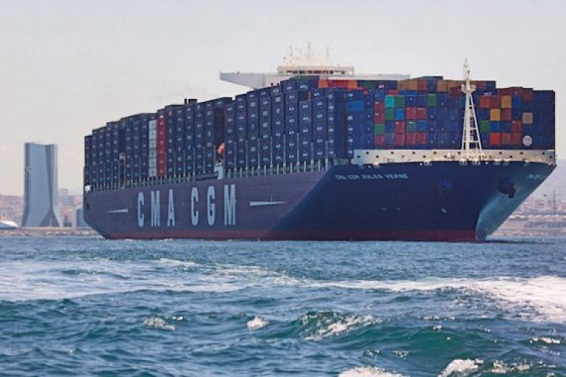
“This is a breakthrough order for gas fuelled shipping – both in scale and in the use of a membrane containment system. Bureau Veritas has been supporting the project throughout, providing assistance to ensure the requirements for the safe use of LNG are addressed,”Philippe Donche-Gay, President, Bureau Veritas Marine & Offshore, said.
The new ships will have a bunker capacity close to 18,000 cubic metres (cbm) and this represents a significantly higher volume than has been required in the LNG fuelled ship market. Bureau Veritas has investigated the feasibility of the design together with shipbuilding group China State Shipbuilding Corporation (CSSC) and French marine engineering company Gaztransport et Technigaz SA (GTT).
GTT has been chosen for the design of cryogenic tanks for the nine containerships.
“As CMA CGM have said, they will be the first shipping company in the world to equip giant containerships with LNG propulsion, pursuing a strong commitment to the protection of the environment and to ocean conservation. For us this is an exciting project to be involved in and our teams in China, supported by expertise in Paris, are looking forward to working on these innovative new ships,” Jean-François Segretain, Bureau Veritas Marine Technical Director, said.
The deliveries of the nine vessels will take place between the end of 2019 and the end of 2020.
World Maritime News
Kongsberg receives first DNV GL cyber security type approval for its K-IMS system
 |
For the past year, DNV GL and Kongsberg have combined their efforts to develop a new type approval programme for the cyber security assessment of control system components: “Security Assessment of Control System Components, DNVGL-CP-0231”. The pilot system has been K-IMS, a core component in Kongsberg’s digital ecosystem Kognifai. Designed in accordance with the principles in IEC 62443-4-2 and IEC 61162-460, the type approval programme focuses on verifying both the technical reliability and cyber security of control systems.
“We would like to thank Kongsberg for choosing to work with us on this project, and we are very pleased that K-IMS is the first product to have received the new type approval,” says Odd Magne Nesvåg, Head of Control Systems at DNV GL – Maritime. “With the new ‘Security Assessment of Control System Components’ type approval programme, we have developed a rigorous certification regime to demonstrate the cyber security capability of onboard systems. By choosing this new voluntary type approval for their systems, maritime vendors now have a way to show their customers they meet a set of independently developed and verified quality standards in an area that is becoming ever more important in today’s connected maritime industry.”
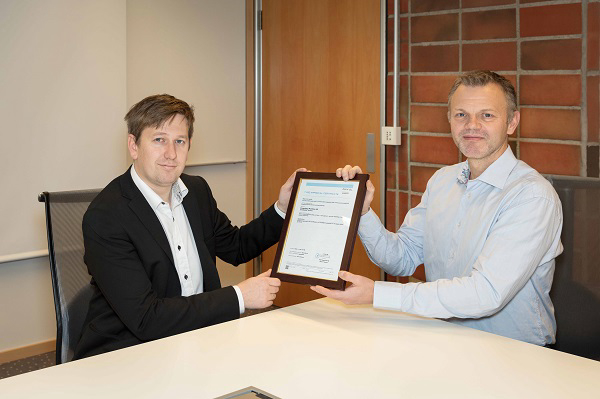
Caption: Knut Omberg, Principal Engineer at DNV GL – Maritime (left), presents Roar Simensen, Product Adviser - Connected Vessels & Information management at Kongsberg Maritime (right), with the new type approval.
About the Kongsberg Group
Kongsberg Group is an international technology company that delivers advanced and reliable solutions improving safety, security and performance in complex operations and under extreme conditions. Kongsberg Maritime is a global marine technology company providing innovative and reliable technology solutions for all marine industry sectors. Kongsberg Digital is a provider of next generation software and digital solutions to customers within maritime, oil and gas, and renewables and utilities. Together, they are driving digitalisation through cutting-edge solutions such as Kognifai, a new open and collaborative digital platform that improves integration between the world of information technology and operational technology.
About DNV GL
Driven by our purpose of safeguarding life, property and the environment, DNV GL enables organizations to advance the safety and sustainability of their business. We provide classification, technical assurance, software and independent expert advisory services to the maritime, oil & gas and energy industries. We also provide certification services to customers across a wide range of industries. Operating in more than 100 countries, our professionals are dedicated to helping our customers make the world safer, smarter and greener.
About DNV GL – Maritime
DNV GL is the world’s leading classification society and a recognized advisor for the maritime industry. We enhance safety, quality, energy efficiency and environmental performance of the global shipping industry – across all vessel types and offshore structures. We invest heavily in research and development to find solutions, together with the industry, that address strategic, operational or regulatory challenges. For more information visit www.dnvgl.com/maritime
EMICERT approved by the Liberian Registry for IMO DCS.
These services include both the Review of the SEEMP (Ship Energy Efficiency Management Plan) and the Verification of the relevant reported data.
 |
On December 2016 EMICERT succeeded to be the very first company worldwide that completed the ISO 14065 accreditation process for EU MRV Regulation. In the Greek shipping market, EMICERT has been assigned as the preferred MRV verifier by 600+ ships from 75+ shipping companies.
 |
Seagull Maritime presents latest developments and training products & services at their annual User Meeting in Athens
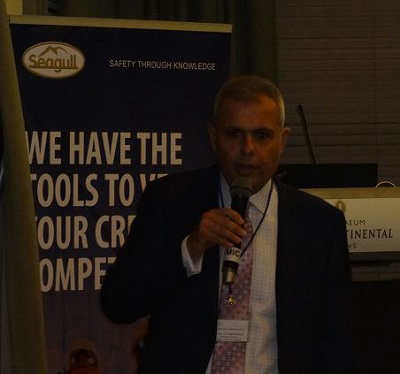
The Seagull User Meetings have been designed for the local shipping community to network and share their experiences with colleagues and friends. The meetings are open to all and are held in several maritime centers each year such as Singapore, Germany, Cyprus, Norway, UK (London), Philippines (Manila) and of course Greece. The challenges of onboard training and distance learning are of great interest for the maritime industry offering certain advantages and cost savings. These trends were examined in the Seagull User Meeting.
The attendees had the chance to discover opportunities from new Seagull software packages on E-learning, onboard training and assessment material, through interaction between speakers and participants.
 |
| Mr. Ioannis Athanasopoulos, Managing Director of Seagull Maritime Greece |
Mr. Roger Ringstad Managing Director of Seagull Maritime Norway presented new Developments of the company. He referred to the company’s new released E-learning titles, Films (Reflective & Resilience), to the collaboration with DNV GL for the Cyber Security Modules, he presented new features of Seagull’s updated Administrative software (STA 4.0) ,Seagull’s mobile app, new tools for training monitoring and compliance. Furthermore, he mentioned Seagull’s collaboration with Intertanko in developing new Competence standards, which will replace TOTS. Lastly, he underlined that Seagull is already in action and will be compliant with the GDPR (General Data Protection Regulation) of the EU.
Mr. Stavros Meidanis, DPA/CSO , S&Q Manager in Capital Ship Management presented the user’s view for the Seagull Training System and Crew Evaluation System (CES). Capital operates 56 vessels - 41 Tankers/ 5 Bulkers/ 10 Containers). Capital Ship Management started using the Crew Evaluation System in their vessels & offices (Romania/Greece / Philippines / Russia) in 2007 and Seagull’s e-learning material (CBT & Video) onboard vessels in 2006. Among other benefits, he noted the full track of all performed training, the cost effectiveness, the immediate support and the positive approach by various third parties (Oil Majors, Port State, etc.).
Capt. Kuba Szymanski, Secretary General of InterManager delivered a presentation related to the very hot topic of “Cyber Security”. He referred to usual habits everyone performs every day and make us sensitive to Cyber Security Risks. After 8 critical questions addressed to the audience, he concluded that everyone should be very careful and think prior to connecting devices to public networks, when setting our passwords and also be aware of the fact that the harm of a Cyber Attack can be irreversible and costly.
 |
At the last session, Mr. George Hoyt, IMO Maritime Ambassador, FNI, Vice President of InterManager presented Solutions at no cost in which Shipping Companies can participate. He presented the “Global Piracy Report” for the first months of 2017 and how implementation of good practices can help against piracy. He noted how effective the connection of “Ships”, “Ports” & “People” could be through free tools such as “Adopt a ship “ & “Seafarers Mosaic”
The User Meeting closed with a cocktail reception which gave the opportunity for socializing and enjoyment by discussing/exchanging opinions on various issues of the Maritime Industry!
Euronav CEO on 3Q Results, Shipping, Oil Demand
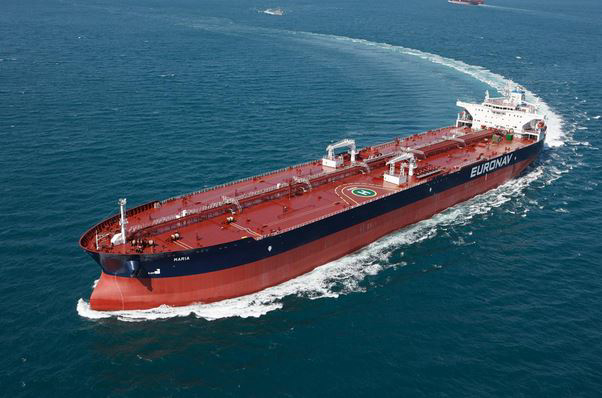
https://www.bloomberg.com/news/videos/2017-10-31/euronav-ceo-on-3q-results-shipping-oil-demand-video
UN Climate Conference – ICS has Vision for Zero Carbon Shipping Future
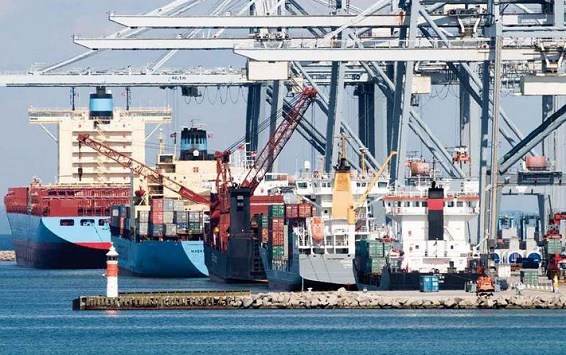
ICS will emphasise how the shipping industry is supporting the UN International Maritime Organization (IMO) to develop an ambitious CO2 reduction strategy.
ICS Director of Policy, Simon Bennett explained:
“ICS has a vision of zero CO2 emissions from shipping in the second half of the century. We are confident this will be achievable with alternative fuels and new propulsion technologies.”
ICS says its vision might be delivered with batteries or fuel cells using renewable energy, other new technologies such as hydrogen or even something not yet anticipated.
In the meantime, the shipping industry has proposed that IMO Member States should adopt a suitably ambitious goal for reducing total emissions from the entire international shipping sector by an agreed percentage by 2050.
ICS is pleased that a large number of IMO Member States have already come forward with detailed proposals. Several EU and Pacific island nations have jointly proposed that the sector should reduce total CO2 by as much as 70 percent by 2050.
Mr Bennett commented:
“Japan has set out in detail to IMO how a 50 percent total cut by 2060 might be achieved. In view of projections for future trade growth, an objective in this range, while still incredibly ambitious, therefore seems more realistic.”
He added:
“It will be for governments to agree the actual reduction number when they adopt an initial IMO strategy next April. And this is also going to have to address the legitimate concerns of major economies such as China and India about the implications for future trade and their sustainable development.”
Whatever is decided, ICS says that the entire world fleet is probably unlikely to enjoy global access to new alternative fuels for at least another 20 or 30 years. Moreover, population growth and further improvements to global living standards will probably determine that demand for shipping must continue to increase, as it is already by far the most carbon efficient form of commercial transport.
ICS says that, using a combination of technical and operational measures, the international shipping sector already appears to have reduced and held its total annual CO2 emissions at about 8 percent below its 2008 peak. This is despite an increase of about 30 percent in maritime trade, estimated in tonnes of cargo transported one nautical mile (tonne-miles) over the period up to the end of 2015.
ICS cautions that these latest estimates by third parties will have to be verified by the next official IMO Greenhouse Study in 2019 using the new IMO CO2 Data Collection System.
“They are nevertheless encouraging especially given the dramatic reduction in fuel prices since 2014. Moreover, a significant increase in marine fuel costs is expected in 2020 due to the mandatory global switch by the entire world fleet to low sulphur fuels. This should greatly incentivise, to the extent this is possible, the further reduction of fuel consumption and CO2 emissions by ships.” said Mr Bennett.
Notes
The annual Conference of Parties (COP 23) to the United Nations Framework Convention on Climate Change (and the 2015 UNFCCC Paris Agreement) meets in Bonn from 6-17 November. On behalf of its member national shipowners’ associations, ICS will be participating in various official events inside the Conference.
The figures quoted on CO2 emissions and maritime trade are derived from a recent study by the International Council on Clean Transportation and the UNCTAD Review of Maritime Transport 2017.
Amendments to the IMO MARPOL Convention, which have already entered into force worldwide, will require from January 2020 all internationally trading ships to use fuel with a sulphur content of 0.5 percent or less (except in Emission Control Areas where they must already use fuel with a sulphur content of 0.1 percent or less).
A copy of the submission made jointly by ICS, BIMCO, INTERCARGO and INTERTANKO to the most recent round of IMO discussions in October 2017 on the development of a GHG reduction strategy can be found here.
Global barge transportation market to hit $170bn by 2024
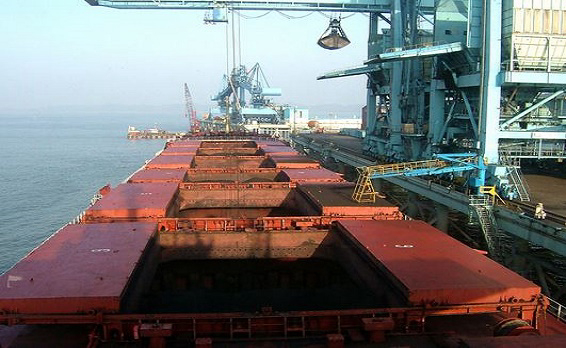
Global barge transportation shipment volume is expected to cross 12bn tons till 2024. Huge capacity of the barges will majorly drive the growth during the forecast timespan. A single barge can carry goods with capacity of above 1,500 tons at once which is far more than that of railcars or trucks.
Rising demand of petrochemical shipments across the globe and increasing crude oil demand especially from developed countries which include US and Japan will further escalate the growth of barge transportation market share over the next few years.
Rising investment from industry players to enhance their infrastructure and quality of their fleet will fuel the barge transportation market growth over the forecast timespan. Addition of propulsion nozzle helps in increasing the overall efficiency. Moreover, restructuring of thruster tunnels reduces the transportation costs by 10-15\%. These advancements contribute to a significant reduction in greenhouse emissions. In addition, integration of communication and navigation technology will induce immense potential to the barge transportation market size till 2024.
GPS integration helps the operators to know about estimated delivery time and the climatic conditions. LNG barge technology is increasingly gaining prominence in the barge transportation market. It is an environment-friendly solution and helps to reduce Sulphur, Nitrogen, and CO2 emissions by 30-80\%. Moreover, this technology helps cater to the mandatory standards and regulations. These technological advancements are anticipated to escalate the industry growth over the forecast timespan. Surging demand from applications including petrochemicals and agricultural products is also responsible for substantial growth of barge transportation market.
Dry cargo will account for highest barge transportation market share surpassing $79bn till 2024. Rising demand from low-value bulk industries for transportation of municipal wastes and recyclable materials will support the industry dominance. Rising need of safe transportation of dry products such as farm products, coal, ore, steel, lumber, and gravel will escalate the dry cargo market growth in the forecast timeframe.
Liquid cargo is poised to exhibit highest CAGR over the forecast timeframe owing to increased demand for liquid chemicals, crude oil, and agriculture fertilizers. Shifting preference of oil & gas industries due to less spillage and damage is also responsible for the substantial growth of the industry over the forecast timeline.
Coal and crude is anticipated to dominate the barge transportation market over the forecast timespan with over 18\% share owing to increasing coal shipments through barges for accomplishment of trading activities in countries with coal scarcity. Rising demand of petrochemical shipments has increased the production of crude oil, thus fostering the industry growth till 2024. Technological advancements including hydraulic fracturing and horizontal drilling will further escalate the industry size. Coke & refined petroleum products is expected to showcase an exponential growth owing to shifting preference towards barge transportation due to higher capacity and lesser spillage than other transportation modes.
Covered barges are anticipated to exhibit maximum share of over 37\% till 2024 owing to increasing marine transportation across the globe due to lesser probability of damages by uncertain weather conditions.
High revenue generation is also attributed to their larger capacity than open barges. Tank barges will witness a substantial growth from 2017 to 2024 owing to increasing petrochemical shipments from various regions, especially North America. Rising investments from barge transportation market players for construction of new tank barges and enhancement of their current fleet.
Asia Pacific barge transportation market is expected to cross $45bn over the forecast timeframe. The revenue generation is attributed to the availability of vast waterways channel. Rising inland and coastal waterways freight traffic will further support the industry growth till 2024.
North America barge transportation market is anticipated to grow at highest CAGR of over 5\%. This growth is attributed to high demand for petrochemical shipments from the region. Moreover, presence of numerous industry players will further fuel the industry growth till 2024.
American Commercial Barge Line (ACBL), Kirby Corporation, SEACOR Holdings, and Campbell Transportation are among the prominent players in the barge transportation market. Other notable players include Blessey Marine Services, PTC Logistics, Canal Barge, and Heartland Barge.
Industry players focus investing heavily on modernisation of their fleet for strengthening their foothold. For instance, Kirby Corporation invested $135m for construction of 66 new barges in 2014.
source: http://www.seatrade-maritime.com
Aegean Marine Petroleum Network Inc. Announces Intention to Cease Physical Supply Operations in Singapore
Aegean Marine Petroleum Network Inc. (the “Company” or “Aegean”) (NYSE: ANW), a leading international marine fuel logistics company, today announced that after almost 11 years as a prominent player in Singapore, it has decided to exit the market as a physical supplier as of January 2018. The Company will maintain a trading presence in the Singapore market.
Our President Jonathan McIlroy commented, “The bunkering market in general, and the Singapore market in particular, are extremely competitive. We had hoped that enforcement of mandatory mass flow meter (MFM)-equipped bunker barging in January would have driven commercial improvement in the Singapore market allowing Aegean to compete profitably. However, 2017 has seen heightened commercial pressures in Singapore, and as a result, management has determined that Aegean’s resources can be more profitably deployed elsewhere.”
The Company is in the process of arranging its orderly withdrawal from the physical supply market in Singapore in conjunction with the Maritime and Port Authority of Singapore (MPA) and its barging and cargo partners in the market.
“All deliveries and contracts that we have booked with clients’ vessels, cargo providers and barge contractors will be fulfilled,” emphasized Aegean’s President.
Despite the cessation of our physical supply activities, the Company will retain a presence in the market. “We will continue to employ a team of traders and support staff who will actively support our valuable clients in this market. This office will support our broad base of Asian customers across both our global physical supply network as well as handling back-to-back bunker trading and our lubricants business in Singapore and South-East Asia,” said McIlroy. “We have an extensive customer base in Asia and we are committed to supporting the valued clients of our business,” continued McIlroy.
Underscoring our client commitment, Aegean continues to develop new physical supply stations in addition to its most recent expansions in Algoa Bay (South Africa) in 2016, and Savannah (U.S.) and St Croix (U.S. Virgin Islands) in 2017. The Company believes it is in advanced stages of development with a number of new physical supply projects in new geographies. Mr. McIlroy commented, “We expect to debut these new markets over the course of 2018 and believe they will continue to reinforce Aegean’s commitment of being an innovative market leader as the industry looks forward to change ahead in 2020.”
Source: Aegean Marine Petroleum Network
Dryships inc. announces successful delivery of its third Very Large Gas Carrier
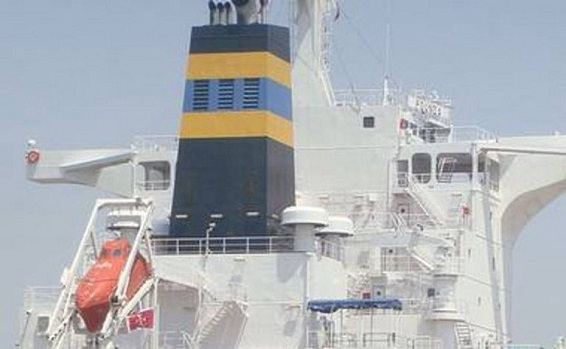
The VLGC will be employed under a time charter on a fixed rate with ten years firm duration to an oil major trading company. The Company expects a total gross backlog associated with this time charter of up to
$103.8 million.
Since the beginning of this year, DryShips has taken delivery of 16 vessels and expects to take delivery of one more at the beginning of next year.
About DryShips Inc.
The Company is a diversified owner of ocean going cargo vessels that operate worldwide. The Company owns a fleet of (i) 13 Panamax drybulk vessels; (ii) 4 Newcastlemax drybulk vessels; (iii) 5 Kamsarmax drybulk
vessels; (iv) 1 Very Large Crude Carrier; (v) 2 Aframax tankers; (vi) 1 Suezmax tanker; (vii) 4 Very Large Gas Carriers, 1 of which is expected to be delivered in January 2018; and (viii) 6 offshore support vessels, comprising 2 platform supply and 4 oil spill recovery vessels.
DryShips’ common stock is listed on the NASDAQ Capital Market where it trades under the symbol “DRYS.”
www.dryships.com

Powered by  © Μaritimes 2019