


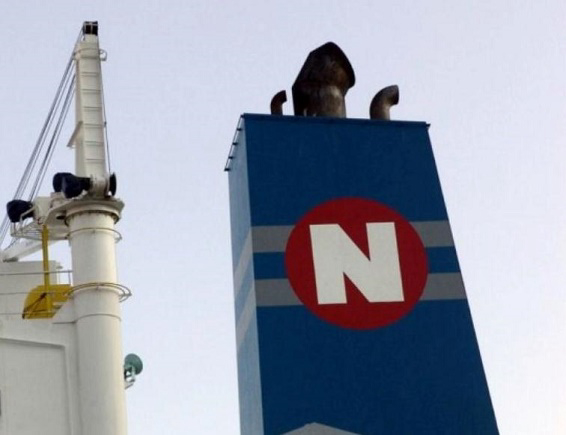
Navios Maritime Holdings Inc. Announces Pricing of $305 Million of 11.25\% Senior Secured Notes Due 2022
The Notes were offered and sold in the United States only to persons reasonably believed to be qualified institutional buyers pursuant to Rule 144A under the Securities Act of 1933, as amended (the “Securities Act”), and in offshore transactions to non-United States persons in reliance on Regulation S under the Securities Act.
The Notes will be secured by a first priority lien on the capital stock owned by certain of the subsidiary guarantors of Navios Holdings in each of Navios Maritime Partners, L.P., Navios GP L.L.C., Navios Maritime Acquisition Corporation, Navios South American Logistics Inc. and Navios Maritime Containers Inc. The Notes will be guaranteed by all of the Company’s direct and indirect subsidiaries, except for certain subsidiaries designated as unrestricted subsidiaries, including Navios South American Logistics Inc.
The net proceeds of the offering will be used to complete a cash tender offer for any and all of its outstanding 8 1⁄8\% Senior Notes due 2019 and to redeem any and all such notes that are not purchased in the tender offer after all conditions to the tender offer are satisfied or waived, including the payment of related fees and expenses and any redemption premium, with any remaining proceeds to be used for general corporate purposes. The consummation of the offering of the Notes is conditioned upon customary closing conditions.
Neither the Notes and related guarantees nor their offering have been registered under the Securities Act or the securities laws of any other jurisdiction and may not be offered or sold in the United States or to or for the benefit of U.S. persons unless so registered except pursuant to an exemption from, or in a transaction not subject to, the registration requirements of the Securities Act and applicable securities laws in other jurisdictions.
This press release does not constitute an offer to sell or a solicitation of an offer to buy the Notes or any other securities, and does not constitute an offer, solicitation or sale of any Notes or other securities in any jurisdiction in which such offer, solicitation or sale would be unlawful. Any offer of the Notes will be made only by means of a private offering memorandum. This press release is being issued pursuant to and in accordance with Rule 135c under the Securities Act.
About Navios Maritime Holdings Inc.
Navios Maritime Holdings Inc. (NYSE:NM) is a global, vertically integrated seaborne shipping and logistics company focused on the transport and transshipment of drybulk commodities including iron ore, coal and grain.
http://www.navios.com
DNV GL line optimization brings ten per cent fuel savings for Hapag-Lloyd Cruises’ new expedition cruise vessels
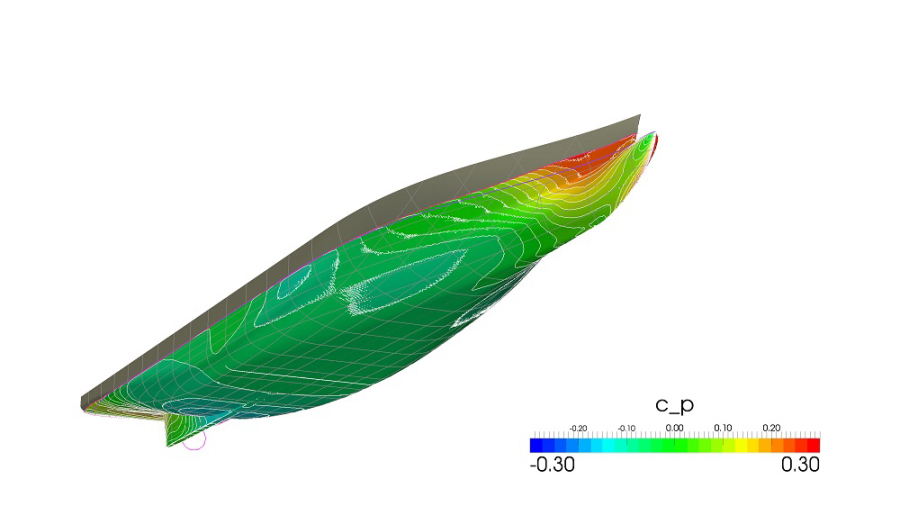
Brought in during the initial design and conception phase, DNV GL experts first created and explored more than 100,000 hull variations for the vessels. They worked to give Hapag-Lloyd Cruises and Vard an idea of the technical possibilities of various hull forms and how the interactions between the hull form, the initial general arrangement and stability requirements would impact fuel consumption.
“The design concept for the two new ships was ‘inspired by nature’,” says Dr. Henning Brauer, Head of New Builds, Hapag-Lloyd Cruises. “The vessel interiors have been created to reflect the environments our passengers are experiencing inside the ships. But these are also sensitive environments, so reducing the environmental impacts of our vessels is an integral part of the design concept. Working with DNV GL has allowed us to significantly reduce fuel consumption, which also decreases our overall emissions.”
“We are very pleased to have been able to exceed Hapag-Lloyd Cruises’ expectations and offer an optimization solution that demonstrates that efficiency and sustainability can go hand in hand,” says Knut Ørbeck-Nilssen, CEO DNV GL – Maritime. “These results show that by bringing greater computing power and smart software to the ship design process we can help to unlock efficiencies for our customers.”
After the initial assessment, the efficiency of the hull form was optimized within the given constraint set using DNV GL’s unique formal optimization approach. During this phase, another 10,000 hull designs were analyzed, with the most promising candidates undergoing high fidelity computational fluid dynamic (CFD) analysis to confirm the results. Finally, the stern was optimized for passenger comfort by minimizing impact from slamming.
“Because these ships will have the highest ice class possible for passenger vessels, PC6, fuel consumption is an essential factor in their economic feasibility,” adds Juryk Henrichs, Senior Project Engineer, DNV GL – Maritime. “With roughly 7,000 CPUs doing the heavy lifting, our unique form-parametric hull model was able to identify the optimal design to meet Hapag-Lloyd Cruises’ specifications.”
 |
| Pressure distribution on the optimized hull |
 |
| Wave elevation and pressure distribution on the optimized hull |
About DNV GL
Driven by our purpose of safeguarding life, property and the environment, DNV GL enables organizations to advance the safety and sustainability of their business. We provide classification, technical assurance, software and independent expert advisory services to the maritime, oil & gas and energy industries. We also provide certification services to customers across a wide range of industries. Operating in more than 100 countries, our professionals are dedicated to helping our customers make the world safer, smarter and greener.
About DNV GL – Maritime
DNV GL is the world’s leading classification society and a recognized advisor for the maritime industry. We enhance safety, quality, energy efficiency and environmental performance of the global shipping industry – across all vessel types and offshore structures. We invest heavily in research and development to find solutions, together with the industry, that address strategic, operational or regulatory challenges. For more information visit www.dnvgl.com/maritime
«it is our duty, and especially of the Hellenics, to convey the importance of shipping to students»
 |
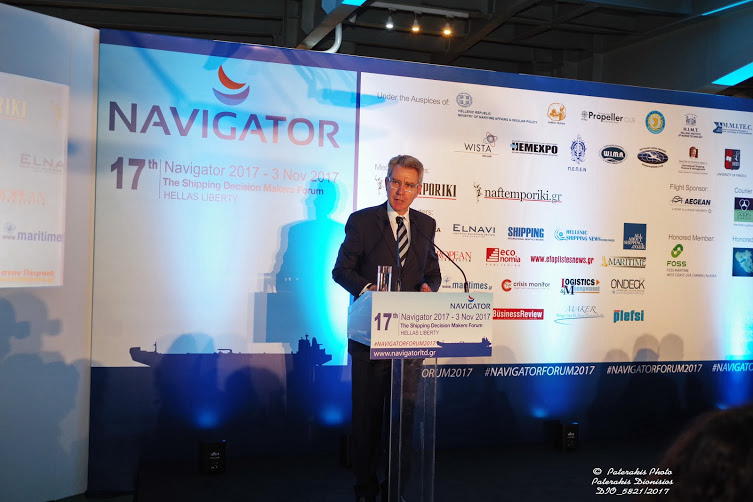
| The Ambassador of the United States to Greece, H.E. Geoffrey Pyatt |
Danae Bezantakou, CEO of NAVIGATOR welcomed the participants underlining the significance of this year’s Forum, as it comes back to Piraeus and takes place in the historical floating museum HELLAS LIBERTY.
The President of NAVIGATOR, Capt. Dimitris Bezantakos, during his opening speech stressed that «it is our duty, and especially of the Hellenics, to convey the importance of shipping to students, society and international fora and to defend shipping with vigor, without expediencies and show the respect the shipping deserves.» He also suggested the establishment of an Organisation with the collaboration of IMO, INTERTANKO, BIMCO, INTERCARGO & European Owners Association, that will mediate between P & I Clubs - shipowners and government –individuals who raise claims from the vessels, in the event of any damage to third parties in order to be able to intervene and avoid unnecessary delays and costs for the vessels, discomfort for crews and depreciation or destruction of the cargoes being transported.
The Minister of Maritme Affairs and Insular Policy, Mr. Panagiotis Kourouplis, referred to the country's leading position in shipping, the need for educated mariners and the Ministry's efforts to implement practices, such as mediation and arbitration.
Piraeus’ Mayor, Ioannis Moralis welcomed the Navigator Forum in Piraeus after 17 years and stressed that the future of the country looks towards the sea, as the sectors that we can develop economically are tourism and the big port, Piraeus.
Vassilis Korkidis, President of - PIRAEUS CHAMBER OF COMMERCE & INDUSTRY (PCCI) presented Maritime Hellas and the coordinated efforts between the Piraeus Chamber of Commerce, Greek Shipowners' Association and the Hellenic Chamber of Shipping for the establishment of the first Greek Maritime Cluster.
The Ambassador of the United States to Greece, H.E. Geoffrey Pyatt, stressed that he hopes to see increased U.S. investment in Greece, mainly in the fields of energy, infrastructure and industry. The Ambassador referred to the key role that Greece plays in the Balkans and the Mediterranean as a pillar of stability, highlighting his hope that an investment in Syros’ shipyards will be completed soon. He also mentioned that the strategic position of Alexandroupolis’ port is on full display right now: elements of the US Army’s 10th Combat Air Brigade are using it as a staging area for Blackhawk helicopters and cargo demonstrating the potential of that port to play a much bigger role in regional infrastructure and connectivity.
The first panel, entitled “Ports and Supply Chain” was moderated by Mr. George Xiradakis, Managing Director – XRTC Business Consultants Ltd and President – The Propeller Club (Port of Piraeus). The panel consisted of Sotiris Theofanis, Coordinator & Authorized Representative, DIEP GmbH- Terminal Link SAS– BELTERRA Investments Ltd Consortium, Kostis Achladitis, Managing Director – Golden Cargo, Mary Pothitos, Marine Insurance & Claims Handling Consultant, PARALEGAL MARITIME SERVICES, Sotiris Raptis, Senior Policy Advisor for Environment and Safety, EcoPorts Coordinator – ESPO. The main topic discussed was the room for further development of the supply chain in Greece and the steps that should be followed in order to take full advantage of the country’s significant geostrategic position. A reference to the port of the future was made, focusing on the aspect that by incorporating advanced technological systems, the transportation of commodities to their final destination will be done in zero time.
The second panel entitled “Sustainable Innovation: Challenging Tradition to Create New Opportunities” was moderated by Helena Athoussaki, Head of Maritime Sustainability Centre - PwC and consisted of Jeff Horst, Commercial Director - FOSS MARITIME, Yoong Hui Chia, CEO – ASCENZ SOLUTIONS, Michael Lund, Deputy Secretary General – BIMCO, Dimitrios Mattheou, Managing Director - ARCADIA SHIPMANAGEMENT & Chairman – Green Award Foundation and Hugo Du Mez, Advisor Business Intelligence - Dry Bulk – Port of Rotterdam. The technical panel started with a survey of Norwegian and Greek shipping companies on the digital transformation, revealing its key role for the industry’s future. The panellists presented innovative projects responding to the environmental challenges such as the Carbon Free Project 2050 of the port of Rotterdam and the Tote’s LNG project. All panellists highlighted the importance of digital innovation to operational efficiency, environmental performance, safety and logistics as well as the value creation from data analytics. They also emphasised the significance of supporting innovation and collaboration to create an innovative ecosystem. Finally, audience and panel recognised that shipping companies need to be more open to innovation, better equipped with resources and infrastructure and ready to fundamentally change the way they do business.
H.E. Cristina Liakopulos de Papadikis, Ambassador and General Consul of Panama in Greece, addressed commemorative words regarding the celebration of the 100 years of the Panama Ships Registry and the Independence of Panama from Colombia on 3rd November 1903.
A short presentation regarding Lesvos island also took place by Capt. Gabriel Haldezos, Master Mariner, Diploma in Shipping – Shipping Expert and Dr. Kostas A. Damianidis, Architect, PhD on History of Shipbuilding, as Lesvos was the honored island for this year’s Forum.
We thank everyone that helped this Forum to take place and we are looking forward to welcoming you in the 18th NAVIGATOR 2018 – The Shipping Decision Makers Forum, which will take place in Chios Island.
US Top Buyers of Auction and Bank Sales Vessels in 2017
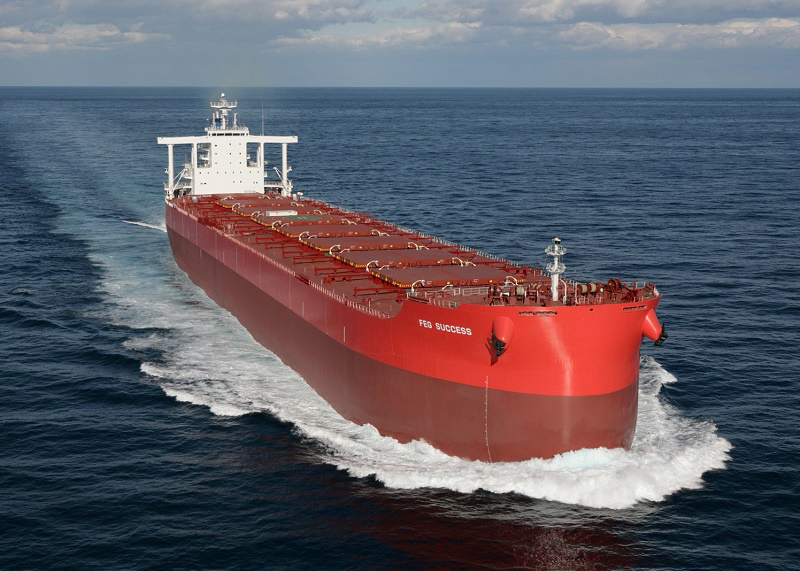
Asset values reached a 25 year low for bulkers, containers and offshore vessel types in 2016, with a spike in the number of bankruptcies and vessel seizures by banks. US owners have been buying these vessels sold at auction or at bank sales, spending $624 million on 52 distressed vessels so far. This comes in at just under double what Greece has spent, totaling $385 million.
 |
In 2016, US companies did not buy any vessels at bank sales or at auction, showing a marked shift in behavior.
|
Also the type of vessel they are buying is incredibly targeted, only buying bulkers, containers and offshore vessels. These asset types hit 25 year historical lows during 2016, with these values now rebounding.
Many in the markets are confident that continued scrapping and a reduction in ordering will balance out supply and demand, bringing asset values back in line. Savvy investors have been getting involved in the last 12 months in order to capitalise on the asset value increase.
www.vesselsvalue.com
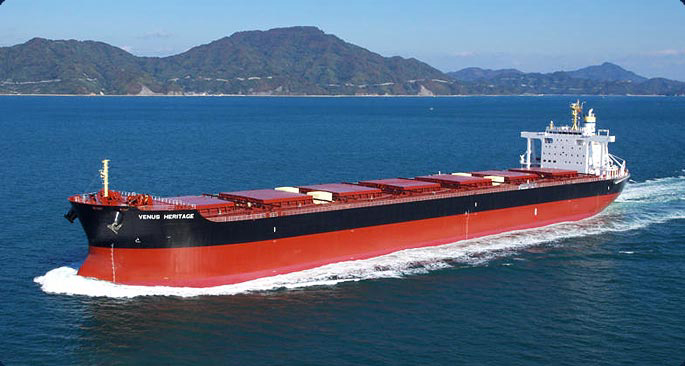
Safe Bulkers to equip entire fleet with Erma First ballast water system
 |
The system will be fitted to all the shipowner’s 38 vessels with the first installation scheduled for Q1 next year at the company’s next drydocking.
The installations will be spread over a five-year period.
“We decided to install in all our vessels Erma First BWTS, which is designed and produced in Greece, starting at an early stage which provides us with certain commercial and financial advantages, including availability of equipment, minimization of down time, unrestricted worldwide trading the following years and the financial benefits of a block order,” Loukas Barmparis, president of Safe Bulkers said.
Erma First was established in 2009 by a team of specialists in waste and water treatment. The company describes its BWTS technology as a simple solution suitable for all types and sizes of vessels, using 40 µm filtration followed by efficient full flow electrolysis. “Using an active substance that is produced by the method of electrolysis,” it explained, “any danger for re-growth of microorganisms is eliminated.”
http://www.seatrade-maritime.com
Increased capesize rates push Baltic sea freight index up
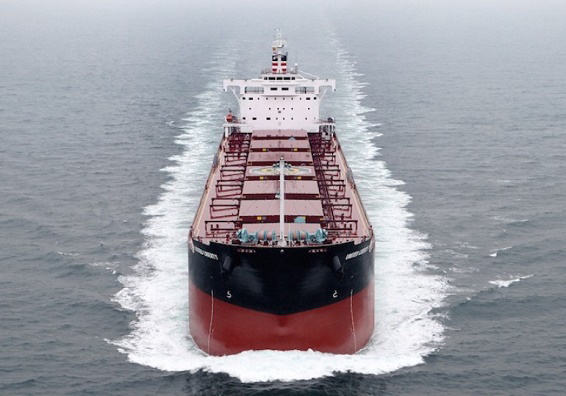
The overall index, which factors in rates for capesize, panamax, supramax and handysize shipping vessels, rose 9 points, or 0.61 percent, to 1,486 points.
The capesize index was up 158 points, or 5.1 percent, at 3,259 points, its highest percentage increase in over a month.
Average daily earnings for capesizes, which typically transport 150,000-tonne cargoes such as iron ore and coal, rose $983 to $21,980.
“Capesize dry bulkers are gaining further momentum with activity in the Atlantic gaining some traction,” Clarksons Platou Securities analysts said in a client note.
The panamax index lost 43 points, or 2.76 percent, to 1,515 points.
Average daily earnings for panamaxes, which typically carry coal or grain cargoes of about 60,000 tonnes to 70,000 tonnes, were down $345 at $12,163.
Among indexes tracking rates for smaller vessels, the supramax index shed 27 points to end at 961 points. The handysize index lost 4 points and closed at 654 points.
Source: Reuters (Reporting by Sumita Layek in Bengaluru; Editing by Maju Samuel)
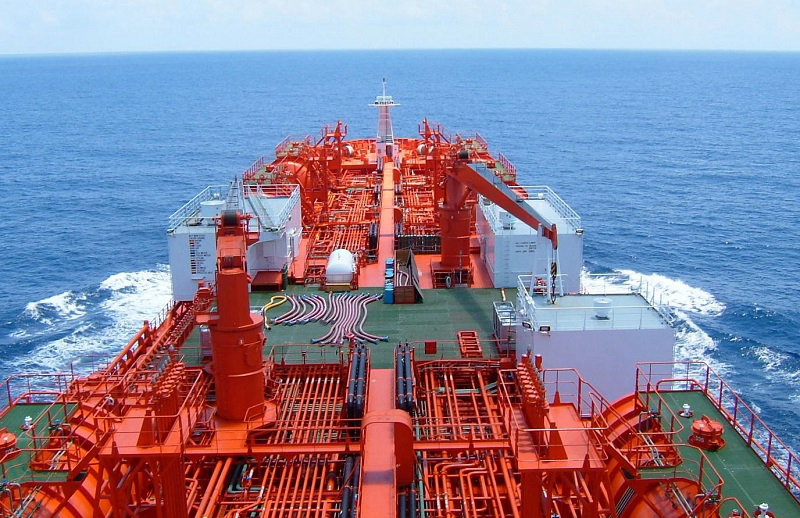
A better outlook for chemical tankers
 |
Drewry estimates that tonne-mile demand of chemical commodities will grow at 3.8\% on a year-on-year basis in 2017, of which the organic trade is likely to grow only at 1.5\%. By contrast, inorganic and vegoil tonne-miles are expected to increase by 6.3\% and 6.5\%.
Drewry estimates that the global chemical trade will grow at 3.3\% in 2017, owing to the strong vegetable oil trade from Southeast Asia to South Asia. The recent reduction in US exports, as a result of Hurricane Harvey, which had a negative impact on the chemical shipping trade, is expected to prove only temporary. Trade will return to normal patterns when North American plants resume production.
 |
Chinese demand for methanol has been improving during the second half of the year as MTO plants either plan to ramp up or resume production. Ten new MTO plants are coming on stream in the second half of 2017, and two new plants will begin operations early in 2018. One methanol plant in Iran and two plants in the US will come online by the end of 2017. Drewry thus expects moderate growth in the global methanol seaborne trade, especially in long-haul and domestic trade routes in China.
Time charter rates picked up in the third quarter of 2017, supported by strong demand for CPP and palm oil. Robust demand, high fuel production and declining fuel inventories will strengthen the clean product tankers market from the fourth quarter to 2018.
“The chemical tanker fleet is oversupplied, and increased demand in the CPP market will attract more swing tankers to move to the CPP trade. Overall, we expect earnings to improve over the medium term,” said Hu Qing, Drewry’s lead analyst for chemical shipping.
Source: Drewry
The Review of Maritime Transport 2017
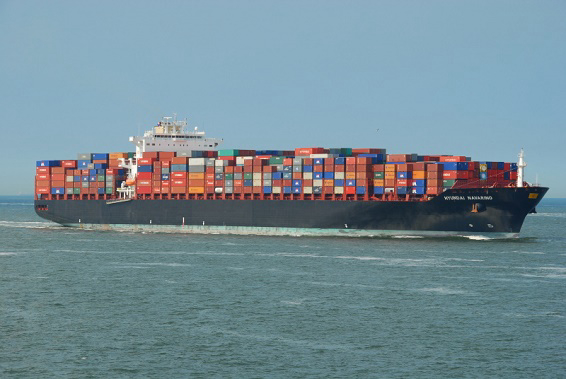
Recognizing the sector’s strategic function, the global policy framework under the Addis Ababa Action Agenda and the 2030 Agenda for Sustainable Development underscores the role of trade – and by extension, seaborne trade – as an engine for inclusive and sustainable growth and development.
The Review of Maritime Transport 2017 presents key developments in the world economy and international trade and related impacts on shipping demand and supply, and freight and charter markets in 2016 and early 2017, as well as seaports and the regulatory and legal framework.
In addition, this year’s Review features a special chapter on maritime transport connectivity, reflecting the prominence of physical and electronic connectivity as a priority area in the trade and development policy agenda.
Ocean shipping will remain the most important mode of transport for international merchandise trade.
Ministries of transport and planning, and maritime and port authorities need to understand the determinants of maritime transport connectivity, as well as the associated opportunities and risks, to ensure informed policy and decision-making processes and adequate investment plans in shipping, ports and their hinterland connections.
Review of Maritime Transport 2017 (UNCTAD/RMT/2017)
http://unctad.org
Greek Shipping Leads the Way
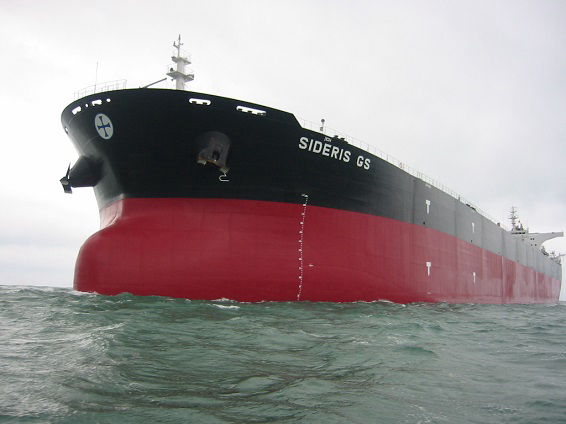
It is nearly a decade since the global crisis began, and despite the ongoing austerity and economic uncertainty in Greece, Greek shipping has demonstrated its ability to sail in high winds and weather the storm. With freight rates improving across the board and the new building order book becoming more balanced, along with anticipated scrapping, there is cautious optimism of a sustained recovery in the shipping sector going into 2018 and beyond.
As ever, Greeks are leading the way maintaining their pole position as the world’s leading maritime nation, controlling 20\% of the world fleet and 50\% of the EU fleet. Greek shipping is there on merit. If further evidence were needed of that justified prominence, beyond bare numbers, Greeks now chair four of the leading global shipping organisations. We are proud to say that this includes North’s own Members, namely Intercargo chairman John Platsidakis, and European Communities’ Shipowners’ Association president elect Panos Laskaridis. Both have long been leading promoters of Greek shipping and shipping in general. Indeed, I can recall John saying to me some years ago that with an established office in Piraeus, North was “part of the story” which I confess did get me thinking as to what role we had to play.
Supporting our Members in Good Times and Bad
First and foremost we are here to support our Greek Members through good times and bad. Fine words but from the Club perspective, what does that really mean? We see on a daily basis the hard work and commitment of our Greek Members to make their companies a success, often in challenging circumstances, and aim to do all that we can to facilitate that goal. What that means in practice is making sure that we provide expert and accurate advice and assistance as quickly and effectively as possible.
This is of course an imperative on the claims front, where commercial pressures often mean that time is of the essence, such that decisions need to be made on the best information available, albeit often with incomplete details and control. To that end we have a highly qualified and experienced team, with many years of legal and practical experience between us, including lawyers, a Master Mariner and a Naval Architect, along with experience of working inhouse for a number of prominent Greek ship owners. Together with our local presence we believe this gives us a real insight and feel for how our Greek Members work and what they expect from their Club.
Meeting the Challenges of Today and Tomorrow
Claims handling is only half the story. These days a considerable amount of our time is taken up dealing with general enquires and loss prevention issues. We are all aware that ever-increasing regulation, which shows no sign of letting up, places a growing burden on today’s shipowners. From environmental concerns due to greenhouse gas emissions and ballast water management through to sanctions, cyber risks, and a shortage of the right crew (especially if as anticipated the markets pick up) the challenges are coming thick and fast. There is no doubt that Greek shipping will respond and we are here to make sure that we contribute and play our part.
We also recognise the importance of education and training and offer in house seminars on a whole raft of subjects to our Members, along with our annual Yacht Club seminar. We continue to be involved with the Merchant Marine Academy on Hydra where this year’s annual seminar looked at some of the lessons to be learnt from the “Torrey Canyon” oil spill and the “Herald of Free Enterprise” ferry casualty, along with sponsoring an annual award for the best cadet. We have also recently become sponsors of Isalos.net, the education and training platform for young Greeks hoping to make a career within the shipping industry.
We are tremendously proud of our Greek Membership and grateful for the trust and support we are given. Greek shipping continues to lead the way and we will continue to do all that we can to play our part in that success.
 |
Source: North of England P&I Club
Wilhelmsen eyes efficiency gains by sharing data on DNV GL’s Veracity platform

 |
“As ships and their systems become more sophisticated, we have more equipment with sensors onboard that are generating and sharing data. If we can gather and systemize this data, this opens up a huge range of possibilities, for example predicting maintenance needs, optimizing vessel performance and safety, or, as we are now testing, making port entry procedures more smooth and efficient. The Veracity platform from DNV GL enables us to make better use of this data by being able to invite partners, suppliers and other stakeholders to share data and collaborate on the
 |
| Wilhelmsen's Digital Journey (subtitles) |
Currently, Wilhelmsen and DNV GL are testing a pilot project on the Veracity platform in cooperation with a major port state authority. Wilhelmsen has created a secure data container on Veracity, where they can collect compliance, condition and other relevant data on their vessels. Through the platform, they are then able to grant the PSA access to this data, reducing paper work and speeding port entry. “The project is still in an early phase, but it shows how an open and secure data platform could reduce friction between stakeholders and create greater efficiencies,” says Sandvik.
Bjørn Tore Markussen, Managing Director of the Veracity platform unit in DNV GL, says: “We have built Veracity to create a secure data platform for digital innovation and collaboration that can drive improved business performance and safety management. Veracity is designed especially with asset owners like Wilhelmsen in mind, who face the challenge of having data in many different “silos”, which can prevent them from extracting the true value of their data.”
Veracity allows Wilhelmsen to share and aggregate data in a secure manner, while facilitating connections between different industry players. Veracity also includes a marketplace, where platform users can access industrial applications and data analytics services that can help them make better use of their data. These services are provided not only by DNV GL, but by other qualified data, data analytics, software and digital solutions providers.
 |
| Remi Eriksen, President & CEO of DNV GL. |
About DNV GL
DNV GL is a global quality assurance and risk management company. Driven by our purpose of safeguarding life, property and the environment, we enable our customers to advance the safety and sustainability of their business. We provide classification, technical assurance, software and independent expert advisory services to the maritime, oil & gas, power and renewables industries. We also provide certification and supply chain services to customers across a wide range of industries. Operating in more than 100 countries, our experts are dedicated to helping customers make the world safer, smarter and greener. For more information visit www.dnvgl.com
Video - Veracity: Wilhemsen's Digital Journey

Powered by  © Μaritimes 2019