



Fifty years ago and today in world shipping: Some insights from maritime history
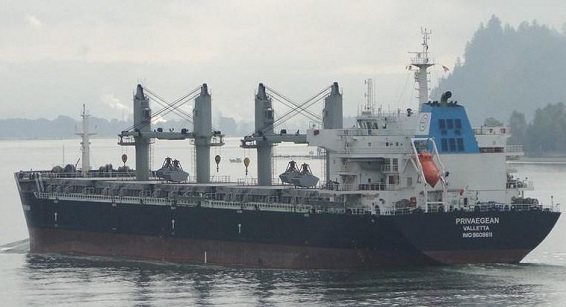
Momentous changes occurring in the late 1960s merit a review of aspects of maritime history. These have some parallels in, and possible lessons for, changes currently taking place which, in turn, have implications for the next half century ahead.
What was happening in the global shipping industry fifty years ago that connects to today’s markets? Some noteworthy changes were taking place, and hindsight enables these to be seen in a longer term context of trends and patterns:
liner trade containerisation affected both liner (regular services) and tramp (bulk commodity shipments) markets, because fully-cellular container ships were specialised and not interchangeable between the two markets as previous liners and tramps had been
dry cargo tramp replacement: a perceived need to replace old Liberty ships
bulk carriers (and ore carriers) displaced traditional dry cargo tramp ships
tankers led the efficiency improvements and rapid advance in ship sizes
combined carriers evolved into a prominent sector (eventually disappearing)
shipping market cycles were erratic, occasionally distorted by unforeseen events
maritime regulations after a notable tanker disaster became tighter
Containerisation onset
During the second half of the 1960s containerisation of international liner trade routes, and the fully-cellular specialised container ships required, moved from planning to initial introduction. But ‘conventional’ multi-deck type cargo liners with installed cargo-handling gear, for many years until then ubiquitous as standard transportation units, were still joining the world fleet.
The new late 1960s cargo liners were highly advanced technologically. A range of features had been added and steadily upgraded, such as ‘deep’ tanks for vegetable oils, refrigerated compartments, efficient cargo-handling gear and other equipment, and extra automation generally. These vessels were employed in an extensive trade route pattern around the world, carrying general cargo (predominantly manufactured goods in a wide variety of packaging, but also bulk cargo parcels) on regular scheduled services. More sophisticated designs and improved technology in the new ships aimed to enhance flexibility and raise productivity.
Examples are three ‘Straths’ joining the British P&O group in 1967. With traditional company names, Strathardle, Strathbrora and Strathconon, these 12,500 gross tons cargo liners were among the most elaborate of their type produced: better designed, faster speed, improved loading and discharging equipment, ability to carry a wider cargo range efficiently. Several more ships of this type were delivered to liner companies later.
Higher speed than previously typical for cargo liner services was a key characteristic of the new and bigger ships. An eminent maritime economist writing in the early 1960s had advocated higher speed coupled with larger carrying capacity. It was suggested that where operators were competing primarily in service quality, faster cargo liners were likely to attract more shipment volumes and therefore benefit from higher loadings than slower ships. A better choice of cargoes would enable higher freights to be obtained, improving voyage returns.
Another author observed that service speed mainly reflected service frequency provided, assuming that liner operators endeavoured to maintain a regular service with the smallest number of ships. The implications of competition with other lines engaged in the same trade were emphasised, necessitating a competitive speed to retain shippers’ loyalty.
Yet all such vessels had inherent disadvantages, which could not be rectified by technological improvements. In particular the core problem, still a normal feature, was prolonged and very costly loading and discharging operations in ports, lengthening cargo delivery times. Cargo liners employed on long distance routes were often stationary in ports for up to half or sometimes as much as 60 percent of a typical total voyage duration.
General cargo was carried on cargo liners in numerous packages of many types and sizes – crates, boxes, cartons, bags, bales, bundles, casks, drums. All required individual handling and the system of loading, stowage and discharging was highly complex, lengthy and labour intensive. One improvement – using pallets to increase unit load size and incorporate some mechanisation – only partly mitigated the problem.
It was an uneconomical system needing a fundamental shakeup. There had been intensive discussion within the industry about the way to proceed. Adoption of fully containerised services, integrating sea transport with ports and land movements in ‘multi-modal’ systems, was seen as the radical solution. An important contribution to the debate emerged in June 1967 when management consultants McKinsey published a report entitled Containerization: The Key To Low-Cost Transport, focusing on the implications for UK ports. The report also had wider applicability to international trades.
Containerisation of international trade had begun during the previous year. The system required purpose-built fully-cellular container ships, standard size freight containers, container handling cranes and berths in ports, and direct access to road and rail links with specially designed trucks or freight wagons. In 1966 the first commercial international container service was inaugurated by Sea-Land’s container ship Fairland, operating in the transatlantic trade. Sea-Land owner Malcom McLean, usually regarded as the ‘father of containerisation’, had started container shipping services in the US coastal trade ten years earlier.
More signs showed that the container age was evolving. A new UK consortium of liner companies, Overseas Containers (OCL) – comprising P&O, Ocean, Furness Withy and British & Commonwealth – had been formed in 1965. Two years later in early 1967 six container ships for use in the trade between Europe and Australia were ordered by OCL. These were much bigger than the cargo liners destined for replacement, approximately double the tonnage at 27,000 gt, capable of carrying 1130 standard 20-foot length containers in the holds and on deck.
Tramp replacements
In the mid 1960s there was much discussion about what would replace wartime-built Liberty ships in the global dry cargo tramp shipping sector. Many Liberties were still employed, twenty or more years after being built for a far shorter envisaged lifespan, and remained useful in numerous trades around the world. A mid-1965 estimate suggested that 800 were still trading. Later, at the end of 1967 a more precise calculation by Westinform put the number at 662 (excluding those laid-up in the US Reserve Fleet), comprising about 14 percent of the world tramp fleet.
With a rigorous 24-year survey approaching, possibly entailing heavy repair bills which might prove uneconomical, and rising maintenance costs and insurance premiums, Liberty ships were assumed in 1967 to be nearing the end of their working lives. Meanwhile, a parallel trend towards using mainly larger and more efficient bulk carriers, rather than traditional tramp ships, for many cargoes on a variety of routes, was rapidly gaining momentum. Assessing market potential for Liberty replacements had become more complex.
Before bulk carriers became a significant element, the conventional (sometime described as traditional) tramp ship was the dry cargo freight market ‘workhorse’. A dry cargo tramp of between 10,000 and 15,000 gross tonnes capacity was employable in most commodity trades in the late 1960s. Its relatively small size ensured acceptability in a very wide range of ports around the world, where draft or other port or loading/discharging berth restrictions excluded larger vessels.
The second aspect of dry cargo tramps’ very flexible employment patterns was, for many higher class ships (but not for old Liberty ships), charter employment in a liner service. Numerous tramps were constructed to a standard of quality, and sophistication, which was almost indistinguishable from that of the cargo liners built especially for the liner trades. These high class tramps could switch between the two markets, depending on relative profitability and what opportunities were available.
However, such flexibility was greatly curtailed when specialised container systems were introduced in liner services, from the late 1960s onwards. Container trades required dedicated fully-cellular ships built especially for that purpose. Dry cargo tramps’ potential for employment in liner services was limited to routes where there was still an element of non-containerised trade, or where containerisation had not yet evolved. From the end of the 1960s, this was a steadily shrinking market for such services provided by conventional dry cargo tramp ships.
In and around 1967 containerisation’s pace over the decade or more ahead was not clear. The rapid rate of bulk carrier fleet growth was much clearer. But a distinct and substantial market appeared to prevail for dry cargo tramps, hence the continuing interest in new versions which could replace old Liberties. Several designs became prominent. One was the 13,600 gross tons ‘Freedom’ offered by Japanese shipbuilders IHI, the first of which, Khian Captain, was delivered to a Greek shipowner in 1967. Another successful design was the 14,200 gross tons ‘SD-14’, offered by UK shipbuilders Austin & Pickersgill, with deliveries starting in the following year.
Bulk carrier ascendancy
The world fleet of bulk carriers expanded rapidly during the late 1960s, amid strong growth in global dry bulk commodity trade. A bulk carrier is defined as a single-decker (no intermediate or ‘tween’ decks) designed to carry a wide variety of dry cargoes, including ores, minerals and agricultural bulk commodities. Usually only one commodity, a full shipload is carried on each voyage. Some bulk carriers were built specifically for the carriage of ore, mainly iron ore, and these ships were described as ore carriers.
Vessels in the bulk carrier category absorbed the enlargement of global commodity trade and also, increasingly, gained a large part of the market served by conventional tramp ships. Trade growth, on the scale seen within the 1960s, would not have been achievable without both transportation capacity expansion and the enhanced efficiency provided by bulk carriers coupled with highly mechanised loading and discharging equipment at ports.
By 1965 the world bulk carrier fleet exceeded one thousand vessels, more than double the number seen five years earlier. The end 1965 figure was 1054, amounting to 24.7 million deadweight tonnes, of which over one-fifth by deadweight were ore carriers, totalling 194 of 5.4m dwt, based on Shipbino/Fearnleys figures. The average bulk carrier size was 23,400 dwt, much larger than a typical dry cargo tramp. In the size range up to about 50,000 dwt bulk carriers were ‘geared’ (cargo handling equipment installed on board). From 50,000 dwt upwards most vessels were ‘gearless’, dependent on shore-based loading and discharging equipment.
Over the next few years further vigorous growth occurred, enabling the entire fleet to reach 2116 bulk carriers totalling 64.5m dwt at end 1970. Of these, 107 were in the 70,000 dwt plus size range (five years earlier there had been only 5). Adding many large vessels raised the average size to 30,500 dwt. But the ore carrier component, although still growing, had become a lower percentage of the total. Bulk carriers strengthened to carry heavy ore cargoes resulted in specialised ore carriers becoming a less attractive investment for shipowners.
Employment patterns in the late 1960s varied. Many bulk carriers, especially smaller ‘handysize’ vessels participated in tramping activity on the spot freight market, under charters arranged voyage by voyage or for short periods, carrying a variety of commodities. Trading patterns were worldwide. Grain cargoes were prominent, also coal, ores, fertilisers, sugar, scrap, forest products and numerous others. Larger vessels carried a more limited cargo range, and the biggest were mainly involved in the iron ore (including all ore carriers) and coal trades, or occasionally grain. Increasing average voyage distances further boosted tonnage demand.
One example of a large size bulk carrier delivered in 1967 is Sigsilver, commissioned by a UK shipowner. New regulations increased this vessel’s capacity by 11 percent to 105,800 dwt, and in that year it was the world’s biggest bulk carrier. The Aegean Monarch and Aegean Neptune, two 67,300 dwt ships are also noteworthy, delivered to a Greek shipowner in the same year.
Tanker gigantism
Two features of the global market for tankers were becoming, or had become, very prominent by the late 1960s. First, the world tanker fleet continued to grow rapidly as a consequence of oil trade expansion, mostly on long-haul routes. Second, there was a clear trend towards using more giant tankers, which had already reached 200,000 dwt capacity, labelled very large crude carriers (VLCCs), and even larger vessels were being introduced.
Tankers of all sizes were designed to carry liquids in full cargoes, mainly oil, in a hull structure divided into many separate individual tanks. Cargoes could be loaded and discharged at relatively high speeds (compared with dry bulk commodities). Shore pumps handled loading, while the ship’s pumps handled discharging. Some cargoes required special equipment such as heating coils in tanks, to prevent oil becoming too difficult to pump.
In the 1960s first half the world tanker fleet’s capacity grew by just over one third, reaching 2,999 vessels totalling 80.4m dwt at the end of 1964, according to Oil Tanker Databook figures. The average ship size was 26,800 dwt. During the second half, fleet expansion accelerated to 64 percent, raising the total to 3,160 vessels of 132.1m dwt at end 1969. Average ship size had risen to 41,800 dwt. These comparisons are not exact because earlier annual figures included all tankers of 5,000 dwt and over, while later figures excluded tankers below 10,000 dwt.
The largest tankers in the world fleet amounted to only a small number in mid 1967. Just four tankers exceeding 150,000 dwt existed, but within the next three years the number surged to 92 at end 1969, including 63 exceeding 200,000 dwt of which six leviathans were over 300,000 dwt (ultra large crude carriers, or ULCCs). Notable VLCC deliveries in 1967 were the 202,600 dwt Bergehus and 191,300 dwt Myrina. All these ships were designed to achieve economies of scale, ensuring the lowest attainable cost per tonne for moving the cargo.
Oil tanker cargoes carried globally in this period, in massive and strongly expanding volumes, consisted primarily of crude oil, in various grades. Cargoes of products (processed, or refined oil) were also transported, mainly by smaller ships although quantities were relatively limited. Some small tankers carried chemicals or other liquids.
Most tankers, especially larger ships, were employed exclusively in crude trades, predominantly originating in the Middle East oil exporting countries, but also from West Africa. Europe and Japan were the dominant importers. Many shipments involved long-distance routes which further raised the transportation capacity needed.
Combined carrier creativity
A solution, at least partially, to the perennial problem of ships in the bulk trades performing long positioning voyages without a cargo was offered by the combined carrier concept. In the 1960s continuing to the present day, these ballast voyages unavoidably result from trade imbalances on most dry and liquid bulk routes, where there is no return cargo from the port of discharge or from a nearby location. In many instances a ‘return’ voyage is in ballast to the same, or a different long-distance loading port.
Two combined carrier types emerged, designed to carry oil cargoes and dry bulk cargoes, but not both together. The ore/oil carrier specification was ideally suited to carrying iron or other ore, and oil. The ore/bulk/oil (obo) carrier was designed to transport a wider range of dry bulk cargoes with higher (compared with ore) cubic volume requirements per tonne of cargo, as well as oil.
Ore/oilers were already well-established at the beginning of the 1960s when the world fleet comprised 60 ships totalling 1.6m dwt. Only one obo existed then. Five years later at end 1965, the ore/oil carrier fleet’s capacity was more than double at 88 ships of 3.3m dwt, while the obo fleet remained small, just 6 ships, according to Shipbino/Fearnleys figures. Later, during the second half 1960s, strong growth occurred. At end 1970 the ore/oil fleet had almost doubled to 108 ships totalling 6.4m dwt, and the obo fleet had surged, reaching 61 ships of 5.1m dwt.
Examples of this vessel type delivered to owners in 1967 were the Japanese ore/oilers Daiko Maru of 94,600 dwt and the 96,200 dwt Japan Wisteria. Norwegian owners took delivery of the 93,000 dwt Vestan in the same year. When the 1960s ended the biggest combined carriers being built were approaching 200,000 dwt.
Combined carriers were more expensive both to build and maintain than bulk carriers or tankers. Construction cost typically was10-15 percent higher per deadweight tonne. The justification for these increased costs was greater employment flexibility, coupled with reduced incidence of unremunerative ballasting. A voyage pattern could be arranged where, for example, a loaded ore voyage was followed by a relatively short ballast trip to an oil loading port. On completion of that oil voyage another short ballast trip to an ore loading terminal could follow. This ‘triangular’ pattern reduced the overall ballasting movements.
In practice such complex voyage patterns often proved difficult to arrange. Consequently the main employment pattern for many combined carriers was to remain in the dry bulk trades when freight rates were more profitable than those in the tanker market, and vice versa. During the 1966-1969 period, combined carriers trading in oil comprised 50 to 85 percent of the fleet, averaging 71 percent. Wide ‘swings’ from dry to oil, and back again, were a destabilising factor in both markets, sometimes exacerbating tonnage shortfalls or surpluses.
Bumpy cycling
One major event in 1967 had a widespread lasting impact on global shipping markets, altering the cyclical pattern. The Six-Day War between Israel and Egypt resulted in closure on 6th June of the Suez Canal, a major maritime artery linking the Mediterranean with the Red Sea which shortened routes between the Atlantic and Indian/Pacific oceans. Subsequently there was great uncertainty about when reopening would occur: that did not happen until eight years later in June 1975.
The significance of Suez is demonstrated by figures showing that in the year immediately before closure, 1966, total cargo volume moving through the Canal was 242 million tonnes, 14 percent of world seaborne trade. For liquid cargoes the proportion was almost 18 percent, and for dry cargoes 8 percent. Canal transits in that year totalled 21,250 vessels. Also of significance, the main alternative route for ships via the Cape of Good Hope adds a large extra voyage distance, for example an additional 3,300 miles or 30 percent from Japan to north Europe.
Markets were greatly affected by the additional demand for vessels resulting from longer voyages in many trades. Lengthened distances raise the tonne-mile measurement. Demand for ships’ capacity increases because longer voyages reduce the number of trips performed by each vessel in any period. Freight rates in all markets rose to varying extents immediately after the Canal closed, but many rises subsided over the following months. One report characterised market events as a major boom in the tanker market and a minor boom for dry cargo vessels.
In the first half of 1967 freight markets were depressed amid a growing surplus of both dry cargo and tanker tonnage. Suez closure in June caused demand to strengthen especially in the oil trades, where the longer route via the Cape resulted in a tanker freight rates surge which was partly reversed later. Dry cargo trades were affected less, with smaller rises in rates. In the cargo liner trades, service operators imposed freight surcharges to offset the higher costs which route deviations entailed.
Advancing regulations
Another event fifty years ago had long-term effects on global shipping markets. A dramatic tanker accident, resulting in severe coastal pollution, hastened moves towards tighter international maritime environmental regulations. In March 1967 the US owned Torrey Canyon, on charter to British Petroleum, ran aground on the Seven Stones Reef off the UK south west coast. The crude oil cargo of around 100,000 tonnes, en route from Kuwait to Milford Haven refinery, was spilled and the ship eventually sank.
Although tanker pollution rules had evolved over a number of years, the Torrey Canyon incident emphasised shortcomings, especially no regulations covering oil discharged as a consequence of a casualty. Soon afterwards IMCO (now IMO), began a study programme focusing on technical and legal changes designed to prevent or alleviate the problem. Eventually in 1973 the initial International Convention for the Prevention of Pollution from Ships (MARPOL) was adopted.
Heritage highlights
What aspects of shipping market trends and circumstances prominent today in 2017-18 can be traced directly back to changes starting or already under way fifty years ago, in 1967? From these historic events and subsequent linked changes over a half century period, observations can be attempted which seem highly relevant to the present day.
One lesson underlined by history is difficulties involved in assessing shipping market cycles, still an essential analytical exercise. Both future demand for, and supply of, shipping capacity was often hard to forecast. Despite great improvements in the availability of up-to-date information and enhanced analysis techniques, predicting market movements correctly – whether in the short or longer term – frequently remains elusive.
At intervals the impact of unforeseen dramatic changes was amply demonstrated. A classic example at the period’s outset was the 1967 Suez Canal closure, which greatly altered ship’s global trading patterns. This semi-permanent feature disrupted market cycles.
Another observation is that adoption of technological advances is sometimes much quicker than foreseen. The rapid pace at which containerisation was embraced in international seaborne liner trades, starting around 1967, provides a striking example.
Linked with such upheavals is the hazard of investing in what proves to be yesterday’s model. Investments in the late 1960s in traditional cargo liners, and also dry cargo tramp replacements (subsequently affected by bulk as well as liner trade changes) often proved unsuccessful. Also, combined carriers appeared and became a substantial market feature, achieving some success, but eventually no longer fulfilled the role envisaged and have now almost disappeared.
Changing aspects of shipping economics were accompanied by changing maritime policies. Severe pollution from the Torrey Canyon casualty in 1967 stimulated a regime of progressively tightening environmental regulations still prevailing and tightening further today.
Although the full course of maritime progress over the past fifty years has not been covered in this article, connections with events half a century ago are visible. Some conclusions or lessons may be useful, at least partly, as a guide to what could happen in the future. But market sentiment and psychology, notoriously difficult to anticipate, is likely to have a big influence on the outcome. Moreover, many global events with possible major effects are a matter for speculation rather than prescriptive analysis.
Source: Richard Scott MA MCIT FICS, Bulk Shipping Analysis
European Shipowners’ President Niels Smedegaard hands over the Presidency to Panagiotis Laskaridis
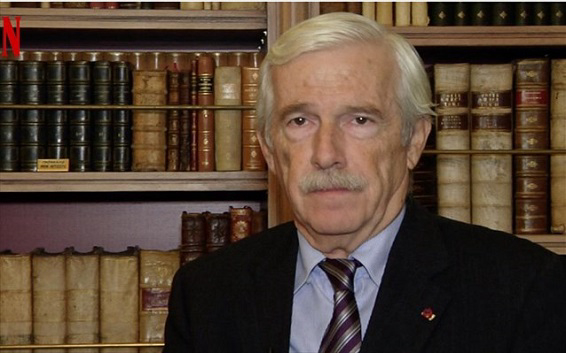
Member of the Board of the Union of Greek Shipowners and CEO of Laskaridis Shipping Co. Ltd. and CEO of Lavinia Corp. Mr. Panagiotis will start his two-year term as ECSA’s new President from January 2018. Mr. Smedegaard will remain Board Member representing Danish Shipping.
“I am very pleased of this trust, and committed to focus the European shipping agenda on shipowning matters, work with stakeholders for an efficient, competitive and future oriented European shipowning community’’, Laskaridis said.
Mr. Martin Dorsman Secretary General of ECSA said: “We look forward to working closely with Mr. Laskaridis and welcome his profound expertise and experience of the global shipping sector”.
Mr. Claes Berglund of the Swedish Shipowners and Director Public Affairs and Sustainability, from Stena AB will start as ECSA’s Vice-President in January. “I feel honoured of this appointment and look forward to supporting ECSA’s work. Shipping is dependent on a strong EU with a clear focus and we need to ensure an open market and free trade”, he commented.
Mr. Dorsman thanked on behalf of the Board and ECSA staff Niels Smedegaard for steering ECSA the last two years through intense discussions and reaching unanimous positions. “The excellent chairmanship of Niels Smedegaard stands out even more taken into account the very challenging circumstances for shipowners the last years”, he said. “Combining environmental improvements with maintaining the competitive position of EU shipowners is a real achievement. I’m really pleased that Mr. Smedegaard will continue to contribute to the ECSA Board discussions the coming years”, Martin Dorsman concluded.
ecsa.eu
NATIONAL DAY OF DOMINICA MARKED

Dominica “has caught the imagination of the world,” he said.
Addressing Greek high officials, business representatives and Members of the Diplomatic and Consular Corps during a private dinner hosted by himself and his charming wife Olga, Mr. Vardikos said that with the assistance of global agencies, “the aim was to rebuild a better, more resilient Dominica; however long or hard the road may be.”
|
|
|||
|
|


|
|
||
|
|


|
|
||
|
|


|
|
||
|
|


|
|
||
|
|


First row: Hnry Consul of the Commonwealth of Dominica and Mrs. Christos Vardikos pictured with MoFA A8 Director, Ambassador Dimitris
Hatzopoulos; with MoFA A7 Director, Ambassador Ekaterini Boura; with MoFA A5 Deputy Director Ambassador and Mrs. Constantinos
Piperigos; with Dean of the Diplomatic Corps, Ambassador of Romania Lucian Fatu.
Second row: with the Ambassadors of Venezuela and Mrs. Farid Fernandez; of Montenegro and Mrs. Petar Popovic; of Panama Cristina Liakopulos de Papadikis and of Korea Young-Jip Ahn; of Saudi Arabia and Mrs. Essam Baitalmal.
Third row: with the Ambassadors of Georgia and Mrs. Ioseb Nanobashvili; of Switzerland and Mrs. Hans-
Rudolf Hodel; of Argentina Carolina Colman; of Algeria and Mrs. Noureddine Bardad-Daidj.
Fifth row: with the Ambassador of Japan Yasuhiro Shimizu; with Hnry Consul General of Ethiopia Mrs. Terina Armenakis-Kalogeropoulos; with
the Hnry Consuls of the Philippines Haris Vafias and of Nicaragua Miguel Capuano; of Ukraine and Mrs. Paraskevas Dragnis.
Top 5 next generation in shipping 2017

AS THE winner of the 2017 Lloyd’s List Global Awards next generation shipping award, Dorothea Ioannou was a shoo-in to top our future leaders' list.
Ms Ioannou has come a long way in a short time, a fact she credits to the support and belief shown in her by the SCB leadership team, singling out American Club president and chief operating officer Vince Solarino as a key ally.
She is the first woman appointed to the executive committee of the NY management company SCB Inc and is involved with corporate strategy. She grew the club's tonnage by more than 16\% and developed its hull and machinery insurance subsidiary, AHHIC Ltd.
Ms Ioannou maintains oversight of the day-to-day operations of the Piraeus office and raises her daughter as a single parent.
In receiving her accolade at the September ceremony in London, Ms Ioannou said: “An award like this encourages me to look for what’s next and helps me to be a better person.”
lloydslist.maritimeintelligence.informa.com
Shipowners urge for rapid and positive progress in the Brexit negotiations
Shipowners sent their priorities to the Commission’s chief negotiator Mr. Barnier regarding the next phase and discussed these with members of the European Commission Task Force on article 50 who joined the ECSA Board of Directors meeting today.
Niels Smedegaard, ECSA President, said: “We need an agreement which will ensure the continuation of trade volumes and unimpeded trade movements across our shared borders. This will require a legal framework which allows these vital trades to continue to flow without delay or dislocation. The industry should be kept informed about the progress in order to be able to prepare and get ready in time.”
Mr. Smedegaard added: “European shipping stands for quality shipping. It is in essence a global business, and best served by global rules and common standards. European shipowners would like to see the Brexit negotiations respect the need for a level playing field for EU and UK shipping. We encourage the EU and UK to be guided by the objective of conformity in legislation relating to maritime affairs.”
MARGETIS MARITIME CONSULTING : New Personnel in Piraeus and Istanbul Offices


Alexandrow Zereifis: A graduate from the National Technical University of Athens (NTUA), he has previously served as Technical Superintendent for a Greek tanker Operator. See Full CV
Ioanna Kafka: A graduate from the National Technical University of Athens and the University of Strathclyde, Glasgow, previously with an International Consulting Firm in London and Singapore and a keen yachtswoman. See Full CV
Athina Chrysomalli: A Psychology Graduate from the National and Kapodistrian University of Athens, Athina has joined the Firm in charge of the Quality and Human Resource division. See Full CV
Hamza Taskeser: An oceangoing Master Mariner, from Istanbul Technical University – Maritime Faculty, with a Law Degree from Istanbul University, Hamza was previously the Deputy Director General of the Merchant Maritime Ministry of Transport in Turkey, and a Turkish delegate to the IMO and EMSA. He has deep knowledge of the particularities of the Turkish Open Form (T.O.F.), having previously served as a Rescue & Salvage Officer. See Full CV
Mustafa Azman: A qualified Master Mariner, has served on board a Rescue & Salvage Tug. Before joining our Firm, Dr. Mustafa Azman was the Harbour Master of Istanbul and the Chief Coordinator in the project of establishing the Turkish P&I Insurance, whilst he has also served as the Vice Chairman in the International Oil Pollution Compensation Fund Assembly (IOPC). See Full CV
We are proud for the vast qualifications and experience of our new executives, we are sure that will be of great assistance to our Firm and clients and wish them all the success.
Yours Faithfully
MARGETIS Maritime Consulting
Piraeus, Istanbul, Montenegro, Houston, Split & Shanghai
Moody’s: Alliances, M&A to remain key feature of container shipping sector seascape into 2018
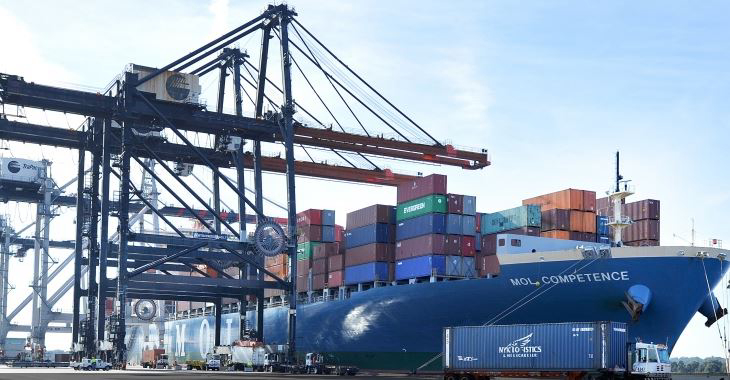
“The trend toward consolidation among container shipping firms will continue into 2018 as larger companies look for opportunities to increase market share, while smaller companies seek to increase efficiency to maintain profitability,” says Maria Maslovsky, Vice President-Senior Analyst at Moody’s.
Consolidation through slot purchases and alliances has helped improve efficiencies without the need for companies to take on extra debt. These strategies allow shipping companies to pool resources to increase efficiencies and customer reach without balance sheet impact and transaction risk.
Moody’s expects shipping companies to continue to seek alliances and slot purchase agreements where possible . Any that do not participate will probably be at a competitive disadvantage as they are less likely to achieve the cost efficiencies needed to compete with peers in alliances. Exceptions would be regional firms like Wan Hai Lines Ltd. (Ba2 stable) that focus successfully on a specific market niche and do not compete with larger firms on the main trade lanes.
Moody’s anticipates that M&A will continue in the sector given the potential for both revenue and cost synergies resulting from such transactions. However, while recent mergers including Hapag-Lloyd AG (B2 stable) and CSAV, and CMA CGM S.A. (B1 positive) and NOL, have resulted in synergies, the success of future transactions will depend on strong operational execution.
In Moody’s view, the impact of debt-funded M&A on companies’ creditworthiness would depend on a number of factors, including the company’s ability and focus on restoring its metrics to within the rating agency’s guidance over a 12-18 month period.
Source: Moody’s
China, Greece vow to strengthen cooperation under Belt and Road

 |
| Greek Prime Minister Yiannis Dragasakis and Chinese Vice Premier Ma Kai |
He said China COSCO Shipping's Piraeus Port project is a good example of win-win cooperation of the two countries.
Ma noted that both China and Greece are in key stages of reform and development, and the two countries should join hands to consolidate and further develop the momentum of cooperation in all fields.
The vice premier suggested the two sides should seize the historical opportunity of the development of the Belt and Road Initiative to step up all-round cooperation, promote practical cooperation through major projects, support cooperation between financial institutions in various ways, enhance balanced development by expanding trade and economic cooperation, and deepen people-to-people and cultural exchanges.
Dragasakis said Greece attaches great importance to the development of the relations with China, and actively supports the Belt and Road Initiative. He said Greece wishes to make use of its status as a regional hub to strengthen cooperation under the initiative.
The Belt and Road Initiative, championed by China, focuses on development of new road and maritime trade routes connecting a large swathe of Asia, Middle East, Europe and Africa.
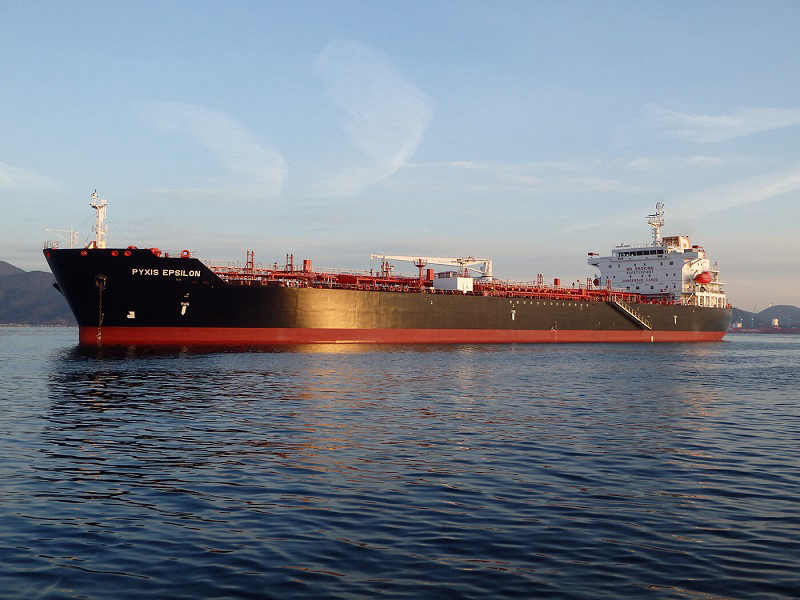
Pyxis Tankers Inc. Announces a $4.8 Million Private Placement of Common Stock
 |
Pyxis Tankers will use the net proceeds from the transaction for general corporate purposes, which may include the repayment of outstanding indebtedness.
The securities offered and sold by Pyxis Tankers in the private placement have not been registered under the Securities Act of 1933, as amended (the "Securities Act"), or state securities laws and may not be offered or sold in the United States absent registration with the Securities and Exchange Commission(the "SEC") or an applicable exemption from such registration requirements. Pyxis Tankers has agreed to file a registration statement with the SEC covering the resale of the shares of common stock to be issued in the private placement. Any resale of Pyxis Tankers' shares under such resale registration statement will be made only by means of a prospectus.
This press release shall not constitute an offer to sell or a solicitation of an offer to buy these securities, nor shall there be any sale of these securities in any state or other jurisdiction in which such offer, solicitation or sale would be unlawful prior to the registration or qualification under the securities laws of any such state or other jurisdiction.
About Pyxis Tankers Inc.
We own a modern fleet of six tankers engaged in seaborne transportation of refined petroleum products and other bulk liquids. We are focused on growing our fleet of medium range product tankers, which provide operational flexibility and enhanced earnings potential due to their "eco" features and modifications. We are well positioned to opportunistically expand and maximize our fleet due to competitive cost structure, strong customer relationships, and an experienced management team, whose interests are aligned with those of our shareholders. For more information, visit: http://www.pyxistankers.com
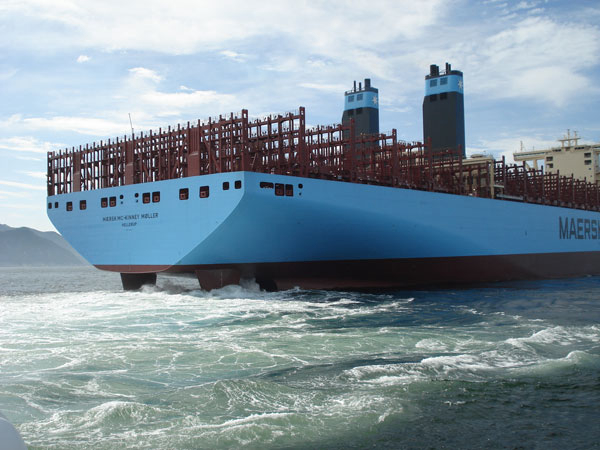
Maersk Line's CCO on Strategy, M&A, Shipping Outlook
https://www.bloomberg.com/news/videos/2017-12-06/maersk-line-s-cco-on-strategy-m-a-shipping-video

Powered by  © Μaritimes 2019