


The Maritime CIO forum Cyprus 2018 will highlight digitalisation in shipping on 27 March

 |
Our Maritime CIO Forum in Cyprus will bring experts together to look at where we are at and where we should be headed, and how to use innovation to drive efficiency and differentiation.
Sessions will include:
- The Maritime Satcom Summit – Investigating the evolution of maritime mobility and connectivity
- Blockchain and its Impact on the Maritime Industry – How will Blockchain streamline trade and transport?
- Harnessing Cyber Resilience and Managing Risk – A look at maritime cyber security, safety and risk
- The iShipping Revolution – Redefining Digitalisation in Maritime
Speakers and Panellists confirmed to participate include:
- Barbara Bersani, Head of Sales ESMEA, Marlink
- Gerbrand Schalkwijk, Deputy President & COO, Inmarsat Maritime
- Manuel Valero, Sales Manager, Telenor Satellite
- Ken Munro, Security Entrepreneur & Writer, Pen Test Partners
- Piera Di Vito, Technical Officer, European Space Agency
- Rear Admiral Nick Lambert, Director, NLA, Former UK National Hydrographer
- Stein Are Hansen, Intelligence & Operations Centre (IOC), Norwegian Shipowners’ Mutual War Risks Insurance Association
- Takis Falidouris, Manager, Marlink
- Rob O’Dwyer, Editor, Digital Ship
and many more to be announced soon
ABOUT DIGITAL SHIP
For 18 years Digital Ship magazine has provided the digital community of the world's maritime industry with the latest news and developments, including satellite communications, software, navigation and electronics, to help keep shipping operating with maximum safety, efficiency and crew comfort.
CONTACT:
Cathy Hodge, Event Director, Digital Ship
+ 44 7956 965 857 |email: This email address is being protected from spambots. You need JavaScript enabled to view it. | www.thedigitalship.com
Website: https://www.cyprus.thedigitalship.com/
From stamp to screen: DNV GL issues over 50,000 electronic certificates

 |
| DNV GL has issued over 50,000 electronic class certificates |
The classification rules covering shaft alignment are formulated to achieve an acceptable distribution of loading on the shaft bearings and lubrication of the aft bearing, taking into consideration the bending moment induced by the propeller during operation. However, during turning manoeuvers at higher ship speeds, exaggerated propeller bending moments can occur, potentially resulting in a reduced shaft-bearing contact area and an exponential increase in local pressure and thermal loading. This could cause damage to the aft bearing. Most of the reported bearing damages have been observed in the aft-most part of the aft bearing, typically during a starboard turn on a right-handed propeller installation. The new rules put additional focus on the impact of these transient hydrodynamic propeller forces and moments, induced in turning conditions, on the aft-most propeller shaft bearing.
“We have been overwhelmed by the positive response from our customers and the industry as a whole,” says Knut Ørbeck-Nilssen, CEO of DNV GL – Maritime. “Many owners have opted not to wait for their first scheduled survey to shift vessels to the new certificates, but have asked to move their whole fleet onto the new system. Our goal for 2018 is to have every vessel in the fleet using electronic certificates in conjunction with their periodic survey.”
Since the launch in mid-October 2017, DNV GL has issued approximately 50,000 certificates, with more than 6,000 vessels of the classed fleet now trading with one or more certificates. Digitally signed electronic certificates represent nearly 80 per cent of all certificates issued by DNV GL since the roll-out. 52 flag states accept the certificates, with further acceptances expected over the coming year.
“The administrative savings for our customers have been significant, in particular in the ease with which customers always have access to new and updated certificates on the fleet status portal and through email subscription,” says Knut Ørbeck-Nilssen. “And vessels issued with electronic certificates have successfully been through close to 1,000 port state inspections worldwide. The port state process is also made more efficient, by enabling owners to use a secure electronic certificate folder to grant temporary access to authorities through our fleet status portal.”
About DNV GL’s electronic certificates
Certificates are published on DNV GL’s customer portal immediately after an onboard survey is completed, so that all relevant parties can access the latest certificates from anywhere in the world. The electronic certificates are secured with a digital signature and a unique tracking number (UTN) which can be checked online, assuring their validity and authenticity. Customers can choose to share access to their certificates with stakeholders (charterers, ports, flag administrations, insurers) by using temporary access codes. With the temporary code the stakeholder can directly access the customer’s secure certificate folder, bringing the administrative burden on the shipowner down to the absolute minimum.
About DNV GL
DNV GL is a global quality assurance and risk management company. Driven by our purpose of safeguarding life, property and the environment, we enable our customers to advance the safety and sustainability of their business. Operating in more than 100 countries, our professionals are dedicated to helping customers in the maritime, oil & gas, power and renewables and other industries to make the world safer, smarter and greener.
About DNV GL – Maritime
DNV GL is the world’s leading classification society and a recognized advisor for the maritime industry. We enhance safety, quality, energy efficiency and environmental performance of the global shipping industry – across all vessel types and offshore structures. We invest heavily in research and development to find solutions, together with the industry, that address strategic, operational or regulatory challenges.
www.dnvgl.com/maritime
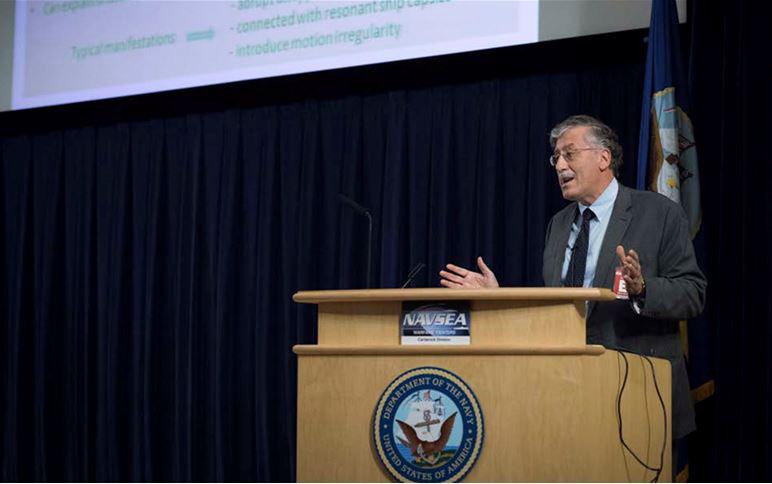
Dr. Spyrou gives Weinblum lecture at Carderock
 |
| Dr. Kostas Spyrou, a professor at the School of Naval Architecture and Marine Engineering for the National Technical University of Athens, Greece, gives a lecture Nov. 13, 2017, at Naval Surface Warfare Center, Carderock Division, as part of the Weinblum Memorial Lecture series, named for Georg Weinblum. (U.S. Navy photo by Monica McCoy/Released) |
This lecture series was established in 1978 by colleagues of Georg Weinblum, a German engineer who studied ship hydrodynamics and had major contributions to aspects such as waveresistance theory, maneuvering, ship motions and hydrofoils. Weinblum also worked at Carderock from 1948-1952, then known as the David Taylor Model Basin. The lecture series honors a person each year who exemplifies the ideals of Weinblum.
Spyrou’s lecture, “Homoclinic Phenomena in Ship Motions,” was given first in Hamburg, Germany, about a year ago and then at Carderock, which is normal for the lectures.
“The title homoclinic is strange for most people, but it is not strange to me as it is a Greek word and I’m a Greek person, so I understand the deeper meaning of the word,” Spyrou said, describing homoclinic as one special class of non-linear phenomena that can affect ship systems that are dynamic, such as a giant wave that would be very rare.
Spyrou has been working with Dr. Vadim Belenky, a naval architect with Carderock’s Simulations and Analysis Branch (Code 851), over the past nine years in a collaborative effort to study these rare events and looking into extreme values, into the extremes in ship motion, such as capsizing.
Specifically, the objective of Spyrou’s lecture was to identify the cases of strange behavior that might happen to a ship and may affect the safety of the system in a critical mode as something that happens very suddenly. Once identified, Spyrou said it’s possible to approach the problem with rational scientific approach and engineers or Sailors may be able to predict the phenomena, and therefore see ways to avoid the phenomena.
“I have tried to identify all the cases we know about such phenomenon, which are relevant to ship motions, from the studies that have taken place in the past,” Spyrou said. “It’s not the kind of work that many people are actually doing right now because it’s about something that’s very rare. You don’t expect a ship to capsize in its lifetime, but you know that this is something you need to avoid at any cost.”
Spyrou said it is essential to put some effort in this area of study. With more knowledge, there may be a way to prevent a disaster with simple design changes. But there may be operational strategies, as well, by avoiding getting the ship into trouble in the first place.
“One of the conclusions was that we need to do more to educate naval architects to understand the phenomenon,” Spyrou said, adding that the math used to describe homoclinic phenomena needs to be included in the naval architect curriculum.
By Kelley Stirling, NSWCCD Public Affairs
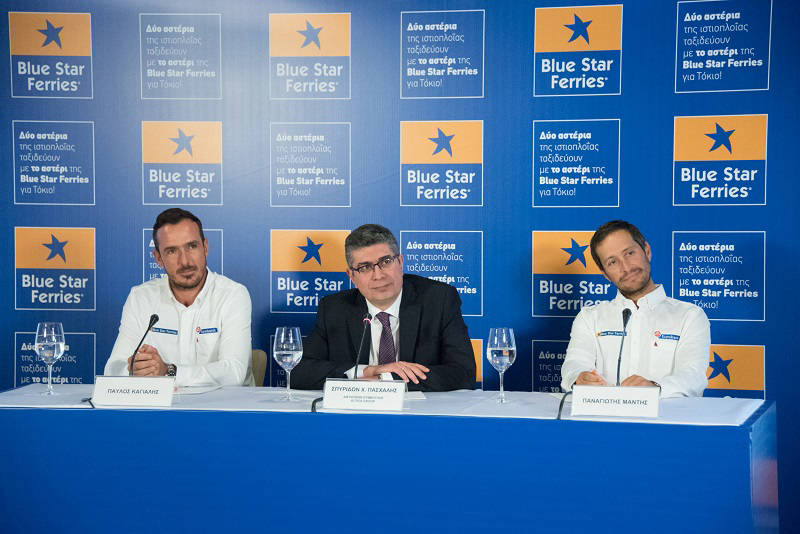
Panagiotis Mantis and Pavlos Kagialis are navigating their way to the Tokyo Olympic Games with the help of a Blue Star!
 |
The Olympic bronze medallists in Rio de Janeiro first sailed together in June 2008. Since then, they have competed in several major events and they are the first National team crew that has participated in every important competition all over the world and are considered the best Greek sailing duo in the men’s 470 sailing class. They hold the first place in the Greek rankings and the third in the World Cup. To quote them: “Racing at sea is difficult but fantastic. In this endeavour it is important to have with us people who know and love the sea as much as we do. Joining forces with Blue Star Ferries, will take us a long way.”
As part of the “With you as our destination” corporate responsibility programme, Blue Star Ferries is supporting the duo in their attempt to represent Greece at the next Olympic Games. As Spyros Paschalis, CEO of Attica Group, noted, our involvement in the efforts of the two champions is and will continue to be active and essential for the achievement of their goals and the representation of our country at the Tokyo Olympic Games. “The truth is that apart from a common love for the sea and Greece, we are also joined by common values. We believe in the constant effort to achieve the best and we are convinced that we can make things better by working together and operating as a team, with consistency and commitment to our goals” Mr Paschalis stressed.
In closing his brief address, Mr S. Paschalis noted: “It gives me great pleasure to welcome Panagiotis Mantis and Pavlos Kagialis to the Blue Star Ferries family. These two star sailors are setting a course to reach Tokyo with the help of a Blue Star. These two internationally renowned Greek athletes fill us with pride and show that with teamwork, unity and cooperation we can achieve so much. This is what we focus on every day at Blue Star Ferries: working constructively together, offering the finest services, meeting the needs of our passengers and island residents to the best of our ability, acting on the principles of responsible entrepreneurship, social awareness and giving. As Panagiotis and Pavlos embark on their voyage to Tokyo, we will be cheering them on, wishing them a strong wind in their sails!”.
Attica Group engages in passenger shipping via the SUPERFAST FERRIES, BLUE STAR FERRIES and AFRICA MOROCO LINKS (AML) companies, operating a total of 15 ships that provide modern, high quality transportation services in Greece and abroad. ATTICA GROUP is a member of the Marfin Investment Group (MIG) with controlling stakes in a number of leading companies.
New DNV GL class notations aim to improve stern tube bearing performance
 |
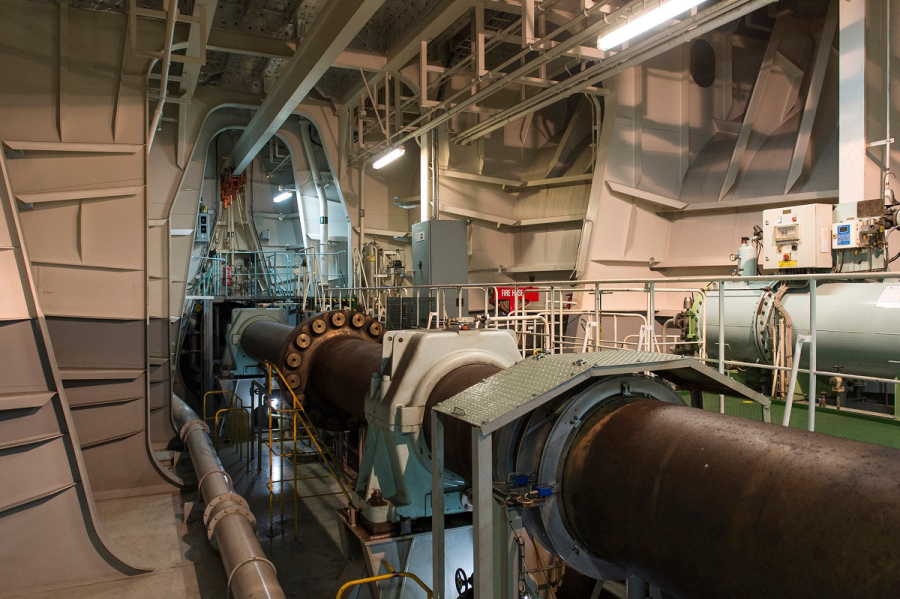
| Propeller shaft system. |
The classification rules covering shaft alignment are formulated to achieve an acceptable distribution of loading on the shaft bearings and lubrication of the aft bearing, taking into consideration the bending moment induced by the propeller during operation. However, during turning manoeuvers at higher ship speeds, exaggerated propeller bending moments can occur, potentially resulting in a reduced shaft-bearing contact area and an exponential increase in local pressure and thermal loading. This could cause damage to the aft bearing. Most of the reported bearing damages have been observed in the aft-most part of the aft bearing, typically during a starboard turn on a right-handed propeller installation. The new rules put additional focus on the impact of these transient hydrodynamic propeller forces and moments, induced in turning conditions, on the aft-most propeller shaft bearing.
In the “Shaft align” class notations and the revised main class requirements for single stern tube bearing installations, a multi-sloped bearing design is mandatory. This is further supplemented by an additional evaluation of the aft bearing lubrication condition considering an increased propeller-induced hydrodynamic bending moment on the aft bearing in the downward direction. Additional design and installation criteria also assist to increase the operating margins and enhance bearing performance and fatigue lifetime in normal continuous running conditions.
“We are always looking to push the development of our rules forward to help our customers operate and maintain more reliable and safe ships,” says Geir Dugstad, Director of Ship Classification at DNV GL – Maritime. “With this revision to the DNV GL class rules and the two additional class notations, we will enable owners to enhance bearing performance, and benefit from a longer lifetime in their stern tube installations.”
The notation “Shaft align(1)” is intended for propulsion systems installed on vessels with conventional hull forms and incorporates enhanced aft bearing performance during normal and turning operating conditions. “Shaft align(2)” is intended for propulsion systems requiring additional calculations to predict hydrodynamic propeller loads during turning conditions, for example vessels with non-conventional hull forms such as asymmetric stern, twin skeg etc. Design and in-service follow-up rules for the class notations are included in the updated DNV GL rules for the classification of ships, Pt.6 Ch.2 Sec 10 and Pt.7 Ch.1 Sec 6(38) respectively.
“We hope that by introducing the revised main class rules for single bearing installations and ‘Shaft align (1) or (2)’ we can substantially reduce stern tube bearing failures,” says Oddvar Deinboll, Head of the Machinery section at DNV GL – Maritime. “We’ve received a lot of positive responses from the industry and are already working on some concrete projects.”
More information on the new notations can be found here.
About DNV GL
DNV GL is a global quality assurance and risk management company. Driven by our purpose of safeguarding life, property and the environment, we enable our customers to advance the safety and sustainability of their business. Operating in more than 100 countries, our professionals are dedicated to helping customers in the maritime, oil & gas, power and renewables and other industries to make the world safer, smarter and greener.
About DNV GL – Maritime
DNV GL is the world’s leading classification society and a recognized advisor for the maritime industry. We enhance safety, quality, energy efficiency and environmental performance of the global shipping industry – across all vessel types and offshore structures. We invest heavily in research and development to find solutions, together with the industry, that address strategic, operational or regulatory challenges. For more information visit www.dnvgl.com/maritime
“Air quality measurements in ports”, Piraeus Port Authority, 16 February 2018
Port authorities, EU officials, stakeholders from shipping sector, environmental associations will have the opportunity to exchange views about the regulatory aspects for the amelioration of air quality in ports; to comment on the findings of the shipping emissions measurements held in Piraeus and Patras Port within Poseidon Med II framework; to map opportunities of greening ports through the deployment of LNG as alternative fuel.
It is an open event subject to registration.
To view the Conference agenda & register, click here
What is Poseidon Med II project?
Poseidon Med II project is a practical roadmap which aims to bring about the wide adoption of LNG as a safe, environmentally efficient and viable alternative fuel for shipping and help the East Mediterranean marine transportation propel towards a low-carbon future. The project, which is co-funded by the European Union, involves three countries Greece, Italy and Cyprus, six European ports (Piraeus, Patras, Lemesos, Venice, Heraklion, Igoumenitsa) as well as the Revithoussa LNG terminal. The project brings together top experts from the marine, energy and financial sectors to design an integrated LNG value chain and establish a well-functioning and sustainable LNG market.
Depressed outlook for long-haul routes in chemical shipping market
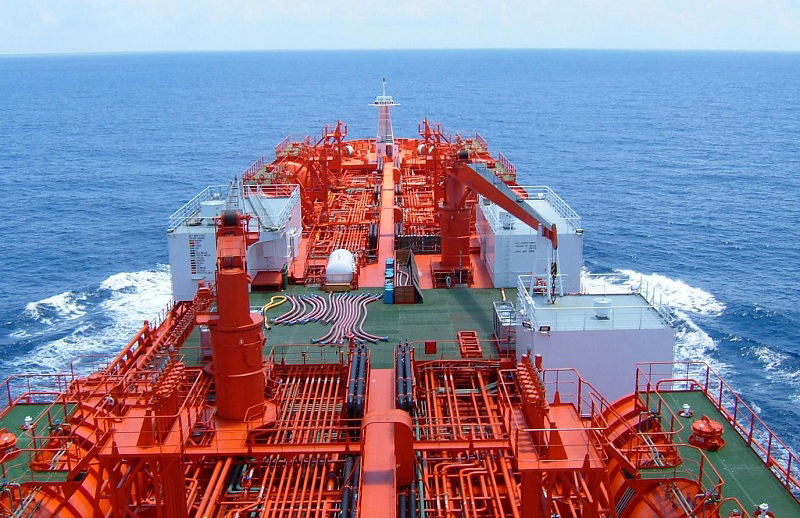
The global chemical trade grew by a little over 4\% in 2017, while overall tonne-mile demand expanded by almost 5\%. Despite continuing global economic growth, Drewry expects seaborne chemical trade to grow by 2.5\% in 2018 and tonne-mile demand by 1.6\%, reflecting a slowdown in long-haul trip growth. Increasing self-sufficiency in base chemicals in Asian countries is a definite threat to long-haul trades.
 |
The global chemical capable fleet increased by 3.9\% in tonnage terms in 2017. However, the fleet trading in the chemicals/vegoils market expanded by 18\%, while the fleet trading in CPP declined by 4\% as the weakness in this market encouraged owners to switch trades. Some 200 IMO tankers aggregating 3.1 mdwt are scheduled to be delivered in 2018. Scrapping will continue to play a vital role and will increase until 2020 when the new Ballast Water Treatment System (BWTS) and the sulphur cap regulations come into effect. However, it will not be sufficient to offset new deliveries and Drewry forecast that the fleet is likely to grow by an annual rate of around 3\% this year and next year.
Drewry expect freight rates to weaken further through 2018 as newbuildings enter service. It is also the case that the future performance of the CPP market will continue to be an important factor in supply changes in the chemicals/vegoils sector.
“We expect freight rates to remain stable in 2018 on major regional routes, but they will be depressed on traditional long-haul routes because of oversupply of large vessels,” commented Hu Qing, Drewry’s lead analyst for chemical shipping.
“We forecast oversupply in the chemical sector in 2018. The fleet trading in chemicals has expanded more than demand and will continue to so in 2018. Apart from the fact that deliveries of new ships will outpace scrapping, it is also the case that the average size of the new vessels scheduled for delivery are larger than the vessels they are replacing. We therefore expect time charter rates to come under increasing pressure,” added Qing.
Source: Drewry Shipping Consultants Limited
Diana Containerships Inc. Announces the Sale of a Panamax Container Vessel, the m/v New Jersey
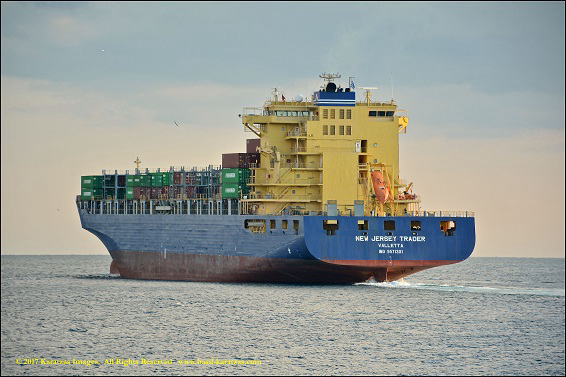
Upon completion of the aforementioned sale and the previously announced sale of two Post-Panamax container vessels, Diana Containerships Inc.’s fleet will consist of 8 container vessels (4 Post-Panamax and 4 Panamax). A table describing the current Diana Containerships Inc. fleet can be found on the Company’s website, www.dcontainerships.com. Information included on the Company’s website does not constitute a part of this press release.
About the Company
Diana Containerships Inc. is a global provider of shipping transportation services through its ownership of containerships. The Company’s vessels are employed primarily on time charters with leading liner companies carrying containerized cargo along worldwide shipping routes.
http://www.dcontainerships.com
Global Shipping Is On Course For Recovery In 2018, But All Eyes Are On Orderbooks
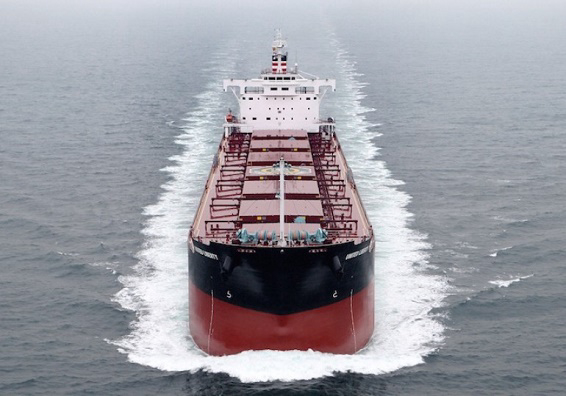
The lighter new vessel delivery schedule for 2018, compared with 2017, combined with our expectation of sustained imports of commodities, and longer distances travelled, point to rising charter rates across the shipping industry this year–with the exception of the container liner segment, which we forecast will see flat rates or a slight dip. What’s more, given the fundamental improvement in supply conditions, as signified by ship orderbooks being at close to all-time lows, we think recovery in shipping rates could continue beyond 2018. However, we see a risk that vessel owners, renowned in the industry for their historically poor supply discipline, could embark on an ordering spree in anticipation of better times ahead. This would disrupt the encouraging supply trend and constrain charter rates. But, assuming a typical lead-time from ship ordering to delivery of 18-24 months, we expect a slowdown in supply growth for at least the next few quarters, regardless of ordering activity.
While our base case assumes no major glitches on the demand side, underpinned by our firm 2018-2019 GDP growth forecast for all major contributors to global trade volumes, especially China, but also the eurozone and the U.S., all eyes are on the supply side and orderbooks, which will essentially shape the shipping industry beyond the likely solid 2018. If owners refrain from aggressive ordering and supply tightens further, we could see momentum in charter rates continuing into 2019. (Watch the related CMTV posted Feb. 13, 2018, titled “All Eyes On Orderbooks: Global Shipping Outlook For 2018”.)
Overview
- We expect industry conditions to strengthen in 2018 for most of the 17 shipping companies we rate globally.
- While improved supply conditions will likely prop up charter rates this year, a further recovery beyond 2018 will depend on prudent capacity management decisions by vessel owners.
- Sustained global demand for commodities is essential for further improvement of dry bulk shipping rates.
- We forecast a cyclical upturn for product tanker rates following soft rates in 2017, as the new vessel delivery schedule for this year is close to historical lows.
- Given uncertainties in container liners’ maintenance of supply discipline, we forecast flat to slightly negative growth in freight rates in 2018.
Stable Outlooks For Most Rated Issuers, Due To Resilient Charter Rates
Our 2018 industry outlook, which points to generally resilient charter rates, mirrors our stable outlooks on the majority of rated ship operators. We rate 17 shipping companies globally (see table 1), two-thirds in the single ‘B’ category, following several negative rating actions over the past few years of industry downturn and unsustainable charter rates. Ratings stabilized in 2017, with positive rating actions outnumbering negative rating actions by ten to seven (see table 2). The vast majority of the seven negative rating actions were related to company-specific issues rather than industry conditions.
We view liquefied natural gas (LNG) shipping and passenger ferries as the most attractive shipping segments, because gas tankers typically operate under very long-term take-or-pay contracts with reputable counterparties, and ferry companies tend to face more stable demand and pricing, and lower capital intensity compared with conventional shipping. Container and dry bulk shipping are the most risky segments in our view, because of typically weak credit quality of charterers, among other factors.
Despite the overall stable outlook, a few downgrades and upgrades could follow in the next 12 months, as signified by the five negative outlooks or negative CreditWatch placements and two positive outlooks. The vast majority of negative outlooks and CreditWatch placements point to downside coming from developments unrelated to charter rate prospects, such as potential covenant breaches, increased financial leverage due to an acquisition, or a likelihood of downgrade of the sovereign rating.
 |
 |


Financing Difficulties May Keep A Lid On Fleet Sizes
We note a few impediments to a significant pick-up in new vessel orders, such as the generally stretched financials and borrowing capacity of vessel owners after several years of the industry downturn, and low appetite from lenders for shipping loans. Most European banks, traditionally the dominant ship financiers, have significantly reduced their exposure to the shipping industry, or even exited it completely over the past few years. We attribute the shift to internal considerations such as scarcity of bank capital, stricter regulatory capital rules, an escalation in restructuring of shipping debt, and a material weakening in the quality of banks’ shipping portfolios because of low vessel values. Funding has consequently become more scarce and selective and we expect this to remain the case during 2018. Chinese and Korean banks have stepped in to partly fill the funding gap because shipbuilding is important to their economies, but these lenders alone are unlikely to reduce credit scarcity for all ship operators.
Dry Bulk Shipping Charter Rates Should Continue Recovering In 2018
Dry bulk vessels move the raw materials of global trade–commodities such as coal, iron ore, and grain. For this segment, we forecast that demand growth will exceed supply growth again this year. A combination of supporting fundamentals bodes well for the dry bulk shipping rates in 2018, most importantly:
- Rising iron ore, coal, and grain ton-mile demand. China, the world’s single-largest commodities’ importer, is bringing in additional volumes from more distant places than before, such as Brazil and North America, because of a pollution-focus-related shift to higher-grade imported commodities (most importantly iron ore and coal) and diversification of supply sources; and
- A close to all-time-low orderbook. The dry bulk vessel orderbook currently represents about 8\% of the global fleet (compared with around 80\% 10 years ago), and is to be delivered over the coming two to three years, according to Clarkson Research.
The sector experienced a strong rebound in charter rates last year (from rock-bottom levels) because the growth in demand for commodities exceeded fleet expansion. For example, the average time charter rate for the benchmark Capesize ship was $15,000 per day in 2017, which was double the equivalent rate in 2016, according to Clarkson Research.
We expect fleet growth will trend markedly below last year, considering the muted new vessel delivery schedule this year, including the upside coming from non-deliveries, cancellations, and delays, which we assume will be 30\%-40\% of scheduled deliveries (the historical five-year average rate). We therefore forecast that demand growth will outpace net fleet growth, as long as China continues its firm imports of commodities to support its economy. We forecast GDP growth for China will only marginally soften to 6.5\% in 2018 and 6.3\% in 2019, compared with 6.8\% in 2017. This level of GDP growth, combined with Chinese regulatory pollution targets that stimulate imports of high-grade commodities, should keep the global demand growth rate in a low-to-mid single-digit range. Accordingly, we forecast that vessel utilization rates and charter rates will continue recovering this year after a rebound in 2017. Our base case in 2018 incorporates an average rate for Capesize vessels of $17,000 per day and for Panamax vessels $12,000 per day. This corresponds to the respective industry average rates seen in the fourth quarter of 2017, as reported by Clarkson Research.
But Improving Rates Are Sensitive To Global Indicators
A significant drop in global trade volumes, a key engine of shipping growth, would be damaging to the industry. We forecast solid growth in developing, mainly Asian, economies will stimulate commodities’ trade in 2018, but there are evident risks in the demand outlook. A slowdown in commodity imports and consumption by China (by far the largest iron-ore and coal importer), in particular, would harm the dry bulk shipping industry, which heavily invested in new vessels a few years back believing in China’s ability to deliver a consistently solid economic expansion. Furthermore, any changes to Chinese regulatory policies, for example, tougher restrictions on heavily-polluting industries, such as the steel sector, may be detrimental to international commodity markets. A renewed weakness in commodity prices, reversing the recovery in prices in recent quarters, could also disrupt improving trade dynamics in Canada and most Latin American economies. Furthermore, if aggressive ordering unexpectedly resumes and scrapping (which slowed over the past quarters) does not offset this, it will interrupt the process of rebalancing the industry and keep a lid on dry bulk charter rates.
The Outlook Is Better For Product Tankers, But Crude Tankers Will Still Struggle
We see a cyclical upturn for oil-product tanker rates just around the corner, as the new vessel delivery schedule for 2018 is historically low. Crude tanker rates, on the other hand, will likely remain under pressure this year because of OPEC oil production restrictions and a spike in vessel orders in 2017.
Tanker rates declined further in 2017, from the already soft rates in 2016. This was the result of the accelerated delivery of new tonnage outstripping relatively stable tanker ton-mile demand. Demand was constrained by the reduced oil production by OPEC and non-OPEC exporters and by high oil and petroleum-product inventories, which suppressed export volumes.
In 2018, we expect supply growth for product tankers to noticeably slow, in particular for medium-range tankers. At the same time, demand should be enhanced by tightening oil product inventories, leading to an uptick in charter rates. Crude tanker rates will have to wait longer for a meaningful rebound. OPEC recently extended its production restrictions until the end of 2018 (with a review in June 2018), which will hamper oil supply. In addition, there’s a firm order book for larger crude tankers after an unexpected spike in orders in 2017. These orders were driven by attractive vessel prices, but did not take into account the weak rate conditions and gloomy prospects. And they will be only to some extent counterbalanced by enlarged vessel scrapping.
The Supply/Demand Balance Is More Fragile For Container Liners
Although the overall supply and demand conditions have shifted in favor of ocean carriers, with trade volume growth likely outpacing fleet growth in 2018, we remain cautious on the freight rates’ outlook. Average freight rates on major trade lanes recovered to more sustainable levels for container liners last year, thanks to decent trade volumes, supply-side measures (such as vessel scrapping and lay-up), and streamlining of networks after yet another wave of industry consolidation. However, significant deliveries of ultra-large containerships are scheduled in 2018 and beyond. These were ordered a few years ago by ship owners looking for economies of scale to be reaped from utilizing such ships. They will pose a threat to the recent rebound in freight rates, in particular on the main Asia-Europe lane (a home for mega-containerships), despite the likely favorable supply-and-demand industry balance in general. According to Clarkson Research, the current order book for post-panamax containerships–which have a capacity of more than 15,000 twenty-foot equivalent unit–may almost double the size of the global post-panamax fleet within the next two to three years.
Bearing in mind the persistent supply burden, freight rates will ultimately depend upon how prudent the leading container liners are in their capacity management decisions. Taking into account historically poor supply discipline, we see a risk that new orders will accelerate. We are alerted to the most recent orders of 20 mega box ships by industry leaders MSC and CMA-CGM. And, given the container liners’ traditional battle for market shares, new orders from other players may follow. In addition, the demolition of older tonnage remains a critical supply-side measure to help correct excess capacity and stabilize rates at commercially viable levels. However, we are mindful that the pace of scrapping has slowed in recent quarters. Given all these uncertainties, we forecast flat to slightly negative growth in freight rates in 2018, coming from the much-improved average rates in 2017.
Consolidation Has Reshaped The Container Industry And Could Lead To More Sustained Rates
During the next 12-18 months–after the most recent acquisitions have been integrated, shipping networks and customer platforms aligned, and cost synergies realized–we expect to see whether consolidation in the container industry, with capacity management decisions now in hands of fewer players, translates into more sustained profitability. The liner industry has been through a few rounds of consolidation over the past several years, as an answer to erratic rate movements and recurring operating losses, including the most recent acquisitions of Hamburg Süd by Maersk Line, United Arab Shipping Company by Hapag-Lloyd, and Neptune Orient Lines by CMA CGM. The consolidation led to a structural change of container liners’ competitive landscape so that the share of the top five players escalated to around 65\% this year from 30\% around 15 years ago. About half of the top-20 players were either absorbed by mergers or defaulted (Hanjin Shipping), and the gap between the larger and smaller players, as measured by their total carrying capacity, has markedly widened. What’s more, it appears that size in this industry matters, as reflected in the above-industry average EBIT margins reported by the largest liners, such as Maersk Line and CMA CGM, over recent quarters.
A more concentrated industry is normally more rational and efficient, but a risk of destabilization remains, with a background of historically aggressive capacity management by the largest players. Our base case assumes that, notwithstanding the consolidation efforts, the container liner industry will remain volatile because of its asset-intense, operating leverage-heavy, and network-based nature. But cyclical swings could be less pronounced and of shorter duration, and mid-cycle freight rates could trend above the operating cost breakeven. We note that the drop in freight rates toward the end of 2017, as the industry hit the seasonal trough, was followed by a quick correction in rates at the beginning of 2018, which could be a sign of more reactive capacity management and which we would normally expect from a more concentrated industry.
The Improved Supply/Demand Balance May Help Spot Operators Pass On High Bunker Prices
Because bunker (ship fuel) accounts for a large share of voyage expenses that ship operators incur, a shipping company’s profitability depends greatly on its ability to pass on higher fuel prices through contracts or hedging instruments. If oil prices were to trend markedly above our current assumptions (see “S&P Global Ratings Raises 2018 Brent And WTI Oil Price Assumptions,” published Jan. 18, 2018), the resulting higher cost of bunker could hamper ship operators’ cash flows, and wipe away the upside coming from more favorable supply and demand conditions, unless the cost inflation is successfully passed through to customers.
Typically, dry bulk-, tanker-, and gas-carrier operators are protected from rising fuel prices because they operate vessels under bareboat- or time-charter contracts, whereby the charterer pays the bunker fuel bill as per a contractual agreement. However, spot operators–which enter into short-term charters, often for a single voyage at market rates–as well as container liners and ferry operators bear fuel risk. In general, they find it difficult to pass on bunker cost inflation, particularly if the industry is oversupplied. But improved supply and demand conditions and vessel utilization should play in the ship operators’ favor this time around.
High bunker prices call for our close monitoring, with a current spot price in Rotterdam at a three-year high of $370 per ton according to Clarkson Research, compared with an average of around $300 per ton in 2017 and the three-year low of $100 per ton in January 2016.
A decision by OPEC to relax its oil supply control and increase production would likely prevent oil prices from rising, or even stimulate a fall in prices, and prop up consumption and international trade, which are key demand drivers for crude oil shipping. Most importantly, a low bunker price would support shipping companies’ profits across all segments, but particularly for container liners, given their largely fixed network cost base. That said, the current OPEC-led production cuts until the end of 2018 remain the key constraint to global oil supply. If there were further unexpected cuts and a resulting surge in oil prices, this would dent demand, disrupt trade, and have an adverse knock-on effect on the crude tanker segment, in particular, which has to absorb a flood of new tonnage delivered in 2017 and some to hit the water in 2018.
Environmental Regulations Will Add Costs Over 2019-2020
International regulations to be implemented over the coming two years will increase either capital or operating expenditure for ship owners. The shipping industry will have to comply with environmental regulations, such as IMO Ballast Water Treatment System (BWTS) from 2019 and IMO 0.5\% Low Sulphur Limit from 2020. Measures to comply with the regulation include, for example, installation of BWTS and scrubbers or conversion of engines to use LNG as fuel, all of which will add to capital expenditure. Operators who don’t install scrubbers would need to run their fleet on a higher-cost low-sulfur marine diesel oil to be complaint, pushing up operating expenditure.
On the positive side, we anticipate that owners of older ships might view the necessary extra investment as economically unviable and send the aging tonnage to the scrap-yard through 2020, which would help to limit net fleet growth. Dry bulk ships, tankers, and containerships that are older than 20 years are close to the end of their useful life. Ships of such age account for 5\%-7\% of their respective global fleets, according to Clarkson Research, and are potential candidates for demolition by 2020, in our view.
Source: S&P Global Ratings
Danaos Corporation Reports Results for the Fourth Quarter and Year Ended December 31, 2017 02/12/2018
Highlights for the Fourth Quarter and Year Ended December 31, 2017:
- Adjusted net income1 of $31.2 million, or $0.28 per share, for the three months ended December 31, 2017 compared to $23.2 million, or $0.21 per share, for the three months ended December 31, 2016, an increase of 34.5\%. Adjusted net income1 of $114.9 million, or $1.05 per share, for the year ended December 31, 2017 compared to $140.9 million, or $1.28 per share, for the year ended December 31, 2016, a decrease of 18.5\%.
- Operating revenues of $114.2 million for the three months ended December 31, 2017 compared to $112.1 million for the three months ended December 31, 2016, an increase of 1.9\%. Operating revenues of $451.7 million for the year ended December 31, 2017 compared to $498.3 million for the year ended December 31, 2016, a decrease of 9.4\%.
- Adjusted EBITDA1 of $80.0 million for the three months ended December 31, 2017 compared to $75.9 million for the three months ended December 31, 2016, an increase of 5.4\%. Adjusted EBITDA1 of $310.4 million for the year ended December 31, 2017 compared to $350.6 million for the year ended December 31, 2016, a decrease of 11.5\%.
-Total contracted operating revenues were $1.7 billion as of December 31, 2017, with charters extending through 2028 and remaining average contracted charter duration of 5.7 years, weighted by aggregate contracted charter hire.
-Charter coverage of 86\% for the next 12 months based on current operating revenues and 69\% in terms of contracted operating days.

Powered by  © Μaritimes 2019