



Borr Drilling takes over Paragon Offshore to create $3.57 billion MODU fleet

Roundup: Greece's Piraeus port enters new era with increasing handling capacity
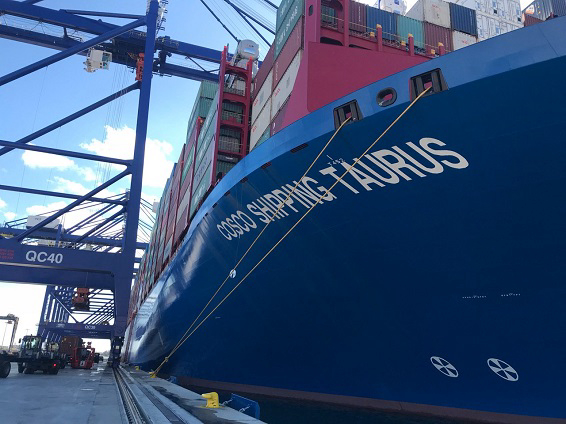
The 400 m Taurus is the largest vessel to berth at Piraeus Container Terminal (PCT), opening a new chapter in the history of the port.
Several officials and shipping industry representatives attended a ceremony for the welcome of the maiden call of the ship -- which set sail from China with a final destination of Rotterdam -- and the inauguration of the 3rd berth for 20,000 plus TEU vessels at PCT.
IMAGE CHANGE
Piraeus port, where the modern maritime Silk Road connects with the land route, has changed impressively since the COSCO Shipping Corporation subsidiary PCT took over the management of the site eight years ago for a span of 35 years.
The terminal has been extended and upgraded with new infrastructure projects. It has been linked with the Greek railways since 2013, and new gigantic cranes have been installed, while efforts are underway to transform the wider area into a major logistics centre as well.
Two years ago, following an international tender, COSCO also took over the management of Piraeus Port Authority (PPA), pledging to further invest in the Greek port and Sino-Greek win-win cooperation.
As part of the Belt and Road initiative, the port is being transformed into a significant transit hub for rapidly growing trade between Asia and Europe.
"It is evidence that the Silk Road, which links the two countries and consequently China to Europe, is progressing and marks the dynamic development of cooperation between the two nations in many sectors," Greek Shipping Minister Panayiotis Kouroumblis said addressing the event.
"Today is a big day for PCT Piraeus port and the Greek shipping industry. It is a very clear signal to prove that Piraeus is a port for world trade," Zhang Anming, PCT managing director, told Xinhua.
BIG AMBITIONS
Built in China and delivered to COSCO in January, Taurus boasts a length of about five Airbus A380 and maximum speed of 22.5 knots (41 kmh).
The Greek port welcomed her at the newly constructed western third berth of PCT which is about 800 meters long. Sea depth here reaches up to 19.5 meters, allowing the docking of giga carriers.
Currently, PCT can service in parallel three such gigantic vessels at berths 2 and 3.
The works are part of the 230 million euro (283 million U.S. dollars) investment project PCT undertook. PPA has committed to invest another 300 million euros at the port by 2021.
PPA CEO Fu Chengqiu, while delivering a speech during the event, stated China COSCO Shipping intends to make Piraeus the top port in the Mediterranean in the next two to three years and one of the 30 largest worldwide.
ROBUST GROWTH
Currently Piraeus is the 6th largest port in Europe and the third in the Mediterranean.
In 2010 when PCT took over from the Greeks the management of Piers II and III at PCT, roughly 900,000 containers passed through the terminal.
In 2016, the number had reached 3.7 million containers and last year over 4.1 million TEUs. An additional one million containers pass through Pier I which is managed by PPA.
COSCO Shipping wants to boost the port's overall container traffic to over 6 million TEUs by 2019.
With all these that have been going on here in the past few years, Piraeus has shot up world rankings of container ports to 38 in 2017 from 44 in 2015 and 93 in 2010, according to Lloyd's List.
"With the container business booming, the call of COSCO Shipping Taurus will bring more business to Piraeus port. The dream of becoming one of the biggest ports in the Mediterranean with 10 million TEU annual capacity will come true soon," Fu said.
Source: Xinhua
3.5m DWT Tankers Scrapped in 2018 so far
Each played a part as the decision to remove a ship from service varies depending on the financial situation of the owner. Some may be motivated as the $/t offered price offsets enough of their remaining mortgage on a ship to allow them to move out of a low cashflow market, while others may remove a ship after it completes a long-term storage contract.
 |
Higher spot market returns were due to higher levels of removals over the past several years combined with a low level of orders. This led to a contraction in fleet sizes in many segments.
Restrictions on emissions in China as the country grapples with air pollution issues has led to a rise in steel prices. The impact of this is seen in the global steel markets, which influences the value recyclers are willing to pay per lightweight ton. The price being offered in India for tankers and bulkers has been trending upwards since mid-2016.
 |
The sudden drop in oil prices led to a demand for floating storage as shoreside tanks filled due to contango in the oil markets. Older ships were taken on three to 12-month charters to store oil as they were able to offer lower $/day numbers than prime (less than 10 years) aged ships. The employment of these ships removed them as scrap candidates and kept them on the water.
High scrapping and market consolidation will contribute to better returns for owners over the next several years. For the harmony of the global shipping markets continues, older units are removed in a weak market and replaced with new vessels as rates recover.
source:Vessel Value
World’s first LNG-fuelled bulk carrier delivered.
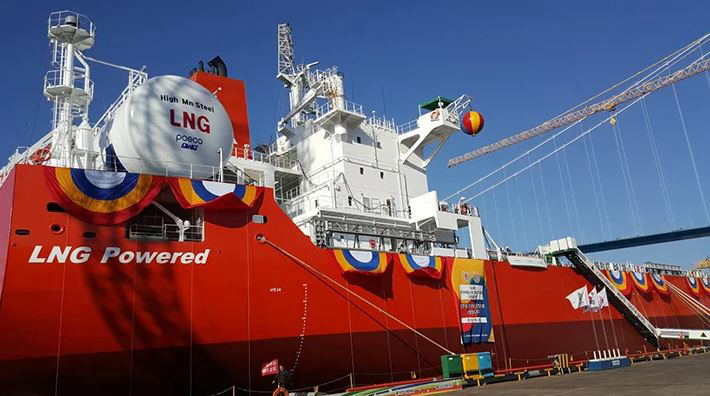
Hyundai Mipo Dockyard (HMD) and ILSHIN LOGISTICS have successfully delivered the world’s first LNG-fuelled bulk carrier under the dual-class of Lloyd’s Register (LR) and Korean Register. The 50,000 dwt bulk carrier has also been verified to be in compliance with the International Gas Fuel (IGF) Code. The vessel is the result of a collaboration project, announced in July 2016, to develop the first in a new generation of environmentally-friendly LNG-fuelled bulk carriers.
The ship has a Type ‘C’ LNG fuel tank with a capacity of 500m³, made of austenitic high manganese steel and located on the aft mooring deck. The material, newly developed by POSCO, has a high manganese content (approximately 26\%) and is specially designed for cryogenic LNG and liquefied gas storage applications. The properties and characteristics of the high-manganese steel, as well as the required welding technology and fuel tank design, have been proven suitable for cryogenics with the support, certification and approval of LR.

LR undertook a comprehensive approach in supporting POSCO and ILSHIN LOGISTICS by providing certification of High Manganese Steel Welding Consumables, Welding Procedure Approval and Material Approval after concluding extensive development and testing. LR certification was officially issued in July 2017.
JT Lee, LR’s Chief Representative & Marine Manager for Korea, commented: “I am very excited and proud to see the successful delivery of the world’s first 50,000 dwt LNG-fuelled bulk carrier with contribution from LR for the certification and approval. This outstanding achievement is also attributed to a concerted effort between industry partners, with their pioneering spirit and tenacity. The successful delivery of the vessel should be a significant indication to the market of a reasonable and solid solution to the preparation for emission compliant eco-friendly designs.”
LR.org
Dry Bulk shipping: Q1 requires careful handling as seasonal cargo demand drops
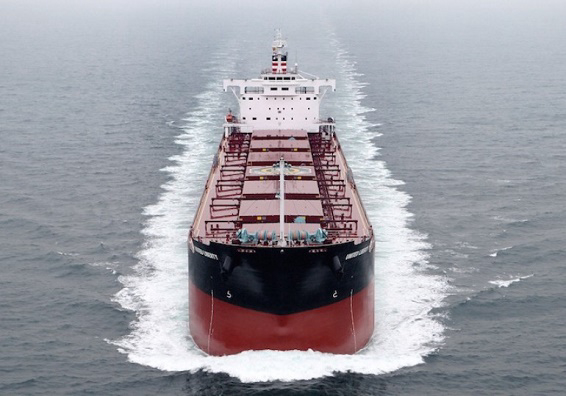
Demand
The first quarter of any year always represents a challenge for the shipping industry, with fewer cargoes being tendered and Chinese New Year in February creating recurring business issues.
In terms of freight rates, the positive development that characterised most of the second half of 2017 came to a sudden end on 12 December 2017, once capesize earnings peaked at USD 30,475 per day. On 29 January 2018, average capesize earnings were quoted at just USD 14,065 per day.
By the end of January, the freight rates for all sizes of dry bulk carriers were at break-even levels – covering both OPEX and CAPEX – but not turning profitable. Chinese New Year celebrated on 16 February 2018, marks the beginning of the year of the dog. For dry bulk shipping it marks volatility, and a fall in demand round the festive days.

Compared to the same time at the end of January 2017, freight rates are higher in 2018 – illustrating that 2017 did deliver significant improvements to the fundamental balance.
The dry bulk market has benefitted from stronger industrial production almost everywhere in the world, illustrating the synchronised recovery mentioned so often these days by the world’s leading economists.
Another trend that sets 2017 apart from previous years, was the massive substitution of Chinese-origin iron ore, favouring imported higher quality ore from Brazil and Australia instead. China’s political initiatives to improve energy-efficiency and to provide cleaner air for the population led to the use of higher quality imports to limit the energy needed and emissions generated in the production process. This trend is something that we expect will continue to support the shipping industry in years to come. Indian iron ore exports fell victim to this trend as the quality of Indian iron ore is inferior to both Brazil and Australia.
On the upside in Q1, we see Brazilian soya exports picking up – heading towards the pinnacle in Q2. However, this will only slightly offset the decline in soya exports in Q1 from the US Gulf, continuing to do so in Q2. In 2018, 161 million tonnes of soybean are expected to be transported.
Supply
As always, January sees plenty of ship deliveries coming onto the water. January 2018 reached a ten-month high at 4.8m DWT, while 0.7m DWT were demolished. In short, the fleet is already expanding briskly, and the only comfort is the fact that the first half of any year is always busier in terms of newbuildings being launched, than the second half.

As we pointed out previously, 2018 is the year of opportunity. The fleet is growing at the slowest pace since 1999, and solid growth in demand means that the dry bulk shipping industry should be facing another year of improvement to the fundamental balance.
The flip side of that optimistic outlook is of course that more new orders are being placed at Far Eastern shipyards by global shipowners and investors. Following 15 months of almost no orders, renewed interest in newbuilding re-emerged mid-2017, as parity for newbuilding’s with the second-hand market prices was restored, and the Baltic Dry Index (BDI) broke the 1,000-index value mark.

By early February 2018, the orderbook consisted of 720 ships with a combined capacity of 81m DWT – before taking cancellations into account. The orderbook reached its highpoint in November 2008, when it consisted of 4,056 ships with a combined capacity of 332m DWT.
During January 5.6m DWT was ordered –including as much as 20 very large ore carriers (VLOCs) set for delivery in 2020 and 2021. Six of those are ordered against a multi-year Contract of Affreightment (COA) deal with Brazilian miner Vale. Quite a few deals of that kind were done in 2017. While this is a sign of the times, it’s also clear that industrial shipping on the main trading lanes limits the spot market for international owners and operators.
Another sign of optimism is that the average age of demolished ships has been going up in 2017. Following three years of difficult market conditions that saw younger and younger vessels sold for scrap in the wake of the false dawn of 2013 – demolished ships in 2017 had an average age of 25 years. In 2016 the average age was 24 years.
In absolute numbers and cargo carrying capacity, deliveries in 2018 will be minor. But in terms of average ship size, 2018 is heading for a record. The launch of 18 valemax and 31 VLOCs (200,000-300,000 DWT) makes all the difference. For the first time ever, the average newbuilt bulker will exceed 90,000 DWT, at an average of 92,255 DWT. Looking to the future, 2019 will beat that record, currently set for an average size of 115,000 DWT.
Outlook
In 2017, the overall tonne miles demand grew by 5.1\% (source: CRSL), powered by a massive lift in Chinese imports once again. Imports saw seaborne iron ore demand go up by 4.7\%, and seaborne coal imports lifted by 12\%.
Will that strong demand be repeated in 2018? BIMCO doesn’t think so – 2017 was extraordinary. Our forecast for overall demand growth in 2018 is around 2-3\%, with plenty of uncertainty surrounding that. Not just in terms of volume, but most likely also in terms of sailing distances. Longer hauls for key minor bulk commodities and grains have lifted shipping demand way above volume demand since 2014. A reversal of this trend, due to traditional exporters regaining market share, will hurt demand. Seen against a fleet growth of 1.4\%, we are still looking at an improved market.
One of the minor bulks that may see a rebound in 2018 is cement. Following a decline in 2017, 110m tonnes of bulk cement and cement clinkers are expected to be shipped in 2018, growing by 3\% (source: CRSL).
China remains all-important in 2018 – by any standard. A few striking numbers to highlight this are: global seaborne iron imports grew by 58m tonnes in 2017 – out of which Chinese imports grew by 50m tonnes. Seaborne steam coal transport increased by 52m tonnes in 2017 – China’s imports grew by 11m tonnes. Finally, seaborne coking coal transport increased by 10m tonnes in 2017 – while China’s imports of the same grew by 7m tonnes.
Separating import data between seaborne and non-seaborne trades is vital if you want a more accurate outlook of trade developments impacting the shipping industry. An example of this being Chinese coal imports that grew by 12\% in seaborne terms whereas the all modality coal trades only grew by 5\%.
www.bimco.org
Container Shipping: A Year Where Fleet Growth And Demand Growth Are The Same
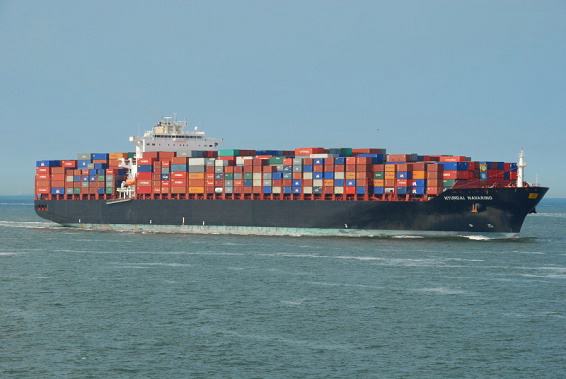
Remarkably, most of them managed to hold onto most of the gains they achieved, considering October and November were challenging in terms of very low demand growth. The weak demand came from the Far East to Europe trade, and on the Intra-Asian transport.
Liners were the most successful at maintaining higher freight rates on the US-bound trade lanes, both east and west coast. On the other high-volume trades into the Mediterranean and North Europe, the announced General Rate Increases (GRI) lifted freight rates too, but to a smaller extent.
 |
Liners always push for higher freight rates going into January. But, as fleet growth had overtaken demand by a large margin in the latter third of 2017, rates had been falling for six months going into January. Nevertheless, exports ahead of Chinese New Year in mid-February 2018, boosted demand to such an extent that rates into the US East Coast went up at the start of January 2018 and kept rising.
Most containers are moved on shorter hauls intra-Asia. For the full year of 2017, data provider CTS counted 40.9m TEU being transported between different Asian ports (+4.3\% Y/Y). On the most important long-haul trades, CTS counted 18.5m TEU going from the Far East into North America (+7.3\% Y/Y) and 15.8m TEU on the routes from the Far East into Europe (+3.7\% Y/Y).
Demand also grew on the Far East to Sub-Saharan Africa trades, +5.9\% for the full year of 2017 (2.8m TEU). Another ”lower volume trade” that grew strongly in 2017 was the Far East to South and Central America trade lanes – shipping 3.6m TEU during 2017, up by 10.7\% on last year.
Either way you look at it 2017 was a strong year.
We always focus a lot on the front hauls – for good reason. Cargoes on the back hauls often only provide a bit of revenue to cover some of the costs of bringing the containership back to the Far East for another profitable pay load.
On 1 January 2018, a Chinese ban on specific imports came into effect. The ban covers the import of 24 types of waste – including waste paper and waste plastics. Commodity categories like “ores and scrap”, “pulp & waste paper” and “plastics in primary forms” often feature now amongst the top 5 commodities on many trades, with Asian-bound trades dominating.
At least for a while, the ban has turned the attention of industry and shippers back to the back-haul cargoes.
On the trade from North America to Asia, the number one commodity – by a margin – is “pulp & waste paper” accounting for 1.46m TEU in 2017 (source: MDST), with an estimated global total of 4-5m TEU that could be affected by the Chinese ban (source: Drewry). The volumes are not expected to be an outright loss. Much of the affected cargo seems to be heading for Indonesia, Taiwan and Vietnam. However, not all this type of cargo can expect to land there, as the now “unavailable” waste handling capacity in China is much bigger than the other waste handling facilities in the Far East combined.
Supply
The containership fleet has already expanded by 1.2\% in the first month of 2018 – equal to the entire fleet expansion of 2016.
A flurry of new ships has been delivered in January. Not since July 2010 has such a massive inflow of capacity taken place in one month – 254,173 TEU. This includes plenty of feeder ships but also five ultra-large 20,000+ TEU ships. On the demolition side, three ships have been removed (a 320 TEU ship built in 1981, a 976 TEU ship built in 1990 and a 3,802 TEU ship built in 1998).
2017 saw a total of 398,000 TEU demolished, a level which is bound to decrease in 2018. BIMCO expects that 250,000 TEU will leave the fleet as the year progresses. Bringing a fleet growth of 3.9\% as the newbuilt delivery is forecast to reach 1.05m TEU.
 |
In 2018, the focus will be on the deployment of ultra-large containerships. 53 ships larger than 13,500 TEU are scheduled for delivery – we expect around 40 of them to be launched. In 2017, 55 ships of the same size were scheduled for delivery but only 43 were delivered.
New orders are also being placed at an increasing pace. The break in ordering from December 2015 through August 2017 was one to cherish.
The idle containership fleet has almost disappeared. Alphaliner counts only 65 ships on their list with a combined capacity of 191,441 TEU as of 5 February 2018. In real terms, this means that nominal fleet growth will have a bigger effect on the market balance, as the temporary idling and re-activation of ships becomes negligible.
Owners and investors were busy in the second-hand market in 2017. In fact, it was the busiest year on record. 297 ships changed hands, valued at USD 4,178m (source: VesselsValue). Panamax ships were in demand, more due to price than anything else – with 93 ships changing hands in total. Purchasing prices were equal to the demolition values of many of the ships, meaning there was little downside risk from the purchase. Since mid-2017 both demolition prices and second-hand values have gone up.
It all depends on timing – a 2009-built panamax ship (4,275 TEU) was valued at USD 13.7m in July 2016, USD 5.6m in January 2017 and USD 10.9m in January 2018. At the same time, the demolition value of the same ship was USD 4.6m, USD 5.6m and USD 8.1m. Meaning that deals done at January 2017 prices were equal to demolition values.
 |
Outlook
The fact that demand growth slowed down towards the end of 2017 is also clear from the development in time charter rates, which peaked twice last year, around April/May and around mid-September 2017. Nevertheless, the upward trend was an encouraging one, as the dip following the second peak was not as low as the previous dip. For a 6,500 TEU ship, that development took time charter rates from USD 14,500 per day in April 2017, down to USD 10,000 per day in June and back up to USD 16,250 per day in September 2017. By early-February the rate was at USD 14,000 per day again. In all aspects time charter rates were mostly lossmaking – but 2017 did deliver considerably higher rates in comparison to the absolute lows of 2016.
 |
What will the future bring? Overall demand growth is expected to be lower than in 2017, but still high enough to potentially improve the fundamental market balance. BIMCO forecasts demand to grow by 4.0-4.5\% against a fleet growth of 3.9\% in 2018. The IMF January update of its World Economic Outlook, significantly lifted expected GDP growth in advanced economies for 2018 and 2019, and growth in advanced economies is generally good for container shipping demand.
Watch out for the North American inbound loaded containers where we expect a change in 2018. We saw very strong growth in 2016 and 2017 for the US West Coast imports and in 2015 and 2017 for the US East Coast imports. We have yet to see the full effect of the elevated Bayonne Bridge allowing ultra-large containerships to pass and enter the New York/New Jersey (NYNJ) port. Loaded containerised imports into NYNJ were up by 6.0\% for the full year of 2017 compared with the year before.
For the whole of the US East Coast in 2017, the amount of inbound loaded containers grew by 10.1\%. It took the industry a while to embrace the expanded Panama Canal locks – but they are making use of them now. 2018 is likely to be the year where many container line networks calling the US East Coast will become fully up-scaled by deploying ultra large container ships.
Source: Peter Sand, Chief Shipping Analyst, BIMCO
WISTA Hellas members met for their traditional Pitta Cutting

The President of the Association, Angie Hartmann and the Board of Directors welcomed our members and exchanged wishes for the New Year. Ms. Hartmann cut a separate small “vasilopita” for the Association and the members of the BoD, where she was the lucky winner.
Ms. Zefi Gritza was the winner of the lucky flouri of the Pitta for the members who won a dinner for four people at the restaurant “Chromata Vythou” a kind courtesy of the restaurant and a scurf offered by Ms. Ioanna Topaloglou.
WISTA Hellas membership looks forward to an even more active and creative year ahead!
Also, our members received a gift, a kind courtesy of Dior.
 |
 |
 |
 |
 |
 |
 |
 |
 |
 |
 |
 |
 |
 |
 |
 |
 |
STEALTHGAS INC. reports twelve months ended December 31, 2017 financial and operating results
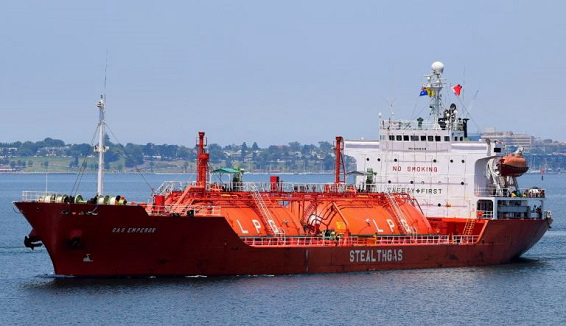
OPERATIONAL AND FINANCIAL HIGHLIGHTS
• Operational utilization of 97.2\% in Q4 ‘17 (94.2\% in Q4 ‘16).
• Commercial off hire days reduced by about 58\% on a year on year basis.
• 65\% of fleet days secured on period charters for the remainder of 2018, with a total of approximately $196 million in contracted revenues.
• Successful delivery of two more 22K semi ref newbuild vessels, the Eco Ice and the Eco Arctic in January 2018 increasing our asset base to around $ 1.1 billion.
• Reduction of fleet average age, following our new deliveries and the sale of older vessels from 9.6 years at the beginning of 2017 to 9.2 years to date.
• Revenues of $38.4 million in Q4 ‘17, an increase of 2.4\% compared to Q4 ‘16
• Net income of approximately $750 thousand in Q4 ‘17 compared to $4.4 million loss in Q4 ‘16.
• EBITDA of $14.9 million in Q4 ‘17 compared to $ 9.3 million in Q4 ‘16.
• Low gearing as debt to assets stands at about 39\%.
• Cash on hand of about $51.8 million, with operating cash flow of $52.4 million.
Twelve Months 2017 Results:
§ Revenues for the twelve months ended December 31, 2017, amounted to $154.3 million, an increase of $10.2 million, or 7.1\%, compared to revenues of $144.1 million for the twelve months ended December 31, 2016, primarily due to improved market conditions and improved operational utilization.
§ Voyage expenses and vessels’ operating expenses for the twelve months ended December 31, 2017 were $15.7 million and $59.4 million respectively, compared to $15.4 million and $58.8 million for the twelve months ended December 31, 2016. The $0.3 million increase in voyage expenses was mainly due to the higher bunker prices prevailing in 2017 compared to the same period of 2016. The $0.6 million increase in vessels’ operating expenses was mainly due to increased maintenance costs for some vessels in the fleet.
§ Drydocking Costs for the twelve months ended December 31, 2017 and 2016 were $3.5 million and $3.6 million, respectively, representing the costs of 7 and 10 vessels drydocked in the corresponding periods. In 2017 the Company faced increased drydocking costs due to the trading areas of some of the vessels due for drydock.
§ Depreciation for the twelve months ended December 31, 2017, was $38.9 million, a $0.2 million decrease from $39.1 million for the same period of last year.
§ Included in the 2017 results, were net losses from interest rate derivative instruments of $0.4 million compared to net losses of $0.8 million in the same period of last year. Interest paid on interest rate swap arrangements amounted to $0.4 million compared to $ 1.1 million in the same period of last year. In 2017, the gains in change in fair value of the interest rate derivative instruments was nil compared to gains of $0.3 million in the same period of last year.
§ The Company recorded an impairment loss of $6.5 million in 2017 for seven of its oldest vessels, four of which were sold in 2017.
§ As a result of the above, the Company reported a net loss of $1.2 million for the twelve months ended December 31, 2017, compared to a net loss of $7.8 million for the twelve months ended December 31, 2016. The weighted average number of shares outstanding for the twelve months ended December 31, 2017 and 2016 was 39.8 million. Loss per share for the twelve months ended December 31, 2017 amounted to $0.03, compared to loss per share of $0.20 for the same period of last year.
§ Adjusted net income was $5.4 million, or $0.14 per share, for the twelve months ended December 31, 2017 compared to adjusted net loss of $2.2 million, or $0.05 per share, for the same period of last year.
§ EBITDA for the twelve months ended December 31, 2017 amounted to $54.5 million. Reconciliations of Adjusted Net (Loss)/Income, EBITDA and Adjusted EBITDA to Net Loss are set forth below. An average of 52.6 vessels were owned by the Company during the twelve months ended December 31, 2017, compared to 53.4 vessels for the same period of 2016.
§ As of December 31, 2017, cash and cash equivalents amounted to $51.8 million and total debt amounted to $384.9 million. During the twelve months ended December 31, 2017 debt repayments amounted to $56.3 million.
Fleet Update Since Previous Announcement
The Company announced the following chartering arrangements:
A two year time charter for its 2018 built LPG carrier, the Eco Arctic, with a major trading house until February 2020.
A two year time charter for its 2018 built LPG carrier, the Eco Ice, with a major trading house until February 2020.
A three months’ time charter for its 2017 built LPG carrier, the Eco Frost, to an oil major until May 2018.
A two months’ time charter for its 2008 built LPG carrier, the Gas Imperiale, to an international trading house until April 2018.
A three months’ consecutive voyage charter for its 1995 built LPG carrier, the Gas Marathon, to an international petrochemical company until June 2018.
A six months’ consecutive voyage charter extension for its 2001 built chartered-in LPG carrier, the Gas Cathar, to an international petrochemical company until December 2018.
A three months’ consecutive voyage charter extension for its 2001 built chartered-in LPG carrier, the Gas Premiership, to an international petrochemical company until October 2018.
A six months’ consecutive voyage charter extension for its 2015 built LPG carrier, the Eco Galaxy, to an international petrochemical company until December 2018.
With these charters, the Company has contracted revenues of approximately $196 million. Total anticipated voyage days of our fleet are 65\% covered for the remainder of 2018.
Board Chairman Michael Jolliffe Commented
"The fourth quarter of 2017 was mixed. On the one hand we are pleased that our core market of small LPGs shows clear signs of improvement, which should continue to leverage our earnings. In this market we achieved an outstanding fleet operational utilization of 97.2\%. On the other hand the sale of four of our older vessels and the weakening of the tanker market affected our revenue growth, somewhat obscuring the improved revenues for our core fleet. Nevertheless, excluding impairment charges, our annual results demonstrated clear improvements both in revenues and profitability. In addition with the delivery of our two 22K semi ref newbuildings in January 2018, our asset base increased to $ 1.1 billion.
We have numerous charters which commenced at the beginning of 2018, and several vessels yet to fix, all of these in a better market environment, reflecting the benefits of our chartering policy.
In terms of strategy, we intend, in the upcoming year, to take advantage of the positive market momentum of the small LPG market. We will focus our efforts on capitalizing our dynamic fleet of the past couple of years by placing strong emphasis on taking advantage of the unique and improving supply and demand fundamentals of our core segment. With assets currently $1.1 billion, low gearing and capex of around $ 31.2 million of which equity is only $1 million – we are looking forward to an exciting 2018."
About STEALTHGAS INC.
StealthGas Inc. is a ship-owning company primarily serving the liquefied petroleum gas (LPG) sector of the international shipping industry. StealthGas Inc. currently has a fleet of 54 vessels. The fleet comprises of 50 LPG carriers, including two chartered in LPG vessels, with a total capacity of 302,492 cubic meters (cbm) and three M.R. product tankers and one Aframax oil tanker with a total capacity of 255,804 deadweight tons (dwt). The Company has agreed to acquire a further 1 LPG carrier with expected delivery in April 2018. Giving effect to the delivery of these acquisitions, StealthGas Inc.’s fleet will be composed of 51 operating LPG carriers with a total capacity of 324,492 cubic meters (cbm). StealthGas Inc.’s shares are listed on the NASDAQ Global Select Market and trade under the symbol “GASS”.
stealthgas.com
The Propeller Club along with ALBA Graduate Business School offered a full scholarship
The MSc in Shipping Management is a specialized program, providing students with a holistic and in depth knowledge of the most important issues in modern commercial shipping. The program is designed to develop recent graduates and young professionals equipped with the skills, knowledge and expertise required for a successful career in the demanding and highly competitive world of shipping.
The winner was Mrs. Anastasia Menti, chosen among a series of interested candidates. The success for the selection was accomplished through Real Time Graduates, which is a non-profit programme that connects graduates with the Greek Shipping cluster.
International Propeller Club of the United States was founded in New York in 1922, has now 8.000 members in 52 cities and 4 Student Clubs globally. Propeller Club (Port of Piraeus), founded in 1935, is a non-profit charity association.
As per its Bylaws, one of its numerous charitable activities is to assist the studies of exceptional Greek students based on the financial needs duly selected from seafarers’ families or institutions which materially contribute to the noble principles of the Club.
Propeller Club has been co-operating with the cluster of Greek shipping and the US Embassy in Athens in order to promote Maritime Relations, Commerce and Cultural relations between citizens of Greece, the U.S. and all other countries represented by their members.
ALBA Graduate Business School, The American College of Greece, was founded in 1992, as a not-for-profit organization and operates under the auspices of the business community, an association of corporations and institutional members including well known shipping companies. Its mission is to educate the visionary leaders of tomorrow who will act as agents of change and help shape the future business, while its twin objective is knowledge generation and dissemination.
Currently ALBA offers 14 Postgraduate Programs, among which three are on shipping studies. The three specialized programs, the MBA in Shipping, the MSc in Shipping Management and the MSc in International Shipping & Finance (in collaboration with the University of Reading “Dual Degree Program”) are designed to meet the needs of students with different academic and / or work backgrounds. All three programs are certified by international certification bodies such as NEASC, AMBA (for MBA in Shipping) and EQUIS EFMD (for MSc in International Shipping and Finance) as well as by maritime bodies such as the Institute of Chartered Shipbrokers (ICS), and the Hellenic Shipbrokers Association (HSA).
More information at: http://www.alba.acg.edu/
Seagull Maritime offers immediate solutions

 |
In April 2017, the OCIMF issued TMSA Version 3. In addition to the inclusion of ballast water management, fuel management and other items, Version 3 also contains a new Chapter 13 entitled “Maritime Security” with extensive on board and in the office cyber security vetting requirements. For the pre-fixture vetting review, Chapter 13 is dedicated to on board and office marine cyber security with OCIMF recommendations.
In response, Seagull Maritime offers immediate solutions to help you train your staff to be better equipped for this change. The e-learning content developed by DNV GL and available through our Seagull Training Administrator has received very positive feedback, and the short and concise modules are easy to understand for crew and shore staff.
Remember that cyber security starts with people – this includes focus on knowledge, behavior and mind-sets. Together we should raise awareness and provide training that communicates the risks at all levels of the organisation.

Powered by  © Μaritimes 2019