


GREEK CONTROLLED SHIPPING
DNV GL opens LNG test centre to enable safer and more efficient use of LNG
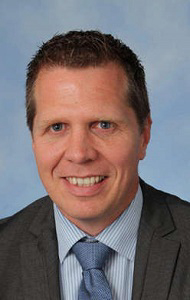
Hovik, 14 March 2018. The facility, at the organization’s existing renewable energy technology and gas laboratory site is the first type of facility with a capacity compatible for the downstream sector. Its capacity is up to 250kg of liquefied gas and boasts a heat exchanger that allows the temperature of the LNG – and therefore its boil-off – to be precisely regulated.
Johan Holstein, Head of gas testing and analysis at DNV GL – Oil & Gas, said the testing of new sensor technology to rapidly identify the composition of LNG would be a priority. “The current accredited technology, gas chromatography, can take 3-5 minutes to show the composition of LNG,” Holstein explained. “Sensors can give an answer in a second.”
A stable and known composition of LNG is important for accurately assessing energy content and engine performance control. With accurate fuel composition monitoring, DNV GL`s online Propane Knock Index (PKI) methane number calculator can be used to assess the fit-for-purpose of gaseous fuels with end-use appliances instantaneously. LNG from different regions have different compositions, which change further as LNG is used or boils off. Holstein noted that sensors have already been tested with other gas compositions, and further validation could lead to DNV GL certification.
The ability to monitor the composition of LNG in real time (combined with advances in flow metering) could also improve pricing transparency in bunkering, which has traditionally relied on mass alone rather than mass and energy content.
The impact of changing LNG composition on engine performance can also be studied at the Groningen site. Engine developers can optimise ignition patterns and compression ratios depending on the LNG composition, for example, and the facility will allow OEMs to perform compliance tests ranging from automotive engines of around 10hp to off-road and marine engines of around 500kW.
 |
| Ben Oudman |
For LNG fuel quality testing, DNV GL has engaged in a strategic partnership with Veritas Petroleum Services (VPS) to further develop procedures and practices to ascertain and monitor LNG quality. DNV GL and VPS aim to develop a set of validated tools and measurement methods to provide the LNG industry with accurate, reliable and cost-efficient tools which will help break down the perceived barriers to LNG adoption.
Related Links:
- DNV GL Energy Transition Outlook report
- https://www.dnvgl.com/oilgas/natural-gas/fitness-for-purpose-for-pipeline-gas.html
YES Forum says YES to Shipping by organizing YES to Shipping Forum
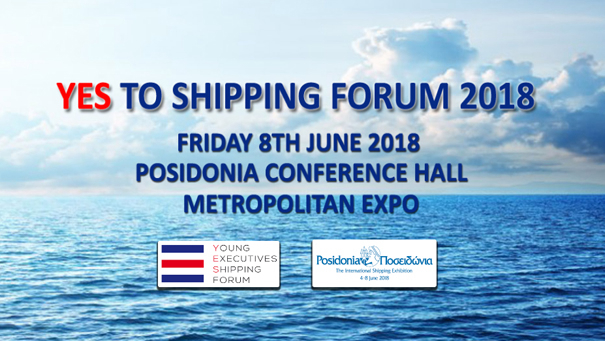
YES Forum was initiated by Danae Bezantakou, CEO - Navigator Shipping Consultants and is the first forum to be held under the auspices of the Ministries of Shipping & Education and the majority of Greek Universities, organized by a team of 40 volunteers .
YES Forum is the leading platform of open dialogue among the Decision Makers of the Greek Shipping and Sea Tourism Industry and the Entrepreneurship in general, principals, executives and university students, recent graduates and young executives. What we are aiming for, is the next generation to become acquainted with the Greek Shipping History through our Collaboration with the Greek Shipping Miracle and the Posidonia Exhibitions as well as to exercise and practice their networking skills.
The establishment of this platform of open dialogue is based on the results of the recent Survey that was done by diaNEOsis which demonstrate the aging of the Greek Population. In 2015, Greeks were 10.8 million and in 2050 it is forecasted to reach 8.3-10 million, with 30-33\% of the population being over 65 years old. If we do not want Greece to be run by an aging population and the country's active labor force to leave abroad (450,000 young people imigrated during the crisis), we should encourage dialogue with young people at all levels of education in order to motivate them to get to know the entrepreneurship, the prospects and opportunities that it offers and to pass on our knowledge, experience and history so that our country can continue to evolve and progress.
It is our strong belief that the open dialogue which began at Posidonia 2016 and attracted more than 1,300 delegates must continue and we hope even more people will be motivated to support our vision and effort.
For this reason, this year, the participants on the day of the Forum, apart from having the opportunity to ask their questions, they will be able to take part in organized visits to the Posidonia Exhibition stands in order to become familiar with the Industry of Shipping Services.
The Forum, which will take place on Friday 8 June 2018, will be the outcome of a project that is running all year through the following actions Open Days in Shipping Companies - Daily Internships - Monthly meetings with the YES Forum volunteer team - Presentations of our actions in Greek Universities and schools:
Forum’s program can be found at http://yes-forum.com/yes-to-shipping-forum-2018/
Deputy Minister of Shipping, Mrs. Natasa Pilidou, gives exclusive interview at “It’s ALL about Shipping”

 |
As the radio show is primarily aimed at facilitating the mentoring for the younger generation in shipping, Mrs. Pilidou was also asked to share her experiences in respect of the challenges she has faced in her career so far, if she encountered prejudices either due to her age or gender and her advise towards the youth in achieving their goals. Her advise was, to work hard, explaining that you have to prove yourself in order to “move up,” to always be prepared and to have the self belief and courage to not settle and compromise. Mrs. Pilidou also noted that all mistakes are necessary in order to form our personality, as different experiences are very important in setting us apart. She concluded in saying that, what you study at university is a minor part of the skillset you acquire as an individual, make sure you broaden your horizons, in order to have more things to offer and to enjoy!
“It’s ALL about Shipping!,” is hosted by Gina Panayiotou, Legal Manager of Intership Navigation Co. Ltd. and Constandinos Papaminas, Claims Assistant at Norient Product Pool ApS and it is broadcasted on the community radio of the Cyprus University of Technology (TEPAK), Cut-Radio 95,2,* every Wednesday evening between 20.00-21.00pm. Each week a guest from the shipping community, either local or international, is interviewed in sharing their experiences and insights. The show aims in raising awareness of shipping related matters, as well as inspiring the younger generation in this respect.
Link to the full recording of the radio show: https://soundcloud.com/gina-panlb/its-all-about-shipping-natasa-pilides-14032018
Bernhard Schulte Shipmanagement: a strategy for growth
 |
These newbuildings and the PRONAV ships will lift the number of BSM’s fully managed LNGCs to 15. LNG World Shipping asked Angus Campbell, corporate director of energy projects to explain the rationale behind this expansion and BSM’s growing role in the nascent LNG bunkering industry.
Could you describe your company’s involvement in the LNG ship management sector?
With 45 years of experience in managing gas carriers, we regard LNG shipmanagement as a key strength and growth area. The fundamental supply and demand balance is good, with LNG production increasing significantly. Services provided span newbuilding supervision, technical management, crew management and inhouse LNG training. BSM manages over 80 gas carriers in the LPG, ethylene and LNG sectors. This involvement will continue to grow as new 174,000 m³ LNGCs are delivered into the owned and managed fleet.
How did your company perform commercially in the LNG sector in 2017, compared to 2016?
Having achieved sector growth in 2016 with new LNG carriers contracted for management, 2017 focused on plan approval, newbuilding supervision and preparation for deliveries. As always, LNGC construction takes longer than conventional tonnage due to the specialised nature of the containment and cargo handling system. Consequently, we regard it as a successful year in line with our business and operational development plan.
What have been the most important developments within your company over the last 12 months in the LNG sector?
The acquisition of the specialist LNG shipmanager PRONAV was certainly a significant development for the Schulte Group. We reached agreement in January 2018 and received clearance for the merger from the German authorities in February 2018. This increases the number of LNG carriers under full management by six vessels. We also continue to work with Babcock International, under the name Babcock Schulte Energy, on opportunities that we have identified in the small-scale LNG sector.
Do you see further consolidation and mergers taking place among shipmanagers, specifically to meet the requirements of the LNG sector?
The shipping industry is consolidating in many areas, with shipmanagement representing one aspect. We are confident that the strength we have in the LNG sector, backed by decades of experience, will add value to our organisation. The expertise of our seafarers on board and our fleet teams ashore provide the ability to work successfully with new technology, meeting the requirements of the LNG sector as it expands. This aligns with BSM’s mission to enable our business partners to achieve their objectives through applied knowledge, experience and innovation.
BSM is at the forefront of managing LNG bunkering. Could you describe the progress so far, and any plans to expand further into this sector?
Babcock Schulte Energy was formed to develop safe, sustainable, high-value business in the energy sector. We recognise the potential of the LNG bunkering and small-scale opportunities that we have identified. They are perfectly suited to the skills that both companies bring to BSE, enabling the Schulte Group’s gas shipping expertise to be blended with the gas process, equipment and design expertise of Babcock. Our first purpose-built gas supply vessel will be delivered in September by Hyundai Mipo Dockyard. This is the first of what we anticipate will be several such specialised ships to work within the evolving small-scale sector.
Based on your experiences, how do you view the challenges that lie ahead?
Our industry is experiencing dramatic change on a grand scale, with new global regulations governing emissions, fuel choice, efficiency and ballast water treatment. Improvements in technology and connectivity, with increasing digitalisation and streamlining of business processes offer commercial opportunities. We are well prepared to meet these challenges and provide our customers with guidance as they navigate this change successfully. The solutions will differ. For example, the choices that make financial sense for the existing fleet will be different to the choices available for newbuildings.
http://www.lngworldshipping.com
“Navigating the New Norm” by WISTA Cyprus
 |
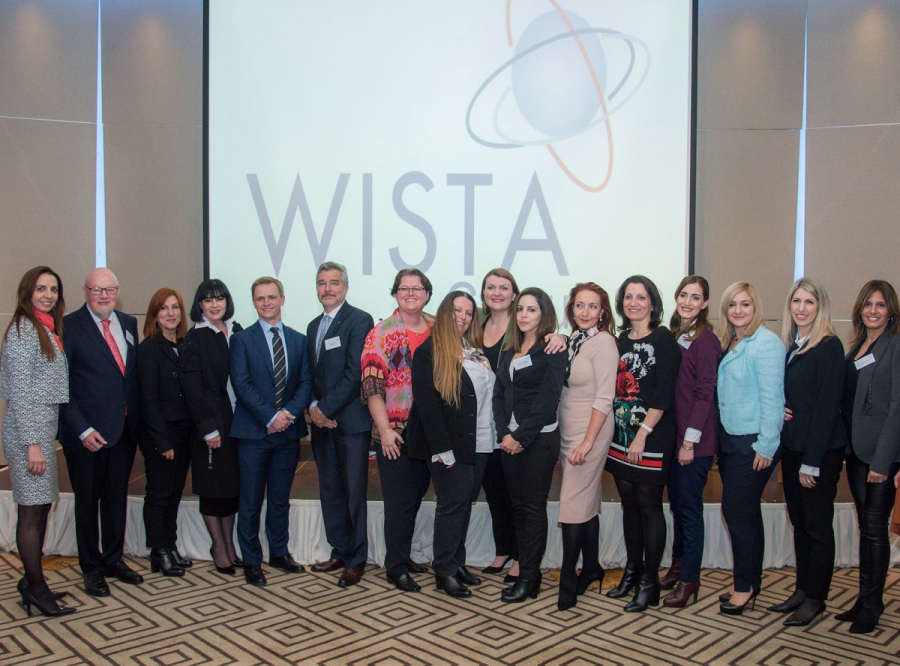
The forum hosted a panel composed of shipping figures from the local and international shipping industry, as per below:
Mrs. Karin Orsel - CEO MF Shipping Group, Vice Chairman ICS (International Chamber of Shipping) and President of the Royal Association of Netherlands Shipowners
Capt. Alfred Hartmann – Chairman of the Hartmann Group and President of the German Shipowners Association
Capt. Maxim Sharov - Operations & Gas Fleet Manager SCF Management Services
Mr. Arthur McWhinnie - Managing Director of Bernhard Schulte Shipmanagement (Cyprus) Ltd and Member of the Board of Directors of the Cyprus Shipping Chamber
Moderator: Mrs. Cleo Papadopoulou, Partner and Shipping & Ports Tax Leader at PWC Cyprus & WISTA Cyprus Member
The forum covered the issues and challenges of the transformation period that the shipping industry is presently facing, with changing market expectations and needs in respect of technology, regulations, as well as the ways in which, ship operators are adjusting to this new reality by “navigating the new norm.” The forum was concluded with an interactive question and answer section, encouraging diverse and interesting discussion with the audience as well as food for thought.
Marking the conclusion of the forum, was Ms. Despina Panayiotou Theodossiou’s, President of WISTA International, announcement of her decision to step down from the position of President of WISTA Cyprus, with effect from 1st of March, 2018, albeit retaining a position in the Board her decision to step down from the position of President of WISTA Cyprus, with effect from 1st of March, 2018. A founding member of WISTA Cyprus and President since its establishment in 2011, Mrs. Theodosiou delivered a touching speech, in which she stated that “I leave the president’s position with satisfaction and happiness in my heart for everything that we are and represent, as an association.” Thanking all members for their overwhelming support in this journey, Mrs. Theodosiou departed with a request to the association’s members and friends, to preserve and cherish and make WISTA stronger! WISTA Vice President Anna Vourgos, of Aphentrica Marine Insurance Brokers Ltd, was appointed Acting President of the association, assuming position as of 1st of March, 2018 and up to the next Annual General Meeting. Mrs Vourgos thanked Mrs Theodossiou and the Board members for entrusting her with the reins of WISTA Cyprus and reassured the members of the association, of her commitment to her new role.
The forum ended with the designated networking cocktail reception for all participants, members and friends of the association.
Listed in alphabetical order, the event was sponsored by Aphentrica Marine Insurance Brokers Ltd, Bernhard Schulte Shipmanagement, Bureau Veritas, Delloite, Department of Merchant Shipping, ERSCO, ERSCO-RA, Interorient Shipmanagement, Intership Navigation and Tototheo Group.
WISTA is a networking organization for women at management level in the maritime industry. Which aims to:
· Facilitate the exchange of contacts, information and experiences among its members
· Promote and facilitate the education of its members
· Provide liaison with other related institutions and organizations worldwide
More info on WISTA Cyprus are available at:
http://www.wista.net/cy
GREEN4SEA Conference addressed key fuel challenges towards 2020
 |
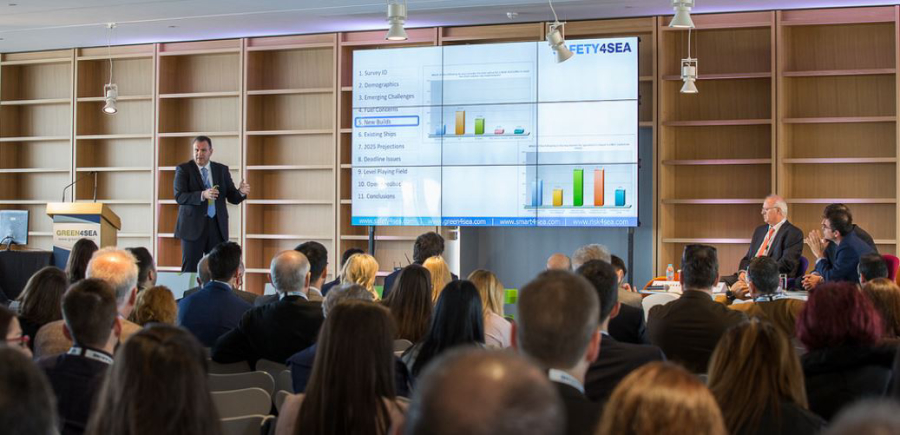
The event organized by GREEN4SEA and sponsored by MacGregor and Wärtsilä as the lead sponsors and SKAI in the media for the event coverage. Other sponsors included: ABS, Alfa Laval, American Club, Arcadia Shipmanagement Co Ltd, ARGO NAVIS, Capital Ship Management, Consolidated Marine Management Inc, Coral Gas, Dorian LPG, GTT, Humble Energy, Lloyd’s Register, Maritime Labs, NanoPhos, Orpheus Marine Transport Corp., SQE MARINE, Trojan Marinex and UK P&I Club.
The event brought together global experts who focused on the recent and future challenges towards a more sustainable shipping industry. Experts shared their views for compliance with the forthcoming sulphur cap and provided feedback on BWMC implementation issues. In addition, alternatives options for compliance towards 2020 were presented such as LNG, LPG, SRF Energy Pellets, scrubbers and wind propulsion and finally latest developments that prove steps towards further decarbonization were discussed. Presentations were given in six panels as follows:
Panel No. 1 – Green Shipping Perspectives
In his presentation, Mr. Anthony Vourdahas, Engineer OEP, ABS, attempted to clarify the regulatory landscape facing ship operators and owners for 2020 and beyond. The increasing environmental compliance requirements, such as the 2020 global sulphur cap, the upcoming IMO Data Collection System (DCS) as well as the reduction of GHG, BWM and EEDI, add complexity for ship operators particularly when markets are also challenging, while all of these have impacts on vessel's design and operations and may lead to the need to invest in new additional equipment for new buildings and existing vessels.
Mr. Sotiris Raptis, Senior Policy Advisor for Environment and Safety, EcoPorts Coordinator, ESPO, focused on the position of European ports on the revision of the Port Reception Facilities (PRF) Directive, recently published by the European Commission. The fee system introduced by the current Directive whereby ships are paying a fixed minimum fee when calling at a port has certainly contributed to the delivery of increased quantities of waste on shore. European ports understand that strengthening this incentive policy is part of the current proposal. However, introducing a fee system whereby ships can deliver unlimited amounts of garbage for a fixed fee seems to be a severe and unacceptable divergence from the ‘polluter pays’ principle.
Mr. David Nichol, Regional Loss Prevention Executive, Thomas Miller P&I (Europe), emphasized on bunker spills, examining the root causes and what loss prevention measures can be implemented to combat them. Mr. Nichol noted that spills into the marine environment relating to routine bunkering operations continue to occur with worrying regularity. Bunker spills, even in relatively limited quantities, may result in very high value claims for recovery of pollutants, clean up, restoration operations and third party damages running into seven figure dollar sums. In addition, ship owners and crews may also be exposed to heavy fines and criminal prosecution.
With his presentation “Hull Coatings Technologies”, Dr. Ioannis Arabatzis, CEO, Nanophos, attempted to clarify the misty landscape of underwater marine coatings, for non-chemists. He namely presented contemporary chemical technologies in the market, in a simplified, understandable way and formulated the checkpoints for a successful selection of a hull coating system. Moving further, he also underlined the trends in relevant technologies and the pathway of developing smart and functional coatings for a greener operational pattern, while he also cited top tips for selecting an AF system.
Panel No. 2 – 2020 Options
Mr. Apostolos Belokas, Managing Editor, SAFETY4SEA presented the preliminary findings of the ‘2020 SAFETY4SEA Fuel Options Survey’ highlighting that the majority of responders believe a postponement of 2020 sulphur cap deadline is possible, similar to BWM Convention. Feedback from the survey reveals that momentum is extremely difficult; all options will work in the market and other options such as LPG and batteries may arise initially in small segments. Mr. Belokas concluded that many seem to prefer a ‘wait and see’ approach with respect to Sulphur cap compliance and certainly market will be distorted. Strongest "players" may increase market share, weakest may disappear while there may be a rise in penalties
Mr. Stylianos Mavrelos, Technical Director, Capital Ship Management, addressed different compliance options and ULSFO availability. As postponement of the Sulphur cup regulation seems unlikely, due to a number constraints presented, the majority of the vessels will continue burning ULSFO and or MGO. Refiners are not investing in desulfurizing fuel, instead they are developing, a variety of blended low Sulphur fuels. These fuels will be available at least in the major bunkering ports, but as there is no guarantee, a vessel bunkering at one port will be able to pick up a compatible LSFO at the next port; the industry needs to be prepared, as there are safety concerns when using such fuels.
Mr. Antonis Trakakis, Technical Manager, Arista Shipping participated at the panel introducing briefly the ‘Project Forward’, a Joint Development Project promoting the adoption of LNG as a marine fuel, suggesting the design of a Kamsarmax size bulk carrier which reduces the cost of transportation at sea, modernizes the shipping industry and defines the new standard of vessel for IMO's 2020 emission rules. The project, conceived in 2013 and funded by Arista Shipping, has received the 2018 GREEN4SEA Clean Shipping Award. Mr. Trakakis highlighted that LNG is currently at a mature stage and while there is limited availability of bunkering station, there are a lot of developments underway.
Mr. Frantzeskos Kontos, Technical Manager, Prime Marine Management joined the panel discussion noting that scrubbers could be considered as a valuable option for compliance with the sulphur cap; the fact that there are already many experts in the industry is positive, as it reduces uncertainty with this technology. The regulation is imminent; therefore each solution should be examined before taking a final decision, considering the cost implications.
Keynote Address
With the completion of Panel 2, a Keynote Speech by Dr. Gratsos, Chairman, HELMEPA, was followed which addressed effective decarbonization actions of the shipping industry. Dr. Gratsos stressed to prioritize our goals having on top global warming and health issues. While other transport modes emit more than shipping, our industry should focus on more energy efficient hull designs to move forward. To improve shipping’s already very good environmental performance we must think clearly, free of ideological constraints and avoid meaningless, unnecessary complications, Dr. Gratsos further advised.
Panel No. 3 – Fuel Alternatives towards 2020
Mrs. Mélodie Noris, Business Development Manager, LNG as Fuel Division, GTT, focused on LNG as a solution stating that it is the only mature solution directly compliant with all current pollution regulations. Mrs. Noris underlined that tomorrow’s main challenge for LNG as marine fuel is safety, with respect to safe operations, reliable systems and reliable industrial partners and presented how GTT is ready to answer to the demand. Dedicated solutions, oriented to shipowners offer maximum autonomy and optimize vessel capacity, as well as the highest standard in LNG fuel gas system safety.
Mr. Nikos Xydas, Technical Director, WLPGA the World LPG Association, examined the use of LPG as a marine alternative fuel, one of the most compliant solutions for the reduction of exhaust emissions in light of 2020 IMO regulations. It is a fuel immediately available everywhere, offering short payback periods, low investment costs and lower sensitivity to fuel price scenarios compared to other alternatives. It is characterized by low emissions of particles, NOx and nearly zero Sox. This and much more, the WLPGA highlights in its new report “LPG for Marine Engines - The Marine Alternative Fuel” dedicated to the use of LPG in the marine sector.
Mr. Aleksey Nikulin, Chief Technology Officer, Humble Energy, noted in his presentation that a greener and cheaper fuel alternative is available to the shipping industry using current technology. Humble Energy’s initiative builds on their extensive Energy from Waste expertise and research into solid fuel propulsion systems that use Solid Recovered Fuel (SRF) Energy Pellets as an energy source to solve the MARPOL issue facing the shipping industry. This technology will cut SOx, NOx and GHG emissions and dramatically reduce fuel bills.
Mr. Gavin Allwright, Secretary, ISWA provided an overview of wind assisted marine projects. There are currently different technologies for wind ships while perception and infrastructure are among the key barriers for wind propulsion as an option. While few years ago, industry thought ‘why wind propulsion’ by 2026, he said, industry will discuss about ‘how’ to adopt the technology. Concluding his presentation, Mr. Allwright referred to Peace Boat ecoship project and to ways for the development of wind propulsion hubs. Support R&D and training/education to increase the pool of skills available to the sector and industry as a whole are imperative among others to promote further wind technology.
Panel No. 4 –Exhaust Gas Cleaning Systems
Mr. Ole-Johan Øby Svendsen, Sales Manager, Wärtsilä Water Systems, argued on how to customize a scrubber system to fit the operators’ need for new builds and retrofits as well as to make a feasible installation process for retrofit installations. Customizing the scrubber system is mainly done by choosing the most feasible system for the vessels trading route and optimizing the system for the operational profile of the vessel. Making a smooth retrofit process is all about controlling the value chain as well as applying a feasible installation concept.
Mr. Panayiotis Mitrou, Marine & Offshore Technology & Innovation Manager, LR, presented the risk and opportunities of scrubbers. Fuel prices make exhaust gas cleaning attractive for commercial operators he said, while decarbonization and further regulatory requirements will inevitably challenge any scrubber uptake trend by the end of the decade. He advised the audience to act now and considering that scrubbers are not risk-free, the best medicine to risk is swift payback which may come with early adoption. Scrubbers will continue offering adequate net returns over a long period of time and scrubbers net returns can hedge you against weak freight rates, he concluded.
Mr. Andreas Zontanos, Partner, Argonavis, provided a recap of what we know and what we do not and perhaps why, with respect to the exhaust emission abatement, ahead of the 2020 sulphur cap, noting that a lot of interest from potential retrofitters reached the makers, but has not resulted in orders yet. As a consultant to shipowners and shipmanagers, Mr. Zontanos said there are too many uncertainties to allow for a reliable calculation on which the wise choice would be: the fuel price difference, the cost and duration of installation and commissioning, the reliability of the equipment and the durability of the materials.
Panel No. 5 – BWTS Makers Panel
Mr. Lars Bo Kirkegaard, General Manager (Sales), BWMS, Wärtsilä, argued on several aspects of BWMS technology. He talked about retrofitting ballast water management systems, which is a solution to help operators meet legislation and reduce impact on the marine environment by making feasible what appears to be complex, risky and costly. He also provided a summary of what operators should know post MEPC 71 with respect to BWMS regulations set by both IMO and US, while he emphasized on Wartsila’s online ballast training.
Mr. Peter Sahlén, R&D Manager, PureBallast, Alfa Laval, talked about the route to IMO G8 revised guidelines (2016) and USCG type approval. Providing a recap of how the new robust 2016 G8 testing guidelines were adopted, he cited what are the new conditions and informed about the IMO revised G8 Certificate, which gives vessel owners peace of mind in planning future-proof fleet retrofit installations. A key point of his presentation was also the USCG zero hold-time. Some vessel owners have expressed concern over the 72h holding time required to make the USCG CMFDA method work. Alfa Laval completed testing without holding time in Q3 2017.
In his presentation, Mr. Juha Kiukas, Sales Director, Trojan Marinex, noted that ballast water testing is expensive and time consuming and consolidation in BWTS market will accelerate. He referred to recent USCG policy letter regarding inoperable systems and clarified that lack of consumables does not meet the ”stops of operating properly” clause and also ships with inoperable BWT system due to BWT system makers bankruptcy and non-availability of spare parts or chemicals will not receive special consideration. Mr. Kiukas believes that the market is becoming more mature, therefore around 20 Type Approvals are expected up to 2019.
Panel No. 6 – BWMC Implementation Issues
Mr. Antonios Georgantzis, Technical Manager, Consolidated Marine Management, talked about implementation issues on BWM Convention from a ship manager’s perspective. Following the entry into force of the BWM Convention and the certification of a number of systems from USCG, the future challenges are on the establishment of solid and proper contingency plans for enabling to respond into a system’s failure, upgrade of installed systems to meet USCG requirements and finally retrofit installations. CMM’s experience shows that early preparation, training of involved personnel, careful and detailed planning and establishment of response plans are key elements to be adhered to into the whole process.
In his presentation, Mr. Andreas Nicolaou, CMO-Biochemist, Maritime Labs, said ballast water compliance testing is an integral part of any BWTS installed on vessels. The testing procedure as described by EPA-VGP and IMO regulations has a dual significance. Results confirm the efficiency or potential problems of the system to the port authorities and to the ship owner/manager. Ballast systems are expensive and complicated equipment and it certainly makes sense to perform regular testing in order to keep them running smoothly and efficiently.
Concluding the last panel of the conference, Mr. Andreas Kokkotos, Partner, Argonavis, discussed the highlights of a BWTS retrofit which directly and indirectly affect the cost of the project. He stressed that the quality of a BWTS project is related to its cost: neither a low nor a high final bill but the successful commissioning and certification of a BWTS, finished at the pre-estimated date and at the pre-estimated cost make a quality project. As such, he cited what are key steps for operators in order to reduce costs without affecting the quality, as well as what they should not do to reduce retrofit costs.
All sessions ended with a round table discussion in which the audience exchanged ideas with high level experts of international repute on technological developments. Finally, Apostolos Belokas as the Forum Chairman thanked the delegates for their participation, the sponsors for their support and the speakers for their excellent presentations and also the organizing team of the event for their contribution towards forum objectives.
Explore more about the event at http://events.safety4sea.com/2018-green4sea-conference/
The winners of 2018 GREEN4SEA Awards announced
 |
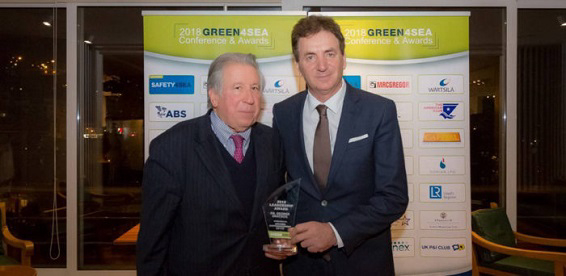
| Dr. George Gratsos, Chairman, HELMEPA & Principal, Standard Bulk Transport Corp. received the GREEN4SEA Leadership Award |
V.Ships received the GREEN4SEA Dry Operator Award, sponsored by Macgregor, for its continuous efforts towards environmental compliance with the implementation of green shipping practices to reduce environmental footprint, strengthening its reputation for high quality new build supervision and ship management of dry bulk vessels. Other short-listed nominees for this category were: Carisbrooke Shipping, Fednav, OOCL and Polaris Shipping.
Prime Marine received the GREEN4SEA Tanker Operator Award, sponsored by ABS, for its various initiatives towards GHG emissions reductions, becoming the first shipping company globally that received from ABS the Assessment letter of a Monitoring Plan for Compliance with the EU MRV Regulation, prepared for vessel M/T Emerald Shiner. Other short-listed nominees for this category were: AET Tankers, SCF Group, Teekay and Waterfront Shipping.
Alfa Laval received the GREEN4SEA Technology Award, sponsored by Capital Ship Management, for its USCG type-approved PureBallast 3.1 BWTS, which provide the same performance in fresh, brackish and marine water, including full-flow operation in IMO-regulated waters where the UV transmittance is as low as 42 percent. Other short-listed nominees for this category were: Becker Marine Systems, Chelsea Technologies Group, GTT and Thordon Bearings.
MPA Singapore received the GREEN4SEA Port Award, sponsored by Lloyd’s Register, for focusing on four key areas for port development: Safe and Secure Port, Efficient Port, Intelligent Port, and Clean and Sustainable Port. MPA Singapore continues encouraging the use of LNG as a marine fuel in Singapore and has made the use of MFM mandatory. Other short-listed nominees for this category were: Port of Gothenburg, Port of Piraeus, Port of Rotterdam and Port of Vancouver.
Project Forward received the GREEN4SEA Clean Shipping Award, sponsored by Orpheus Marine Transport, for promoting the adoption of LNG as a marine fuel, suggesting the design of a Kamsarmax size bulk carrier which reduces the cost of transportation at sea, modernizes the shipping industry and defines the new standard of vessel for IMO's 2020 emission rules. Other short-listed nominees for this category were: CMA CGM Group, Ecoslops, Green Ship of the Future and Vision of the Fjords.
Elemed Project received the GREEN4SEA Initiative Award, sponsored by Nanophos, for preparing the ground for the introduction of cold ironing, electric bunkering and hybrid ships across the Eastern Mediterranean Sea corridor. The EU project involves three member states -Cyprus, Greece and Slovenia- forming a strong consortium, comprised by a team of experts. Other short-listed nominees for this category were: Ambition 1.5oC – Global Shipping ‘s Action Plan Summit, Bunkering at Sea, NAMEPA and WLPGA- World LPG Association.
Dr. George Gratsos, Chairman, HELMEPA & Principal, Standard Bulk Transport Corp. received the GREEN4SEA Leadership Award, sponsored by Arcadia Shipmanagement, for demonstrating innovative, initiative-driven leadership by holding various positions throughout his career impacting significantly the national and international shipping industry. Dr. George A. Gratsos is a shipowner and a senior member of a Greek shipping family established in 1902, holding a B.Sc. in Naval Architecture and Marine Engineering from MIT(1965) and a Ph.D on Shipping Market Dynamics by the University of the Aegean (Highest Honors). He is Chairman of HELMEPA (Hellenic Marine Environment Protection Association). Also, he is President of the Maritime Safety and Marine Environment Protection Committee of the UNION OF GREEK SHIPOWNERS (UGS), on the BoD of U.K. FREIGHT DEMURRAGE AND DEFENCE ASSOCIATION LTD (London) (the largest mutual legal cost insurer). He is also a member of many international shipping organizations and has lectured at universities in Greece and abroad.
Find photos from the awards ceremony at Flickr and explore more about the nomination & voting procedure and the winners of 2018 GREEN4SEA Awards at http://events.safety4sea.com/2018-green4sea-awards/
Marlink and Seagull Maritime collaborate for efficient online distribution of onboard training material
The partnership combines Marlink and Seagull’s respective domain expertise to streamline and automate e-learning content distribution and management. Additional functionality will be offered later this year to enable fully digitalised services with the Seagull software running on Marlink’s XChange centralised IT and communications management platform, providing full on-board hosting, and monitoring of Seagulls market leading software to improve crews’ knowledge and qualification.
“With this partnership we will strengthen both Marlink’s and Seagull’s positions in the market by offering efficient online updates and distribution of training material. We will digitalize training services through Seagull training software, our global Sealink network and XChange as the enabler,”
Tore Morten Olsen, President Maritime, Marlink.
‘Over the air’ updates of e-learning material to improve crews’ knowledge and qualification
This new solution will reduce maintenance effort for shipping companies while the crew can stay qualified and up to date on the latest safe and efficient vessel operation practices. Offering distribution of training content “over the air” will ensure the system is kept up-to-date with the latest e-learning modules and software versions according to the customer’s specific training requirements. Online distribution will also eliminate manual work and physical shipments which will reduce cost for the ship operator. Currently the solution is running successfully on first pilot vessels.
“Together with Marlink, we will deliver an efficient approach to satcom based updating of Seagull software that will deliver improved efficiencies while providing a stronger platform for our customers to ensure they are providing high quality training for crew onboard immediate after it has been released.
Roger Ringstad, CEO, Seagull.
The Digital Imperative in Container Shipping

Digital opens the door for carriers to strengthen their direct relationships with end customers, further reduce their costs (including for fuel, vessel operation, and customer service), and pursue new revenue streams beyond traditional shipping services.

Powered by  © Μaritimes 2019