


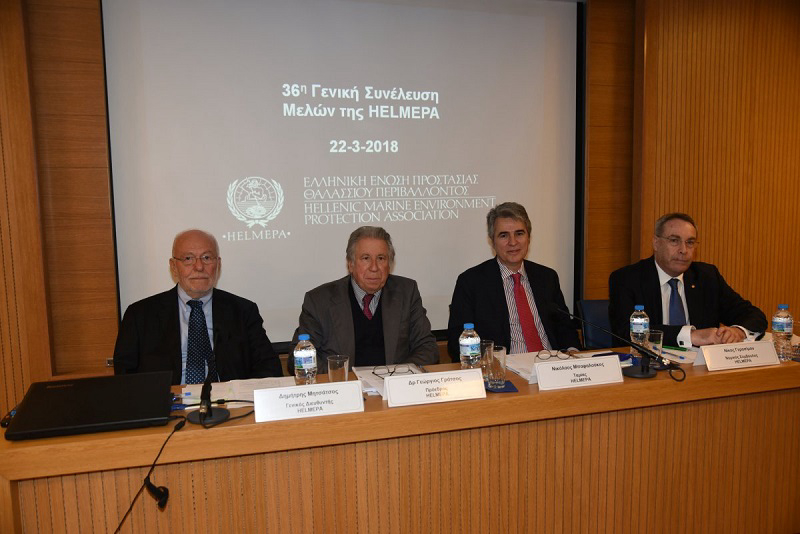
36th General Assembly of HELMEPA
 |
The Assembly unanimously approved the activities of 2017 presented by the Director General, Mr D. C. Mitsatsos. The Treasurer of the Board, Mr Ν. Bafaloukos, described the overall financial operation during the past year, while the auditors, Moore Stephens S.A., presented their relevant report. The Assembly approved the 2017 financial operation, released the Directors and auditors from any responsibility for the financial management of last year and elected Moore Stephens S.A. as the 2018 auditors.
The secret ballot that followed resulted in the election of the following Members of the new Board, in alphabetical order:
Bafaloukos Nicolas
Beis Athanassios
Chandris Marietta-Antonia
Daifas Irene
Dalacouras Michael
Gratsos George
Karageorgiou George
Ladas Ilias
Los Aikaterini
Matthaiou Dimitrios
Paliou Semiramis
Pittas Aristidis
Xylas John
Zachariadis Panagiotis, and
Chalas John, General Secretary of the Panhellenic Seafarers Federation (PNO), permanent Board Member
Alternate Members are the following, in alphabetical order:
Andreou Gabriel
Avlonitis Evangelos
Dimitriou Constantinos
Pafliotis Theofilos
Vlachos Spyridon
The elected Members will meet on Tuesday 27 March 2018 in order for the new Board to be formed according to the Constitution.
The Assembly of the Members of HELMEPA came to a close with a light buffet kindly offered, as always, by CERES Shipping.
Alina in the Navy ..
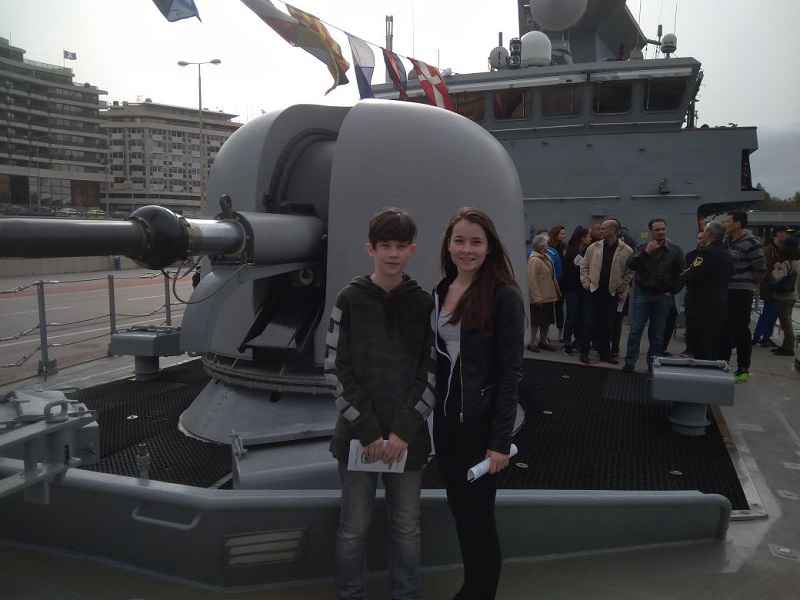
The attendance was admittedly great from all ages, but also from visitors outside of Greece. In particular, Maritimes.gr spoke with a family from Austria who came to Greece and are well aware of what this feast means for the Greeks "The Greeks, in 1821, chose March 25th, in the Annunciation of Theotokos to revolt and free yourself, "said Alina Berwein from the deck of the" Grigoropoulos " warship.
He also spoke of the additional reason he wanted to visit with his parents and brother Leo, the ships and the submarine: "My grandfather served in the Second World War on a submarine in the North Sea and wanted to see how it is." For Greece the Berwein family has the best impressions and visits it often.
Regarding how a teenage girl perceives the United Europe and how she envisions her future, Alina stresses that "The different cultures of the European Union are something positive, through this diversity we will become better. Like the mindset, to learn and respect the different attitudes, for example, hospitality in Greece is something unique. "
 |
| Leo and Alina Berwein |
 |
 |
WISTA Hellas Annual Dinner Dance – another successful event
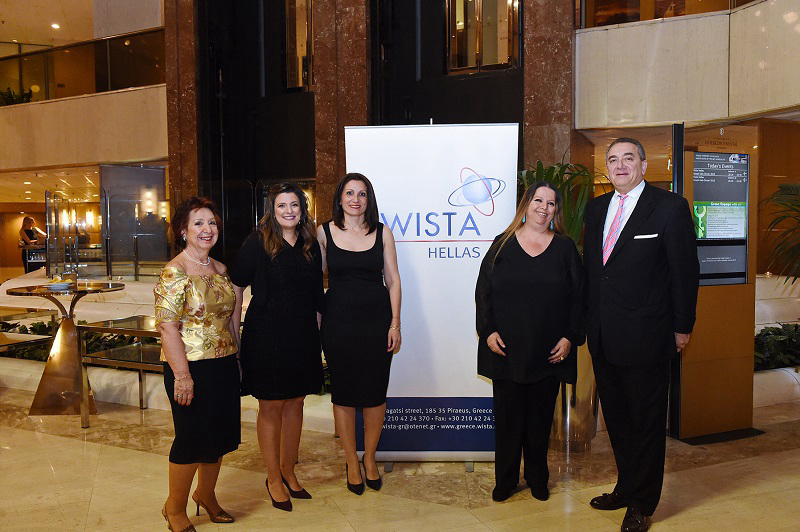
The Minister of Maritime Affairs and Insular Policy Mr. Panagiotis Kouroublis was represented by Ms. Maria Kyriakou and Ms. Kelly Karamessini. Guests of honour were Mr. Giannis Plakiotakis, Head of Sector at the Ministry of Maritime Affairs and Insular Policy of Nea Dimokratia, Mr. Charalambos Simantonis President of the Hellenic Shortsea Shipowners Association, Mr. George Pateras, President of the Hellenic Chamber of Shipping, Captain Manolis Tsikalakis President of P.E.P.E.N, Mr. George Xiradakis, President of the International Propeller Club, Port of Piraeus, Ms. Despina Papastelianou, President of “ARGO” and Mr. Yannis Perlepes, General Manager of NAFTEMPORIKI; as well as press officers from the maritime industry.
The evening started at the foyer with a welcome drink which set a great atmosphere for the attendees to meet and network. After Angie Hartmann, President of WISTA Hellas, welcomed everyone on behalf of the Board of Directors, a video was shown depicting WISTA Hellas’ highlights over the past two years in the form of a photographic and musical journey. After the dinner, a lucky raffle draw was held with gifts donated by the Association’s supporters. The evening ended on the dance floor where guests enjoyed themselves until the early morning hours. An evening to remember.
The Board thanks all members and friends who attended and once again helped make the event a great success.
 |
 |
 |
 |
 |
 |
 |
 |
 |
 |
 |
 |
 |
 |
 |
 |
 |
 |
 |
 |
 |
Shipping: Evolution Not Revolution
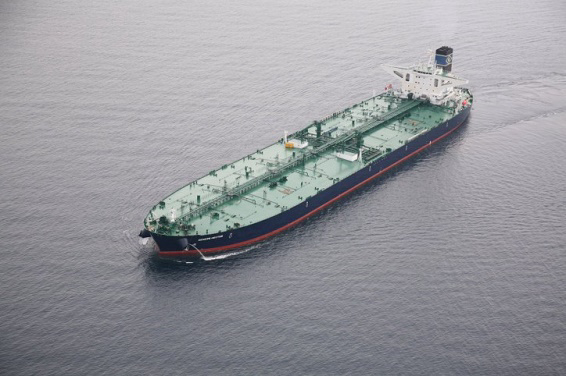
The energy sector, however, remains complicated with the LNG market rising, tankers falling, coal volumes up, and shale the wild card. All in all, more transaction volumes (demand) plus more controlled tonnage (supply) leads us to conclude that the year ahead of us will be more and more balanced. Yard consolidation has also continued (from 680 yards in 2007 to 300 today), which has meant upward pressure on newbuilding prices.
This year has seen the confirmation of three major changes to the shipping market whose implications, and whether they will be disruptive or evolutive, have yet to be settled:
1) the awareness that shipping is a major contributor to CO2 and sulphur emissions;
2) the fact that all shipping markets, and thus the landed costs of many trades, are based on broker indices; and
3) a recognition of the need for transaction traceability for compliance, sanctions, tax and reliability purposes. Regulations imposed on national companies by international organizations are by defi nition hard to enact and even harder to enforce.
The industry is making small steps, but there is a large differential building between those who embrace the targets and the others who try to circumnavigate or delay them. Geopolitical events complicate planning and decision-making, as oil at $40 a barrel leads to radically different decisions than oil at $75 a barrel. Such decisions range from immediate scrapping for heavy consumers, to conversion to dual-fuel engines, to newbuildings with full LNG-capable engines, or simply ultra-slow speeding. Our markets will be infl uenced by the ultimate proposals of the engine/ ship designers; what fuel qualities the energy companies can provide effi ciently; the political decisions of the major oil producers; and of course the fuel price which emerges from these developments, as all the while the climate conundrum unfolds.
The Singapore Stock Exchange (SGX) bought the Baltic Exchange at the end of 2016 and with it the right to publish all the shipping indices used as benchmarks for pricing, plus the settlement numbers used for derivatives and increasingly also for term physical transactions. The indices were developed by shipbrokers to allow a tanker and dry cargo shipping derivative market to fl ourish. The indices were extended into all sectors in response to a real need for transparency and objectivity. The industry is now faced with a realization that the indices less and less refl ect shipbrokers’ objective opinion of the state of the market, but rather more and more what the clients are showing to the market.
Who owns the indices? The cargo owners who transact (in which case the compliance offi cers will have a serious issue to resolve; transacting using an index which you infl uence), the shipbrokers who supply objective appraisals of how they see their markets (but they are seeing a smaller and smaller share), or the Singapore Exchange (in which case with what authority, as any major news provider could compile them, albeit with less objectivity and sentiment as the users who rely on them would quickly learn to feed the provider and thus infl uence the indices). Direct fi xing using indices is now the majority of dry bulk transactions.
On the major ore routes, which represent over 50\% of the dry cargo market, we estimate less than 10\% is fi xed through brokers or disclosed. The CIF (Cost, Insurance and Freight) net back prices of commodities are even more dependent on the indices. Price disclosure that used to be done by establishing bids and offers on the market is no longer necessary as the indices serve as price references. End users can now price their freight (and the landed cost of their commodity) on their own ships without going to the market.
Could this be the reason why a majority of the dry cargo orderbook in 2017 constituted orders by, or for, end users and traders. Traditional owners are having a harder and harder time justifying investing against returns based on purely indices. Is this a natural inevitable evolution or are we headed to an uneven playing fi eld where the giants are able to control the total commodity chain? We better figure it out before there is a revolution, but the evolution is already well advanced. Whether it is the Panama Papers, national tax laws, Brexit, terrorist funding, sanction enforcement, the future need for traceability and accountability is growing. Various maritime initiatives are underway with Silicon Valley targeting the huge transaction volumes in all aspects of the maritime sector.
The complexity of cross border trades and payments, coupled with the even more complex interaction between the participants, screams for transparency, speed and simplification. Blockchain and cryptocurrencies are heralded as potential solutions but with the complex web of essential maritime links, the chain will look more like a cobweb than an anchor chain. Our industry has major challenges ahead but we are confident that it will continue to grow in order to transport safely, efficiently and cheaply, with participants finding solutions to overcome climate, transparency and transaction hurdles. Maybe not in one go, but slow and steady like a ship tracing its own wake. Evolving not disrupting.
Source: BRS Annual Review, Tim Ford, President
Greek Shipping Hall of Fame inducts Aleco N. Goulandris and Basil M. Mavroleon
 |
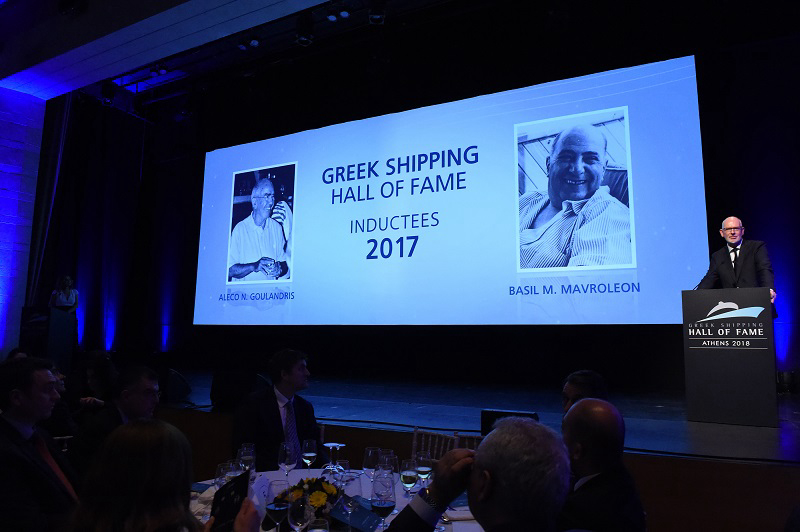
The two historic industry personalities were revealed as the Inductees for 2017 in front of more than 600 guests at a special Induction Ceremony & Dinner held at the Megaron, The Athens Concert Hall.
Voting for Inductees takes place annually and is open to members of the Greek Shipping Hall of Fame Academy, currently numbering about 300 prominent individuals in today’s Greek shipping community. The integrity of the on-line voting and the final results are overseen by the international audit firm, Deloitte.
Aleco N. Goulandris (1927-2017)
ALECO Goulandris, who passed away last year, was the last surviving of the founders of the N.J. Goulandris group, as well as a noted art collector and philanthropist.
Together with his twin Leonidas (1927-2009) and older brother (and Greek Shipping Hall of Fame Inductee) John N. Goulandris (1923-2011), Aleco established N. J. Goulandris Ltd in 1953 as a spin-off from the existing Goulandris family shipping business begun in the 19th century.
The new company was named after their father Nicholas and quickly became a leader in post-World War Two Greek shipping. It was among the first international shipowners to turn to Japanese shipyards and established a high-quality fleet of oil tankers. But it also had a continuing interest in dry cargo ships and was the first Greek shipowner with newly-built bulk carriers, thanks to two vessels delivered in 1956.
Aleco Goulandris was highly supportive to his home island of Andros, but was also a national benefactor. Unknown to most Greeks, he quietly sponsored many concerts at the Athens Concert Hall. Other causes he funded in recent years included assembling a new legal case for returning the Parthenon Sculptures from the British Museum, and an ambitious renovation of the historic steel battleship Georgios Averof.
Basil M. Mavroleon (1900-1978)
BASIL Manuel Mavroleon gained his early experience in shipping at Rethymnis & Kulukundis, the pivotal company for Greek shipping interests in London prior to the Second World War. He soon became one of the leading lights of R&K as well as a leading shipbroker active at the Baltic Exchange.
After the war, he established the Mavroleon Brothers shipping firm and launched London & Overseas Freighters, which was co-owned with the Kulukundis family. His many claims to fame including leading LOF to a listing on the London Stock Exchange in 1951, more than 30 years before any other Greek shipping company was publicly traded.
LOF later acquired the Sunderland shipbuilder Austin & Pickersgill and Mavroleon conceived the idea to build an economic dry cargo replacement for the aging fleet of wartime Liberty ships.
He personally inspired the design of the new 14,000 dwt dry cargo ships known as ‘SD 14s’, many of which were built at A&P. In all 211 SD 14s were built in the UK and under licence in Brazil, Argentina and Greece, including 27 at Hellenic Shipyards, making it the most popular of the various Liberty replacements. Buyers included many Greek owners.
The Inductees for 2017 will shortly be featured with full biographies and other media in the Greek Shipping Hall of Fame, which resides at www.greekshippinghalloffame.org
An independent organisation established to bring the fascinating story of Greek shipping to a wider public, the Greek Shipping Hall of Fame has been paying tribute to leading personalities from Greece’s past shipping history since 2007.
With the addition of Aleco N. Goulandris and Basil M. Mavroleon, the Hall of Fame now includes 28 outstanding personalities of the shipping world.
Managing risk in the fourth industrial revolution.
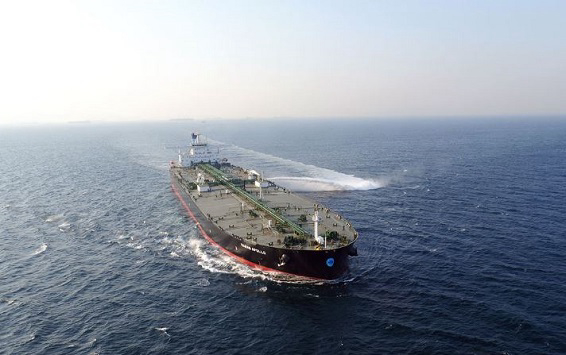
Digitalization in the Oil and Gas sector could be worth between $1.6 to $2.5 trillion for the industry, its customers and wider society over the next decade, but what is the reality of risk in the current business world and how can technology and data enable safer, risk reduced and efficient environments for our businesses? At the end of February, LR hosted one of its exclusive client events in Oslo, which saw us welcome guests to fuel the discussion on manging risks through technology.
Greek Shipping Hall of Fame salutes the past while contributing to the present
MANY of the past greats of the Greek shipping industry were saluted at the Greek Shipping Hall of Fame Induction Ceremony & Dinner 2018, attended by about 630 guests included numerous leading personalities from today’s maritime community.
The gala dinner event concluded with the announcement of the Inductees for 2017 – Aleco N. Goulandris and Basil M. Mavroleon – who were remembered through interviews with family and warmly lauded for their contributions and achievements at the prestigious event held at the Megaron, the Athens Concert Hall.
Annually the Inductees are decided through voting by the members of the Greek Shipping Hall of Fame Academy. The event also included tributes to the 26 other Inductees of the Hall of Fame. The new Inductees for 2017 marked the 10th anniversary of Inductions into the Greek Shipping Hall of Fame which began with the Inductees for 2007, the year that the Hall of Fame was born.
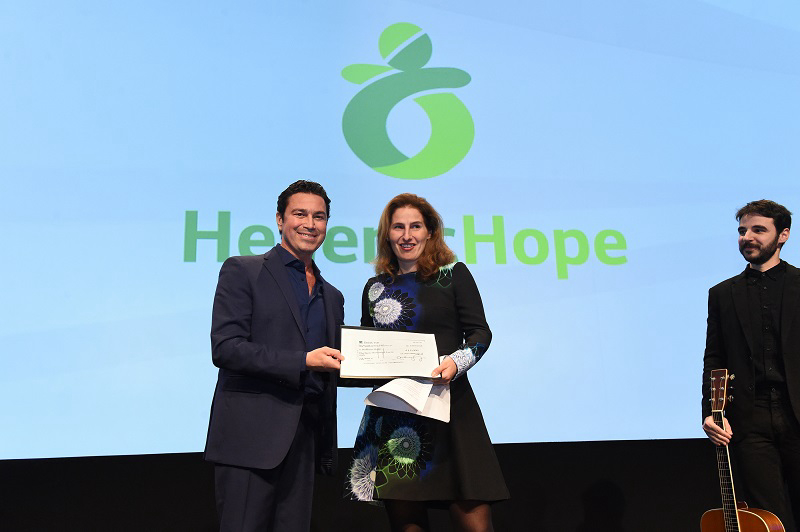
Highlights of the event included the appearance of internationally-renowned classical crossover singing star Mario Frangoulis who presented a donation out of the proceeds of the event to Hellenic Hope, a charity that raises funds to support carefully-selected projects in Greece that help children in need, focusing on children at risk from the nation’s ongoing economic hardships.
Before presenting the cheque to Tina Mavraki, one of Hellenic Hope’s founders and trustees, Mario Frangoulis congratulated the shipping community for its generosity and emphasised the need for continuing support as hundreds of thousands of Greek kids currently live below the official poverty line.
The keynote after-dinner speech was given by Spyros M. Polemis. Among numerous important positions held by Dr Polemis during his career, between 2006 and 2012 he was chairman of the International Chamber of Shipping, the first time a Greek had headed the world’s principal shipping industry organisation, representing more than 80\% of all merchant shipping capacity. Dr Polemis gave a compelling speech, drawing parallels between modern Greek shipping and the maritime exploits of Athens about 2,500 years ago. “The Greeks, more than any other people in the world, have remained mariners without interruption throughout history,” he noted.
Impressive industry support for the event was led by ABS, IRI / The Marshall Islands Registry and Shanghai Waigaoqiao Shipbuilding Co. Ltd. the three Co-Lead Sponsors of the Induction Ceremony & Dinner 2018.
Vassilios Kroustallis, Senior Regional Vice President, ABS, said: " The people we are celebrating tonight exemplify leadership and embody the pioneering spirit that has defined the maritime industry for centuries. We are doing our best to live up to their legacy."
According to Theo Xenakoudis, Director, Worldwide Business Operations and Managing Director, Piraeus, Greece for International Registries Inc., “Greece is a maritime nation by more than just tradition, it is a maritime nation built on the passion and commitment of its people. With a legacy of seafaring that goes back thousands of years, Greece continues to be a driving force in the modern maritime industry.”
Wang Qi, Chairman of Shanghai Waigaoqiao Shipbuilding Co. Ltd., emphasised the strong ties between Greek shipowners and shipbuilding in China. “It has become a tradition for SWS to visit Greece to meet our Hellenic friends and join you in paying tribute to personalities who have made an outstanding contribution to Greek and global shipping,” he said.
TMS, which has become one of Greece’s largest shipping groups since it was established in 1986, sponsored the welcome drinks party for the event and TMS general manager George Kourelis welcomed guests on behalf of founder George Economou.
Navios Group of Companies was the event’s Dinner Sponsor and Navios Chairman and Chief Executive Angeliki Frangou addressed the audience to emphasise the importance of not losing the opportunity to invest in shipping during the down-cycle and also the importance of investing in human capital for Greek shipping.
American Hellenic Hull Insurance Company, Bureau Veritas, Citi Private Bank, Moore Stephens and Thomas Miller supported the event as Premium Sponsors.
Other Sponsors were China Classification Society, Clarksons Platou, ClassNK, DNV-GL, Hellenic War Risks, HSBC, Marine Tours, National Bank of Greece, OSM Maritime Group, UK Defence Club and UK P&I. The Ecali Club supported the Hall of Fame’s Athens 2018 event as exclusive Lifestyle Partner.
Bank Julius Baer enhanced the Greek Shipping Hall of Fame’s support for Hellenic Hope in 2018.
 |
 |
 |
Certification of Environmental Management PERS of PPA S.A. by ESPO
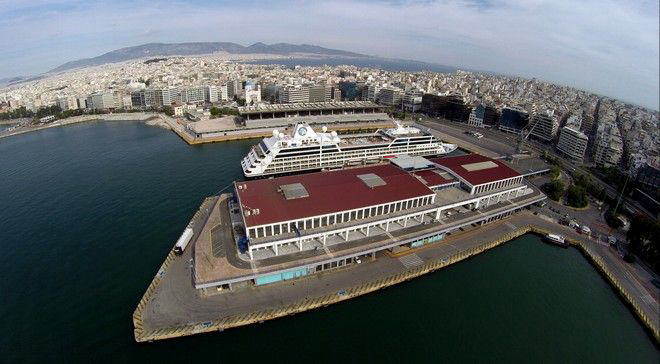
The environmental management applied by PPA S.A. for all of its activities has been certified since 2004, according to the European PERS System of the European Ports Organization (ESPO) and at the same time, PPA S.A. is an active member of the European port network EcoPorts.
The PERS System has been developed by ESPO specifically for port environmental management and is certified by the independent certification body Lloyd's Register.
In this framework, PPA S.A. has developed and implements a specific environmental policy and is in a continuous record of the environmental parameters associated with its activities while at the same time aims at continuously improving its environmental performance, following the European and international standards and aiming at protecting the environment and preserving natural resources.
Results of the environmental performance of PPA S.A. are also presented through the published Annual Financial Report of the company.
 |
Bulkers move to the top spot
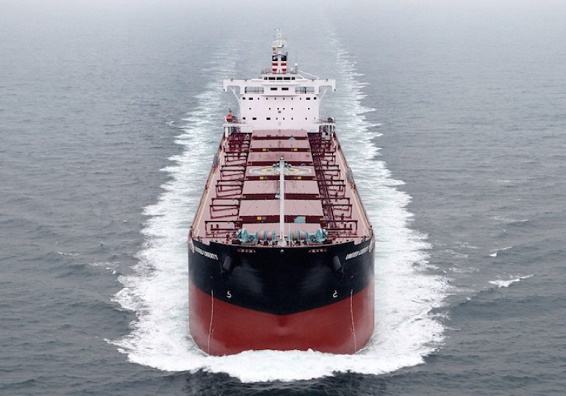
Dry bulk asset values have surged over the past two years following a period of soft returns which encouraged scrapping while ton mile demand continued to climb. Hire rates are surging, which is encouraging investment in dry bulk carriers. The dry bulk fleet is now worth more than the combined value of the tanker fleet, leapfrogging container ships as well.
The below chart shows the total valuation of each major shipping segment and how it has varied each year from 2015 to the present. The value of the tanker fleet has slipped by almost $50 billion dollars from 2015 to the present, while bulkers have appreciated by a net $56 billion dollars.
 |
Tankers appear to be in the middle of a down cycle, which has depressed the valuation of the tonnage on the water and the outstanding orderbook to second place. Although the top three vessel segments have shuffled places, gas carriers and small dry ships held onto more historic trends. Overall the value of total freight carrying assets fell by about $43bn from the end of 2015.
 |
VesseslValue.com
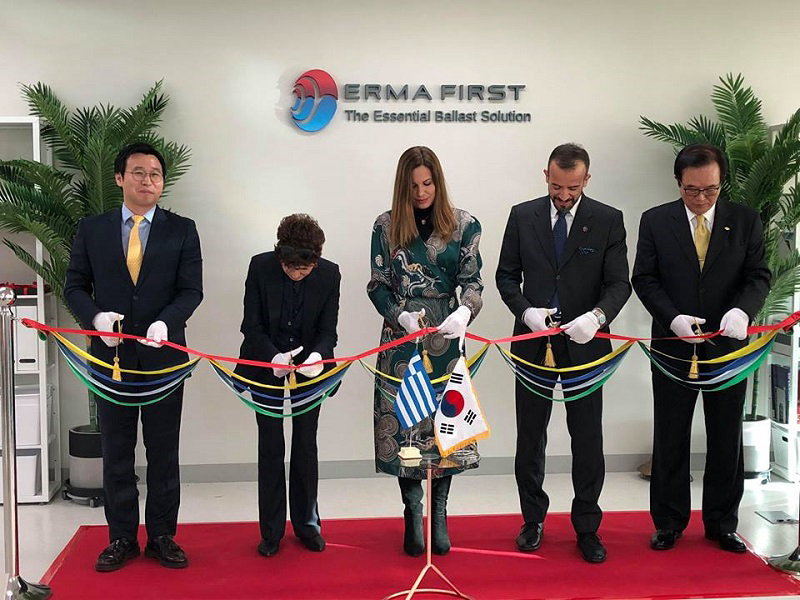
ERMA FIRST Accelerates Growth with Opening of New Office in Korea
 |
After having delivered satisfactory results and in an effort to expand the company’s services worldwide, considering the overwhelming demand for its systems and services, ERMA FIRST advanced its provisions, in cooperation with its local agent Magna Mare, with the addition of brand new joint allocation offices in the heart of maritime city of Busan.
Mr. Konstantinos Stampedakis, Managing Director & Director of Research, Development and Engineering Dpt. of ERMA FIRST, explained how the new office underpins both the proximity to the company’s existing client base in Korea and its ambition to offer its expertise in all key maritime centers around the globe. More specifically he said, “We believe that our new offices in such an important, market wise, location will expand our services range, will allow us to further provide our support to all Korean shipyards and will also enable us to respond to real-time demand”.
The opening of the new branch office in Korea is fully in line with the company’s long-term growth strategy, which is being promoted not only on a national but also on a global level.
About ERMA FIRST:
ERMA FIRST designs and manufactures innovative Ballast Water Treatment Systems (BWTS) in compliance with the latest legislation. ERMA FIRST BWTS FIT holds USCG Type Approval and AMS Acceptance letter, Final Approval by IMO and Type Approval by LR.
ERMA FIRST BWTS FIT is an advanced modular system developed to exceed all special installation requirements. Covering an extensive capacity range of 50-3740 m3/hr, the system is suitable for newbuilds as well as for retrofits of all types and sizes of vessels. The major components of the system are an automatic back-flushing filter and an electrolytic cell of outstanding performance under the most demanding conditions. Using an active substance produced by the method of electrolysis, the re-growth of microorganisms is eliminated.
Nowadays, ERMA FIRST has a prestigious reference list comprised of ship-owners and shipyards worldwide.

Powered by  © Μaritimes 2019