


LPG Shipping: China mulls trade war on propane
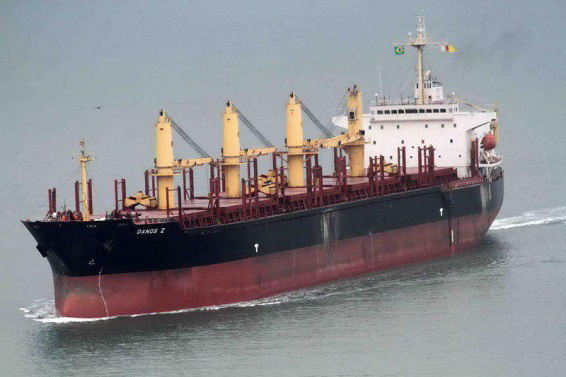
The battle over tariffs between the US and China is looking more like turning into a war. Both administrations have announced a new list of commodities to be targeted with higher import duties, and propane has been included on China’s hit list.
China currently imposes 1\% duty on propane imports, irrespective of where they come from, but now plans to raise it to 25\% for supplies from the US. The only comfort comes from the fact that Beijing has not yet announced when the proposed tax will be applied, leaving scope for talks between the two governments.
How important is US-China LPG trade?
Currently, China is the world’s biggest buyer of LPG. Not only have its imports grown strongly over the past five years, but its importance has also grown. China’s share of the global LPG trade stood at 20\% in 2017, substantially higher than the 6\% it had of a much smaller market in 2012.
Moreover, the US share of China’s LPG imports has also grown from zero in 2012 to 19\% in 2017. This strong long-haul trade on the US-China route has been a big source of employment for VLGCs over the past few years and so any reduction on this trade route will hit VLGCs the hardest.
Global LPG trade and China’s share (million tonnes)

Source: Drewry Maritime Research
Carnival Horizon delivered to LR class.
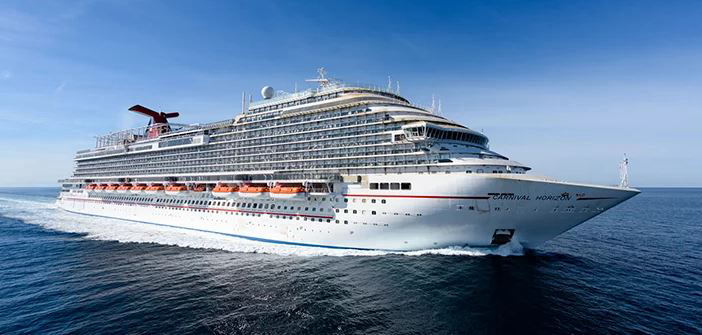
The cruise ship has a capacity of 3960 guests, plus 1450 crew, and is the second in the Vista-class and the 26th ship in Carnival’s fleet. She was designed and built to LR class.
The naming ceremony for Carnival Horizon will take place in New York on 23 May. Following a summer schedule of four-day Bermuda and eight-day Caribbean sailings from New York, the cruise ship will reposition to Miami for a year-round schedule of six- and eight-day Caribbean cruises beginning in September 2018.
Like its sister ship (Carnival Vista), Carnival Horizon is certified to LR’s ECO Notation, meaning that she was designed, built and operates in a way that exceeds current marine statutory environmental regulations. The ship also has an Intelligent Power Management System installed, which optimises diesel engine operational settings to reduce emissions and conserve fuel. Additionally, she has a ballast water treatment system that complies with the Ballast Water Management Convention requirements.
Carnival Horizon also features several noteworthy attractions including an IMAX Theatre, a brewery with onboard craft beer production, an 800-foot-long SkyRide and the first Dr. Seuss-themed water park with a 455-foot-long water slide.
“We are very pleased with the collaboration and teamwork with our valued partners at Fincantieri and LR to deliver this spectacular addition to our fleet,” said Mark Jackson, Senior Vice President of Technical Operations, Carnival Cruise Line.
LR’s John Hicks, Global Passenger Ship Manager, Marine & Offshore, commented: “Carnival Horizon is a magnificent ship representing the latest collaboration between Fincantieri and Carnival, supported through the entire two and half year process by an excellent LR team of surveyors and plan approval specialists.”
The third vessel in the Vista-class series, Carnival Panorama, is currently under construction and scheduled to enter service from Long Beach, California in December 2019.
 |
 |
| LR staff on the bridge with Carnival Horizon Captain Luigi De Angelis. Left-right: Tom Wright (Surveyor, Marghera Site Team), Valter Tissone (Senior Surveyor, Marghera Site Team), Captain Luigi De Angelis, Nicola Pietro Villani (Project Manager), Luciano Falcone (Team Leader, Marghera Site Team), Federico Renaldi (Surveyor, Marghera Site Team). |
European shipowners welcome the proposed EU trade agreements with Japan and Singapore
The European shipowners are very pleased that the first step towards the conclusion of these agreements has been taken. “With Japan and Singapore agreements Europe sends a strong message to the world in support of fair and regulated trade”, said ECSA’s Secretary General Martin Dorsman.
The agreement with Japan is the biggest bilateral trade partnership ever negotiated by the European Union. It will remove the vast majority of customs duties that cost EU companies exporting to Japan €1 billion a year. EU exports to Japan could increase by over one third. “It contains obligations to maintain open and non-discriminatory access to international maritime services such as transport and auxiliary services, as well as access to ports and port services,” Dorsman reminded.
“Shipping needs global trade to exist and global trade cannot exist without an efficient shipping industry. Around 90\% of world trade in goods is carried by the international shipping industry and European shipowners control 40\% of the world’s merchant fleet and operate shipping services all over the world,” he concluded.
European Shipowners look forward to the Council’s approval of the agreements. Once approved by the Council, they will be sent to the European Parliament, aiming for the entry into force before the end of the current mandate of the European Commission in 2019. The investment protection agreement with Singapore will follow its ratification procedure also at Member State level.
ecsa.eu
Stealth Gas Inc. Announces the completion of its newbuilding program
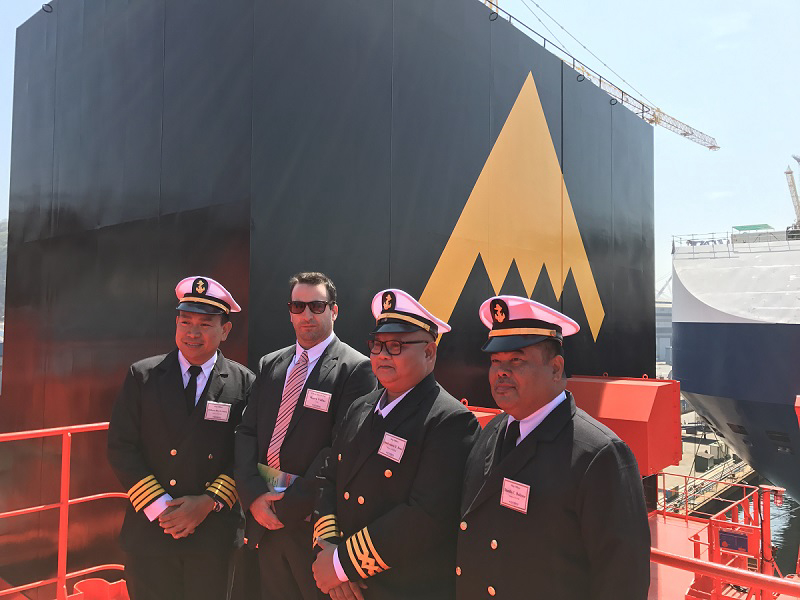
The vessel delivered today is a 22,000 cbm ice class semi refrigerated hybrid scrubber fitted eco LPG carrier, the Eco Freeze, the fourth and last 22,000 cbm semi refrigerated eco LPG newbuild. This acquisition concludes the Company’s expansion phase which commenced in 2011 and totaled the acquisition of 26 newbuilding LPG vessels. Twenty were delivered from Japanese yards and six from South Korean yards.
About StealthGas Inc.
StealthGas Inc. is a ship-owning company primarily serving the liquefied petroleum gas (LPG) sector of the international shipping industry. StealthGas Inc. currently has a fleet of 56 vessels, comprising 52 LPG carriers with a total capacity of 329,149 cubic meters (cbm) (three LPG vessels are chartered in), three M.R. product tankers and one Aframax oil tanker with a total capacity of 255,804 deadweight tons (dwt). StealthGas Inc.’s shares are listed on the NASDAQ Global Select Market and trade under the symbol “GASS”.


 |
First SAFETY4SEA Conference in Cyprus sheds focus on key challenges towards 2020
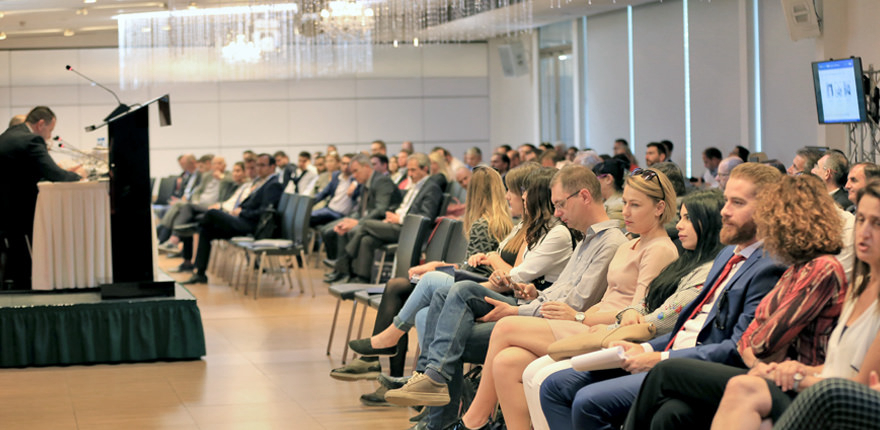
The event, organized by SAFETY4SEA, was sponsored by UMAR-WSR (lead sponsor) and Alfa Laval, American Club, American Hellenic Hull, Arcadia Ship Management, Argo Navis, Bureau Veritas, Capital Ship Management, Columbia Shipmanagement, Consolidated Marine Management, Diaplous Marine Services, Dorian LPG , Dromon Bureau of Shipping, Epsco-Ra , Flowwater Technologies, MINERVA Marine, Orpheus Marine Transport Corp, RISK4SEA, Safebridge, SKILL4SEA, SQE ACADEMY, SQE MARINE, Tototheo Group, World-Link Communications. Furthermore, the event was supported by AMMITEC, CYMEPA, CYNAMEA, Cyprus Marine Club, CYMA, CUS, ICS Cyprus Branch, ISES, Marinem, The Nautical Institute Cyprus Branch, WISTA Cyprus, and YoungShip.
The pro bono event brought together global experts who focused on the recent and future challenges toward safe, smart and green shipping excellence and sustainable shipping. Presentations were given in four panels in which the experts shared their views on compliance with the forthcoming regulations, providing feedback on MEPC 72 outcome, which took place in early April. The paths towards decarbonisation, fuel options for compliance towards 2020 and BWMC implementation issues were among the critical issues that were discussed.
The event also tackled with the prominent topic of safety culture. Namely, the last panel of the conference addressed key challenges for future crew training and soft skills required, considering that maritime industry transform will inevitably reshape the way crewing and training processes work. Given that the introduction of autonomous ships, often described as the next step for the maritime industry, has already been launched to make the smart ship concept a reality, the event also provided a comprehensive review of current trends and outlook with respect to human element.
Panel # 1 – Introductory Panel
Mr. Costas Iacovou, Acting Permanent Secretary of the Deputy Ministry of Shipping, Cyprus, discussed about the key shipping challenges with regards to maritime safety and environmental protection, considering the existing and future regulatory framework. Also, he explained why Cyprus is one of the top global hubs for ship owning and shipmanagement services. Namely, Cyprus has a flexible Tonnage Tax system in the EU, combined with an excellent infrastructure and an extremely competitive tax system with the lowest corporate tax rate in the EU.
Mr. George Tsavliris, Chairman, CYMEPA reminded of the critical issues raised during MEPC72, including the reduction of GHG from ships, implementation of sulphur 2020 and measures to reduce risk of use and carriage of HFO in Arctic. Mr. Tsavliris referred to the chaos with the Paris Agreement concerning shipping, noting that the European Union has different perspectives on how the industry should implement measures to cut shipping emissions, therefore, he advised, synergy within the sector is needed. Moreover, he provided a recap of oil and gas recent developments and highlighted that over regulation need to be further reviewed with regards to MARPOL Annex VI.
Panel # 2 – 2020 Fuel Options
Mr. Apostolos Belokas, Managing Editor, SAFETY4SEA presented the findings of the ‘2020 SAFETY4SEA Fuel Options Survey’ highlighting that the majority of responders believe a postponement of 2020 sulphur cap deadline is possible, similar to BWM Convention. The survey revealed that momentum is extremely difficult; all options will work in the market and other options such as LPG and batteries may arise initially in small segments. Mr. Belokas concluded that many seem to prefer a ‘wait and see’ approach with respect to Sulphur cap compliance and certainly market will be distorted. Strongest "players" may increase market share, weakest may disappear while there may be a rise in penalties.
Mr. Kyriacos Gregoriou, Marine Surveyor, DMS Cyprus, highlighted hot debated issues concerning the 2020 Global 0.5\% sulphur cap challenge. He began his presentation with an overview of the SOx regulations examining later what the global limit actually means for ships and how these can meet low Sulphur emissions standards. Thus, he talked about fuel oil availability and what controls are needed when the new global cap takes effect. Given the many alternatives for compliance, Mr. Gregoriou advised delegated that a life cycle cost analysis taking into the ‘equation’ of all the ‘influential paramenters’ is needed, in order to define the best solution applicable to each particular ship.
Dr. John Kokarakis, Vice President Technology & Business Development Hellenic, Black Sea Region & Middle East, Bureau Veritas, provided a comprehensive insight into the 2020 global Sulphur cap, highlighting that compliant fuel needs energy to be produced. Therefore, he noted alternative and compliant fuels are likely to be utilized in smaller vessels. High fuel consumption favors the scrubber option for the larger ships. Dr. Kokarakis said that freight rates are expected to increase. For the smaller vessels, the resurrection of slow steaming is anticipated while scrubber equipped vessels will run faster. It seems that post-2020 we will face a multi-fuel future, with low-sulphur blended bunker fuels to be the ‘future king’ of the marine fuel market, he added.
Mr. Marcel vanHaaren, Sales Engineer Exhaust Gas Cleaning, Alfa Laval, argued on how to be one step ahead once the regulations become effective in less than two years. After providing briefly an overview of the available options for compliance, he concluded that installing a scrubber offers more flexibility as it allows the continued use of HFO. Although, low sulphur fuel seems to be the most popular compliance strategy in 2020, the key questions regarding its availability, quality and price continue to challenge operators and provided a forecast of the scrubber market up to 2025, when approximately 5,000 vessels are expected to be retrofitted with scrubbers.
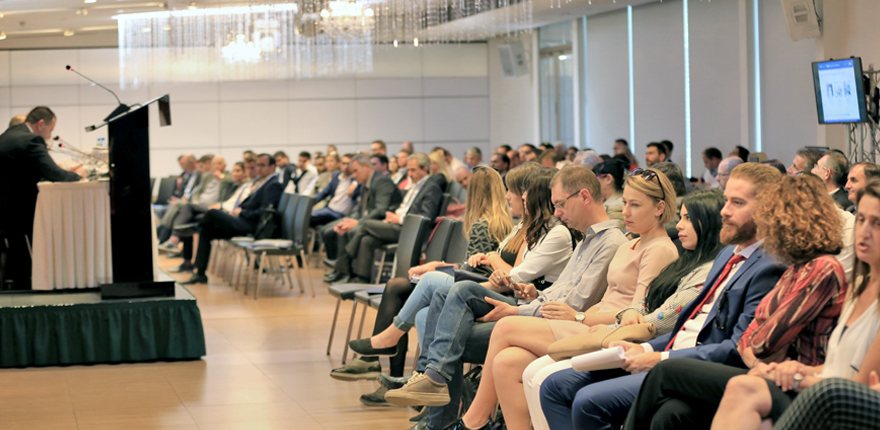
Panel # 3 – Ballast Water Management
Mrs. Kristina Effler, Business development & Marketing Manager PureBallast Alfa Laval, talked about the route to IMO G8 revised guidelines (2016) and USCG type approval. Providing a recap of how the new robust 2016 G8 testing guidelines were adopted, he cited what are the new conditions and informed about the IMO revised G8 Certificate, which gives vessel owners peace of mind in planning future-proof fleet retrofit installations. A key point of his presentation was also the USCG zero hold-time. Some vessel owners have expressed concern over the 72h holding time required to make the USCG CMFDA method work. Alfa Laval completed testing without holding time in Q3 2017.
Mr. Mark Hadfield, CEO, Flow Water Technologies, addressed the subject of ballast water treatment which is one of those subjects that whenever it is brought up, ship operators tend to avoid, he commented. This is due to the enormous space required for the installation of a BWMS and the many regulations concerning its application. Therefore, Mr Hadfield advised those responsible for the installation and purchase of a BWMS, to make sure you they first make a research of every manufacturer, including those that are approved and those that are in the process, as no one has a system that works best on every vessel.
Mr. Andreas Zontanos, Partner, Argo Navis, discussed the highlights of a BWTS retrofit which directly and indirectly affect the cost of the project. He stressed that the quality of a BWTS project is related to its cost: neither a low nor a high final bill but the successful commissioning and certification of a BWTS, finished at the pre-estimated date and at the pre-estimated cost make a quality project. As such, he cited what are key steps for operators in order to reduce costs without affecting the quality, as well as what they should not do to reduce retrofit costs.
Panel # 4 – Human Element
Sotiris Kambanellas, President, YoungShip Cyprus / Business Development Manager, Fleet Management, presented key issues with regards to crewing in the 21st century, considering how new technologies are impacting the global shipping industry. In a constantly evolving world, even a more “traditional” industry like shipping is already changing and developing to adapt to new transformational technologies which bring many internal and external developments in the industry. Concluding his presentation, he referred to the future trends of crewing, presenting the results of a recent crewing connectivity survey and shared his advice on how to move forward.
Dr. Luiza Shahbazyan, Product Manager CAT, SAFEBRIDGE, discussed about the future crewing requirements and solutions for the maritime industry and explained why soft skills are increasingly important onboard than ever before. Living in the smart shipping era, Dr. Shahbazyan noted that it is likely to see a change in the working environment, requiring from seafarers a different kind of skills which could be able to augment artificial intelligence, and focusing more on non-technical skills, known as 'soft skills'. The technical skills of the crews have turned into a critical factor, as the better equipped ship and more technically knowledgeable crew meant a faster and a safer journey.
At the dawn of the smart shipping revolution, Mrs. Christiana Moustaki, Senior Crew Manager, Fleet Management, insisted on putting people first. She said that today, the global supply of officers is forecasted to increase steadily, but this is predicted to be outplaced by increasing demand. As such, unless training levels are increased significantly, the growth in demand for seafarers could generate a serious shortage in the supply of officers. However, and as digitalization is coming fast, great opportunities but also with very real threats are anticipated with regards to human element. Thus, the price and many more questions of a practical nature, will have to be answered before ship owners can determine whether an autonomous ship is actually commercially viable, she concluded.
Concluding the last panel of the conference, Mr .Dimitrios Maniatis, Chief Commercial Officer, Diaplous Maritime Services, focused on how maritime security affects the human element and referred briefly at incidents and recent developments in a number of areas including Nigeria, other WAF countries, the HRA and South East Asia. He concluded his presentation noting that risk is apparent as long as there are still pirates, terrorists and any other kind of threat looking for the right time and opportunity. However, he said, there is always way to mitigate risk and avoid losses. For that, industry is vital to keep focusing on the human element which is a complex multi-dimensional issue. Namely, all need to co-operate to address human element issues effectively.
All sessions ended with a round table discussion in which the audience exchanged ideas with high level experts of international repute on technological developments. Finally, Apostolos Belokas as the Forum Chairman thanked the delegates for their participation, the sponsors for their support and the speakers for their excellent presentations and also the organizing team of the event for their contribution towards forum objectives. Explore more about the event at https://events.safety4sea.com/safety4sea-cyprus-conference/
DNV GL launches alternative fuels white paper

 |
| The white paper “Alternative fuels and technologies for greener shipping” examines the price, availability, regulatory challenges and environmental benefits of alternative fuels and technologies. |
The white paper “Alternative fuels and technologies for greener shipping” examines the price, availability, regulatory challenges and environmental benefits of alternative fuels and technologies, including LNG, LPG, hydrogen, fuel cells, and hybrid and battery technologies, and comparing them to the use of conventional fuel with scrubbers and new low sulphur alternatives. Through the new white paper DNV GL intends to offer the shipping industry insights that will help them in their preparations for the upcoming Global Sulphur Cap, which is due to come into effect on 1 January 2020.
“The incoming International Maritime Organization (IMO) sulphur cap on emissions from shipping could have a significant effect on the maritime industry, and it has the potential to be a game changer for alternative fuels,” says Trond Hodne, Senior Vice President, Sales & Marketing Director at DNV GL – Maritime. “Our new white paper is designed to set out the options for interested stakeholders and to offer a balanced assessment of the potential of these fuels and technologies going forward. We hope that by doing so we can add to the growing body of knowledge and enable investment decisions to be made with greater certainty and confidence.”
The technologies and fuels considered in the white paper are many of the most commonly used in the shipping industry today: LNG, LPG, methanol, biofuel, hydrogen, battery systems, fuel cell systems, and wind-assisted propulsion. The white paper identifies and examines the factors that will affect the uptake and acceptance of alternative fuels and technologies in shipping, including: environmental compatibility, availability, fuel costs and the international rules within the IGF Code. Over the short term, the white paper foresees that the vast majority of conventionally fuelled vessels already in service will either switch to low sulphur conventional fuels, or implement a scrubber system while continuing to use heavy fuel oil (HFO).
For newbuilding vessels, the sulphur cap could be a major driver for alternative fuels, and DNV GL’s Gerd Würsig, Business Director Alternative fuelled ships, at DNV GL – Maritime, believes that LNG is the prime contender among them: “LNG has already overcome the barriers related to international legislation and is available in sufficient quantities today to meet the requirements of the shipping industry for many years. It also fits within the trend of demands to lower emissions of CO2, NOx and particulate matter. At the end of the day however, the best concept for a given application needs to be determined by the shipowner on a case-by-case basis, and at DNV GL we are ready to assist in finding the best solution.”
The full white paper or an executive summary can be downloaded here.
About DNV GL
DNV GL is a global quality assurance and risk management company. Driven by our purpose of safeguarding life, property and the environment, we enable our customers to advance the safety and sustainability of their business. Operating in more than 100 countries, our professionals are dedicated to helping customers in the maritime, oil & gas, power and renewables and other industries to make the world safer, smarter and greener.
About DNV GL – Maritime
DNV GL is the world’s leading classification society and a recognized advisor for the maritime industry. We enhance safety, quality, energy efficiency and environmental performance of the global shipping industry – across all vessel types and offshore structures. We invest heavily in research and development to find solutions, together with the industry, that address strategic, operational or regulatory challenges. For more information visit www.dnvgl.com/maritime
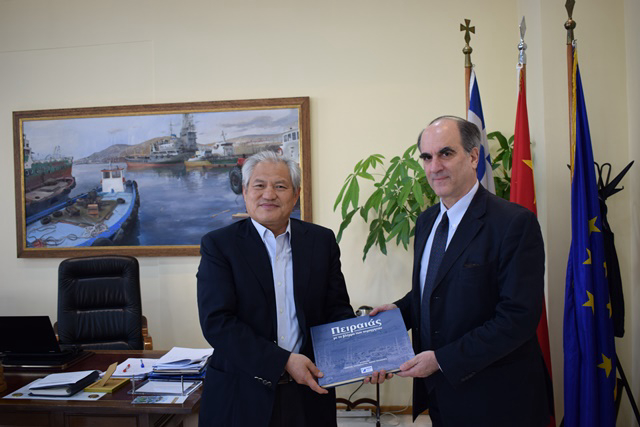
A delegation of the B5 Directorate of Ministry of Foreign Affairs visited the headquarters of PPA S.A.
 |
During the meeting, were presented the big steps that have taken place in the Piraeus port in recent years and the development of the company's investment plan. There was also a constructive exchange of views on issues and difficulties arisen during the development of the port operations.
Well-established Working Luncheon was held at Piraeus Marine Club
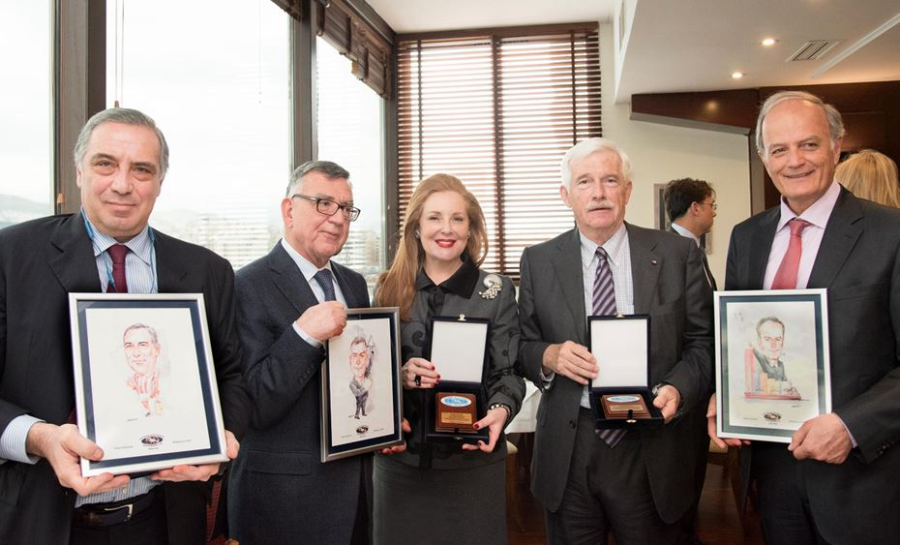
Mr Panagiotis Laskarides, President of ECSA, Mr Anastasios Papagiannopoulos, President of BIMCO, Mr Ioannis Platsidakis, President of INTERCARGO, & Mr Nikolaos Tsakos, President of INTERTANKO.
Members had the opportunity to participate in an extremely interesting questions & answers session and deepen on their subjects, causing debates that lasted until the afternoon.
For further information and photos, please contact Mr Evripides Salapasidis, Piraeus Marine Club Manager at: 210 42 93 606 or send an e-mail to This email address is being protected from spambots. You need JavaScript enabled to view it.
 |
| The President of Piraeus Marine Club, Mrs Irene S. Daifas, together with the four Presidents (from the left), Mr Tsakos Nikolaos, Mr Papagiannopoulos Anastasios, Mr Laskarides Panagiotis & Mr Platsidakis Ioannis. |
|
|
||||
|
|
||||
|
|


 |
| General point of view of the Working Luncheon speech at “Stavros S. Daifas” restaurant of the Piraeus Marine Club. |
Docking of the first ship in the new floating dock "PIRAEUS III"
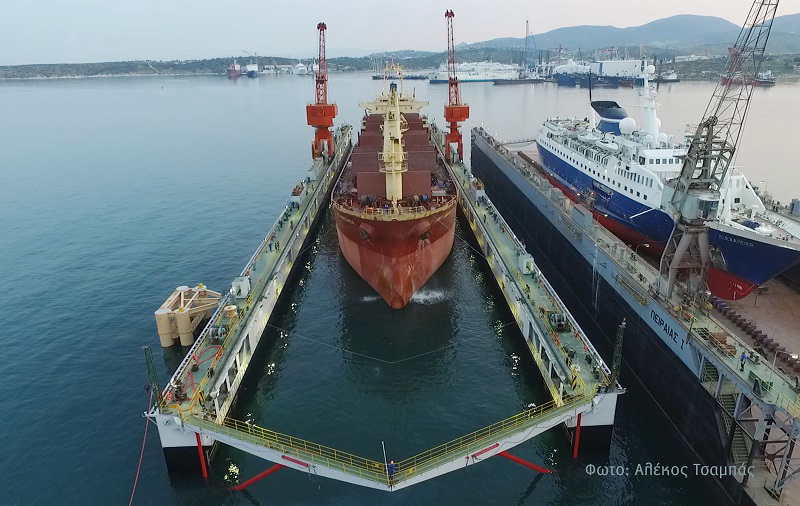
In addition, in the Ship Repair Zone, extensive works for the infrastructure improvement are carried out, such as:
• Upgrading of the quay wall.
• Reconstruction of dock floors.
• Repair / reconstruction of tracks.
• Improvement of electromechanical installations and networks.
The total investments provided by the concession agreement and are already in progress at the Ship Repair Zone of Perama will exceed € 55.000.000.
 |
 |
Golden Energy’s platform supplier stays with Total in Nigeria
 |
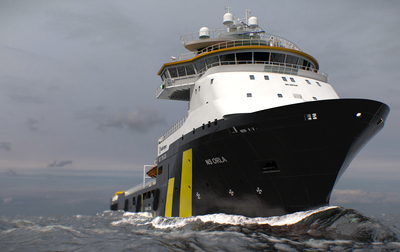
GEOS said on Friday that the Energy Scout contract was further extended in direct continuation to the present firm contract and vessel would stay with Total until July 1, 2018, plus optional periods of three months each after that.
Golden Energy did not specify how many of these optional periods are included in the contract.
The vessel has been working for Total in Africa for quite some time now, with the last four charters coming from Total E&P Nigeria, Total E&P Angola, and Total E&P Congo for general supply duties.
Energy Scout is of a UT 755-L design and is a mechanically driven supply ship built by Brevik Construction and delivered in 2005. The vessel is designed for field supply & ROV duties, equipped with four thrusters and DP 2 class dynamic positioning system and is meant for all kind of offshore services.
Earlier this week, GEOS secured a contract extension for the Energy Swan platform supply vessels (PSVs) with Wintershall Norge.
Offshore Energy Today Staff

Powered by  © Μaritimes 2019