


Baltic Exchange launches Escrow Service for vessel sales

The move will allow Baltic Exchange members to take advantage of the Exchange's trusted position in the marketplace when undertaking the sale or purchase of a vessel.
Announcing the initiative today (25 April) at its Freight & Commodities Forum during Singapore Maritime Week, the paid-for service will be available for use in transactions where the buyer of the vessel is a Baltic Exchange member. The service is likely to be extended to disputes related payments.
The Escrow Service will be run by the Baltic Exchange's Asia office in Singapore and will be subject to the Singapore Exchange's (SGX) detailed compliance and money laundering procedures. OCBC Bank will be providing the joint deposit account.
Headed up by the Baltic Exchange's Head of Asia-Pacific, Chris Jones, a sale & purchase broker with over 40 years of experience, the service will initially be offered from Singapore with a view to further expansion to other Asian shipping centres.
Chris Jones said:
"Having the Baltic Exchange provide this service solves the problem as to where the deposit should be held in a vessel transaction. Buyer and seller alike can be certain that the Baltic Exchange will apply its high standards of compliance as well as have a full understanding of the complexities of any maritime transaction."
He added:
"This service will add real value to the many sale & purchase brokers who are Baltic members and are currently expected to provide this service to clients. It will allow them to undertake the highest level of due diligence and compliance checks, reduce the administrative burden of organising a client escrow account and allow them to focus on adding value to the transaction."
The service will go live in May 2018 and will cost US$ 5,000 per side
Star Bulk Announces the Acquisition of 16 Vessels from Augustea Atlantica & York Capital Management

 |
 |
Petros Pappas, Chief Executive Officer of Star Bulk, commented: “I am very pleased that Star Bulk is acquiring a high quality, modern fleet in an all-share transaction. Combined with attractive bank financing, we believe that the transaction will be accretive to our shareholders. Star Bulk will continue to be a consolidator in the dry bulk industry. As part of the Vessel Acquisition, Star Bulk will acquire a fleet of 5 Newcastlemaxes / Capesize vessels, 2 Mini Capesize vessels, 8 Post Panamax / Kamsarmax vessels and 1 Ultramax vessel of 4.5 years of average age, built mainly in Japan and Korea which will provide Star Bulk with synergies and economies of scale. The vessels will be acquired by a non-recourse fully-owned subsidiary of Star Bulk. Upon completion of the Transaction, it is expected that Mr. Raffaele Zagari will join the Board of Directors of Star Bulk. I am confident that Raffaele with his 25 years of shipping experience, will be a valuable asset in the development of our Company.” Citi is acting as financial advisor to the Company in connection with the Vessel Acquisition.
About Star Bulk
Star Bulk is a global shipping company providing worldwide seaborne transportation solutions in the dry bulk sector. Star Bulk’s vessels transport major bulks, which include iron ore, coal and grain, and minor bulks, which include bauxite, fertilizers and steel products. Star Bulk was incorporated in the Marshall Islands on December 13, 2006 and maintains executive offices in Athens, Greece. Its common stock trades on the Nasdaq Global Select Market under the symbol “SBLK”. On a fully delivered basis, Star Bulk will have a fleet of 90 vessels, with an aggregate capacity of 10.2 million dwt, consisting of 14 Newcastlemax, 15 Capesize, 2 Mini Capesize, 7 Post Panamax, 25 Kamsarmax, 2 Panamax, 15 Ultramax and 10 Supramax vessels with carrying capacities between 52,055 dwt and 209,537 dwt.
Ocean freight overcapacity fears ‘over-hyped’
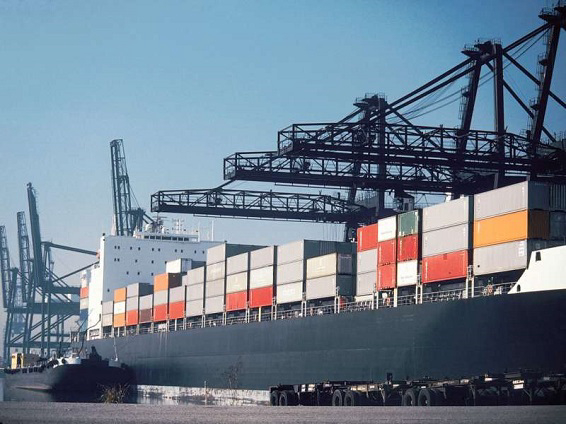
Drewry acknowledged that last year, like many other analysts, it had expressed concerns about overcapacity in 2018, based on the orderbook at the time, even after including forecasts in its analysis last year for slippage and scrapping, noting: “Such was the weight of the 2018 delivery schedule in October 2017 that at the time we predicted supply growth would outpace demand, resulting in a lower reading to the Drewry Global Supply-Demand Index.
“However, since then the orderbook has undergone some subtle manoeuvres, which have had a positive effect on our supply-demand equations. While the sum total of confirmed new capacity due to arrive through 2022 hasn’t much changed, the delivery breakdown by year has been significantly altered as a consequence of owners delaying a number of deliveries.”
This “smoothing process” means that as of 1 January 2018, the unadjusted orderbook schedule for 2018 shrank by approximately 150,000 teu to stand at 1.46 million, the container shipping analyst noted. Based on deliveries in the first quarter of 2018 and what is scheduled for the remainder of the year (as of 18 April), Drewry now expects the full-year delivery total for 2018 to be in the region of 1 million to 1.2m teu.
“In essence, over the space of six months, owners have pared back the 2018 total by as much as 600,000 teu,” it added. “If our forecast is correct, the annual delivery total for 2018 will be broadly unchanged from 2016 and 2017, which marked a significant slowdown compared to the previous six years.
“Crucially, the new supply growth forecast for the current year is lower than demand, meaning we expect the global supply-demand index to nudge upwards this year. The market will still be over-supplied, but not catastrophically so, and certainly showing signs of improvement.”
Drewry noted that even though the global supply-demand index for the year as a whole was expected to be higher, it will start off lower – that is, the year will start in a greater state of overcapacity – “due to the top-heavy delivery schedule in 2018”. It added: “The timing could not have been worse for carriers, as it created negative sentiment for the crucial annual Asia-Europe and Transpacific contracting seasons.”
But the effects will vary on different trades, Drewry noted, explaining: “While we are anticipating a more benign overall supply scenario for 2018, it would be remiss not to mention that pressures will still exist and vary in severity trade by trade as a consequence of the growing share of Ultra Large Container Vessels (ULCVs) of 18,000 teu and above in the orderbook. ULCVs, with their limited deployment options, made up just 5\% of deliveries in 2013 in terms of teu, but have since risen to one-third by 2017. Based on the current orderbook, the upwards trend will intensify over the next few years.”
Looking further ahead, Drewry said the low-level newbuild contracting of 2016-17 meant that there was “not much currently scheduled for delivery post-2019, most of which comes from slippage caused by deferrals from earlier years. Based on Drewry’s current projections, there is a clear need for extra newbuilds for 2020 onwards to satisfy the expected cargo growth.”
For the next few years, beyond 2018, it noted: “At the moment, Drewry is of the opinion that new orders will be appropriate to demand needs, thanks to a combination of financial constraints and greater capex discipline brought about by M&A, although we recognise that there are major risks to that assumption, primarily from state-backed entities that can play by their own rules.”
It concluded: “The reality of supply growth in 2018 is far less frightening than it was previously. We expect new ordering activity to rise off the floor, but stay at a level that incrementally improves the supply-demand balance over the next five years.”
www.lloydsloadinglist.com
Five leading academics in finance, international trade and shipping named winners of the 2018 Onassis Prizes
 |
The Onassis Prizes are awarded to the world’s foremost academics in the fields of finance, international trade and shipping, to honour outstanding academic achievements that have had international significance. The prizes, each worth $200,000, are sponsored by the Onassis Foundation and together with Cass Business School, its Centre for Shipping, Trade and Finance and the City of London, are granted every three years. The prizes recognize the lifetime achievement of experienced academics in the fields of finance, international trade and shipping – the disciplines in which Aristotle Onassis excelled.
The Onassis Prizes’ recipients were selected by a panel of judges, two of whom are Nobel Laureates, and other distinguished academics, and were announced at The Mansion House, the official office of the Lord Mayor of the City of London, by Alderman David Graves on Friday 20th April. The 2018 prizes have been awarded to:
Onassis Prize in Finance
- Professor Douglas W. Diamond, Merton H. Miller Distinguished Service Professor of Finance, Booth School of Business, University of Chicago
Onassis Prize in International Trade (shared)
- Professor Jonathan Eaton, Distinguished Professor of Economics, Department of Economics, The Pennsylvania State University
Professor Samuel S. Kortum, James Burrows Moffatt Professor of Economics, Department of Economics, Yale University
Onassis Prize in Shipping (shared)
- Professor Mary R. Brooks, Professor Emerita, Rowe School of Business, Dalhousie University and Chair of the Marine Board of the National Academies, Washington DC.
- Professor Wayne K. Talley, Professor of Maritime and Supply Chain Management, Executive Director of the Maritime Institute and Eminent Scholar, Strome College of Business, Old Dominion University
 |
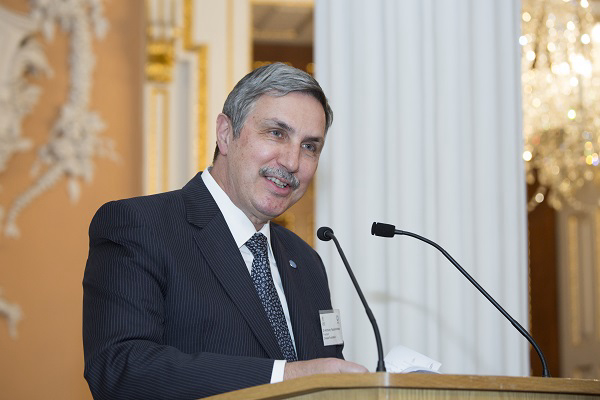
| Dr. Anthony S. Papadimitriou, President of the Onassis Foundation and President of the jury panel |
“Awards like these, allow us to foresee and, in a way, return from the future, where the work of the distinguished scholars of our era will have received the greatest possible recognition. Aristotle Onassis’ name is synonymous with the spheres of endeavor in which our laureates are engaged, and shipping, trade and finance are the three core areas of business activity in contemporary economies. The contributions made to the research in these fields by today’s winners is such that we can safely say they have brought us not one but many steps closer to the knowledge we will enjoy in the future. We, at the Onassis Foundation, are particularly proud to support the Onassis International Prizes for Finance, Shipping and Trade in association with the City of London and the City University/Cass Business School. The awards are already in their fourth iteration. Previous winners have continued to distinguish themselves and make outstanding contributions, with Professor Eugene Fama receiving a Nobel Prize for his work.”
Professor Costas Grammenos, Chairman of the Costas Grammenos Centre for Shipping, Trade and Finance at Cass, said:
Professor Costas Th. Grammenos, LRF Professor in Shipping, Trade and Finance, Cass Business School, City, University of London
“The Onassis Prizes are awarded for the fourth time and one can safely say that they have become the most highly respected international awards in the areas of finance, international trade and shipping. I warmly congratulate the recipients whose distinguished achievements have profoundly influenced their disciplines and continue to have an impact on academic thinking and business conduct worldwide.”
The Lord Mayor Alderman Charles Bowman said:
“The Cass Business School is a world-leader in business and professional education, based here in the City of London and closely connected with the UK’s financial and professional services sector. As a global ambassador for that sector, I am proud to work with the Onassis Foundation to recognise the contributions of Professors Diamond, Eaton, Kortum, Brooks and Talley to finance, trade and shipping.”
The Onassis Prizes have been awarded in their current form since 2009 and the winners have included many distinguished economists. Professor Eugene Fama of the University of Chicago is considered one of the fathers of modern finance for his work on asset pricing models and efficient market theory and went on to receive the Nobel Prize for Economics in 2013. Other prominent winners include Professor Stewart Myers of MIT, who co-authored the influential textbook Principles of Corporate Finance and Professor Gene Grossman of Princeton University who is known for his research into the relationship between trade and economic growth.
The 2018 Onassis Prizes will be formally presented to the recipients at a Banquet at the Guildhall in the City of London on 24th September, following an academic conference featuring all the recipients at Cass Business School earlier in the day.
- Cass Business School, which is part of City, University of London, is a leading global business school driven by world-class knowledge, innovative education and a vibrant community. Located in the heart of one of the world’s leading financial centres, Cass has strong links to both the City of London and the thriving entrepreneurial hub of Tech City.
- The Onassis Foundation was established in December 1975 with the mission of supporting Greek society in the crucial areas of education, culture and health. With education as a key pillar in its mission, the Foundation has supported more than 7.000 scholarships and research fellowships for post-graduate and doctorate studies; provided educational material and technological equipment to hundreds of schools all over Greece; acquired the Cavafy Archive (more than 4.600 manuscripts and personal items of the poet) to ensure its openness and accessibility to researchers; and launched the Onassis Prizes, which from 2007, in collaboration with Cass Business School recognise the lifetime achievement of experienced academics in the fields of finance, shipping and international trade. In addition to its contributions to the field of education, the Foundation also built, the state-of-art Onassis Cardiac Surgery Centre (OCSC) in Athens and donated it to the Greek State, and also created the Onassis Cultural Centre in Athens and an affiliate Cultural Center in New York City.
Recipient biographies and quotes
Onassis Prize in Finance
Professor Douglas W. Diamond, Merton H. Miller Distinguished Service Professor of Finance, Booth School of Business, University of Chicago
Douglas W. Diamond specializes in the study of financial intermediaries, financial crises, and liquidity. His research agenda has been to explain what banks do, why they do it, and the consequences of these arrangements. He is the Merton H. Miller Distinguished Service Professor of Finance at the University of Chicago’s Booth School of Business, where he has been on the faculty since 1979. Diamond is a research associate of the National Bureau of Economic Research and a visiting scholar at the Federal Reserve Bank of Richmond. He was president of the American Finance Association and the Western Finance Association and is a member of the National Academy of Sciences (USA) and a fellow of the Econometric Society, the American Academy of Arts and Sciences, and the American Finance Association. Diamond received the CME Group- Mathematical Sciences Research Institute Prize in Innovative Quantitative Applications in 2016 and the Morgan Stanley-American Finance Association Award for Excellence in Finance in 2012. He has taught at Yale and was a visiting professor at MIT. Diamond earned a bachelor's degree in economics from Brown University in 1975. He earned a PhD in economics from Yale University in 1980.
Professor Diamond said:
“I am delighted to receive the Onassis prize. After the recent financial crisis, policy makers and scholars have a renewed focus on of the stability of financial institutions.”
Onassis Prize in International Trade (shared)
Professor Jonathan Eaton, Distinguished Professor of Economics, Department of Economics, The Pennsylvania State University
Jonathan Eaton is Distinguished Professor of Economics at Pennsylvania State University. He has worked on many issues in international economics. After receiving a Ph.D. in economics from Yale in 1976, he and Mark Gersovitz developed a model of sovereign default which has become a standard tool for analysing government borrowing in international capital markets. Subsequent work with Gene Grossman investigated strategic trade policy and work with Maxim Engers concerned the efficacy of sanctions in the international economy. His research in the last two decades, joint with Samuel Kortum, has analysed the roles of technology and trade in the global economy. Their 2002 Econometrica article, "Technology, Geography, and Trade," awarded the Frisch Medal by the Econometric Society, develops what is now sometimes called the EK model of trade. It provides a framework using Ricardo’s simple idea of comparative advantage to understand and to analyse quantitatively bilateral trade flows in a general equilibrium setting among many countries in many products. The framework has since been applied in numerous studies to address such diverse issues as the welfare implications of NAFTA, the connections between international trade and CO₂ emissions, the role of trade in propagating international business cycles, and the effect of trade frictions in segmenting international capital markets. Other work of theirs has examined the contribution of innovation and the diffusion of technology to economic growth across countries of the world. Eaton is a Research Associate of the National Bureau of Economic Research, a Fellow of the Econometric Society, and a Member of the American Academy of Arts and Sciences.
Professor Eaton said:
“The growth the world has experienced since the middle of the last century has led to a level of prosperity that I couldn’t have imagined when I started in the profession in the late 1970s. A carefully constructed, rules-based international economic system was an essential contributor. The field of international trade, going back to its roots in David Ricardo’s "On Foreign Trade," provided a foundation for designing this system.
“Despite this success, the field currently faces two great challenges. One is to provide an intellectual counterweight to the economic nationalism suddenly again in vogue. Another is to guide policy toward reaching out to those felt left behind by the system.
“The field is in good shape to meet these challenges. Recent work in the field has used Ricardo’s simple idea of comparative advantage to understand and to interpret the enormous amount of data the world economy now spits out. Theory and data are working together to provide a much better understanding of how trade shapes individual lives.
“The vibrancy of work in the field has attracted enormously talented young researchers in recent years. Learning from them has been an enormous source of satisfaction to me. As a teacher of the field at Penn State I look forward to working with subsequent generations of such researchers.
“The Onassis Prize in International Trade, in providing recognition to the field, raises awareness of its contribution of its ideas to current prosperity. In honoring those working in the field it helps us continue to attract the very best minds out there.”
Professor Samuel S. Kortum, James Burrows Moffatt Professor of Economics, Department of Economics, Yale University
Samuel Kortum is the James Burrows Moffatt Professor of Economics at Yale University, Fellow of the Econometric Society, Member of the American Academy of Arts and Sciences, and Research Associate at the NBER. Before coming to Yale in 2012, he served on the faculty at Boston University, the University of Minnesota, and the University of Chicago.
Kortum received his bachelor’s degree from Wesleyan University and Ph.D. in Economics from Yale. In 2004, he and Jonathan Eaton received the Frisch Medal for their paper “Technology, Geography, and Trade” published in Econometrica. He served as an editor of the Journal of Political Economy from 2008-2012. In addition to international economics, Kortum has written on economic growth, innovation, and firm dynamics.
Professor Kortum said:
“As a young assistant professor, fresh from graduate school, I had the good fortune to collaborate with Jonathan Eaton. We have worked side-by-side ever since, whether at the chalkboard struggling to understand a formal problem or at the computer screen struggling to improve the wording of a sentence.
“Out of that struggle we began to realize that a useful theory of trade could emerge, capturing the classic idea of comparative advantage and amenable to quantification from observations on trade flows between any number of countries. While that realization was its own reward,receiving the Onassis Prize in International Trade is deeply gratifying as recognition that others value our contribution.
“I don’t want to get too carried away with what we accomplished. The prize is a stimulus to advance on the vexing issues that remain in the field of international trade.”
Onassis Prize in Shipping (shared)
Professor Mary R. Brooks, Professor Emerita, Rowe School of Business, Dalhousie University and Chair of the Marine Board of the National Academies, Washington DC.
Dr. Mary R. Brooks is Professor Emerita at Dalhousie University, Halifax, Canada, and Chair of the Marine Board of the National Academies, Washington DC. Dr. Brooks has been a thought leader in the shipping and ports field since the 1970s, and has worked in Canada, the U.S., Singapore, South America and Australia. She is sought after for her expertise on competition policy in liner shipping, port strategic management and short sea shipping. A founding editor of Elsevier’s Research in Transportation Business and Management, she has authored and published more than 25 books and technical reports, more than 25 book chapters, and more than 75 articles in peer-reviewed scholarly journals. She serves on multiple journal boards, including Maritime Policy and Management and Ocean Yearbook. She was a founding member of the International Association of Maritime Economists, served as its Membership Secretary and Treasurer from 1994-1998, played a key role on the IAME Council at three different periods during its history, and acted as the Chair of its International Scientific Steering Committee for the 2014 Annual Conference. She also is the founder and past chair of the Port Performance Research Network, a network of more than 60 scholars interested in port governance and port performance issues.
Professor Brooks said:
“I am so honoured to have been chosen as one of two recipients of the 2018 Onassis Prize in Shipping. To be the second Canadian, and the first woman, to be awarded this most prestigious prize accorded to academics in the field makes it even more of an honour. I grew up in a small town in Nova Scotia, a province where shipping was critical to its history and economy, but I did not know then how important the industry was to global prosperity. No great journey of discovery is ever completed alone, and my success is shared with all the colleagues and mentors who worked with me over the years.”
Professor Wayne K. Talley, Professor of Maritime and Supply Chain Management, Executive Director of the Maritime Institute and Eminent Scholar, Strome College of Business, Old Dominion University
Dr. Wayne Talley is Professor of Maritime and Supply Chain Management, Executive Director of the Maritime Institute and Eminent Scholar at Old Dominion University, Norfolk, Virginia, USA. He holds the international designations of: Honorary Visiting Professor, City University London (United Kingdom); Honorary Chair Professor, National Chiao Tung University (Taiwan); and Honorary Guest Professor, Shanghai Maritime University (China). During 2000-2012, he was Editor-in-Chief of the highly-ranked Transportation Research Part E: Logistics and Transportation Review and in 2014 was President of the Transportation and Public Utilities Group, American Economic Association. His academic publications include over 170 journal papers and book chapters. His academic books include: The Blackwell Companion to Maritime Economics (Wiley-Blackwell, 2012); the four-volume book, Maritime Economics: Critical Concepts in Economics (Routledge, 2017) and Port Economics (Second Edition, Routledge, 2018).
Professor Talley said:
"A recipient of the Onassis Prize in Shipping is the highlight of my academic career as a maritime economist. It will provide me with a platform for promoting the establishment of a Ph.D. program in maritime business at Old Dominion University, making it the first university in the U.S. to have such a program."
Judging panel
Chair: Dr. Anthony S. Papadimitriou, President, Onassis Foundation
Professor George Constantinides, Leo Melamed Professor of Finance, University of Chicago
Professor Costas Th. Grammenos, LRF Professor in Shipping, Trade and Finance, Cass Business School, City, University of London
Professor Elhanan Helpman, Galen L. Stone Professor of International Trade, Harvard University
Professor Robert Merton, (1997 Nobel Laureate), School of Management Distinguished Professor of Finance, Massachusetts Institute of Technology
Professor Myron Scholes (1997 Nobel Laureate), Frank E. Buck Professor of Finance, Emeritus, Stanford Graduate School of Business
Professor Eddy Van de Voorde, Professor of Port and Maritime Economics, University of Antwerp.
Aegean Marine Petroleum Network Inc. Appoints Pavlos Papageorgiou as Chief Financial Officer
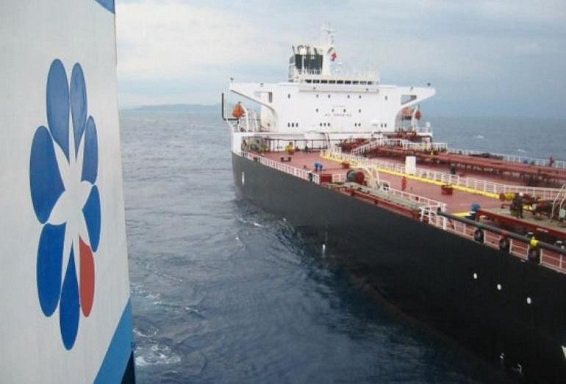
Yiannis Papanicolaou, Aegean’s Chairman of the Board, commented, “We are pleased to welcome Pavlos as Chief Financial Officer of Aegean. Pavlos brings more than twenty years of extensive senior leadership experience across global marine transportation, business development and financial services. We are confident Pavlos’ significant industry knowledge positions him to hit the ground running and support our ongoing efforts to drive growth, profitability and value for all Aegean stakeholders.”
Mr. Papageorgiou added, “I am very excited to join the team at Aegean and look forward to helping management deliver on the Company’s great potential.”
About Pavlos Papageorgiou
Mr. Papageorgiou has more than twenty years of experience in the financial services sector and most recently served as Senior Advisor at Seacor Holdings (NYSE:CKH) where he worked with the executive management team in executing corporate opportunities. While at Seacor, Pavlos held a number of management roles including Chief Financial Officer of Seacor Marine Holdings LLC (SMH), the company’s largest operating division that services the offshore oil and gas exploration, development, and production industry worldwide. In addition to his responsibilities as CFO of SMH, Mr. Papageorgiou also helped advise management on strategy and mergers and acquisitions (M&A) activities including deal assessment, structuring and analysis, as well as capital markets.
Prior to his positions at Seacor, Mr. Papageorgiou held various roles of increasing seniority at Morgan Stanley having served as Head of Principal M&A Execution, responsible for major strategic initiatives including deal sourcing, and executing acquisitions. More recently, Pavlos served as Assistant Treasurer and Global Head of Liquidity Planning and Coverage at Morgan Stanley where he led the firm’s Global Liquidity Risk Management Framework, including Contingency Funding Plan (CFP), governance, escalation and mitigating actions. Pavlos began his career in the Investment Banking department at Merrill Lynch where he specialized in Telecommunications M&A. Mr. Papageorgiou received a M.Sc. in International Finance from The Grammenos Centre for Shipping, Trade and Finance at City University of London’s Cass Business School and a B.S. in International Economics from Georgetown University’s School of Foreign Service.
About Aegean Marine Petroleum Network Inc.
Aegean Marine Petroleum Network Inc. is an international marine fuel logistics company that markets and physically supplies refined marine fuel and lubricants to ships in port and at sea. The Company procures product from various sources (such as refineries, oil producers, and traders) and resells it to a diverse group of customers across all major commercial shipping sectors and leading cruise lines. Currently, Aegean has a global presence in more than 30 markets and a team of professionals ready to serve its customers wherever they are around the globe. For additional information please visit: www.ampni.com.
Source: Aegean Marine Petroleum Network Inc.
INSB Class in top ranks of the USCG PSC Report 2017
The report provides key statistics related to enforcement of international requirements with regard to foreign flag vessels calling in US ports as well as on the safety performance of Flag States and Recognized Organizations.
2015- 2017 | Safety Compliance Performance
Basis the published performance results for the year 2017 and the 3-year rolling period 2015-2017 relevant to Class societies, INSB Class remained for a 5th consecutive year in the top performing group of class societies with a detention ratio of 0\%.
In 17 individual vessel examinations received in the period 2015 to 2017 (distinct arrivals), INSB Class was not attributed with any RO related detention and thus continues its unbroken presence amongst the top performers in the USCG Port State Control Reports, since 2013.
INSB Class consistent positive PSC performance highlights its commitment to applying safety norms and verifying compliance for its certified fleet.
INSB Class shall continue to demonstrate an increased focus and care with regards to the application and verification of applicable safety norms to ensure that its register fleet continues to meet required IMO safety regulations and INSB Class Rules, with the aim for sustained Quality Shipping and safer seas.

INSB Class | USCG Approval
Since 2006, INSB Class remains approved by the United States Coast Guard (USCG) for Classification Society activities under 46 CFR part 2, subpart 2.45 , in reflection of its commitment to achieve ever-higher standards.
INSB classed vessels freely operate in the United States waters, on the same basis with IACS classed fleet.
Abu Dhabi hosts Maritime Standard Ship Finance and Trade Conference
 |
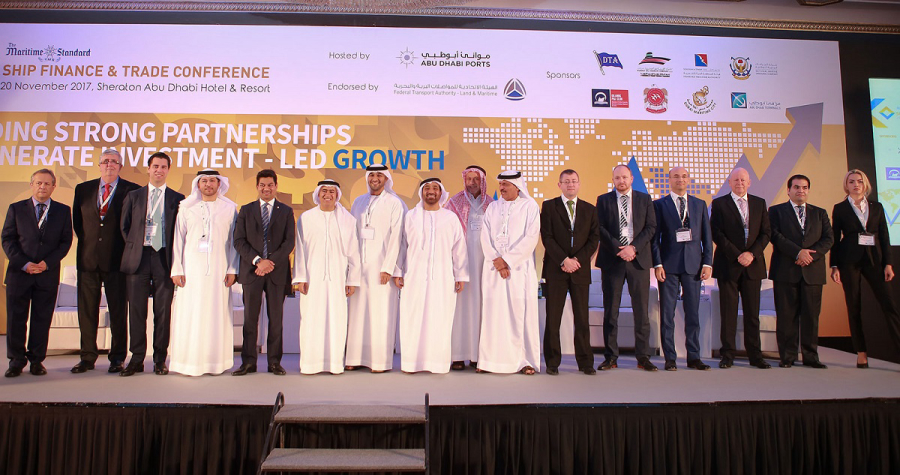
| (from left to right) Clive Woodbridge, The Maritime Standard; Capt. Stephen Bligh, DNV GL; Jacob Berman, Standard Chartered; Abdulla bin Damithan, DP World; Trevor Pereira, The Maritime Standard; H.E. Dr. Ali Obaid Al Yabhouni, Ambassador to China; Abdulkareem Al Masabi, Abu Dhabi Ports; H.E. Dr. Abdullah Salem Alkatheeri, FTA; Khamis Juma Buamim, Gulf Navigation Holding; Chris Peters, Emirates Ship Investment Company; Ross Thompson, Abu Dhabi Ports; Bora Bariman, National Bank of Fujairah; Andrew Simmons, Global Marine Transport Capital; Amir Mosadeghi, Islamic P & I Club; Katherine Yakunchenkova, Al Safina Security |
The popular one day event is expected to attract over 150 senior executives from across the shipping, ports, finance, banking and legal sectors, who will gather to debate and discus the key issues and challenges facing the industry.
The event will kick-off with keynote presentations from renowned business leaders. There will then follow distinct conference sessions that will tackle topical themes covering regional trade patterns, ship finance, ports and shipping. Case studies, highlighting how the financial sector can help facilitate the ongoing development of regional shipping and ports to the benefit of trade and economic growth, will be a feature of the event.
A top quality panel of expert speakers is being lined up by The Maritime Standard, and will include representatives from leading ship owners and managers, port operators, trade organisations, brokers and analysts, law firms and financiers. The event has also secured sponsorship support from a number of top maritime companies and organisations, including Abu Dhabi Ports as the host sponsor, Kuwait Oil Tanker Company, International Shipping and Logistics FZE and Bestar Consultancy Pvt. Ltd. The event is endorsed by The Federal Transport Authority-Land & Maritime. Supporting Associations for the event include: UAE Shipping Association (UAESA), The Organisation of Islamic Shipowners’ Association (OISA), The Dubai Council for Marine and Maritime Industries (DCMMI); Dubai Ship Agents Association (DSAA); Federation of National Associations of Ship Brokers and Agents (FONASBA); Institute of Chartered Shipbrokers; Nautical Institute; Indian National Shipowner’s Association (INSA); Pakistan Ship Agents Association (PSAA) and the Baltic Ports Organisation.
Trevor Pereira, managing director of The Maritime Standard says, “We are returning to Abu Dhabi to hold this conference for the fourth time, and we will be looking to build on the tremendous strides forward that have made over the past three years. The event is already well established on the UAE shipping industry calendar, attracting a wide range of industry experts, and it has become an event that anyone in the shipping and maritime industry will benefit from attending. It is truly a unique occasion and the quality of the speakers and the decision makers in the audience really sets it apart from other conferences in this sector.”
Abu Dhabi Ports is a strong supporter of the Ship Finance and Trade Conference and believes the event is in a tremendous position to add value within the region. Captain Mohamed Juma Al Shamisi, chief executive, says, “We are very excited to be hosting The Maritime Standard Ship Finance and Trade Conference once again in Abu Dhabi. This conference brings together banks, financial institutions and shipping companies under the same roof and is the only one of its kind in the Middle East & Indian Subcontinent. I would encourage any business active in the shipping, ports and maritime sectors, as well as the financial world, to support, participate and attend this important conference.”
The TMS Ship Finance and Trade Conference is certain to generate a high level of interest and places are strictly limited. For more information about how to register go to: http://www.tms-shipfinanceandtrade.com/conference/delegate-registration/
The Maritime Standard (TMS), publishes a regular e-newsletter aimed specifically at the shipping and maritime community. It is delivered fortnightly, on the 1st and 15th of every month. It delivers the most accurate, up-to-date news about the market and has built up the largest readership of any shipping-related online newsletter in the Middle East and India. It is also gaining popularity in other major shipping hubs, including Oslo, Hamburg, Singapore, London and Greece. The newsletter includes news and analysis from the shipping and ports industries and related sectors in the Middle East and the Indian Subcontinent. Topics that are covered include tanker shipping, container operations, dry and liquid bulk trades, ro-ro, and cruise shipping. In addition there is up to date information about regional terminal operations; port development; classification; ship repair and conversion; shipbuilding; ship agency; finance and insurance; maritime law; and transportation & logistics. The newsletter regularly carries exclusives, analysis and interviews with top executives.
TMS also publishes the very successful TMS UAE Yearbook. The first 2016/17 edition was followed by a second volume covering 2017/18, that was launched in July last year. Covering key developments across the country’s maritime sector, the annual publication aims to publicise the UAE’s achievements both locally and internationally, through in depth articles, researched first hand. These cover all the major sectors of the shipping, ports and maritime industry in the UAE. The articles, on terminals, shipping companies, shipyards, maritime law firms, classification, regulators and inland transport firms, among others, have been well received by the industry as a year round reference point. The Maritime Standard UAE Yearbook 2017/18 is a must-read publication for everyone interested in UAE maritime issues, and can be downloaded by going to: http://www.themaritimestandard.com/uae-yearbook- 2017-18
Preparations for the 2018/19 issue are well underway and this will be published in the summer of 2018.
Website: www.themaritimestandard.com
The not-to-be missed The Maritime Standard Awards recognise and celebrate success in the shipping, ports and related sectors across the Middle East and the Indian Subcontinent. The fifth edition of TMS Awards will take place on Monday, on 15th October 2018 at The Atlantis, The Palm, Dubai.
The Awards are now positioned as one of the world's leading shipping and maritime Awards gala dinners and are the premier event of their kind in the region. All of the four events to date have been held under the patronage of His Highness Sheikh Ahmed bin Saeed Al Maktoum, and have each attracted close to 700 of the region's elite shipping and maritime professionals, as well as a number of leading figures from overseas. These guests have come from a variety of industry segments, ranging from ports and terminal operators to ship owners and managers, and executives from the worlds of maritime law and finance, classification, ship building and repair and maritime education and training.
For the inaugural event in 2014 PR guru, journalist and writer Alastair Campbell performed as master of ceremonies, while in 2015 Dutch soccer legend, Ruud Gullit compered the event and in 2016 former CNN news anchor, Jim Clancy, was on stage to lead proceedings.
The 2017 TMS Awards event, which was hosted by the well-known actress and model, Lara Dutta, saw 20 general awards presented, following the recommendations of an elite, independent judging panel, as well as a number for special individual awards recognising the contributions made by high profile industry leaders and innovators. The Awards have set a benchmark within the industry and have become an eagerly anticipated meeting place for top executives from across the business, where they can meet, network and create new opportunities.
Website: www.tmsawards.com
The third Maritime Standard Tanker Conference will be held on 16th October 2018 at Atlantis, the Palm, Dubai. Attendees will include key decision makers and opinion formers who were able to discuss the challenges and opportunities that exist, not just for ship owners and operators active in the tanker markets, but those delivering products and services to this sector. The second TMS Tanker Conference took place on 24th October 2017 at the Grosvenor House Hotel, Dubai. Presentations were given by many of the region's leading tanker owners and operators, as well as experts in related fields. For more information about the 2018 event, which is at an advanced planning stage, please go to the website: www.tmstankerconference.com
The fourth Maritime Standard Ship Finance and Trade Conference will be held on 6th November 2018 at Sheraton Abu Dhabi Hotel & Resort. The Conference will bring together experts from the fields of shipping, ports, banking, finance, trade and maritime law, among others, to discuss and debate the key issues and trends facing the shipping business, and trade, in the Middle East and the Indian Subcontinent. The third TMS Ship Finance and Trade Conference took place at the Sheraton Abu Dhabi Hotel and Resort, on November 8th 2017, building on the success of the first two events, held in 2015 and 2016 respectively. Speakers shared their insights and knowledge through a series of presentations and panel discussions, signposting the way forward. For more information about the 2018 event, please go to: www.tms-shipfinanceandtrade.com
The SNAM, ENAGAS, FLUXYS consortium awarded the tender for the acquisition of 66\% of the Greek operator DESFA
DESFA manages, under a regulated regime, a high pressure transport network of approximately 1,500 km, as well as a regasification terminal at Revithoussa. Snam, Enagás and Fluxys, shareholders of the TAP project, will be able to boost the development of the Greek gas infrastructure system in the coming years, fully realizing the potential of Greece as a natural gas hub, which will further leverage the development of the domestic market as well as other transit initiatives.
Furthermore, the consortium will be able to transfer technical and operational capabilities to DESFA and develop new uses and sources of natural gas (such as methane for transport and biomethane) to make a crucial contribution to the country's emission reduction process.
Thanks to its strategic position in the Mediterranean, Greece could represent an important crossroads for the diversification of supplies and the opening of new natural gas routes in Europe.
TAIPED accepted an offer of 535 million euro for 66\% of DESFA share capital presented by the consortium last week. Discussions have started with a pool of Greek and international banks to secure a non-recourse financing package for the acquisition.
In 2017, DESFA reported significant growth compared to the previous year, with an EBITDA of approximately 177 million euro, also benefiting from non-recurring tariff items, and a positive net financial position of around 5 million euro (including available cash of approximately 228 million euro).
The signing of the agreements for the acquisition is subject to the completion of the further steps envisaged by the tender procedure and by local legislation on privatization, while the closing of the transaction is expected in the second half of the year, following the required authorizations including antitrust clearance.
The Deadliest Catch

 |
Many marine animals ingest plastics, mistaking them for food. Marine researchers around the world have observed hungry sea turtles eating plastic bags, mistaking them for jellyfish, and seabirds eating all kinds of plastic objects, including cigarette lighters and toothbrushes, mistaking them for small fish.
“We need to stop believing that the oceans can absorb anything thrown into them,” said Roger Ringstad, Managing Director of Seagull Maritime. “It is our responsibility as a promoter of maritime education and sustainable shipping to give everyone the same quality of information around the importance of not using our oceans as rubbish tips”
 |
However, in some areas most of the rubbish found comes from passing ships, where crewmembers throw it overboard, rather than disposing of it correctly in ports. So as a consequence, Seagull Maritime is proud to do their part by releasing a new training module on Garbage and Waste Management. This has the aim of changing the behaviour of crew so that they are aware of their responsibilities to the environment.
‘Highlighting to crewmembers that the oceans should not be used as a rubbish tip is a matter of education, The old idea that the sea can cope with anything still prevails to some extent, but it also involves much more vigorous enforcement of regulations such as MARPOL Annex V.’
Among other things, this new module also covers the dangers of not using garbage disposal equipment correctly. Unfortunately, there have also been a number of accidents where crewmembers have been seriously injured because they have bypassed the safety features on incinerators.
To learn more about this new module you can contact your dedicated account manager or have a look at the below link where you can also request a demo on the module*
Delivery of World’s First LNG-Fuelled Bulk Carrier Announced
 |
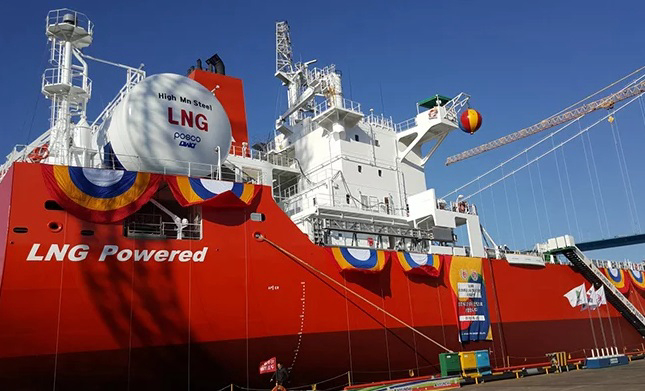
Bjarne Foldager – Vice President, Sales & Promotion, Two-Stroke Business at MAN Diesel & Turbo – said: “We are very pleased to be part of this exciting project and to see our dual-fuel ME-GI engine win favour in yet another market segment. We look forward to following its progress.”
The Ilshin Green Iris has a Type ‘C’ LNG fuel tank with a capacity of 500m³ and comprised of a material – high-manganese austenitic steel – newly developed by POSCO that is specially designed for cryogenic LNG and liquefied gas-storage applications.
The ME-GI engine – the new industrial standard
MAN Diesel & Turbo’s successful ME-GI (-Gas Injection) engine, with over 200 engines ordered, has set a new industrial standard for two-stroke propulsion engines aboard – among others – LNG carriers, container vessels, and now bulk carriers. The ME-GI engine provides ship-owners and operators with a peerless solution within environmentally friendly and high-efficiency, two-stroke technology.
With the ME-GI engine, two-stroke development has taken a step further by combining the unique properties of multi-fuel combustion and the well-known reliability of Man Diesel & Turbo’s ME-engine. The Diesel principle provides the ME-GI engine with high operational stability and efficiency, including during load changes and fuel change-over, while defining properties such as a stable change-over from fuel to gas with no fuel-penalties are maintained. The negligible methane slip of the ME-GI engine makes it the most environmentally friendly, two-stroke technology available.
greece.mandieselturbo.com

Powered by  © Μaritimes 2019