
-
Home

-
Maritimes NEWS
-
Ports
- maritimes


maritimes
European shipping welcomes the approval by the European Parliament of the EU-UK Trade and Cooperation Agreement

On April 27, 660 MEPs voted in favour of the EU-UK Trade and Cooperation agreement
After the prior assent of EP foreign affairs and trade committees, on April 27 the European Parliament has finally approved the EU-UK Trade and Cooperation agreement with 660 votes in favour, just four days ahead of the end of the ad-interim application period. The deal, which can now enter into force on May 1, has already been ratified by the UK and it is provisionally applicable since 1 January 2021, after having been agreed by the EU and the UK negotiators on December 24, 2020.
On January 1, 2021, the transition period came to an end after the UK left the European Union on January 31, 2020. Its trade relationship with the EU has been temporarily governed by the EU-UK Trade and Cooperation Agreement (TCA), which establishes a free-trade area in goods and services comparable to the trade deals the EU has signed with other global partners, such as Japan.
The EU-UK Trade and Cooperation Agreement concluded between the EU and the UK sets out preferential arrangements in vital areas such as trade in goods and in services, digital economy, intellectual property rights, law enforcement and judicial cooperation. It also includes provisions on ensuring a level playing field.
Although this cannot be considered to be equivalent to the situation in the past, when the UK was still an EU Member, the Trade and Cooperation Agreement goes beyond the provisions of a crude free trade agreement and now provides a solid basis for preserving trade freedom, respect of fundamental human rights and mutual cooperation.
Having strongly advocated for a negotiated settlement which allowed the continued seamless flow of trade, ECSA’s Secretary-General Martin Dorsman stated:
“We welcome the end of a long period of uncertainty on the relationship between the EU and the UK and we highlight the pivotal role played by the maritime industry for both the EU and the UK economy. The shipping sector is crucial for the UK economy and accounts for 76% of the EU’s external trade: safeguarding trade flows between the EU and the UK is key for the recovery from the pandemic and the mutual relationship.”
ecsa.eu
RINA launches Hellenic Decarbonization Committee
The HDC will target technology improvements, regulatory changes, digitally enabled services and the potential funding or financing of green technologies
RINA will inaugurate the first Hellenic Decarbonization Committee (HDC) on May 6th, 2021. The initiative falls within the broader decarbonization program RINA is pursuing to support the shipping industry in achieving CO2 emissions reduction objectives established by IMO.
The RINA Hellenic Decarbonization Committee will be chaired by Mrs. Ioanna Procopiou, Prominence Maritime Managing Director and will be made up of a selected group of representatives among shipowners, technical managers, shipyards, designers, fuel suppliers and charterers.
The dialogue between the stakeholders will target improvements in technology, regulatory changes, digitally enabled services and the potential funding or financing of green technologies to benefit the entire industry.
The members will periodically meet in person or remotely according to the circumstances. Broader meetings, with the participation of members from RINA’s Decarbonization Committees in other countries will be organized to maximise multisectoral and multicompetency participation.
Ioanna Procopiou, Chairwoman of the HDC, said “RINA's initiative aims to bring different stakeholders of the industry into a constructive dialogue. It is an opportunity to share ideas, voice concerns and distinguish between pragmatic and idealistic solutions for shipping when it comes to climate change”.
Massimo Volta, Marine EMEA Region EVP at RINA, said “Decarbonisation will be the main driver guiding the shipping sector in the years to come. RINA is determined to play an active role in this evolution bringing its multidisciplinary skills to the industry to build a sustainable future, but it is clear that the objectives set will be achieved only through a joint effort. And this is the reason the Hellenic Decarbonization Committee was set up”.
Spyros Zolotas, Senior Director, RINA Marine Southern Europe & Africa Area, added “Greece is not only a maritime nation by tradition, but Greek shipowners own over 20% of the world tonnage. RINA knows that the contribution that this country can give to the entire industry is fundamental and through our Committee we want to maximize that together with shipyards, engine makers, and the main players of the sector”.
High-sulphur fuel oil sales rebound after pre-IMO 2020 correction
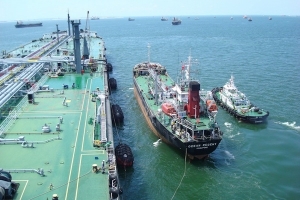
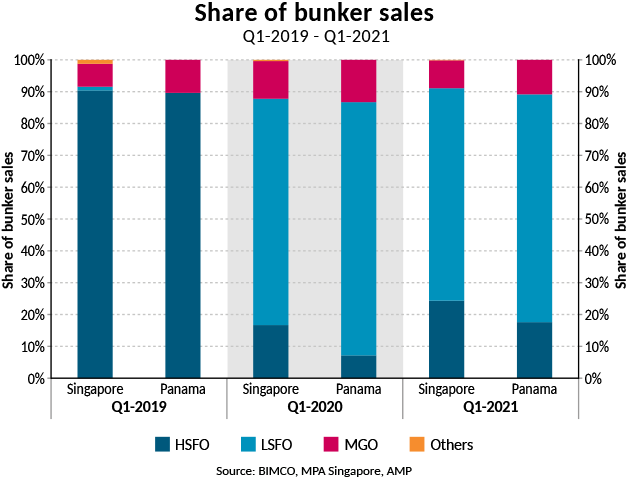
In the first quarter of 2021 high-sulphur fuel oil (HSFO) has been the only bunker fuel to experience year-on-year growth in Singapore, the world's largest bunkering hub. HSFO sales are up 47.2% from Q1 2020, reaching 3.1m tonnes. This is however still less than a third of high-sulphur fuel sales in Q1 2019, before the IMO 2020 Sulphur Cap came into force.
The 1 million tonne increase in HSFO sales exceeded the fall in low-sulphur fuel oil (LSFO) and marine gas oil (MGO) sales, though only marginally, with total bunker sales in Singapore up by 0.8% in Q1. Sales of MGO fell the most compared to a year earlier, down by 25.3% and accounting for just 8.7% of total bunker sales in Singapore in Q1. LSFO sales reached 8.6m tonnes, a 5.4% drop from Q1 2020, bringing its share of total bunker sales to 66.7%, slightly down from the 71.1% share it claimed at the start of last year.
HSFO on the rise across the board
A similar development in the share of bunker fuel sales can be seen in other bunkering hubs. In Fujairah, HSFO accounted for 16.9% of total bunker sales in Q1 2021. Here, LSFO dominated with a 78.6% market share.
In Panama, where total bunker sales fell by 7.2% in the first three months of this year compared with 2020, LSFO accounted for 71.6% of total bunker sales (down from 79.5% in Q1 2020). HSFO’s share has also risen from Q1 2020, to a 17.6% share, up from 7.1% in 2020, but nowhere near the dominance it enjoyed in Q1 2019.
“After the quick adjustment to the global sulphur cap, the decline in HSFO’s share of total bunker sales has stopped. Although its share is much lower than any time prior to Q4 2019, the steadily rise in scrubber-fitted ships has supported demand for HSFO and will remain until new solutions and future fuels are widely introduced on the industry’s path to decarbonisation,” says Peter Sand, BIMCO’s Chief Shipping Analyst.
“In addition to changing the share of fuel types being sold, the global sulphur cap has also resulted in larger bunkering hubs gaining an even larger market share, and recording growth in 2020 despite a drop in total bunker sales. This development was due to owners and charterers seeking to minimise risks by choosing the biggest bunker hubs in the face of uncertainty surrounding the new fuel types,” Sand says.
Rising high-sulphur fuel sales match rise in scrubber take-up
The number of scrubber-fitted ships doubled in the thirteen months after the global sulphur cap came into force, fuelling a rise in high-sulphur fuel sales. There are currently 4,006 scrubber-fitted ships, up from 2,010 ships in January 2020.
Across the four major shipping segments an average of 24.1% of the fleet, when measured in DWT (and TEU for containers). The crude oil tanker fleet has the highest share, at 30.5%, while with only 13.8% of total capacity scrubber fitted the oil product tanker fleet has the lowest. At the start of 2020 the average share across these four fleets stood at just 12.9%.
The pace of scrubber fittings has slowed since its peak in January 2020, during which 259 ships with a total capacity of 33.4m DWT either had a scrubber installed or were delivered with one already on board. In the first three months of this year 228 ships have joined the number of scrubber-fitted ships each month, totalling 30.5m DWT in the first quarter.
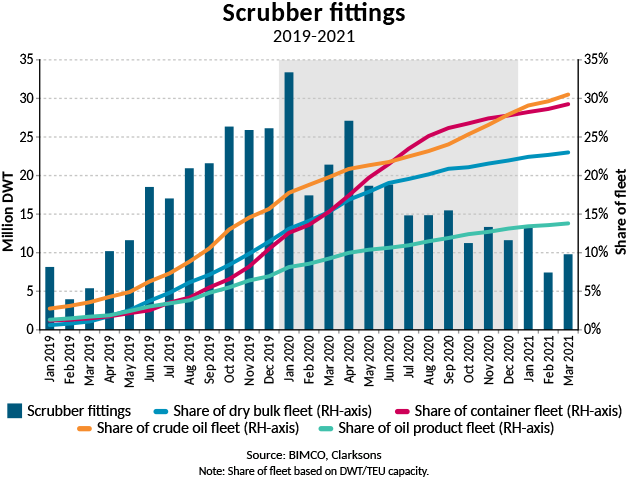
scrubbers so far this year, two-thirds (153) were new-builds being delivered with a scrubber already fitted, with only 75 ships being retrofitted. This is almost the exact opposite of the shares in 2020, when only 27.1% were newbuilds (479), while the rest (1,289) were retrofits of the total 1,768 ships to have a scrubber installed.
Will we see a second wave of scrubber installations?
Although the pace of scrubber installations has slowed, the economic case for a scrubber is still strong. After the ups and downs of 2020, the price spread between HSFO and LSFO has stabilised at an average of USD 100 per tonne in the major bunkering hubs.
In Singapore on 27 April, a metric ton of HSFO cost USD 388, leaving VLSFO USD 106 more expensive per metric ton. In comparison, on 1 January 2020 the price of HSFO was only USD 28 per metric ton lower than currently (USD 360 per tonne), but the spread was however three times higher as a metric ton of VLSFO cost USD 710 at the time.
Despite the ups and downs of the spread in 2020, when averaging the HSFO and VLSFO spread over the whole year, it stood at almost exactly USD 100 per metric ton (100.7).
“With the spread now stabilising at a more normal level, a scrubber investment still represents a solid economic decision for owners, as higher earning -, thanks to lower voyage costs - are enough to cover the initial cost as well as the running costs of the scrubber within a reasonable period,” says Sand.
“Low demand for certain oil products as a result of mobility restrictions has helped lower the price of LSFO. However, as demand for products such as jet fuel starts to recover, the HSFO-LSFO spread may well increase, solidifying the economic case for scrubbers.”
“A return to the high levels of scrubber installations that we saw at the end of 2019 and start of 2020 is however unlikely, as the majority of owners who wanted to retrofit their ships have now done so, and the majority of scrubbers being added to the fleet now come from newbuilds, Sand says.”
Results of the accelerated bookbuild of shares in ElvalHalcor S.A
Further to the announcement made on April 26, 2021, Viohalco S.A. (“Viohalco”) has completed the placement of 25,000,000 shares (the “Placing Shares”) at a price of EUR 2.00 per Placing Share in ElvalHalcor S.A. (the “Company”), to institutional investors by way of an accelerated bookbuilding process (the “Transaction”). Viohalco’s gross proceeds from the Transaction amount to EUR 50,000,000. The Placing Shares represent 6.66% of the Company’s total share capital.
Immediately following settlement of the Transaction, Viohalco will hold 318,111,475 shares in the Company, representing 84.78% of the Company’s total share capital. The trade date for the Transaction is April 27, 2021 and settlement is expected to occur on April 29, 2021.
AXIA Ventures Group Ltd. and EUROXX Securities SA acted as managers (the “Managers”) in connection with the Transaction.
Viohalco has agreed to a 60-day lock-up period (commencing from 26 April 2021) with respect to any remaining shares of the Company it will hold following the Transaction and that, subject to customary exceptions, no additional sales of shares of the Company will be made by Viohalco during the lock-up period without the consent of the Managers.
About Viohalco
Viohalco is the Belgium based holding company of a number of leading metal processing companies in Europe.
It is listed on Euronext Brussels (VIO) and the Athens Stock Exchange (BIO). Viohalco’s subsidiaries specialise in the manufacture of aluminium, copper, cables, steel and steel pipes products, and are committed to the sustainable development of quality, innovative and value-added products and solutions for a dynamic global client base. With production facilities in Greece, Bulgaria, Romania, Russia, North Macedonia, Turkey, the Netherlands and the United Kingdom, Viohalco companies collectively generate annual revenue of EUR 3.85 billion. Viohalco’s portfolio includes a dedicated technology and R&D segment. In addition, Viohalco and its companies own real estate investment properties, mainly in Greece, which generate additional income through their commercial development.
Norwegian Jade set to cruise the Greek Isles
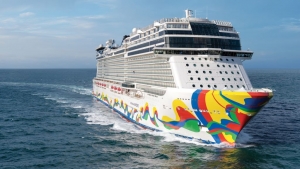
Norwegian Cruise Line to Relaunch Norwegian Epic and Norwegian Getaway with Itineraries to the Mediterranean and Greek Isles beginning September 5
Norwegian Jade set to cruise the Greek Isles with seven-night itineraries from Piraeus beginning July 25
ATHENS, 28 April 2021 – Old and new friends of cruise travelling will soon have the opportunity to enjoy again the unique experience of cruising with the Norwegian Cruise Line (NCL) ships combined with the unique natural and cultural beauties of the Mediterranean and the Greek Islands, as the pioneer company expands the program of restarting its itineraries in the area.
NCL, the innovator in global cruise travel, today announced a further restart of operations in Europe from the homeports of Barcelona and Rome (Civitavecchia) with previously scheduled port-intensive itineraries to the Mediterranean and Greek Isles beginning Sept. 5, 2021, showcasing the growing importance of the Greek market for the company.
Guided by the robust protocols of the SailSAFE Global Health and Safety Program, and in partnership with local governments, NCL plans to welcome travelers to experience the warm and vibrant cultures and sites of Spain, Italy and Greece. Guests will be able to cruise the Greek Isles with seven-night itineraries on Norwegian Jade from Athens (Piraeus) beginning July 25, 2021. Currently scheduled to sail from Barcelona, Norwegian Epic will cruise seven-night Western Mediterranean itineraries from Sept. 5, 2021 through Oct. 24, 2021, with Norwegian Getaway sailing a mix of 10 to 11-day Greek Isles voyages from Rome (Civitavecchia) from Sept. 13, 2021 to Oct. 25, 2021. With five to eight ports of call, up to 13 hours in each city and no more than two days at sea, guests can spend their days exploring ancient ruins and medieval architecture, admiring artistic masterpieces or simply savoring a variety of local cuisine.
“Europe is a top travel destination, so we are very much looking forward to returning to some of our most beloved homeports, resuming those itineraries and welcoming our guests to experience a vacation of a lifetime in the safest possible manner,” said Harry Sommer, President and Chief Executive Officer of Norwegian Cruise Line. “We are actively working with our local partners and government officials, as we plan for resumption of voyages in the region with Norwegian Epic and Getaway joining Norwegian Jade this summer. Relaunching Norwegian Epic and Getaway will allow us to provide a greater variety of highly sought-after itineraries for those travelers preparing to take their first cruise vacation in over a year.”
Norwegian Epic Redesign
Reaffirming the Company’s commitment to elevating the guest experience at sea, the Cruise Line will debut an all-new The Haven by Norwegian complex aboard Norwegian Epic, following an extensive refurbishment in Marseille, France at the end of 2020. Norwegian Epic was the first in the fleet to premiere the Brand’s key-card access ship-within-a-ship concept in 2010, complete with private amenities, dedicated services and the most luxurious accommodations on board. The recent renovation resulted in 75 reimagined and upgraded suites combined with redesigned experiences including The Haven Restaurant and The Haven Courtyard Pool and Sundeck. Norwegian Epic features one of the largest The Haven complexes in the Norwegian fleet.
“Although we have been unable to connect with our guests at sea, we have used the last year to prepare for their return by investing in our fleet and our onboard offerings,” said Sommer. “Norwegian Epic’s redesign is a testament to our unwavering commitment to extraordinary quality and elevating the standard of excellence across our fleet.”
More new itineraries to follow
As of today, the Company has announced the redeployment of 5 of its 17 ships beginning as early as July 25, 2021, sailing new and revised itineraries in Europe and The Caribbean, as part of its return to service plans. Following the resumption in Europe, the Company will also resume cruises to The Caribbean on Aug. 7, 2021 with week-long Western Caribbean itineraries aboard Norwegian Joy from Montego Bay, Jamaica; and seven-night Eastern Caribbean voyages from Punta Cana (La Romana), Dominican Republic on Norwegian Gem. As these first ships prepare to welcome guests back on board, the Company looks forward to announcing further redeployments in the near future.
Norwegian Cruise Line will continue to take a thoughtful approach to redeploying its fleet, working in partnership with its destination partners and the leading experts of the SailSAFE Global Health and Wellness Council. The Council will regularly evaluate the robust protocols of the SailSAFE Health and Safety program and make science-based decisions to protect guests, crew and the destinations it visits. As protocols evolve and additional information becomes available, updates will be published at www.ncl.com/sail-safe.
The Cruise Line also extended its temporary Peace of Mind cancelation policy to guests sailing on cruises with embarkation dates through Oct. 31, 2021. These guests have the flexibility to cancel their cruise 15 days prior to departure. Those who take advantage of the Peace of Mind policy will receive a full refund in the form of a future cruise credit, which may be applied to any sailing through Dec. 31, 2022.
EMBARK – The Series, Episode 2
The highly anticipated comeback of NCL itineraries as well as information about the innovative health protocols it implements and the unique travel experience offered by the company, are presented in the five-part docuseries entitled "EMBARK - The Series". Following this month’s highly successful global debut of the series, the second episode, entitled “Second to None” is scheduled to premiere on Thursday, May 21, 2021 at www.ncl.com/embark and Facebook.
The upcoming episode will provide insight into guest and crew safety protocols being implemented both onboard and on-land, along with a behind-the-scenes look at the Brand’s private island in the Bahamas, Great Stirrup Cay. Viewers will preview the sweeping changes being implemented to help ensure the safety of all, while not sacrificing the thrill-filled experience guests have come to know and love.
The first episode of “EMBARK – The Series” premiered live on April 15, 2021 and is now streaming on-demand as part of NCL’s recently announced EMBARK with NCL content platform at www.ncl.com/embark.
For more information about the Company’s award-winning 17-ship fleet and worldwide itineraries, or to book a cruise, please visit www.ncl.com.
20th “NAVIGATOR – the shipping decision makers online week & forum”
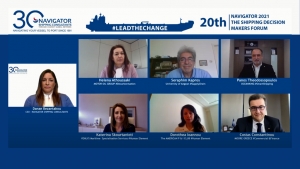
In the context of the celebration of the 30th anniversary of NAVIGATOR SHIPPING CONSULTANTS (a robust network of Towing companies and Shipping agencies worldwide), 20th Navigator – The Shipping Decision Makers Forum was organized with great success.
From Monday 12th to Friday 16th April 2021, five (5) “closed” discussions took place during NAVIGATOR – THE SHIPPING DECISION MAKERS ONLINE WEEK, among 300 executives representing 200 Greek Ship owning & Ship Management Companies participated and the members of NAVIGATOR FORUM ADVISORY BOARD. The results of NAVIGATOR ONLINE WEEK were presented to the International Shipping Community during the forum by the respective moderators on Monday 19th April 2021.
The President of NAVIGATOR, Capt. Dimitris Bezantakos, referred to the course of Bezantakos family which counts almost half a century in Shipping Industry and to the establishment and core values of NAVIGATOR SHIPPING CONSULTANTS. He highlighted human element as the basic pillar of the Greek Shipping Miracle underlining that technology should be humans’ tool, not the opposite.
CEO of NAVIGATOR, Danae Bezantakou, stressed once again the importance of synergies and dialogue which also enhances the NAVIGATOR - THE SHIPPING DECISION MAKERS FORUM.
The Minister of Shipping and Insular Policy, Ioannis Plakiotakis stressed the need for a realistic approach on emissions’ reduction produced by the shipping industry, the modernization of maritime education and also referred to the ongoing efforts of the Ministry regarding repatriation of crews that are of top concern.
The outcome of the "closed" discussions of the week 12-16 April 2021, among the executives-representatives of Ship-owning Companies and Ship management Companies, and the members of NAVIGATOR FORUM ADVISORY BOARD, was presented by:
Helena Athoussaki, Head of ESG, Sustainability & Climate Change – MOTOR OIL GROUP (#Decarbonisation) referred to the concerns raised related the decisions Shipowners need to take in order to comply with the regulations. She also mentioned the challenges the second - hand market faces and highlighted the great need of strategy, transparency and dialogue among stake holders and Organizations responsible for achieving the United Nations Sustainable Development Goals.
Seraphim Kapros, Director of MBA in Shipping – University of Aegean (#SupplyChain) pointed out the need of "smart" and alternative solutions for the uninterrupted operation of the supply chain and underlined the increased specialization in shipping companies in regards to the evaluation and monitoring of the supply chain.
The term "smart shipping" does not only concern vessels but also offices, reminded us Panos Theodossopoulos, Chief Digital Officer – OCEANKING (#smartshipping). COVID-19, new regulatory requirements and the increasing number of vertical technology solutions acted as catalysts “promoting” digitalization. On the other hand, lack of trained on-board crew and shore office personnel as well as the Cyber-risk and lack of standardization are considered barriers.
Dorothea Ioannou, Deputy Chief Operating Officer – The AMERICAN P & I CLUB (#Human Element) stated that most accidents and claims are caused due to human error. She also stressed the importance of seafarers’ mental health, as the profession ranks second in the world in the number of suicides. New generations will probably be the first who will have to deal with increased levels of technology and onboard autonomy. Therefore, the interaction with complicated and highly advanced systems, as well as situational awareness, critical thinking, effective communication, will be some of the skills that will be required to survive the imminent changes in maritime industry said Katerina Skourtanioti, Managing Director- VENLYS Maritime Specialization Services (#Human Element).
Costas Constantinou, Managing Partner/Global Maritime Leader – MOORE GREECE (#Commercial &Finance) mentioned the uncertainties as to the availability of capital and more specifically on the criteria to be used by lending banks and other capital providers to rate potential borrowers. Also he referred to the concern of the strict lending rules that Europe will impose on its banks that will not be applicable to Asian banks and therefore competition will not be fair. If financing leaves Europe, then this (together with the fact that cargoes, shipbuilding, crewing and management are already there) will speed up the process of transferring the global center of shipping from the Atlantic to the Pacific which will put European shipping at risk.
Danae Bezantakou, CEO, Navigator Shipping Consultants and Gina Panayiotou, CVO, Oceans Arena and Concept Founder, It's ALL about shipping, welcomed Guy Platten, Secretary General - International Chamber of Shipping, Margi Van Gogh, Head of Supply Chain & Transport - World Economic Forum and Elaine Smith Genser, Engagement & Partnership Development - United Nations Joint SDG Fund, in an interesting discussion on how international organisations are leading the way to positive change within the shipping sector.
According to Margi Van Gogh, the 3 key areas for the supply chain are: contribution to social development, environmental and economic impact and sustainability. She also spoke about the role of LNG as a transitional fuel, the creation of hubs for crew changes and the crucial vaccination of seafarers.
Elaine Smith Genser, Responsible for Engagement and Partnerships Development - United Nations Joint SDG Fund, said that decarbonization is not only a challenge but also an opportunity and spoke about the emphasis that the new generation of investors places on environmental protection. Finally, she pointed out that Asian countries are one step ahead of Europe in terms of decarbonization measures.
Guy Platten, Secretary General of International Shipping Chamber, focused on seafarers’ vaccinations that they affect the supply chain, crew changes that were and are of great concern and stressed the failure of governments to meet the requirements. He also named decarbonization of shipping as the "fourth revolution of propulsion", after sails, steam and oil, and added that through synergies and dialogue, many problems were solved during the pandemic.
FORUM was completed with the presentations of representatives of strategic ports of NAVIGATOR’s network of Towing Companies & Agencies worldwide. Taking into consideration the absence of physical meetings , they took the opportunity to inform the shipping community about issues related to port developments, crew changes, renewal of the tug fleet worldwide, their Companies’ future strategies, etc .:
Jeff Horst, Vice President of Sales & Marketing - FOSS MARITIME (Harbor Towing & Marine Transportation services) (U.S. West Coast - Hawaii), Julian Oggel, Managing Director - Novatug & Counsel - MULTRASHIP TOWAGE & SALVAGE (Belgium & The Netherlands), Diana Villarreal, Commercial Manager–COLTUGS TOWAGE & SALVAGE/ ULTRATUG (Chile, Peru, Equador, Colombia), Hugh Buchanan, Operations Director- AGENCIA MARITIMA NABSA S.A (Argentina) Elisio Dourado, Towage Commercial Director - WILSON SONS (Brazil), Sushil Mulchandani, Chief Executive Officer - JM BAXI & CO. (India), Jose Echeverria Goldoni, General Manager - ILG LOGISTICS (Panama), Meera Kumar, Head of DIABOS Business Unit (DA’s processing System).
Speakers stressed that in order to avoid accidents such as that of EVER GIVEN, it is very important to take the necessary measures, inspect all ships before crossing the canal, and escort tugs for larger ships. Regarding the crew changes, they also mentioned sailors' fatigue, which is of great importance both for their mental health and for the safe and effective operation of the vessels.
We express special thanks to sponsors of NAVIGATOR FORUM:
DNV– ERMA FIRST S.A. - FORTUNE TECHNOLOGIES S.A. - FRANMAN - GOLDEN CARGO – LAROS by PRISMA ELECTRONICS – ΜΑCGREGOR - MARICHEM MARIGASES - IRI/ THE MARSHALL ISLANDS REGISTRY - MOORE GREECE – OCEANKING - PALAU SHIP REGISTRY - PENNINGTONS MANCHES COOPER GREECE – Τhe AMERICAN P&I CLUB - The SWEDISH CLUB - THOMAS MILLER BV GREEK BRANCH - VENLYS MARITIME SPECIALISATION SERVICES – V.SHIPS - WINGUSUITE CLOUD COMMUNICATIONS PLATFORM.
Decarbonising maritime transport: The EU perspective

SUMMARY
International maritime transport is the backbone of the global economy. However, vessels release emissions that pollute the air and contribute significantly to global warming. As shipping is forecast to grow, reducing these emissions is urgent, in order not to undermine emissions-reducing efforts in other areas, to keep humans healthy, preserve the environment and limit climate change.
Although international shipping was not explicitly mentioned in the 2015 Paris Climate Agreement, efforts to make shipping cleaner and greener have since progressed.
International rules to reduce air-polluting emissions from ships have been agreed in the International Maritime Organization (IMO). Their impact, in particular the application of stricter
limits for sulphur content in marine fuels since 1 January 2020, is yet to be evaluated. Parallel efforts to reduce greenhouse gas (GHG) emissions from maritime shipping have resulted in the setting of rules on collecting data on fuel oil consumption and the first collected data becoming available. In 2018, the IMO adopted an initial strategy for reducing GHG emissions, aimed at cutting shipping GHG emissions by at least 50 % by 2050, compared to 2008 levels. While concrete steps are yet to be agreed, achieving this goal will require both short-term emission-reducing measures and longer term measures to make shipping switch to alternative fuels. Short-term guidance from the IMO is expected in 2020. On the EU front, the European Commission announced in the European Green Deal that GHG from EU transport should be cut by 90 % by 2050 and outlined how this would involve shipping. Initial measures are to be proposed by the end of 2020.
This briefing reviews the existing international and EU rules on shipping emissions and their application, looks into the short-term measures under discussion and maps the landscape of marine
fuels and technologies that could help decarbonise shipping in the long term
BIMCO sees Brazil’s iron ore exports up 14.4% in first four months despite disruption scares
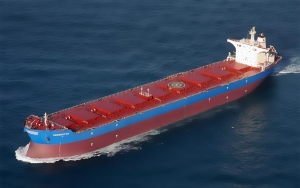
In the early hours of 22 April 2021, Vale - the Brazilian mining giant, was ordered to temporary suspend shipping activities at the country’s Guaiba Island terminal, a dedicated iron ore export terminal. Later that day, the hurdle was cleared, and activities could resume. Should the market worry when Brazil’s iron ore exports are disrupted? Now, that all depends on the terminal.
Ilha Guaiba, accounts for 7% of seaborne Brazilian iron ore exports. During February and March, 11 and eight Capesize ships departed the terminal, carrying an average of 220,000 tonnes of iron ore. All but one of them headed for China (source: Oceanbolt) and disruption at Guaiba Island terminal should not cause too much worry.
Three months earlier however, on 14 January, a fire broke out at the southern berth of Brazil’s Ponta Da Madeira terminal (PDM), Pier #4. The fire had the potential to halt a quarter of all exports from the terminal if the entire Pier #4 had been forced to close, since the pier exports twice the amount of the Ilha Guaiba terminal. Disruption at any part of Brazil’s key northern Ponta Da Madeira terminal should therefore most certainly be worrying.
“12.5% of global seaborne iron ore exports is shipped out of Ponta Da Madeira – amounting to 55% of all Brazilian. Fortunately, the port has three piers, five berths and eight ship loaders. Only one loader was damaged in the fire,” says Peter Sand, BIMCO’s Chief Shipping Analyst.
“Still, exports from the damaged southern berth stopped for 18 days and exclusively using the second ship loader at the berth was not an option,” Sand says.
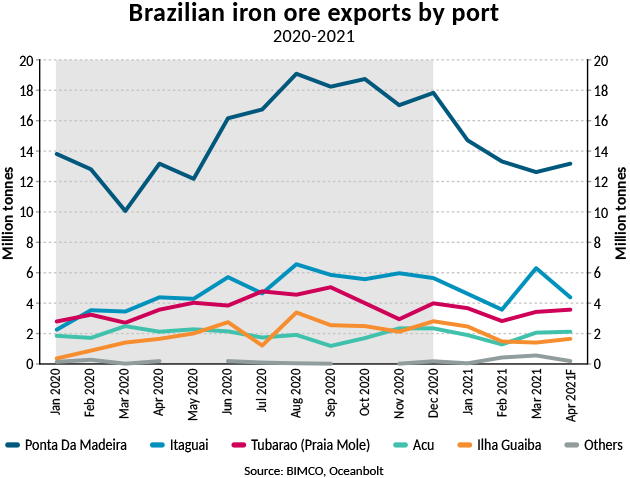
At the end of the day, and due to the low season, disruptions to the world’s most important dry bulk trade were limited, but the potential upheaval was clear and present. Surely, this will not be last scare from Brazilian iron ore operations.
Strong start to the year for Brazilian iron ore exports
BIMCO expects the first four months of iron exports out of Brazil to be up by 14.4% compared with the same period in 2020, as April exports are expected to be flat following a 20.1% surge in Q1.
As is the case for the entire dry bulk market, China’s dominance as importer is also clear when it comes to Brazilian iron ore exports. In 2020, China grew its share of global iron ore imports to 72.6% from 56.8% in 2017. During 2019 and 2020, the percentage of Chinese iron ore imports were particularly strong as overall exports fell, while the Chinese share of it continued to rise.
Malaysia comes in second place, accounting for 7% of global iron ore exports, while the Netherlands is the biggest non-Asian destination with a share of 3%.
“It is lifeblood to the capesize dry bulk market that Brazilian iron ore exports to Asia keep rising. For the whole market it is a lever which often decides the profitability of it,” says Sand.
”The current strength of the capesize market, with freight rates reaching USD 35,347 per day on Monday, is closely linked to the strong performing Brazilian iron ore exports so far this year,” Sand says.
bimco.org
Misinterpretation of EU law by AADE set to drive away €50-75 million in tourist revenue

At a time when all elements of the Greek tourist industry are working hard with health officials to minimise the impact of Covid and make Greece a safe place for foreign tourists to visit, misinterpretation of EU Brexit directives by the AADE put income estimated at tens of millions of Euros at risk.
The argument is over the AADE’s refusal to follow EU directives on the Union Customs Code and the Brexit Withdrawal Agreement. This states that any (tax paid) British flagged vessel in EU27 waters at midnight on 31st December 2020 automatically retained EU27 VAT tax paid status.
Greece has been a popular cruising area for British sailors for more than 50 years and around 5,000+ owners have contracts to keep their boats permanently in Greece, many owners typically spending the entire summer in the country.
Six months prior to Brexit, the London-based Cruising Association entered into talks with government officials to see if a combined cruising tax and visa could be introduced to ensure British owners could keep on visiting their boats for up to six months at a time rather than just the 90-day restriction imposed by Schengen rules.
“A positive outcome would have been a win/win situation for everyone and negotiations seemed to be going well,” claimed Christopher Robb of the CA. “We were taken by complete surprise when the AADE announced they would not recognise the VAT paid status of British boats.”
The AADE decision effectively limits the time a British vessel can spend in Greek waters to just 18 months before it must leave. Ironically, the rest of the EU are prepared to welcome this exodus of boats without any such time restriction. France has already agreed to offer six-month visas to boat owners allowing them summer long cruising. Many yachts will now move to overwinter in Turkish boatyards and may never return. This would be a massive loss for Greek Marinas.
“We really do not understand why the AADE have adopted this unique position,” Mr Robb continued. “It will not only have a major negative impact on Greece’s marine infrastructure but will devastate the economy of many smaller islands who rely heavily on visiting yachts for their income.”
The Cruising Association has lodged an official complaint with the EU Commission over AADE’s non-compliance with EU law. Whilst Christopher Robb remains optimistic that the issue will be resolved amicably, he admits that some owners have already made plans to leave Greek waters the moment Covid restrictions are lifted. International shipping agents Peters & May are scheduling a weekly boat relocation service from the Ionian, a service totally unheard of prior to the AADE’s decision.
The UK allows EU citizens to visit Britain without the need for a visa for up to six months. However Schengen rules limit UK visitors to just 90 days in every 180 days.
https://www.schengenvisainfo.com
The CA’s 190-day Campaign is aimed at persuading the EU’s (Schengen) coastal member states to offer long stay visas designed for the special circumstances of sailing and boating which treats a boat as a valid accommodation address and allows a whole season of cruising. Visiting the boat for maintenance during the winter, and other visits to EU countries would then be possible under Schengen’s 90/180 rule.
The CA:
The Cruising Association (CA) celebrated its 110th Anniversary in 2018. Founded in 1908 specifically to meet the needs of cruising sailors, the Cruising Association (CA) has been a home to many of the great names in sailing. It is a non-profit mutually supportive association and is acknowledged as the leading organisation for cruising sailors and motor cruisers, with over 6,300 members around the world.
The CA provides services, information, help and advice to sailors worldwide using a variety of communication platforms including its inter-active website, CAptain's Mate App, Forums, Rallies, Seminars and Events, Newsletters and the in-house quarterly magazine Cruising.
Well-known names associated with the CA include HRH The Princess Royal and the CA's Patron, Sir Robin Knox-Johnston. Supporters also include Keith Musto, Tom Cunliffe, Jeanne Socrates and Don Street, amongst others.
www.theca.org.uk
Costamare Inc. Announces the Acquisition of the York Capital Majority Interest in Five 11,000 TEU Containerships with Long-Term Charters
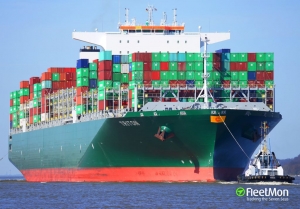
MONACO – April 26, 2021 – Costamare Inc. (the “Company”) (NYSE: CMRE) announced today the acquisition of York Capital’s 60% equity interest, on average, in five 11,000 TEU containerships, four of which were built in 2017 and one of which was built in 2016. The acquisition brings the Company’s ownership interest in these five vessels to 100%.
The five vessels were initially contracted as new buildings in 2013 and 2015 under the joint venture with York Capital. The vessels currently operate under long-term charters, with four of them expiring in 2031 and the fifth one in 2025.
The acquisition has been funded with cash at hand and commercial bank debt provided by leading European and U.S. financial institutions with tenors of up to 10 years.
Management Commentary
Gregory Zikos, Chief Financial Officer of the Company, said: “We are pleased with the conclusion of the transaction with York Capital, which underscores our excellent relationship. The deal provides a successful exit path in this investment for our partner. At the same time, the joint venture continues to own another five vessels and our relationship is ongoing.
The vessels acquired provide us with incremental contracted revenues of approximately US $335 million and have a TEU-weighted average time charter duration of 8.9 years.
About Costamare Inc.
Costamare Inc. is one of the world’s leading owners and providers of containerships for charter. Costamare Inc. has 47 years of history in the international shipping industry and a fleet of 78 containerships, with a total capacity of approximately 559,000 TEU, including one vessel under construction and three secondhand vessels that we have agreed to acquire, and excluding a vessel that we have agreed to sell.
Since the date of our last Annual Report on Form 20-F, we have taken delivery of three of the secondhand vessels which we had previously agreed to acquire, and have agreed to acquire two additional secondhand vessels. Five of our containerships have been acquired pursuant to the Framework Deed with York Capital Management by vessel-owning joint venture entities in which we hold a minority equity interest. The Company’s common stock, Series B Preferred Stock, Series C Preferred Stock, Series D Preferred Stock and Series E Preferred Stock trade on the New York Stock 2 Exchange under the symbols “CMRE”, “CMRE PR B”, “CMRE PR C”, “CMRE PR D” and “CMRE PR E”, respectively

Powered by  © Μaritimes 2019