
-
Home

-
Maritimes NEWS
-
Ports
- maritimes


maritimes
“The Latest Developments in Limitation of Liability under Greek Law: Losing the Right to Limit Liability

by Christos Aporellis
Senior Claims Executive
UK P&I Club
The International Perspective
The international legal framework relating to the entitlement of shipowners to limit their liability for maritime claims has been established by the entry into force of the 1976 Convention on Limitation of Liability for Maritime Claims.
The aim of the Convention is the 'harmonisation', to the extent possible, amongst Members States of the rules relating to the limitation of liability for maritime claims.
The parties to the Convention, recognising the need to provide for enhanced compensation and to establish a simplified procedure for the purposes of updating the limitation amounts, entered into the 1996 Protocol, amending the Convention.
Greek Law - A First Instance Decision, with potentially significant impact
Greece ratified the Convention and enacted Law 1923/1991 to give effect to its provisions with the force of national law. By virtue of Law 3743/2009 Greece implemented the amendments brought by the Protocol.
There are not many Greek court cases on the topic of limitation of liability. In this article, we will discuss a recently issued court judgment, from the Piraeus Court of First Instance, decision number 1291/2018. This judgment is noteworthy in that it ruled on whether the conditions for breaking the limit, thus losing the right to limit liability, were met.
Factual Background of the Case
The vessel had been anchored for an extended period of time off Lavrio in Greece. On a number of occasions, she shifted to the port to load bunkers. After one such occasion, the ship returned to the anchorage and dropped her anchor in a position nominated by the Coast Guard. Following this, the shipowner's office was advised that a cable, running between the Greek mainland and a windfarm located on a nearby island, had sustained damage.
The cable owners subsequently submitted a claim against the shipowner in excess of 20 million euros, based on the cost of repairing the cable and loss of profit, and commenced proceedings against the shipowner in the Greek courts.
The shipowner sought, inter alia, limitation under Article 10 of the LLMC 1976/1996, as incorporated into Greek law.
Its claim to limitation failed. The court concluded that, at the time of the incident, the master was aware that the ship had fouled a power cable but chose to heave the anchor in any event and that this constituted gross negligence, such that the defendant could not rely on limitation.
The Greek court accepted the claimant's claim in full but reduced it by 35% on the grounds of contributory negligence.
So, what conduct bars Limitation Under the LLMC of 1976/1996?
Article 1 para 4 specifies the persons who may limit their liability. It provides:
"If any claims set out in Article 2 are made against any person for whose act, neglect or default the shipowner or salvor is responsible, such person shall be entitled to avail himself of the limitation of liability provided for in this Convention."
It should be noted that the shipowner itself may limit its liability under Article 1 para 1.
Article 4 sets out the reasons for which the limitation is not available:
"A person shall not be entitled to limit his liability if it is proved that the loss resulted from his personal act or omission, committed with the intent to cause such loss, or recklessly and with knowledge that such loss would probably result."
 There is a clear distinction in the convention between the shipowner and the other persons, who may limit their liability. The person, other than the shipowner, who are able to limit their liability, on the basis of the LLMC, are those "for whose act, neglect or default the Shipowner ...is responsible". The master, who under Article 84 of the Greek Code of Private Maritime Law, is a person for whose contracts or torts the shipowner is responsible, is one such person. He may limit his liability under Article 1 para 4.
It must be highlighted that the exemption from the right to limit liability applies in cases of personal acts committed recklessly. The Convention, accordingly, establishes a rule, which annuls vicarious liability, as apparent from Article 1 para 4, which refers to "any person for whose act, neglect or default the Shipowner... is responsible". So, in the example of a master, if he has been found to have been reckless, he may not limit his personal liability (as a person entitled to do this under Article 1 para 4 of the Convention), though the master's recklessness would not affect the right of the shipowner to limit its liability.
The Greek First Instance Decision on the Exemption from the Right to Limit Liability
Considering the aforementioned highlighted points, the vessel’s actions under the command of the master should not be viewed as liable acts or omissions of the shipowner, unless the shipowner happens to also be the captain – which, as a matter of fact, cannot be the case with merchant vessels.
The view adopted in this judgment constitutes a direct deviation from the letter and the intent of Article 4 of the International Convention LLMC1976/1996. In the realm of maritime law, the limitation of liability is the rule, whereas returning to limitless liability is the exception.
Accordingly, the court erred on its finding that the master’s recklessness (in insisting on manoeuvring when he observed the difficulty in lifting the anchor) resulted in the shipowner being excluded from its right to limit its liability.
The First Instance Decision on the Inadmissibility of the Limitation Defence
It is important to analyse the second reason given, in the First Instance Decision, for not upholding the limitation of liability defence. This court ruled that, once it accepted contributory negligence of the claimant by 35%, it was not necessary to deal with the issue of limitation of liability under the London Convention.
This does not appear to be correct. While it is the case that, once a prior defence is accepted by the court, and various defences are submitted as alternative defences, the alternative defences do not need to be examined by the court. Importantly, however, a paramount precondition for this is that the defence responds to all the issues posed by the alternative defence(s). To illustrate the point further, if the court had held that the defendant had no liability, there would be no need to assess the limitation defence. Similarly, if it was held that the defendant was liable for an amount much lower than the limit of liability following limitation, it would not be relevant for the court to examine the limitation defence. However, in this case, where the court (despite accepting the contributory negligence defence) held that the amount of liability of the defendant is much higher than the amount of limitation, the court would still be obliged to examine the alternative defence of limitation of liability.
The Consequences of this Judgment
The interpretation of Article 4 of the International Convention LLMC1976/1996 raises several difficult issues, which are the concern of the Courts of Law internationally, especially in the countries which are signatories to the Convention.
The shipowner’s right to limitation of liability for acts committed by others is not one of these difficult issues. This limitation should be considered acquis from the coming into force of the Convention. It is surprising that the Greek courts would, through this decision, question one of the basic parameters associated with limitation of liability under the agreed regime.
It is doubtful that this judgment will constitute a new established position as far as the interpretation of limitation of liability under Greek Law. “
LR and LISCR award Design Approval for world’s first 22,000cbm multi-Gas carrier
New storage tank design and materials will increase gas carrier size and efficiency.
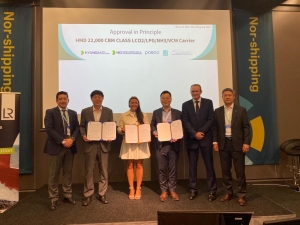
Lloyd’s Register (LR) and the Liberian International Ship & Corporate Registry (LISCR) have awarded Design Approval to HD Korea Shipbuilding & Offshore Engineering (HD KSOE) and Hyundai Mipo Dockyard (HMD) for the development of the world’s first 22,000cbm multi-gas carrier as part of a Joint Development Project for LCO2 Carrier design and development.
The vessel will be capable of carrying Liquified Carbon dioxide (LCO2), Liquid Petroleum Gas (LPG), Ammonia (NH3) and Vinyl Chloride Monomer (VCM) and incorporates a new type of steel in its tanks that supports greater efficiency in the carbon capture and storage (CCS) value chain.
The steel used in the Type C tank construction for multi-gas will make scantling lighter whilst keeping intact the tanks’ structural integrity. This innovation allows an upscale in the size of the carrier, improving storage and transportation, something shipbuilders are not able to do with more conventional materials.
As part of the Design Approval process, LR will provide advice and guidance on technical regulations and the development of a Type C storage tank for using the new material. The Liberian Flag Administration will liaise with LR to formalise the approval and provide the required certification to allow the multi-gas Carrier to enter service.
When built, the carrier will transport liquefied carbon dioxide under pressure, allowing carbon from the CCS process to be transported to storage facilities.
HD KSOE & HMD have developed three different LCO2 carriers to respond to the market demands of different business models in the CO2 value chain, which include a 12,000cbm LCO2 carrier with medium pressure cargo tanks, a 22,000cbm LCO2 carrier with low pressure cargo tanks and a 30,000cbm LCO2 carrier with low pressure cargo tanks.
Andy McKeran, Lloyd’s Register, said: “This Design Approval demonstrates LR’s expertise in supporting the advance of ground breaking maritime projects in a safe, sustainable way. This multi-gas carrier will be a key piece of infrastructure in the carbon capture and storage value chain, helping remove greenhouse gases from the atmosphere, supporting the progress to a net zero carbon economy.”
Yi-hyo Chung, Senior Vice President, HMD, said: “This is the first result of the JDP of new steel for liquefied CO2 carriers signed in August 2021, allowing us to design & build more economical and efficient carriers. The developed new material has been examined and approved based on the mechanical properties experiment and engineering assessment.”
“We are very pleased to share the result of this development show as we prepare to build customized economical liquefied CO2 Carriers.”
Thomas Klenum, Executive Vice President, Liberian Registry, said: “Carbon capture is one of the keys to unlock the potential to fully decarbonize international shipping and other industries in the fight against climate change, and therefore the Liberian Registry is very proud to contribute with an Approval in Principle to HD KSOE and HMD for their innovative multi-gas carrier design featuring a new steel type for the cargo tanks allowing multiple gases to be safely and efficiently transported including liquefied CO2.”
“This JDP between HD KSOE, HMD, POSCO, LR and LISCR demonstrates that international collaboration can pave the way for innovation in ship design and a sustainable future for our maritime industry.”
About Lloyd's Register (LR)
Trusted maritime advisers, partnering with clients to drive performance across the ocean economy.
Lloyd’s Register (LR) is a global professional services group specialising in marine engineering and technology. Created more than 260 years ago as the world’s first marine classification society, to improve and set standards for the safety of ships.
Today we are a leading provider of classification and compliance services to the marine and offshore industries, helping our clients design, construct and operate their assets to accepted levels of safety and environmental compliance.
We also provide advice, support and solutions on fleet performance and optimisation, voyage optimisation, enhancing our clients’ digital capability.
Our digital solutions are relied upon by more than 20,000 vessels. In the race to net zero, our research, technical expertise and industry-firsts are supporting a safe, sustainable maritime energy transition.
Lloyd’s Register Group is wholly owned by the Lloyd’s Register Foundation, a politically and financially independent global charity that promotes safety and education.
About Liberian Registry
The Liberian Registry has a long-established track record of combining the highest standards of safety for vessels and crews with the highest levels of responsive and innovative service to owners. Comprised of 5,600+ vessels aggregating over 240 million gross tons, representing 15 percent of the world’s ocean-going fleet. Moreover, the Liberian Registry has a well-deserved reputation for supporting international legislation designed to maintain and improve the safety and effectiveness of the shipping industry and protection of the marine environment.
About Hyundai Mipo Dockyard (HMD)
Hyundai Mipo Dockyard (HMD) founded in 1975 has secured its foothold as the world’s No. 1 dockyard dedicated to the construction of mid-sized vessels, based on abundant technology and experience. Equipped with an integrated information system for the entire manufacturing process and an advanced design and engineering system achieved based on relentless research and development (R&D), HMD boasts the industry’s best technology and productivity.
It has the biggest share of the global market when it comes to petrochemical carriers, container ships, Conro, and asphalt carriers, and it has been selected as the World Class Product of Korea attesting to its competitiveness in the mid-sized ship construction sector.
The company has been striving to gain a competitive edge through ceaseless change and innovation amidst the global economic recession and as latecomers are catching up. As a result, HMD has pre-emptively occupied the eco-friendly ship market based on the world’s top eco-ship technology and boosting its competitiveness in the high value-added special-purpose ship market that includes platform supply vessels (PSVs), combo vessels, open hatch general cargo (OHGC), juice carriers, refrigerated container carriers, ethylene gas carriers, etc.
By meeting the demands in the rapidly changing shipping market and the diverse demands from customers, HMD has taken leadership in the global shipbuilding industry. As part of the efforts toward business diversification and technology export in 1999, HMD expanded into Vietnam and established Hyundai-Vietnam Shipyard (HVS).
After commencing its business in the area of ship repair, HVS switch into shipbuilding in 2009 and has been garnering global attention with its remarkable growth. HMD, which has been contributing to national development and prosperity through the advancement of the shipbuilding industry, will continue to maintain its devotion to building unparalleled ships.
Based on the quality and technical standards raised over the past four decades, all of us at HMD will make every effort to become the world’s leading shipyard without wavering due to change or challenges.
Methanol Institute publishes first complete guide to methanol as a marine fuel
Tool to support decision-making on future fuel choices includes analysis and commentary on technical, commercial and operational aspects
Washington, Brussels and Singapore, 30 May 2023. The Methanol Institute (MI) has published the first comprehensive guide to methanol as a marine fuel. As the shipping industry continues its transition towards net carbon neutral operations, owners are increasingly choosing methanol as a fuel that can help them progressively reduce emissions in line with regulatory targets.
‘MARINE METHANOL Future-Proof Shipping Fuel’ has been produced to help stakeholders across the industry access the information they need to support decision-making on which alternative fuel is right for their fleet.
Sections of the report address regulatory drivers, environmental performance, engines and fuel systems, bunkering, handling and safety characteristics, costs and pricing, availability and feedstocks for conventional and renewable product. Also included are case studies on first movers including AP Moller-Maersk, Waterfront Shipping, Proman Stena Bulk and the conversion of ropax ferry Stena Germanica.
The orderbook for methanol fuelled ships has grown rapidly with owners and operators specifying the fuel for use on ships from the largest containerships to small pilot boats. In between is the growing fleet of methanol carriers, bunker tankers, bulk carriers, heavylift vessels, cruiseships, ferries and superyachts.
Approved for use as fuel under the IMO’s IGF Code, the momentum for methanol as fuel has increased as studies, analysis and guidance - much of it supported by the Methanol Institute - has been published. This includes early guidance for bunkering operations developed with Lloyd’s Register and subsequent work with the ports of Shanghai, Singapore and Rotterdam.
Propulsion systems include tried and tested two-stroke main engines, four stroke units, and fuel cells using methanol for conversion to hydrogen. Main engine manufacturers report considerable order backlogs and are developing ever larger, higher capacity units. Studies and pilots continue to prove the effectiveness of converting smaller main engines to methanol operations.
“Methanol has staked a significant claim to be among the serious fuel choices for vessel designers, owners and operators looking to make a start on their transition to sustainable operations,” said MI Chief Executive Officer Greg Dolan. “While there won’t be a single decarbonization solution, it is clear that methanol has advantages that combine to provide a pathway to lower carbon and ultimately carbon-neutral operations; This report provides a clear roadmap for this journey.”
“Shipowners have recognised that methanol provides them with huge flexibility in introducing a low-pollution, lower carbon fuel which is closest to a drop-in available in the market,” said MI Chief Operating Officer Chris Chatterton. “The decision by more and more leading shipping companies to adopt methanol as fuel signals that the industry recognises the need to start its transition to net carbon neutrality now; this publication can support their decision-making process.”
To download the guide, please click here.
Thenamaris to install Starlink LEO internet solution within Marlink smart hybrid network

Leading ship owning and shipmanagement company will evaluate high throughput, low latency solution for business and crew internet access onboard its diverse fleet
Oslo and Paris, 31 May 2023. Marlink, the smart network and digital solutions company will support shipmanager Thenamaris in its digital business transformation with the integration of Starlink within its smart hybrid network.
Thenamaris is an existing user of Marlink’s high throughput Sealink VSAT with L-Band backup in part of its fleet and plans to add new LEO services – to provide an additional layer of capability onboard its vessels – a concept Marlink has created as a next generation solution. Sealink NextGen combines GEO VSAT and MSS back-up with customers’ required mix of LEO or MEO connectivity, 5G and digital solutions, all controlled and managed via Marlink’s Xchange platform.
This combination will provide Thenamaris with a blended network spanning guaranteed bandwidth and best effort services across multiple channels. The result will be an enhanced user experience for crews and shore management teams, with a hybrid approach leveraging advanced software tools.
Designed to meet the next generation of user demand, the combined digital solutions take advantage of software-defined routeing, with applications assigned channels and priority for seamless delivery of data. Marlink will also provision network performance management tools to ensure that vessel managers have visibility on the fleet at all times.
Thenamaris Group is a global manager of a high-specification, modern ocean-going fleet, of a total of 88 vessels, including 50 crude oil and products tankers, 23 bulk carriers and containerships as well as seven LNG carriers and eight LPG carriers.
Thenamaris operates, maintains, crews and trade its principals’ vessels worldwide, ensuring consistently high standards across integrated ship management services, covering commercial, technical, safety and quality and crewing aspects of its diversified portfolio.
“The success of Thenamaris is a testament to our philosophy that safety and quality permeate every aspect of our operations, and that every member of our team is a trusted partner,” said George Tsivgoulis, Electrical Supervisor, Thenamaris. “To be a leader in commercial and technical ship management requires us to constantly be exploring new ways and utilizing cutting-edge technology, to improve efficiency and enhance life onboard ship. It is believed that Marlink’s hybrid approach, now incorporating Starlink, will enable us to achieve these objectives. This belief drives the decision to test the new SATCOM architecture.”
“Marlink continues to play a key role in helping industry leaders like Thenamaris take the next steps on their digital journey and accrue the benefits of new technology to support that transformation,” said Tore Morten Olsen, President, Maritime, Marlink. “We see Sealink NextGen as key to helping vessel operators and managers unlock the benefits of digitalisation and improve connectivity for their crews.”
Sperry Marine to supply bridge systems to innovative newbuildings for SAL Heavy Lift

Series of vessels under construction in China will feature a networked suite of navigation, steering and heading management systems
05 June 2023. Sperry Marine has secured the contract to deliver complete navigation systems including its VisionMaster Net bridge, NAVIGAT gyrocompass and NAVIPILOT 4500N autopilot for four vessels under construction for SAL Heavy Lift at WuHu shipyard, China.
Sperry Marine’s VM Net bridge system provides connected navigation and can be supported remotely, reducing the requirement for in-person service calls. VM Net is designed for simplified deployment and increased system availability, creating the foundation for ‘big data’ on the vessel to improve operational efficiency while reducing through-life costs.
The NAVIGAT 3500 fibre optic gyrocompass provides highly accurate pitch/heave information which is particularly important for safe operations under loaded conditions. The NAVIGAT family of compasses provide superior heading measurement in all kinds of dynamic conditions with compatibility to Sperry Marine CompassNet, the industry’s first networked heading management system.
NAVIGAT 3500 can also contribute to fuel efficiency gains, supporting course optimisation using Sperry’s NAVIPILOT 4500N autopilot, which is proven to reduce rudder drag, further improving the performance of the vessels. Part of the NAVIPILOT series of autopilot systems, NAVIPILOT 4500N is designed to deliver improved course-keeping with reduced fuel consumption and lower workload on the bridge.
HAL’s new vessels will feature methanol-ready propulsion systems and zero emission port operations thanks to ‘cold-ironing' connections to shoreside electricity. The vessels feature powerful, fast and fully electric cranes with 1,600 tonnes of lifting capacity.
“We have designed our ORCA-class ships to be the most efficient vessels in their class with fuel consumption and carbon emission figures far superior to any existing heavy lift vessels,” said Dr Martin Harren, owner and CEO of SAL Heavy Lift. “Our decision to select Sperry Marine as our navigation solutions partner was based on their ability to deploy systems that meet our demanding requirements.”
"This agreement demonstrates Sperry Marine’s ability to support the primary goals of SAL’s newbuilding programme, providing advanced solutions for safety of navigation as well as greater vessel efficiency and fuel savings,” said James Collett, Managing Director, Sperry Marine. "Equipping these highly-specialised ships calls for a unique blend of technical expertise and close co-ordination between SAL and Sperry’s global teams.”
WinGD and Mitsubishi Shipbuilding sign MoU for ammonia collaboration

Swiss marine power company WinGD and Japanese shipbuilder and technology developer Mitsubishi Shipbuilding Co., Ltd. have signed a memorandum of understanding to enter into a partnership on ammonia-fuelled vessels.
The project will see WinGD applying its X-DF-A ammonia-fuelled engines to a range of vessel designs, with Mitsubishi both designing the vessels and completing the fuel chain with its ammonia fuel supply system (AFSS).
Manabu Kawakado, Head of Marine Engineering Centre, Mitsubishi Shipbuilding Co., Ltd. said: “This collaboration will give both Mitsubishi and WinGD an important first-mover advantage in using ammonia in marine engines to meet IMO decarbonisation targets. It will set the path for the new generation of technology applicable to a wide range of vessels over the next decades.”
Under the partnership, WinGD will develop X-DF-A engines at appropriate sizes for the vessel designs, providing Mitsubishi with the specifications for installing the engines and the requirements for all auxiliary fuel systems. Mitsubishi will design the vessels, set performance parameters for the engines and further develop its existing AFSS for use with WinGD’s ammonia engines.
Dominik Schneiter, Vice President R&D, WinGD said: “This project will allow WinGD and Mitsubishi to make further progress in bringing ammonia-fuelled capability to merchant vessels within our established future fuel development timeframe. It is a timely opportunity to apply X-DF-A engines across a wider range of bore sizes. Our aim is to develop the applicability of these engines and their critical fuel elements across multiple vessel types, while upholding the highest standards for environmental impact and for the safety of the crew on board.”
The project will commence in the third quarter of 2023, with a timeline considered that could place vessels in service by 2027.
New strategy leads to significant growth at Green Instruments

Green Instruments, a frontrunner in developing solutions for measuring the environmental impact of ships, experienced notable growth last year. With a targeted focus on providing innovative solutions, the company expects a rising demand for its environmental protection and safety solutions in the coming years.
As the maritime industry worldwide increasingly contributes to more sustainable shipping, Green Instruments in Denmark has emerged as a specialist in developing, manufacturing, selling, and servicing emissions and analysis/measuring equipment for the maritime sector. The Green Instruments group, headquartered in Denmark with hubs in Singapore and the USA, achieved a gross profit of DKK 75.106 million, marking a solid growth of over 30% compared to 2021.
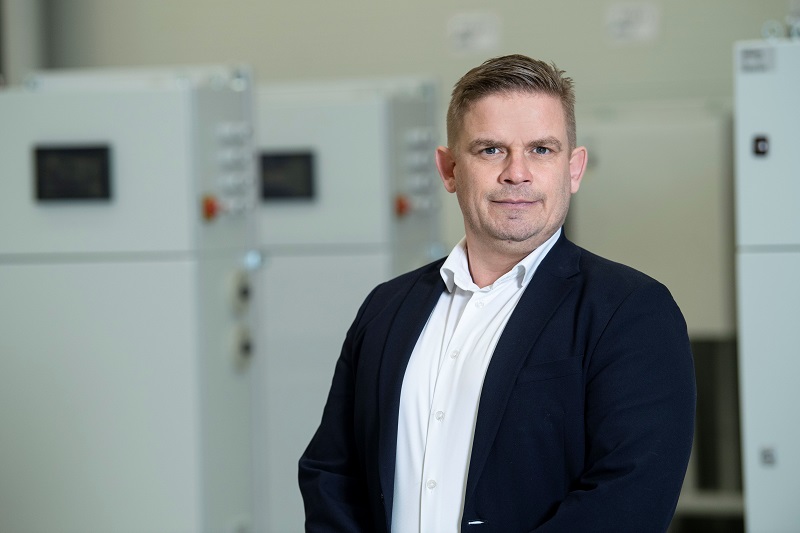
"We are extremely pleased with the solid results we achieved in 2022, while also making strategic investments in future technologies, organization, and partnerships. Our annual report reflects our focused approach, strengthening our competitiveness and positioning us for further growth and development," says CFO Lars Flou from Green Instruments.
The 2022 annual report showcases strong financial development, maintaining a healthy economic position with robust key figures. This instils confidence in our investors and stakeholders and enhances our ability to invest in future growth and development for the benefit of both internal and external stakeholders.
In 2022, Green Instruments transitioned from solely offering product sales to providing problem-solving solutions that enable measurement and validation of progress in environmental protection and regulatory compliance. Furthermore, partnerships hold great importance at Green Instruments, as we work together with our customers and other stakeholders to develop future solutions that match and reduce emissions.
This strategic shift has positioned Green Instruments as a leading authority in environmental protection and safety, giving the company a significant competitive advantage. By prioritizing solutions that actively contribute to "making the world a better place," Green Instruments is ideally positioned to leverage the rapidly growing demand for sustainable solutions in the years to come.
Furthermore, tightening environmental regulations by authorities in the EU, USA, China, and the increased requirements for safety and environmental standards by the International Maritime Organization (IMO) have led to an increased demand for Green Instruments' offerings.

"We anticipate that the green transformation in the maritime industry will be a significant market driver in the coming decade. Green Instruments has a strong track record and value propositions within green maritime technology, and we see substantial growth and expansion opportunities in this market due to our global presence, market expertise, and extensive knowledge of measurement technology," says CEO Morten Brandborg from Green Instruments.
Continuing to prioritize research and development, Green Instruments has allocated significant resources to stay at the forefront of innovation. Investments in the latest technologies ensure the company can offer customers the most innovative and competitive solutions. This commitment to continuous improvement will persist in the years to come.
About Green Instruments:
Green Instruments specializes in emissions control, water and gas monitoring, hazard detection, and energy optimization to ensure more sustainable and safe ship operations. With extensive experience in monitoring and analysis, the company's solutions can also be utilized in land-based industries. Founded in 1999, Green Instruments A/S is headquartered in Broenderslev, Denmark, with production facilities and additional hubs in the USA and Singapore.
GLOBALink | "Leadership" does not imply hegemony, Chinese delegation says at Shangri-La Dialogue

SINGAPORE, June 4 (Xinhua) -- The Chinese delegation on Saturday rejected U.S. Secretary of Defense Lloyd Austin's unfounded accusations against China at the Shangri-La Dialogue, saying "leadership" does not imply hegemony, status is determined by acts, and actions speak louder than words.
Lieutenant General Jing Jianfeng, deputy chief of the Joint Staff Department of China's Central Military Commission, told a press conference that by peddling the so-called "Indo-Pacific strategy," Washington is attempting to maintain its hegemony.
Although the Cold War ended 32 years ago, the United States has not removed residues of the Cold War, such as the Five Eyes intelligence alliance and bilateral military alliance. Instead, it has escalated bloc politics and stoked conflict and confrontation by launching the Quadrilateral Security Dialogue and trilateral security partnerships.
"To pursue its selfish interests, the United States has coaxed and coerced some countries into acting as a pawn with the fundamental aim of maintaining its hegemonic system, regardless of the aspiration for stability and order by regional countries," he said.
Regarding the Taiwan question, Jing strongly refuted the recent U.S. remarks on Taiwan for ignoring facts and distorting the truth.
The United States has continuously weakened and hollowed out the one-China principle, strengthened the so-called official exchanges with Taiwan and condoned "Taiwan independence" activities, he said.
The United States has also increased arms sales to Taiwan in both quality and quantity, frequently sailed through the Taiwan Strait to flex its muscles, and ganged up with other countries to intervene in the Taiwan question, Jing said.
He emphasized that China's military operations around the Taiwan Strait are targeted at "Taiwan independence" separatist forces and the interference of external forces, and are justified.
The general added that China cannot be blamed for changing the status quo, as the U.S. "exploiting Taiwan to contain China" and "Taiwan independence" separatists relying on external forces are the real factors causing changes in the status quo, exacerbating tensions and undermining the stability.
Noting that the Taiwan question concerns China's core interests and brooks no compromise, he said that the Chinese People's Liberation Army is fully prepared and ready to firmly defend China's sovereignty, unity and territorial integrity.
Jing said that in recent years, the United States has continued to interfere in the South China Sea issue, and taken it as an excuse to suppress other countries.
This is completely contrary to the will and efforts of regional countries to seek peace, pursue development and promote stability, he said.
Jing stressed that China advocates a peaceful settlement of disputes in the South China Sea, adding that regional countries have the ability, confidence and wisdom to deal with the issue, and there is no room for interference from countries outside the region.
He said that the United States is the real mastermind behind tension in the South China Sea.
In recent years, the U.S. side has been sending warships and military aircraft to the South China Sea to provoke troubles under the so-called "freedom of navigation," he said.
The United States has also intensified its efforts to increase temporary and rotational deployment, establish additional military bases, and continue to strengthen its military presence in the South China Sea, Jing said.
"By doing so, the United States will only cause more security risks and increase the potential for crisis," he said.
Concerning an incident over the South China Sea, in which the U.S. side claimed that a Chinese fighter jet conducted an "unnecessarily aggressive maneuver," Jing said the move was carried out lawfully and professionally, and was only conducted after a U.S. reconnaissance plane deliberately intruded into a PLA naval routine training exercise.
China values the development of China-U.S. military relations, and exchanges between the two militaries have not been interrupted, the Chinese general said, adding that the United States should be blamed for current obstacles to the development of the relations.
It will not work if the United States appeals for communication while undermining China's interests, and claims to strengthen crisis management while continuing its provocations, Jing said.
China urges the United States to earnestly respect China's core interests and major concerns, take concrete actions to remove obstacles to military-to-military exchanges, and bring relations between the two militaries back on the right track, Jing noted.
Calling the Shangri-La Dialogue a platform for peace topics, not a hegemony show-off, Jing said China comes for peace, development and cooperation, while the United States clearly aims for promoting its "leadership," smearing and suppressing others, and preserving its hegemony.
Countries that adhere to strategic independence and peaceful development will not follow the U.S. steps into the old path of bloc confrontation, he said.
Produced by Xinhua Global Service
Xiconomics: China's green development philosophy is contributing to global sustainable growth

China, the world's second-largest economy, has increased its green areas at home and contributed to global sustainable growth.
BEIJING, June 5 (Xinhua) -- The life of Maksat Abilgaziev, a resident of Zhanatas, a small town in southern Kazakhstan, has changed immensely since a Chinese company built a wind farm there a few years ago.
The 33-year-old was once an electrical engineer at a local phosphate mine company. Believing the future of his homeland and Kazakhstan lies in clean energy, especially wind energy, he quit the job in 2020 and became a wind power engineering trainee at the Zhanatas wind farm.
"Our Chinese friends have brought equipment, investment, technology and experience to Kazakhstan. They have also cultivated clean energy talents in our country. The wind power projects have created jobs and tax revenues for Zhanatas, bringing the town back to life," said Abilgaziev, who has been promoted to senior maintenance engineer with an income that more than doubled in three years.
This is one example of China's efforts to bolster global sustainable development over the years. The world's second-largest economy has increased its green areas at home and contributed to global sustainable growth.
PIONEERING GREEN ACTIONS
For some time, better air quality was widely expected among residents of smog-shrouded north China in winter.
Over the past decade, Chinese President Xi Jinping has led the country in an unswerving fight against pollution, rolling out effective measures, including publishing an action plan on the prevention and control of air pollution and increasing the supply of clean energy.
Air quality is crucial to the people's sense of happiness, Xi said in a discussion with national legislators from southwest China's Guizhou Province in 2014.
Today the blue skies are back, and city dwellers are breathing noticeably cleaner air. China's PM2.5 density fell 57 percent from 2013 to 2022, and its carbon dioxide emissions per unit of GDP declined 34.4 percent. The country's annual number of days with serious air pollution dropped sharply by 92 percent.
"China will prioritize ecological protection, conserve resources and use them efficiently, and pursue green and low-carbon development," Xi said at the opening session of the 20th National Congress of the Communist Party of China last year.
For years, China has placed a high value on ecological conservation, with a commitment to protecting natural resources. As a result of decades of efforts, tangible achievements have emerged in forestation, wetlands and biodiversity protection, bolstering the country's green credentials.
Take afforestation. The country has created the world's most extensive planted forest area, doubling its forest coverage rate from 12 percent in the early 1980s to 24.02 percent in 2022.
The country's afforestation area reached 960 million mu (64 million hectares) over the past decade. A 2019 finding published in Nature Sustainability showed that at least 25 percent of the foliage expansion since the early 2000s globally came from China, based on data from NASA satellites.
Thick forests have also become a substantial source of revenue for locals. Last year, the output value of China's forestry and grassland industry reached about 1.18 trillion U.S. dollars, while the foreign trade volume of forest products was 191 billion dollars.
Neak Chandarith, director of the Cambodia 21st Century Maritime Silk Road Research Center, hailed China as a green development leader. "The Chinese government sees green development and environmental protection as top priorities as these strategies have been integrated into all of the country's socio-economic development plans," he said.

This aerial photo taken on May 25, 2023 shows birds resting in the mangrove forest near the sea in Zhanjiang City, south China's Guangdong Province. (Xinhua/Liu Dawei)
PROMOTING GREEN INNOVATIONS
China should work to achieve greater self-reliance and strength in science and technology, promote industrial transformation and upgrading, advance coordinated urban-rural and regional development, and foster green and low-carbon economic and social development, Xi said when addressing the closing meeting of the first session of the 14th National People's Congress, the national legislature, in March.
Over the years, China has taken innovation-driven development as a driving force for economic development, helping its economy switch to green and high-quality growth.
The country is now the world's largest producer of clean energy equipment. In 2021, the output value of the energy conservation and environmental protection industry exceeded 1.13 trillion dollars.
China's export of three tech-intensive green products, namely solar batteries, lithium-ion batteries and electric vehicles, registered a 66.9 percent increase in the first quarter of this year, official data showed. Together they contributed 2 percentage points to the overall export growth, up from 1.7 percentage points for 2022.
"China's foreign trade growth in Q1 is mainly buoyed by new energy-related exports," said Zhou Maohua, an analyst with the China Everbright Bank.
According to the China Association of Automobile Manufacturers, China's new energy vehicle (NEV) sales nearly doubled to 6.89 million units in 2022, accounting for over a quarter of the total automobile sales in the world's largest auto market.
"The speed of growth here is much faster than in other regions of the world," said Oliver Blume, chairman of the Board of Management of Volkswagen AG, adding that with its high level of innovation, China is a vital pacesetter for the entire automotive industry.
In August last year, China revealed a plan for fulfilling its "dual carbon" goal of peaking carbon dioxide emissions by 2030 and achieving carbon neutrality by 2060 through technology.
China has been pursuing green development by scientific means, addressing all challenges through science, technological innovation and creativity, said Benjamin Anyagre, general secretary of the Ghana-China Friendship Association, adding that China's commitment to green development would positively impact the world's efforts to combat climate change.
This is echoed by Peter Bakker, president and CEO of the World Business Council for Sustainable Development, who said that Chinese businesses, with their enormous implementation power and creativity in areas like batteries, electric vehicles and solar power, are expected to decarbonize the world significantly.

This aerial photo taken on Feb. 18, 2023 shows a photovoltaic (PV) power project in Liangzhou district of Wuwei, northwest China's Gansu Province. (Xinhua/Fan Peishen)
GLOBAL ENGAGEMENT
"We should pursue the new vision of green development and a way of life and work that is green, low-carbon, circular and sustainable," Xi said at the opening ceremony of the Belt and Road Forum for International Cooperation in May 2017. "We propose the establishment of an international coalition for green development on the Belt and Road, and we will provide support to related countries in adapting to climate change."
China has walked its talk by sharing its green development philosophy globally, helping countries sustain green growth.
"Chinese involvement in Ethiopia's renewable energy sector is visible. They are increasingly involved in both hydro and wind power projects," said Moges Mekonnen, communications director at Ethiopian Electric Power, noting that the cooperation projects help Ethiopia tap into its rich renewable energy potential.
The Aysha Wind Farm, the first wind power project in the Somali region presently under the construction of China's Dongfang Electric Corporation, is expected to provide power to Ethiopia's mega-development projects, such as the Addis Ababa-Djibouti railway and Dire Dawa Industrial Park, and ensure a stable and sufficient power supply for the Addis Ababa-Djibouti economic corridor.
In the hydropower sector, cooperation with China enabled Ethiopia to realize the 254 MW Genale-Dawa III hydroelectric power station, which has been in safe operation since its launch in the first quarter of 2020.
In Kenya, official figures showed that the installed capacity of solar power is more than 100 MW, while the China-financed Garissa Solar power plant accounts for 50 MW.
Kenyan President Uhuru Kenyatta said that Garissa Solar, the largest solar plant in East and Central Africa, puts Kenya on the path to achieving green energy sufficiency and adds to his country's rich profile as the center of green energy generation in Africa.
While promoting green development projects, China also emphasizes maintaining biological diversity. For example, many tunnels were extended, and bridges replaced roads to protect elephant habitats during the building of the China-Laos Railway.
Philip Clayton, president of the Institute for Postmodern Development of China, a U.S. think tank, said China's contributions to greening the planet and commitments to preserving biological diversity have empowered the international community to pursue environmental reforms and more robust ecological governance.
At the same time, China is also scaling up its multilateral coordination for ecological conservation.
Last year, China's central city Wuhan hosted the 14th Meeting of the Conference of the Contracting Parties (COP14) to the Ramsar Convention on Wetlands, together with Geneva, Switzerland, which facilitated the adoption of the Global Strategic Framework for Wetland Conservation 2025-2030 that aims to curb wetland degradation.
Also, China held the presidency of COP15, known as the 15th meeting of the Conference of the Parties to the Convention on Biological Diversity. It led the parties involved to adopt a landmark deal, the Kunming-Montreal Global Biodiversity Framework, for reversing biodiversity loss.
David Cooper, acting executive secretary of the Secretariat of the Convention on Biological Diversity, commented that China's leadership role involves leading and working with parties and stakeholders to ensure an overall commitment to biodiversity.
He said China has achieved a lot in biodiversity conservation during its rapid economic growth, adding that China's active participation in combating climate change globally has the potential to provide a sound model for developing countries and contribute to consensus-building on global biodiversity conservation.■
Chinese, U.S. trade officials agree to strengthen exchanges: commerce ministry
BEIJING, June 1 (Xinhua) -- Commerce and trade officials of China and the United States stressed the significance of bilateral economic and trade ties and agreed to maintain and strengthen exchanges, Chinese Ministry of Commerce spokesperson Shu Jueting said Thursday.
Chinese Commerce Minister Wang Wentao met with U.S. Commerce Secretary Gina Raimondo and U.S. Trade Representative Katherine Tai last week when he was in the United States for the APEC trade ministers meeting.
The two sides exchanged views on economic and trade issues of their respective concerns and discussed possible areas of cooperation, Shu said at a press briefing.
China hopes that the United States will, based on the principles of mutual respect, peaceful coexistence and win-win cooperation, work with China to manage differences, and safeguard and deepen bilateral pragmatic economic and trade cooperation, so as to benefit the two countries and peoples and promote global economic development, Shu said.
The spokesperson also said that the U.S. side's semiconductor industry policy and export control have been China's important economic and trade concerns, and were key issues raised by the Chinese side during the talks.
The officials carried out in-depth exchanges on the issue and agreed to continue the discussion, Shu said. ■

Powered by  © Μaritimes 2019