



Greek Shipping Hall of Fame is now accepting nominations for 2017-18
 |
Electronic balloting to choose the 2017 Inductees will be open to members of the Greek Shipping Hall of Fame Academy. Voting will take place during the month of November.
Deloitte will once again act as the Hall of Fame’s Audit Firm to monitor the voting processes and verify results.
The Greek Shipping Hall of Fame has been inducting leading personalities from Greek shipping’s modern history since 2007. Currently 26 historic shipping personalities have been inducted and they can be viewed at www.greekshippinghalloffame.org
Y. Pastra Scholarship for the MSc in Finance
This scholarship is established in memory of the late Dr. Yiota Pastra, Assistant Professor in the Practice of Accounting, Head of ALBA Center for Business Ethics, Social Responsibility and Sustainability.
Dr. Pastra joined ALBA in 2001, and had taught a variety of accounting courses to MBA and MSc Programs. She was also researching and teaching on the social aspects in accounting focusing on the human meaning of corporate financials and on Corporate Social Responsibility of companies. She was also the Academic Coordinator of ALBA’s internship Program.
Her teaching philosophy focused on enhancing student learning. This philosophy has led her to the development of student-centered materials
“Y. Pastra Scholarship” is a merit-based scholarship covering 60\% of the tuition fees in the program. Eligible candidates must demonstrate a strong profile and a bachelor C.I. higher than 7,5/10* .
Extracurricular activities, volunteering and related work experience would be highly appreciated.
Interested applicants must complete and submit the online application, no later than Friday 1/9/2017.Please use the notes section to indicate that you apply for “Υ. Pastra Scholarship”.
The ALBA admission committee carries all responsibility for shortlist and the final decision. Eligible candidates must meet all of the program’s admission criteria as mentioned in the ALBA website
* Graduates of foreign Universities with a different rating system will be judged on a case-by-case basis
Aid Percentage:“Y. Pastra Scholarship” is a merit-based scholarship covering 60\% of the tuition fees of the MSc in Finance
Deadline:Friday 1/9/2017
Firm demand will continue to support dry bulk shipping
 |
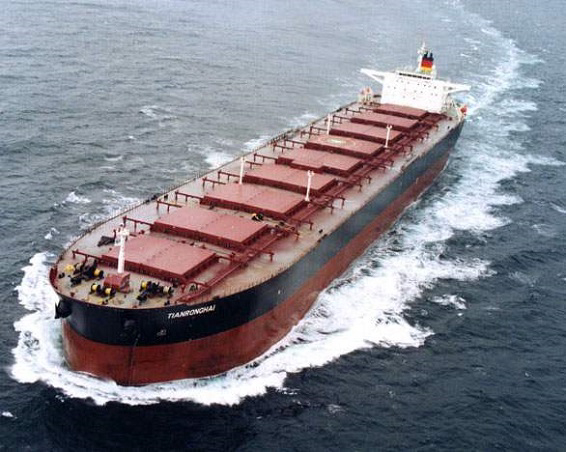
Drewry has revised its charter rates forecast in the short term as the date to implement ballast water management systems (BWMS) has been postponed by two years, bringing down the forecast for demolitions that will eventually support fleet growth. Despite the increased fleet supply, charter rates will strengthen because demand will grow faster. The recovery in rates will become more prominent in 2019 and 2020, when the IMO regulations will be implemented.
Tonne mile demand will grow at a healthy pace of around 3\% annually over the next five years while fleet supply is expected to expand at a rate of just 1\% a year over the same period. The slowdown in fleet growth can be credited to low deliveries because of a thin orderbook and high demolitions resulting from the upcoming environmental regulations.
Demand will improve with the strengthening of iron ore, coal, grain and minor bulk trades. The rise in infrastructure activities in China will support imports of iron ore and other minor bulk commodities.
Among the major events that will decide the future of the dry bulk market, India’s re-emergence as a significant iron ore exporter stands at the forefront. Indian iron ore exports are making a silent comeback from a mere 4 million tonnes in 2015 to more than 20 million tonnes in 2016 and expected to be more than 30 million tonnes this year.
“We believe India’s return to the seaborne iron ore market will have wide implications for the dry bulk trade in the coming quarters. Iron ore exports from India to China that resumed at a fast pace, could reclaim a part of their lost share from Brazil and Australia,” commented Rahul Sharan, Drewry’s lead analyst for dry bulk shipping.
Drewry believes increased iron ore exports from India will provide additional employment opportunities to Supramax and Panamax fleets, and marginally to the Capesize fleet. “Many Indian ports have been dredged further to accommodate Capesizes, but a large part of the ore will still be carried on smaller vessels, providing employment and higher utilisation to smaller segments,” added Sharan.
source:Drewry
Navigation Maritime Bulgare continues investing in a new, energy efficient tonnage
 |
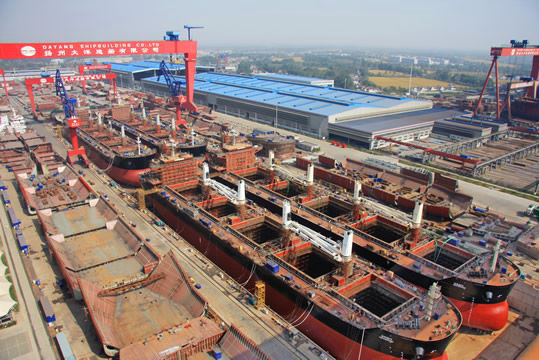
The new investment of the Company will exceed 100 million dollars, but the Management of Navigation Maritime Bulgare considers that it is time for a step-by-step transition to the most modern and efficient ships possible. According to the Management, this is the only way to strengthen and improve the competitiveness of the fleet, and the market positions of the Company, respectively. As a reminder in the past few months, the fleet of Navigation Maritime Bulgare was increased by two brand new vessels from the last generation („Bluetech 42” – „RUEN“ and „RILA“), and the last two ships from the project – „ROZHEN“ and „MUSALA“ will be completed within 2018.
By signing these contracts, Navigation Maritime Bulgare will operate its own tonnage of more than 1.5 million tons, with an average fleet age of less than 7 years, by mid 2020, aiming to become the largest ship owner of the so-called „Handy size” bulk carriers in Europe.
Navigation Maritime Bulgare
LNG Pacific freight rates rise above those in Atlantic, first time in 2 years
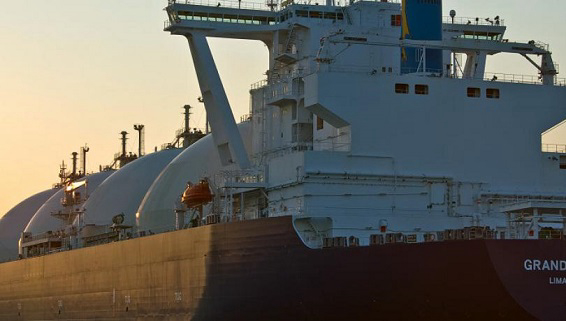
S&P Global Platts assessed Pacific day rates for LNG vessels at $39,000 on Friday, up $2,000 from Thursday. Friday’s level also was up 56\% from $25,000 in late May, a recent low point, according to Platts data.
The increase was largely driven by spot fixtures loading out of Australia and Indonesia, with hire rates that ranged in the low-$40,000s/d on two deals. The Cool Explorer was fixed by BP and the Palu LNG was heard chartered by Shell to load out of Queensland Curtis LNG around mid-August for a delivery into Tokyo Bay.
In the Atlantic, the hire rate was assessed at $37,000/d. Vessel availability for prompt loading was thin, with prospects for higher rates on the horizon pending news on pricing on recent fixtures. One shipping source said that vessels would need to be drawn from the Middle East in order to meet any potential spot shipping requirements.
The premium the Pacific market now commands over the Atlantic was driven by a higher level of chartering activity, according to one shipping source.
In the Pacific, the Grace Dahlia was heard on subjects to load out of Papua New Guinea in early September for ExxonMobil, and Guangdong Dapeng LNG was heard to have a vessel requirement of around 50 days delivering in the first half of September to replace one that will dry dock.
Meanwhile, Shell has been active in the spot market, with four fixtures reported over the last two weeks: the Palu LNG mentioned above; a fixture from the Middle East to Argentina on either the Yenisei River or the Pskov; and two fixtures to load end of July from Bonny on a Golar vessel and the Wilpride. Shipping sources heard two more Atlantic-based fixtures from Shell, but few details were available.
Shipping typically accounts for 5-20\% of the delivered price ex-ship of LNG, meaning big moves in rates can have a significant effect on the final price of gas.
source: www.platts.com
Capital Product Partners Secures USD 460 Mn Loan
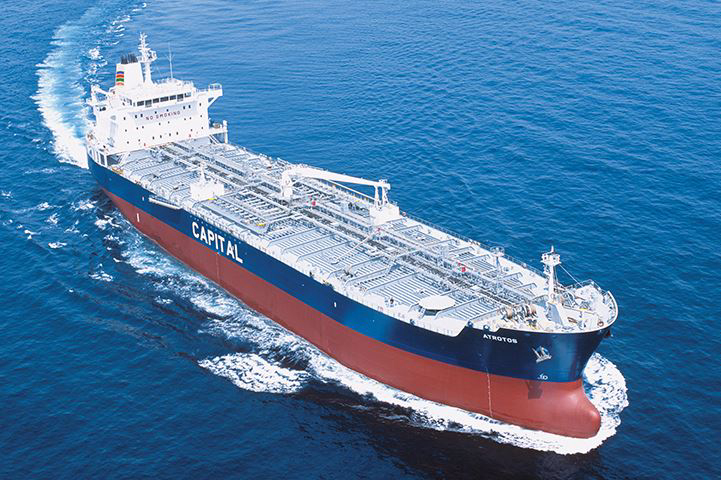
The Partnership’s net income for the quarter ended June 30, 2017 was $9.8 million compared with $14.9 million for the second quarter of 2016 and $12.3 million for the previous quarter ended March 31, 2017. After taking into account the preferred interest in net income attributable to the unit holders of the 12,983,333 Class B Convertible Preferred Units outstanding as of June 30, 2017 (the “Class B Units” and the “Class B Unitholders”), and the interest attributable to the general partner, net income per common unit for the quarter ended June 30, 2017 was $0.06, compared to $0.10 for the second quarter of 2016 and $0.08 for the previous quarter ended March 31, 2017.
Operating surplus prior to the capital reserve and the Class B Units distributions for the quarter ended June 30, 2017 amounted to $30.5 million, a decrease of 16.7\% compared to $36.6 million for the second quarter of 2016 and a decrease of 6.7\% compared to $32.7 million for the previous quarter ended March 31, 2017. We allocated $14.6 million to the capital reserve during the second quarter of 2017, unchanged compared to the previous quarter. Operating surplus after the quarterly allocation to the capital reserve and distributions to the Class B Unitholders was $13.0 million for the second quarter 2017. Operating surplus is a non-GAAP financial measure used by certain investors to measure the financial performance of the Partnership and other master limited partnerships. Please refer to “Appendix A” at the end of the press release for a reconciliation of this non-GAAP measure with net income.
Total revenues for the second quarter of 2017 reached $62.1 million corresponding to an increase of 2.0\% compared to $60.9 million during the second quarter of 2016. The increase in total revenues was primarily a result of the expansion of our fleet, partly offset by the lower charter rates earned by certain of our vessels compared to the second quarter of 2016.
Total expenses for the second quarter of 2017 were $45.7 million compared to $40.3 million in the second quarter of 2016. Total vessel operating expenses during the second quarter of 2017 amounted to $22.0 million, an increase of 17.6\% compared to $18.7 million during the second quarter of 2016. The increase primarily reflects the expansion of our fleet and the increase in the number of vessels in our fleet incurring operating expenses, following the redelivery of M/T ‘Atlantas II’ in September 2016 and M/T ‘Aktoras’ and M/T ‘Aiolos’ in March 2017, which were previously employed on bareboat charters. Total expenses for the second quarter of 2017 include vessel depreciation and amortization of $18.5 million compared to $17.9 million in the second quarter of 2016, corresponding to an increase of 3.4\%, also attributable to the expansion of our fleet. General and administrative expenses for the second quarter of 2017 were $1.5 million, in line with the second quarter of 2016.
Total other expense, net for the second quarter of 2017 was $6.6 million compared to $5.7 million in the second quarter of 2016. Total other expense, net includes interest expense and finance costs of $6.7 million, compared to $6.0 million in the second quarter of 2016. The increase primarily reflects higher interest costs incurred during the second quarter of 2017, mainly as a result of an increase in the LIBOR weighted average interest rate compared to the same period in 2016.
As of June 30, 2017, total partners’ capital amounted to $929.8 million, an increase of $2.0 million compared to $927.8 million as of December 31, 2016. The increase primarily reflects net income for the six months ended June 30, 2017, partly offset by distributions declared and paid during the first half of 2017 in the total amount of $25.6 million.
Total cash as of June 30, 2017, amounted to $156.3 million out of which restricted cash (under our credit facilities) amounted to $18.0 million.
As of June 30, 2017, the Partnership’s total debt decreased by $8.7 million to $596.3 million, compared to $605.0 million as of December 31, 2016 due to scheduled loan principal payments during the first half of 2017.
New $460 million credit facility for the refinancing of substantially all of our existing credit facilities
On May 22, 2017, we entered into a firm offer letter for a senior secured term loan facility (the “New Facility”) of up to $460.0 million with HSH Nordbank AG (“HSH”) and ING Bank N.V. (“ING”) as mandated lead arrangers and bookrunners and BNP Paribas and National Bank of Greece S.A. as arrangers. The lenders also include Alpha Bank S.A., Piraeus Bank S.A. and Skandinaviska Enskilda Banken AB (Publ). The closing of the credit facility is subject to finalization of the long form loan documentation. We intend to use the net proceeds of the loans under the New Facility, together with available cash of approximately $120.6 million, to refinance, four out of five of our existing credit facilities amounting to $580.6 million in total: (i) our 2007 revolving credit facility of up to $370.0 million led by HSH, (ii) our 2008 non-amortizing credit facility of up to $350.0 million led by HSH, (iii) our 2011 credit facility of up to $25.0 million with Credit Agricole Bank, and (iv) our 2013 senior secured credit facility of up to $225.0 million led by ING. Following our planned refinancing, our debt will consist only of the loans outstanding under the New Facility and our 2015 credit facility with ING, and will total approximately $475.8 million. The New Facility has a six year maturity from drawdown, but it will be repayable in any event no later than November 2023. The New Facility is comprised of two tranches. Tranche A amounts to the lower of (i) $259.0 million and (ii) 57.5\% of the value of 11 of our vessels with an average age of 3.0 years, and shall be repaid in 24 equal quarterly instalments of up to $4.8 million in addition to a balloon instalment of $143.0 million (payable together with the final quarterly instalment). Tranche B amounts to the lower of (i) $201.0 million and (ii) 57.5\% of the value of 24 of our vessels with an average age of 10.3 years, and shall be repaid fully in 24 equal quarterly instalments of up to $8.4 million. The loans drawn under the New Facility will bear interest at LIBOR plus a margin of 3.25\%. Our covenants under the New Facility are substantially similar to covenants made under our existing credit facilities and do not contain any restrictions on distributions to our unit holders in the absence of an event of default.
Fleet Employment Update
The M/T ‘Aktoras’ (36,759 IMO II/III Chemical Product Tanker built 2006 Hyundai Mipo Dockyard, South Korea) and M/T ‘Aiolos’ (36,725 IMO II/III Chemical Product Tanker built 2007 Hyundai Mipo Dockyard, South Korea) were redelivered to us on 11 and 25 March 2017 respectively from their previous ten year bareboat employment with BP Shipping Ltd (“BP”), which was at above market rates compared to period rates prevailing currently in the market. Both vessels were trading ‘dirty’ petroleum products during their employment with BP and as a result had to incur off hire days, in order to be prepared for clean product trading. In addition, in order to transition the vessels to clean petroleum product trading and reposition them for longer term employment, they have been trading on voyage or short time charters during the second quarter of 2017.
The M/T ‘Alkiviadis’ (36,721 dwt, Ice Class 1A IMO II/III Chemical/ Product, built 2006 Hyundai Mipo Dockyard Company Ltd., South Korea) has extended its employment with CSSA S.A. (the shipping affiliate of Total S.A.) for an additional 12 months (+/- 30 days) at a gross daily rate of $12,750 per day. The charter extension will commence in early August with the earliest charter expiration in July 2018. The vessel is currently earning a gross daily rate of $13,300 per day.
As a result of the new charter, our charter coverage for 2017 and 2018 now stands at 83\% and 52\%, respectively.
Quarterly Common and Class B Unit Cash Distribution
On July 20, 2017, the Board of Directors of the Partnership declared a cash distribution of $0.08 per common unit for the second quarter of 2017 payable on August 11, 2017 to common unit holders of record on August 3, 2017.
In addition, on July 20, 2017, the Board of Directors of the Partnership declared a cash distribution of $0.21375 per Class B Unit for the second quarter of 2017, in line with the requirements of the Partnership’s Second Amended and Restated Partnership Agreement, as amended. The second quarter of 2017 Class B Unit cash distribution will be paid on August 10, 2017 to Class B Unitholders of record on August 2, 2017.
Market Commentary
Neo-Panamax Container Market
The neo-panamax charter market continued to see improving charter rates for most of the second quarter of 2017, as increased employment opportunities absorbed idle tonnage. However, the charter market remains volatile, as rates seemed to cool off in most container segments towards the end of the quarter.
Increased vessel demand led to a further decrease of the idle container fleet from 4.5\% at the end of the first quarter of 2017 to approximately 2.7\%.
In addition, analysts have revised their demand growth projections for containerized cargo for full year 2017 to 4.8\% from 4.3\% in the previous quarter.
At the same time, the expected net fleet growth for 2017 has increased from 1.7\% at the end of previous quarter to 2.7\%, due to a slowdown in container vessel demolition, as well as reduced slippage for newbuilding deliveries in the second quarter of 2017. Analysts estimate that approximately 278,641 TEU’s have been scrapped in the first half of 2017 compared to 268,250 in the same period last year. At the end of the second quarter of 2017, the container orderbook stood at 13.7\% of the current fleet, down from 15.1\% in the previous quarter, which is at the lowest level on record.
Management Commentary
Mr. Jerry Kalogiratos, Chief Executive and Chief Financial Officer of the Partnership’s General Partner, commented:
“We are pleased to have completed a major milestone for the Partnership with the arrangement of our new $460.0 million credit facility to refinance, together with available cash, substantially all of our existing credit facilities. There are many benefits to the forthcoming refinancing. First, we expect that the contemplated refinancing will give our unitholders enhanced visibility on our financial position, as this will refinance the vast majority of our debt obligations well into 2023. Second, the envisaged prepayment associated with the refinancing will significantly reduce our indebtedness with our pro forma debt to capitalization ratio amounting to 33.8\% as of June 30, 2017 (after giving effect to the refinancing) compared to 39.1\% as of June 30, 2017. Additionally, we believe that the dual tranche structure of our new facility greatly mitigates the refinancing risk for the Partnership in the future, as the tranche collateralized by close to two thirds of our vessels will be fully amortizing without a balloon payment at maturity of the loan. The only bullet payment upon maturity of our new facility is therefore expected to amount to $143.0 million, compared to assumed net book value of the collateral fleet of $846.1 million, assuming solely, for this purpose, depreciation and amortization in line with our accounting policies and no write offs through 2023. Finally, annual amortization under our new credit facility is expected to be lower than the amount we currently allocate to our capital reserve, in addition to any interest cost savings from our reduced indebtedness.
“We strongly believe that this transaction will further strengthen our balance sheet and will be an important cornerstone, as we turn our attention to growth. We aim, subject to market conditions and the availability of financing, to further increase the long-term distributable cash flow of the Partnership by pursuing additional accretive transactions including a number of acquisition opportunities from Capital Maritime & Trading Corp. (“Capital Maritime”), our sponsor.”
DryShips inc. announces appointment of two new directors
Mr. Anthony Kandylidis has served as the Company’s President and Chief Financial Officer since December 2016 and was previously the Company’s Executive Vice President since January 2015. In September 2006, Mr. Kandylidis founded OceanFreight Inc. and took it public in April 2007. In 2011, OceanFreight Inc. was absorbed by DryShips through a merger. Mr. Kandylidis also serves as President and Chief Financial Officer of OceanRig UDW Inc. (NASDAQ: ORIG), an international drilling contractor and is a director of the International Association of Drilling Contractors (IADC). Mr. Kandylidis graduated magna cum laude from Brown University and continued his studies at the Massachusetts Institute of Technology where he graduated with a Master’s degree of Science in Ocean Systems Management. Mr. Kandylidis is the nephew of Mr. George Economou, the Company’s Founder, Chairman and Chief Executive Officer.
Mr. Andreas Argyropoulos worked for Ocean Rig UDW Inc. for five years in a variety of positions, including the Marketing department and then serving as Communications Manager. Before joining Ocean Rig UDW Inc. in 2012, he worked as Marketing Manager for Nike Greece from 2006-2009. He also has extensive experience in international event management. Mr. Argyropoulos received a Bachelor’s of Science degree from Boston University and a Master’s degree from the CIES/FIFA Master in Neuchatel, Switzerland. He speaks five languages fluently.
The Company’s board of directors has determined that Mr. Argyropoulos is considered to be an independent director under the SEC rules. Mr. Argyropoulos has been appointed as the third member of the Company’s Nominating, Compensation and Audit Committees.
Following the appointments of Mr. Kandylidis and Mr. Argyropoulos, the Company’s Board of Directors is now comprised of five directors, three of whom are considered independent under the SEC rules.
About DryShips Inc.
The Company is a diversified owner of ocean going cargo vessels that operate worldwide. The Company owns a fleet of (i) 13 Panamax drybulk vessels; (ii) 4 Newcastlemax drybulk vessels; (iii) 5 Kamsarmax drybulk vessels; (iv) 1 Very Large Crude Carrier; (v) 2 Aframax tankers; (vi) 1 Suezmax tanker; (vii) 4 Very Large Gas Carriers, 3 of which are expected to be delivered in September, October and December of 2017; and (viii) 6 offshore support vessels, comprising 2 platform supply and 4 oil spill recovery vessels.
DryShips’ common stock is listed on the NASDAQ Capital Market where it trades under the symbol “DRYS.”
www.dryships.com.
Through The Looking Glass: Exploring The Orderbook
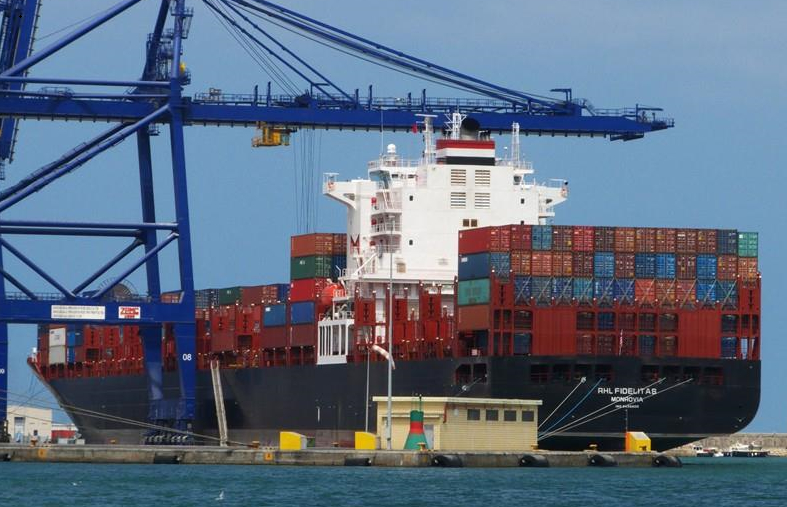
Ordering during this period has remained very limited, with capacity contracted in 2016 at 0.29m TEU, representing the lowest level since 2009, and contracting in the first half of 2017 totalling less than 40,000 TEU. Despite this, however, there are several important aspects of the containership orderbook to consider.
 |
Checking The Schedule
The second interesting aspect is the shape of the orderbook schedule, which is a result of the pattern of ordering, as well as delays to deliveries to owners throughout challenging market conditions. With the vast majority of boxship capacity currently on order scheduled for delivery either in the remainder of this year or next year, the containership orderbook looks very thin after 2018 (see inset graph). Basis start July, just 22 boxships of over 12,000 TEU (including ‘mega boxships’) are scheduled for delivery from 2019 onwards (out of a total 108 vessels in this size range currently on order). In reality, some vessels currently expected to be delivered in 2017-18 may slip into 2019-20. Moreover, new orders for containerships of very large capacity could yet still emerge for delivery in that period, although appetite for boxship ordering in general currently remains very subdued.
Different Sizes
Thirdly, the orderbook tells a very different story across the boxship sectors, remaining heavily weighted towards the larger sizes (see graph). Ships of 15,000+ TEU account for c.40\% of capacity on order, and represent the equivalent of 73\% of 15,000+ TEU fleet capacity. Meanwhile, sub-3,000 TEU there are currently 213 ships of 0.39m TEU on order, equivalent to 10\% of fleet capacity in this size range, and expectations of limited deliveries mean that the sub-3,000 TEU fleet is expected to shrink in the short-term. Moreover, the orderbook in the 3-7,999 TEU size range is extremely limited, just 2\% of fleet capacity.
Shrinking Further?
So, the boxship orderbook has dwindled significantly, and against the current backdrop of a diminished appetite for contracting, it looks likely that it will continue to shrink. The shape and size of the orderbook does vary significantly across different vessel sizes but overall the schedule looks pretty thin after 2018. Peering through the orderbook ‘looking glass’, clearly there’s still a lot to see.
Source: Clarksons
European Maritime Social Partners welcome the Directive ensuring the welfare of seafarers
The ILO MLC amendments entered into force on 18 January 2017 and require shipowners to provide financial security to ensure the repatriation of seafarers and the payment of contractual claims from seafarers or their dependants in respect of death in service or long-term disability.
The MLC 2006 sets minimum requirements to improve seafarers’ working and living conditions including recruitment and placement practices, conditions of employment, hours of work and rest, repatriation, annual leave, payment of wages, accommodation, recreational facilities, food and catering, health protection, occupational safety and health, medical care, onshore welfare services and social protection.
ETF spokesperson Mark Dickinson, said, “It is important that ECSA and ETF are able to keep their European agreement on the MLC up to date as we must not forget this Convention is a living instrument for the continued improvement of seafarers’ living and working conditions. We are therefore very pleased that the Commission has supported us in our aims by adopting our proposals for amending the Agreement on the MLC to incorporate the amendments made by the ILO in 2014. We hope that they will be similarly adopted by the Council with the minimum delay.”
This is the third occasion on which the maritime Social Partners have agreed to make legally-binding European agreements. The first was the Agreement on Working Time for Seafarers and the second the agreement on the MLC. “We are proud of what we have achieved through the maritime social dialogue. Our constructive relations and co-operation have resulted in numerous joint projects and campaigns to assist shipowners and seafarers in Europe. We have also agreed an ambitious work programme for the next biennium” ECSA’s spokesperson, Tim Springett said.
ecsa.eu
Number of Newbuilding orders drop during H1 2017
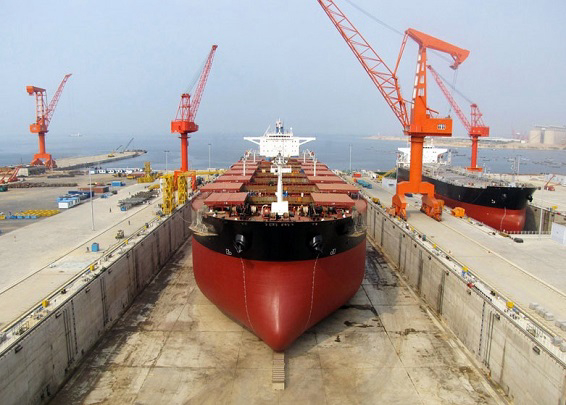
This is especially obvious when comparing the 50 offshore vessels ordered in H1 2015 vs the absence of any offshore orders plcaed during H1 2017
 |

Powered by  © Μaritimes 2019