


DRYSHIPS INC. ANNOUNCES REVERSE STOCK SPLIT

that its Board of Directors (the “Board”) has determined to effect a 1-for-8 reverse stock split of the Company’s common shares. At the Company’s annual general meeting of shareholders on October 26, 2016, the Company’s shareholders approved the reverse stock split and granted the Board, or a duly constituted committee thereof, the authority to determine the exact split ratio and proceed
with the reverse stock split.
The reverse stock split will take effect, and the Company’s common stock will begin trading on a splitadjusted basis on the Nasdaq Capital Market, as of the opening of trading on January 23, 2017 under the existing trading symbol “DRYS”. The new CUSIP number for the common stock following the reverse stock split is Y2109Q408.
When the reverse stock split becomes effective, every 8 shares of the Company’s issued common stock will be automatically combined into one issued share of common stock. As of the date of this press release, the Company had 69,357,841 common shares issued. Effecting the reverse stock split will reduce the number of issued common shares from 69,357,841 shares to approximately 8.7 million shares.
No fractional shares will be issued in connection with the reverse split of the issued common stock.
Shareholders who would otherwise hold a fractional share of the Company’s common stock will receive a cash payment in lieu thereof at a price equal to that fraction to which the shareholder would otherwise be entitled multiplied by the closing price of the Company’s common stock on the Nasdaq Capital Market on January 20, 2017.
Shareholders with shares held in book-entry form or through a bank, broker, or other nominee are not required to take any action and will see the impact of the reverse stock split reflected in their accounts on or after January 23, 2017. Such beneficial holders may contact their bank, broker, or nominee for more information.
Shareholders with shares held in certificate form will receive instructions from the Company’s exchange agent, American Stock Transfer & Trust Company, LLC, for exchanging their stock certificates for a new certificate representing the shares of common stock resulting from the reverse split.
Additional information about the reverse stock split can be found in the Company’s proxy statement furnished to the Securities and Exchange Commission on September 23, 2016, a copy of which is available on the Commission’s website at www.sec.gov.
About DryShips
DryShips Inc. is an owner of drybulk carriers and offshore support vessels that operate worldwide. DryShips owns a fleet of 13 Panamax drybulk carriers with a combined deadweight tonnage of approximately 1.0 million tons, and 6 offshore supply vessels, comprised of 2 platform supply and 4 oil spill recovery vessels.
DryShips’ common stock is listed on the NASDAQ Capital Market where it trades under the symbol “DRYS.”
www.dryships.com.
Container Shipping Outlook 2017 – “Return to profitability”: Winners and losers to emerge as sector returns to profitability
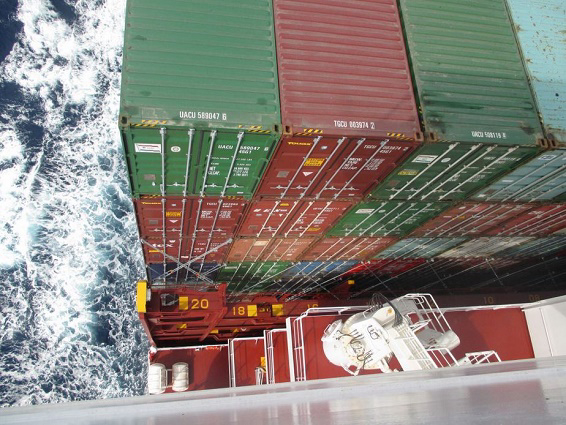
We expect the rejuvenation of the business cycle to drive further gains by year-end, though the ride could be bumpy. One of the key metrics to measure the health of the industry are the head-haul East-West load factors. Average industry utilisations of 87\% and 93\% in the second and third quarters denote a decent state of affairs. Although this is not enough to cure the industry’s ills overnight, it is an important first step towards restoring some degree of commercial common sense and financial propriety to the business, we believe.
While our medium-term view remains bullish on the sector, we continue to look out for negative surprises – the challenge is continued anti-trade sentiment and rhetoric stemming out from the US, and a resultant escalation into a full blown trade war. A trade war would be disastrous for the nascent recovery and force us to reverse our long-term recommendations and positive sector outlook.
We at DMFR have been highlighting the industry’s perilous financial health and rising debt for the last few years. Barring a few companies, most will continue to struggle on elevated debt levels, and low cash and liquidity positions.
Hanjin’s bankruptcy has now embedded “Fear” among industry participants, and with a caveat, it might lead the way for setting the commercial pricing in the industry. Hopefully, the “freight for free” tactics will be less heard of in the coming quarters.
One of the best ways to benefit from the sector’s return to profitability in 2017 is being long on the sector leader A.P. Moller Maersk A/S (MAERSKB DC) and event-driven Orient Overseas International Ltd (316 HK).
We are Sellers of Yang Ming Marine Transport Corp ( 2609 TT) and Hyundai Merchant Marine (011200 KS).
We are Neutral on Hapag-Lloyd AG ( HLAG GY), Evergreen Marine Corp Ltd ( 2603 TT) and Wan Hai Lines Ltd ( 2615 TT).

Sectoral calls for 2017
A.P. Moller Maersk A/S (MAERSKB DC, Attractive, DKK 14,000 ) – Positive outlook on contract rates is a key tailwind for share prices, in our view. The continued recovery in Asia to Europe spot rates has improved carriers’ chances of securing higher 2017 contract rates and is a good sign for Maersk Line heading into the contract season. We believe Maersk Line will be a key beneficiary from the positive turnaround in freight rates, and recommend APMM shares on the back of continued positive industry developments in coming quarters.
Orient Overseas International Ltd (316 HK, Attractive, HKD 50) – We believe higher and sustainable freight rates are the likely outcomes in 2017. As OOIL normally undertakes 60-70\% and 35-50\% of Transpacific and Asia-Europe trade volumes respectively on contract, higher and sustainable freight rates could be positive developments for the company. Recovery in OOIL’s biggest market (intra-Asia) will also support profitability. OOIL’s financial soundness also negates any balance sheet concerns and liquidity risks in what has been a stressful and volatile period for sector profitability. The added speculations around M&A activity will also support the stock price; in case of an M&A activity, we estimate a fair value of about HKD 50 per share.
Yang Ming Marine Transport Corp (2609 TT, Unattractive, NTD 3.5 ) – YMM now takes the slot left vacant by Hanjin Shipping, as it has the most leveraged balance sheet in the industry. YMM’s net gearing stood at 437\% at the end of 3Q16, well above the industry average of 124\% and nearly five times its closest regional peer, Evergreen Marine, and 12 times that of Wan Hai. YMM’s high debt is a great cause for concern for us given the heightened financial risks. Even with recovery in the underlying freight market, the debt burden without a restructuring is a red flag and a clear sell signal for us. We see YMM as an apt candidate for a government-backed shareholder bailout.
Hyundai Merchant Marine (011200 KS, Unattractive, KRW 6,000 ) – Financial woes are likely to persist for Korea’s new flagship container shipping company. HMM’s balance sheet is in a much better shape after the restructuring, but the company needs years of sustained profitability to recover completely. HMM’s net gearing dropped from 823\% in 3Q15 to 130\% in 3Q16 while total debt reduced to more than half from KRW 5tr last year to KRW 2.2tr, largely on government-aided restructuring. However, we believe the liquidity and profitability profiles will remain challenging in the medium term despite the restructuring exercise.
We recommend investors to accumulate our top picks – APMM and OOIL on the basis of their long-term potential and sector consolidation. As contract rates recover on long-haul trade routes, core profitability is likely to bounce back.

Source: Drewry Maritime Financial Research
Making Sense of the Regulations
 |
“Empowering ship operators with consistent regulations, balancing the role of the regulator with that of the commercial environment, and explaining how the rules should be interpreted, are what I see as the main roles of the modern flag State,” says Rob Lomas.
With over 25 years of maritime regulatory experience working for shipowner representative bodies, including the UK Chamber of Shipping and Intercargo, Rob Lomas has helped shape the debate and interpreted the International Maritime Organization’s (IMO’s) conventions and codes for ship operators around the world.
He started his career in the mid-1980s with the Japanese container line NYK where he specialized in the management of dangerous goods.
“I made it my business to study the regulations, write them out, and then put them into real world situations,” he says.
This was an important grounding for a career that was to see him provide regulatory advice for the North Sea offshore vessel sector, European shortsea trades, and the dry bulk sector. He says that being involved in the drive to improve the dry bulk carrier fleet’s safety record is one of his proudest achievements.
“When I joined the dry bulk owner representative organization Intercargo, dry bulk carriers were in the news for all the wrong reasons. But the industry rose to the challenge, professionalized, and dramatically improved its safety record.”
Expert advice on tap
Today, much of his focus is on meeting the needs of ship operators who require practical and consistent legislation to run their businesses successfully.
In his two years with IRI, Rob Lomas says that he has been overwhelmed by the high levels of expertise that IRI can call upon from within its 400 strong workforce. He says that the quality of advice that is available to him from across IRI’s network of offices is second to none, thanks to the ready availability of experts with decades of experience to provide guidance on every aspect of ship operations.
The RMI is a committed participant at the IMO with a permanent representative and large, active delegation at the major committee and subcommittee meetings.
“The proof is in the pudding,” he says. “The world has a much safer shipping industry than ever before and regulation plays an important role in this. Yes, sometimes it can take longer than anticipated to reach consensus and yes, it can take a wrong turn from time to time, but the IMO has successfully pushed the industry forward and it is there for the common good.”
An important part of the Administrator’s work is not just providing guidance and implementing the latest legislation, but anticipating and shaping future requirements. Developing standards for electronic recordkeeping on board ships is the next big challenge at the IMO. The IMO’s Sub-Committee on Pollution Prevention and Response will be meeting in January 2017 to focus on developing a watertight standard that could allow for the future admissibility of electronic logs. Currently, decades old regulations are underpinned by a mandatory requirement for paper records.
“Regulation should not hold back modern technology,” says Rob Lomas. “The RMI is very keen that the shipping industry should be a 21st century force that allows its employees to operate efficiently. Introducing electronic records that can’t be tampered with should be an easy win for the industry.”
Beyond IMO
It is not just the IMO that is critical to the RMI’s work. The output of the Geneva based International Labour Organization (ILO) is the focus for a good deal of the Administrator’s attention, particularly amendments to the Maritime Labour Convention, 2006. Also important are the relationships that the RMI enjoys with the International Association of Classification Societies (IACS) and the International Group of P&I Clubs, as well as the various owner representative bodies such as Intertanko, Intercargo, BIMCO, and the International Chamber of Shipping (ICS). Rob Lomas also commented that the RMI works closely with other flag States and will often co-sponsor or support proposals at the IMO.
Committee meetings, plenary sessions, and hearings can seem a world away from the realities of a tough life at sea, but thanks to a commitment to progressive, meaningful safety and environmental legislation seafarers are able to do a good job and run the world’s ships safely and efficiently.
Source: International Registries Inc.
COSCO ‘bidding’ for Orient Overseas
 |
Orient Overseas stock jumped as much as 12 percent, the biggest intraday gain since March 2011.
The company has a market value of about HK$26.8 billion ($3.5 billion).
A representative at COSCO Shipping’s media relations department said the company wasn’t aware of the bidding.
Evergreen Marine’s president and spokesman Lee Mong-jye couldn’t immediately be reached at his office for a comment.
Representatives for Orient Overseas and CMA CGM didn’t immediately respond to emails seeking comment.
Asian container lines, faced with a prolonged trade slowdown and depressed freight rates, are set for further consolidation in 2017 as firms continue joining forces, the head of Danish industry behemoth AP Moller-Maersk A/S and the chief of Hyundai Merchant Marine Co have said.
“The industry has seen a lot of consolidation and OOCL is among the last few that has a certain scale,” said Rahul Kapoor, a director at Drewry Financial Research Services Ltd in Singapore.
Last year saw the collapse of South Korea’s Hanjin Shipping Co, a mega merger among Japanese rivals and the sale of Singapore’s shipping flagship, Neptune Orient Lines Ltd to CMA CGM.
An overly optimistic expectation of a trade recovery following the 2008-09 global financial crisis, prompted shipping companies to order ever-larger vessels, with some stretching longer than the Eiffel Tower.
As capacity piled up, the companies tried to under-bid each other on freight rates to lure clients, causing shipping rates to
Source: China Daily
Prisma Electronics will participate in the 3rd Naftemporiki Shipping Conference
 |
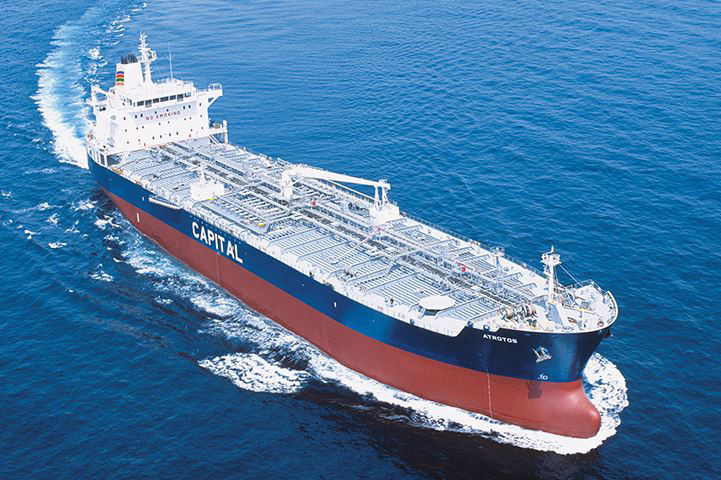
Capital Ship Management Corp. takes delivery of M/T ‘Amfitrion’
 |
About Capital Ship Management Corp.
Capital Ship Management Corp. is a distinguished oceangoing vessel operator, offering comprehensive services in every aspect of ship management, currently operating a fleet of 55 vessels with a total dwt of 5.70 million tons approx. The fleet under management includes the vessels of Nasdaq-listed Capital Product Partners L.P.
Celestyal Cruises welcomes Samos to its 2017 Iconic Aegean Itineraries
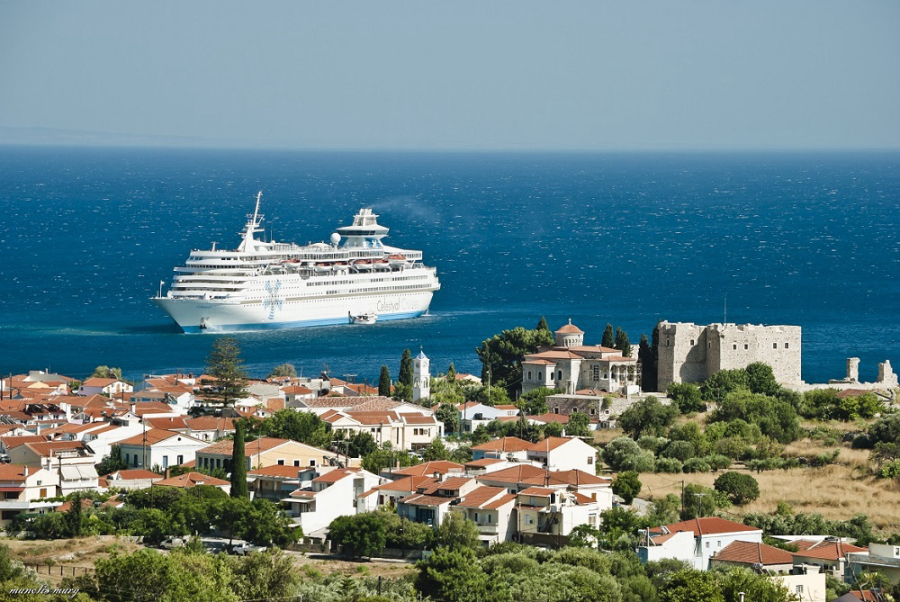
After evaluating more than 85,000 valid questionnaires, Celestyal Cruises found its passengers considered Samos, a lush beauty in the northeastern Aegean, as one of the top destinations on the company’s itineraries. Starting from March 2017, Celestyal Cruises has decided to add Samos so passengers can now choose to visit either Samos or Kusadasi, whilst being on the same cruise. The 3 and 4 day Iconic Aegean itineraries include also destinations as Piraeus, Mykonos, Patmos, Rhodes, Heraklion and Santorini.
Samos offers many delights, including a stroll through the lovely main square of Vathi. The island is also home to a wonderful wine museum where visitors are introduced to artistry and tradition of local wine production. Celestyal Cruises will also offer passengers the chance to tour the picturesque seaside village of Kokkari, a small, homey port and home to some of the Aegean’s most envied beaches.
“We continue to bring unique products to the cruise industry,” said Celestyal Cruises CEO Kyriakos Anastassiadis. “The addition of Samos to our Iconic Aegean itineraries is part of the new Celestyal Cruises vision, which is to expand to new horizons and to provide our cruisers with authentic, ‘lifetime’ experiences.
In 2017 Celestyal Cruises will be thrilled to bring its passengers to the birthplace of Pythagoras. The Pythagorean Theorem applies to right triangles, but our 2017 Iconic Aegean itineraries won’t require any math or measurement, just the willingness to step ashore on one of the most breathtaking islands in the Aegean!
About Celestyal Cruises
Celestyal Cruises is the only home-porting cruise operator in Greece and the preeminent cruise line serving Greek destinations and the island of Cuba. The company operates five mid-sized ships, each one cosy enough to provide a highly personal service. Every cruise focuses on true cultural immersion, offering an authentic experience of the regions in which the vessels sail.
Sustainability
Celestyal Cruises is deeply committed to sustainability and ethical business practice. The company supports the local communities in the destinations it visits, particularly in the field of education. Since 2015, more than 1,000 students on the islands of Milos, Patmos and Ios have enjoyed a ‘journey to knowledge’ by attending the Museums Program, an initiative by Celestyal Cruises to bring interactive exhibits from the highly respected Herakleidon Museum to remote areas so that students can learn first-hand about the connection between science, art and mathematics. In addition to the above program, Celestyal Cruises supports cultural NGOs as well as promoting entrepreneurship, marine student development and child welfare.
ISO Certification
Following the successful ISO 9001/14001 auditing of three of the company’s ships and the company’s office, Celestyal Cruises’ operations are now certified in accordance with ISO 9001/14001 standards. This relates to the entire spectrum of cruise ship management including technical, hotel and crew management; the certifying authority is DNV-GL, which is by far the biggest and most respected classification society in the marine industry.
Awards
In 2016, the company won the prestigious Editor’s Pick award from Cruise Critic UK, the world’s largest online cruise community, in the ‘Best Value for Money (Ocean)’ category. Celestyal Cruises has enjoyed recognition in such prestigious awards as the Greek Tourism Awards (winning gold and silver in four categories in 2016); the Efkranti Awards; the HR Community Conference & Awards; and was finalist in the UK’s WAVE Awards.
For more information, please visit www.celestyalcruises.com
Facebook: (full URL) https://www.facebook.com/CelestyalCruises
YouTube: (full URL) http://www.youtube.com/user/CelestyalCruises
Google+: http://plus.google.com/u/1/+celestyalcruises
Twitter: @celestyalcruises ● Pinterest: http://pinterest.com/celestyalcruises
Instagram: celestyalcruises ● Foursquare: https://foursquare.com/v/celstyal-cruises
Twitter: twitter.com/celestyalcruise
LinkedIn: www.linkedin.com/company/celestyal-cruises


Supersizing car carriers New Horizon Class
 |
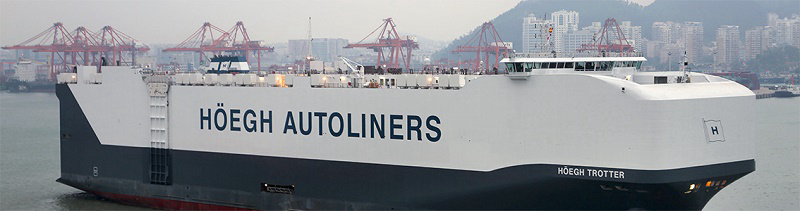
The final two vessels in a series of six New Horizon Class pure car and truck carriers (PCTC) were delivered on schedule at the Xiamen Shipbuilding Industry yard in September and December 2016, respectively. Ordered by Norwegian shipping company Höegh Autoliners, the New Horizon Class vessels have a carrying capacity of 8,500 units, and are able to accommodate nearly 15 per cent more cars than ships of same size and type. The 200 m long and 36.5 m wide vessels have a deck area of 71,400 m2, divided over 14 decks. This makes them some of the world’s largest PCTCs by capacity.
“We worked very closely with Deltamarin OY, the Finnish designer, Xiamen Shipbuilding Industry, as well as DNV GL concerning class approval,” says Jan Rune Mørken, Head of Newbuilding – Höegh Autoliners. “There are several reasons why we wanted to give these vessels a wider beam rather than increasing the length. For example, the expansion of the Panama Canal gave us more freedom to increase capacity. In addition, we aim to reduce the carbon footprint of each vehicle we transport. Creating a new vessel standard with a capacity for 8,500 vehicles makes a big difference,” he explains. Making the vessels longer was not an option. “A maximum length of 200 metres is common for many PCTC berths,” says Mørken.
Small carbon footprint
The final design was fully optimized to make these vessels as green as possible, with a new hull shape and a very efficient propeller. “These PCTCs only emit half the amount of CO2 per car transported compared to standard car carriers, and they consume a lot less fuel oil per day. Certification to the DNV GL CLEAN and BWM-T (Ballast Water Management) notations demonstrates the sustainability of the design and its preparedness for future requirements,” says Li Zhenjun, Chairman of Xiamen Shipbuilding Industry (XSI). “We are proud to have worked on this vessel series. We are committed to developing our expertise in the car carrier segment; through these projects and our cooperation with shipowners and DNV GL, we have grown to be a leading yard in this field.”
A milestone for Höegh
Increasing the beam presented significant design challenges. Höegh and DNV GL carried out extensive studies looking at the impact of the wider beam on stability. “Our fleet uses the ‘two pillar support principle’. This means the deck is like a football pitch and we can utilize the entire deck from port to starboard. DNV GL was the first classification society to approve such a flexible design with an open deck, so we knew it had a good track record and competence with this type of design,” Mørken explains. “Installing the complex ro-ro system including the doors, hoistable decks, stern ramp and side ramps was also a challenge we had to overcome,” says Li.
The new vessels have 14 cargo decks and five liftable car decks, and a higher door opening than Höegh Autoliners’ current vessels, enabling cargo up to 6.5 metres high and twelve metres wide to be loaded. Extra ramp strength allows for cargo weighing up to 375 tonnes to be loaded over the stern ramp and 22 tonnes over the side ramp.
“It is fascinating for us to be involved in such an ambitious project,” says Chi Shaoguang, DNV GL Newbuilding Manager for Area South China. “The cooperation between all the partners has been excellent and the progress on the construction site is a testament to the high level of expertise XSI holds in building these complex vessels.”
“Indeed this is a milestone for our company,” says Mørken. “It is a very proud moment and it is great to see that we have had very positive feedback from those who work on and operate these vessels.”
DNV-GL
Initial EU ship recycling list shows clear need for global mind-set
The first edition of the European list of ship recycling facilities includes 18 European recyling yards that are deemed safe for workers and environmentally sound, in accordance with the relevant requirements of the 2013 EU Ship Recycling Regulation. The Commission received applications from yards in third countries as well but these applications are still being reviewed. Site inspections will be conducted to check their credentials followed by a decision in 2017 on their inclusion in the list.
“Whilst the EU list can serve to raise ship recycling standards worldwide and respond to recycling demand, the current list clearly shows the need to include third country yards and especially those that already meet the international standards laid down in the Hong Kong Convention for safe and environmentally sound ship recycling”, said Patrick Verhoeven, ECSA Secretary General.
The IMO Hong Kong Convention has already a profound impact on the ground as recycling yards have taken action to comply with its measures, even when the Convention itself is not yet in force. This is notably the case for a number of yards in Alang, India. Giving these yards EU recognition will encourage others to raise their standards and apply for inclusion as well. It will furthermore ensure sufficient and adequate capacity on the EU list, not just in terms of volume, but also in terms of the size of ships that can be dismantled. In turn, this will facilitate a swift entry into force of the Hong Kong Convention, creating a flag neutral level playing field in the global ship recycling market.
“Approximately 150 container vessels were sent for recycling in 2016, the current EU list would cater for only 16 smaller container vessels, taking into consideration limitation of EU yards in terms of lenght and vessel draft. And that is just for one type of vessels. We thus strongly encourage the Commission to enlarge the list to non-EU facilities as soon as possible”, Patrick Verhoeven concluded.
All vessels sailing under an EU flag will eventually be required to use an approved ship recycling facility, once the EU Ship Recycling Regulation effectively applies. This will either be six months after the date that the combined maximum annual ship recycling output of the ship recycling facilities included in the European list constitutes not less than 2.5 million light displacement tonnes (LDT), or on 31 December 2018, whichever date occurs first.
ECSA
SM Line Corporation targets over USD830 million in revenue by 2018
The company, which is taking over Hanjin Shipping's Asia-US and intra-Asia networks, is aiming for revenue of KRW1 trillion (USD835 million) by the end of 2018.
Within the next five years, SM Line Corporation wants to raise the revenue to KRW3 trillion, its CEO Kim Chil-bong said at a press conference on Tuesday.
"By 2018, we will be operating 21 ships on 12 routes. In the next five years, we will have 41 ships on 25 routes," said Kim.
SM Line Corporation recently acquired a 4,300 teu ship and another of 1,000 teu. In the first half of 2017, the company expects to have 12 vessels, including some of 6,500 teu. It is reportedly in talks to buy Stadt Coburg.
"We should ensure the survival of the business to contribute to economic development by providing optimal container shipping services as the foundations of free and dynamic international trade,” Kim added.
"If we are to survive the unstable operating environment, both internally and externally, we'll shed the clothes of the all-too-familiar large corporations and do business according to our conscience. We have to look at what is ahead and work our way through."
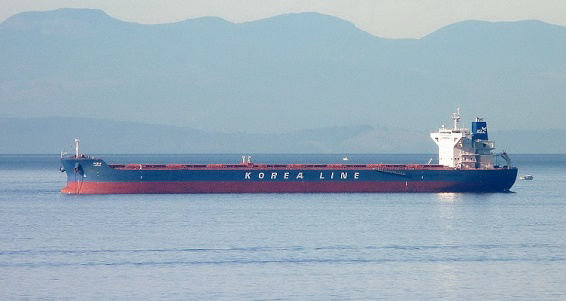
Samra Midas (SM) Group, the parent of Korea Line Corporation (KLC), won an open tender to buy the Asia-US and intra-Asia networks of Hanjin Shipping, which went into receivership on 1 September 2016 after accumulating more than USD5 billion in debt and losing its banks' support.
Primarily a construction business, SM Group ventured into shipping in late 2013 through acquiring KLC, South Korea's second-largest dry bulk carrier operator, which it took out of receivership. Kim is also the CEO of KLC.
The group's board voted overwhelmingly against the acquisition of Hanjin Shipping's Asia-US and intra-Asia networks at an extraordinary general meeting on 3 January. Directors feared KLC's lack of expertise in container shipping could affect the overall bottom line.
SM Line Corporation will therefore commence operations as an entity constituted separately from SM Group. The company is now occupying Hanjin Shipping's office in the financial district of Yeouido in Seoul.
http://fairplay.ihs.com/

Powered by  © Μaritimes 2019