


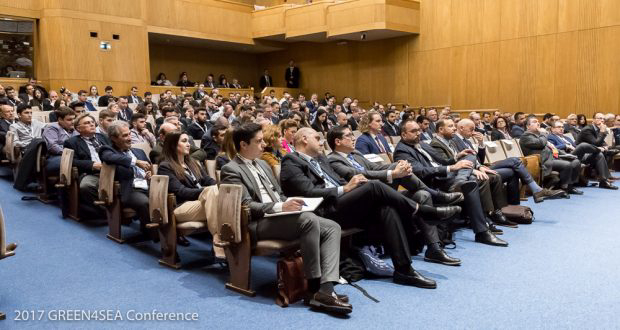
GREEN4SEA Conference addressed challenges and opportunities for sustainable shipping
 |
The event took place at the Eugenides Foundation, in Athens, attracting 800 delegates from 18 countries representing a total of 370 organizations.
The event organized by GREEN4SEA and sponsored by DuPont, ERMA FIRST ESK Engineering, Wärtsilä as the lead sponsors and SKAI in the media for the event coverage. Other sponsors included: ABB, ABS, Alfa Laval, American P&I Club, Arcadia Shipmanagement, Bluesoul, Bureau Veritas, Consolidated Marine Management, DNV GL, Dorian LPG, Ecospray Technologies, EPE, Lloyd’s Register, MacGregor, OCEANKING, OceanSaver, PwC, RightShip, RISK4SEA, SQE MARINE, UK P&I Club and Verifavia Shipping.
During his welcome address Apostolos Belokas, Founder and Managing Editor of GREEN4SEA and also Chairman of the Conference, outlined the objectives of this event, including fostering sustainability and promoting best practices for a greener shipping industry. Speakers’ presentations then followed which were given in six panels and ended up with panel discussion with the audience.
 |
Panel No. 1 – Green Shipping Perspectives
Stamatis Fradelos, Principal Engineer, Operational & Environmental Performance (OEP), ABS, provided briefly the current “Environmental Legislation Outlook” concerning the BWM Convention, the unsettled implementation scheme and the USCG requirements including the type approval program and the recently revised extensions policy; the establishment of the North Sea area (including the English Channel) and the Baltic Sea area as new NOx Emission Control Areas; the decision on the applicability of global sulphur cap 0.5\% after 1 January 2020; the EU Ship Recycling Regulation; the attained and required EEDI; and the monitoring and reporting requirements and implementation dates for the EU MRV and the IMO data collection system.
Dimitris Heliotis, COO & Technical Director, Target Group & VP, MARTECMA, addressed the “Forthcoming Legislation Implementation Challenges’’ that ship operators are currently facing including the undertaking of ballast water installation modification on existing ships which will be a major modification to the fleets over the next five years. Similarly, MRV as an instrument will device the mechanism via which shipping will contribute its fair share on emissions control. Mr. Heliotis referred to the emissions sulphur cap for 2020 which is expected to bring a huge uncertainty in the quality of the available fuels at the time of implementation and finally to scrubber technology which is ready to be applied as an alternative solution. Mr. Heliotis also highlighted that an extra highly trained crew team will be needed and concluded that it is vital for operators to carefully select and plan all the new regulatory outfits with ample time, allowing initial shortcomings and failures to take their time in order to establish a learning curve for the industry.
Panos Zachariadis, Technical Director, Atlantic Bulk Carriers Management, gave a presentation entitled “Ship Energy Efficiency Indicators: Fake News’’ in which he showed that the so called Ship Energy Efficiency Indicators, either design or operational ones, such as EEDI, EEOI, EVI, CSI, EVDI, ESI and the like, have no connection whatsoever to a ship’s actual fuel efficiency. Mr. Zachariadis commented that relying on such indicators to judge a ship’s fuel efficiency is nonsensical because in most cases they favor the fuel-thirsty ships. He suggested that the only real efficiency indicator is the charter-guaranteed speed and fuel consumption data.
David Nichol, Regional Loss Prevention Executive, Thomas Miller P&I (Europe) Ltd, gave a presentation regarding the “Pollution Prevention and Mitigation” and explained how The UK P&I Club Risk Assessment Scheme works towards that end. The scheme has at its core a team of experienced master mariners and chief engineers visiting hundreds of entered vessels at strategic ports around the world annually. These risk assessments focus on the cause of P&I claims and provide suggestions for improving on board preventative and recovery controls for specific hazard areas, including marine pollution. Mr. Nichol provided a brief overview of the scheme and showcased well illustrated examples of good ship board practice and common failures relating to pollution prevention.
 |
Panel No.2 – Towards a Greener Future
Henning Gramann, Chairman, IHMA, talked about the “Inventory of Hazardous Materials: Current status & best practice”. Mr. Gramann noted that the new legal requirements for Recycling of Ships have become a pressing issue for all ships, no matter if brand new or very old. A key requirement all for EU-registered and all EU-visiting ships above 500GT is to have a certified Inventory of Hazardous Materials (IHM) onboard until end of 2020. Approx. 30,000 ships are affected and time for IHM-development is short. During his presentation, Mr. Gramann gave insights into IHM development for new and existing ships, related capacity issues and how IHMA supports shipowners to meet the tight deadline.
Fotis Ploumitsakos, Naval Architect & Mechanical Engineer, EPE, gave a presentation entitled “Inventory of Hazardous Materials: From theory to practice’’. Mr. Ploumitsakos underlined the obligation for an IHM onboard all vessels with EU flags and those which visit EU ports according to the EU Ship recycling regulation 1257/2103. He referred to the practical parameters on the preparation of an IHM in order to be considered sufficient and also to the required qualifications and credentials for the HazMat Experts who are responsible to prepare it on behalf of ship operators.
Roberto Bernacchi, Shore-to-ship power & Smart Ports Global Product Manager, ABB, gave a presentation regarding the “Shore-to-Ship power applications”. As he explained, commercial ports are complex systems where goods and passenger traffic must be managed efficiently and in a sustainable way: all ports stakeholders, and amongst those terminal operators, shipowners and authorities, shall cooperate to achieve the lowest environmental impact, in order to be a role model for the communities in which they operate. In view of the above, Mr. Bernacchi highlighted that the top priorities for ports are the management of air quality, energy efficiency and noise management. Therefore, he said, the answer to those basic needs comes with port electrification and supplying vessels with shore power during their stay at berth.
Sotiris Raptis, Senior Policy Advisor for Environment and Safety, EcoPorts Coordinator, ESPO, referred to the “Sustainable policies of EU ports” at his presentation focusing on EcoPorts contribution. Mr. Raptis noted that EcoPorts has become the main environmental initiative of the European port sector to address current environmental challenges. It has provided a system developed by ports, for ports, specifically designed to put ESPO’s policies into practice by encouraging the free exchange of experience on environmental issues among its members. The overarching aim of EcoPorts is to increase awareness about environmental challenges, deliver compliance with legislation and to demonstrate a high standard of environmental management. He notified delegates that EcoPorts helps European ports be at the frontline taking initiatives to protect the environment, improve public health and address the challenges of climate change.
 |
Panel No.3 – Challenges for the 2020 and beyond
Poul Woodall, Director Environment & Sustainability, DFDS A/S, presented “An operator’s concern about 0.5\% sulphur cap from 2020”. Mr. Woodall shared DFDS views on the challenges ahead now that IMO has decided that the 0.5\% Global Sulphur Cap will be effective in three years. Among the important issues for consideration will be the quantity, quality and cost of existing fuels in 2020, the logistics, the scrubber uptake and the refinery dilemma. At his presentation, Mr. Woodall highlighted that industry needs to gain experience feedback from the SECA implementation and look out for emerging issues, to ensure compliance in the most cost-efficient way.
Steve Esau, General Manager, SEA\LNG, focused on “The case of LNG as a fuel” and presented the scope of SEA\LNG multi-sector industry coalition. Mr. Esau explained that the coalition created with the aim to accelerate the widespread adoption of LNG as a marine fuel and to highlight the viability of and demand for LNG across the maritime value chain, creating the necessary confidence between each link. SEA\LNG focuses on addressing the commercial barriers to LNG, particularly in the deep-sea shipping segment. SEA\LNG brings together key players from across the supply chain, including shipping companies, classification societies, ports, major LNG suppliers, downstream companies, infrastructure providers and OEMs to address market barriers and transform the use of LNG as a marine fuel.
Franco Porcellacchia, Vice President, Ship Refit, Carnival Corporate, gave a presentation entitled “EGCSs and LNG ships” in which he illustrated Carnival’s plan installation of LNG solutions and its experience acquired by installing Exhaust Gas Cleaning Systems. Both solutions were examined and compared considering the environmental and economic aspects and related features. In addition, Mr. Porcellacchia provided a recap of the current program of the Carnival EGCSs installation and some technical highlights.
Panayiotis Mitrou, Marine & Offshore Technology & Innovation Manager, Lloyd’s Register, gave a presentation entitled “Low Carbon Pathways – The 2020 Challenge and alternative fuels”. Mr. Mitrou noted that if shipping has a higher cost of decarbonisation than other sectors of the economy, it may be possible to offset some of shipping’s CO2 emissions by purchasing offsets from other sectors. He referred to major projects concerning the LNG as a fuel such as Poseidon Med II in which LR actively participates in setting a roadmap to LNG bunkering operations in East Mediterranean Sea. He concluded that futureproofing cannot be guaranteed, however, decabornisation is the mother of all challenges. Also, he advised not to think only about short-term but also beyond 2020.
 |
Panel No.4 – Exhaust Gas Cleaning Systems Maker’s Panel
Marco Dierico, Marine Business Development EMEA, DuPont, discussed how to “Burn the most affordable fuel”. Considering the forthcoming regulations and the real short pay-back time for newbuilds applications, Mr. Dierico said that the marine scrubbers can provide the industry with a mature technology limiting the constraints and the availability uncertainties of sourcing the 0,5\% sulphur fuel. Scrubbers will be the bridge to an LNG future fleet in 2030, he stated. Also, yards are providing scrubber ready designed ships incorporating our scrubber system to limit the associated installation and re-design costs.
Ole-Johan Øby Svendsen, Sales Manager, Wärtsilä Exhaust Gas Cleaning, presented means of meeting SOx emission compliance, including alternative technology. Mr. Svendsen referred to his company portfolio which includes inline and venturi type scrubbers, system configurations including open loop, closed loop and hybrid systems. He also presented a case study of OPEX, CAPEX and payback time for open loop, closed loop and hybrid as well as some selected reference projects along with the main figures of the reference list.
Marcello Vercellino, Sales Manager Marine Division, Ecospray Technologies, gave his advice on “Meeting environmental goals with innovation and experience in installing EGCS”. His presentation focused on innovation and knowledge gained from long lasting experience in the installation of EGCSs to meet the environmental commitments. In particular, Mr. Vercellino highlighted the additional benefits coming from the continuous development of EGCS software and automation, and from operators training.
Andrés Gómez, Global Market Director, Shanghai BlueSoul Environmental Technology Co. Ltd , focused on “IMO Sulphur Cap”. He stressed that time matters more than ever, considering that SOx emissions reduction is a reality and the environment will notice the benefits soon. His company was the first of its kind for a scrubber to receive AiP according to the new DNV GL rule set and the first for a Chinese scrubber manufacturer.
 |
Panel No.5 – Ship Emissions Monitoring, Reporting & Verification
Helena Athousaki, Head of Maritime Sustainability Centre, PwC, presented the “EU MRV & proposed ETS legislation challenges”. She stated that considering shipping is responsible for the carriage of about 90\% of the world trade, by sense it is a responsible sector. Although the industry is accountable for a small percentage of CO2 emissions and IMO developments aiming for a single solution, EU proceeds with regional measures. Starting this year with EU MRV regulation followed by a strong pressure for the sector’s inclusion in EU ETS, Mrs. Athoussaki noted that shipping will face some significant challenges in the future, both operationally and financially. Moreover, environmental regulations and current market conditions pave the way for companies to look beyond compliance and prepare with a long view strategy in order to sustain their business.
Kostas Vlachos, Chief Operating Officer, Consolidated Marine Management Inc., addressed the “Challenges on the implementation of the EU MRV” from the Ship Manager Perspective. Mr. Vlachos focused on the preparation of the Monitoring Plan and suggested that a Risk based approach is certainly required. He further presented the required Data Flow Activities for the control of data and referred to issues concerning the Quality assurance and Reliability of IT along with the required Internal Reviews and Validation of data.
John Kokarakis, Vice President Technology & Business Development Hellenic, Black Sea Region & Middle East, Bureau Veritas, presented the “Challenges in the implementation of IMO and EU/MRV Regulation”. Dr. Kokarakis noted that the IMO system is simpler and efforts are performed to get some elements from the EU/MRV in order to reach harmonization. For example, issues like uncertainty of monitoring methods are not mentioned. The IMO system does not include publication of fuel consumption data under the name of ship and its publication will be anonymous whereas the EU/MRV is based on publication under the ship name. He also addressed the challenges concerning the proper preparation for the MRV.
Nikolas Theodorou, Managing Director, Verifavia Shipping Hellas, focused on the “EU MRV implementation” and explained the process of creating and approving a Monitoring Plan. He reminded that the Monitoring Plan is a mandatory requirement according to Article 6 of the EU MRV Regulation, which must be submitted to an independent accredited verifier before 31st Aug 2017 for assessment. The plan compiles all information on how the ship’s MRV system works and must be complete, accurate, relevant and compliant. Mr. Theodorou said that Verifavia Shipping is now offering a free use “Extranet” to facilitate for a straightforward, accurate, seamless and smooth Assessment experience.

Panel No.6 – Ballast Water Management
Dimitris Dedepsidis, Customer Service Manager, DNV GL, covered “Challenges in the forthcoming implementation of the BWMC”. He mentioned that this July at IMO MEPC 71 two alternatives will be discussed for the IOPP: the existing one (Compliance with D-2 at the first IOPP renewal survey after 8 Sept 2017) or a new proposed including a new compliance date to be set at the first IOPP renewal survey completed after 8 Sept 2017. He also noted that BWM is no longer an ad-hoc operation. It is essential that the Master, BWM officer and crew have an understanding of BWM. Therefore, personnel need to be well trained and assigned key responsibilities and ballasting operations should be planned.
Kristina Effler, Global Business Manager, PureBallast, Alfa Laval, said that “Pure confidence is a must for the future’’ and presented the existing legislative uncertainties concerning the Ballast Water Management Convention. On the one hand, the MPN method is still under discussion in the US. On the other hand, there are no regulated limits for disinfection by-products generated. Mrs. Effler noted that there is no clear route ahead as only three systems have acquired USCG approval so far. Therefore, it remains to see what will happen next until the implementation date. She referred to the challenges ahead and advised lesson learned: invest time in the project; identify the needs of your fleet; commit for the long term and; look closely at total cost of ownership.
Kashif Javaid, Sales Manager, OceanSaver, provided feedback from his BWMT which is the first electrochlorination system to obtain final USCG type approval certificate with no restriction regarding holding time, temperature, flow-rate and water quality. Mr. Javaid said that his company patented cell membrane electrodialylsis technology continuous to provide distinctive advantages. He advised operators to initiate retrofitting projects 8-10 months prior of expected DD in order to ensure smooth project handling.
Craig Patrick, Sales Director, Wartsila Water Systems Ltd, provided his feedback at the BWMS highlighting that serious volumes of equipment will have to be consumed by the industry due to the increased demand in the future. He also said that high ballast dependent vessels tend to choose EC technology, whereas low ballast dependent vessels choose UV. Important consideration is to offer flexibility and phases to the owner / manager operators. Normally there is not one only need – but a combination of equipment and services to satisfy customers’ needs. He further said that his company offers online training for both technologies so that the crew understands how the equipment works.
In the event closing, Mr. Apostolos Belokas, Chairman, thanked the delegates for their participation, the sponsors for their support and the speakers for their excellent presentations and also the organizing team of the event for their contribution towards forum objectives. Mr Belokas also congratulated all winners and short-listed nominees of the 2017 GREEN4SEA Awards for their contribution to a greener industry.
GREEN4SEA.com
TEN announced the closing of its successful public offering of 4,600,000 Series E
The public offering price was $25.00 per share. The gross proceeds of the offering were $115.0 million.
TEN intends to use the net proceeds from the offering for general corporate purposes, which may include vessel acquisitions and/or strategic investments. TEN has filed an application to list the Series E Preferred Shares on the New York Stock Exchange.
Morgan Stanley, UBS Investment Bank, J.P. Morgan, Citigroup and Stifel acted as joint bookrunners for the offering. BNP PARIBAS and DVB Capital Markets acted as co-managers for the offering.
ABOUT TSAKOS ENERGY NAVIGATION
TEN, founded in 1993, is one of the first and most established public shipping companies in the world today. TEN’s pro-forma fleet, including four Aframax tankers under construction, consists of 65 double-hull vessels, constituting a mix of crude tankers, product tankers and LNG carriers, totaling 7.2 million dwt. Of these, 45 vessels trade in crude, 15 in products, three are shuttle tankers and two are LNG carriers.
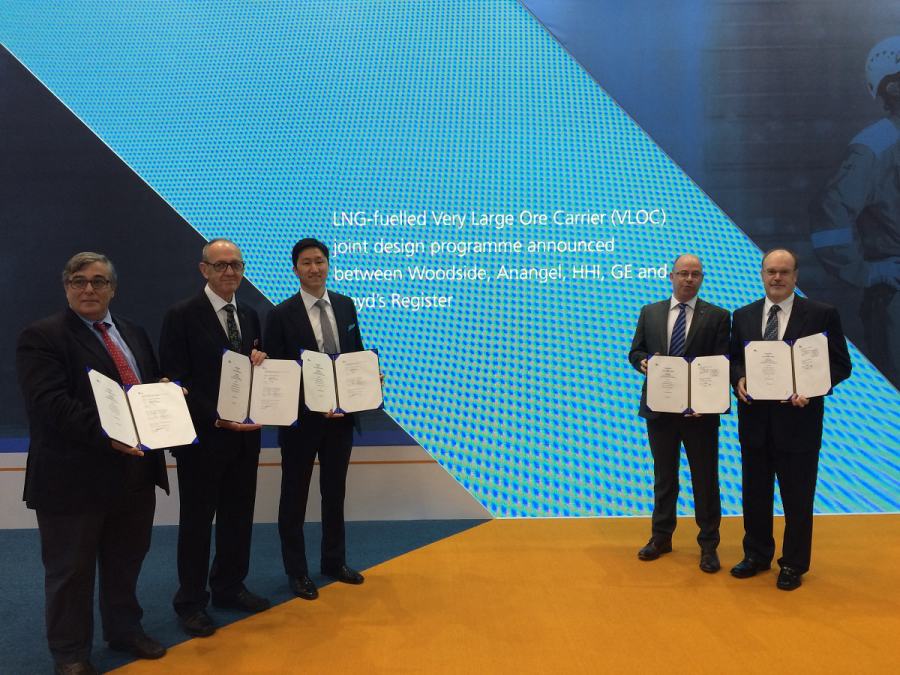
LNG-fuelled very large ore carrier (VLOC) joint design programme announced
 |
| from left to right: Stavros Hatzigrigoris, MD, Maran Gas Maritime Warwick Pointon, VP Shipping, Woodside Energy Kisun Chung, Executive VP, Corporate Planning Office, HHI Jim Smith, North Asia Area Manager, Marine & Offshore, Lloyd’s Register David Nelson, Director, Sales & Business Development, Marine, GE Aviation |
The joint design programme is aimed at exploring the suitability of technologies for large ships, such as VLOC. Since the introduction of IMO nitrogen oxide and sulphur oxide emission limitations, and the increased developments in the global supply of gas, there is a continued need for ship designs to evolve to provide further alternatives to traditional oil-fuelled designs.
In this regard, the novel ship propulsion design burning natural gas is considered as the most favourable option and the adoption of novel gas storage, supply and propulsion technologies are not only environmentally-friendly but also provide a wealth of possibilities for cost-efficient design and operation.
The next generation of cost efficient and environmentally-friendly large ships are best defined by the design development of an alternative propulsion system, improved asset safety and reliability. The agreement outlines the joint design project for a conventional dual-fuel powered VLOC incorporating proved technologies. The next stage of the joint design programme will then investigate the design and benefits of highly efficient next-generation LNG fuelled propulsion systems.
A programme of work has been agreed by the joint parties to address design, construction and operational aspects including LNG bunkering, with the aim to create a new generation of cost efficient, safe, reliable and above all, environmentally-optimised design for large ore carriers.
About Lloyd’s Register
Lloyd’s Register (LR) is a global engineering, technical and business services organisation wholly owned by the Lloyd’s Register Foundation, a UK charity dedicated to research and education in science and engineering. Founded in 1760 as a marine classification society, LR now operates across many industry sectors, with some 8,000 employees in 78 countries.
LR has a long-standing reputation for integrity, impartiality and technical excellence. Its compliance, risk and technical consultancy services give clients confidence that their assets and businesses are safe, sustainable and dependable. Through its global technology centres and research network, LR is at the forefront of understanding the application of new science and technology to future-proof its clients’ businesses. www.lr.org
About Hyundai Heavy Industries
In an effort to improve management efficiency and sharpen its core competitiveness, Hyundai Heavy Industries (HHI) Group, the world’s biggest shipbuilder and a leading integrated heavy industries group is recently spun off into four independent companies; Hyundai Heavy Industries, Hyundai Electric & Energy Systems, Hyundai Construction Equipment and Hyundai Robotics.
The new Hyundai Heavy Industries now with Shipbuilding, Offshore & Engineering, and Engine & Machinery Division has delivered more than 2,000 plus quality ships to 305 ship owners in 51 countries since its foundation in 1972. HHI is continually enhancing its leadership position in the world shipbuilding industry, in collaboration with its affiliated shipbuilding companies Hyundai Mipo Dockyard and Hyundai Samho Industries. Moving forward, HHI will continue to strengthen its global standing as the world’s leading heavy industries company by providing total ship and marine solutions for its valued clients across a diverse selection of industries. For more information, please visit www.hyundaiheavy.com
About Woodside
Woodside is Australia’s largest independent oil and gas company with a global portfolio, recognised for our world-class capabilities – as an explorer, a developer, a producer and supplier of energy. The company’s producing assets in the north-west of Australia are among the world’s best facilities, including the North West Shelf Project and the Pluto LNG Plant. Woodside’s global exploration portfolio includes emerging and frontier provinces in Australia and the Asia-Pacific region, the Atlantic margins and Sub-Saharan Africa. Woodside believes collaborative innovation is key to future growth.
About GE
GE’s marine gas turbine business is part of GE Aviation and is headquartered in Cincinnati, Ohio. GE is one of the world’s leading manufacturers of marine propulsion products, systems and solutions including aeroderivative gas turbines ranging from 6,000 to 70,275 shaft horsepower/4.5 to 52 megawatts. These gas turbines reliably operate the world over in some of the most arduous conditions in temperatures ranging from -40 to 120F/-40 to 48C. For more information, visit http://ge.com/marine
Greek shipowners backing homegrown marine equipment suppliers
Investing heavily in new ships the owners believe innovative and competitive Greek made equipment should reap some of the benefits of this investment, at least 10\% of the tens of billions of dollars spent on new ships.
To this end, Greek shipping companies are to work together to promote ships' equipment developed and manufactured in Greece. Though the two have been cooperating for sometime, the Hellenic Marine Equipment Manufacturers & Exporters (Hemexpo) and Greece's powerful Marine Technical Managers Association (Martecma) they are to now formally create a working group to promote their joint activities.
Ellen Polychronopoulou, president of Hemexpo, revealed the formal cooperation at the “Support the Local Maritime Industry Summit”, in Athens last week. Noting “the local marine equipment industry is the best performing in the Greek manufacturing sector”, she said Hemexpo is determined to boost output and is going to attend Martecma meetings and visa versa.
At the same time a number of leading Greek shipowners, through Martecma, are going to push for Asian and European shipbuilders 'makers lists' "to become as detailed as possible" and they insist this should include Greek manufacturers.
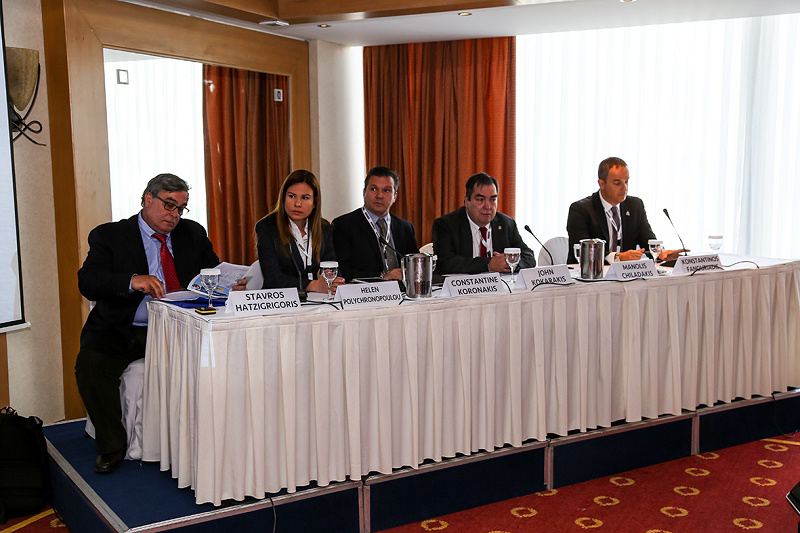
Indeed, Martecma chairman, Stavros Hatzigrigoris, md of Maran Gas Maritime, part of the Greece’;s largest owner, the Angelicoussis group, is adamant Greek makers produce "important equipment items which should be made available to owners contracting newbuildings".
He also hopes that one day soon a newbuilding contract would be signed at the same time as one specifying what equipment is to go onboard rather than as is the case now where two rounds of negotiating are involved first the building contract and then one involving the equipment.
Vassilis Papageorgiou, deputy chairman of the Tsakos Group, told the Natfiliaki / Newsfront organized summit, that many of the items that are manufactured in the shipbuilders' home marketplace and are going on new ships “are not as competitive or up to the standard of Greek made products and quickly have to be replaced”.
Both Tsakos and Angelicoussis are working with Greek manufacturers as are some 20 or so major Greek owners which regularly appear on Greek company client reference lists. Papageorgiou noted that established South Korean makers, for example, "are under pressure because of the difficulties facing shipyards and as a result are making it extremely difficult for makers outside the home marketplace".
He said, "owners have to support Hemexpo to expand its presence in the international marketplace", but warned, "it's easier to gain a name than keep it". He said Greek makers must "find representatives in countries building ships, rather than depend on agents".
Costamare Shipping's director, Dimitris Tsalapatis, a veteran in the international world of marine equipment manufacturers, warned Hemexpo that after sales service is the top priority. are doing".
Shipping company delegates generally agreed with Hatzigrigoris, Papageorgiou and summit chairman, John Kokarakis, vp technical and business development for Bureau Veritas' South Europe, Africa, Greece, Black Sea and Middle East that makers have to be ready to take advantage of the pick-up in ship newbuilding orders, with Hatzigrigoris saying "the world fleet has to be renewed".
Papageorgiou said new fuel and environmental demands will "see shipbuilding boom again because many ships will be demolished”.
Kokarakis, president of the Greek section of SNAME also pointed out several Greek companies are at the forefront in developing new unique products, like non-snap back ropes and self-healing coatings using nanotechnology.
Leading Greek players in the marine equipment market have annual turnovers topping $100m, of which some 90\% is exported.
David Glass
Greece Correspondent, Seatrade Maritime
http://www.seatrade-maritime.com
 |
 |
 |
 |
Historic Greek shipping personalities lauded at major event
 |
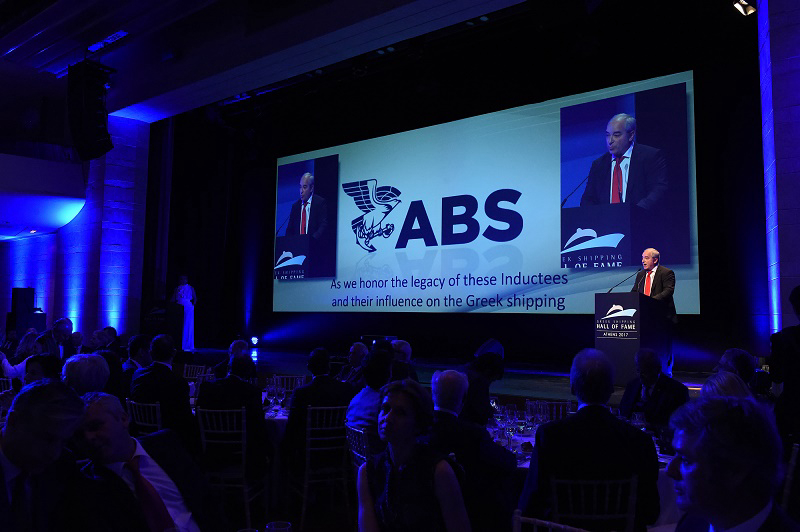
Leading participants in today’s shipping industry gathered to pay tribute to some of the greats of Greek shipping’s past at the Greek Shipping Hall of Fame Induction Ceremony & Dinner 2017.
Highlights of the gala dinner event included the announcement of the Inductees for 2016 – George L. Daniolos and Nicolaos D. Lykiardopulo – who were remembered through interviews with family and warmly lauded by the 600 guests attending the prestigious event at the Megaron, the Athens Concert Hall.
Annually the Inductees are decided through voting by the members of the Greek Shipping Hall of Fame Academy. The event also included spots to remember the 24 other current Inductees of the Hall of Fame which began life in 2007. The new Inductees for 2016 marked the completion of the Greek Shipping Hall of Fame’s first decade of recognising leaders of the Greek shipping industry.
A portion of the funds raised from the event was donated to Hellenic Hope, a charity that raises funds, primarily from overseas, to support carefully-selected projects in Greece that help children in need, focusing on children in socio-economically deprived areas and children at risk from the ongoing crisis in other ways.
Hellenic Hope co-founder Manos Papatheophanous said that the organisation has so far raised about €1,000,000 that has gone to help and assist more than 3,700 children. Hellenic Hope has supported 17 charitable organisations in Greece. “A warm thank you from us at Hellenic Hope to the Greek Shipping Hall of Fame, for supporting our organisation for a fourth consecutive year,” he said.
In addition to the Greek Shipping Hall of Fame’s donation, presented on behalf of the Hall of Fame by George Gratsos, chairman of the Hellenic Marine Environment Protection Association (Helmepa), the event included an after-dinner charity auction of four original artworks – each one a costume sketch used in the production of a historic film related to the sea. Generous bidding by guests ensured that the ‘Hollywood at Sea’ auction exceeded all hopes, raising a further €37,500 for Hellenic Hope on top of the donation by the organisers.
Impressive industry support for the event was led by ABS, the Liberian Registry and Shanghai Waigaoqiao Shipbuilding Co. Ltd. the three Co-Lead Sponsors of the Induction Ceremony & Dinner 2017.
Vassilios Kroustallis, Regional Vice President, ABS, said that "The people we are honouring tonight exemplify leadership and embody the pioneering spirit that has defined the maritime industry for centuries. It is important that we recognise that innovation and advancement does not stop with them."
According to Michalis Pantazopoulos, Senior Vice President of the Liberian Registry, Greek shipping’s relationship with Liberia goes back to the Registry’s foundation year of 1948. "The shipping ties between Greece and the Liberian Registry have become even stronger during the global economic downturn of recent years, founded on solidarity, trust and mutual support,” he said.
Sheng Jigang, President of Shanghai Waigaoqiao Shipbuilding Co. Ltd., emphasised the strong ties between Greek shipowners and shipbuilding in China. “SWS has delivered hundreds of high quality vessels to dozens of Greek shipowners which gives us precious memories. However, we are not content to remember our past successes but instead we work towards a successful future with our clients through hard work and dedication,” he said.
TMS, which has become one of Greece’s largest shipping groups since it was established in 1986, sponsored the welcome drinks party for the event and TMS founder George Economou said a few words to welcome guests.
American Hellenic Hull Insurance Company, the expanding hull and machinery insurer established by the American P&I Club together with Hellenic Hull Management, was Dinner Sponsor.
Aegean Marine Petroleum, The Baltic Exchange, Bureau Veritas, Citi Private Bank, Moore Stephens and Thomas Miller supported the event as Premium Sponsors.
Other Sponsors were The Bahamas Maritime Authority, China Classification Society, ClassNK, DNV-GL, Hellenic War Risks, Korean Register, Marine Tours, Marsh, National Bank of Greece, UK Defence Club, UK P&I Club and Vilmar International. The Ecali Club supported the Hall of Fame’s Athens 2017 event as exclusive Lifestyle Partner.
 |
| The Event |
 |
| TMS |
 |
| ABS |
 |
| American Hellenic Hull |
 |
| SWS |
 |
| Presentation to Hellenic Hope |
 |
| Maria Vassara |
 |
| Yiannis Kapetanakis |
Global Shipping Fleet Braces for Chaos of $60 Billion Fuel Shock
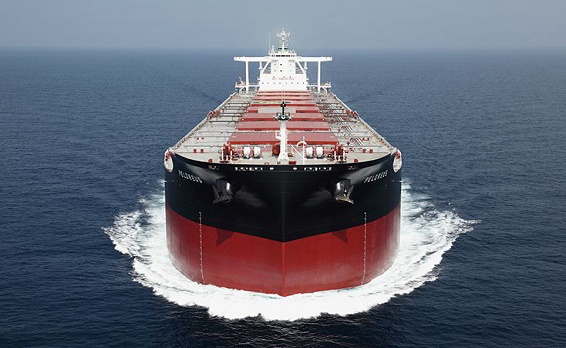
That’s how much more seaborne vessels may be forced to spend each year on higher-quality fuel to comply with new emission rules that start in 2020, consultant Wood Mackenzie Ltd. estimates. For an industry that hauls everything from oil to steel to coal, higher operating costs will compound the financial strain on cash-strapped ship owners, whose vessels earn an average of 70 percent less than they did just before the 2008-09 recession.
The consequences may reach beyond the 90,000-ship merchant fleet, which handles about 90 percent of global trade. Possible confusion over which carriers comply with the new rules could lead to some vessels being barred from making deliveries, which would disrupt shipments, according to BIMCO, a group representing ship owners and operators in about 130 countries. Oil refiners still don’t have enough capacity to supply all the fuel that would be needed, and few vessels have embarked on costly retrofits.
“There will be an absolute chaos,” said Lars Robert Pedersen, the deputy secretary general of Denmark-based BIMCO. “We are talking about 2.5 million to 4 million barrels a day of fuel oil to basically shift into a different product.”
 |
Merchant ships around the world are required to cut the amount of sulfur emitted under rules approved in October by the International Maritime Organization, a UN agency that sets industry standards for safety, security and the environment. As well as contributing to acid rain, sulfur, combined with oxygen, can form fine sulfate particles that can be inhaled by humans and may cause asthma and bronchitis, according to the U.S. Environmental Protection Agency.
There are two main ways to comply: vessel engines are fitted with scrubbers that would eliminate the pollutant, or oil refiners will have to make lower-emission fuels. The limit on sulfur content will drop to 0.5 percent from 3.5 percent.
Not Enough
So far, neither the refining industry nor shipping is doing anywhere near enough for owners to achieve compliance in 2020, according Iain Mowat, a senior analyst at Wood Mackenzie.
“Ship owners are reluctant to install scrubbers to continue using the same oil because of uncertainties and lack of funding,” Mowat said. “And most refineries won’t invest to convert heavy fuel because that will cost more than $1 billion and take about five years to complete.”
Just 2.2 percent of the fleet will have scrubbers installed by 2020 that would allow them to continue using current fuels, estimates the International Energy Agency in Paris, an adviser to 29 nations.
“The compliant technical options are still very immature, and it is hard for us to see them as a real compliance option for our fleet,” said Aslak Ross, head of marine standards at Maersk Line, the world’s biggest container shipping company. For Maersk alone, the additional fuel cost will amount to billions of dollars annually, he said.
$4 Million Per Engine
Most ships will switch to using a mix of lower-sulfur fuel oil or more-expensive middle distillates, according to Jan Christensen, head of global bunker operations at Bomin Bunker Holding, a Hamburg, Germany-based fuels supplier.
The scrubbing technology could cost as much as $4 million per engine, depending on its size, said Nick Confuorto, president and chief operating officer at scrubber supplier CR Ocean Engineering. Retrofitting engines might be worth doing, possibly paying off in two years, because the price of compliant fuel probably will be three times higher than what ships currently burn, he said.
While the world’s largest owners are already reserving spaces for refits, smaller operators are taking a more wait-and-see approach, said Neil Carmichael, chief executive officer at Pacific Green Technologies.
Wood Mackenzie estimates about 70 percent compliance globally by 2020 and full compliance by 2025 after a transition period.
Tough Markets
Merchant ships earned an average of about $9,800 a day this year, according to data from Clarkson Research Services Ltd., part of the world’s biggest shipbroker. Ten years ago, they were earning about $34,000. In the industry’s three main markets -- container shipping, dry-bulk cargo transportation, and oil tankers -- there’s been evidence of overcapacity and depressed rates over the past several years.
Those tough markets are making it harder for owners to secure investment and finance they need to comply, which means the IMO and its member states will probably permit some kind of transition period when the 2020 rules begin, Simon Bennett, policy director and external relations at the International Chamber of Shipping, said in a phone interview.
“If there were no flexibility on Jan. 1 and owners couldn’t get fuel, then that would have an impact on world trade,” Bennett said. Either way, “this will have a profound impact on the economics of shipping.”
www.bloomberg.com
Five ways nanotechnology is securing your future

CMM, HHI, Wärtsila and DNV GL reveal LPGreen concept design
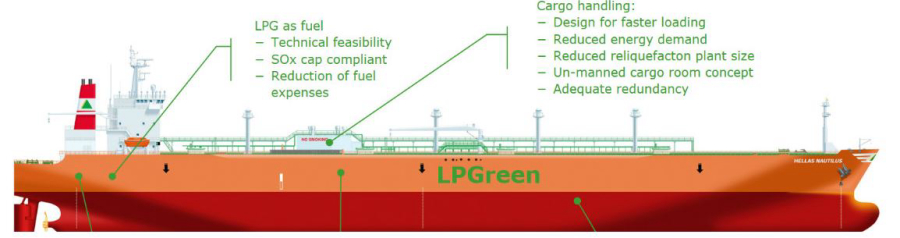
Launched at the Posidonia trade fair in 2016, the JIP sought to develop a more energy efficient, environmentally friendly, and safer vessel for the transportation of LPG products.
 |
“In order to increase the competitiveness of modern LPG carriers, novel ship designs need to simultaneously account for the market and trade route characteristics; excellent safety and ease of operation; cargo and fuel flexibility; and, overall energy efficiency combined with economic viability,” says Nikolaos Kakalis, DNV GL’s Manager for R&D and Advisory Services in South East Europe and Middle East. “Therefore, a holistic approach to the design of modern LPG carriers is required, taking into advantage market insight, technology innovation, advanced computer tools and industry-wide collaboration with strong partnerships.”
 |
| Nikolaos Kakalis Manager R&D and Advisory Services, South East Europe and Middle East, DNV GL – Maritime |
The JIP has resulted in a new concept design that achieves state of the art performance on several fronts. Compared to the reference vessel, a high specification standard design vessel built in 2016, there is an overall improvement of 6–9\% in energy efficiency, depending on machinery configuration and fuel used. A redesign of the tank allows for a filling limit of 99\% – a 1\% increase in overall carrying capacity. Loading duration has been decreased by 30\%, while the newly designed cargo handling system concept results in a 5\% reduction in energy demand. “Perhaps most importantly, LPGreen has demonstrated the technical feasibility of a LPG fuelled propulsion concept, which, depending on fuel prices and the development of a commercial and chartering framework, could result in a cut of up to 30\% in fuel expenses,” says George Dimopoulos, Principal Specialist in DNV GL and project manager for LPGreen.
To realise these gains, the partners utilised advanced computer analysis tools. Hull form optimisation both in calm water and waves was conducted using HHI’s and DNV GL’s CFD hydrodynamic optimisation codes. The overall concept system evaluation and optimisation was conducted using DNV GL’s COSSMOS modelling framework, which allowed for an integrated analytical approach to the evaluation of all machinery technology options and design improvements considered. Finally, every technology feature was compared against the performance of an existing, new (2016), and very modern LPG carrier from CMM’s fleet, which gave a solid basis for documenting improvements.
DNV GL
DSME and DNV GL partner for efficient LNG carrier design
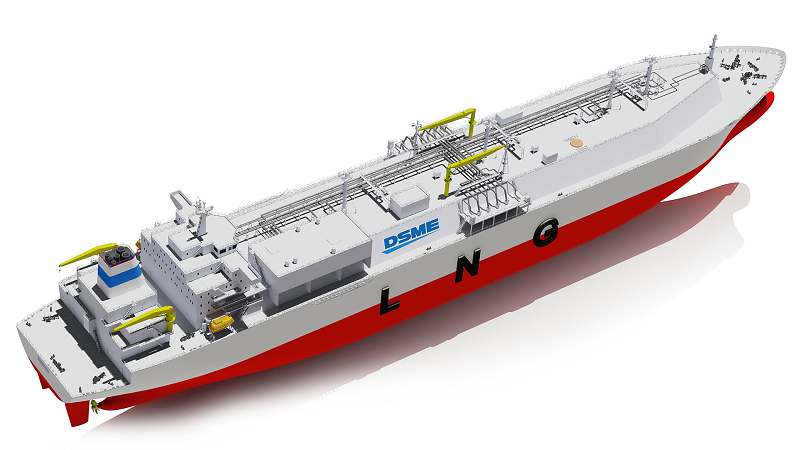
The project focused on delivering a design which an owner can take straight to the yard and is ready for upcoming market trends and incoming regulations, with an optimal size, hull form, and machinery and electrical systems.
 |
“When we look at today’s LNG market we predict that in the years to come we will see the rise of post-Panamax LNG carrier designs which are dimensioned to fit of the new Panama Canal. Capacities of over 175,000 m3 are feasible given the new restrictions,” says Johan Petter Tutturen, DNV GL – Maritime Business Director Gas Carriers.
An important consideration for the design is the shift towards lower, more energy-efficient transit speeds. The hull and propulsion system have been optimized for three different operating profiles on a standard transpacific route (19.5, 16 and 12 knots). Calm water optimization resulted in gains of 6\%, 2\% and 5\% over the reference design at each of the three operating profiles. The optimization calculations were performed using the DNV GL hydrodynamic analysis software Wasim as well as statistics and Reynolds-averaged Navier-Stokes (RANS) simulations for determining wave resistance.
The design uses direct-coupled, two-stroke dual-fuel (DF) main engines and DF auxiliary engines, with LNG as the primary fuel. A combined gas turbine, electric and steam (COGES) propulsion system was chosen for the optimized machinery.
For the portion of the boil-off gas used as LNG fuel a “High Manganese Steel Cargo Tank Independent Type B” was chosen and underwent closed mock-up testing using liquid nitrogen (LN2). This was selected for its excellent tensile properties, high performance and product capacity at low cost, and allows flexible tank shapes while being slosh-free without imposing any filling limitations.
The design also incorporates DSME’s SloT® (Ship Internet of Things) technology and their wireless computer network and integration system Smartship 4.0. In addition, the entire on-board computer environment underwent thorough testing to improve its cybersecurity.
DNV GL
Why VLCC Rates in West Africa are Firming
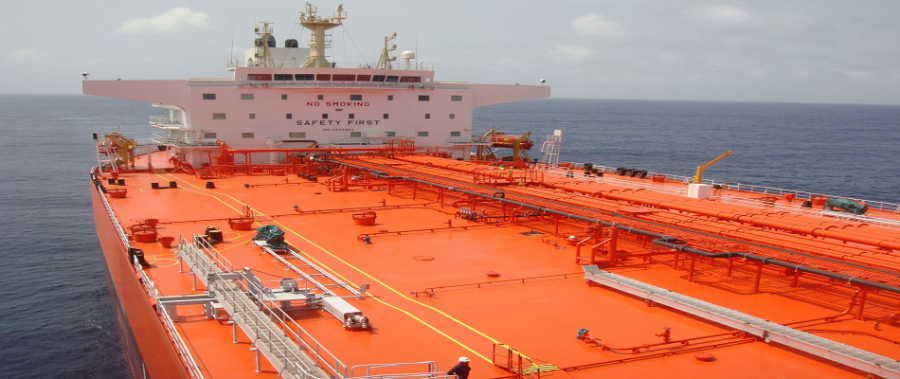
Belying its usual trend of aligning with the AG market, VLCC rates on the WAF/East route grew by w1.5 points on the week to w55 last Thursday due to increased activity in WAF as well as owners’ increasing refusal to lock in long-haul voyages at low returns. The lack of disadvantaged units in WAF also allowed owners to grab a premium for modern tonnage.
The total number of ex-WAF VLCC fixtures last week grew by 62.5\% w-o-w to 13, marking a four-week high. This reflected a surge in third-decade April loading cargoes which helped to tighten tonnage in the region. However, overall WAF April loading crude exports to Asia fell by 2.1\% m-o-m to 2.07 mmb/d according to Reuters data. Our data indicates that around 35 ex-WAF VLCC stems have been fixed for April loading, down by 12.5\% m-o-m. Demand from Asian buyers (notably China) was muted compared to the last two months due to heavy refinery maintenance in Asia which peaks in April. At least 2.5 mmb/d of refining capacity is likely to be shut in April, up by 1.2 mmb/d y-o-y.
 |
As we move into the fixing window for May loading cargoes, Asian demand for WAF crude may recover as refinery maintenance starts to ease in May. Rates for a WAF/East journey have since strengthened further to w61 on Wednesday, with at least 4 ships placed on subs at w60 and above for first decade May loading as owners try to sustain momentum. Unipec placed Olympic Leader on subs for a WAF/China run at w61.5, loading May 3-5 basis 270 kt. A narrow Brent-Dubai EFS will continue to incentivize the movement of barrels to the East.
Source: OFE Insights

Powered by  © Μaritimes 2019