


DNV GL at Marintec China: Classification steps up to the digital challenge
 |
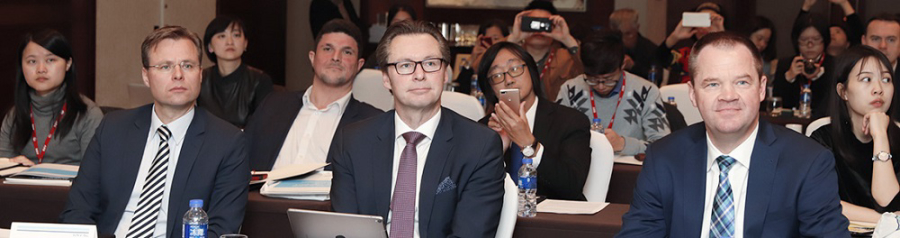
| DNV GL Press Conference at Marintec China 2017 (from L to R): Torgeir Sterri, Knut Ørbeck-Nilssen, Norbert Kray |
“One of the major contributions of class in current times of transformation is to bring familiar assurance processes to new and unfamiliar technologies,” said Knut Ørbeck-Nilssen, Chairman of the International Association of Classification Societies (IACS) and CEO DNV GL – Maritime. “This will help to ensure a quick uptake and smoother implementation of new technologies which can enhance safety and increase efficiency.”
IACS was working to adapt regulations to new needs and remove regulatory barriers, he said. “An effective regulation is one that rewards early adopters. At the moment, it could be argued that those who adopt last get the best financial return. Instead, let us embrace the opportunities which arise from the digital transformation and be proactive in addressing challenges,” he said.
Ship systems are becoming ever more complex and increasingly controlled by software. “This is leading to new risks, like hacking and cyber-crime. Accordingly, the role of Class would expand into new verification fields, e.g. cyber safety, assurance of data quality, and sensor-equipped cyber-physical systems, said Ørbeck-Nilssen. “Even so, the methods and processes might change but the purpose of classification remains the same: ensuring safe operations at sea while protecting life, property and the environment.”
New leadership for DNV GL Regions Greater China and Western Europe
At the press conference, Knut Ørbeck-Nilssen also announced a shift in regional responsibilities for DNV GL. From January 2018, Norbert Kray, current Area Manager for Japan, will move to become the new Regional Manager for Greater China. The current head of the region, Torgeir Sterri, will be taking up the position as the Regional Manager of Western Europe, covering Germany, France, Spain, Portugal, Benelux, and the UK and Ireland.
Sterri stressed the importance of China as a maritime player and evolving technology power-house: “For nearly 130 years now, DNV GL has been deeply involved in working to support the development of China as a shipping nation. And we are proud that many of the largest and most advanced ship and offshore newbuilding projects constructed in China have been classed by DNV GL. Going forward, Chinese shipbuilders and owners will continue to develop as they move into new and more sophisticated ship types and DNV GL will be here to support them. I wish Norbert Kray all the best for this exciting journey ahead.”
New Regional Manager Norbert Kray outlined some of the new digital initiatives from DNV GL. One of the most impactful was the rollout of electronic certificates across the DNV GL fleet. “Just six weeks after the rollout, over 25,000 electronic certificates have been issued for more than 3,000 vessels in operation, including many class entries and newbuilds, and this number is growing rapidly every day,” he noted.
In addition, new digital services such as the Smart Survey Booking tool, the machine-learning enhanced DATE (Direct Access to Technical Experts) service, drone surveys, and the Veracity open data platform were all improving the efficiency of DNV GL’s core services, enabling customers to reap the full potential of digitalization, he said. “This is part of our drive to be recognized as the most customer centric classification society,” said Kray, “and I look forward to working with customers and stakeholders in China to help them find new efficiencies and opportunities with these new services.”
About DNV GL
DNV GL is a global quality assurance and risk management company. Driven by our purpose of safeguarding life, property and the environment, we enable our customers to advance the safety and sustainability of their business. Operating in more than 100 countries, our professionals are dedicated to helping customers in the maritime, oil & gas, power and renewables and other industries to make the world safer, smarter and greener.
Αbout DNV GL – Maritime
DNV GL is the world’s leading classification society and a recognized advisor for the maritime industry. We enhance safety, quality, energy efficiency and environmental performance of the global shipping industry – across all vessel types and offshore structures. We invest heavily in research and development to find solutions, together with the industry, that address strategic, operational or regulatory challenges.
www.dnvgl.com/maritime
Outlook for Shipping in 2018
https://www.bloomberg.com/news/videos/2017-12-07/outlook-for-shipping-in-2018-video
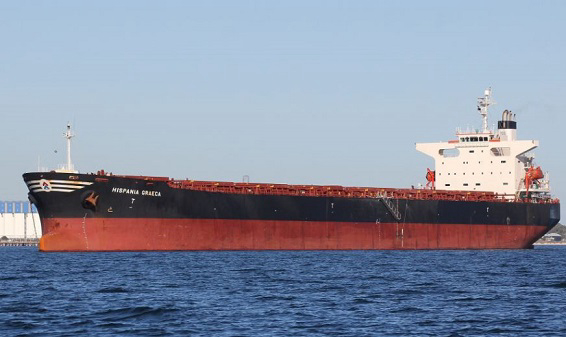
Special rescue Award to M/V Hispania Graeca Amver Awards 2017
 |
The award was to honour the Master, Officers and Crew of m/v Hispania Graeca, who rescued four (4) Philippino shipwrecked fishermen off the South coast of Mindanao Island, Philippines, on 24.01.2017, who had been helpless in the sea for four (4) days after their boat had capsized.
Their action is not only an example of saving people at sea, but it also represents the spirit of the crew that Angelakos (Hellas) S.A. have onboard their fleet.
 |
European shipowners welcome the Council conclusions on the digitalisation of transport
“Digitalisation is already very present in our sector and we welcome the attention given to it by the Transport ministers”, commented Martin Dorsman, ECSA Secretary General.
“As the Council conclusions propose, a genuine European single window should be provided, based on the “reporting once” principle and the use of a harmonised electronic cargo manifest in order to set up a European Maritime Transport Space without Barriers. This is something we have stressed for a long time to improve the efficiency. Together with Transport Council we also want to support the International Maritime Organization’s work in facilitating the uptake of new technologies and digitalisation on board ships”, he concluded.
ECSA believes it is crucial to keep in mind the importance of privacy, data protection and cyber security, as well as the new skills needs. Cyber Security will indeed be critical with the increased use of digital tools in the maritime industry.
ecsa.eu
WISTA Hellas Annual Forum debates shipping’s challenges and owners’ response.
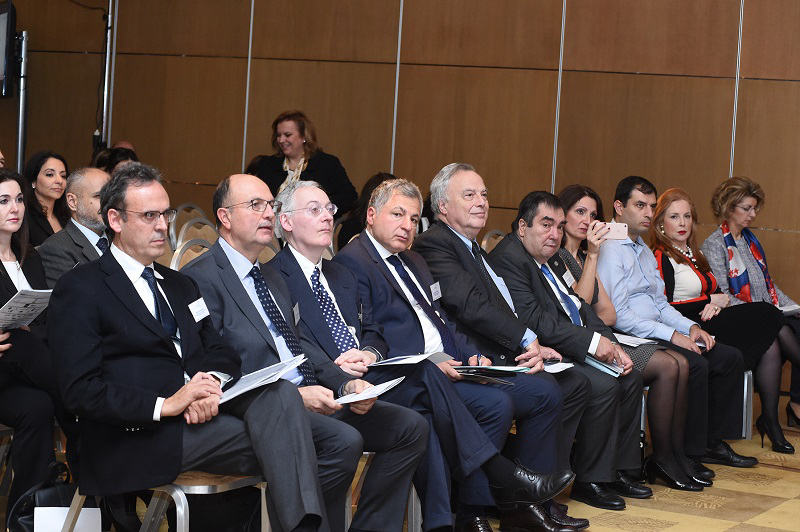
More than 300 prominent shipping professionals attended the forum. For the first time, the agenda for the annual gathering included two panel discussions: the first debating the theme: “What are the challenges that may affect the shipping industry?” and moderated by Yannis Perlepes, General Manager of NAFTEMPORIKI Newspaper; and the second featuring panellists discussing “How ship owners cope with the industry challenges ahead?” under the moderation of John Cotzias, President of Hellenic Shipbrokers Association, Projects Finance, Xclusiv Shiprbrokers Inc.
Panagiotis Kouroublis, Minister of Maritime Affairs and Insular Policy opened the forum with a video message. The first panel was composed of (in alphabetical order): Stamatis Bourboulis, General Manager, Euronav Ship Management (Hellas) Ltd; John Kokarakis, Technical Manager, Bureau Veritas; Theodore Kontes, Director, Majestic International Cruises; President, Union of Cruise Ship Owners & Associated Members; Hamish Norton, President, Star Bulk Carriers Corp; Christiana Prekezes, Executive Coordinator, Hellenic Marine Environment Protection Association – HELMEPA; Kostas Vlachos, Chief Operating Officer, Consolidated Marine Management Inc.
The second panel was composed of (in alphabetical order): Sadan Kaptanoglu Shipping Manager, Kaptanoglu Shipping; Vassilis Mantzavinos, General Manager Greece UniCredit Bank AG; Milena Pappas, Commercial Director, Star Bulk Carriers Corp; Aristides J. Pittas, CEO, Chairman of the Board of EUROSEAS LTD; Valentios “Eddie” Valentis, Chairman and CEO, Pyxis Tankers; Lila Μ. Vergou, Chief Operating Officer, Vergos Marine Management S.A.
Each panelist offered their insight into the forum’s themes and responded to questions about the greatest challenges facing shipping today. Follow-up dialogues by representatives from major market sectors added further to the success of the event leading to an open and impulsive discussion that kept the audience focused till the very end. Issues discussed included global financial instability, maritime training, challenges faced by the maritime sector, new technology onboard the vessels, environmental concerns, automated ships, digitalization, cyber-security, Ballast Water Treatment Convention, climate changes and new investments and financing opportunities in an constantly changing and unpredicted business environment. A wide range of opinions and perspectives were aired, ensuring strong engagement throughout the debate.
In her opening address, WISTA Hellas President Angie Hartmann said: “I would like to thank our members for their active participation to our activities and for making WISTA an industry voice in the Greek Shipping community”. Ms. Hartmann presented to the audience WISTA Hellas and said: “This year also marks the first time that we’ve expanded the agenda of our annual forum with two panel discussions so that more representatives of the shipping industry could express their opinion and have sufficient time to discuss with you”. The President, also thanked on behalf of the Board of Directors the panelists, sponsors, media supporters and supporting organizations.
Closing the forum, Mrs. Hartmann thanked once again the panelists, sponsors, media supporters, supporting organizations and the audience for a constructive and successful event, and invited everyone to a cocktail reception which lasted long into the evening.
WISTA Hellas
WISTA International is a non-profit organization established in London in 1974 by a group of women brokers involved in the tanker market in order to help and support women working in the shipping industry. Today, WISTA International has about 3000 members in 40 countries worldwide.
WISTA Hellas, a member of WISTA International, is also a non-profit organization that was formed in Greece in 1993 with membership currently exceeding 260 women in top management positions in shipping based in Greece. WISTA Hellas supports the exchange of information and experience in the shipping industry among its members for the facilitation of business development both within and out of the organization. WISTA seeks to empower its members by enhancing competence and for career success through networking and education. In furtherance to these goals and to promote Greek Shipping both domestically and internationally, WISTA organises and hosts a number of seminars, forums and events, featuring experts both from within the country and the international shipping community. (www.wista.net)
 |
 |
 |
 |


Chinese shipyards eat away Korean shipbuilding market
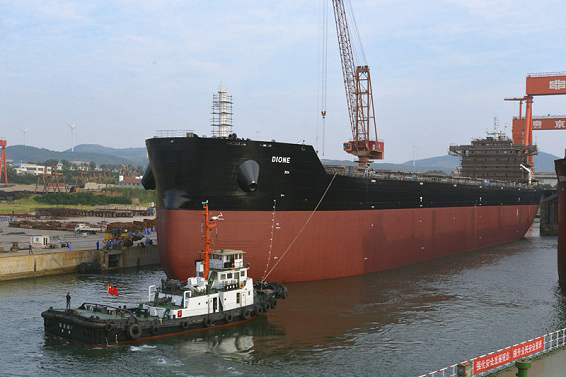
The shipping companies that won the Brazil-based Vale’s iron ore shipment orders signed contracts with both South Korean and Chinese shipbuilders, which can hurt the ship building industry. The ships will be used to transport iron ore from Brazil to China. Vale is the world’s largest iron ore producer.
Hyundai Heavy is set to hand over 15 325,000-ton vessels to Polaris Shipping Co., a South Korean shipping line, in stages in the coming years.
Hyundai Heavy has also clinched a deal with the Korea Line Corp. to build two very large ore carriers for the shipping firm.
Of the remaining 10, PanOcean Co., South Korea’s leading bulk carrier, has placed orders with a Chinese shipbuilder for six very large ore carriers.
SK Shipping Co., and H-Line Shipping Co. — the two other South Korean local shipping lines — could also place orders with Chinese shipbuilders for two very large ore carriers each, according to industry sources.
Hyundai Heavy is reportedly working hard to win the contract from H-Line Shipping, though no details were available.
The latest development shows Chinese shipbuilders are able to win orders from South Korean shipping and build very large ore carriers.
South Korean shipyards have been hit hard by a drop in demand for new ships in the wake of sluggish global economic growth, as well as low crude and gas prices in the past few years.
Local shipyards have since laid off workers through voluntary retirement programs, forced employees to take leave and even requested cuts in salaries to stay afloat.
Source: Yonhap
Small and bigger shipping companies would have the same opportunity to receive funding
“Together with the Commission we want to solve the mismatch between the oversubscription of the Motorways of the Sea (MoS) and the fact that the MoS envelope is not entirely spent, but we also want to improve the visibility of the funding for the shipowners”, commented ECSA’s Secretary General Martin Dorsman on the event.
“During the discussions, the following key-messages from the shipowners came across: The Commission should make sure that small and bigger shipping companies would have the same opportunity to receive funding, it should increase communication with the industry in order to pinpoint the real needs, the award criteria of relevance, maturity, quality and impact should always be kept in mind and the selection criteria should be made more transparent”, he concluded.
A wide range of stakeholders participated and shared information on the programmes and best practices including shipping companies, DG MOVE, the Innovation and Networks Executive Agency (INEA) and the Executive Agency for Small and Medium-sized Enterprises (EASME).
Source: European Community Shipowners’ Associations
Hellas Maritime Journal - Posidonia update available now!
To download the Posidonia 2018 Update please click here.
IMO Assembly elects new 40-Member Council

Category (a) 10 States with the largest interest in providing international shipping services:
China, Greece, Italy, Japan, Norway, Panama, Republic of Korea, Russian Federation, United Kingdom, United States.
Category (b) 10 States with the largest interest in international seaborne trade:
Australia, Brazil, Canada, France, Germany, India, Netherlands, Spain, Sweden, United Arab Emirates.
Category (c) 20 States not elected under (a) or (b) above, which have special interests in maritime transport or navigation and whose election to the Council will ensure the representation of all major geographic areas of the world:
Bahamas, Belgium, Chile, Cyprus, Denmark, Egypt, Indonesia, Jamaica, Kenya, Liberia, Malaysia, Malta, Mexico, Morocco, Peru, Philippines, Singapore, South Africa, Thailand, Turkey.
The Council is the executive organ of IMO and is responsible, under the Assembly, for supervising the work of the Organization. Between sessions of the Assembly, the Council performs all the functions of the Assembly, except that of making recommendations to Governments on maritime safety and pollution prevention.
The newly elected Council will meet, following the conclusion of the 30th Assembly, for its 119th session (on 7 December) and will elect its Chair and Vice-Chair for the next biennium.
IMO Assembly
The 30th Assembly of IMO is meeting in London at IMO Headquarters from 27 November to 6 December 2017. All 172 Member States and three Associate Members (click for list) are entitled to attend the Assembly, which is IMO’s highest governing body. The intergovernmental organizations with which agreements of co-operation have been concluded and international non-governmental organizations in consultative status with IMO are also invited to attend.
The Assembly normally meets once every two years in regular session. It is responsible for approving the work programme, voting the budget and determining the financial arrangements of the Organization. It also elects the Organization’s 40-Member Council.
World’s first Class approved 3d printed ship’s propeller unveiled
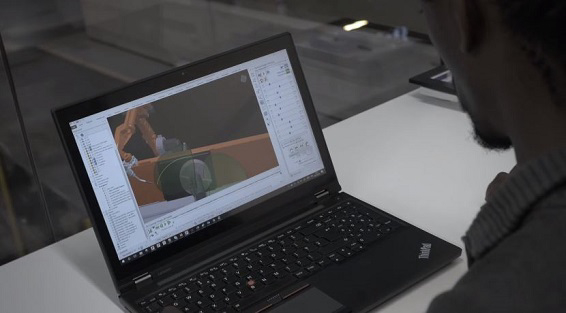
The five-company partnership started pooling their collective resources and knowledge to develop the world’s first 3D printed ship’s propeller seven months ago. Promarin provided the design of the triple-blade propeller. The Port of Rotterdam’s RAMLAB (Rotterdam Additive Manufacturing LAB) carried out fabrication using Wire Arc Additive Manufacturing (WAAM) techniques, supported by Autodesk’s expertise in software, robotics and additive manufacturing.
Damen provided Research and Development resources in addition to one of its Stan Tug 1606 vessels for operational testing purposes. Bureau Veritas’ role was to verify the entire development, production and testing process.
298 layers of 3D printing
The consortium reached its first milestone in August with the completion of the first WAAMpeller prototype. With valuable experience gained, production of the second version, with the aim of achieving class certification, started immediately.
“Production of the second WAAMpeller was greatly improved because we had learned a lot from producing the prototype,” says Vincent Wegener, Managing Director RAMLAB. “This mainly concerned the hardware/software interaction because, when laying down 298 layers of Nickel Aluminium Bronze alloy, it is important to have a tight control on all process parameters.”
Testing in Dordrecht
With the second WAAMpeller complete, the project then progressed to the testing stage, the first phase of which saw the WAAMpeller installed on a Damen Stan Tug 1606. “This particular vessel is of extra interest in that it is equipped with a Tier III compliant engine, making it future proof for the ever stricter environmental rules and regulations in harbours around the world”, comments Martin de Bruijn, Managing Director Workboats at Damen.
Damen’s testing engineers performed operational testing of the WAAMpeller on 20 November, with representatives from all of the consortium partners present. Furthermore, the day’s procedures were overseen by Bureau Veritas surveyors throughout.
Martijn Nieuwenhuijs, Chief Executive of Bureau Veritas Marine & Offshore Netherlands comments: “Bureaus Veritas has witnessed every step of the making and testing of the WAAMpeller. Some challenges needed to be tackled along the way, but the final product is technically sound and ready for commercial application.”
Heavy loads
The testing programme included bollard pull and crash stop testing in addition to speed trials. “Of course, we were all a bit nervous beforehand – after all, innovation always comes with a certain amount of unknowns – but the testing was a success,” says Kees Custers, Damen Project Engineer R&D enthusiastically.
“We are pleased to report that the WAAMpeller displayed the same behaviour as a conventional casted propeller in all of the tests. This includes the same level of performance in the crash stop scenario, which – going from full throttle ahead to full throttle reverse – is the heaviest loading that a propeller can experience.
“From day one, this project has been characterised by a good working atmosphere and team dynamics, so there were quite a few high-fives on board when we had successfully completed the tests!”
Future thinking
Talking before the WAAMpeller unveiling event, which took place on 30 November, Allard Castelein, CEO Port of Rotterdam took the time to highlight the efforts of the collaborating partners: “The WAAMpeller project is special for many reasons. Not only has it produced the world’s first class approved 3D printed ship’s propeller, but this has been accomplished within a very impressive seven-month timeframe and only one year after the official opening of RAMLAB.”
“Everyone involved has worked extremely hard to make this happen. Damen, Autodesk and Bureau Veritas have supported the project all the way. Promarin have really shown their expertise with the finishing of this WAAMpeller. And last, but not least, the production process at RAMLAB continued 24/7, with their experts permanently on hand.”
Looking at the bigger picture, Mr Castelein went on to identify the implications of the WAAMpeller project on the maritime industry. “This project has shown the shipbuilding industry the potential of 3D printing techniques for the production of vessel components. We continue our intensive research into this very exciting area.”
http://www.damen.com

Powered by  © Μaritimes 2019