



Navios selects DuPont / BELCO as preferred supplier of Exhaust Gas Cleaning Systems
The letter of intent also confirms that Navios and BELCO will carry out a joint feasibility study and techno-economic analysis of marine scrubbing units for retrofitting or new build installation on a variety of vessels, from bulk carriers to containers and tankers.
The planned feasibility study will examine the viability of fitting DuPontTM Marine Scrubbers on both retrofit and newbuild projects. “Talks with Navios reached this point because we are companies that are focused on reducing emissions efficiently. With our technical capabilities and flexible, reliable exhaust gas cleaning systems, we are able to ensure that Navios maintains its emissions standards with full confidence,” says Marco Dierico, Business Development Manager.
Navios Group operates a fleet of 163 owned and long-term charter-in vessels ranging from Capesize, to Panamax, Ultra-Handymax and Handy size bulk carriers, container vessels and MR2, LR1 VLCC and chemical tanker vessels deployed for complex freight movement around the world. BELCO specializes in the project management, process engineering, design, construction and commissioning of the DuPont exhaust gas cleaning system. For more information on DuPont™ Marine Scrubbers visit www.marinescrubber.dupont.com.
The DuPont Clean Technologies division applies real-world experience, history of innovation, problem-solving success, and strong brands to help organizations operate safely and with the highest level of performance, reliability, energy efficiency and environmental integrity. The Clean Technologies portfolio includes STRATCO® alkylation technology for production of clean, high-octane gasoline; IsoTherming® hydroprocessing technology for desulfurization of motor fuels; MECS® sulfuric acid production and regeneration technologies; BELCO® air quality control systems for FCC flue gas scrubbing, other refinery scrubbing applications and marine exhaust gas scrubbing; MECS® DynaWave® technology for sulfur recovery and tail gas-treating solutions; and a comprehensive suite of aftermarket service and solutions offerings. Learn more about DuPont Clean Technologies at www.cleantechnologies.dupont.com.
DuPont (NYSE: DD) has been bringing world-class science and engineering to the global marketplace in the form of innovative products, materials and services since 1802. The company believes that by collaborating with customers, governments, NGOs and thought leaders we can help find solutions to such global challenges as providing enough healthy food for people everywhere, decreasing dependence on fossil fuels, and protecting life and the environment. For additional information about DuPont and its commitment to inclusive innovation, please visit http://www.dupont.com.
Navios Maritime Holdings Inc. (“Navios”) (NYSE: NM) is a global, vertically integrated seaborne shipping and logistics company focused on the transport and transshipment of drybulk commodities including iron ore, coal and grain. Navios was created in 1954 by US Steel to transport iron ore to the US and Europe. Since then, Navios has diversified geographically and expanded the scope of its business activities such that Navios currently controls 66 vessels totaling approximately 6.7 million deadweight tons.
Navios maintains offices in Monaco, Piraeus-Greece, New York-USA, Singapore, Montevideo-Uruguay, Antwerp-Belgium, Buenos Aires-Argentina and Asuncion-Paraguay.
The Navios Group of companies includes also Navios Maritime Partners, L.P. (NYSE: NMM), Navios Maritime Acquisition Corporation (NYSE: NNA), Navios Maritime Midstream Partners L.P. (NYSE: NAP), Navios South American Logistics Inc. (“Navios Logistics”), Navios Europe I and Navios Europe II. As a total, Navios Group controls 163 owned and long term charter-in vessels, excluding Navios Logistics, consisting of 97 dry bulk vessels = 9.9 million dwt, 47 tanker vessels = 5.9 million dwt and 19 container vessels = 83,070 TEU
Future Care’s Caring For the Crew®
 |
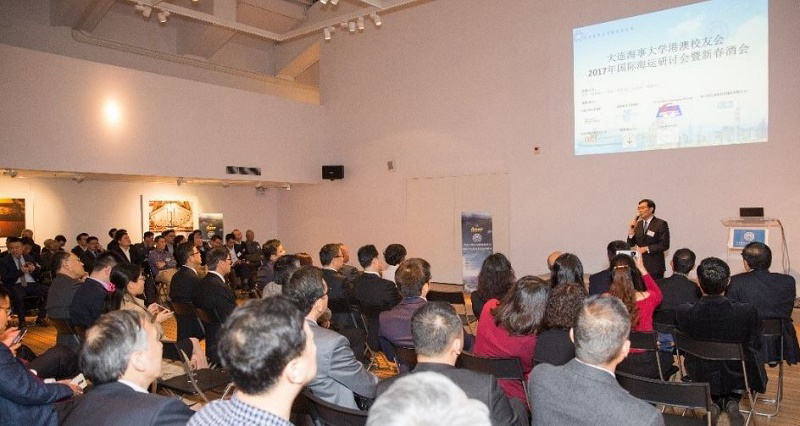
During this seminar Dalian Maritime University’s alumni representatives addressed the overview of the international maritime industry; the international iron ore market; the developments of the Maritime Labour Convention (MLC) and P&I Clubs and the developments in maritime law, among other topics.
Future Care’s Caring For the Crew® program includes its telemedical service, Physician Advice at Sea, which provides a global, 24 hour presence of practiced physicians for the mariner while onboard ship. Future Care’s first response and medical case management teams, including nurses and other licensed healthcare professionals, oversee treatment onboard, during transition to shore and through repatriation/convalescence. These services provide the shipowner with a single experienced resource to manage medical treatment from incident to return to work. Future Care’s Caring For the Crew® program assists the shipowner in demonstrating compliance with the Maritime Labour Convention’s Title IV mandate to provide “medical care as comparable as possible to that which is generally available to workers ashore”. Also, Future Care’s global network of medical facilities and treatment providers promotes compliance with MLC requirements for land-side medical treatment.
Future Care’s CEO, Christina DeSimone, and Director of Asia Marketing, Yuki Yu, visited current and prospective clients in Singapore, Shanghai, Hangzhou and Nanjing earlier this year. Christina and Yuki have been assisting Asian ship owners and ship managers in providing their crewmembers with access to telemedical advice at sea. During their recent visit they have stressed the importance of early medical intervention in avoiding unnecessary repatriation and emergency deviation.
Christina emphasized: “We are extremely pleased and excited to be part of Dalian Maritime University Alumni event. I am very pleased to see more and more Asian ship owners who are benefiting from our Caring for the Crew® program. We are eagerly looking forward to working with more Asian ship owners, ship managers and P&I clubs and providing them international shipboard tele-medicine diagnosis and treatment and cost containment.”
Yuki stated: “I’m so glad to hear a Chinese safety manager who told me he always encourages his crews to reach out for medical assistant at sea as early as possible. I found Asian ship owners are more than ever focused on the “human factor” as a key for safety and efficient operations. I always believe the earlier we receive the cases, the more we could save a life and control the cost of the care, and that is exactly what Future Care offers.”
Other sponsors for this seminar includes Reed Smith Richards Butler, The Swedish Club, Hong Kong Seamen’s Union, Guochuang International Holding Co, Haida United Marine Tech-Services Co, and Global Maritime Supply Pty Ltd.
Future Care Inc. received the Certificate of Appreciation from DMUHKMAA.
 |
New York based Future Care, Inc. provides global maritime telemedical, shoreside case management and audit services with a team of maritime trained physicians, nurses and first responders. Future Care offers its services exclusively to the maritime community, including commercial shipowners/shipmanagers, cruise lines, yacht owners, insurance companies, and P&I Clubs. Future Care’s 24/7 First Response Caring for the Crew® program provides the seafarer and his employer with a superior managed healthcare response in both routine and emergency situations. Through access to the Company’s 24/7 call center, proprietary networks, medically trained personnel and auditing services the shipowner can realize powerful savings both over and under his insurance deductible, while simultaneously improving the quality of healthcare provided to crew and passengers.
For more information, visit www.futurecareinc.com
ERMA FIRST Submits Final USCG Type Approval Application
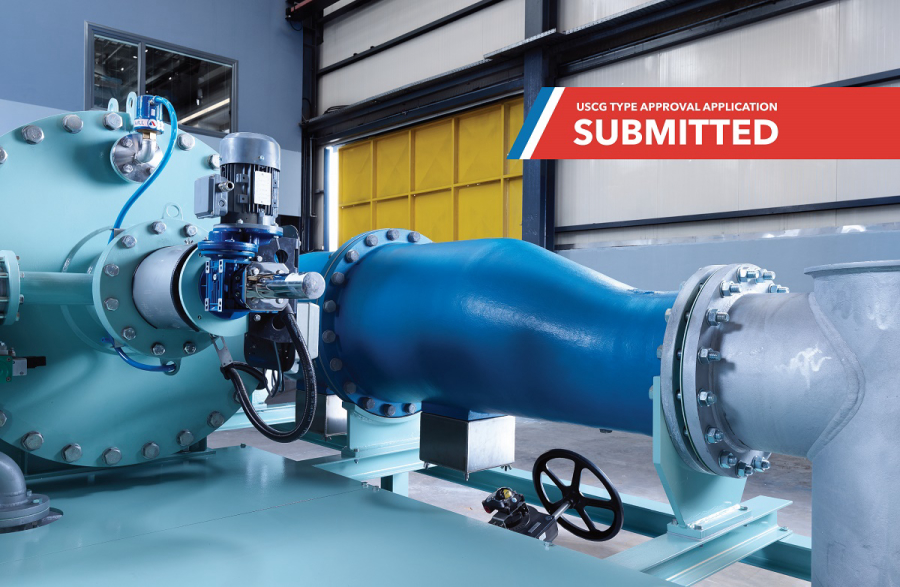

ERMA FIRST FIT BWTS, being type approved by IMO and several classes, has remained without any changes or modifications throughout the USCG type approval process. Mr. Konstantinos Stampedakis Managing Director of ERMA FIRST stated, “It has been a long and demanding journey towards the USCG Type Approval and having submitted the application amongst the first, proves our ability to deliver a high quality and well-designed BWTS but also justifies the efforts and methodical work of our team of experts towards this objective”.
The system performed perfectly in a variety of challenging marine environments during the tests in Morocco, Spain, Netherlands, France, New York and Savannah. The testing period lasted 30 months having finished in autumn 2016. Tested at three water salinities, ERMA FIRST BWTS offers a reliable, simple and effective solution for all types and sizes of vessels. The smooth testing process proves that the system has been carefully designed, developed and engineered so as to undergo the most rigorous testing and ensure reliable operation in challenging natural water conditions.
Mr. Stampedakis also commented, “Our extensive knowledge and experience enables ERMA FIRST to provide with a superior BWTS that fully meets our customers’ needs. This reflects well on our testing results that meet and even exceed USCG criteria”. ERMA FIRST BWTS is flexible, modular and project-specific suitable for all special installation requirements in both new builds as well as retrofit projects. ERMA FIRST’s design simplicity and expertise on delivering challenging projects, has been well acknowledged by many ship-owners and operators who have already trusted the company with their retrofit installations.
The next certification step will be the application for IMO Type Approval according to the revised G8 Guidelines. This is planned for early summer 2017.
About ERMA FIRST:
ERMA FIRST S.A. was established in 2009 by a team of specialists with strong background and expertise in waste and water treatment technology in Marine applications. Driven by the maritime needs and regulations, and monitoring the Environmental Protection challenges, the company started designing and manufacturing ballast water treatment systems. Being successfully tested in the most prominent test facilities, ERMA FIRST systems are certified and have been awarded prizes for technological achievement many times through the years. ERMA FIRST technology uses a 40 μm filtration followed by an efficient full flow electrolysis.
Nowadays, ERMA FIRST has a prestigious and fast growing reference list comprised of ship-owners and shipyards in Greece, Denmark, UK, Germany, Japan, Korea, Italy, Turkey, Romania, US, etc.
DIGITAL SHIP’S MARITIME CYBER RESILIENCE FORUM IS HEADING TO ATHENS ON 25 APRIL
The Forum will bring advisors, end-users, technology providers and policy makers together, aiming to:
Understand, define and assess the threats and risk of maritime cyber-attack
Raise awareness of cyber security and risk issues and identify increased cooperation and information sharing mechanisms
Discuss appropriate regulation and guidelines for clearer standards throughout the industry, and with authorities
Five key sessions will contain plenary presentations and panel discussions:
Session 1: Facing the Cyber Threat: An Overview of Maritime Cyber Challenges and Focus on Building Resilience
Session 2: Business Planning and Cyber Preparedness
Session 3: New Developments in Maritime Cyber Regulations and Guidelines
Session 4: Training, Awareness and Human Factors
Session 5: Viewpoint: Are We Cyber Ready? Conclusions and Actions
Speakers and panellists include:
George A. Tsavliris, Tsavliris Salvage Group George Efthimiou, Gourdomichalis Maritime S.A Charalampos Pylarinos, World Gaz Corporation Dimitris Moutzouris-Lygeros, Motor Oil Hellas Michael
Owen, Marlink Nick Lambert, Satellite Applications Catapult Joe Dauncey, Inmarsat Max J. Bobys, HudsonAnalytix, Inc. David Patraiko, The Nautical Institute Roel van Rijsewijk, Deloitte's Center for the
Edge Steve Williams, Moore Stephens Bernard Twomey, Bernard Twomey Consulting Ltd Nicky Pappadakis, A.G. Pappadakis & Co. Ltd Howard Hughes, Tototheo Dr. Nikitas Nikitakos, University of the
Aegean Svend Lykke Larsen, Palantir Mark Sutcliffe, CSO Alliance Jordan Wylie, Be Cyber Aware At Sea
Rossella Mattioli, ENISA - European Union Agency for Network & Information Security Panagiotis Papagiannakopoulos, Ernst & Young Business Advisory Solutions S.A.
Event Website: http://www.athens.thedigitalship.com/
ABOUT DIGITAL SHIP
For 17 years Digital Ship magazine has provided the digital community of the world's maritime industry with the latest news and developments, including satellite communications, software, navigation and electronics, to help keep shipping operating with maximum safety, efficiency and crew comfort.
CONTACT:
Cathy Hodge, Event Director, Digital Ship
+ 44 7956 965 857 |email: This email address is being protected from spambots. You need JavaScript enabled to view it. | www.thedigitalship.com
-Ends-
Top Ships Inc. (TOPS) Technicals Are Painting A Bleak Picture
It looks like traders are not happy with the stock. On the other side, analysts now consider Top Ships Inc. a sell, and a technical analysis of the stock is setting somewhat neutral outlook for now.
The stock has actually made sharp losses in the past year, as the company has gathered a -74.87\% return in the past twelve months. But even with this move, there is still plenty of room for the company to come back from a longer term perspective, and especially if we look to recent lows for the company as well.
Finally, from a technical perspective, there’s a strong possibility that the stock could enter into a new bull market after finding strong support between $0.43 and $0.47. In terms of pullbacks, $0.56 level is the first resistance point. Technical analysis can help recognize key technical price levels in the stock. Investors can use these support and resistance levels to refine their entries and exits from stocks.
Top Ships Inc. (NASDAQ:TOPS) price is pointing towards neither exit nor entry barriers, according to a technical analysis tool called the Relative Strength Index (RSI). Last session Top Ships Inc. RSI was seen at 31.03. RSI measures the speed and change of a stock price to warn investors when a stock’s momentum has carried it too far. An RSI reading above 80 indicates that a stock is overbought while anything below 20 is oversold.
With these kinds of figures it is worthy to note that Top Ships Inc. (TOPS) has been put into a sell territory, but there are few other spots to consider. The Stochastic \%K for TOPS is 1.9. Stochastics is a momentum indicator that uses basic support and resistance levels and integrates with the trend to give accurate buy or sell signals to traders. For stochastics, readings below 20 are considered oversold and you would only take buy signals if the indicator is below that level. A value of 80 is considered overbought and sell signals occurring below that level would be ignored. This leads to longer trades and should result in fewer losses.
14-day Williams \%R for Top Ships Inc. (NASDAQ:TOPS) moved to around 99.05. The interpretation of Williams \%R is very similar to that of the stochastic oscillator, except that the stochastic oscillator has internal smoothing. The oscillator ranges from 0 to -100. No matter how fast a security advances or declines, Williams \%R will always fluctuate within this range. Overbought and oversold levels can be used to identify unsustainable price extremes. Simply put, readings in the range of 80\% to 100\% indicate that the security is oversold while readings in the 0\% to 20\% range suggest it is overbought.
Source: Commerce Daily
New LNG fleet concept receives LR approval
 |
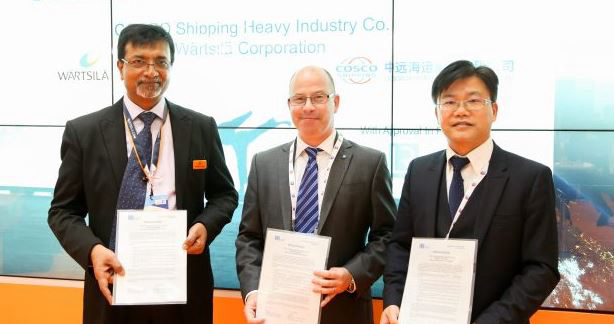
| Sanjay Verma, Wärtsilä, Jim Smith, Lloyd’s Register and Zhao Zhijian, CHI with the Natural Gas Operating Fleet concept’s AiP Certification |
The aim of the concept is to offer global operators a more efficient and economical fleet design that meets current and anticipated environmental requirements according to the classification rules. The fleet comprises four vessels; a pusher tug, LNG storage barge, LNG regasification barge, and a floating liquefaction natural gas barge. The pusher tug can be used to transport the three barges.
The concept’s main advantages are its operative flexibility, and the fleet’s competitive CAPEX and OPEX costs. The pusher tug makes all the units mobile and transportable. The number and choice of units will depend on the project, since not all of the concept’s units are necessarily needed for every project. For example, the concept can be utilized to act as an LNG carrier (using only the pusher tug and LNG storage barge), or it can be used for more complex projects involving liquefaction and regasification systems (using all units). The modular design of Wärtsilä’s liquefaction and regasification units makes this an ideal concept for gas plants in the 50-200 MW range. The low draft design also makes it very attractive for gas power plant projects in South East Asia.
The project has attained the authority of China’s National Patent Office and has been conceptualised by CHI. The design and engineering development, especially in relation to the hinge joint, mooring arrangement, ship type and seakeeping analysis, has also been carried out by CHI. Wärtsilä has supported this project through its extensive experience and expertise in supplying LNG systems for the complete gas value chain. It is expected that when ordered, the fleet vessels will include Wärtsilä dual-fuel engines and steerable thrusters, the Wärtsilä LNGPac gas storage and supply system, a Wärtsilä liquefaction module, a Wärtsilä LNG cargo handling system, and a Wärtsilä regasification module.
“This is a new and innovative fleet concept that is designed to create better efficiencies for companies involved in any part of the natural gas supply chain. By combining CHI’s know-how in this field with Wärtsilä’ s vast technological competences, we have together taken yet another step forward in creating an optimal LNG supply chain,” says Sanjay Verma, Director, Business Development, South East Asia, Wärtsilä Marine Solutions.
“We have worked together with Wärtsilä for many years in various marine and offshore projects. Wärtsilä has the technical leadership and a broad portfolio of products and solutions in LNG systems for marine applications, and is a partner that we enjoy working with. This natural gas operating fleet concept is a new and exciting development, which should bring extensive customer benefits. CHI will continue to focus on LNG related business, and extend its market influence, research and development for LNG projects.” says Mr.Zhao Zhijian General Manager of CHI technical R&D center.
“LR has completed a preliminary hazard identification (HAZID) study for this innovative design. This study covered the fuel gas supply system, the transfer of LNG between the vessels, as well as the mooring arrangement of the fleet, and as a result the Approval in Principle certificate has been issued,” says Ms Wei Ying, Principal Specialist & General Manager, Shanghai Technical Support Office, Lloyd’s Register Marine & Offshore.
Source & Image credit: Wärtsilä
Hellenic Register of Shipping: Provision of consultancy to Kenya Maritime Authority

The tender was awarded to HRS’s subsidiary, HRS East Africa, having established offices in Nairobi and Mombasa, in July 2016. Our partner in this project was the Hellenic Institute of Transport / Center for Research and Technology Hellas (HIT/CERTH). The study was carried out within a period of 3.5 months, from September to mid December 2016. Working in close collaboration, HRS and HIT provided KMA with an integrated consultancy plan consisting of a full set of proposals, with emphasis on practical measures and recommendations.
 |
The research and consultation came up with practical recommendations for the improvement of transport systems providing guidance for the short and long term initiatives that could improve on the one hand the infrastructural supply and on the other hand stimulate the emerging transportation demand, spurring thus a cycle of enhanced economic activity and socioeconomic development. Emphasis was given on fast track proposals towards the development of multi-modal transport and more specifically maritime transport to fully exploit the potential for cross border maritime transport of passenger and goods.
 |
Based on HRS experience and understanding of maritime safety and security regulations, the in depth examination of the Kenya legislative framework identified possible improvements that could be used to fill the existing regulatory gaps. The proposed legislative framework amendments ensure the safety and security of the human life and property during maritime activities in Kenyan inland waters.
Key study results were presented during the validation workshop, 8th December 2016, regarding the adoption of the outcome of the study and recommended interventions by KMA. The workshop took place at Kisumu providing stimulus and an opportunity for further consideration among the stakeholders.
hrsorg.gr
Asia Dirty Tanker Market Outlook Q2 2017: A Glimmer of Hope
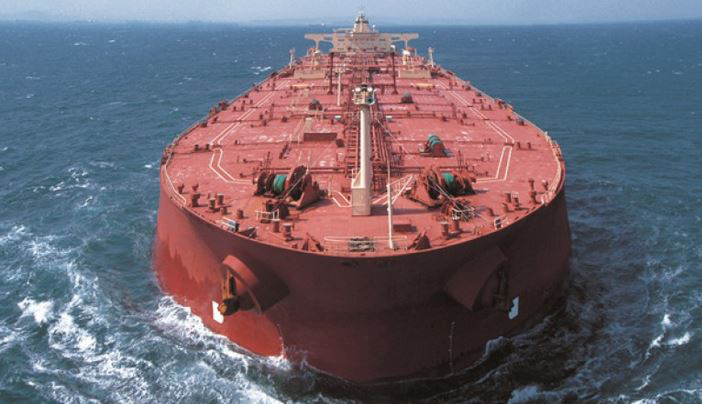
According to Lloyd’s List Intelligence, new tonnage delivered hit 15m dwt in Q1 and is expected to stand at 8.7m dwt in Q2. The gradual but steady unwinding of floating storage in global hotspots due to a flattening Brent futures curve is likely to release a constant stream of tonnage into the market, exacerbating the situation of oversupply.
The negative impact of unusually heavy refinery turnarounds in Asia as well as OPEC production cuts seems to have been offset by increased ton-mile demand from a surge in long-haul shipments, which has put a floor under tanker spot rates. Around 2.6 mmb/d of Asian refining capacity is expected to be offline in April (up by 87\% y-o-y), before easing to 2.1 mmb/d in May and 974 kb/d in June.
According to a Platts Survey, OPEC compliance has been robust, averaging 115\% over January to March. Amidst such bearish factors, a recent spike in long-haul trades from the Americas has provided a much-needed boost to the Asian VLCC market. Around 27 VLCCs are headed to Asia in April, with not all cargoes confirmed. Of the 27 VLCCs, 11 are exCaribs, 7 ex-Brazil, 3 ex-Uruguay, 3 ex-USGC, 2 ex-Venezuela and the remaining from Mexico. While such arbitrage trades remain dependent on crude price spreads, Asian buyers are expected to continue turning to sources from afar to make up the supply shortfall from the OPEC production cuts.
We might see some recovery in VLCC rates at the end of Q2 as peak turnaround season comes to an end and a slowdown in newbuild deliveries takes place. Lower cargo flows from Iran and Iraq are expected to add downwards pressure to the Suezmax market in Q2. Iraq has been steadily trimming its crude exports in accordance with its pledged production cuts. Iraqi crude exports averaged 3.33 mmb/d in Q1, down by 5.2\% from December’s record high of 3.5 mmb/d. While Iran is exempt from the OPEC output cuts, it has been grappling with raising crude exports due to sharp drawdowns of floating storage as well as depleting mature oil fields according to Thomson Reuters Oil Research. A relatively weaker VLCC segment is also likely to put a lid on further growth in Suezmax rates as it is currently around $3.67/T cheaper to load cargoes on VLCCs. The Asian Aframax segment may find some support from growing exports from Kozmino which are expected to expand by 10.2\% from Q1 to 655.5 kb/d in Q2.
With ADNOC’s 127 kb/d RFCC unit at Ruwais out of commission until 1Q 2018 as reported by Reuters, increasing fuel oil flows out of the AG may lead to an incremental increase in demand for Aframaxes. In recent months, ADNOC has been exporting on average 4 to 5 Aframaxes of fuel oil from Ruwais per month since the shutdown of the RFCC unit.
Source: OFE Insights
Capesize Market Still on Bullish Mode for the Long Term, Despite Recent Drop
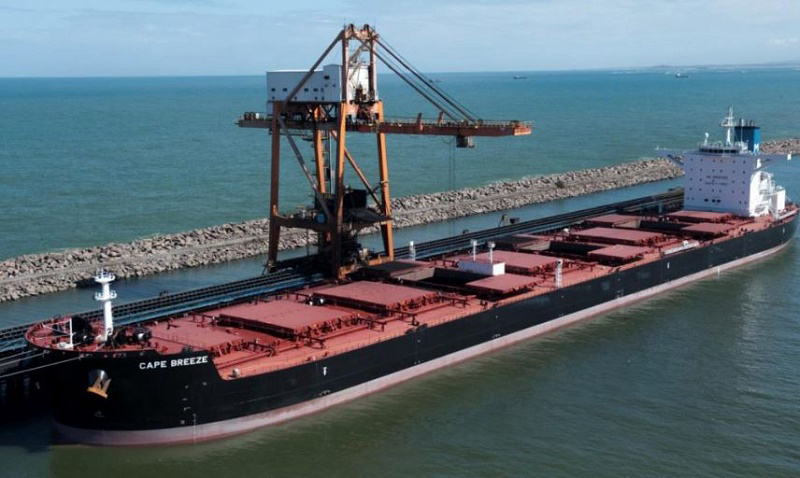
Support and resistance remaining the same as we have not reached our first downside target of US$ 13,643 yet. The stochastic is now showing a bearish cross and this would suggest that the index has more potential downside at this point. We are also seeing a drop in open interest suggesting market longs are starting to exit on higher volume. Any rejection of the downside support at US$ 13,643 – US$ 13,176 would have potential bullish connotations going forward. Technically the trend remains bullish within a long term range.
Capesize May 17 Daily
Support – 15,723, 14,420, 13,790
Resistance– 17, 100, 17,330, 17,550
Quick note on April, weakening momentum has now put the futures back onto support levels which continue to hold. The longer term trend remains bullish on the May futures as we continue to make higher highs and higher lows. Technical resistance is between US$ 17,100 – US$ 17,550, a rejection of this level would suggest a pullback to the US$ 15,723 support, with secondary support at US$ 14,420. Note the stochastic is failing to make new highs in line with price creating a bearish divergence. Not a sell signal, however it will become relevant on any pullback from the resistance levels mentioned. Caution on a close below US$ 14,420.
Capesize Cal 18 Daily
Support – 13, 660, 13,075, 12,350
Resistance – 15,370, 16,535, 16,700
Last week we noted that momentum was weakening, however we remained in a bull trend and it was not yet a sell. Sideways action resulted in a breakout to the upside resulting in fresh market highs, keeping the trend momentum bullish. Technical resistance is between US$ 15,370 – 16,700 with the first resistance being the range resistance between June – July 2015. A close above this level is likely to push the Cal 18 up to the tertiary resistance at US$ 16,700. Market sellers should remain on the side-line as the trend remains bullish. A close below US$ 13,660 is needed to break the upward trend cycle (or a lower high) and until this happens we remain technically in a buyers’ market.
Capesize Q2 V Cal 18 Daily
Support – 607, 370, 159
Resistance-1,506, 2,331, 2,862
Last week we noted weakening momentum in a bullish trend, with US$ 370 being a key level for buyers. Technically the Q2 v Cal 18 spread remains in bullish territory as it has remained above US$ 370 (low US$ 607) before rallying to US$ 1,488. The stochastic is now showing a bullish cross and at 44 has room to the upside. This would suggest that we have the potential to test recent highs in the near term at US$ 2,331. Technical sellers need to see a close below the US$ 607 before looking to enter from the sell side as the technical remain bullish, or a failure below recent market highs.
Trade recovery expected in 2017 and 2018, amid policy uncertainty

Powered by  © Μaritimes 2019