


ECSA trusts that IMO can deliver an ambitious initial CO2 reduction strategy for international shipping
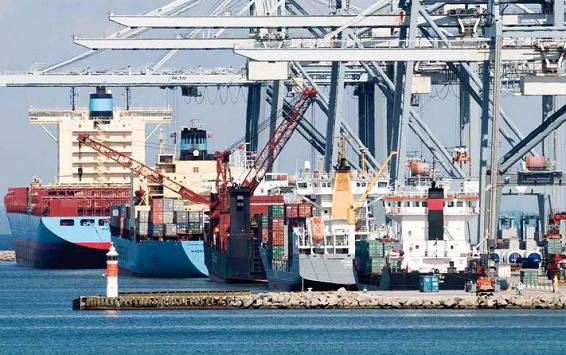
Realising that governments have to take and give during the negotiations, which will not be easy and requires courage to do, ECSA is confident that ultimately all governments will realise that a deal has to be made. A deal based on the ambitious European approach, taking into account legitimate concerns of developing countries and of countries threatened in their existence by a rising sea level, is in the opinion of ECSA possible and necessary. European governments can be the driving force in reaching an agreement that strikes the right balance between the interests of all countries worldwide.
ecsa.eu
If an initial strategy is agreed upon, this will give a clear and much wanted signal to the shipping industry and all other organisations in the maritime cluster to move full speed ahead to a fully decarbonised shipping industry as soon as possible. Alternative low carbon or carbon free fuels, alternative propulsion systems and operational measures will be absolutely necessary to reach that ultimate goal. Much R&D has to be done, for which public funding will be an important source of finance. Also by taking other smart and effective measures governments can speed up the developments, for example by supporting first movers and adapting or introducing legislation to accommodate new concepts.
On the short and medium term other CO2 emission reduction measures are possible and should be introduced and implemented as soon as possible after a thorough assessment of all related aspects, to prevent mistakes that might harm longer term developments.
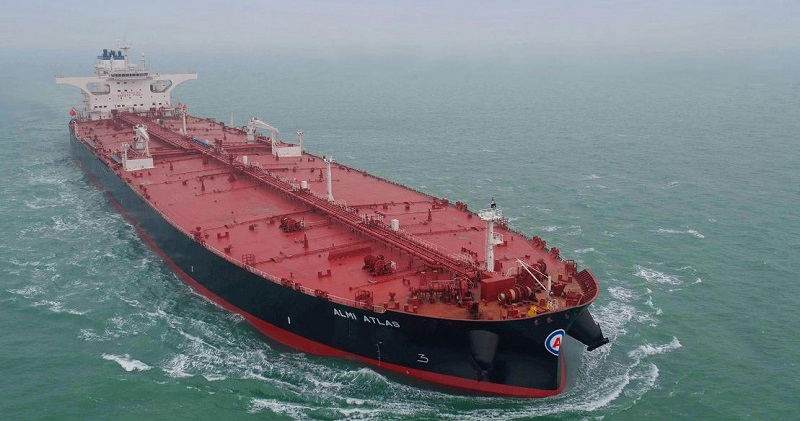
Delivery of VLCC M/T Almi Atlas
 |
The Almi Atlas was designed in accordance to the latest regulations and industry requirements in order to satisfy our customers’ needs, therefore special emphasis was placed on creating an environmentally friendly design. The vessel is among the most Eco-friendly ships worldwide, designed with our responsibility to safeguard the environment in mind.
Among other eco-friendly technologies on board, the Almi Atlas is equipped with the HYUNDAI-B&W 7G80ME - C9.5 - EGRTC (Tier III) Green-type engine - she is one of the first vessels of her size with a Tier III engine. The G-type is an ultra long stroke engine, which, in conjunction with a larger diameter propeller, offers significant fuel savings and produces less emissions than engines with the same output, thus classifying it as one of the most environmentally efficient propulsion systems. The vessel is equipped with the Hyundai HiBallast HiB 6000ex Ballast Water Treatment System and is one of the first vessels worldwide fitted with SOx Scrubber going above and beyond industry requirements in a constant effort to anticipate and satisfy customer needs.
Almi Tankers recognises the need to consistently and continuously improve performance, especially in environmental issues. Therefore, all vessels in Almi Tankers' fleet will always be equipped with top of the line technologies to enhance safety and ensure the best possible protection of the environment. The vessel specifications reflect Almi Tankers' aim of ensuring reliable and efficient operation throughout the vessel's life.
The Almi Atlas flies the Liberian flag and is classed under DNV-GL.
http://almitankers.gr
RINA’s Hellenic Technical Committee focuses on Digitalization
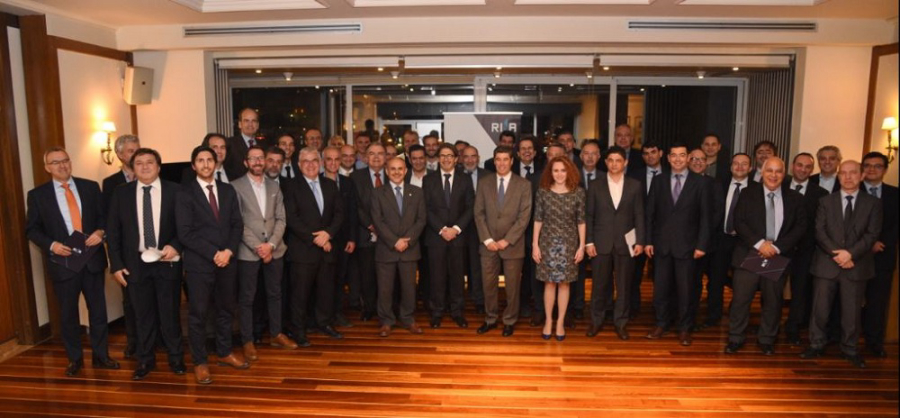

Spyros Zolotas, RINA Marine Greece & Black Sea Area Director, welcomed the members and thanked them for their continuous support. “The Greek and Cypriot owned RINA fleet significantly increased in 2017 and the expectations for 2018 are very positive as well. This is the way the industry gives us recognition for making a difference with our people and quality of services”, Zolotas said.
The Co-Chairmen of the Committee, Mr. Theo Baltatzis, General Manager of Technomar Shipping Inc. and Mr. Akis Tsirigakis, General Manager of Nautilus Marine Acquisition Corp., welcomed the new members and explained RINA’s achievements in the last year and the challenges that our industry is facing.
According to Clarksons, RINA’s classed fleet had a growth rate of +7.1\% in 2017, the highest among all classification societies, and now is composed of 6000 ships for about 41 million GT. Its marine international network has been growing constantly and currently counts over 170 Offices worldwide. With a newbuildings portfolio of over 4.5 million GT and some very sophisticated projects in progress worldwide, like the dual fuel cruise vessels for Carnival Group or other hybrid propulsion projects, RINA is today at the forefront of technology. The yachting business continues to be very active and RINA’s fleet counts about 1300 classed yachts with another 250 yachting projects ongoing worldwide.
An overview of RINA, its financial results of 2017, as well as its new organization dedicated to five sectors (Marine, Energy, T&I, Industry, Certification) was presented by Stefano Bertilone, RINA EMEA & Italy Marine Business Development Director, with his presentation “Results and future Strategies”.
The technical part of the meeting included information on all the new Rules and Regulations from IACS and IMO presented by Michael Markogiannis, RINA Greece Plan Approval Head. His presentation on “Rule Updates” was highly appreciated by all technical members of the committee and it’s not a surprise considering the high number of regulations entering into force presently and in the near future and their impact on the decisions taken by shipping executives.
RINA’s focus for 2018 and the years to come is on digitalization, so Giampiero Soncini, RINA Marine Innovation Senior Advisor, was the appropriate executive to give the big picture of the relevant challenges for the Marine Industry.
Alessandro Pescetto, RINA Marine Innovation Sector Head, continued with more details on RINA’s services and strategies in the digital sector by offering a presentation on “State of the art of the digitalization process / RINA’s ideas for the future”.
The technical part of the meeting was concluded with an interesting presentation by Panagiotis Kitsakis, SKF Services & Solutions Engineer, who informed RINA’s HTC members about latest developments regarding “Predictive maintenance: old idea, new technologies”.
The issues presented and discussed raised a lot of interest and ignited an exchange of views among the members that continued in a lively atmosphere during the dinner in the beautiful environment of the Club.
RINA a wide range of services across the Energy, Marine, Certification, Transport & Infrastructure and Industry sectors.
With a turnover in 2016 of 448 million Euros, about 3,700 employees and 170 offices in 65 countries worldwide, RINA is a member of key international organizations and an important contributor to the development of new legislative standards.
www.rina.org
Weekly Market Analysis
Dry Cargo
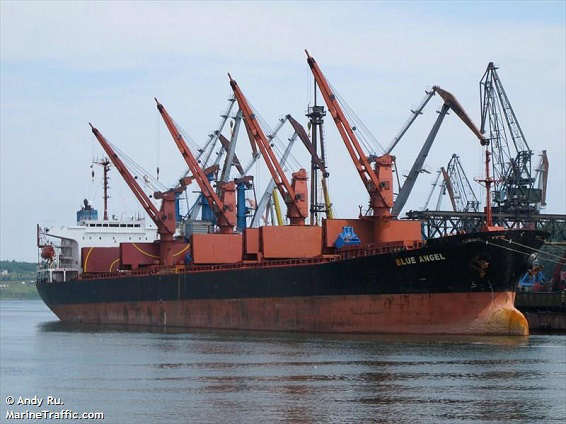
Another week with staggering rates for Capesizes, softening earnings for Panamaxes and steady ones for Supramaxes. Australia and Brazil iron ore exports currently don’t provide a firm support for tonnemiles. This loose picture is also supported by the fact that spot Australian iron ore price has dropped almost 15\% since the beginning of March. Nonetheless, if the drop in Chinese flat and construction steel stockpiles carries on, it could signal the start of construction activity. This, along with the fact that Chinese government wishes to keep steel mills’ profit margins at sustainable levels, by retaining a steady price differential between iron ore and steel, could help market to become bullish.
A worrying factor steaming from US tariffs could possibly affect heavily the scrap market. What remains to be seen is whether the excess supply of steel from China will be supplied to continent market, causing the steel prices to collapse. India is somehow protected against a supply glut in their market, mainly due to the imposed tariffs on steel originating and exported from China. But how much the other market will be affected is something that will see in the long term.
Wet Cargo
This week we have witnessed an improvement in the crude oil market, mainly supported from the improved earnings for the VLCCS in WAF-East routes. However, this improved picture doesn’t provide an indication for the behavior in the market in the long term, since winter has already passed for the Northern Hemisphere, and seasonally the market drops until the 3rd quarter. What remains to be seen is how fast-rising output from US shale will cap prices and how intensively scrapping activity will continue. Based on our records, 18 VLCC’s have been sold for scrap since the beginning of the year, whereas for the same period in 2017, 2 vessels only have reached sub-continent beaches.
GOLDEN DESTINY Research & Valuations Department
WISTA Hellas : 23rd Annual General Assembly
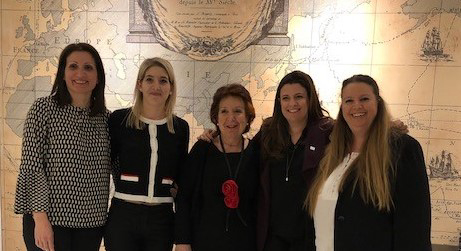

L-R Maria Angelidou, Marsia Ioannidi, Ioanna Topaloglou, Elpi Petraki, Angie Hartmann.
BOARD OF DIRECTORS
1. President: Angie Hartmann, Crew Manager, Starbulk S.A.
2. Vice-President: Petraki Elpiniki-Natalia, Director, Enea Management
3. General Secretary: Ioanna Topaloglou, Orion International Brokers and Consultants Ltd.
4. Treasurer: Maria Angelidou, Group Marketing Manager, Gulf Agency Company Limited
5. Board Member: Maria Sofia Ioannidi, Compliance Officer, Aspida
SUBSTITUTE BOARD MEMBERS
1. Christiana Prekezes, HELMEPA
2. Angeliki Karagianni, Business Partner, Karagianni Bros Marine & Industrial Products
3. Iris D. Liaskoni, Marketing & Business Development Coordinator, Seascape Ltd.
AUDITING COMMITTEE
1. Elizabeth Ioannidi, Oceanbulk Maritime S.A.
2. Kolliopoulou Vivi, Thenamaris Shipmanagement Inc.
3. Vicky Roussos, J.G. Roussos Shipping S.A.
It was a successful event attended by 65 members, while 22 more voted through proxies. The Association’s members were updated on WISTA Hellas’ overall activities during the last year of service, as well as major activities of WISTA International and in particular, were made aware of its annual financial status and the budget for 2018. A lively exchange of views, ideas and information between members present (representing all facets of the maritime industry) ensued, relating to the future conduct and activities of the Association.
WISTA Hellas is part of a greater international body of professional women actively involved in the global industry of shipping and trade spanning 34 countries. Many of its members play key roles in the companies they represent. Such diversity of professionals within a single industry has been a major factor in promoting the goals of WISTA by encouraging commercial and educational interaction on many levels.
Greek shipping fleet hits all time high in 2017
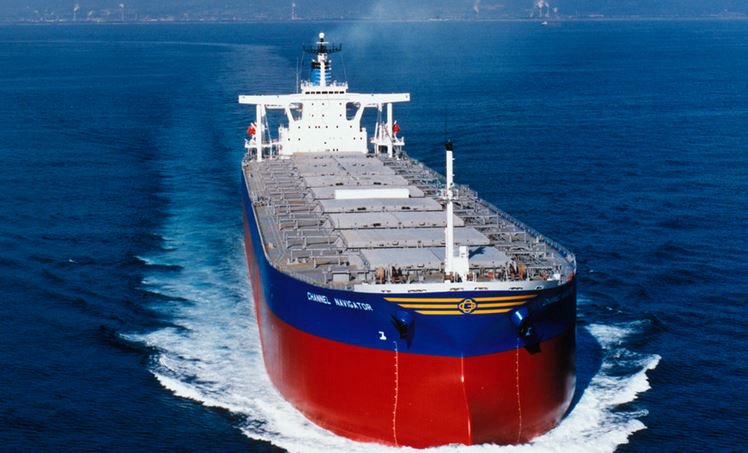
The Greek fleet of ships over 1,000gt stood at 4,148 ships of 342m dwt and 199.3m gt mid-March, an increase of 64 vessels, 13m dwt and 6.88m gt, on 12 months ago. The carrying capacity and gross tonnage have bounded along to all-time highs, with the Greek armada now just short of the 4,173 strong fleet in 2008, pre-crisis
Latest figures include 200 vessels of 24m dwt and 14.2m gt on order according to a study compiled for the 31st consecutive year by the London-based Greek Shipping Cooperation Committee (GSCC).
Greek flag loses out
However, the home flag continues to leak decreasing in all categories, though the sizable losses of recent years has been stemmed. The Greek flag flies over 723 ships (down 24 ships), of 74.54m dwt (down 670,000 dwt) and 43.4m gt (down 320,000 gt).
The fleet is registered under 41 flags, with the home flag the third choice, but top when it comes to carrying capacity. Liberia and the Marshall Islands continue their tussle for top flag choice, with both recorded as having 824 ships, ahead of Greece and Malta's 694 ships. In terms of dwt, after Greece comes Marshall Islands 65.9m dwt and Liberia 65.08m dwt.
The Greek flag has a 21.8\% of the total dwt of the Greek owned fleet.It is notable that Greeks control 26.4\% of the world tanker fleet and 16.2\% of the ore and bulk fleet. Overall, the Greek owned fleet comprises 7.6\% of the world’s ships, 13.8\% of the gt and 16.4\% of the dwt, all up a shade on March 2017. Average age of the fleet in ship terms increased slightly to 10.6 years, but still 2.8 years below the world average.
Seatrade (UBM (UK) Ltd).
David Glass
Greece Correspondent, Seatrade Maritime
New Board of Directors of HELMEPA
Chairman:
Dr George Gratsos
Vice Chairman:
John Xylas
General Secretary:
Irene Daifas
Special Secretary:
Aikaterini Los
Treasurer:
Nicolas Bafaloukos
Deputy Treasurer:
Michael Dalacouras
Members:
(in alphabetical order)
Athanassios Beis
Marietta-Antonia Chandris
John Chalas
George Karageorgiou
Ilias Ladas
Dimitrios Matthaiou
Semiramis Paliou
Aristidis Pittas
Panagiotis Zachariadis
Assuming his duties, the Chairman thanked his Colleagues for honoring him with their vote and stated that the Board and he personally will make every effort so that HELMEPA continues its voluntary work of informing and mobilizing the human element in Shipping and the wider society.
OSV YTD Scrapping Rates Increase by 153\%
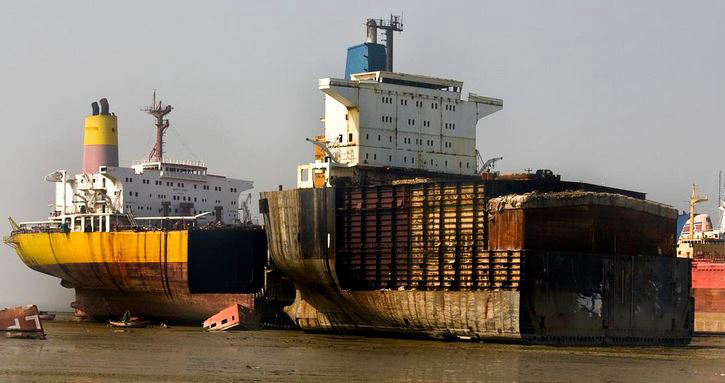
Though this is justified, rewind to pre-downturn, these debt free older vessels were able to get work on a fairly regular basis, and were a cashflow generator for owners.
The abrupt way in which the offshore party ended in 2014/15 meant that due to their aforementioned earning power, owners have many now idle old OSVs on their books. No one knew the downturn would be so severe, but analysts and market commenters were quick to point to the high number of these older vessels as one of the principle problems with the overall market.
 |
During the first years of the downturn (2015-2016), owners resisted the calls to scrap, no doubt thinking of how these vessels were solid earners in previous years.
However, as the severity of the downturn increased and the likelihood of these older vessels returning to work began to diminish, owners have slowly come round to the importance of scrapping these vessels. So far in 2018, 43 OSV vessels have been sold for scrap. In the first three months of 2017 only 17 vessels were sold. This increase shows owners are biting the bullet and realising that if they are to survive these poor market conditions, they need to think of the future market rather than the market of the past.
Despite the low scrap value of old OSVs, owners are putting faith in the restructuring process and emerging a leaner entity on the other side. A prime example of this being Tidewater, who are unsurprisingly top of the scrapping leaderboard selling 13 vessels for scrap in 2018.
source: VesselsValue Analyst
ECSA urges parties at IMO to conclude on ambitious GHG reduction targets
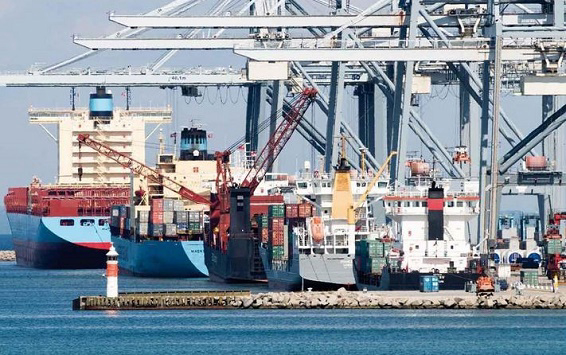
ECSA’s President Panos Laskaridis said: "With the IMO MEPC 72 meeting fast approaching, the European Shipowners reiterate their strongest possible commitment to the development, within the time schedule agreed in the Roadmap, of an ambitious and realistic IMO strategy on GHG, including CO2 emissions reductions from shipping as a whole and urges Member States to work diligently towards this goal".
The shipping industry has traditionally spared no effort to enhance the safety and environmental protection and is by far the most energy efficient transport mode. It was also the first industrial sector, way ahead of any other global industry, to be regulated by legally binding global regulations to reduce its CO2 emissions, through two IMO’s measures, the Energy Efficiency Design Index (EEDI) and the Ship Energy Efficiency Management Plan (SEEMP), both in force since 2013. IMO’s proven track record in developing pioneering and technically feasible environmental measures should be entrusted and supported.
Mr. Laskaridis firmly believes that the conclusion of an agreement at the forthcoming IMO MEPC 72 is imperative for addressing GHG emissions reductions from international shipping meaningfully and effectively and it is committed to facilitate this process, working closely and in good faith with all stakeholders.
The European Shipowners believe that all proposals by IMO Member States should be discussed on their own merit, as the negotiations have reached a very sensitive and political stage. Mr. Laskaridis concluded by saying that: "It is in this context that ECSA strongly supports and advocates an insightful compromise approach by Member States and the European Institutions in order to reach an agreement, which is the objective for the benefit of the industry and the environment".
ECSA.EU
The new Board of Directors of ThPA SA

SEGT Ltd consists of "Deutsche Invest Equity Partners GmbH" (47\%), "Terminal Link SAS" (33\%) and "Belterra Investments Ltd" (20\%).
Mr. Sotiriοs Theofanis, the coordinator of DIEP GmbH-Terminal Link SAS-Belterra Investments Ltd, was appointed as Chairman of BoD and Chief Executive Officer of ThPA SA, and the Managing Director of Terminal Link SAS, Mr. Boris Wenzel was appointed as Alternate Chairman of the Board of Directors.
The composition of the new Board of Directors of ThPA SA is as follows:
Sotirios Theofanis, Chairman of BoD and Chief Executive Officer of ThPA SA, executive member
Boris Wenzel, Alternate Chairman of BoD, non-executive member
Arthur Davidian, non-executive member
Angelos Vlachos, independent non-executive member
Alexander-Wilhelm Von Mellenthin, non-executive member
Panagiotis Alevras, independent non-executive member
Gavriel Ioannou, non-executive member
Panagiotis Michalopoulos, independent non-executive member
Yung YU, non-executive member
The new Chairman of BoD and Chief Executive Officer of ThPA SA, Sotiriοs Theofanis, after expressing his thanks to the outgoing administration for its contribution to the operation of the Port, said: "The prospects for the Port of Thessaloniki are extremely positive and we will concentrate our efforts to strengthen its position in the Southeastern European port services market. We are ready to implement our investment plan and we will keep open channels of communication with all stakeholders. I am convinced that the Port of Thessaloniki has the prospects to become a hub of strategic interest for Mediterranean, the Balkans and Southeastern Europe and play a leading role in the development of Northern Greece".
The new Board of Directors will take over, after an official ceremony, which will take place on Monday, March 26, at 12 noon, at the Port of Thessaloniki’s administration building.

Powered by  © Μaritimes 2019