


Acquisition of controlling stake in Hellenic Seaways Maritime s.a.
 |
Attica Group already owned 1.61\% of HSW's share capital through its 100\% subsidiary “Blue Star Ferries S.A.”. Following the latest acquisition, the total number of shares held by Attica Group is 39,039,833 shares, or 50.30\% of HSW's share capital.
In line with previous announcements, Attica Group will proceed immediately with the completion of the required contractual actions to acquire an additional 48.53\% of HSW's share capital from “Minoan Lines S.A.”, which will raise its total stake at 98.83\% of the share capital of HSW.
Cruise Lines International Association Updates Official 2017 Global Passenger Numbers
The industry has surpassed the 2017 ocean cruise passenger projections, reaching 26.7 million cruise passengers globally up from a projection of 25.8 million. For 2018, based on the new vessel launch schedule and expected regional deployment, CLIA is projecting another positive year-over-year growth for the industry with a passenger forecast of 28 million.
“Once again, the cruise industry has raised the bar and exceeded projections and expectations,” said Cindy D’Aoust, president and CEO, CLIA. “I am proud to be a part of this dynamic industry that continues to grow and evolve bringing the cruise vacation experience to millions each year.”
Global Ocean Passenger Growth and Volume by Region
Asia, accounting for about 15 percent of total global ocean passenger volume in 2017, experienced a 20.5 percent increase last year in comparison to 2016. Domestically, the U.S. and Canada saw impressive ocean passenger growth in 2017 with a 5 percent increase over the prior year. Australia also experienced some positive growth at around 5 percent. Europe also remains strong with recording a 2.5 percent global passenger growth over 2016.
North America represented the largest ocean passenger volume in 2017 (49 percent) with a total of more than 13 million ocean cruise passengers followed by Europe (26 percent) with nearly seven million ocean cruise passengers.
- North America (49 percent)
- Europe (26 percent)
- Asia (15 percent)
- Australia/Pacific (5.4) percent)
- South Central America (3.2 percent)
- Other (1.6 percent)
Demographics and Preferences of Global Ocean Passengers
New analytics also reveal the average age of global ocean passengers last year was 47 years old. These passengers also preferred cruising for an average of 7.2 days, 2 percent lower than the average cruise length in 2016.
For more information, the latest research findings and visuals, please click here.
About Cruise Lines International Association (CLIA) – One Industry, One Voice
Cruise Lines International Association (CLIA) is the world’s largest cruise industry trade association, providing a unified voice and leading authority of the global cruise community. The association has 15 offices globally with representation in North and South America, Europe, Asia and Australasia. CLIA supports policies and practices that foster a safe, secure, healthy and sustainable cruise ship environment for the more than 26 million passengers who cruise annually and is dedicated to promoting the cruise travel experience. The CLIA Community is comprised of the world’s most prestigious ocean, river and specialty cruise lines; a highly trained and certified travel agent community; and cruise line suppliers and partners, including ports & destinations, ship development, suppliers and business services. The organization’s mission is to be the unified global organization that helps its members succeed by advocating, educating and promoting for the common interests of the cruise community. For more information, visit www.cruising.org or follow Cruise Lines International Association on CLIA Facebook and Twitter pages.
LNG for shipping makes headway through Poseidon Med II
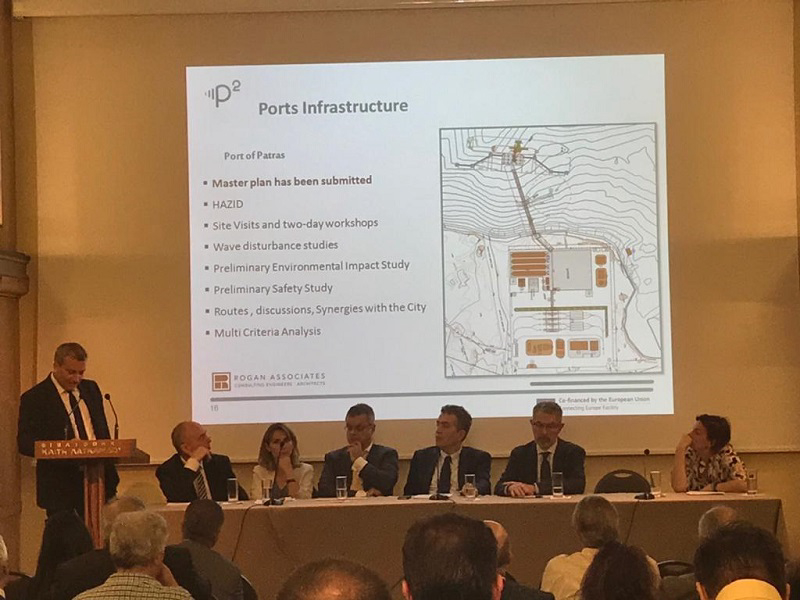
This is one of the key highlights expressed by George Polychroniou from DEPA during his introductory speech at 21st May event, taken place at the Historical Library of Aikaterini Laskaridis Foundation, which was co-organised by the Hellenic ShortSea Shipowners’ Association (HSSA) and the Association of Passenger Shipping Companies (SEEN) within the framework of European co-funded Poseidon Med II project.
The event was officially opened by Nikos Liapis, Board Member of HSSA and Michalis Sakellis, President of SEEN, who endorsed Poseidon Med II work on developing a sustainable supply chain for the use of LNG as fuel in Eastern Mediterranean, expressing the current conditions and status of the Greek passenger & short-sea shipping sector.
The gap between MGO and LNG current price and the potential for a cost-effective transition; the Poseidon Med II contribution to the forthcoming Presidential Decree for LNG Bunkering operations in Greece which will allow Simultaneous Operations (SIMOPS) under specific conditions; the mature Poseidon Med II work in designing LNG-powered vessels, including a cost-verification for LNG bunker vessel by European shipyard; the key figures of LNG port installation in Patras; the factors that influence LNG bunkering costs and finally the available EU funding tools to support the switch to alternative fuelled-vessels and the proposal to treat them as infrastructure particularly for insular communities’ mobility were at the core of the presentations by key Poseidon med II partners which triggered discussion with representatives from the shipping industry.
This event underlined how Poseidon Med II work could support the greek shipping society to improve their emissions performance with the view of 2020 sulphur cup implementation and build a social corporate responsibility profile with tangible impact on quality of life for people living near ports. By leveraging knowledge on regulatory, technical, financial and technological aspects, Poseidon Med II team aims at creating the necessary confidence that by 2020 there will be a sustainable, reliable and financial sound LNG as fuel option for greek shipping sector.
What is Poseidon Med II project?
Poseidon Med II project is a practical roadmap which aims to bring about the wide adoption of LNG as a safe, environmentally efficient and viable alternative fuel for shipping and help the East Mediterranean marine transportation propel towards a low-carbon future. The project, which is co-funded by the European Union, involves three countries Greece, Italy and Cyprus, six European ports (Piraeus, Patras, Lemesos, Venice, Heraklion, Igoumenitsa) as well as the Revithoussa LNG terminal. The project brings together top experts from the marine, energy and financial sectors to design an integrated LNG value chain and establish a well-functioning and sustainable LNG market.
 |
| Snapshot from the panel, Poseidon Med II event at Laskaridis Historical Library,21/5/2018 |
|
|
||||
|
|
||||
|
|
||||
|
|
||||
|


ABS Evaluation Demonstrates Feasibility of LPG as Fuel Strategy for Dorian LPG
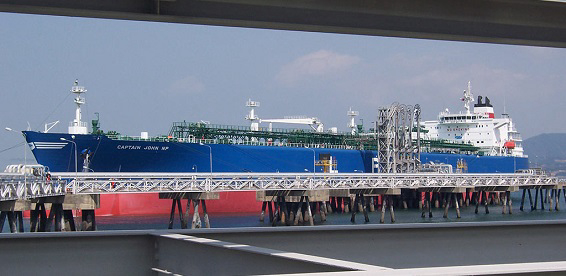
“As owners and operators evaluate their compliance options for the impending 2020 Global Sulfur Cap, it is critical to understand how each option will impact their fleet and operations,” said ABS Senior Vice President for Engineering and Technology, Derek Novak. “We worked closely with Dorian LPG throughout this evaluation to demonstrate the feasibility of applying LPG to power their fleet.”
Through this evaluation, ABS and Dorian LPG compared the economics of various fleet compliance options, including LPG as a marine fuel, installation of scrubbers and use of low-sulfur fuels. ABS and Dorian LPG performed a comprehensive LPG as fuel technical evaluation which considered current applicable regulations and potential future requirements on air emissions, design capabilities and limitations, installation and safety requirements, operating features and equipment restrictions.
“This feasibility study gave us a model to benchmark all of our compliance options, including LPG as fuel, against one-another for the best long-term compliance solution,” said Dorian LPG Chairman, CEO and President John Hadjipateras. “We believe in the viability of LPG as a fuel source and see significant advantages over other potential sources, including LNG, methanol and marine gas oil. Importantly, our VLGCs were designed to meet tomorrow’s regulations, and this study confirms the wide range of options available to Dorian LPG for obtaining compliance with impending emissions controls regulations. With the results of the ABS economic analysis and technical evaluation of LPG as fuel, we have concluded a comprehensive survey of our options.”
As owners begin to prepare for compliance with impending air emissions requirements, they must ensure they have selected solutions that best meet their fleet needs. Through its techno-economic evaluation, ABS offers guidance that provides owners and operators confidence in their compliance strategies.
Source: ABS
World’s Ship Owners Warn About a Fuel Risk to Global Trade
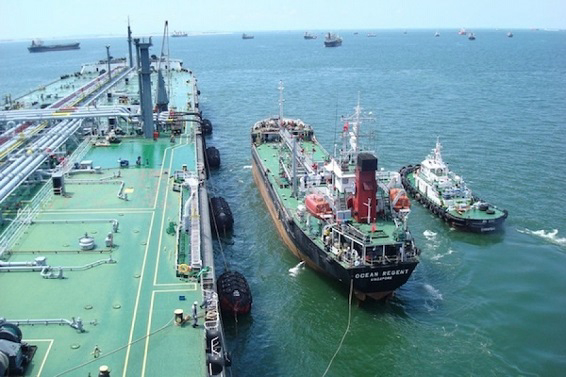
From January 1, 2020, the world’s ships will need to use fuel that contains no more than 0.5 percent sulfur, or be fitted with kit to remove the pollutant, under rules set out by the International Maritime Organization. The shift, announced in late 2016, requires significant investment in new projects among oil-refining companies that can sometimes take many years to plan and construct.
 |
“Unless a number of serious issues are satisfactorily addressed by governments within the next few months, the smooth flow of maritime trade could be dangerously impeded,” Esben Poulsson, chairman of the International Chamber of Shipping, said in an emailed statement. The ICS represents the world’s national shipowners’ associations, whose membership covers over 80 percent of the global merchant fleet.
The IMO is working with member countries, as well as with the refining and shipping industries to “identify and mitigate transitional issues so that ships may meet the requirement,” Natasha Brown, a spokeswoman, said in response to the statement.
Widespread disruption to cargo movements could have even more far-reaching economic consequences since the shipping industry handles about 90 percent of world trade. Refineries so far have offered mixed views about which fuels will prevail, according to Bloomberg surveys with dozens of owners of plants operating in Europe and Asia. There isn’t yet a single standard for a new fuel that’s been specified and agreed.
“At the moment no one knows what types of fuel will be available or at what price, specification or in what quantity,” Poulsson said. “Unless everyone gets to grips with this quickly we could be faced with an unholy mess with ships and cargo being stuck in port.”
The new rules are so far-reaching that they prompted Morgan Stanley to increase its oil price forecast because the bank anticipates a surge in demand from the shipping industry for so-called middle distillate fuels including marine gasoil. At the moment, the shipping industry primarily uses fuel oil, the residue left after more valuable products like gasoline, jet fuel and diesel are made.
The IMO, which is part of the United Nations, is insistent that the rules will proceed as planned and that there’s no scope for any kind of delay.
The lack of a global standard means there are safety issues too if ships take incompatible fuels on board, Poulsson said.
“Governments, oil refiners and charterers of ships responsible for meeting the cost of bunkers all need to understand that ships will need to start purchasing compliant fuels several months in advance of 1 January 2020,” he said.
source:www.bloomberg.com
Gunvor Group, Oceangold Tankers and Maas Capital Form ClearOcean Tankers JV
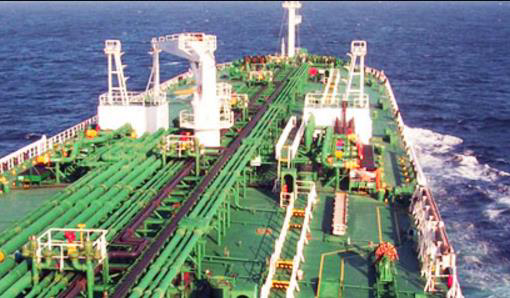
The three partners hold an equal share in ClearOcean Tankers, which has been incorporated in Cyprus.
ClearOcean Tankers has entered into shipbuilding contracts with STX Offshore & Shipbuilding Co. for four MR2 product tankers, and with Daehan Shipbuilding Co for two LR2 product tankers. All six of the contracted vessels will be delivered during the first half of 2019, and will be eco-friendly and scrubber-ready, in view of the International Maritime Organization’s (IMO) new standard for lower global sulphur emissions from international shipping that will be implemented in 2020.
Clearlake Shipping, Gunvor’s wholly-owned shipping division, has entered into long-term time charters for the vessels and Oceangold Tankers is also acting as construction supervision and technical manager of the vessels. ClearOcean Tankers may acquire additional newbuilding, resale or second-hand crude oil or product tankers in the future.
Jan Andersen, Head of Shipping at Clearlake, commented: “Expanding into vessel ownership and taking advantage of the historically low shipbuilding prices to contract eco-friendly, scrubber-ready newbuilding tankers represented an attractive opportunity. Teaming up with solid partners like Oceangold Tankers and Maas Capital enables us to control more vessels and to de-risk our investment.”
John Dragnis, CEO of Oceangold Tankers, commented: “We are delighted with the establishment of a unique partnership that brings together one of the largest charterers of product tanker vessels in the world with in-depth market knowledge, a ship owning and management group with unblemished track record and a financial investor with a longstanding track record in the shipping industry.”
Mark Ras, Managing Director of Maas Capital Shipping, commented: “This investment exemplifies our investment approach of acquiring top assets at a compelling price in partnership with top industry participants. We aim to invest together with leading and longstanding industry players and are excited about this new partnership with Gunvor Group and Oceangold Tankers.”
Source: Gunvor Group
Euroseas Ltd. Announces the Effectiveness of the Registration Statement and Approval for Listing on the NASDAQ Capital Market of EuroDry Ltd, its Drybulk Fleet Spin-Off
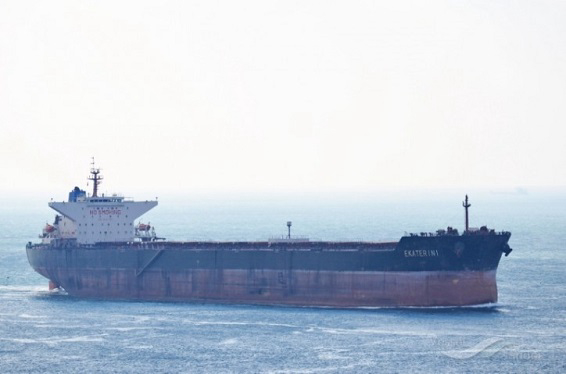
The Company also announced that the application of EuroDry Ltd. for listing on the NASDAQ Capital Market under the symbol “EDRY” has been approved.
Currently, EuroDry Ltd. is a wholly owned subsidiary of the Company. Shares of EuroDry Ltd. will be distributed on May 30, 2018 to shareholders of record of the Company as of May 23, 2018.
The Company’s shareholders will receive one share of EuroDry Ltd. for every five shares the Company they own. After the spin-off, the Company will continue owning and operating its containership fleet as the only publicly listed company focused on feeder containership vessels.
Shares of Euroseas common stock will continue to trade "regular-way" on the NASDAQ under the symbol “ESEA" through and after the May 30, 2018 distribution date. Any holder of shares of
Euroseas common stock who sells Euroseas shares "regular way" through the close of trading on May 30, 2018, will also be selling their right to receive shares of EuroDry Ltd. common stock in
the distribution, i.e. the purchaser of those shares will also be entitled to receive the EuroDry Ltd. shares distribution.
At the same time, Euroseas shares will also trade "ex-distribution" (that is, without the right to receive shares of EuroDry common stock in the distribution) beginning on or about May 24, 2018, and continuing through the close of trading on May 30, 2018, under the symbol “ESEAV."
Beginning on May 31, 2018, trading under symbol “ESEAV” will end and trading in Euroseas stock will reflect the distribution of EuroDry Ltd.
Furthermore, a "when-issued" public trading market for EuroDry Ltd.'s common stock will begin on or about May 24, 2018 on the NASDAQ under the symbol “EDRYV" and continue through the
close of trading on May 30, 2018. Beginning on May 31, 2018, "when-issued" trading under the symbol “EDRYV" will end and EuroDry Ltd. will begin "regular-way" trading on the NASDAQ under the symbol “EDRY"
Aristides Pittas, Chairman and CEO of Euroseas commented: “We are extremely excited with the spin-off and separate listing of our drybulk fleet into a separate publicly listed company, EuroDry Ltd. As we stated in our recent earnings call, we believe that this separation will unlock the value inherent in our fleet which is currently trading at a significant discount to its net asset value (“NAV”). We believe that by forming “pure” play companies we can more easily be compared to our peers and this is expected to result in a significant increase in our value for our shareholders as our sector-focused companies should trade closer to their NAV. We also believe that separate drybulk and containership investment options will give our shareholders the flexibility to adjust their holdings, if they so wish, between the two sectors. We also anticipate that the creation of sector-focused companies will allow the capital markets to appreciate the value that our public platforms can create as consolidators in their respective fields: EuroDry Ltd., a middle range drybulk owner that owns six vessels, three of which are newbuildings, one ultramax and two kamsarmaxes, built according to our specifications in the last two years and three highquality Panamax vessels Japanese-built post-2000; and Euroseas Ltd., the only US-listed feeder containership public company, with a fleet of eleven vessels that are proven workhorses of the sector.
We also expect that both EuroDry and Euroseas will trade much closer to their net asset value, like their peers, than the combined company does now.
“We plan to take advantage of growth opportunities, as they may arise, in each of the two sectors to increase the size of each respective company as we believe that they are both well positioned
to do so both in terms of their capital structure and their contract mix. Each of them being a public company with a cost-effective operating structure could be attractive to other small or large private fleets looking for opportunities to grow and obtain a public listing.”
 |
www.euroseas.gr
SAFETY4SEA Masterclass addresses top issues towards cyber hygiene for the industry
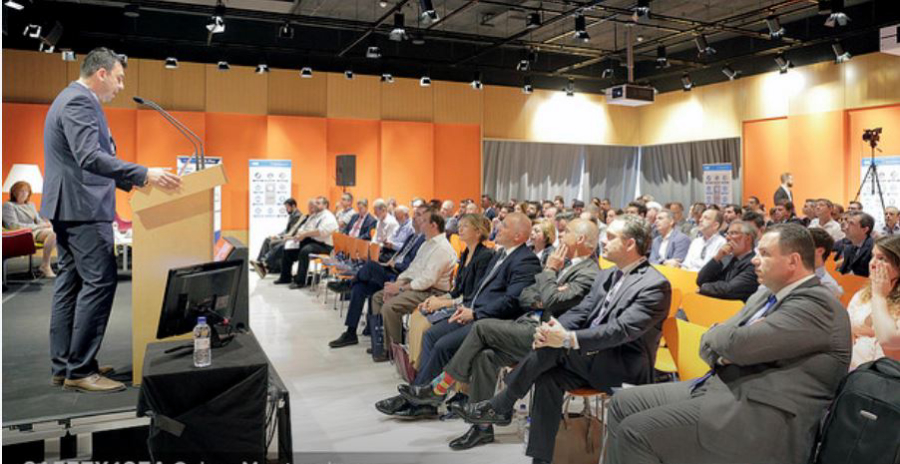
The pace of overall technology development has been unprecedentedly fast in the past few years and more developments are looming in the forthcoming years to make the smart shipping concept a reality. However, the 'smart era' escalates cyber security risks; last year shipping industry reported the first significant cyber incidents which rang the bell for this new kind of threats. Certainly, with the sheer amount of data getting generated globally across the shipping industry, cyber security is one the major issues that needs to be addressed.
The event, organized by SAFETY4SEA, brought together global experts who focused on the recent and future cyber challenges that shipping faces amid digital transformation. The presentations, which were given in two sessions, provided a comprehensive review of current cyber threats and outlook for effective ‘cyber hygiene’, examining both the theoretical framework and lessons learned from response to cyber-attacks that have been recorded.

Session # 1 – The Theoretical Framework
Mr. Max J.Bobys, VP Global Strategies, HudsonAnalytix, gave a presentation with the aim to initially characterize the rapidly evolving cyber threat landscape and place it in maritime industry context. The IMO’s current cyber risk management framework was presented and reviewed, including the identification and overview of associated standards, models and frameworks that provide its core foundation. Mr. Bobys also referred to common questions and key insights into the challenges today’s shipping companies are faced with, and discussed about the forthcoming trends. Concluding his presentation, he highlighted that an assessment approach for initiating organizational cyber risk management and sustaining risk reduction activities that’s consistent with the IMO’s guidelines, is essential to any organization.
Mr. Colin Gillespie, Deputy Director (Loss Prevention), The North of England P&I Club, highlighted that the risk of cyber-attacks is ever present across all industries and sectors. The IMO has recognized the threat of cyberattacks in the marine industry and will require ship operators to consider cyber risk management as a part of their safety management system. Mr. Gillespie briefly presented both the H&M and the P&I position towards cyber risks and preparedness. Also he gave the owner’s picture towards cyber seaworthiness and suggested available useful tools that can help to create awareness over the issue such the ‘Be Cyber Aware At Sea’ initiative and CSO Alliance. Finally, Mr. Gillespie highlighted that there is need to keep up momentum and dialogue to counter cyber security threats.
Mr. Nick Taylor, Consultant, Shoreline, provided feedback on the topic of Cyber or IT Security from the insurer’s perspective, noting that shipowners are facing a number of calls to address them across all aspects of their operations. The pressure is not yet as severe as that imposed by the Oil Pollution Act 1990, where attitudes to preventing environmental pollution had materially to change, and successfully so. In response to evident client demand to address the situation, the insurance industry has been led by Shoreline into offering to indemnify the financial costs of the disruption caused by a CyberCrime attack in respect of the whole business, at sea or ashore. Mr. Taylor further said that the insurance will take its place in accepting the transfer of those risks that are either too costly to prevent or where the threat remains as yet unrecognised, as an integral part of a well-developed risk management programme.
Mr. Chronis Kapalidis, Academy Stavros Niarchos Foundation Fellow, International Security Department, Chatham House, focused on the EU GDPR, an important legislation for the data protection, effective from May 25th2018, which is undoubtedly a great challenge for cyber security that cannot be ignored. In this regard, Mr. Kapalidis shared five best practices in order organizations to successfully comply with the regulation and at the same time effectively safeguard and secure personal data amid possible cyber threats. Therefore, it is important all organizations to invest in cyber security; decide to take up cyber insurance; report breaches responsibly within 72 hours as per regulation; understand the risks and not leave it to the IT team only; and finally regularly review procedures and not be complacent.
Session # 2 – The Practical Aspects
Mr. Demetres Armanes, PhD, Senior Research Engineer, Engineering and Technology, Global Ships Systems Center, American Bureau of Shipping, argued that cybersecurity is a wide-ranging, cross-platform issue for which ABS brings together information technology (IT) and operational technologies (OT) in a unique approach. This approach moves clients from a traditional set of basic procedures covering corporate organization and governance to a digitally informed, detailed capability and task-assessment cycle. In particular, it aims to identify and address Operational Technology (OT) cyber-risk vulnerabilities for marine and offshore assets and fleets with a view to compile an industry standard with actionable tasks to improve cyber intelligence and security implementation.
Mrs. Cynthia Hudson, CEO, HudsonAnalytix, delivered a presentation of the practical approach a ship operator must undertake in order to address the important risk of cyber security. The methods provided put the ship operator in control of this critical risk element and enables him to assess his exposure; identify and measure his present level of cyber readiness; and give him the tools to implement a robust enterprise wide sustainable cyber maturity program which is continuously indicating and documenting progress and achievements in the protection of the assets of the company.
Mrs. Eftihia Benaki, IT Manager, Minerva Marine Inc, referred to the three principal risks an organization could face in an event of cyber breach: Business Operational Risk, Reputational Risk and Legal or Compliance Risk. When it comes to shipping, she said, the risk may affect Safety and Environment, which makes it even more serious. Although IT Teams have been working on security for years, shipping industry is lately being forced with regulations to include cyber risk in its safety management system. Mrs. Benaki further explained that Minerva Marine is working on three pillars to address cyber security. The first one is to raise awareness, on shore and onboard, either with formal training courses or by alternative means. The second one covers the procedural part, with the help of a risk assessment platform and vulnerability assessments and the third one is investing on new technology to protect information and operational assets.
Mr. Apostolos Belokas, Managing Editor, SAFETY4SEA, provided lessons learned from recent cyber incidents and addressed future challenges. Mr. Belokas started his presentation highlighting that according to a recent survey by Allianz, cyber-crime is considered one of the top five risks in shipping. Considering all incidents so far, from attacks recorded in the maritime industry (Saudi Aramco, IRISL, Maersk, Clarkson) until the recent data security breach of Facebook, we certainly need to better prepare for the unknown challenges ahead by applying lessons learned, he commented. However, non-reporting of this kind of incidents and not testing of cyber capabilities do not help in tackling the issue. Concluding his presentation, Mr. Belokas further noted that mindset seems to be the biggest obstacle towards cyber hygiene; overall the resistance to change is of human nature.
All sessions ended with a round table discussion in which the audience exchanged ideas with high level experts of international repute on technological developments. Finally, Apostolos Belokas as the Event Facilitator thanked the delegates for their participation and the speakers for their excellent presentations and also the organizing team of the event for their contribution towards forum objectives. Explore more about the event at https://events.safety4sea.com/safety4sea-cyber-masterclass/
Video Presentations: All presentations will be made available on YouTube in high resolution within this month at the SAFETY4SEA Channel
Speaker Articles: Edited articles with key points of each presentation will be available at www.safety4sea.com under ‘Opinions’ column within this month
Event Photos: Available soon at SAFETY4SEA Flickr
Paper Magazine Coverage: Event will be covered on the next SAFETY4SEA Log due to be issued in June 2018! Event webpage: Stay tuned on masterclass webpage for further updates!
The 21st Annual Meeting of the Hellenic and Black Sea Committee of Bureau Veritas
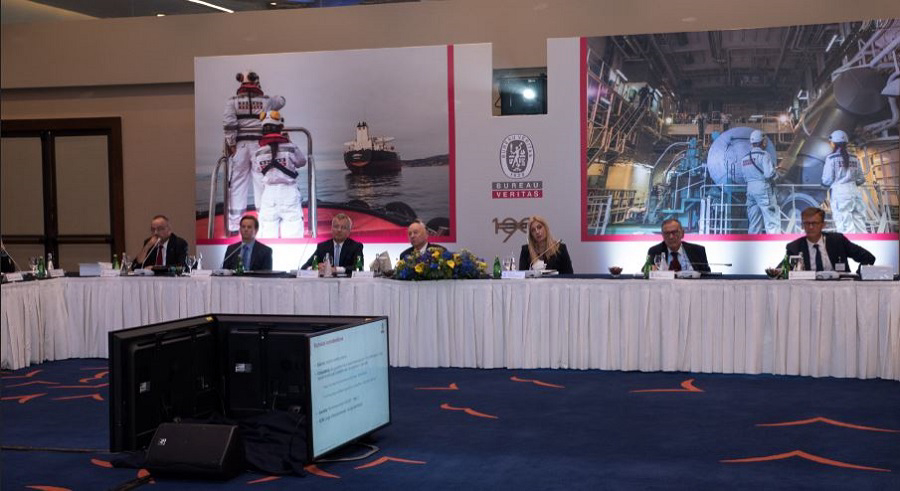
Hellenic & Black Sea Region, Mrs. Paillette Palaiologou, was held on the 18th of May 2018 under the Chairmanship of Mr. George Procopiou and the presence of the Bureau Veritas Top Management, namely Mr. Philippe Donche-Gay, President Marine & Offshore Division – Deputy CEO Bureau Veritas Group, Mr. Matthieu De Tugny, Chief Operations Officer Bureau Veritas M&O Division, Mr. Didier Bouttier, Senior Vice President M&O Division SEMEA Zone, Mr. Jean-François Segretain, Technical Director M&O Division, Mr. Nick Brown, Communications Director, Dr. John Kokarakis, Technology & Business Development Director M&O Division, Mr. George Andreadis, Marine Manager, Mr. Bill Stamatopoulos, Business Development Manager SE Europe–Marine Fuel Services & Mr. Michael Sterghiou, Director SE Europe Bureau Veritas Commodities .
This year the Committee took place at the Grand Resort Lagonissi in Athens.
Following the welcome and adoption of the agenda by the Committee’s Chairman, Mr. George Procopiou, a distinguished colleague of shipping, Mr. George A. Papagiannopoulos, Principal of Common Progress Compania Naviera S.A., was introduced as new member.
Mr. Philippe Donche-Gay opened the round of presentations with a critical review on the Bureau Veritas Group’s Corporate & Marine Activities & Results for 2017.
Subsequently, Mr. Jean- François Segretain made a presentation on the innovations in shipping today & focused on understanding risk, finding opportunity & CYBER challenges.
Mr. Tony Lauritzen, CEO of Dynagas Ltd, made a very interesting presentation on the LNG market, bringing about some rather interesting issues regarding current trends and future opportunities.
The presentation by Mr. Matthieu De Tugny focused on the current environmental issues, technical practice and propulsion options, with a report on BV’s successful activities in LNG as fuel as well as a look into the future.
Mr. Bill Stamatopoulos presented the various options to comply with the IMO 2020 global sulphur cap regulation. He explained the characteristics and the challenges associated with a variety of fuels.
The presentation by Dr. John Kokarakis dealt with the future challenge on the shipping industry, the decarbonization. He presented the recently unveiled IMO strategy, measures to achieve it as well as alternative fuels and sources of energy.
The meeting was concluded with the traditional heated discussion between the members on topics of evolving interest, and the social time during the lunch at the beautiful resort.-
 |
| Didier Bouttier, Tony Lauritzen, Philippe Donche-Gay, George Procopiou, Paillette Palaiologou, George Dalacouras, Matthieu De Tugny. |
 |
| 1st row L to R : George Mylonas, Michael Lavidas, John Kokarakis, Michael Bodouroglou, Elias Gotsis, Panagiotis Laskaridis, Marielena Procopiou, George Procopiou, Eliza Procopiou, Philippe Donche-Gay, Paillette Palaiologou, Adamandios L. Polemis, Dimitrios Sficas, George Dalacouras, Vassilios Th. Terzis, Semiramis Palios, Nikolaos Hondos, Nick Brown, Tony Lauritzen. 2nd row L to R: George A. Papagiannopoulos, Petros Spanos, Demetris Condylis, George Paul Perantzakis, Vassilis Papageorgiou, Nikolaos Balalis, Alexis Kondilis, Dimitris E. Patrikios, Paris Dragnis, Costas Diamantis, George Andreadis, Gabriel A. Panayotides, Michael Sterghiou, Panagiotis Petratos, Leonidas S. Polemis 3rd row L to R: Bill Stamatopoulos, Theodoros Savvas, Lambros A. Chahalis, Nicolas Chrissakis, Didier Bouttier, Jean-François Segretain, Matthieu De Tugny |
Strong programme raises profile of The Maritime Standard Ship Finance and Trade Conference
 |
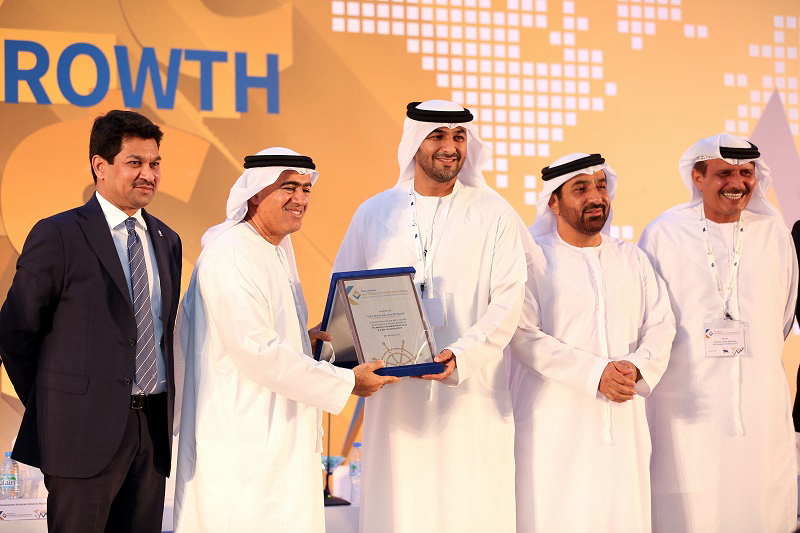
| (from left to right) Trevor Pereira, The Maritime Standard; H.E. Dr. Ali Obaid Al Yabhouni, UAE Ambassador to the People’s Republic of China; Abdulkareem Al Masabi, ADNOC Logistics & Services; H.E. Dr. Abdullah Salem Alkatheeri, FTA; Khamis Juma Buamim, Gulf Navigation Holding |
The theme of the event will be: “Converting greater optimism into sustainable trade growth”, which is highly topical and builds on the discussions that took place at last year’s event.
Clive Woodbridge, Editor and Conference Chairman, says, “There is a growing consensus that markets in many different segments of the shipping business are improving. Making the right decisions now as we hit the upturn will be crucial and this Conference is perfectly timed to signpost the way forward.”
The popular one day event is expected to attract over 150 senior executives from across the shipping, ports, finance, banking, trade and legal sectors, who will gather to debate and discuss the key issues and challenges facing the industry. In particular the conference aims to encourage dialogue and cooperation between the various sectors to achieve sustainable growth within the regional shipping and ports businesses, as well as an overall increase in trade activity.
Abu Dhabi Ports is a strong supporter of the Ship Finance and Trade Conference and believes the event is in a tremendous position to add value within the region. Captain Mohamed Juma Al Shamisi, chief executive, says, “We are very excited to be hosting The Maritime Standard Ship Finance and Trade Conference once again in Abu Dhabi. This conference brings together banks, financial institutions and shipping companies under the same roof and is the only one of its kind in the Middle East & Indian Subcontinent. I would encourage any business active in the shipping, ports and maritime sectors, as well as the financial world, to support, participate and attend this important conference.”
The event will kick-off with keynote presentations from renowned business and political leaders. There will then follow distinct conference sessions that will tackle topical themes. The main session in the morning will look at investing in infrastructure delivery, with a view towards unlocking trade potential. Topics that will be addressed include port investments in the Middle East, India and Sri Lanka, as well as the need to invest to capitalise on China’s New Silk Road and One Belt programmes.
Session 2 will look at the future of ship finance, and the implications of change in this sector for the shipping business in the Middle East and the Indian Subcontinent. Topics will include an assessment of alternative lending platforms, merger and acquisition activity and the requirements of the shipping industry from financial sector.
The third and last session will assess how best to support regional trade development. This will include case studies from the UAE commodity markets, maritime law issues, environmentally inspired investments and the development of new trade-supporting financial products.
Trevor Pereira, managing director of The Maritime Standard, says, “We are delighted to be returning to Abu Dhabi to hold this conference for the fourth time. The programme is an exciting and challenging one, with plenty to engage all sectors of the business. Our aim is to provide something that really sets it apart from other conferences in this sector and we are confident that we can achieve this goal.”
A top quality panel of expert speakers is being lined up by The Maritime Standard, and will include representatives from leading ship owners and managers, port operators, trade organisations, brokers and analysts, law firms and financiers.
The event has also secured sponsorship support from a number of top maritime companies and organisations, including Abu Dhabi Ports as the host sponsor, Kuwait Oil Tanker Company, Dubai Trading Agency, Bestar Consultancy Pvt. Ltd, International Shipping and Logistics FZE, ADNOC Logistics & Services, Dubai Maritime City and Sharjah Ports Authority.
The event is endorsed by The Federal Transport Authority-Land & Maritime. Supporting Associations for the event include: UAE Shipping Association (UAESA), The Organisation of Islamic Shipowners’ Association (OISA), The Dubai Council for Marine and Maritime Industries (DCMMI); Dubai Ship Agents Association (DSAA); Federation of National Associations of Ship Brokers and Agents (FONASBA); Institute of Chartered Shipbrokers; Nautical Institute; Indian National Shipowner’s Association (INSA); Pakistan Ship Agents Association (PSAA), Jordan Shipping Association, Supply Chain & Logistics Group, the Women’s International Shipping & Trading Association (WISTA) and the Baltic Ports Organisation.
The TMS Ship Finance and Trade Conference is certain to generate a high level of interest and places are strictly limited. For more information about how to register go to: http://www.tms-shipfinanceandtrade.com/conference/delegate-registration/
About The Maritime Standard
The Maritime Standard (TMS), publishes a regular e-newsletter aimed specifically at the shipping and maritime community. It is delivered fortnightly, on the 1st and 15th of every month. It delivers the most accurate, up-to-date news about the market and has built up the largest readership of any shipping-related online newsletter in the Middle East and India. It is also gaining popularity in other major shipping hubs, including Oslo, Hamburg, Singapore, London and Greece. The newsletter includes news and analysis from the shipping and ports industries and related sectors in the Middle East and the Indian Subcontinent. Topics that are covered include tanker shipping, container operations, dry and liquid bulk trades, ro-ro, and cruise shipping. In addition there is up to date information about regional terminal operations; port development; classification; ship repair and conversion; shipbuilding; ship agency; finance and insurance; maritime law; and transportation & logistics. The newsletter regularly carries exclusives, analysis and interviews with top executives.
TMS also publishes the very successful TMS UAE Yearbook. The first 2016/17 edition was followed by a second volume covering 2017/18, that was launched in July last year. Covering key developments across the country’s maritime sector, the annual publication aims to publicise the UAE’s achievements both locally and internationally, through in depth articles, researched first hand. These cover all the major sectors of the shipping, ports and maritime industry in the UAE. The articles, on terminals, shipping companies, shipyards, maritime law firms, classification, regulators and inland transport firms, among others, have been well received by the industry as a year round reference point. The Maritime Standard UAE Yearbook 2017/18 is a must-read publication for everyone interested in UAE maritime issues, and can be downloaded by going to: http://www.themaritimestandard.com/uae-yearbook- 2017-18
Preparations for the 2018/19 issue are well underway and this will be published in the summer of 2018.
Website: www.themaritimestandard.com
The not-to-be missed The Maritime Standard Awards recognise and celebrate success in the shipping, ports and related sectors across the Middle East and the Indian Subcontinent. The fifth edition of TMS Awards will take place on Monday, on 15th October 2018 at The Atlantis, The Palm, Dubai.
The Awards are now positioned as one of the world's leading shipping and maritime Awards gala dinners and are the premier event of their kind in the region. All of the four events to date have been held under the patronage of His Highness Sheikh Ahmed bin Saeed Al Maktoum, and have each attracted close to 700 of the region's elite shipping and maritime professionals, as well as a number of leading figures from overseas. These guests have come from a variety of industry segments, ranging from ports and terminal operators to ship owners and managers, and executives from the worlds of maritime law and finance, classification, ship building and repair and maritime education and training.
For the inaugural event in 2014 PR guru, journalist and writer Alastair Campbell performed as master of ceremonies, while in 2015 Dutch soccer legend, Ruud Gullit compered the event and in 2016 former CNN news anchor, Jim Clancy, was on stage to lead proceedings.
The 2017 TMS Awards event, which was hosted by the well-known actress and model, Lara Dutta, saw 20 general awards presented, following the recommendations of an elite, independent judging panel, as well as a number for special individual awards recognising the contributions made by high profile industry leaders and innovators. The Awards have set a benchmark within the industry and have become an eagerly anticipated meeting place for top executives from across the business, where they can meet, network and create new opportunities.
Website: www.tmsawards.com
The third Maritime Standard Tanker Conference will be held on 16th October 2018 at Atlantis, the Palm, Dubai. Attendees will include key decision makers and opinion formers who were able to discuss the challenges and opportunities that exist, not just for ship owners and operators active in the tanker markets, but those delivering products and services to this sector. The second TMS Tanker Conference took place on 24th October 2017 at the Grosvenor House Hotel, Dubai. Presentations were given by many of the region's leading tanker owners and operators, as well as experts in related fields. For more information about the 2018 event, which is at an advanced planning stage, please go to the website: www.tmstankerconference.com
The fourth Maritime Standard Ship Finance and Trade Conference will be held on 6th November 2018 at Sheraton Abu Dhabi Hotel & Resort. The Conference will bring together experts from the fields of shipping, ports, banking, finance, trade and maritime law, among others, to discuss and debate the key issues and trends facing the shipping business, and trade, in the Middle East and the Indian Subcontinent. The third TMS Ship Finance and Trade Conference took place at the Sheraton Abu Dhabi Hotel and Resort, on November 8th 2017, building on the success of the first two events, held in 2015 and 2016 respectively. Speakers shared their insights and knowledge through a series of presentations and panel discussions, signposting the way forward. For more information about the 2018 event, please go to: www.tms-shipfinanceandtrade.com

Powered by  © Μaritimes 2019