


Capesize Index- a lower low and lower high would suggest the technical is weakening
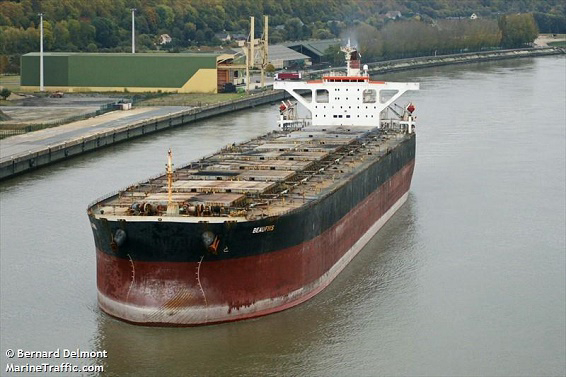
ov – the previous wave made a higher high and a lower low suggesting the trend lacks direction, and has the potential to enter a consolidation phase. Caution on a close below USD 18,050.
Cape Q4 17 – Like the Nov futures we have the potential to enter a consolidation phase with the stochastic suggest upside moves could be limited. A close below USD 17,630 would suggest downside continuation and consolidation would be unlikely.
Cal 18 – Technically bearish, there is a potential that we could see a bullish divergence on a close below USD 13,374. Market sellers need to be cautious they do not get caught on a false breakout.
ExxonMobil Survey Reveals No Clear Route to Compliance with 2020 Global Sulphur Cap: Results highlight confusion and importance of trusted fuel suppliers
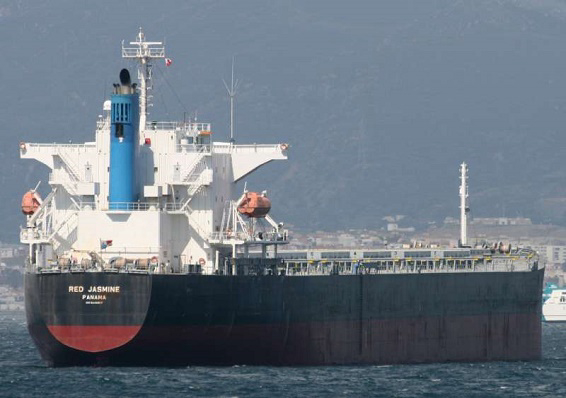
Results highlight an ongoing sense of confusion and lack of preparedness, with 70\% of respondents saying that they do not believe the industry is ready for the deadline. The makeup of the marine fuel mix in 2020 and beyond is a clear area of concern, with wide-ranging views from the industry on how the landscape will evolve.
Thirty-two percent of those surveyed predict that a combination of heavy fuel oil, marine gas oil and fuels and blends will be used, while 69\% believe the cap will lead to the development of new low sulphur fuels.
“At ExxonMobil we expect that new 0.5\% fuel formulations will emerge, based on low sulphur refinery streams, in addition to novel fuel blends,” said Iain White, Global Marine Marketing Manager at ExxonMobil. “As a result, it’s likely we will see increased compatibility and stability problems, which will make purchasing fuels from a trusted supplier more important than ever.”
The cost implications of the cap were also highlighted as a potential challenge; with 53\% of respondents predicting an increase in fuel spend.
When asked about the uptake of liquefied natural gas (LNG), 31\% of respondents believe there will be a growth in its adoption as a marine fuel. These findings align with ExxonMobil’s 2017 Outlook for Energy: A View to 2040, which predicts that by 2040 global LNG consumption will rise to more than two and a half times the 2015 level.
Forty-five percent of respondents predict an increased investment in abatement technologies (scrubbers). However, only 11\% said they were actively looking to install a scrubber before 2020, with 40\% citing a lack of economic clarity as a reason for forgoing investment.
“The results of this survey show that that we are heading to a multi-fuel future and that there is not one obvious fuel solution that will apply to all vessels,” said White. “To avoid the pitfalls that may lie ahead, it’s vital that operators work closely with trusted fuel suppliers to ensure that they select the best route to compliance for their vessel’s needs.”
Source: ExxonMobil Marine
Container shipping faces 'massive' overcapacity in Q4: SeaIntel
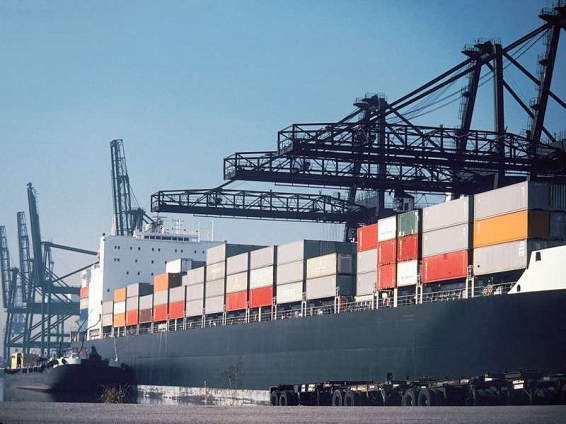
According to SeaIntel as the industry moves into the fourth quarter it has failed to make capacity cuts seen in previous years as the peak season comes to an end.
“We are now heading into the fourth quarter, where we would expect to see the traditional culling of deployed capacity relative to the peak season third quarter, but the current capacity outlook does not show a Q4 drop in deployed capacity in line with past years,” SeaIntel said.
Over the past five years container lines have blanked an average of 25 sailings on Asia – Europe in Q4 and 67 sailings on the transpacific of the quarter.
On the Asia – North Europe trade in the 2012 to 2016 period capacity contracted by an average an average of 6.6\% in the fourth quarter, but this year just 0.8\% of capacity is scheduled to be taken out in Q4 – this equates to roughly one sailing per week.
On the Asia – US West Coast trade capacity has contracted an average of 4.5\% in Q4 2012 – 2016, meaning that close to two sailings a week need to be blanked in the fourth quarter of this year.
On the Asia – US East Coast far from capacity being cut in Q4 2017 it is forecast to grow 4.1\% over Q3, and what SeaIntel described as a “staggering” 21.9\% growth year-on-year. To cut capacity to the same levels as Q4 2016 an average of 2.5 sailings per week would need to be cancelled.
http://www.seatrade-maritime.com
Last chance to nominate for the 2017 Greek Shipping Awards
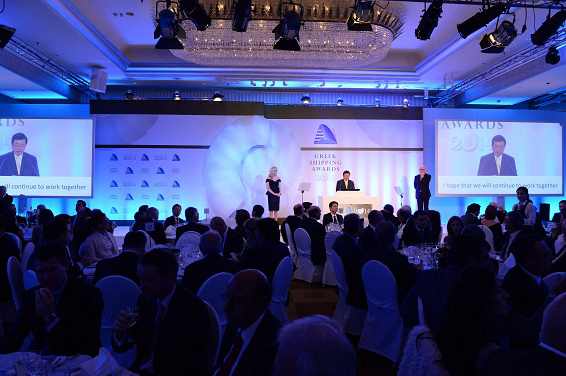
Nominations close on Wednesday October 18 for the 2017 awards, which once again are supported by a host of industry organisations and sponsors headed by lead event sponsor ClassNK.
For long-term shipping players, turbulent, even depressed, spells in the industry always mean there will be winners and losers. At such times the task of deciding criteria for adjudicating the year’s most award-worthy performers if anything becomes tougher.
That is part of the job of the independent judges who will decide the winners of this year’s Greek Shipping Awards, and this year’s panel of luminaries looks more than capable of applying high standards and taking tough decisions.
Some are experienced hands from previous awards years, such as Chairman of the Greek Shipping Co-operation Committee Haralambos Fafalios, Chairman of Helmepa George Gratsos, Secretary General Emeritus of the IMO Efthimios E. Mitropoulos, President of the Hellenic Chamber of Shipping George Pateras, Maritime Historian Gelina Harlaftis and Panhellenic Seamen’s Federation general secretary Capt. John Halas.
Making their first appearance on the judging panel are Vasilis Bacolitsas Chairman of Intertanko’s Hellenic Mediterranean Panel, Irene Daifas President of the Piraeus Marine Club and Stavros Hatzigrigoris Chairman of the Marine Technical Managers Association.
More than 65 prominent personalities from Greek shipping have taken part in the awards judging panel, which is refreshed each year. Over 170 trophies have already been presented at the event, now in its fourteenth year, which has established a reputation as the largest international maritime awards ceremony worldwide. This year’s awards dinner will be held at the Athenaeum InterContinental hotel in Athens on Friday November 24.
The awards always attract a high number of very competitive nominations underlying the strength in depth of the Greek shipping community, while audiences at the presentation dinner have averaged 1,000 leading shipping personalities and their guests.
The opportunity to nominate is flung open to anyone connected with shipping, from the most prestigious owner to the humblest clerk, and in exercising their objectivity down the years the judges have played a key role in establishing the awards’ reputation for fairness and credibility.
The judges can only select winners from those nominated in writing by the deadline of Wednesday October 18. You can nominate on-line via the website www.greekshippingawards.gr. Nominations for the Greek Shipping Awards are also accepted by simple email or fax (email: This email address is being protected from spambots. You need JavaScript enabled to view it.; fax: +30 210 4291196)
Remember to provide reasons why your candidate would make a deserving winner.
SAVE THE DATE:
Lloyd’s List Greek Shipping Awards 2017 Gala Dinner – Friday November 24, 2017.
2017 Awards Categories
Dry Cargo Company of the Year
Sponsored by Marichem Marigases
Tanker Company of the Year
Sponsored by Bureau Veritas
Passenger Line of the Year
Sponsored by Palumbo Shipyards
Shipbroker of the Year
Sponsored by the Tsakos Group
Shipping Financier of the Year
Sponsored by Tototheo Maritime
Piraeus International Centre Award
Technical Achievement Award
Sponsored by DNV GL
International Personality of the Year
Sponsored by Capital Ship Management Corp.
Ship of the Year
Sponsored by RightShip
Award for Achievement in Education or Training
Award for Achievement in Safety or Environmental Protection
Sponsored by Lloyd’s Register
The Next Generation Shipping Award - NEW
Sponsored by IRI / The Marshall Islands Registry
Lloyd’s List Intelligence Big Data Award
Lloyd’s List / Propeller Club Lifetime Achievement Award
Sponsored by Cyprus Department of Merchant Shipping
Greek Shipping Personality of the Year
Sponsored by Eurobank
* Denotes awards not decided by the panel
AWARDS NOT OPEN TO OUTSIDE NOMINATIONS
Seafarer of the Year
Sponsored by Tsavliris Salvage Group
Greek Shipping Newsmaker of the Year*
Sponsored by ExxonMobil
“Maritime Cyprus 2017” Conference is reaching a successful completion
 |
On Monday morning the President of the Republic of Cyprus delivered the opening address. The President referred to the Cyprus shipping sector as the only sector in Cyprus whose size goes far beyond the size of Cyprus as a country and that Cyprus Shipping holds a privileged position on the world’s shipping map. The President noted that the Cypriot economy is one of the fastest growing of the European Union whereas foreign direct investment has significantly increased. The shipping sector has been catalytic to the recovery of the Cyprus economy. Shipping and its sustainable growth is thus one of the main concerns and priorities of the Cyprus Government, the President mentioned. The President announced the materialisation of the Cyprus Government’s commitment to establish an independent Deputy Ministry for Shipping which will start functioning as from 1st March 2018.
The first session’s theme was “Future Shipping Strategy: Regulators vs. Industry”. Views were aired on the future challenges for commercial shipping, with the importance of intensifying cooperation between all players in the maritime sector, ensuring a level playing field, and preparing today the shipping of tomorrow. All panellists agreed that they do not see there is as a question of "regulators versus industry". There is a long and successful history of regulators and industry working together to achieve common, shared objectives; objectives which, if achieved, will have a beneficial and positive effect not just on the industry but far beyond. It was stressed that the regulators need to be more proactive and the speed of adapting to technological developments should increase.
The second session of the first day of the Conference concentrated on the issue of “Tanker Owners; An Endangered Species?”. The discussion focused on whether the tanker owners are facing an endangered future. The panellists analysed the fact that although the demand for oil is changing due to the shift to renewable sources of clean energy, the need for transporting crude oil and oil products with tanker vessels will not extinct. It was mentioned that it is not possible that the world will no longer need crude oil and clean products or that oil will be able to be transported from source to consumption without using tanker vessels. The panellists concluded that tanker owners are vulnerable but certainly do not constitute an endangered species. They noted that they anticipate an improvement in the market. Maintaining a balance between supply and demand is essential for ensuring a bright future for tanker owners.
The third panel of the first day of the conference explored the theme “What does the future hold for Shipowners”. The panellists mentioned that the market is improving and that the very bottom ship prices belong to the past. There is a substantial increase in the dry cargo ships’ rates and a slight increase in the rates for container ships thus the future looks promising. The supply and demand of bulk carriers seem satisfactory. Shipowners are not discouraged from ordering new ships but they should do so prudently and wisely. It was noted that the preceding year was a record year for scrapping of ships whereas the following year will be a record year for lowest deliveries of new ships. The ship finance parameters were analysed and it was stressed that once better rates are made available, there will be ample ship financing. Finally, the importance of innovation was highlighted and so was the existence of quality focused services.
The second day of the conference commenced with a panel discussion on the theme “The cost of smoke”. The debate was focused on air pollution burden imposed by shipping, which has led to an upsurge of international, regional and national regulations. Panellists referred to the implementation of the new EU Regulation of Monitoring, Reporting and Verification (MRV) of CO2 emissions from large ships using EU ports and on the further reduction of SO2 emissions. During the debate, panellists agreed that Liquefied Natural Gas (LNG) is maybe the fuel of the future. From the insurance perspective, it was noted that greener ships will not automatically get a discount in premiums as premiums are based on claims records. However, a less greener ship has a higher probability to have a worse claims record. Thus, there are indirect incentives on insurance with respect to greener ships. The panellists highlighted that climate change and environmental protection require a global response particularly when dealing with actions from the shipping sector. Maritime transport is widely recognized as an environmentally sustainable and energy efficient mode of transport.
The second panel of the second day of the Conference inquired into "Smart Shipping”. On novel ship design, it was mentioned that newly designed ships have additional and novel equipment on board that make ships more efficient. This equipment will lead to decreased air emissions from such new ships. With regard to digitalisation, it was emphasised that it is coming to the shipping industry fast thus, the industry needs to be ready to embrace its benefits and prepare for the threats it poses such as cybersecurity. Autonomous ships will become a reality but we should not expect to see unmanned ships for many years to come since seafarers on board cannot be replaced by vulnerable digital systems. On cybersecurity, it was stressed that cyber risk is here to stay for both companies and ships. The shipping industry constitutes a target for cyber attacks since a lot of information and money is at stake. Therefore, the shipping industry should take protective measures.
Yesterday afternoon the “Young Executives” session took place organised by YoungShip Cyprus. Young people had the opportunity to discuss and exchange interesting views on the session´s theme “Challenging the Business Model”. The speakers stressed the importance of start up, innovation and employment of new key technologies, ensuring at the same time the eco-friendly and sustainable growth.
Today’s 3rd day discussions commenced with an address delivered by the Mayor of Limassol, Mr. Nicos Nicolaides on the theme “Limassol as a maritime and energy hub”. Then a discussion followed on “Market Forecasting”. It was noted that freight profitability remains a tangible target for the very near future. Moreover, it was stressed that the market is currently experiencing a relatively better fundamental balance between supply and demand. The importance of maintaining a significant level of demolition activity was mentioned as shipowners can control the supply of vessels since the demand side is beyond their control.
The second discussion of today’s deliberations inquired into the theme “Drilling Forward”. The panelists analysed the potential of the hydrocarbon discoveries in the Eastern Mediterranean Region as well as the geopolitical aspects. Large discoveries in the region and the prospect of substantial hydrocarbon resources have sparked major international interest. It was empasised that the exploitation and export of these resources present numerous technical, administrative, security, legal and political challenges.
Dear all. Another successful Maritime Cyprus Conference has come to an end. I would like to thank all of you for joining us and especially those that came from abroad. Particular thanks are due to our high calibre speakers, panellists and moderators. Furthermore, I would like to reiterate my sincere thanks to the Conference co-organisers the Cyprus Shipping Chamber and the Cyprus Union of Shipowners, as well as to all Conference sponsors.
Once again I would like to thank you all for being with us and we look forward to welcoming you to Maritime Cyprus Conference 2019. I do therefore officially declare Maritime Cyprus 2017 Conference closed.
ClassNK again leads strong support for the 2017 Greek Shipping Awards
 |
LEADING classification society ClassNK for the eighth consecutive year is supporting the Greek Shipping Awards as overall sponsor.
The Japan based class society began its relationship with Greek shipping’s premier annual event, in 2009 as sponsor of the ‘Ship of the Year’ category.
ClassNK heads a fresh wave of support for the glittering annual event, which will see top companies engaged in various maritime sectors sponsoring this year’s event.
Janet Wood, sponsorship manager for the Awards, says: “We are very proud of the quality of the companies sponsoring the Greek Shipping Awards, many of whom have been loyal supporters for a number of years and it is nice to welcome new and returning supporters. We are delighted to have a major organisation of ClassNK’s high standing as our Event Sponsor, and we are also very proud to have a company as prestigious as China Classification Society sponsoring the Champagne Toast.
The full list of current sponsors for the 2017 Greek Shipping Awards is:
Event Sponsor: ClassNK
Champagne Toast: China Classification Society
Welcome Reception Sponsor: Malta Ship Registry
Awards Sponsors:-
Bureau Veritas
Capital Ship Management Corp.
Cyprus Dep. Merchant Shipping
DNV GL
Eurobank
ExxonMobil
IRI /The Marshall Islands Registry
Lloyd’s Register
Marichem Marigases
Palumbo Shipyards
RightShip
The Tsakos Group
Tototheo Maritime
Tsavliris Salvage Group
The Greek Shipping Awards is also proud to be supported by a number of prestigious industry organizations. The following are official supporting organisations for the 2017 Greek Shipping Awards:-
The Union of Greek Shipowners
The Hellenic Chamber of Shipping
The Greek Shipping Co-operation Committee
The Hellenic Shortsea Shipowners Association
The Association of Greek Passenger Shipping Companies
The Hellenic Shipbrokers Association
Helmepa
The Propeller Club – International Port of Piraeus
WISTA Hellas
Piraeus Association for Maritime Arbitration
The Association of Banking & Shipping Finance Executives of Hellenic Shipping
SAVE THE DATE:
Lloyd’s List Greek Shipping Awards 2017 Gala Dinner
Friday November 24, 2017
Athenaeum InterContinental, Athens
“Limassol as a maritime and energy hub”
 |
The first discussion relating to “Market Forecasting” was moderated by Mr. Bob Jaques, Editor of Seatrade Maritime Review. The panelists for this discussion were Mr. Alfred Hartmann, President of the Association of German Shipowners (VDR), Mr. Fotios Katsoulas, Shipping Data Manager and Fleet & Newbuilding Analyst of Affinity Research LLP and Mr. Peter Sand, Chief Shipping Analyst of BIMCO. The discussion was focused on the current market trends. It was noted that freight profitability is a tangible target for the very near future. It was stressed that the market is currently experiencing a relatively better fundamental balance between supply and demand. The importance of maintaining a significant level of demolition activity was mentioned as shipowners can control the supply of vessels since the demand side is beyond their control. It was mentioned that a substantial demand in dry bulk was noted in the first half of this year, a clear sign of positive development in the industries affecting global shipping. With regards to oil tankers it was mentioned that the market will increase by 2020 provided that the balance between supply and demand is maintained. The tanker fleet is still growing while scrapping is affected by the current age profile of the fleet. Reference was made to the orders of the largest container ships in the world in September 2017. The decrease of the life expectancy of the container vessels was mentioned and it was stressed that a 9 year old container vessel was scrapped. Mention was also made to the collapse of Hanjin Shipping and the necessary market’s recovery period. Container rates have shown an increase during the last months and hence the market looks promising.
The second discussion inquired into “Drilling Forward”. The Moderator for this Discussion was Mr. Sony Kapoor, Managing Director of “Re Define” – Institute for New Economic Thinking whereas the panel was comprised of Mr. George Lakkotrypis, Minister of Energy, Commerce, Industry and Tourism of the Republic of Cyprus, Mr. George Papanastasiou, Managing Director of VTT Vasiliko Ltd and Mrs. Elfride Covarrubias, Business Development Manager for Italy and Mediterranean Area of DNV GL. The panelists analysed the potential of the hydrocarbon discoveries in the Eastern Mediterranean Region as well as the geopolitical aspects. Large discoveries in the region and the prospect of substantial hydrocarbon resources have sparked major international interest. The Eastern Mediterranean remains one of the world’s most under-explored areas. These discoveries offer major opportunities in terms of energy security, economic prosperity and regional cooperation. It was stressed that the exploitation and export of these resources present numerous technical, administrative, security, legal and political challenges. Therefore, these resources should be developed for the benefit of all the countries in the region in order to avoid causing any unnecessary disputes to the already volatile Eastern Mediterranean Region. Reference was made to the strategy of the Government of the Republic of Cyprus on oil & gas and it was mentioned that it inter alia includes the geopolitical alignment with the countries in the region and companies operating from Cyprus, the exploration and exploitation of the hydrocarbons, the infrastructure and the relevant legislation. It was stressed that Cyprus should invest in the future of renewable energy sources as well as in education.
Following this last debate, the Permanent Secretary of the Ministry of Transport, Communications and Works, Mr. Alecos Michaelides, delivered the Conference’s Concluding Remarks. The Permanent Secretary thanked all the participants and high calibre speakers, panellists and moderators as well as the Conference sponsors and co-organisers the Cyprus Shipping Chamber and the Cyprus Union of Shipowners.
US labor market strength likely to lead to near-term monetary policy tightening
Indeed, the unemployment rate declined by 0.2 pps to 4.2\%, its lowest level since February 2001 and 0.4 pps below Fed’s estimate for NAIRU (Non-Accelerating Inflation Rate of Unemployment).
Wages increased by a solid 2.9\% yoy in September from an upwardly revised 2.7\% yoy in August (2009 – 2017 average: +2.2\% yoy). As a result, markets raised the likelihood for a December rate hike to 80\% from 70\% a week ago (22\% in early September). 10-Year US Treasury yields rose slightly to 2.36\% (3 bps wow).
The ECB minutes from the September 6-7 meeting supported the case for decisions regarding future sequencing of the wind down of the Asset Purchase Programme (APP) to be taken at the October 26th meeting (currently: € 60bn / month up to December 2017). In order to avoid an unwarranted tightening of financial conditions due to the unwinding of QE, the ECB emphasized keeping expectations low regarding the evolution of interest rates (currently: 0.0\% and -0.4\%).
ECB members contemplated the trade-off regarding the pace of the reduction of asset purchases, albeit arguing that monetary policy would remain highly accommodative either way (less purchases but for longer or vice versa). Consensus now appears more inclined towards an extension of nine months to September 2018 with a monthly pace of purchases of €20 bn or €30 bn, from January 2018.
Global equity markets rose on a weekly basis, with the MSCI World index up by 0.8\% (+16.4\% ytd). US equities reached record highs due to positive economic data (labor market, ISM manufacturing rose to 60.8, the highest level since May 2004), with the S&P 500 up by 1.2\% wow, while banks rose by +1.9\% wow (+12\% ytd).
Regionally, UK equities overperformed, with the FTSE 100 up by 2.0\% wow (+5.3\% ytd), supported by a weaker GBP (as 70\% of revenue is earned abroad). Indeed, signs of a challenge to PM May’s leadership and the lack of clarity on the UK’s Brexit strategy led the GBP lower (-1.8\% wow against the euro to €/₤0.898). In euro terms, the FTSE 100 was flat (+0.1\%) wow.
The euro lost ground against the USD for a 2nd consecutive week, by 0.7\% wow to $/1.173 (+11.5\% ytd) due to a combination of positive economic data in the US and political uncertainty in the euro area due to heightened tensions between Spain’s central and Catalonian regional authorities following the controversial October 1st referendum on Catalonia’s independence.
As a result, Spanish assets underperformed in the past week, with the IBEX 35 index down by 1.9\% wow and the 10Yr yield up by 11 bps to 1.71\% (the 10Yr Bund yield was broadly unchanged at 0.46\%). Spanish banks declined by 3.0\% wow. Note that Catalonian based banks (Banco Sabadell, CaixaBank) have signaled their intention to move their headquarters from the region. On Monday, Spanish assets recovered slightly (IBEX 35: +0.5\% / 10Yr yield: -3 bps) after a pro-unity demonstration in Barcelona on Sunday and optimism that the brinkmanship may subside.
Republic of the Marshall Islands Strengthens Support for Japanese Owners
 |
“IRI is committed to resourcing the RMI Registry with the breadth and depth of expertise needed to manage a fleet that today comprises 4,286 vessels and more than 155 million gross tons (GT),” continued Bill Gallagher.
Commenting on the appointment, Annie Ng, Head of Asia, IRI, added, “we are the only international maritime registry with an office and resources available to register a vessel and offer technical support in Imabari, which is the home of Japan’s shipowning sector.”
“Having a senior marine technical and safety expert locally is important as we can provide the Japanese shipping community with an experienced maritime professional as well as our owners and operators throughout Asia,” continued Ms. Ng.
“The RMI office in Japan has been led by Masaharu Okamoto for the last 10 years and he has been instrumental in adding 7 million GT from Japanese owners to our fleet; we extend our sincere appreciation to him for his dedicated commitment to building our presence in this important market,” she added.
“Furthermore, the RMI Maritime Administrator began issuing documents and certificates electronically as part of the initial vessel registration package and is working towards the issuance of all certificates electronically which has been of benefit to our owners and operators in all markets,” continued Ms. Ng.
The International Maritime Organization (IMO) guidelines, FAL.5/Circ.39/Rev.2, set out features for electronic certificates to enable stakeholders the ability to verify their authenticity. “As per the IMO guidelines, initial registration documents can now be sent electronically and verified using a Quick Response (QR) Code and Unique Tracking Number (UTN) which allows port State control officers the ability to verify the authenticity of these documents via the Registry’s website,” said Ms. Ng.
“The RMI Registry continues to focus on providing the best quality service through qualified personnel from our worldwide offices; with the addition of a new technical officer in our Imabari office, we have not only strengthened our technical capacity for owners in Asia but also for all of our owners whose ships trade in Asia,” concluded Mr. Gallagher.
Poseidon Med II & CYnergy Conference Outcome: “Building synergies for the promotion of LNG in the East Mediterranean Region”
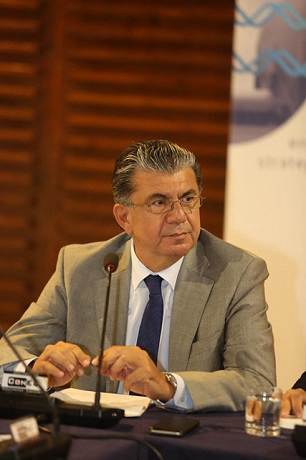
The Conference entitled “LNG: the meeting point for Marine, Transport & Energy sector in Cyprus”, attracted more than 180 delegates from marine & energy sectors, public bodies, port authorities and international organisations.
The Conference maritime section was inaugurated by the Cypriot Minister of Transport, Communications and Works Marios Dimitriades and European Commission DG Move representative Wojtek Sopinski, who endorsed the efforts of Poseidon Med II initiative, underlying LNG’s great potential for greener and sustainable future of shipping industry. The Poseidon Med II case was also featured at the morning keynote session, where project representatives -George Polychroniou, Executive Director Strategy, Development, Administration & IT at Public Gas Corporation (DEPA) & Dr Joseph Florentin, Corporate Development Department Manager at Hellenic Gas Transmission System Operator (DESFA) showcased project work and plans as well as the LNG choice, leading next generation of marine fueling.
Turning LNG from prospect into reality in shipping was the focus of the first session, where distinguished panelists highlighted global experience and strategies promoting LNG as marine fuel, plans for LNG bunkering in Cyprus as well as funding opportunities for investments, setting the scene for LNG uptake in the region. Innovative LNG fuelled vessels and storage technologies, quantity and quality verification processes, terminals’ experience and the shipyards approach towards the LNG as fuel era were presented at the second Conference session, underlying how pioneers accelerate technology uptake and create a fertile ground for the adoption of LNG in ships and ports.
Dr. Panayotis Zacharioudakis, Managing Director of OceanFinance & Project Manager of CYnergy, welcomed the audience to the final session on Energy and Transport inviting them to take the discussion regarding the Cypriot gas exploration and commercial exploitation one step further to the benefits for Cyprus by the everyday life use of NG. This first public presentation of the CYnergy Action, inaugurated by Antonis Ioannou, Acting Director of the Energy Service of the Ministry of Energy, Commerce, Industry and Tourism, was also saluted by W. Sopinski, who took the podium for the second time to deliver a short message on behalf of DG Energy, expressing full support to the project and congratulating CYnergy stakeholders for achieving significantly high co-funding rate in the context of the CEF Synergy Call.
Dr. Symeon Kassianides, President of CyGas (DEFA), presented a clear roadmap for the implementation of the Cyprus Republic’s plans regarding storage and distribution of NG in Cyprus, while representatives of the CYnergy Consortium discussed further the steps towards the transition of the internal market to the use of NG that will turn Cyprus into an energy hub of the South-East Med Sea. The session’s concluding panel discussion addressed the needs of the Cypriot industry conveying a strong message: In this new effort to bring NG to Cyprus, all related stakeholders are cooperating closely and by taking into consideration the Cypriot community’s needs coordinate their actions to establish a sustainable NG market.
The Conference was organised by Bunkernet, one of the main partners of Poseidon Med II & CYnergy project.
On the occasion of the Conference, Poseidon Med II & CYnergy project representatives, participated in “Agonas Eleftherias” sailing race on 1st October 2017, highlighting their devotion to low-emission marine transportation, setting sails to LNG era.
Videos of the conference are available here
Conference agenda & presentations of the conference are available here
About the Conference Organisers
Poseidon Med II project is a practical roadmap which aims to bring about the wide adoption of LNG as a safe, environmentally efficient and viable alternative fuel for shipping and help the East Mediterranean marine transportation propel towards a low-carbon future. The project, which is co-funded by the European Union, involves three countries Greece, Italy and Cyprus, six European ports (Piraeus, Patras, Limassol, Venice, Heraklion, Igoumenitsa) as well as the Revithoussa LNG terminal. The project brings together top experts from the marine, energy and financial sectors to design an integrated LNG value chain and establish a well-functioning and sustainable LNG market
CYnergy project is a holistic approach towards the establishment of a Natural Gas (NG) system in Cyprus aiming to end the energy isolation of the island through establishing strategic synergies between the sectors of Energy and Transport. Embarking on turning Cyprus into an energy hub in the East Mediterranean, CYnergy targets the development of a sustainable and fully functional NG/LNG market for providing clean and affordable energy to the end user. The project, which is co-financed by the EU, is a collaboration of energy, transport and finance experts as well as public and governmental institutions of Cyprus and Greece.

Dr. Stelios Himonas, General Manager, Ministry of Energy, Commerce, Industry and Tourism, Republic of Cyprus at the Press Briefing on 29/9/2017
 |
| Marios Demetriades, Cypriot Minister of Transport, Communications & Works, at the Press Briefing on 29/9/2017 |
 |
| George Polychroniou, Poseidon Med II Manager, Executive Director Strategy, Development, Administration & IT, Public Gas Corporation (DEPA) S.A. |
 |
| Snapshot from the first panel on “LNG uptake: setting the scene |
 |
| Snapshot from the second panel on “Pioneering the use of LNG as fuel” |
 |
| Snapshot from the Energy & Transport panel |
 |
| Photos from the Poseidon Med II & CYnergy participating at “Agonas Eleftherias” sailing race. |
 |
| Photos from the Poseidon Med II & CYnergy participating at “Agonas Eleftherias” sailing race. |

Powered by  © Μaritimes 2019