


Who are the crew?’ and ‘what are wages?’ are just some of the areas of marine claims ‘shaded in grey’ says chairman of the Association of Average Adjusters
The call came from Willum Richards, chairman of the Association of Average Adjusters, as he lauded the London market’s Joint Hull Committee for its decision to embark on a review of the Institute Time Clauses (Hulls).
He wished success to those involved in developing revised hull wordings and getting markets to adopt them and hoped “that they would continue the good work and turn their eye to some of the less frequented pages [of specialist publications] such as the Institute Fishing Vessel Clauses.”
Mr Richards, who works principally in the Australian and New Zealand markets, was delivering his chairman’s address at the annual general meeting of the association.
Surveying what he called “the grey world of the fishing vessel claim,” Mr Richards said that the insurance issues which arose with what some termed ‘proper shipping’ such as large bulk carriers, tankers and containerships or large, multi-bill of lading general averages [the apportioning of liability for loss after marine casualties] “are not something which we see often” in the fishing vessel arena.
This meant that “trying to shoe-horn ‘proper shipping’ concepts into claims relating to fishing vessel or offshore supply boat and similar claims produces nonsensical and inequitable results.”
Mr Richards told the Association of Average Adjusters’ gathering in the City on May 10, 2018, that fishing vessels were a huge class ranging from small, inshore craft with a crew of two or three, to substantial ocean-going factory vessels with more than 40 people on board and values above $50m.
In 2015, UN statistics indicated the world fishing fleet was around 4.5m vessels. This compared to some 17,000 general cargo ships, 11,000 dry bulk carriers, 13,000 oil or chemical tankers and just over 5,000 containerships.
Of the 4.5m fishing vessels, around 1.7m were not powered and little more than rowing boats; and those over 100 gross tons made up only around 1\% or 40,000 – about the same number as what might be termed “proper” vessels.
Fishing vessels were not an insignificant market segment but in some instances their insurance cover was placed by brokers and underwriters unfamiliar with marine conditions. “Whilst there are specialists, in many parts of the world fishing vessels are often broked and insured by people who are more confident discussing the cover available for farm irrigation systems and cattle in transit than general average.”
Mr Richards said that most of the development of marine policy wordings, law and instruments such as the York-Antwerp, Hague-Visby and Rotterdam Rules usually concerned commercial vessels on a voyage from A to B with third party cargo or passengers.
“If, after several hundred years, we are still making mistakes and struggling to understand the intricacies of maritime law for ‘proper shipping’, imagine the situation when one ventures off and starts to look at some of the darker backwaters of the marine insurance world where the light of legal precedent and consideration rarely, if ever, penetrate.”
Fishing vessel insurance raised questions and adjusting issues which had a wider application to other areas of shipping but, he warned, trying to fit some of the rules and policy wordings from mainstream shipping into the fishing trade could be challenging. It could leave an average adjuster wondering whether some of the law was really intended to produce the bizarre outcomes which often resulted.
Examining the complexities, Mr Richards said that the Institute Fishing Vessel Clauses, under which many commercial fishing vessels are insured, date from 1987, and owe their parentage to a blend of the Institute Time Clauses (Hulls) and the British Trawler All Risks Clauses. It was in the adaptations for the fishing industry that some of the problems were found. He called for a closer review of what he said was a significant difference which the Fishing Vessel Clauses have to their commercial stablemates, Clause 9 on wages and maintenance.
The clause states that underwriters should pay the cost of wages and maintenance of members of the crew retained while a vessel is undergoing repairs for which the underwriters are liable. “With the wage bills on some vessels approaching $100,000 a week, you can easily see how the wages element can start to dominate a claim for a relatively inexpensive repair,” said Mr Richards.
Whether for a fishing or any other vessel, it was important to have agreement on what was meant by the terms crew, wages, and maintenance. Should we consider everyone who works on a vessel part of the ship’s complement or some smaller subset and if so who?
Fishing vessels could have a complement of only one or two people or they could have more than 40 with many engaged exclusively on processing the fish. Similarly, cruiseships and ferries will have a marine team who navigate the vessel and large numbers of staff to entertain the passengers or work in a casino, together with cleaners and cooks who may loosely be referred to as hotel staff.
The fishing vessel clauses make an allowance for the wages of the “crew” only and so is this intended to exclude the master and any officers? One might think so if there is to be a consistent definition across the various Institute Time Clauses at least.
In a confused field of possibilities, the Merchant Shipping Act says the complement is more or less everyone on the ship except the master; in 1971 the Association of Average Adjusters advisory and dispute resolution panel said it is everyone engaged under articles and of “sea-going rank” (an antiquated definition, Mr Richards suggested); the Institute Time Clauses (Hulls) and the York-Antwerp Rules do not provide a definition of crew but make allowances for the wages and maintenance of the “master, officers and crew” which indicates that the term “crew” is not intended to include the master and officers.
Mr Richards suggested that the crew should be taken as everyone on board the vessel who works towards its commercial purpose (be that of transporting and entertaining passengers or catching and processing fish) and who is engaged directly or indirectly by the shipowner or insured.
“If insurers want to restrict allowances for ‘wages’ to a smaller subset of individuals, then I would suggest, as Scandinavian underwriters have tried to do with the Nordic Plan, that clearer and more specific wording would be required and would not be overly complex to draft. A few well-chosen words would suffice.”
On the question of general average for fishing boats, Mr Richards pointed out that, as with offshore supply vessels and the like, the voyage profile of the vessel leaving a port for a point in the ocean to go fishing and then returning to the port they started from did not fit well with the law and rules around general average which were predicated on a voyage from Port A to Port B.
The issue often produced inequitable results whereby the shipowner either got all his expenses of returning to his home port considered as general average or none of them, depending on the stage of the fishing campaign at the time of a casualty. The difference between all or nothing, under the current rules, could be a singular point of time.
Mr Richards said that with fishing vessel claims there is what might be termed a “benevolent cargo owner” in that he is generally also the owner of the ship. The cargo or catch insurer is often also either the hull insurer or at least the lead insurer or holding a significant share of the hull cover.
It ought, therefore, to be possible to generate a wording whereby equity is achieved for both hull insurers and the insured. Allowances based on the percentage of expected catch on board at the time of the loss would seem sensible. The current “all or nothing” approach would almost certainly unduly benefit the insurers or the insured at the expense of the other and in very few cases fit with the concepts of equity and fairness which are in the DNA of General Average.
Mr Richards was elected to serve as association chairman for a further year, 2018-19, with Burkhard Fischer as vice-chairman, Tristan Miller as treasurer, David Pannell as examination committee convenor and David Clancey as convenor of the advisory and dispute resolution panel.
The Association of Average Adjusters promotes professional principles in the adjustment of marine claims, uniformity of adjusting practice, and the maintenance of high standards of professional conduct. Irrespective of the identity of the instructing party, the average adjuster is bound to act in an impartial and independent manner. The Association plays an important part in London insurance market committees and has strong relationships with international associations and insurance markets.
Source: Association of Average Adjusters
Star Bulk Carriers Corp. Agrees to acquire 15 dry bulk vessels
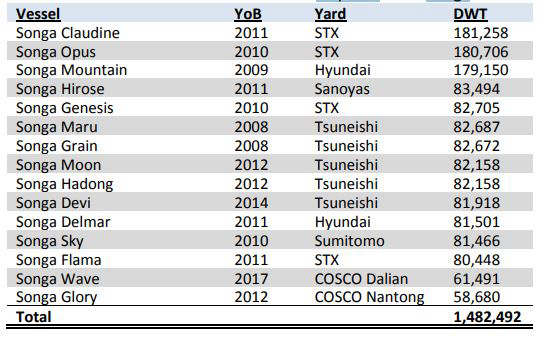
announced today that it has entered into a definitive agreement with Songa Bulk ASA (“Songa”) pursuant to which the Company will acquire 15 operating vessels (the “Vessels”) for an aggregate of 13.725 million common shares of Star Bulk (the “Consideration Shares”) and $145 million in cash (the “Vessel Purchase Transaction”). The cash portion of the consideration will be financed through proceeds of a new five‐year capital lease of $180 million with China Merchants Bank Leasing with a margin of 280 bps, thus offering approx. $35 million of additional liquidity for Star Bulk.
Below are the details of the vessels to be acquired from Songa:
 |
The Vessel Purchase Transaction remains subject to, among other things, the approval of the Songa shareholders and other customary closing conditions, and is expected to be consummated in by the third quarter of 2018. Companies controlled by Messrs. Arne Blystad, Magnus Roth and Herman Billung, representing approximately 29\% of the outstanding shares of Songa, have committed to vote in favor of the Vessel Purchase Transaction on terms customary for such undertakings.
Upon completion of the Songa transaction, Mr. Arne Blystad will be appointed to the Board of Directors of Star Bulk and Mr. Herman Billung will join the management team of Star Bulk, contributing his approximately 30 years of dry bulk and capital market experience. Songa is expected to distribute the Consideration Shares to its shareholders following closing of the transaction. As a result of the contemplated transactions, shareholders of Songa are expected to own approximately 14.9\% of the outstanding common shares of the Company, and the pre‐existing top 5 shareholders of the Company would own approximately 38.7\%, 4.4\%, 3.9\%, 1.0\% and 1.0\% of the outstanding common shares of the Company respectively.
Contemporaneously with the closing of the Vessel Purchase Transaction, the Company intends to apply for a secondary listing of its common shares for trading on Oslo Børs, a regulated stock market operated by Oslo Børs ASA of Norway. The Consideration Shares will be restricted from trading in the U.S., including through the Nasdaq Global Select Market, for a period of six months following the distribution of the Consideration Shares to the shareholders of Songa unless they are sold pursuant to a transaction exempt from, or not subject to, registration under the Securities Act of 1933, as amended (the “Act”).
After giving effect to the Vessel Purchase Transactions, Star Bulk will have a fleet of 108 vessels on a fully delivered basis, aggregate cargo‐carrying capacity of approximately 12.26 million deadweight tons and vessels with an average age of 7.1 years.
The Consideration Shares will not be registered under the Act may not be offered or sold in the United States absent registration or an applicable exemption from the registration requirements under the Act.
About Star Bulk
Star Bulk is a global shipping company providing worldwide seaborne transportation solutions in the dry bulk sector. Star Bulk's vessels transport major bulks, which include iron ore, coal and grain and minor bulks such as bauxite, fertilizers and steel products. Star Bulk was incorporated in the Marshall Islands on December 13, 2006 and maintains executive offices in Athens, Greece. Its common stock trades on the Nasdaq Global Market under the symbol “SBLK”.
On a fully delivered basis, Star Bulk will have a fleet of 108 vessels, with an aggregate capacity of 12.26 million dwt, consisting of 17 Newcastlemax, 18 Capesize, 2 Mini Capesize, 7 Post Panamax, 35
Kamsarmax, 2 Panamax, 16 Ultramax and 11 Supramax vessels with carrying capacities between 52,055 dwt and 209,537 dwt.
KPI Bridge Oil promotes Chambers to Group Marketing Manager

 |
| Alysha Chambers |
Since joining, Alysha has been instrumental in strengthening brand identity, implementing various new initiatives and coordinating marketing activities across the Group’s 9 offices. She also managed the production of the company’s latest corporate video and has staged a number of key events.
Søren Høll, Group CEO states: “We’ve recently seen opportunities open up in various areas and to ensure that we are well positioned to take advantage of these, we need to strengthen our marketing function. We have expanded most of our trading teams over the past 6-12 months and the increased activity naturally leads us to also evaluate our support functions. Adding value to our relationships
 |
| Søren Høll |
Alysha commented: “I am extremely happy with this incredible opportunity and I am proud to work for this great company. I look forward to the new challenges and to expanding my role within this exciting industry.”
ABS, the American Club and Lamar University Join Forces to Improve Maritime Workforce Safety
(Houston) ABS, the American Club and Lamar University are launching a new initiative aimed at reducing maritime-related safety incidents. The initial focus of the partnership’s analysis and industry guidance will be on slips, trips and falls, a significant cause of maritime injuries.
Commenting for ABS, Manager of Human Factors, Dr. Kevin McSweeney said, “We are excited to work with our partners to develop pragmatic guidance for some of the most common hazards and behaviors affecting maritime personnel. Much still remains to be done in reducing these incidents.” McSweeney provides more detail, “Slips, trips and falls have received a lot of attention over the years but remain a leading cause of incidents aboard ship. This initiative will identify, prepare and share actionable safety-related guidance to help organizations better prioritize resources and measure progress to improve seafarer safety and health.”
According to the ABS Mariner Safety Research Initiative, the commonly reported causes of slips, trips, and falls are situational awareness (40\%) and poor housekeeping (29\%). The American Club’s Senior Vice President William Moore emphasized the collaborative nature of the initiative, “The specific talents of all three partners have come together in identifying common behaviors and hazards impacting maritime personnel; developing recommendations for interventions that can improve safety, as well as presenting guidance to marine owners and operators in understanding key causes, with the ultimate aim of implementing onboard strategies to mitigate these incidents.”
“Our goal with this initiative is developing practical industry recommendations that can be applied to improve the day-to-day safety of maritime crews and staff,” said American Club’s Moore. “By working with ABS, a recognized leader in maritime safety, and Lamar University, this effort will move the ball towards the ultimate objective of reducing work-related incidents; we all fully appreciate what impact fatalities and serious debilitating injuries will have on associated costs to marine liability insurers – let alone the abject misery caused to the families of affected seafarers.”
“Through the ABS/Lamar University Mariner Safety Research initiative, we have a long history of providing solutions to help prevent maritime injuries”, stated Lamar University Professor and Chair of the Department of Industrial Engineering and Director of the Mariner Safety Research Initiative, Dr. Brian Craig. “By collecting and analyzing injury and incident data we can identify lessons learned and corrective actions to aid in preventing the occurrence and reoccurrence of maritime injuries. We all believe that this partnership will help improve the welfare of the maritime industry’s most valuable asset; its seafarers.”
About ABS
ABS, a leading global provider of classification and technical advisory services to the marine and offshore industries, is committed to setting standards for safety and excellence in design, and construction. Focused on safe and practical application of advanced technologies and digital solutions, ABS works with industry and clients to develop accurate and cost-effective compliance, optimized performance and operational efficiency for marine and offshore assets.
About The American Club
American Steamship Owners Mutual Protection and Indemnity Association, Inc. (the American Club) was established in New York in 1917. It is the only mutual Protection and Indemnity Club domiciled in the entire Americas and its headquarters are in New York, USA.
The American Club has been successful in recent years in building on its US heritage to create a truly international insurer with a global reach second-to-none in the industry. Day to day management of the American Club is provided by Shipowners Claims Bureau, Inc. also headquartered in New York.
The Club is able to provide local service for its members across all time zones, communicating in eleven languages, and has subsidiary offices located in London, Houston, Piraeus, Hong Kong and Shanghai, plus a worldwide network of correspondents.
The Club is a member of the International Group of P&I Clubs, a collective of thirteen mutuals which together provide Protection and Indemnity insurance for some 90\% of all world shipping.
For more information, please visit the Club’s website http://www.american-club.com/.
About Lamar University
Home to more than 15,000 students, Lamar University, near Houston in Beaumont, Texas, is among the state’s fastest growing colleges and universities, and is a member of The Texas State University System. LU offers more than 100 programs of study leading to bachelor’s, master’s and doctoral degrees.
The university has been nationally recognized for the quality of its core curriculum and the diversity of its student body. LU stresses academic achievement by emphasizing hands-on learning at all levels, providing ample opportunities for undergraduate research and supporting an excellent Honors Program. The university is accredited by the Commission on Colleges of the Southern Association of Colleges and Schools. Several LU colleges and programs hold additional specialized accreditations, including the five undergraduate engineering programs in the College of Engineering. LU also is home to the many unique programs including the Center for Advancements in Port Management, the Center for Innovation, Commercialization and Entrepreneurship, and the Mariner Safety Research Initiative.
For more information, please visit Lamar University website https://www.lamar.edu/, the Department of Industrial Engineering website https://www.lamar.edu/engineering/industrial/index.html, and the Mariner Safety Research Initiative website http://maritime.lamar.edu/.
“Zero Emission Vessels, what needs to be done?”
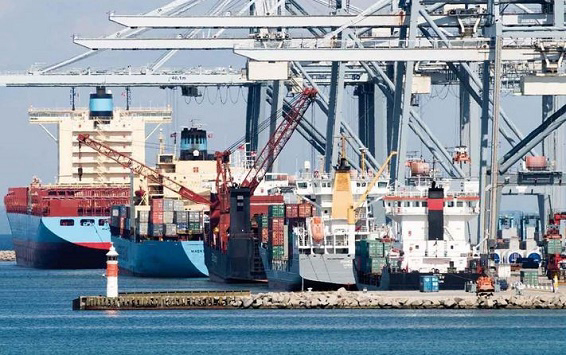
In this environment, biofuels currently present the most affordable option for shipping, though great challenges remain in relation to the scale of production and sustainability of biofuels.
This report, authored by Lloyds Register and UMAS, was geared to the needs and requirements of SSI members, who are mainly involved in deep-sea trades with container ships, bulk carriers and tankers.
Stephanie Draper, Chief Change Officer for Forum for the Future and co-chair of the SSI: “The report makes clear that the technology is with us today, but investment is needed both to bring the technology to scale and to encourage a wider take-up. The shipping industry will need multiple solutions, and investment for different technologies – not just biofuels – to reach beyond fuel efficiency to decarbonisation.”
The report also examines electric power and hydrogen fuel cells, and takes note of the upstream CO2 emissions which need to be resolved as these fuels will have to be judged on an environmental performance from “well to wake,” and not just on emissions from ships. As shipping is now in concert with the Paris Agreement, the benefits of other land-based technologies and energy production should help to drive down upstream emissions for ships fuel.
As a result of this report, the SSI are engaged in a deep-dive into biofuels in 2018 to assess the viability of biofuels for the world fleet. “Biofuels represent a stepping stone to further emissions reduction,” said Tom Holmer, General Manager of the SSI. “Alternative marine fuels provide a huge opportunity for creating value and finding sustainable solutions. The SSI will continue to look at the whole value chain and this report highlights that the next ten years will see huge changes in the way ships are fuelled.”
Zero Emission Vessels, what needs to be done?
Source: The Sustainable Shipping Initiative (SSI)
HELMEPA supports the Oceanos NTUA research program
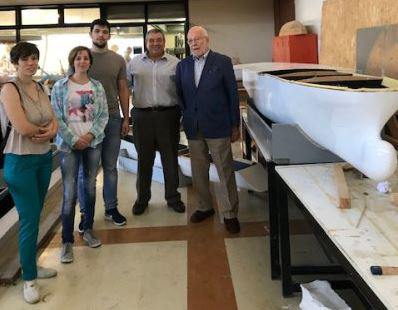
on the occasion of HELMEPAs sponsorship of the Oceanos NTUA research program. The aim of the project is to design energy efficient ship models to represent Greece at the worldwide competition "Hydrocontest" in September 2018, in France.
The Dean Professor and coordinator of the program, Grigoris Grigoropoulos, guided the visitors to the laboratory area and presented the achievements of his longstanding operation. The Oceanos NTUA students, who were at that time working on the 2 ship models, provided a detailed account of the structural features and the improvements made in their design to achieve the maximum efficiency of the ships.
The enthusiasm of these students and their attempt to promote NTUA's research work fills us with optimism for the distinction of Greek scientists worldwide. We wish them every success at the contest!
 |
 |
Golden Destiny Weekly Market Analysis
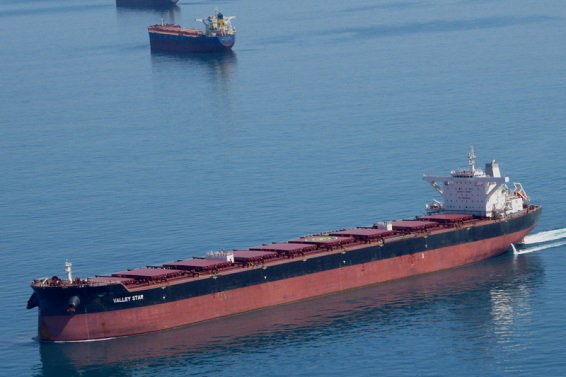
Bulk Carriers
This week was marked by an increased S&P activity with 16 units having changed hands in total, marking a 78\% increase compared to the previous week, increased by 33\% compared to the year to date average. As regards to the bulkers, 50\% of the vessels purchased were between 6 to 9 years old, with 3 panamaxes averaging 16 years and one capesize sold.
On the commodity side, Baltic index closed with gains of 5.6\% this week , mainly underpinned by the improved Capesize rates that experienced gains of 13.96\%, indicating that the market is starting to finding some support on this size. The capesize index rose to 2,630 points, marking a 12.5\% increase compared to previous Friday, climbing to four months high. As mentioned in our previous report increased construction activity is anticipated in China during May, in response to the upcoming rainy in south eastern parts of the country something that will bolster iron ore imports in the short term amid low steel inventories. After the built up in stockpiles during March, when inventories have picked up to almost 10.0 million tonnes, stockpiles have come down almost 50\% to 6.7 million tonnes in view of increased anctipicated real estate and infrastructure activity. Future indications show that steel demand will remain in increased level since steel construction futures traded at the Shanghai
Futures exchange were up by 1.7\% to $575.73 a tonne while iron ore futures at Dalian commodity exchange rose by 0.8\% to $74.6 (473,5 yuan) per tonne.
However ,the prolonged mine outage in Brazil is still a worrying factor that should be beared in mind, since it could reduce the demand for tonnemilles.
Tankers
In the tanker segment the number of vessel’s having changed hands this week, was reduced by 25\% reaching the 9. Newbuilding activity is remaining intense with 11 orders placed, mainly Aframax and chemical tankers .
On the commodity side, US plans to reinstate sanctions against Iran have sustained oil prices rat near multi-year possibly leading the market into undersupply. Sanctions against the Islamic state of Iran that produces around 4\% of global crude oil supply come amid an oil market that has is already firm due to strong demand, especially from the Asian markets, and OPEC’s curbed production. U.S. West
Texas Intermediate (WTI) crude futures were at $71.42 a barrel. However soaring U.S. crude oil production may also help fill Iran's supply gap, marking another record last week by climbing to 10.7 million barrels per day (bpd) quickly approaching Russia’s production that produces around 11 million bpd.
www.goldendestiny.com
Norddeutsche Reederei upgrades connectivity options with the Infinity Cube from Navarino.
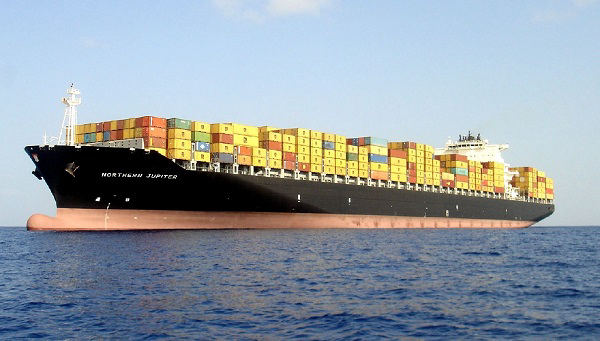
The company, which has been operating for 150 years, has a fleet consisting mostly of modern container vessels which trade worldwide.
 |
 |
Oldendorff Carriers selects Navarino’s Fleet Xpress and Infinity Cube
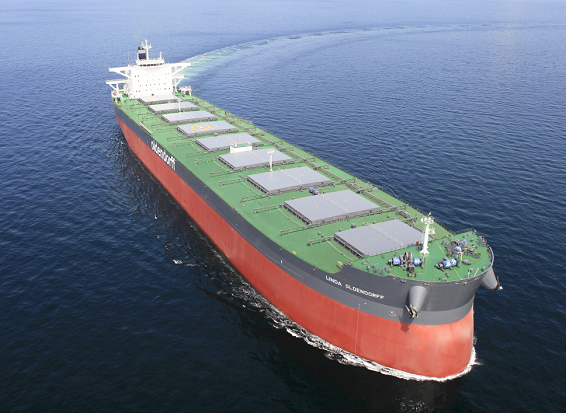
Following a sophisticated tender and proof of concept phase, Oldendorff will be rolling out Fleet Xpress internet on their vessels, with Infinity Cube hosting the Fleet Xpress soft NSD (Network Service Device). The company will install Cobham GX 100 antennas and activate them on the 4Mbps Entry Plan.
The Infinity Cube will act as the nerve center of vessel networks, providing an Active/Active server platform, a virtual disk and network management and a HUB to control all cubes from a centralized web application. The cube is a host for shipboard applications such as fleet management systems, weather routing, chart and nautical publications and collects and reports user management data and allows Oldendorff active monitoring of all onboard IT equipment. All crew communications for both internet access and telephony services will likewise be managed by the Cube.
‘The centrally managed HUB, the state of the art server and the high-availability and redundancy of the system are the main arguments why we decided to go for the Navarino Infinity cubes’ Oldendorff said.
Thomas Weber, Managing Director at Oldendorff Carriers said ‘We have chosen Navarino because we were looking for a fair and competent company to help us to roll-out a complex system, in a short timeframe, to our own fleet. We are convinced we found in Navarino a partner who will help us to achieve this goal, and also for future challenges in the vessel communication sector’.
Ivo Terhell, VP Sales EMEA at Navarino Germany, said ‘We are really excited about this project with Oldendorff Carriers. I am very proud to be working so closely with such a highly reputed company and we appreciate the trust that Oldendorff is putting in Navarino and our services. It is a complex and demanding project but Navarino has a wealth of experience in large scale rollouts and we are looking forwards to completing the installation phase in conjunction with the world-class Oldendorff IT team.’
How to avoid wet damage on dry bulkers
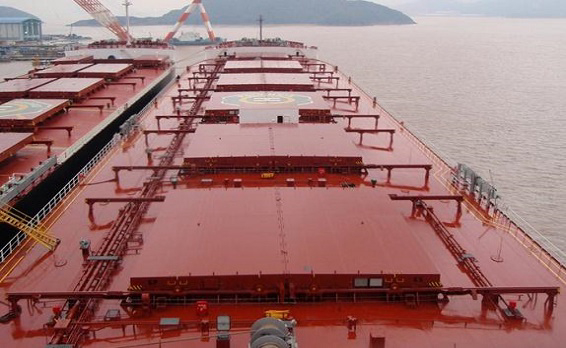
The mutual insurer has found that for bulk carrier operators, wet damage is the most costly claim type and the second most common claim experienced.
The report, Wet Damage on Bulk Carriers, which has been prepared in conjunction with DNV GL, and MacGregor, identifies heavy weather and leaking hatch covers as both the most common and the most costly type of wet damage claim, with the average cost for a wet damage cargo claim running at almost $110,000.
While weather routeing is used to minimize the effects of heavy weather, green sea on deck should be a surprise to no-one, and it is not unusual for cargo hatch covers to be fully immersed in sea water. Incorrectly applied and poorly maintained cargo hatch covers and sealing systems significantly increase the risk of cargo becoming damaged by water. Case studies have revealed that many of these claims could be avoided, with hatch components in poor repair, and applications of tape and seal-foam proving no substitute for good maintenance.
"Hatches leak for a variety of reasons, but mainly because of poor maintenance or failure to close them properly," says Lars A. Malm, Director, Strategic Business Development & Client Relations at the Swedish Club. "Leaking or badly maintained hatch covers can lead to more serious consequences than wet cargo – flooding, accelerated corrosion or even loss of the ship."
The most common wet cargo issues include leaking cross joints, and compression bars, rubber gaskets, hatch coamings, drain channels and cleats in poor condition.
Wet Damage on Bulk Carriers offers practical advice on how to avoid these pitfalls, providing simple checklists and explanations of the routine tasks that can be carried out as part of a vessel's PMS.
Access the report HERE
www.marinelog.com/

Powered by  © Μaritimes 2019