


DNV GL at Posidonia 2018: Classification more relevant than ever
 |
| Ioannis Chiotopoulos,Knut Ørbeck-Nilssen, Remi Eriksen |
In terms of digitalisation Eriksen said: “It’s about connecting the hardware with services, with people and with other data streams to build better ways of doing business. And the key to unlocking the value that industrial data holds is trust. We see significant interest and demand for our open industry data platform, Veracity, from the maritime, oil and gas, and energy sectors. It is now closing in on a million service subscriptions from 1,500 different companies.”
In his presentation, Knut Ørbeck-Nilssen said that the shipping market was probably at the bottom of the cycle and looks forward to continuing modest upward growth. As part of this upswing, European yards had experienced a renaissance, on the basis of a strategy to specialise in high technology vessels. DNV GL was working with many of these yards, he said, helping to implement alternative fuels, working to improve energy efficiency and providing insight and technical expertise in high-tech segments, such as cruise, ferries and offshore vessels.
Decarbonising shipping would not impact specific ships in the short term, said Knut Ørbeck-Nilssen, but required concrete policy measures and the development of an action plan by IMO. “The 50\% reduction goal will likely call for a wide-spread uptake of zero-carbon fuels, in addition to other energy efficiency measures,” he said. “These fuels are not existing today, and there needs to be a concerted effort towards developing these and making them available in the necessary quantity. In classification, working with the industry to create a safe and sustainable future is at the heart of what we do. We look forward to working closely with the IMO and the wider maritime community to reach this goal.”
Increasing digitalisation in the industry came with a host of benefits, including improving environmental performance, said Ørbeck-Nilssen, but there were challenges as well. Cyber-crime needed to be addressed: “We see our industry being more exposed with cyber-attacks migrating from the IT world to operational technology, increasing the risk for shipping. To help the industry to tackle those risks, we have put cyber security high on our agenda,” he said.
 |
| DNV GL Posidonia key visual |
In closing, Knut Ørbeck-Nilssen emphasized the continuing importance of classification: “Our ways of working may be changing. But the purpose of classification still remains the same: To protect life, property and the environment.”
Ioannis Chiotopoulos, DNV GL’s Regional Manager South East Europe, Middle East & Africa, looked at the Greek market and how DNV GL was continuing to support local customers: “We have implemented a package of measures that have enhanced our services to the local shipping community, boosted response times and strengthened the responsibilities and capabilities in the region. Our DATE service centre is fully functional, where customers have direct access to technical experts. Additionally, the approval centre in Piraeus offers all fleet in service approvals locally and a chief surveyor who is Greek is available for 24/7 support. The Piraeus office is already one of our great hubs for maritime innovation and we will continue to work cooperatively on projects that tackle the needs of our customers. Finally, we have invested not only in Greece but in making sure that our Greek customers are at home around the globe, by posting experienced Greek speaking engineers to key locations around the world.”
About DNV GL
Driven by our purpose of safeguarding life, property and the environment, DNV GL enables organizations to advance the safety and sustainability of their business. We provide classification, technical assurance, software and independent expert advisory services to the maritime, oil & gas and energy industries. We also provide certification services to customers across a wide range of industries. Operating in more than 100 countries, our professionals are dedicated to helping our customers make the world safer, smarter and greener.
About DNV GL – Maritime
DNV GL is the world’s leading classification society and a recognized advisor for the maritime industry. We enhance safety, quality, energy efficiency and environmental performance of the global shipping industry – across all vessel types and offshore structures. We invest heavily in research and development to find solutions, together with the industry, that address strategic, operational or regulatory challenges. For more information visit www.dnvgl.com/maritime
DNV GL Press Briefing Posidonia_Ioannis Chiotopoulos
Dry Bulk Shipping: No More Room For Newbuilds
Demand
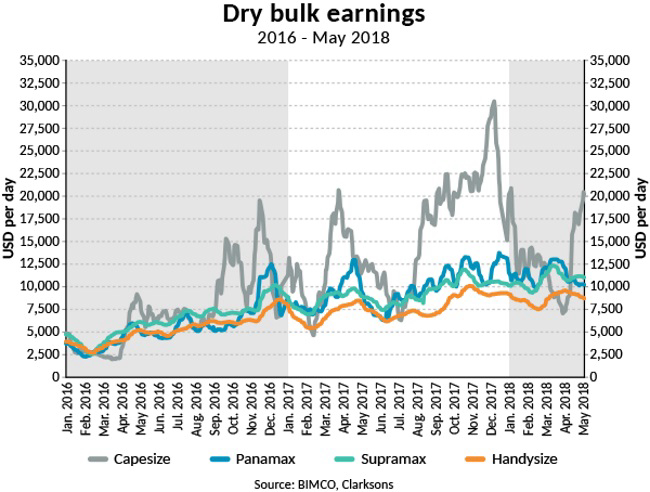
The improved fundamentals during 2017 are clearly seen in the freight rate levels during the first four months of 2018. Freight rates for Handysize, Supramax and Panamax went up by 25-27\% as compared to the same period of last year. All three sectors moved from loss-making average earnings in the full year of 2017 to a profitable level in first four months of 2018.
Meanwhile, capesize freight rates improved by only 5\% as compared to the same period last year, and stayed within loss-making territory at USD 12,660 per day, needing at least USD 15,000 per day on industry average to cover all costs.
 |
In many ways, shipped volumes during Q1 were seasonally stronger than expected. Except for iron ore. This was hurting the capesize sector. Reported sales from the world’s top 3 iron ore mining companies were down 9\% in Q1-2018 as compared to sales in Q4-2017. Total seaborne iron ore exports were estimated down by 11\%, a weak level. That fact clearly affected the performance of capesize freight rates, that took a deep dive during March to hit USD 7,051 per day on 5 April, before bouncing back in the second half of April reaching USD 18,192 on the 25th.
2017 also delivered a comeback of US coal exports (steam and coking). Exporting 88 mill tonnes to at least 42 countries, according to EIA. Distributed with approx. 40\% being steam coal and 60\% being coking coal. Exports to Asia, which benefit the dry bulk shipping industry the most, more than doubled to reach 30 million tonnes in 2017 (+109\% from 2016), most of it being steam coal to South Korea and Japan. Increasing electricity demand fuels imports of steam coal with no expansion of nuclear power production taking place in South Korea and Japan. India is the largest importer of US steam coal, as a large portion of its newer coal-fired power plants require higher quality and energy content than domestically mined coal.
 |
Nevertheless, the amount of US coal exports remains a pricing issue more than anything. Increased US coal production does not automatically mean that more is exported. US export prices are simply too high compared with those of its global competitors. This means that buyers go elsewhere when global prices are low. Since the middle of 2016 global coal prices started to lift and they stayed high during 2017. So far, they have kept up well in 2018 too, resulting in a continued interest in high quality US steam and coking coal.
Supply
Four of the Valemax ships ordered in 2016 have entered the active fleet of “capesize” tonnage since the start of 2018. The remaining 26 are scheduled for delivery in the coming 24 months. All of them are heading for the Brazil-China iron ore trade on long term charters. They are set to increase the pressure already felt by standard capesize ships plying that trade. 30 Valemax can transport 48 million of cargo from Brazil to China a year, and as a result are likely to squeeze out 67 capesizes. Where are these standard capesize to go for other business?
For the first four and a half months of 2018, the dry bulk fleet grew by 10.2 million DWT net, equal to 1.2\%. 12.1 million DWT was delivered while as little as 1.7 million DWT was sold for breaker’s yards. Newbuilt deliveries came in all sizes. 44\% of the new capacity was added to the capesize, VLOC and Valemax segments at the top of the chart. 27 out of the 114 delivered newbuilds were Handysizes with a capacity less than 40,000 DWT.
 |
Most interesting, only 9.2 million DWT of new capacity was ordered in the first four months. This is an extraordinary and positive development – and one that was not expected either. The improving freight market conditions that we saw in 2017, meant that a higher level of ordering returned, after a year and a half of very low activity. As the freight market continues to improve, a continuance of ordering is expected.
Whereas the low level of newbuilding orders is consistent with being on the road to recovery, the low level of demolition activity is not. Dry bulk demolition during the first four months was down by 73\% compared to last year. With these new orders coming in, its relevant to question whether they will derail the ongoing recovery. The reply to that is: they will not derail it – yet. All but a few of the new orders are set for delivery in 2020. But in turn this also mean that there is no more room left for new orders to be placed before the balance potentially tilts.
 |
As BIMCO sees 2\% demand growth as the long run average, a fleet growth of 2\% or less is required to avoid a worsening of the fundamental freight market conditions. Considering the current orderbook and our assumptions for actual delivery date – 2019 and 2020 are now “fully booked”.
Outlook
In summary, the dry bulk shipping industry remains on the road to recovery, as demand continues to keep its nose just ahead of fleet growth, while scrapping and ordering remains subdued.
What could upset the recovery is the looming trade war between the US and China that has caused a lot of commotion already, including within the dry bulk shipping industry. Soya beans are at the centre of attention as also covered by BIMCO, here. Even though, it isn’t officially a trade war yet – the uncertainty it creates amongst shipping industry participants is very real.
Will we see Chinese stockpiling of Brazilian soya beans, in order to reduce tariffed imports from the US later in the year? The coming months will tell us. Right now, we know that China is importing from anywhere but the US. But be aware that this is simply normal seasonality – almost no soya beans are exported from the US into China in second and third quarter of the year.
Beyond that, Q2 is expected to bring on more cargoes overall in need of transportation. Brazil and Australia will both grow its exports of iron ore, whereas soya bean exports will grow out of Brazil while slowing out of the US. All due to seasonality.
Coal, wheat and coarse grains are likely to stay flat from Q1. Looking into exports in Q3, grain trades are likely to grow, due to larger growing areas, good weather conditions and large harvests anticipated. Wheat from Russia and Ukraine and corn from Brazil will lift shipping demand.
In recent years, we have heard a lot about the closing of Chinese steel mills which in turn ’should’ reduce production capacity. At the same time, we have seen an almost unchanged production level. The fact is that the capacity that has been closed and currently is being closed comes from old and un-utilised facilities. Instead, China builds new, mills that are using higher quality imported iron ore.
In Q1-2018, China produced 5.4\% more crude steel than in Q1-2017. Growing production by 10.8 million tonnes for the quarter. This three-months growth compares to one month of production by the world’s second largest producer, India, at 9.3 million tonnes.
Source: Peter Sand, Chief Shipping Analyst, BIMCO
American Hellenic Hull supports the Greek Shipping Hall of Fame for the third time in a row
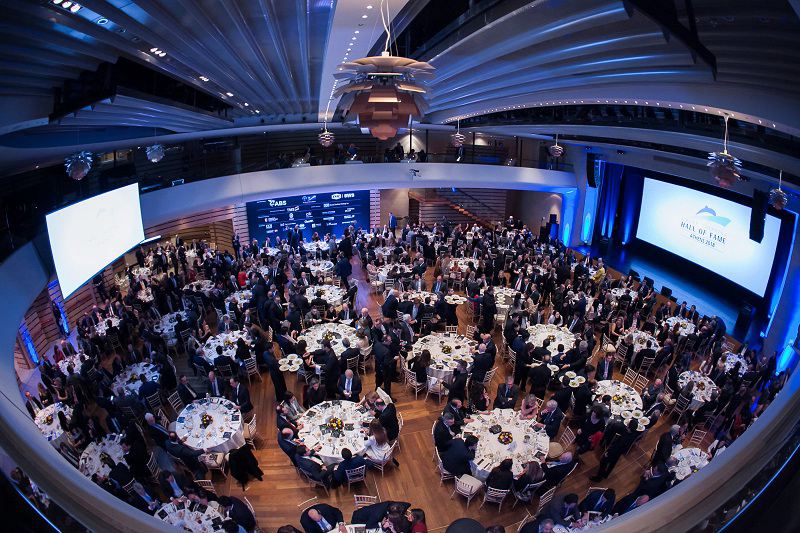
About 630 guests from the Greek shipping community, key business partners and friends from overseas enjoyed the Welcome Drinks Reception and an exciting Induction Ceremony programme that celebrated Greek shipping and its remarkable history.
American Hellenic Hull sponsored the annual Greek Shipping Hall of Fame event for the third time. CEO Ilias Tsakiris stated: “American Hellenic Hull Insurance Company is once more delighted to support the Greek Shipping Hall of Fame. We feel a strong connection with this event because it conveys the important message that Greek shipping still leads and navigates the industry. We welcome the opportunity to come together this evening to honor Greek shipowners as risk takers and achievers. Today, we see the Greek fleet is as strong as ever and continuing to grow. American Hellenic Hull Insurance Company’s global network is there to meet its evolving needs.”
A highlight of the 2018 Induction Ceremony was the announcement of the latest Inductees to the Greek Shipping Hall of Fame – the 2017 Inductees. The Inaugurators for 2017, Alekos N. Goulandris and Vasilis M. Mavroloeon, were mentioned through interviews with the family and warmly welcomed for their contribution and achievements at the prestigious event. This marked the 10th anniversary of the birth of the Greek Shipping Hall of Fame when the very first four Inductees were unveiled in a short ceremony back in 2007 – an event that was also remembered and celebrated during this year’s programme.
The Greek Shipping Hall of Fame donated a portion of the event proceeds to the Greek children’s charity, Hellenic Hope (www.hellenic-hope.org) by the internationally-renowned classical crossover singing star Mario Frangoulis, showing once again that the Greek shipping community actively contributes to wider social needs.
d’Amico Group, RINA and Telemar Set to Create a New, Cutting-Edge Operating Centre for its Global Fleet

 |
The project, which officially started at the beginning of May 2018, is an example of an increasing trend towards digitalisation within the maritime industry. As well as providing d’Amico Group with intelligence about operations on which to base strategic business decisions and operational improvements, the level of information from fleet vessels will enable expert support during emergency situations and efficient planning of predictive maintenance to maximize vessel availability.
Within the three-way partnership, RINA will manage automatic data acquisition onboard the ships and subsequent analysis and presentation of the data collected. Telemar will provide secure satellite communications from the global fleet to the operating centre, using its sister company Marlink’s global, multi-band VSAT network. Marlink’s involvement with Telemar is critical to the project as it boosts expertise in cyber security and brings experience in ensuring safe, reliable communications from ship to shore. d’Amico Group will take an active role in the project, providing technical specifications and validation of the overall set-up for the system and in particular of the design of monitoring, layout and alerting rules.
The FOC project for RINA means adding another important brick to the just released cloud digital platform named RINACube that has the ambition to host many marine services and to be open to integrate third party data and applications. RINACube will be the solution to offer to ship owners and ship operators a new concept of data monitoring and analysis platforms and to provide powerful analytics capabilities in order to extract value and business insights from data collected.
With its industry expertise and dedicated software resources, digitalisation services are a growing part of the RINA business, both core (i.e. e-certificates) and more innovative. Its understanding of naval architecture, the knowledge of international and local regulations and its third-party attitude to independently validate data from different sources provides a 360° set of skills ship operators trust and rely on.
In addition to delivering fast, secure, digital, fully managed smart connectivity across the d’Amico Group fleet with Marlink, Telemar’s position will be leveraged to securely link on board operational technology to the digital framework. Telemar and Marlink combined may bring their capacities, such as expertise in navigation equipment and bridge electronics maintenance, which is evolving towards smart maintenance and connected assets management, to co-create with Rina and d’Amico suitable enablers of the new digital operating centres. Telemar and Marlink’s combined expertise gives complete peace of mind that operations will remain secure and protected from hackers – a factor that must be considered in our modern, connected world. If there is any loss to communication signals due to poor satellite coverage, in the Norwegian fjords for example, the system is designed to log data locally on board the ship and synchronise with the control centre once communications are restored.
The new d’Amico Group operating centre will be completed around the end of the year. As a three-way partnership, the companies involved in the project bring together strong skill sets to ensure a smooth and successful outcome. Once complete, there will be further opportunities to integrate other software systems into the platform to further increase efficiency and visibility throughout the d’Amico Group business.
Salvatore d’Amico, Fleet Director at d’Amico Group, “We are very proud to be part of this project where together with RINA and Telemar we are planning to develop from scratch a fleet control centre built around the shipowner. In d'Amico Group we believe that this is the next step to make our ships safer in an industry where the margin for mistakes is zero."
Paolo Moretti, EVP Marine Strategic Development at RINA “RINA is very excited to be involved in the process of building this fleet digital operating centre with experienced partners like d’Amico Group and Telemar. In today’s marine industry, digitalisation is pivotal to improve efficiency and safety. This project will bridge digitalisation, strategic decisions and operational excellence together.”
Pasquale Golia, Technical Director of Compagnia Generale Telemar, “Together with RINA and d’Amico Group, along with support and services from Marlink, we are building a next generation global digital solution that will enable the Company to improve performance across its fleet and business, helping it to grow and prosper in the highly competitive global shipping market.”
About d’Amico
d’Amico Group is a leading Italian family-run shipping company operating on a global scale. The core business is focused on the management and operation of dry cargo and product tankers vessels, also providing international shipping services.
d’Amico has an advanced technical department made up of highly qualified personnel. Thanks to this, a wide range of in-house technical management services are provided for the Groups’ ships and, on request, for third party clients, guaranteeing 24/7 early assistance. d’Amico Group carries out audits and inspections on board ships to ensure that the highest standards of international compliance are respected, aiming to exceed client expectations. Every on board inspection is used as an opportunity to understand the crew’s company culture, including their vision, mission and policy. d’Amico also offers maintenance services on the ships thanks to a specialized team which is renowned in the shipping sector.
d’Amico Group has always been committed to its client needs. Operational safety and concern for the environment represent its core values, with the continuing professional development of the team and investment in a substantial state of the art and eco-friendly fleet which are amongst the top priorities. www.damicoship.com
About the Marlink Group
The Marlink Group is the world’s leading provider of end-to-end managed connectivity and IT solutions. The group which includes Marlink, Telemar, Palantir, Livewire Connections and OmniAccess, provides maritime and enterprise customers with an integrated offering of reliable broadband communications and IT, digital solutions, bridge electronics, and flexible service and maintenance.
The Marlink Group’s unrivalled portfolio of multi-band communication solutions covering Ku-, Ka-, C- and L-band services is augmented with mobile and terrestrial links and an industry-unique range of digital solutions. With more than 1000 employees worldwide, the Group serves enterprise and maritime customers globally, including: Shipping, Offshore, Cruise & Ferry, Yachting and Fishing, as well as Mining, Oil & Gas, Utilities, Humanitarian & NGO, Media & Events.
The Marlink Group delivers solutions with unrivalled service and support through an enhanced global footprint, including a network of sales and service locations ensuring customer proximity. Our 24/7 service desk, local presence on all continents and a network of 1250 service points staffed with highly qualified service engineers support our customers globally to operate their business in an ever smarter, safer and more profitable way.
More than 70 years’ experience, combined with our strong satellite network and hardware manufacturer partnerships, enables Marlink to bring the power of smart connectivity solutions to customers worldwide, helping them to digitalise their remote business operations wherever they are.
The Group is led by Erik Ceuppens as CEO. www.marlink.com www.telemarspa.it www.palantir.no
About RINA
RINA provides a wide range of services across the Energy, Marine, Certification, Transport & Infrastructure and Industry sectors.
With a turnover in 2017 of 437 million Euros, about 3,700 employees and 170 offices in 65 countries worldwide, RINA is a member of key international organizations and an important contributor to the development of new legislative standards. www.rina.org
OLDENDORFF CARRIERS PARTNERS WITH ERMA FIRST FOR BWTS
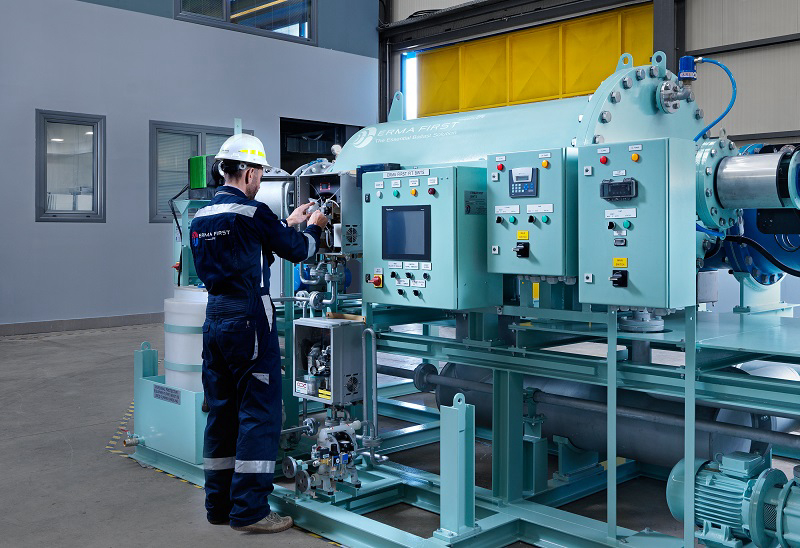
After a review of the different Ballast Water Treatment Systems (BWTS), Oldendorff Carriers has decided to partner with ERMA FIRST. Oldendorff Carriers made a review of the approved BWTS including visiting some manufacturing facilities, the review included; regulation compliance, capital cost, energy requirements, anticipated operating costs, space requirements, simplicity to manage and availability.
ERMA FIRST is headquartered in Greece; they impressed Oldendorff Carriers with their professional method of addressing our questions and concerns. The ERMA FIRST BWTS FIT is USCG type approved and IMO approved for nearly all water types. Their BWTS is simple, flexible, and suitable for small and large ballast-pump capacities. It also has a small footprint and a low power consumption.
During ballasting, the water goes through the filter, where organisms and sediment (with a diameter larger than 40 microns) are separated and further discharged overboard. The filtered water enters the Electrolytic Cell. Naturally, from the chlorides of the water, free chlorine is produced through the electrolysis process at a very low concentration (around 4-6 mg/L). The treated water then, enters the ballast tanks. During de-ballasting, the system will only monitor the residual oxidants and will further intervene if necessary. The main stages of the system (filtration and disinfection) are bypassed.
Niklas Richter, Project Manager of the Oldendorff Carriers Green Ships Department commented, “We have had an internal task force working on BWTS for two years, during this time we have thoroughly investigated many systems, particularly those with US Coast Guard approval. We were very impressed with the professionalism of ERMA FIRST and are very pleased to partner with them on the BWTS project. Although the fitting of BWTS is not yet compulsory, we plan to fit a trial ERMA FIRST system in July 2018 and start fitting many of our owned vessels in 2019 to have time to train and implement the system before vessels are required to comply with the regulations."
Konstantinos Stampedakis, ERMA FIRST Managing Director commented, ‘Working with such a professional and high quality shipping company such as Oldendorff Carriers, promoted the quality of our equipment and services. We have undertaken a great challenge which we will fulfill at the most professional and efficient way.
 |
 |
| (L-R) Niklas Richter, Konstantinos Stampedakis |
 |
 |
 |
Angelicoussis is the Highest Valued Greek Shipping Billionaire
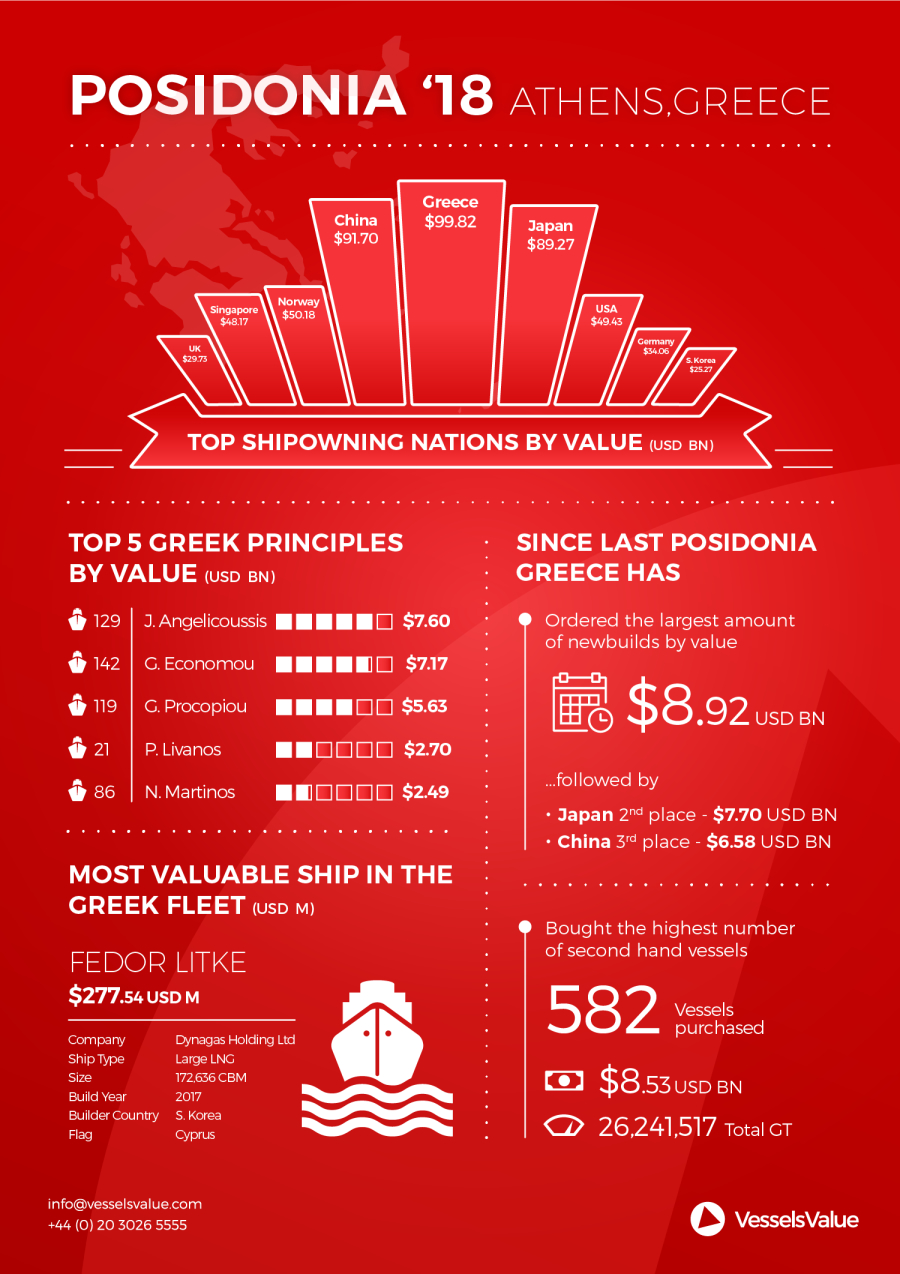
This includes:
- Greece has the most valuable fleet in the world
- The top 5 Greek Prinicipals by value
- The highest valued Greek vessel today
- Since the last Posidonia, Greece has ordered $8.96 BN of newbuildings
- Since the last Posidonia, Greece has bought 582 second hand vessels
 |
Marshall Islands Aims to Resolve Shipping Industry's Safety Concerns
 |
The regulation limits sulphur in fuel oil to 0.50\% when operating outside of designated Emission Control Areas (ECAs). It was decided at the 70th session of the IMO Marine Environment Protection Committee (MEPC) to retain 01 January 2020 as the effective date for the shift to the 0.50\% global fuel oil standard. The MEPC issued Resolution MEPC.280(70) to affirm this decision. Additionally, recognizing concerns expressed regarding the implementation of this fuel oil standard, MEPC 71 agreed to establish a new output on what additional measures may be developed to promote consistent implementation of the 0.50\% global fuel oil standard.
The RMI's submission to the IMO provides technical information focusing on safety implications and challenges associated with using new fuel oil blends compliant with the new 0.50\% sulphur fuel oil standard. The technical information, detailed in the Annex to the submission, aims to cover a wide range of safety aspects associated with the switch to 2020 fuels such as potential issues with blend components, stability, compatibility and other fuel oil parameters. All of these issues are viewed as having the potential to negatively impact fuel and machinery systems. Accordingly, the technical information also touches upon operational and technical measures to address risks during fuel switching, tank cleaning and fuel system arrangements (heating capacities and tank segregation). The information is intended to facilitate informed decision making as the ISWG addresses preparatory and transitional issues.
The co-sponsors also recommend that any consequential regulatory amendments and/or guidelines necessary to address the safety issues raised in the submission are brought to the attention of the MEPC at its next session in October 2018. Likewise, it is also proposed that any potential safety implications resulting from new blends or fuel types should be reported to the next session of the Marine Safety Committee (MSC) in December 2018.
Theo Xenakoudis (pictured), Director, Worldwide Business Operations, International Registries, Inc. (IRI), said:
"This paper allows the shipping community to have a voice in the development of rules that shape our industry. We are happy to be the catalyst for smart regulation that has been crafted with careful consideration from everyone it effects. Shipowners in particular will bear the impact of this transition and this will hopefully resolve some of the concerns about the regulation."
International Registries, Inc. and its affiliates (IRI), with more than 65 years of experience as a maritime and corporate registry service provider, has a network of offices in Baltimore, Busan, Dalian, Dubai, Ft. Lauderdale, Geneva, Hamburg, Hong Kong (Harbour Road and Gloucester Road), Houston, Imabari, Istanbul, Long Beach, London, Manila, Mumbai, New York (midtown and downtown), Piraeus, Rio de Janeiro, Roosendaal, Seoul, Shanghai, Singapore, Taipei, Tokyo, Washington, DC/Reston, and Zurich, that have the ability to register a vessel or yacht, including those under construction, record a mortgage or financing charter, incorporate a company, issue seafarer documentation and service clientele. In order to meet higher expectations, IRI has expanded its worldwide coverage to include representation in Chile, Limassol, Oslo, and Port Said. IRI concentrates solely on administering the RMI flag and provides a broad spectrum of registry related services for the shipping and financial services industries.
KPI Bridge Oil welcomes 4 new Bunker & Lubricant traders and announces the relocation of Cihan Birdogdu.
 |
Søren Høll, Group CEO states: “Setting the right team, being agile and building close, long lasting relationships with our business partners is an integral part of our People First culture. We have a rigorous recruitment process and I’m pleased to now officially welcome 4 exceptional new team members to our group. Each one brings with them distinct knowledge, skills and experience that will add value to our existing teams. Being part of a large group with global geographical reach offers our team members a unique opportunity to relocate according to their aspirations and needs. We encourage and support all team members to experience new regions and cultures and are excited that Cihan has decided to relocate to New York from Istanbul.”
Denmark- Mikkel Kristensen
Mikkel joins KPI Bridge Oil from the sales team at a well-known Danish wholesale company. Before that he spent over three years at an oil and energy company. He has also achieved Certification in Administration from Campus Vejle. Mikkel will primarily be focusing on servicing the Group’s European business partners.
Istanbul- Eren Ӧnder
Eren joins KPI Bridge Oil from Petrol Ofisi, where he worked the past 3 ½ years as Territory and Sales Manager. Prior to this he spent 4 years at sea as a marine engineer and 2 years as chief engineer at a power plant. Eren graduated from Istanbul Technical University, Maritime Faculty, Marine Engineering Department in 2009.
London- Marc Cook
Marc joins KPI Bridge Oil London from a well-known trading group where he spent over 5 years working as a Bunker Trader. Marc started his career as a shipbroker, working for 3 years in a competitive broking house with primary focus on dry cargo. Marc brings a fresh approach and in-depth knowledge of numerous markets to the team.
New York- Paul Martinez
Paul joins KPI Bridge Oil from Unimarine where he worked as Regional Sales Manager. Before that he worked as 2nd engineer at Pacific Drilling. Paul was awarded a Bachelor of Science in Marine Engineering and Shipyard Management from the United States Merchant Marine Academy in 2009. Paul has an excellent knowledge of marine lubricants and strong technical expertise.
New York- Cihan Birdogdu relocation
Cihan joined KPI Bridge Oil’s Istanbul office 5 years ago and has since contributed significantly to the team there. Before joining KPI Bridge Oil, Cihan spent 2 years as an import sales specialist for a global Shipping company. Cihan is fluent in English, Turkish and Russian.
www.kpibridgeoil.com
A major milestone for Poseidon Med II work on regulatory framework:
 |
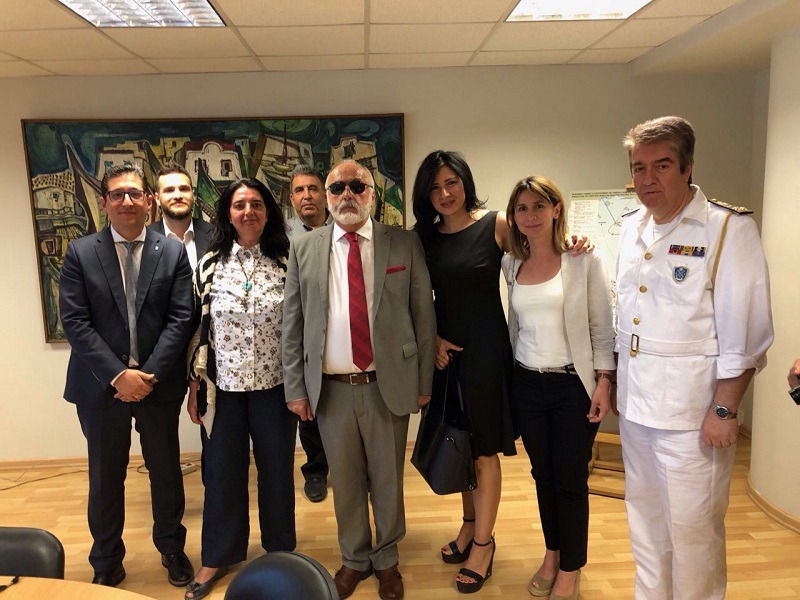
| 2. Presenting the Presidential Decree, with the presence of Minister of Shipping P. Kouroumplis, Vice-Minister N. Santorinios, representatives from maritime authorities and Poseidon Med II partners |
Greek Minister of Shipping P. Kouroumplis presented the Presidential Decree containing safety provisions for LNG bunkering operations in Greece at a ceremony held yesterday at Greek Ministry of Shipping & Island Policy, bringing together key marine stakeholders, representatives from relevant authorities, Poseidon Med II partners and journalists.
The Presidential Decree is the umbrella legislation, taking into account all national and international rules and practices, containing a set of provisions, such as safety & emergency procedures; Simultaneous Operations (SIMOPS); fire-fighting measurements; manuals overview for LNG bunkering preparation and execution; training and other pillars, which will allow Greek ports to accommodate LNG bunkering operations.
“Poseidon Med II project started 3 years ago aiming at establishing the use of LNG as marine fuel in the East Mediterranean region. It has since then worked towards this direction, using 26 partners’ know-how and expertise. The Presidential Decree that was presented yesterday is a milestone for the project and the necessary step to establish the regulatory framework which will ensure the safe and uninterrupted use of LNG as marine fuel. We are proud to see Greece among the pioneers to adopt a comprehensive regulatory framework, demonstrating in this way that LNG is a sustainable solution. In parallel, Poseidon Med II has also advanced the technical aspects for the use of LNG, undergoing technical designs for ports infrastructure and LNG fuelled vessels, as well as environmental and economic feasibility studies which will facilitate the effective transition to the LNG era”, underlined George Polychroniou, Poseidon Med II Project Manager, Executive Director Strategy, Development, Administration & IT, Public Gas Corporation, DEPA S.A.
During the event, government officials expressed their gratitude to Poseidon Med II partners for actively contributing, for more than a year, to the legislation process by sharing their knowledge and expertise. The Presidential Decree, paves the way for the next regulatory steps required for the adoption of LNG as marine fuel in Greece. Representing Poseidon Med II at the ceremony, Maria Fotiadou from DEPA,Vassilis Kazis & Tatiana Eleftheriadou from DESFA and Anna Apostolopoulou & Panayiotis Mitrou from Lloyd’s Register, answering to journalists’ questions, underlined how Poseidon Med II offers the missing links for a sustainable LNG supply chain in Greece by: basic and detailed designs for LNG bunkering vessels and LNG retrofits, new building designs of LNG fuelled Ro/ Pax ferries; plan approvals for LNG bunkering infrastructure in PMII participating ports-; small scale LNG infrastructure at Revithoussa LNG terminal and the development of funding tools that will instigate the necessary investments for ports and vessels.
What is Poseidon Med II project?
Poseidon Med II project is a practical roadmap which aims to bring about the wide adoption of LNG as a safe, environmentally efficient and viable alternative fuel for shipping and help the East Mediterranean marine transportation propel towards a low-carbon future. The project, which is co-funded by the European Union, involves three countries Greece, Italy and Cyprus, six European ports (Piraeus, Patras, Lemesos, Venice, Heraklion, Igoumenitsa) as well as the Revithoussa LNG terminal. The project brings together top experts from the marine, energy and financial sectors to design an integrated LNG value chain and establish a well-functioning and sustainable LNG market.
TEN, Ltd. Holds its Twenty Fifth Annual General Meeting
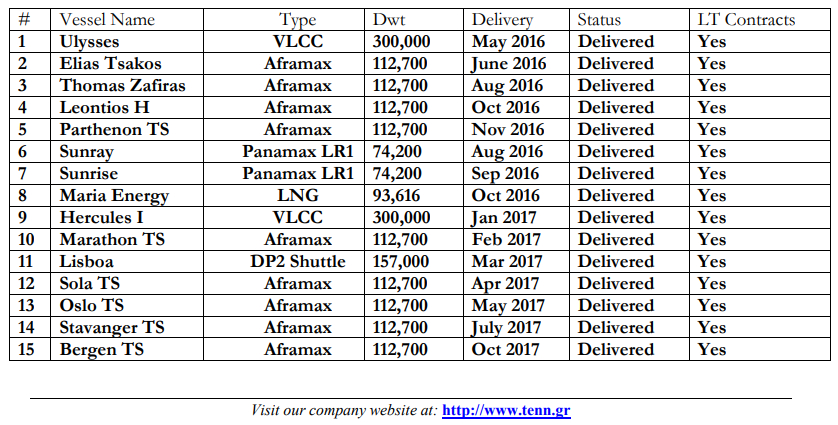
ABOUT TSAKOS ENERGY NAVIGATION
TEN, founded in 1993 and celebrating this year 25 years as a public company, is one of the first and most established public shipping companies in the world today. TEN’s fleet today consists of 64 double-hull vessels, constituting a mix of crude tankers, product tankers and LNG carriers, totalling 6.9 million dwt. Of these, 46 vessels trade in crude, 13 in products, three are shuttle tankers and two are LNG carriers.
COMPANY’S GROWTH TIME-TABLE
 |

Powered by  © Μaritimes 2019