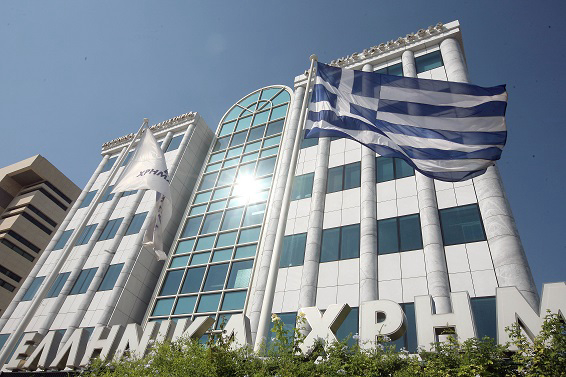
30 July 2018 – The consolidated net after tax profits of the Group amounted to €2.8m vs. €1.5m in the first half (H1) of 2017, increased by 80\%. Αfter the securities valuation loss of €71 thousand in 2018 compared to a gain of €57 thousand in 2017, the net earnings after tax per share in the first half were €0.045 vs. €0.026 in H1 2017, increased by 73.1\%.
The turnover of the Group was €14.7m in Η1 2018 vs. €13m in Η1 2017, increased by 12,7\%; after subtracting the Hellenic Capital Market Commission fee, total consolidated revenue was €14.1m vs. €12.5m, increased by 12.6\%.
Total consolidated revenue is increased mainly due to an increase in trading activity in the cash market in H1 2018. In particular, average daily traded value was €68.1m, compared to €58.9m in H1 2017, increased by 15.6\%. It should be noted that for 2018 to date the average daily traded value is €61.6m. The average capitalization of the Greek capital market increased by 17.3\% compared to Η1 2017 (€55.7bn vs. € 47.5bn).
The Athens Exchange General Index closed on 30.6.2018 at 757.57 points, decreased by 8\% compared to the close at the end of H1 2017 (823.74 points). Market liquidity, as measured by turnover velocity, decreased slightly to 30.6\% in H1 2018 compared to 31\% in H1 2017, while average daily volume was 48.5m shares compared to 85.5m shares.
In the derivatives market, the average daily number of contracts decreased by 25.7\% (62.6 thousand vs. 84.2 thousand), while the corresponding trading and clearing revenue increased by 26.7\% due to the increase in the prices of the underlying securities and the change in the product mix in the market. The average revenue per contract increased by 73.7\% to €0.150 compared to €0.086 in the corresponding period last year.
Total operating expenses were unchanged compared to the corresponding period last year at €8.8m, while consolidated Earnings Before Tax (EBT) in H1 2018 were €4m compared to €2.3m in H1 2017, increased by 69\%.
The financial statements of the Group and the Company are posted on the Company’s website (www.athexgroup.gr).
13th vessel acquisition since commencing fleet renewal strategy
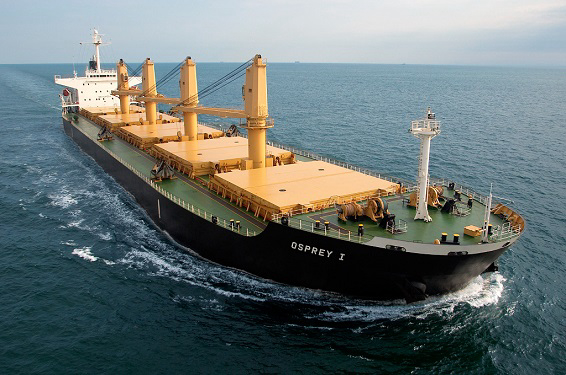
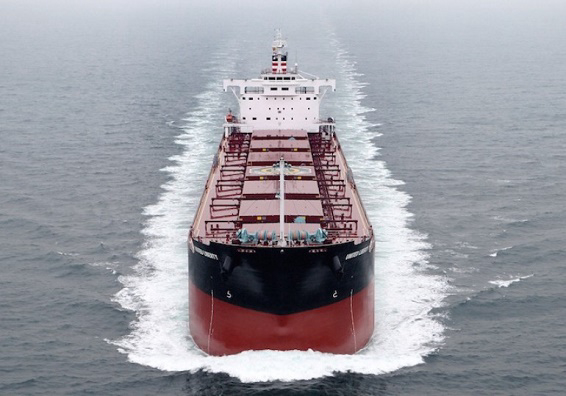
STAMFORD, Conn., July 24, 2018 (GLOBE NEWSWIRE) -- Eagle Bulk Shipping Inc. (NASDAQ:EGLE) (the “Company”) announced today that it has acquired a high-specification 2014-built SDARI-64 Ultramax bulkcarrier for a purchase price of USD 21.2 million. The ship was constructed at Chengxi Shipyard Co. Ltd, the same yard as the M/V Singapore Eagle. The vessel, which will be renamed M/V Hamburg Eagle, is scheduled to be delivered to the Company during the fourth quarter of 2018.
Upon delivery of the M/V Hamburg Eagle, the Company’s fleet will consist of 47 vessels, including 13 Ultramax dry bulk vessels acquired over the last 20 months.
About Eagle Bulk Shipping Inc.
Eagle Bulk Shipping Inc. is a Marshall Islands corporation headquartered in Stamford, Connecticut. Eagle Bulk owns one of the largest fleets of Supramax/Ultramax dry bulk vessels in the world. Supramax/ Ultramax vessels, which are constructed with on-board cranes, range in size from approximately 50,000 to 65,000 dwt. The Company transports a broad range of major and minor bulk cargoes, including but not limited to coal, grain, ore, pet coke, cement and fertilizer, along worldwide shipping routes.
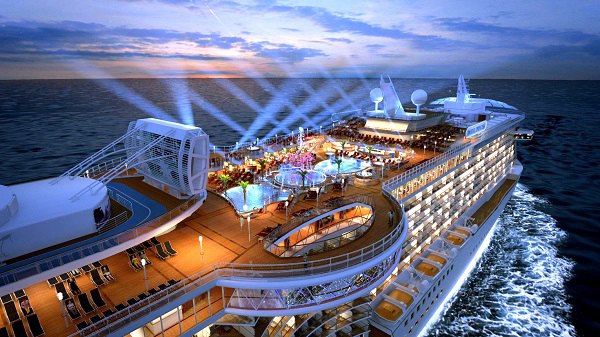
Princess Cruises has recently refurbished the 2,000-guest Sun Princess following a two-week refit in Singapore. The multi-million pound enhancements include a redesigned youth centre, new premium staterooms and upgraded onboard shopping.
The refit comprises:
Camp Discovery Youth Centre: for cruisers aged 3-17, Sun Princess will offer a redesigned youth centre – Camp Discovery – which was created in partnership with the Discovery Channel. Catering to specific age groups, children and teens can make new friends and participate in activities specially designed to help them discover, play and fuel creativity.
Club class mini-suites: Sun Princess now features club class mini-suites, Princess Cruises’ premium stateroom category that includes VIP amenities, exclusive dining and priority embarkation and disembarkation.
Enhanced Boutiques: a number of enhancements and upgrades have been made to the onboard shops including the introduction of an Effy Fine Jewelry boutique and luxury designer brands including Burberry, Coach, Longchamp and Guess.
The line’s signature logo on the ship’s bow
Sun Princess is currently sailing in Southeast Asia before returning to Australia for the 2019 winter season. Her itineraries begin on the western coast before transitioning to the eastern coast and New Zealand.
Jan Swartz, Princess Cruises’ president, said: “Southeast Asia, Australia and New Zealand have always had an allure for travellers and cruising is one of the best ways to explore them. We are thrilled to provide guests sailing the regions with our newest onboard features that enhance their cruise experience while sailing this beautiful part of the world.”
The enhancements continue Princess’ ‘Come Back New Promise’ campaign, with £330m being invested across the line’s fleet of 17 ships.
About Amphitrion Group :
Amphitrion commenced its operation in 1973 and specializes in providing Destination Management Services in Greece as well as representing cruise lines in the Greek market. Besides Princess Cruises, Carnival Cruises and Cunard Line are also companies that belong to Carnival Corporation represented by Amphitrion.
About Princess Cruises One of the best-known names in cruising, Princess Cruises is a global cruise line and tour company operating a fleet of 17 modern cruise ships renowned for their innovative design and wide array of choices in dining, entertainment and amenities, all provided with the experience of exceptional customer service. A recognised leader in worldwide cruising, Princess carries two million guests each year to more than 360 destinations around the globe on more than 150 itineraries ranging in length from three to 114 days. The company is part of Carnival Corporation & plc (NYSE/LSE: CCL; NYSE:CUK).
The company received unique LR Type Approval Certification for collection, transmission and analysis of vessel performance data
Τhe innovative platform of software and smart electronic devices, designed and produced by METIS Cyberspace Technology SA, a member of the Olympia Group, received the Type Approval Certification from Lloyd’s Register, for collection, transmission and analysis of vessel performance data.
METIS is now the only company globally with Lloyd’s Register Certification for the specific solution, once again confirming the company’s distinguished position on global shipping. Lloyd’s Register Type Approval Certification constitutes one of the most important and vital certifications that implements the highest quality standards internationally. The certified products successfully underwent extensive testing and are suitable for use on vessels and offshore facilities. This certification also confirms the products’ suitability for installation and operation on the bridge, deck and engine room, in any extreme weather and environmental conditions.
The METIS system, which is already established globally, operates non-stop, constantly monitoring hundreds of vessel parameters and sending notifications when an incident needs to be reported. It provides to the ship owner or ship manager a real-time, 24/7 information on the condition of the fleet, without any personnel intervention. It is the easiest and most direct way for every shipping company to remotely monitor every ship worldwide.
On the occasion of the system’s new certification, Serafeim Katsikas, CTO of METIS, stated that “Our company is dedicated to innovation and constant development. Every aspect of the system we have designed has consistently put METIS at the centre of global shipping’s attention in recent years. The LR Type Approval certification from Lloyd’s Register confers prestige to METIS, putting it at the forefront of developments in the shipping sector and gives us a global lead to new markets, in the shipping landscape.”
About METIS Cyberspace Technology SA
METIS CYBERSPACE TECHNOLOGY SA was founded by a team of seven highly educated scientists and engineers with extensive experience in the shipping sector and strong backgrounds in research. The company specializes in the fields of Electronics Engineering, IoT, Cloud Computing and Artificial Intelligence for the needs of global shipping. METIS, in which Olympia holds an 80\% stake, is one of the Olympia Group's most recent investments in the Greek market.
The best golf tournament for the shipping community has grown a year older and this year is a two-day tournament on the 29th-30th of September 2018.
The «Greek Maritime Golf Event», an initiative of P.G.A. Professionals Panos and Thanos Karantzias, is the ultimate golf tournament exclusively designated for distinguished members of the shipping community. After three years of continuous success (2015-2017), and upon the demand of the Greek shipping community, the sponsors decided this year to extend its duration to a two-day tournament, which will take place at The Dunes Course and The Bay Course in Costa Navarino, Messinia, Greece, on Saturday the 29 th and Sunday the 30th of September 2018.
Eighty golfers, all leading executive professionals of the Greek shipping community, divided in twenty foursome teams will compete in the team competition on the 1st day of the tournament and an individual competition will take place on the 2nd day. Plenty of presents and give-aways will be distributed to all participants of the tournament, during the games and at the Award Ceremony special evening event which will be hosted at the PERO Restaurant, at Romanos Hotel of Costa Navarino. Winning prizes will be awarded to the teams and individual golfers achieving 1st, 2nd and 3rd place, as well as to the players with the best shots for the «Longest Drive» and «Closest to the Pin» special categories.
Similar to the previous years, the Greek Maritime Golf event will be supporting through fund raising the works of the «Captain Vassilis and Carmen Constantakopoulos» Foundation, a charitable non-profit private foundation, founded in 2011 to honor Captain Vassilis and Carmen Constantakopoulos. Its aim is to establish Messinia as a model for sustainable development, by supporting and promoting related projects. The Foundation plans manages and finances programs related to research, education and support of local structures of Messinia. It trades in a wide range of areas related to rural development, society, culture and the environment by developing partnerships with institutions and with bodies in those fields.
The «Greek Maritime Golf Event» has established itself as an annual pole of attraction and a solid meeting point for the top executives of the Greek shipping community, who share the same love and passion for the sport of golf and for shipping.
On behalf of the organizers, we wish to thank the Sponsors of the «Greek Maritime Golf Event», which this year are:
The Marshall Islands Registry (Platinum Sponsor), Mainline Shipping Company (Gold Sponsor), Onego Shipping Company (Gold Sponsor), Jotun Hellas (Silver Sponsor), Ross Shipbrokers (Silver Sponsor), Ergon (Silver Sponsor), Swift Marine (Silver Sponsor), Porsche (Silver Sponsor), Arrow Hellas (Silver Sponsor).
We wish to also thank the Supporters of «Greek Maritime Golf Event», which this year are:
JOHN LYRAS, EST. 1959, jewellery – diamonds, BENOSTAN, Nature’s treatment, The Westin Resort, Costa Navarino, Handy Chart, Shipbrokers & Shipmanagers, Golf Events 18, sport events company, Golf Buddy, Accuracy matters,Pylos Poems, Messinian traditional local products, Dermagenetic, Skin health restoration system, Souvlaki grill house, Gialova, BOO productions, audio/visual supporter, METAXA, The original Greek spirit, welcome cocktail supporter, as well as to the Communication Sponsors of «Greek Maritime Golf Event» which this year are: Tradewinds (www.tradewinds.com), Naftika Chronika (www.naftikachronika.gr), Kathimerini daily newsapaper (www.kathimerini.gr) and Sportime newspaper (www.sportime.gr).
Further information about the “Greek Maritime Golf Event” can be found at www.maritimegolf.com.gr
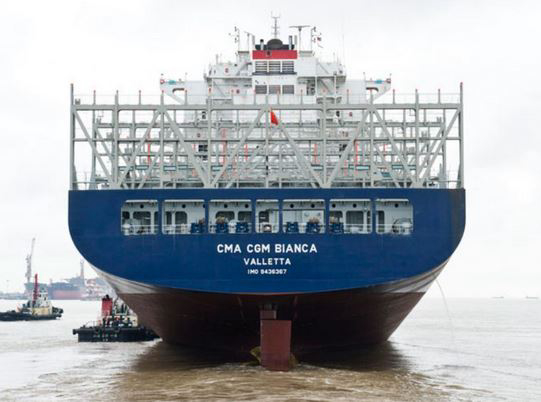
JULY 18, 2018 — Marseilles headquartered container shipping giant CMA CGM has contracted France's BIO-UV Group to supply its Bio-Sea ballast water treatment systems (BWTS) to 17 containerships.
The company's nine 22,000 TEU LNG fueled newbuilds under construction at two CSSC shipyards in China will each be fitted-out with two 3,000 cu.m/h capacity Bio-Sea B 10-1500 FX units. Eight 9,000 TEU capacity Opera-class vessels will each be retrofitted with a Bio-Sea B 10-1000 FX unit capable of treating ballast water flow rates of 1,000 cu.m/h.
Benoit Gillmann, President and CEO, BIO-UV Group, said: "Beyond the dynamics of this milestone agreement, the order from CMA CGM, the world's third largest container shipping company, indicates the industry's commitment to reducing the impact that the transfer of non-indigenous species has on the marine environment, and beyond. The order strengthens BIO-UV's position in the maritime segment and Bio-Sea's leading position in the ballast water market."
The order, which is valued at more than EUR 5 million (about $5.8 million), is the company's first Bio-Sea order following the system's USCG type-approval, awarded last month.
Xavier Deval, Business Director, Bio-Sea, said: "We are excited to be working with CMA CGM on these newbuild and retrofit projects, which represent the first orders since our USCG-approval. The order substantiates our view that Bio-Sea is one of the best ultraviolet treatment systems available. It is suitable for all waters of the world in which these CMA CGM vessels will operate and is one of the very few ballast water treatment systems that is currently compliant with both USCG and IMO requirements."
The UV-type ballast water treatment system is available as a skid mounted, semi-modular or modular system capable of dealing with flow rates between 10 and 2,000 cu.m/h. To date, it is the only UV system on the market with no limit for freshwater retention, 24 hours in marine water, and 72h days for brackish water.
Bio-Sea is two stage treatment process, with ballast waters entering a 20µm filter to flush out any suspended solids and zooplankton. The filtered water then enters a titanium reactor to be put through the ultraviolet disinfection process. The system is also equipped with an automated operating, monitoring and alarm with power regulation.
Greek owner said to has formed outfit to operate recently bought LR2 vessels
Paris Kassidokostas-Latsis has set up a new shipmanagement outfit, possibly dedicated to the running of the secondhand tankers he started buying two months ago.
Marla Tankers Shipmanagement registered with Greek authorities in June, shipping ministry documents show.
The company is domiciled within the Latsis group headquarters in Athens. Its legal representatives are the same as those who signed responsibility for Marla Shipmanagement, a separate Latsis outfit that manages four supramax bulkers the Greek owner bought with partners last year.
The Marla brand, whose name is a contraction of Marianna Latsis, Kassidokostas-Latsis’ mother, seems to be at the centre of many of his recent activities. Alongside Marla Shipmanagement and Marla Tankers Shipmanagement, the group also registered a shipbroking outfit called Marla Brokers with Greek authorities a few months ago.
Latsis group officials declined to comment or elaborate on the establishment of Marla Tankers Shipmanagement. The group’s previous moves suggest that the new outfit will be managing LR2 tankers that Kassidokostas-Latsis bought from Greek peer Chandris (Hellas) in May. These were the 115,760-dwt Amorea and Aegea (both built 2009), acquired for about $23.7m each.
The Greek owner bought these ships as part of a new venture formed to engage in asset plays in the tanker market. He revealed its existence in a meeting with journalists during Posidonia.
Kassidokostas-Latsis declined to divulge the venture’s name or the identity of his partners. However, he did explain that the outfit was similar in spirit to dry bulk asset play vehicle Ivy Shipping, which owns the four supramaxes he bought last year.
The new tanker firm would “certainly” acquire more ships, Kassidokostas-Latsis said. He explained that one of the reasons he invested in coated aframaxes was that they could trade crude oil and petroleum products.
This flexibility may prove particularly valuable after 2020, when an overhaul of bunkering regulations is expected to play to the advantage of product tankers.
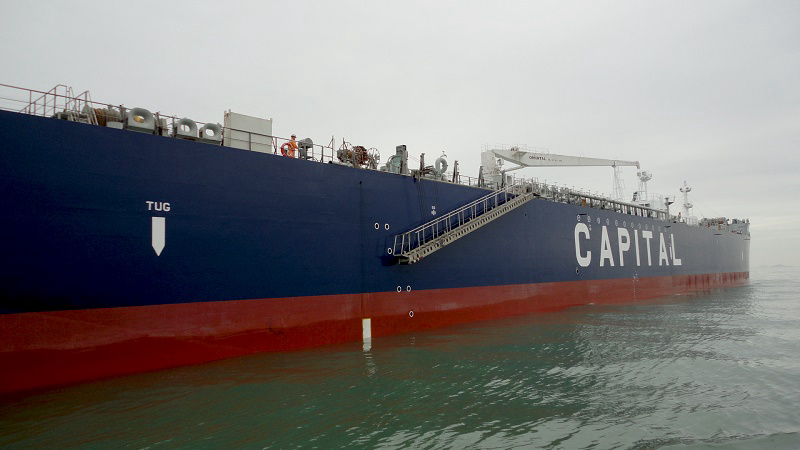
ATHENS, Greece, July 18, 2018 (GLOBE NEWSWIRE) -- Capital Product Partners L.P. (NASDAQ:CPLP) today announced that its board of directors has declared a cash distribution of $0.08 per common unit for the second quarter of 2018 ended June 30, 2018.
The second quarter common unit cash distribution will be paid on August 14, 2018 to common unit holders of record on August 2, 2018.
About Capital Product Partners L.P.
Capital Product Partners L.P. (NASDAQ:CPLP), a Marshall Islands master limited partnership, is an international owner of tanker, container and drybulk vessels. The Partnership currently owns 37 vessels, including twenty-one modern MR (Medium Range) product tankers, four Suezmax crude oil tankers, one Aframax crude/product oil tanker, ten Neo Panamax container vessels and one Capesize bulk carrier. Its vessels trade predominantly under period charters.
Confusion about whether the existing ISO 8217 marine fuel quality standard will cover fuel blends produced to meet the 0.50\% sulphur limit has, hopefully, been cleared up at last week’s meeting at the International Maritime Organization.
Concerns about the safety of fuel blends complying with the upcoming 0.50\% sulphur limit were on the agenda for the intersessional working group (ISWG) meeting of the Sub-Committee on Pollution Prevention and Response (PPR), which was tasked with developing guidelines to support the consistent implementation of the 2020 sulphur limit.
IBIA was encouraged to hear several delegations at the IMO meeting last week also highlighting that ISO 8217 already addresses most of the safety concerns raised. In particular, a statement made by ISO, represented at the meeting by the Chair of the technical committee in charge of the ISO 8217 marine fuel standard, said the 0.50\% fuel oils “will be fully capable of being categorised within the existing ISO 8217 standard.”
Moreover, ISO explained that the Publicly Available Specification (PAS) which the ISO 8217 committee expects to develop and finalise prior to 2020 will provide guidance as to the application of the existing ISO 8217 standard to 0.50\% sulphur fuels.
One of the key concerns expressed in the market is the stability of fuel blends, as it has been pointed out that some blend components – especially if mixing aromatic and paraffinic refinery streams – would increase the risk of the final blend being unstable. ISO pointed out to the meeting that fuel oil blenders and suppliers should take careful note of these consequences ensuring this fuel characteristic is not overlooked. That statement is in line with IBIA’s “Best practice guidance for suppliers for assuring the quality of bunkers delivered to ships” published earlier this year, in particular under Chapter 4.2 – Quality control during production of bunkers.
One element that ISO 8217 cannot address, however, is compatibility between different blends ordered by ships. Compatibility between pure distillate fuels is not an issue as they do not contain asphaltenes, however for blends containing residual fuel oils, ship operators need to be fully aware of the potential for different batches of fuel being incompatible. Just like the case is today, it will not be possible for suppliers to guarantee compatibility as blend formulations will vary widely, hence ships will, as they do today, have to consider the risk of incompatibility. The ISO representative told the meeting: “Recognising that some degree of mixing of different fuel oils onboard the ship cannot be avoided, many ships today have already procedures in place to minimise co-mingling of fuel oils with bunker segregation being always the first option. We would therefore encourage ship operators to evaluate further their segregation policy.”
A more comprehensive document containing guidelines of a more operational nature to help operators manage both distillate fuels and fuel oil blends containing residual fuel will be developed at PPR in February next year for approval by MEPC 74 in May, 2019.
Several elements that may be included in ship operational guidance were described in documents submitted to last week’s meeting, however, it was agreed to take up an initiative by OCIMF and IPIECA to establish industry guidance that addresses the impact on fuel and machinery systems resulting from new fuel blends or fuel types with guidance on the handling, storage and use of such fuels. They have engaged with organisations including as CIMAC, the Energy Institute and ISO to develop such guidance and have invited other interested parties to join. IBIA has taken up the invitation.
Report by Unni Einemo This email address is being protected from spambots. You need JavaScript enabled to view it.
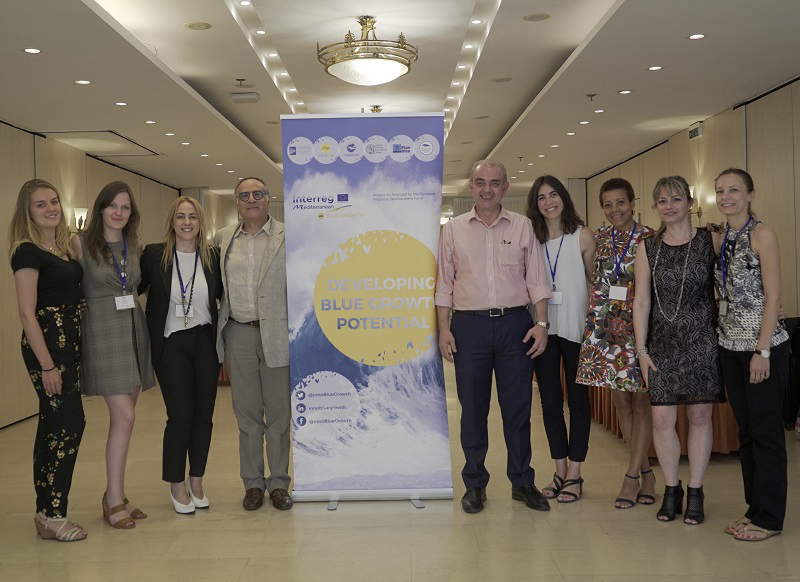
The Blue Growth Community celebrated its third transnational capitalization and community building event in Athens.
Athens, June 20th-21st, 2018 - The Blue Growth Community, driven by the InnoBlueGrowth project (Interreg MED), celebrated its third transnational capitalization and community building event on the theme of Clusters. The event, entitled “The Cluster approach for a sustainable Blue Growth in the Med,” was organized by the NTUA-School of Naval Architecture and Marine Engineering with the support of all InnoBlueGrowth partners. It gathered stakeholders ranging from higher education & research institutes to SMEs, sectoral agents, business support organizations, and the Private sector.
The workshop had a dual approach. The first day was focused on Capitalization Activities of Maritime Surveillance in the Mediterranean area with as a leading actor the PROteuS project. PROteuS aims at exploiting the growth potential of the emerging Maritime Surveillance industry that can play a crucial role in the socio-economic development of the Mediterranean area and in the generation of new job opportunities, through the creation of a “Cluster of Clusters”. This new cluster would be composed by National Nodes operating in Mediterranean countries (Italy, Spain, France, Portugal, Greece, Cyprus).
The themes chosen to be developed during the maritime surveillance thematic session, were:
How to define a transparent, accountable and secure Blue Economy with Maritime Surveillance activities;
The challenges of sea frontier’s control and potential solution for identified obstacles, through integration & data sharing;
The importance of Public-Private partnership establishment; and
The need to provide qualified and skilled personnel through education & training for market development.
Among the highlighted points were the impacting contribution of the Hellenic Coast Guard, presenting the aspects of Maritime Surveillance though a memorable video depicting its different aspects such as sea rescuing for migrants, policing for illegal substances traffic smugglers, monitoring boats in wreck danger, and pollution threats for the environment.
The debates that followed particularly focused on migration and cyber security vulnerability. They concluded on the demand to establish a clear harmonized policy & regulatory framework for strategic actions, in order to facilitate the growth and development of the maritime surveillance sector. For that reason, the establishment of public-private partnerships through an open innovation approach “with a clear vision from the start’’ and “the right government in place’’, was identified as essential, however bearing in mind the “risks may be experienced due to different cultures involved’’.
Following the debates, the last session focused on the strength that derives from knowledge creation and knowledge capitalization.” "A lack of awareness means that we create open doors’’. In the digital transformation world, new skills, training, scientific and technological expertise are major components, so as to support the new era of a holistic maritime eco-system.
The next day had a community building approach, with aim to outline the cluster methodology and challenges, and promote the benefits for a sustainable development of the blue economy. Starting with the MAESTRALE project by presenting the Blue Energy Geodatabase platform and the transnationality of Blue Energy Labs, the floor was given to the newly launched INTERREG MED project 4HELIX+ “Empowering the 4 helix of Mediterranean maritime clusters through an open source/knowledge sharing and community-based approach in favour of Mediterranean blue growth.’’ The last part of the first session was focused on training and educational part of the sector, and the importance of highly-skilled personnel availability for the cluster performance. “Companies cannot compete on sophisticated services without well-educated employees’’.
The possibility of cooperation and competition in the Mediterranean level was afterwards presented by PELAGOS project and the newly launched Online Platform of the Blue Energy Cluster, http://www.be-cluster.eu; a platform that offers a unique opportunity to the members of the Blue Energy Cluster to promote their organizations and it includes some of the most innovative and influential organizations in the field of Marine Renewable Energies in the Mediterranean region that will shape the face of the industry. A debate followed with very interested questions and answers and afterwards, participants moved to the activity of ‘’round-table discussions’’, with topics such as funding resources for a cluster, how to choose an appropriate partner, the importance of governance and the contribution of a cluster in sustainable development and economic growth. Among the highlighted issues suggested, was to include the environmental helix in the process model, as environment can be a driving force for the future policy-makers.
A more technical and policy report will be published soon following this event and on the road to the InnoBlueGrowth mid-term event, to be respectively celebrated next November 2018 (22-23) in Barcelona (Spain).