


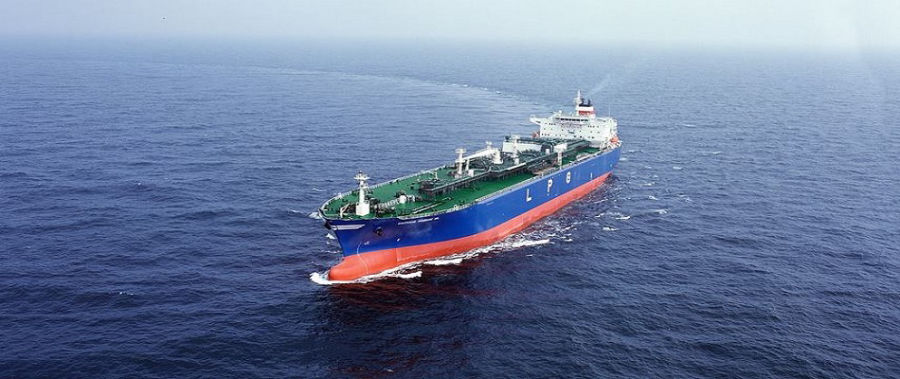
THE very large gas carrier fleet includes more than 40 vessels over 20 years old, which would be ideal candidates to be displaced if the influx of new tonnage is not completely absorbed by increased demand, according to leading VLGC owner Dorian LPG.
US-listed Dorian’s comments come as the VLGC industry is wondering how the freight market will cope with the heavy newbuilding delivery schedule this year. Some 45-52 new VLGCs are scheduled to be delivered into the global fleet this year, which many experts predict will put negative pressure on spot rates as vessels compete for cargoes.
The downturn in the spot rate over the last few weeks, from spectacular highs last year, has added fuel to concerns. While Dorian acknowledged the imminent heavy delivery schedule, the age of the current fleet must be taken into account. Moreover, new buoyant market dynamics cannot be ignored, such as exports from the US.
| Dorian’s manager of business development Peter Hadjipateras told Lloyd’s List on Friday: “We expect increased export capacity from the US Gulf in 2016, from the Enterprise Terminal in Houston, Marcus Hook in Pennsylvania and P66 in Freeport, Texas later in the year.” He pointed out that Enterprise has just added capacity for an additional 10 VLGC cargoes per month, Marcus Hook is expected to add two to three VLGCs per month, and P66’s Freeport terminal should add another six to seven VLGC cargoes per month in the third or fourth quarter. |
Hadjipateras: Dorian LPG expects increased export capacity from the US Gulf in 2016. |

Tonne-mile demand resulting from the increased exports will depend on their destination and on the timing of the start of operations of the widened Panama and on the slots allocated to VLGC transits, he said.
Mr Hadjipateras estimated that in 2015 about 70 vessels were employed to export about 22m tonnes of LPG from the US. In addition to US exports, the VLGC fleet accommodates the majority of LPG exports from the Middle East Gulf (about 35m tonnes per year), Algeria (about 8m tonnes per year), West Africa (about 3m tonnes per year), and northwest Europe (about 8m tonnes per year).
Imports of LPG into India increased dramatically in 2015, resulting in longer port waiting times due to the lack of port infrastructure and storage, said Mr Hadjipateras. “We believe this will continue throughout 2016 and will result in increased vessel demand.”
He said that Chinese imports of LPG in 2015 reached record levels. “Low LPG prices helped stimulate further Chinese domestic demand as well as demand for industrial use.”
He added: “We have not yet considered the effect of Iran’s possible lift of sanctions which will provide additional LPG supply to the markets.”
Strong demand from China has indeed been a key driver for VLGCs — and medium-sized gas carriers as several Chinese ports have yet to accommodate VLGCs — which is a case for the upside in 2016, according to Arctic Securities.
Global LPG demand should rise by 4.1\% in 2016, down from 7.5\% in 2015, Arctic has forecast, with tonne-mile growth hitting 24\% in 2015, declining to 13\% in 2016.
SOURCE: Lloyd's List

